平安银行

Search documents
1月20日贷款财政贴息四项政策点评:“一揽子”贷款财政贴息政策影响几何?
EBSCN· 2026-01-21 11:17
Investment Rating - The report maintains a "Buy" rating for the banking industry, indicating an expected investment return exceeding the market benchmark index by more than 15% over the next 6-12 months [29] Core Insights - The "package" loan interest subsidy policies aim to stimulate consumption and investment, focusing on enhancing effective domestic demand through financial and fiscal collaboration [2][7] - The new policies are expected to significantly increase the scale of interest subsidies compared to previous measures, with a projected subsidy scale of approximately 1000 to 2000 billion yuan for 2026 [17][19] Summary by Sections Loan Subsidy Policies - The policies include four main areas: subsidies for small and micro enterprises, equipment updates, service industry operators, and personal consumption loans, with a focus on key industries such as new energy vehicles and medical equipment [4][6] - The subsidy rate for small and micro enterprise loans is set at 1.5 percentage points, with a maximum loan amount of 50 million yuan per entity, potentially providing up to 150,000 yuan in subsidies [4][6] - The equipment update loan subsidy has been increased from 1% to 1.5%, expanding the scope to include technology innovation loans and related fields [4][6] - The personal consumption loan subsidy has removed previous restrictions, allowing for broader eligibility and a maintained subsidy rate of 1% [5][6] Economic Impact - The policies are designed to alleviate financial burdens on small and micro enterprises, encouraging investment and job stability, particularly in high-tech and essential service sectors [7][8] - The expected increase in loan demand from these sectors is anticipated to support the overall credit recovery in the economy, particularly for retail and service industries [7][8] Market Outlook - The report suggests that the coordinated fiscal and monetary policies will positively impact the banking sector's loan volume and pricing, particularly benefiting banks focused on small and micro enterprises and retail finance [23] - The banking sector has seen a decline in stock performance, and the new policies are expected to act as a catalyst for recovery, especially in the context of the "opening red" period for banks [23]
多家银行扎堆发卫星上天
21世纪经济报道· 2026-01-21 11:06
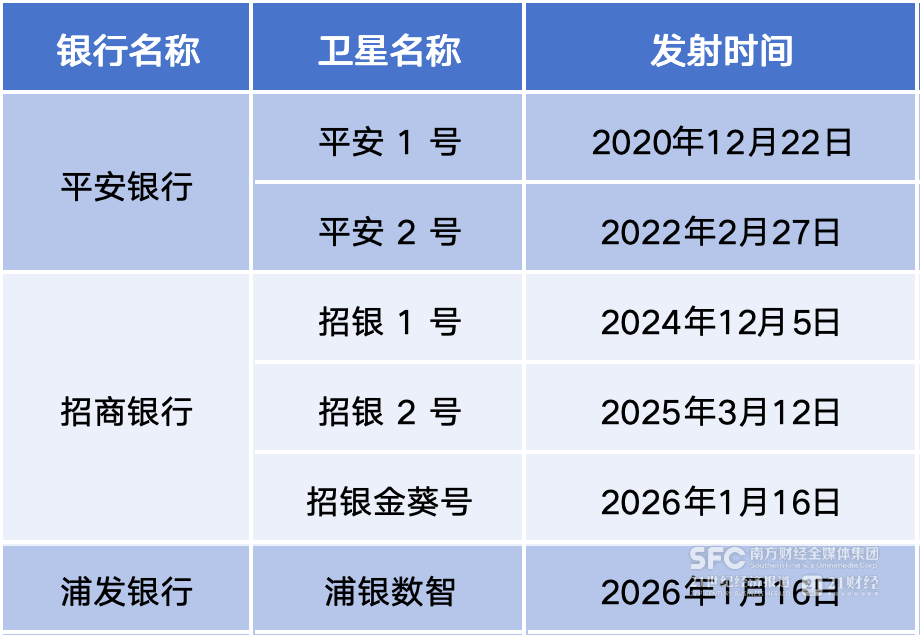
Core Viewpoint - The article discusses the recent satellite launches by major Chinese banks, highlighting their strategic shift towards utilizing satellite technology for enhancing financial services and risk management [1][4]. Group 1: Satellite Launches and Their Purpose - Three major banks, China Merchants Bank, Shanghai Pudong Development Bank, and Ping An Bank, have successfully launched satellites as part of their strategic initiatives to integrate satellite technology into their operations [4][5]. - The "Zhaoyin Jinqi" satellite launched by China Merchants Bank is designed to enhance global communication capabilities and improve data transmission efficiency, forming a comprehensive low-orbit satellite communication matrix [4][6]. - The "Puyin Shuzhi" satellite, launched simultaneously, is part of the "Tianqi Constellation" and aims to improve the performance and revisit time of the satellite network [4][6]. Group 2: Business Logic Behind Satellite Utilization - Banks are leveraging satellite technology for remote monitoring of collateral and project progress, significantly enhancing post-loan management efficiency and reducing credit risk [7][8]. - The use of satellite technology allows banks to gather unique spatial data, which can transform risk control and business models, addressing issues of information asymmetry in lending [7][9]. - For instance, China Merchants Bank has integrated remote sensing technology into its risk management system, achieving over 95% accuracy in monitoring construction progress of mortgage properties [8][9]. Group 3: Applications in Extreme Scenarios - In extreme scenarios such as natural disasters, satellite communication technology provides a solution to maintain business continuity when ground communication networks fail [12][13]. - China Merchants Bank has tested low-orbit satellite links for disaster recovery, establishing a foundation for an integrated emergency communication network [12][13]. Group 4: Supporting National Strategy and Commercial Space Industry - By participating in satellite launches, banks are aligning with national strategies and expanding financial services to support the commercial space industry [13][14]. - The banks are developing various services and products tailored to the needs of the commercial space sector, such as satellite leasing and financing solutions [14]. Group 5: Broader Industry Impact - The trend of banks utilizing satellite technology is expanding beyond a few players, with other banks also exploring applications in agriculture, environmental monitoring, and supply chain finance [14]. - Innovations such as satellite remote sensing applications are being adopted to enhance risk management and service delivery in various sectors, indicating a shift towards integrating advanced technologies in traditional banking practices [14].





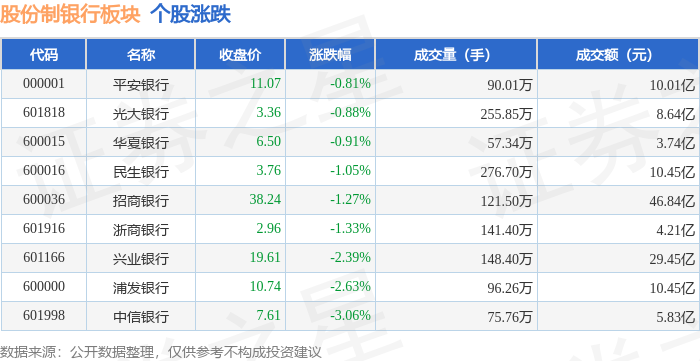
股份制银行板块1月21日跌1.78%,中信银行领跌,主力资金净流出1.38亿元
Zheng Xing Xing Ye Ri Bao· 2026-01-21 08:54
证券之星消息,1月21日股份制银行板块较上一交易日下跌1.78%,中信银行领跌。当日上证指数报收于 4116.94,上涨0.08%。深证成指报收于14255.12,上涨0.7%。股份制银行板块个股涨跌见下表: | 代码 | 名称 | 收盘价 | 涨跌幅 | 成交量(手) | 成交额(元) | | --- | --- | --- | --- | --- | --- | | 000001 | 平安银行 | 11.07 | -0.81% | 90.01万 | 10.01亿 | | 601818 | 光大银行 | 3.36 | -0.88% | 255.85万 | 8.64亿 | | 600015 | 华夏银行 | 6.50 | -0.91% | 57.34万 | 3.74亿 | | 600016 | 民生银行 | 3.76 | -1.05% | 276.70万 | 10.45 Z | | 600036 | 招商银行 | 38.24 | -1.27% | 121.50万 | 46.84亿 | | 601916 | 浙商银行 | 2.96 | -1.33% | 141.40万 | 4.21亿 | | 601166 | ...




吉祥航空:控股股东4100万股解质后再质押,累计质押7.24亿股
Xin Lang Cai Jing· 2026-01-21 08:43
Core Viewpoint - The announcement from Juneyao Airlines indicates that its controlling shareholder, Juneyao Group, will release a pledge of 41 million shares on January 20, 2026, while simultaneously pledging the same number of shares to Ping An Bank Shanghai Branch as collateral for debt performance guarantees [1] Group 1 - Juneyao Group currently holds 43.74% of Juneyao Airlines' shares [1] - After the recent changes, Juneyao Group has a total of 697 million pledged shares, which accounts for 72.91% of its holdings and 31.89% of the total share capital of the company [1] - The combined pledged shares of Juneyao Group and its concerted parties exceed 50% of their total holdings [1] Group 2 - The financing balances corresponding to the pledged shares that will mature in the next six months and one year are 3.972 billion yuan and 5.541 billion yuan, respectively [1] - Currently, there is no risk of forced liquidation [1]

涉3.5亿元委托贷款逾期案件,中山证券卷入诉讼纠纷
Nan Fang Du Shi Bao· 2026-01-21 08:21
深陷业绩经营困境的中山证券,又有了新麻烦。 此前,1月16日晚,在最新的2025年未经审计的财报中,中山证券表现不佳,营业收入同比下降 29.17%,净利润同比下降88.06%。 2026年1月20日,锦龙股份发布公告,披露其控股子公司中山证券收到吉林省长春市中级人民法院应诉 通知,因一起侵权责任纠纷被光大长春分行列为被告,诉讼请求金额合计为4.89亿元。 据悉,该纠纷起源于2014年的一笔3.5亿元委托贷款业务。2014年5月,招商银行股份有限公司无锡分行 (简称"招商无锡分行")委托中山证券设立定向资产管理计划,指令其投资平安银行股份有限公司深圳 分行(简称"平安深圳分行")作为受托人的委托贷款,资金投向柳河聚鑫源米业有限公司(简称"柳河 米业"),投资期限为一年。 锦龙股份在公告中强调,该投资系由招商无锡分行决策,投资安全及任何风险收益均由招商无锡分行负 责。中山证券根据相关约定,代表资产管理计划及其委托人通知平安深圳分行将委托贷款资金3.5亿元 转入借款人柳河米业账户。 投资期限届满后,该笔委托贷款未能按约收回。光大长春分行在诉讼中主张,其下属汽车厂支行员工张 磊与柳河米业实控人刘孝义冒用该行名义,于 ...

尾焰划破夜空 金融机构为何爱上“发卫星”
2 1 Shi Ji Jing Ji Bao Dao· 2026-01-21 08:05
Core Viewpoint - The recent successful launch of satellites by major banks in China, including China Merchants Bank and Shanghai Pudong Development Bank, signifies a strategic shift towards utilizing satellite technology for enhancing financial services and risk management in the banking sector [1][2][3]. Group 1: Satellite Launches and Their Purpose - China Merchants Bank and Shanghai Pudong Development Bank have joined Ping An Bank in launching satellites, indicating a trend among banks to leverage space technology for business needs [2][4]. - The satellites are part of the "Tianqi Constellation," which aims to provide global coverage and enhance communication capabilities, thereby improving data transmission and supporting more devices [4][5]. - The "Zhaoyin Jinkui" satellite launched by China Merchants Bank is designed to enhance the density of the satellite constellation and reduce revisit intervals, which will significantly improve global communication capabilities [4][5]. Group 2: Business and Risk Management Enhancements - Banks are utilizing remote sensing satellite technology for precise monitoring of collateral and project progress, which enhances post-loan management efficiency and reduces credit risk [3][7]. - The integration of satellite technology into financial risk control systems allows banks to monitor real-time data from various sectors, addressing information asymmetry in lending [7][8]. - For instance, China Merchants Bank has implemented a high-precision construction monitoring system for mortgage projects, achieving over 95% accuracy in monitoring construction progress [8]. Group 3: Applications in Supply Chain and Disaster Recovery - Satellite technology is crucial for expanding supply chain finance by providing timely and effective data transmission, especially in remote areas where traditional communication may fail [9][10]. - In extreme scenarios, such as natural disasters, satellite communication ensures business continuity for banks by maintaining service availability when ground networks are disrupted [11][12]. - The banks' involvement in satellite launches also aligns with national strategies, enabling them to support the commercial space industry while enhancing their service offerings [12][13]. Group 4: Broader Industry Implications - The trend of banks launching satellites is not limited to a few institutions; it is gradually permeating various banking operations, enhancing risk management capabilities across sectors like agriculture and logistics [13][14]. - The adoption of satellite remote sensing technology is becoming a standard practice in the banking industry, reflecting a shift towards innovative financial services that integrate advanced technologies [14].
去年深圳8家银行密集“换将”,新行长们的角色之变
Nan Fang Du Shi Bao· 2026-01-21 06:19
Core Insights - Shenzhen's "14th Five-Year Plan" aims to establish a global "Industrial Financial Center," raising expectations for local financial institutions, particularly banks [1] - The recent leadership changes in at least eight commercial banks in Shenzhen reflect a strategic shift towards enhancing the role of these institutions in the financial ecosystem [1] Leadership Changes - The appointment of Xiong Tao as the head of the Industrial and Commercial Bank of China (ICBC) Shenzhen branch marks a significant leadership transition, emphasizing his experience in corporate banking and technology finance [2][3] - Ma Mingjun, previously the head of the Tianjin branch of the Bank of China, has been appointed to lead the Shenzhen branch, indicating a strategic focus on the Guangdong-Hong Kong-Macao Greater Bay Area [3] - Wang Xinghai has taken over as the head of the Shenzhen branch of China Merchants Bank, showcasing the bank's commitment to internal talent development and stability [4][6] - Zhang Chaohui's appointment as the head of Ping An Bank's Shenzhen branch highlights the importance of this branch within the bank's overall strategy [5][6] Focus on Technology Finance - Several new leaders in Shenzhen's banking sector are emphasizing technology finance, with initiatives aimed at supporting key sectors such as semiconductors and advanced manufacturing [8][9] - The establishment of specialized financial products for technology enterprises is a priority for banks like Shanghai Pudong Development Bank, which aims to support the entire lifecycle of tech companies [9] - Chen Dapeng, head of Minsheng Bank's Shenzhen branch, aims to tailor financial services to the unique needs of the innovation-driven economy in Shenzhen [10][11] Strategic Importance of Shenzhen - Shenzhen's banking sector is positioned as a critical area for talent development and strategic implementation, serving as a testing ground for financial innovations [12][13] - The city is recognized as a key player in China's financial landscape, with total banking assets reaching 14.25 trillion yuan, ranking third among major cities [14] - The "14th Five-Year Plan" emphasizes the need for banks to transition from traditional financing to integrated services, including venture capital and cross-border finance [15]
观察|去年深圳8家银行密集“换将”,新行长们的角色之变
Nan Fang Du Shi Bao· 2026-01-21 06:03
Core Viewpoint - Shenzhen's "15th Five-Year Plan" aims to establish itself as a global "industrial financial center," raising expectations for local financial institutions, particularly banks, in their roles and responsibilities [22][23]. Group 1: Leadership Changes in Shenzhen Banks - Over the past year, at least eight commercial banks in Shenzhen have changed their leadership, including major state-owned banks and leading joint-stock banks [2]. - The appointment of Xiong Tao as the head of the Industrial and Commercial Bank of China (ICBC) Shenzhen branch reflects a strategic move to enhance the bank's focus on technology and innovation [2][4]. - Similarly, Ma Mingjun has been appointed as the head of the Bank of China Shenzhen branch, indicating a strengthened commitment to the Guangdong-Hong Kong-Macao Greater Bay Area [4][7]. Group 2: Key Appointments and Their Implications - Wang Xinghai, a veteran of China Merchants Bank, has taken over as the head of the Shenzhen branch, showcasing the bank's internal talent development strategy [9]. - Ping An Bank has also seen significant leadership changes, with Zhang Chaohui becoming the head of the Shenzhen branch, emphasizing the importance of this branch within the bank's overall strategy [11]. - New leaders at various banks, such as Shang Wencheng of China Everbright Bank and Yuan Rui of Shanghai Pudong Development Bank, are focusing on technology finance and innovative service models to meet the needs of Shenzhen's tech-driven economy [12][15]. Group 3: Strategic Focus on Technology Finance - The new leaders are expected to align their banks' strategies with Shenzhen's identity as a technology innovation hub, emphasizing the importance of "investment-loan linkage" services [12][23]. - The financial institutions are being urged to develop comprehensive service models that support the entire lifecycle of technology enterprises, particularly in critical sectors like semiconductors and advanced manufacturing [12][15]. - The shift towards a more integrated financial service approach reflects a broader trend in which banks are expected to act as "deep partners" and "comprehensive service providers" rather than just capital providers [23]. Group 4: Challenges and Future Directions - The banks in Shenzhen face challenges in transitioning from traditional financing to more complex service models, requiring enhanced risk management and understanding of emerging technologies [23]. - There is a growing need for collaboration with venture capital, insurance, and other financial institutions to meet the comprehensive needs of enterprises [23]. - The emphasis on long-term investment strategies and the establishment of a long-term assessment mechanism are critical for supporting sustainable growth in the technology sector [23].



摩根大通银行、浙江稠州商业银行获批资格!FT账户密集扩容
2 1 Shi Ji Jing Ji Bao Dao· 2026-01-21 03:49
Group 1 - The Shanghai Free Trade Account (FT Account) has seen significant developments recently, with the approval of new financial institutions and upgrades to existing accounts, indicating a potential increase in foreign participation in China's cross-border financial activities [1][2] - Morgan Stanley Bank (China) Limited's Shanghai branch has been approved as the first new FT account financial institution in over five years, marking a notable opportunity for foreign banks in the region [1] - As of the latest update, there are 62 financial institutions with FT account qualifications in Shanghai, with 49 being banks, reflecting a growing trend in the FT system [1] Group 2 - The implementation of the "Implementation Measures for the Function Upgrade of Free Trade Accounts" by the People's Bank of China on December 5 has introduced significant policy upgrades, allowing for more flexible cross-border fund transfers [2][4] - The new regulations enable trial enterprises to conduct capital account business without the constraints of external debt quotas or prior registration with foreign exchange authorities, enhancing operational efficiency [2][4] - Major banks, including state-owned and foreign banks, have quickly responded to the new policy by facilitating the opening of upgraded FT accounts for clients, indicating strong market interest and potential for increased cross-border trade [3][4] Group 3 - The recent policy changes are expected to create a multiplier effect for cross-border trade and investment, improving the efficiency of capital allocation for enterprises [4] - The expansion of the FT account system is anticipated to continue, with more financial institutions likely to be added to the list of qualified entities in the future [5]




消费贷贴息新政“加速度”!怎么办?5家银行连夜发指引
Nan Fang Du Shi Bao· 2026-01-21 03:40
Core Viewpoint - The Ministry of Finance, the People's Bank of China, and the Financial Regulatory Administration jointly issued a notice to optimize the implementation of personal consumption loan interest subsidy policies, extending the policy duration, expanding the subsidy scope, and adjusting subsidy standards [2][4]. Policy Adjustments - The personal consumption loan interest subsidy policy now covers the period from September 1, 2025, to December 31, 2026, with a new specific implementation period for credit card bill installment subsidies from January 1, 2026, to December 31, 2026 [5]. - The previous restriction on key areas for consumption loans of 50,000 yuan and above has been lifted, allowing consumers to enjoy subsidies for all areas of personal consumption loans [7]. - The subsidy standards have been adjusted to unify the annual subsidy cap for each borrower at 3,000 yuan, with the subsidy shared between personal consumption loans and credit card installment loans [7]. Bank Responses - Major state-owned banks and representative joint-stock banks, including Bank of China, Agricultural Bank of China, Postal Savings Bank, and China Merchants Bank, have quickly responded by issuing detailed implementation guidelines and customer FAQs [2][5]. - Banks have emphasized the convenience of the application process, with various banks providing different channels for customers to apply for subsidies, such as mobile banking and customer service hotlines [8][10]. Implementation and Compliance - Existing customers who have already applied for subsidies will automatically benefit from the new policy without needing to re-sign agreements [9]. - Banks have committed to a "direct deduction" model for subsidy funds, ensuring that no additional fees are charged and that all processes are handled through official channels [10]. - Consumers are warned against fraudulent activities related to subsidy applications, with strict penalties for violations [10].