
Uber

Search documents
Why Lucid stock is surging today
Finbold· 2025-10-29 14:43
Core Insights - Lucid Motors is experiencing a significant stock price increase due to renewed investor interest driven by new strategic partnerships [1][4] - The stock rose to $19.25, reflecting a 6.29% increase in premarket trading, and opened at $18.80, marking a 3.81% rise [1] Strategic Partnerships - The stock surge follows Uber's announcement of a driverless ride-hailing service in San Francisco, utilizing Lucid's Gravity SUVs equipped with Nuro's Level 4 self-driving technology [4][5] - Uber plans to deploy 100,000 autonomous vehicles by 2027, starting with at least 20,000 self-driving Lucid vehicles [5] - Lucid and Nuro are developing an "Engineering Test Fleet" of over 100 robotaxis to ensure safety through various testing methods [6] Technological Advancements - Lucid has partnered with Nvidia to integrate Level 4 autonomous driving capabilities into its upcoming midsize vehicles [7] - Nvidia's DRIVE AGX computers and DriveOS platform will enable Lucid vehicles to operate fully autonomously under defined conditions [7][8] Market Outlook - Wall Street analysts have set an average price target of $25 for Lucid Motors, indicating a potential upside of 35.28% from the current stock price [9] - The most optimistic projection values the stock at $70, while the most conservative outlook is set at $10, with a consensus rating of 'Hold' [10]


Global Innovators Leading Level 4 Autonomy with NVIDIA
NVIDIA· 2025-10-29 07:00
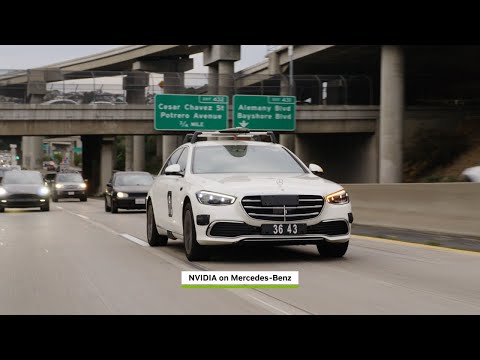
NVIDIA’s level 4 partners are accelerating the future of autonomous vehicles. Together, we’re building an AI-driven transportation ecosystem powered by NVIDIA — from training and simulation to in-vehicle compute — to safely bring autonomy to the road. Our level 4 ecosystem includes: Uber, Stellantis, Mercedes-Benz, Lucid, Nuro, Wayve, Oxa, Pony.ai, WeRide, Waabi, and Volvo Autonomous Solutions. These innovators are redefining mobility by developing, deploying, and scaling autonomous vehicles on NVIDIA. Read ...
英伟达GTC大会:黄仁勋驳斥“AI泡沫”质疑,称“钱途”不可限量!
Jin Shi Shu Ju· 2025-10-29 03:08
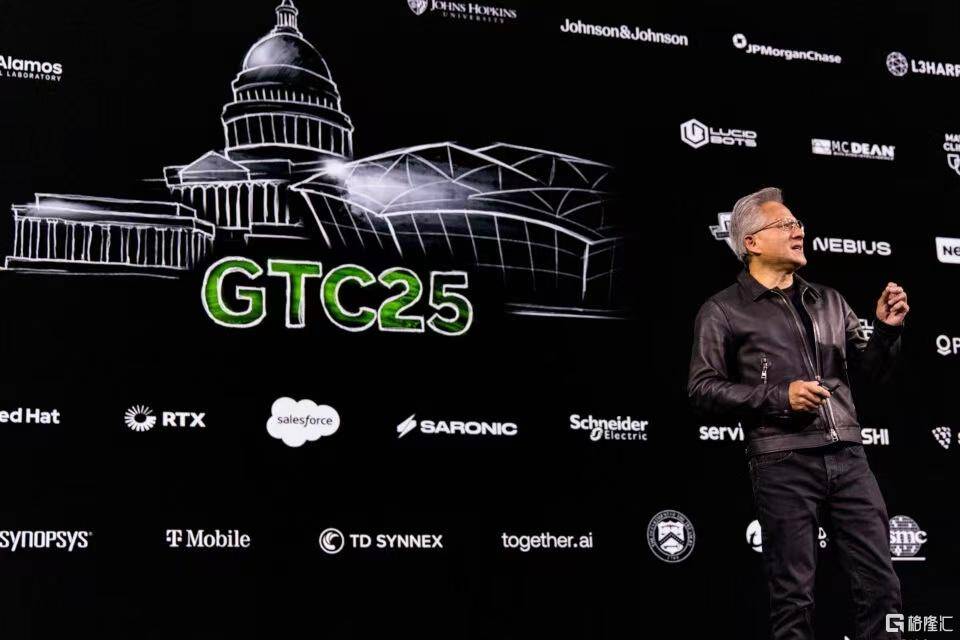
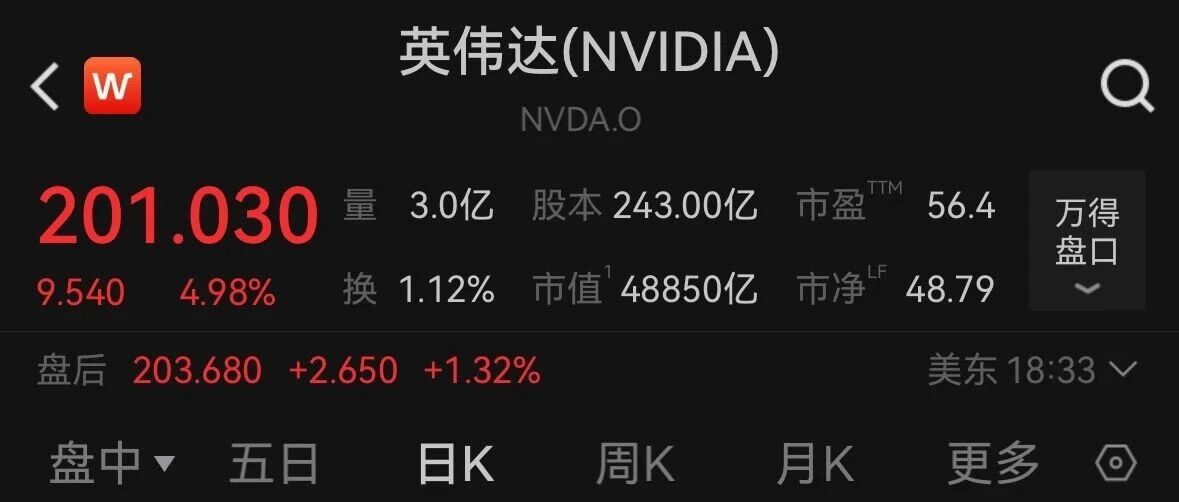
Core Insights - Nvidia's CEO Jensen Huang announced new partnerships and dismissed concerns about an "AI bubble," stating that the company's latest chips could generate up to $500 billion in revenue [2] - The GTC conference in Washington showcased Nvidia's expanding collaboration network, including partnerships with Uber, Palantir, and CrowdStrike, and highlighted the launch of a new system connecting quantum computers with AI chips [2][3] - Nvidia's flagship AI accelerators, "Blackwell" and its updated model "Rubin," are expected to drive unprecedented sales growth by 2026 [2][3] Partnerships and Collaborations - Nvidia plans to invest €1 billion (approximately $1.2 billion) in a data center in Germany in collaboration with Deutsche Telekom and has recently signed an investment agreement with Nokia [2] - The company is also working with Lucid to develop an autonomous driving platform and with CrowdStrike to create an AI cybersecurity system [5] - A partnership with Eli Lilly aims to build a powerful supercomputer for the pharmaceutical industry, utilizing over 1,000 Nvidia Blackwell AI accelerator chips [4] Market Position and Competition - Nvidia's latest generation of chips is expected to ship 20 million units, a significant increase compared to the 4 million units sold of the previous "Hopper" chip [3] - Despite Nvidia's dominance in the AI accelerator market, competition is intensifying with AMD and Broadcom entering the field, and companies like Qualcomm announcing plans to enter the AI accelerator market [4][6] - Nvidia's stock rose 5% following the conference, closing at a record $201.03, while AMD's stock has more than doubled this year, indicating investor optimism about AMD as a competitor [3][6] Economic Impact and Future Outlook - Huang emphasized that AI is reshaping the global economy and that current investments in computing infrastructure are justified [6] - The company is seeking assistance from the White House and Congress to restore AI chip exports to China, which have resulted in significant revenue losses [6] - Nvidia's efforts to position itself as a key supplier for sovereign AI systems globally reflect its ambition to expand its influence beyond the U.S. market [6]
英伟达_华盛顿特区 GTC 大会主题演讲核心要点
2025-10-29 02:52
Summary of Nvidia Corp. (NVDA) Key Takeaways from GTC Washington DC Keynote Company Overview - **Company**: Nvidia Corp. (NVDA) - **Event**: GTC Washington DC keynote on October 28 Key Points Revenue Visibility - Nvidia has visibility into **$500 billion** in cumulative Datacenter revenue for **2025-26** - This estimate is **10%** above internal estimates of **$453 billion** and **12%** above the Visible Alpha Consensus Data of **$447 billion** - Increased visibility into **CY26** revenues is viewed positively, leading to a **Buy** rating reaffirmation [1][5][7] Strategic Partnerships and Investments - Announced a **$1 billion** equity investment in **Nokia** at a subscription price of **$6.01** per share to enhance AI-native mobile networks [5] - Partnership with **Uber** to develop a Level 4 ready mobility network using Nvidia's **DRIVE AGX Hyperion 10** platform and **DRIVE AV** software [6] Technological Developments - Introduction of **NVQLink**, a high-speed interconnect for quantum computers [5] - Seven new supercomputers announced in collaboration with the **U.S. Department of Energy**, featuring **100,000** and **10,000** Nvidia Blackwell GPUs [5] Financial Projections - Current estimates for **CY26** revenues are approximately **7%** above Street estimates, with potential for further upward adjustments based on factors such as OpenAI's deployment timing and contributions from non-traditional customers [1][5] Price Target and Risks - **12-month price target** set at **$210**, based on a **35X P/E** applied to a normalized EPS estimate of **$6.00** - Key downside risks include: - Slowdown in AI infrastructure spending - Increased competitive intensity leading to share erosion - Margin erosion due to competition - Supply constraints [7][8] Additional Insights - Nvidia's market cap is reported at **$4.9 trillion** with significant revenue growth projected over the next few years [8] - The company is positioned within the **Americas Semiconductors, Telecom & IT Services** sector, indicating its relevance in the technology landscape [8] This summary encapsulates the critical insights from Nvidia's recent keynote, highlighting its revenue projections, strategic partnerships, technological advancements, and financial outlook.
炸翻全球科技圈!黄仁勋“AI春晚”引爆英伟达,反驳AI泡沫、抛GPU核弹…
Sou Hu Cai Jing· 2025-10-29 02:46
Core Insights - Huang Renxun's keynote at the GTC conference highlighted significant advancements in AI and technology, marking the beginning of "Computing Revolution 2.0" for NVIDIA, which saw its market value approach $5 trillion after a 5% increase in stock price [2][3][12]. Group 1: Strategic Partnerships and Collaborations - NVIDIA announced a $1 billion equity investment in collaboration with Nokia to develop a 6G AI platform, alongside partnerships with T-Mobile and Cisco for the first 6G AI-native wireless stack in the U.S. [5][6]. - The company is working with the U.S. Department of Energy to build seven supercomputers, including the largest AI supercomputer for the department, equipped with 100,000 NVIDIA Blackwell GPUs [9][10]. Group 2: Technological Innovations - NVIDIA introduced NVQLink technology to connect quantum processors with GPU supercomputers, gaining support from 17 quantum processor manufacturers and 5 controller manufacturers [7][8]. - The company unveiled the BlueField-4 data processing chip and the industrial-grade edge AI platform IGX Thor, significantly enhancing processing capabilities [11]. Group 3: AI Market Outlook - Huang Renxun refuted claims of an AI bubble, asserting that the demand for NVIDIA GPUs remains strong, with 6 million Blackwell architecture GPUs shipped in the past four quarters [12][14]. - The anticipated sales for Blackwell and the upcoming Rubin chip are projected to reach $500 billion [15]. Group 4: Future Developments - NVIDIA's roadmap includes the production of the fastest AI chip, Blackwell, in Arizona, marking a significant milestone in U.S. manufacturing [18][19]. - The next-generation Vera Rubin super GPU has completed lab testing and is expected to enter mass production soon, designed for both AI and scientific tasks [20].
量子计算、机器人……黄仁勋勾勒AI宏伟蓝图
财联社· 2025-10-29 00:20
Core Viewpoint - NVIDIA's GTC conference highlighted its expansive vision for AI and related technologies, showcasing partnerships and innovations that position the company at the forefront of the AI and telecommunications sectors [2][4]. Group 1: NVIDIA's Technological Advancements - NVIDIA's CEO Jensen Huang presented a roadmap extending to 2028, revealing that the company has accumulated $500 billion in orders for its Blackwell and Rubin chips by the end of the 2026 fiscal year [4][19]. - The introduction of the NVIDIA ARC (Aerial RAN Computer) aims to capture opportunities in the AI-RAN market, in collaboration with Nokia, which includes a $1 billion equity investment [6]. - NVIDIA's new BlueField-4 data processing chip is designed to accelerate AI infrastructure, supporting throughput of 800 Gb/s and high-performance inference processing [17]. Group 2: Partnerships and Collaborations - NVIDIA announced partnerships with T-Mobile and Cisco to develop the first AI-native wireless stack for 6G in the U.S. [9]. - A collaboration with the U.S. Department of Energy will see the construction of seven supercomputers, including the Solstice system, which will be the largest AI supercomputer for scientific discovery [11]. Group 3: AI Applications and Innovations - The AI traffic is experiencing explosive growth, with ChatGPT having 800 million active users, nearly half of whom access it via mobile devices [8]. - NVIDIA's Omniverse digital twin technology is being utilized to build modern factories and train robots, with a partnership with the startup Figure to accelerate humanoid robot development [26]. - The introduction of the IGX Thor edge AI platform offers 8 times the AI computing power compared to its predecessor, enabling seamless operation of large language models at the edge [29]. Group 4: Automotive and Autonomous Driving - The launch of the NVIDIA DRIVE AGX Hyperion 10 platform is aimed at L4-level autonomous driving, featuring a comprehensive sensor architecture [31]. - A partnership with Uber will allow vehicles using this platform to connect to the Uber network [33].
GTC大会 英伟达新高
小熊跑的快· 2025-10-28 23:20
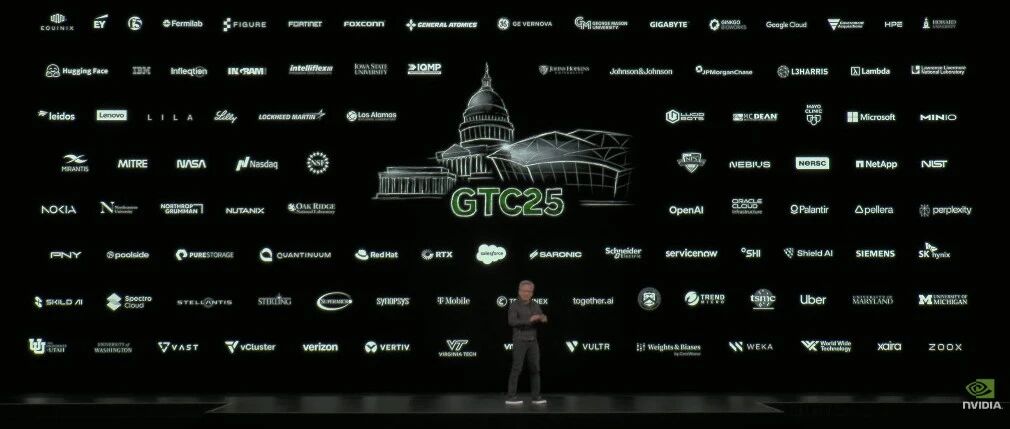
Core Insights - Nvidia is actively collaborating with various companies to enhance its AI and computing capabilities, particularly in the telecommunications and automotive sectors [1][2][3] Group 1: Strategic Collaborations - Nvidia is partnering with Nokia to launch a new Aerial RAN computer, supporting 6G telecommunications and AI services, which promises more stable and efficient connections [1] - Nvidia and Oracle are set to create the largest AI supercomputer for the U.S. Department of Energy, utilizing a total of 110,000 Blackwell GPUs to accelerate scientific discoveries [2] - Nvidia is working with Uber to prepare for autonomous taxis, planning to deploy a fleet of 100,000 self-driving taxis starting in 2027 [2] Group 2: Industrial AI Developments - Nvidia is expanding its Omniverse platform to include technologies for designing and simulating digital twins of factories, which is crucial for the industrial AI era [3] Group 3: Competitive Landscape - The competition for government projects is intensifying, with AMD recently announcing a collaboration with the U.S. Department of Energy, while Nvidia is also making significant moves by deploying 110,000 Blackwell chips [4] - Nvidia is entering the autonomous taxi sector to gather real-world data, which is essential for refining its models despite having the strongest synthetic data capabilities [5]
一文看清英伟达(NVDA.US)GTC黄仁勋演讲要点:6G等重磅合作,NVQLink融合量子计算和超算,驳AI泡沫,Blackwell美国造
智通财经网· 2025-10-28 22:44
Core Insights - Nvidia's CEO Jensen Huang emphasized breakthroughs in 6G, AI, quantum computing, and robotics during the GTC conference, highlighting the shift from traditional computing to accelerated computing and GPU technology as key drivers of technological advancement [1][2][3] Group 1: Strategic Partnerships and Collaborations - Nvidia announced a strategic partnership with Nokia to invest $1 billion in Nokia shares to jointly advance an AI-native 6G network platform [1][4] - Collaborations with AI company Palantir and pharmaceutical giant Eli Lilly aim to integrate Nvidia's GPU computing capabilities into enterprise data platforms and drug development processes, accelerating the commercialization of AI in complex industries [2][24][27] Group 2: AI and Quantum Computing Innovations - Nvidia introduced NVQLink technology, connecting quantum processors with GPU supercomputers, which has garnered support from 17 quantum computing companies [8][10] - The company is collaborating with the U.S. Department of Energy to build the largest AI supercomputer, equipped with 100,000 Nvidia Blackwell GPUs, to enhance scientific research capabilities [12] Group 3: AI Infrastructure and Product Launches - The launch of the Bluefield-4 processor aims to support AI factory operations, providing significant throughput and performance improvements over previous models [13][14] - Nvidia's DRIVE Hyperion platform is set to support Uber's deployment of 100,000 Robotaxi vehicles starting in 2027, marking a significant step in autonomous vehicle technology [20][22] Group 4: Market Predictions and Future Outlook - The AI-RAN market is projected to exceed $200 billion by 2030, with Nvidia and Nokia's partnership expected to open new high-growth areas for telecom operators [7] - Eli Lilly's new supercomputer, powered by over 1,000 Blackwell Ultra GPUs, aims to revolutionize drug discovery and development processes, with significant benefits expected by 2030 [27][28]

Uber Technologies Inc. (NYSE:UBER) Expands into Autonomous Vehicle Sector
Financial Modeling Prep· 2025-10-28 18:16
Core Insights - Uber Technologies Inc. is a global leader in ride-sharing and food delivery services, making significant advancements in the autonomous vehicle sector, particularly in the robotaxi market through strategic partnerships with Baidu and Lucid [1][5] Market Performance - As of October 28, 2025, Uber's stock is priced at approximately $96.40, reflecting a slight decrease of 0.02% from a previous price of $95.90, with a daily trading range between $95.75 and $97.20 [2] - Uber's market capitalization is approximately $201 billion, with a 52-week high of $101.99 and a low of $59.33, indicating volatility in its stock performance [4][5] Industry Growth Potential - The global robotaxi market is projected to reach $45.7 billion by 2030, with a compound annual growth rate (CAGR) of 91.8% from 2023 to 2030, attracting significant interest from companies like Uber and WeRide [3][5]


X @Bloomberg
Bloomberg· 2025-10-28 17:58
Uber will begin expanding a fleet of 100,000 autonomous vehicles powered by Nvidia technology starting in 2027, an ambitious move that could help bring down the cost of offering hailable robotaxis to consumers https://t.co/4RxtmMS1D4 ...