英伟达Hopper芯片

Search documents
科技投资大佬:明年英伟达GPU将颠覆谷歌TPU优势
美股IPO· 2025-12-10 03:38
Core Viewpoint - Google currently holds a cost advantage in AI training with its TPU chips, operating at a negative 30% profit margin, which allows it to suppress competitors. However, this advantage is expected to reverse with the introduction of NVIDIA's Blackwell chip cluster in early 2026, potentially reshaping the competitive landscape of the AI industry [1][4][11]. Group 1: Cost Structure and Competitive Dynamics - Gavin Baker highlights that Google's TPU chips are akin to "fourth-generation jet fighters," while NVIDIA's Hopper chips are compared to "World War II P-51 Mustangs," indicating a significant cost advantage for Google [4]. - The transition from NVIDIA's Hopper to Blackwell is described as one of the most complex product transformations in tech history, with substantial increases in data center rack weight and power consumption [5]. - Baker anticipates that the first models trained on Blackwell will debut in early 2026, with xAI playing a crucial role in NVIDIA's deployment strategy [6]. Group 2: Supply Chain and Design Strategy - Google's conservative design choices and supply chain strategy may limit its long-term competitiveness, as it outsources backend design to Broadcom, incurring significant costs [7]. - The estimated annual payment to Broadcom could reach approximately $15 billion by 2027, raising questions about the economic rationale behind this outsourcing [7]. - The introduction of MediaTek as a second supplier is seen as a warning to Broadcom, but this diversification may slow down TPU's development pace compared to NVIDIA's rapid GPU iterations [9][10]. Group 3: Strategic Implications - Once Google loses its status as the lowest-cost producer, its strategic computing approach will fundamentally change, making it challenging to maintain a negative profit margin [11]. - The shift in cost dynamics with the Blackwell cluster moving towards inference applications could lead to significant financial strain for Google, potentially impacting its stock performance [11]. - Baker emphasizes that the gap between NVIDIA's GPUs and Google's TPUs will widen further with the release of the next-generation Ruben chip [12].



科技投资大佬Gavin Baker:明年英伟达GPU将颠覆谷歌TPU优势!一旦谷歌失去成本优势,可能重塑AI产业的竞争格局和经济模型
Ge Long Hui· 2025-12-10 03:36
Core Viewpoint - Google holds a cost advantage in AI training due to its TPU chips, compared to Nvidia's Hopper chips, which are considered outdated [1] Group 1: Cost Advantage - Gavin Baker highlights that Google's TPU chips provide a low-cost advantage in the AI training sector, likening them to "fourth-generation jet fighters" [1] - In contrast, Nvidia's Hopper chips are compared to "World War II-era P-51 Mustangs," indicating a significant technological gap [1] - This cost advantage allows Google to operate its AI business at a negative profit margin of 30%, effectively "sucking the economic oxygen out of the AI ecosystem" [1] Group 2: Future Competition - Baker warns that this situation may change with the introduction of Nvidia's Blackwell chip cluster in early 2026, which will enhance training capabilities [1] - The subsequent release of the more easily deployable GB300 chip is expected to further shift the competitive landscape [1] - If Google loses its cost advantage, it could reshape the competitive dynamics and economic models within the AI industry [1]

科技投资大佬:明年英伟达GPU将颠覆谷歌TPU优势
Hua Er Jie Jian Wen· 2025-12-10 03:06
Core Insights - Nvidia's next-generation Blackwell chips and subsequent products are expected to reshape the cost structure of AI training, potentially ending Google's TPU cost advantage [1] - The transition from Nvidia's Hopper to Blackwell is one of the most complex product transformations in tech history, creating an unexpected advantage window for Google [2] - Google's conservative design choices and supply chain strategies in TPU development may limit its long-term competitiveness [4][5] Group 1: Nvidia's Blackwell Chips - The Blackwell chip cluster is set to begin training use in early 2026, with the GB300 chip following, which will be easier to deploy [1][2] - The first models trained on Blackwell are expected to be launched by xAI in early 2026 [2] - The GB300 chip will feature "plug-and-play" compatibility, allowing for direct replacement of existing GB200 infrastructure without additional modifications [3] Group 2: Google's TPU Challenges - Google's TPU architecture decisions, including outsourcing backend design to Broadcom, may result in significant annual payments, limiting profitability [4] - The introduction of MediaTek as a second supplier signals a warning to Broadcom, but this diversification may slow down TPU development [5] - If Google loses its status as the lowest-cost producer, its strategic computing approach will fundamentally change, making it difficult to maintain a negative profit margin [6]
万亿美元AI投资回报被夸大?现在每个人都在问:GPU的寿命究竟有几年?
美股IPO· 2025-11-14 23:10
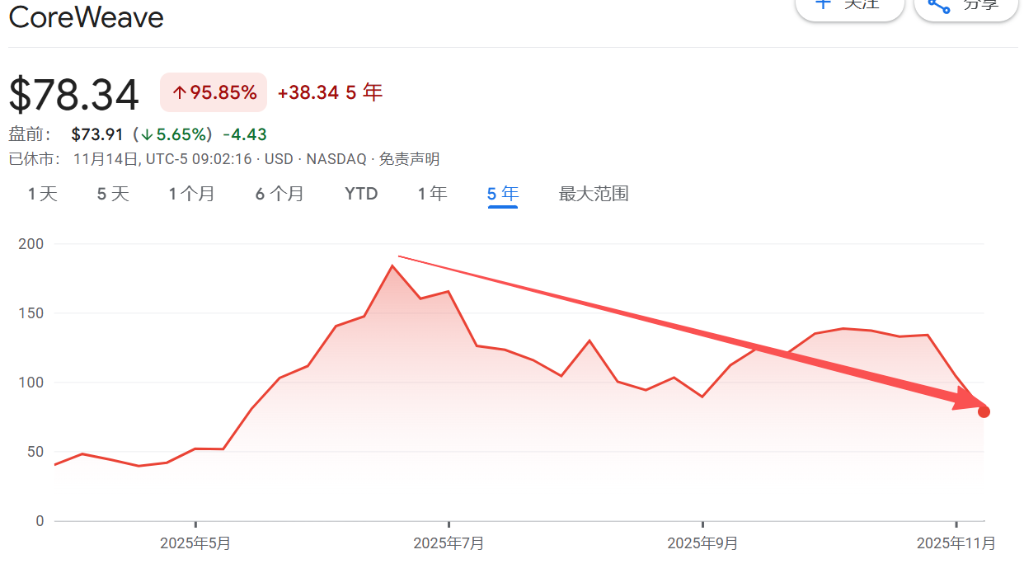
Core Viewpoint - The depreciation period of GPUs is a critical issue affecting corporate profits and investment returns, especially as major tech companies plan to invest $1 trillion in AI data centers over the next five years [3][5]. Depreciation Challenges - The actual lifespan of GPUs is under scrutiny, with estimates ranging from two to six years, leading to concerns about inflated earnings by companies like Microsoft, Google, and Oracle [3][6]. - The lack of historical data on GPU usage complicates depreciation assessments, making it difficult for investors and lenders to gauge the value of these assets [5][6]. Market Reactions - Concerns about AI spending have already impacted stock prices, with CoreWeave's shares dropping 57% from their June peak and Oracle's stock falling 34% from its September high last year [3]. - CoreWeave has adopted a six-year depreciation cycle for its infrastructure, but its stock fell 16% following earnings reports due to delays from third-party data center developers [6][3]. Technological Impact - Rapid technological advancements are pressuring the depreciation of AI chips, with new models being released annually, which may render older models obsolete more quickly [7][8]. - Companies like Amazon have shortened the expected lifespan of some servers from six years to five years due to the accelerated pace of technological development in AI and machine learning [7]. Corporate Strategies - Microsoft is diversifying its AI chip procurement to avoid over-investment in any single generation of processors, acknowledging the rapid pace of innovation [8][9]. - Depreciation estimates are influenced by various factors, including technological obsolescence and maintenance, requiring companies to justify their assumptions to auditors [9].
万亿美元AI投资回报被夸大?现在每个人都在问:GPU的寿命究竟有几年?
Hua Er Jie Jian Wen· 2025-11-14 14:11
Core Insights - The article discusses the significant financial implications of determining the depreciation period for GPUs as major tech companies plan to invest $1 trillion in AI data centers over the next five years [1] - The depreciation period directly affects financial performance, with longer periods allowing companies to spread costs over more years, thus reducing profit impact [1][4] - Concerns about AI spending are reflected in stock price declines for companies like CoreWeave and Oracle, indicating investor skepticism about over-investment in AI [1] Depreciation Challenges - Estimating GPU depreciation is complicated due to a lack of historical usage data, as the first AI processors from NVIDIA were launched around 2018, and the current AI boom began in late 2022 [4] - CoreWeave has adopted a six-year depreciation cycle for its infrastructure, while its CEO emphasizes a data-driven approach to assess GPU lifespan [5] - Market opinions vary, with some suggesting actual GPU lifespan may be as short as two to three years, leading to concerns about inflated earnings projections by major tech firms [5] Technological Pressure - The rapid pace of technological advancement is a key factor in GPU depreciation, with new models potentially rendering older ones obsolete within a short timeframe [6][7] - NVIDIA has shifted to an annual release cycle for new AI chips, increasing the risk of older models losing value quickly [7] - Amazon has reduced the estimated lifespan of some servers from six years to five due to accelerated technological development in AI and machine learning [7] Strategic Responses from Tech Giants - Microsoft is diversifying its AI chip procurement strategy to avoid over-investment in any single generation of processors, learning from NVIDIA's rapid product cycles [8] - Depreciation estimates in fast-evolving industries like technology require careful consideration of various factors, including technological obsolescence and historical lifespan data [8]
英伟达GTC大会:黄仁勋驳斥“AI泡沫”质疑,称“钱途”不可限量!
Jin Shi Shu Ju· 2025-10-29 03:08
Core Insights - Nvidia's CEO Jensen Huang announced new partnerships and dismissed concerns about an "AI bubble," stating that the company's latest chips could generate up to $500 billion in revenue [2] - The GTC conference in Washington showcased Nvidia's expanding collaboration network, including partnerships with Uber, Palantir, and CrowdStrike, and highlighted the launch of a new system connecting quantum computers with AI chips [2][3] - Nvidia's flagship AI accelerators, "Blackwell" and its updated model "Rubin," are expected to drive unprecedented sales growth by 2026 [2][3] Partnerships and Collaborations - Nvidia plans to invest €1 billion (approximately $1.2 billion) in a data center in Germany in collaboration with Deutsche Telekom and has recently signed an investment agreement with Nokia [2] - The company is also working with Lucid to develop an autonomous driving platform and with CrowdStrike to create an AI cybersecurity system [5] - A partnership with Eli Lilly aims to build a powerful supercomputer for the pharmaceutical industry, utilizing over 1,000 Nvidia Blackwell AI accelerator chips [4] Market Position and Competition - Nvidia's latest generation of chips is expected to ship 20 million units, a significant increase compared to the 4 million units sold of the previous "Hopper" chip [3] - Despite Nvidia's dominance in the AI accelerator market, competition is intensifying with AMD and Broadcom entering the field, and companies like Qualcomm announcing plans to enter the AI accelerator market [4][6] - Nvidia's stock rose 5% following the conference, closing at a record $201.03, while AMD's stock has more than doubled this year, indicating investor optimism about AMD as a competitor [3][6] Economic Impact and Future Outlook - Huang emphasized that AI is reshaping the global economy and that current investments in computing infrastructure are justified [6] - The company is seeking assistance from the White House and Congress to restore AI chip exports to China, which have resulted in significant revenue losses [6] - Nvidia's efforts to position itself as a key supplier for sovereign AI systems globally reflect its ambition to expand its influence beyond the U.S. market [6]
GPU疯狂抢购背后:一场价值万亿的AI豪赌正在上演!
Sou Hu Cai Jing· 2025-10-08 14:41
Core Insights - The current chip market is experiencing extreme price inflation, with Nvidia's H100 chip selling for $45,000, comparable to the price of a Tesla Model 3 [1] - OpenAI has signed contracts worth approximately $1 trillion for computing power, which is significantly higher than its projected revenue for the year [3] - Nvidia plans to invest $100 billion over the next decade in OpenAI, specifically for purchasing its own chips, indicating a unique market strategy [5] Group 1: Investment Trends - Major tech companies are making substantial investments in AI infrastructure, with Meta predicting to spend $600 billion by 2028, surpassing Finland's GDP [10] - Microsoft has already purchased 485,000 Nvidia "Hopper" chips and recently signed a $19.4 billion deal for access to over 100,000 GB300 chips [10] - Elon Musk's xAI is constructing a data center filled with over 200,000 Nvidia chips, with estimated costs reaching hundreds of billions [8] Group 2: Market Speculation - Analysts are drawing parallels between the current AI investment climate and the dot-com bubble of 1999, suggesting that Nvidia's investment in OpenAI could signal an impending bubble [12] - A macroeconomic analyst claims that the capital misallocation caused by AI investments is 17 times worse than the internet bubble and four times worse than the 2008 housing bubble [13] - There is a concern that the massive influx of resources into AI, which has yet to prove its profitability, could lead to significant resource wastage [23] Group 3: Opportunities in the Market - Despite the focus on hardware investments, there are still numerous opportunities in application layers and vertical markets for smaller companies [15] - The movement of top talent, such as a notable physicist joining Google DeepMind, indicates potential for smaller firms to leverage expertise for competitive advantage [17] - OpenAI's entry into e-commerce with features like "Instant checkout" presents opportunities for small e-commerce platforms to benefit from increased traffic [17] Group 4: Future Scenarios - Three potential outcomes for the AI investment landscape are proposed: a winner-takes-all scenario, a diverse market with multiple players, or a bubble burst similar to the 2000 internet crash [21] - Historical trends suggest that technology revolutions are rarely monopolized by a single company, indicating a likelihood of coexistence among various firms [21]