
Manus

Search documents
来自 Manus 的一手分享:如何构建 AI Agent 的上下文工程?
Founder Park· 2025-07-18 18:51
Core Insights - The article emphasizes the importance of context engineering in building AI agents, highlighting that it allows for rapid improvements and adaptability in response to advancements in underlying models [3][33] - Manus has adopted a strategy focused on context engineering, which enables faster iterations and keeps their products aligned with the evolving capabilities of foundational models [3][33] Group 1: Context Engineering Principles - KV cache hit rate is identified as the most critical metric for production-level AI agents, significantly impacting latency and cost [6][7] - The article outlines several key practices to improve KV cache hit rates, including maintaining stable prompt prefixes and ensuring context remains additive rather than modifying previous actions or observations [10][11] - The use of a context-aware state machine to manage tool availability is recommended to prevent inefficient action selection as the action space grows [10][15] Group 2: Handling Context Limitations - The article discusses the challenges of context length in AI agents, noting that while modern LLMs support large context windows, practical limitations often arise [17][19] - Manus treats the file system as an ultimate context, allowing for unlimited capacity and persistent memory, which can be directly manipulated by agents [19][23] Group 3: Attention Management and Error Handling - A unique attention management strategy is employed by Manus, where a todo.md file is created and updated throughout task execution to keep the agent focused on its goals [24][27] - The article advocates for retaining erroneous actions in context to help the model learn from mistakes, thereby improving its adaptability and reducing the likelihood of repeating errors [28][31] Group 4: Avoiding Few-Shot Pitfalls - Few-shot prompting can lead to undesirable outcomes in agent systems, as models may overly rely on repetitive patterns from similar action-observation pairs [32] - Introducing controlled randomness in actions and observations is suggested to break fixed patterns and enhance model attention [32] Conclusion - Context engineering is presented as an emerging discipline essential for AI agent systems, influencing their speed, recovery capabilities, and scalability [33][34]


90%被大模型吃掉,AI Agent的困局
3 6 Ke· 2025-07-18 10:48
Core Viewpoint - The general agent market is facing significant challenges, with companies like Manus experiencing declines in user engagement and revenue, indicating a lack of compelling use cases that drive sustained user loyalty and payment [2][9][11]. Group 1: Market Dynamics - Manus has relocated its headquarters to Singapore, laid off 80 employees, and abandoned its domestic version, reflecting a strategic shift rather than a failure in operations [2]. - The general agent market is being eroded by the overflow of model capabilities and competition from specialized agents, leading to a decline in revenue and user activity for general agents like Manus and Genspark [2][8]. - The market is witnessing a drop in monthly recurring revenue (MRR) for general agents, with Manus reporting a more than 50% decline in June [11]. Group 2: Product Performance - General agents have struggled to find killer applications that can attract and retain users, often being used for basic tasks like creating presentations or reports [2][9][11]. - The performance of general agents is hindered by their inability to match the precision of specialized agents in enterprise settings, leading to dissatisfaction among users [7][8]. - The pricing model of Manus, which relies on a points-based system, is seen as a barrier to user adoption compared to cheaper and more efficient model APIs [6][11]. Group 3: Technological Challenges - The rapid advancement of large models has made them increasingly agent-like, allowing users to directly utilize these models instead of relying on general agents [4][8]. - General agents often struggle with complex tasks due to their reliance on a step-by-step execution process, which can lead to errors and inconsistent output quality [16][19]. - Innovations in reinforcement learning (RL) are being explored to enhance the capabilities of agents, potentially allowing them to evolve from simple tools to more autonomous and adaptable systems [17][22]. Group 4: Competitive Landscape - The competitive landscape is shifting, with larger companies leveraging their resources to develop and promote their own agent products while also providing free services to attract users [12][13]. - The domestic market for general agents is becoming increasingly competitive, with major players like Baidu and ByteDance offering free testing and services, making it difficult for smaller companies to compete [12][13]. - The focus on deep research capabilities and multi-modal functionalities is becoming a common strategy among various agent developers to enhance their offerings [12][15].

Manus们在“出走”,怎么还有AI产品逆向回国?
3 6 Ke· 2025-07-18 09:22
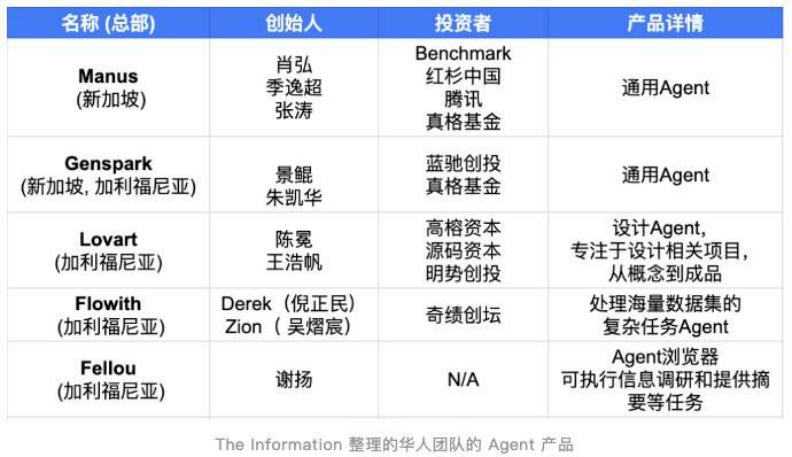
Core Insights - The current AI startup ecosystem is experiencing a trend of polarization, with some entrepreneurs returning to China after establishing themselves abroad, while newcomers are seeking new opportunities overseas [2][4][8] Group 1: Company Movements - Manus, founded by Xiao Hong, has faced criticism for allegedly "running away" to Singapore, leading to the removal of its domestic social media presence and the unavailability of its Chinese version [1][4] - AiShi Technology, known for its viral superhero transformation videos, has accumulated over 1 billion views and launched its domestic version "Pai Wo AI" after gaining traction overseas [1][5] - Lovart.ai, created by former ByteDance executive Chen Mian, has introduced its domestic version "Xing Liu Agent" after initially targeting the overseas market [1][5][10] Group 2: Market Dynamics - The AI product landscape is characterized by a significant shift, with returning teams leveraging their overseas experience to tap into the domestic market's potential [8][9] - The domestic market is seen as having a strong user base with a willingness to pay, similar to overseas users, making it an attractive target for AI startups [9][10] - Companies like Lovart.ai and AiShi Technology are adapting their products to better suit the Chinese market, incorporating local language and cultural nuances [5][6][11] Group 3: Competitive Landscape - The AI startup sector faces intense competition from established tech giants like OpenAI and Meta, which are expanding their reach into various AI applications [11][14] - The reliance on large models from major tech companies poses challenges for smaller startups, as they must compete with the resources and capabilities of these larger entities [13][14] - The cost of AI product delivery remains a significant concern, with startups struggling to balance user acquisition and operational costs [11][15][16]
黄仁勋第三次访华:英伟达4万亿市值血洗AI算力焦虑;DeepSeek爆火后遭遇滑铁卢;Manus大撤退!|混沌AI一周焦点
混沌学园· 2025-07-17 09:15
Core Trends - The article highlights the trend of "dislocated competition," where vertical capabilities are building barriers, and the shift of Chaos AI consultants towards strategic partnerships, emphasizing differentiated capabilities over homogeneous model competition [1][4]. Browser Reconstruction - AI-driven browsers are reshaping human-computer interaction, transitioning from tools to intelligent agent collaborative network entry points, with examples like Aura and Comet [2]. Computing Power Breakthrough - Nvidia's H20 chip has been re-approved for sale in China, alleviating computing power anxiety and accelerating local model iterations and low-cost applications [3][10]. Business Validation - The withdrawal of Manus and the decline of DeepSeek serve as warnings that pure model competition is unsustainable; there is a need to enhance service stability and cost control [4][13]. Strategic Leap - The upgrade of Chaos AI strategic consultants to version 2.0 marks a significant transition from tool-based to strategic intelligent partners, focusing on deep intent recognition and dynamic decision-making frameworks [5][6]. Core Capability Breakthrough - The deep intent recognition engine and intelligent framework decision system are key advancements, allowing for automatic parsing of user analysis intentions and dynamic selection of optimal analysis tools [7][6]. Market Dynamics - DeepSeek's monthly active users have dropped to 169 million, a 5.1% decline, with website traffic down 29%, indicating challenges in model iteration speed and computing power reserves [13][15]. - Kimi's K2 model has been launched, featuring a 1 trillion MoE architecture, outperforming DeepSeek in performance and offering competitive pricing [14][21]. Competitive Landscape - The launch of DeepResearch by Mita has significantly improved research efficiency, directly challenging overseas AI products like ChatGPT and Gemini [17]. - Perplexity aims to establish its AI browser Comet as a "cognitive operating system," with a valuation of $14 billion, positioning itself against Google [18]. Industry Shifts - Manus has retreated from the market, indicating challenges in user retention and high model costs, prompting a strategic shift towards globalization [22]. - xAI's Grok 4 model has been released, boasting a tenfold increase in reasoning capabilities, directly challenging OpenAI and Google [23][25].


X @Bloomberg
Bloomberg· 2025-07-16 19:10
AI startup Manus has made the choice to go global, writes @cathythorbecke. But trying to recast your identity has become a trap for Chinese tech startups (via @opinion) https://t.co/rUwaOIM4Ah ...
Manus爆火仨月远走他乡,AI Agent全球化困于合规与代码
第一财经· 2025-07-16 08:52
Core Viewpoint - Manus, an AI startup, is facing scrutiny and challenges in its global expansion strategy, particularly in light of regulatory issues and market dynamics, which reflect broader trends for Chinese AI entrepreneurs seeking international opportunities [4][6][9]. Group 1: Manus's Strategic Moves - Manus has shifted its focus from the domestic market to overseas, leading to questions about its operational stability and intentions, especially after its website indicated unavailability in certain regions [4][6]. - The company has been actively recruiting in Singapore and has established a strategic partnership with Alibaba's Tongyi Qianwen team, indicating a pivot towards international collaboration [4][7]. - The decision to cut domestic operations appears to be a proactive measure to navigate compliance challenges and regulatory scrutiny from U.S. authorities [6][9]. Group 2: Market Dynamics and Trends - The AI Agent sector is experiencing a surge in interest, with many Chinese entrepreneurs looking to replicate successful models in overseas markets, particularly after the launch of OpenAI's Operator [5][12]. - The rapid growth in AI revenue is noted, with companies achieving significant milestones faster than in previous tech waves, driven by advancements in model capabilities [12][13]. - The current entrepreneurial landscape is characterized by a shift from traditional growth strategies to leveraging model advancements, with a focus on niche applications that can capitalize on new capabilities [12][14]. Group 3: Regulatory Challenges - Manus's recent operational changes are closely tied to the implications of the Reverse CFIUS regulations, which restrict U.S. investments in critical sectors like AI, affecting the company's funding and operational strategies [8][9]. - The uncertainty surrounding compliance with U.S. regulations has prompted Manus to take decisive actions to mitigate risks associated with its domestic operations [9][10]. - The company's reliance on external foundational models raises concerns about its long-term viability in a regulatory environment that is increasingly scrutinizing foreign investments in sensitive technologies [8][9].

Manus爆火仨月远走他乡,AI Agent全球化困于合规与代码
Di Yi Cai Jing· 2025-07-16 07:28
Core Viewpoint - Manus, an AI startup, is facing scrutiny and questions about its commitment to the domestic market as it shifts focus to international expansion, reflecting broader challenges for Chinese AI entrepreneurs in the global landscape [1][3][5]. Group 1: Company Strategy and Market Position - Manus has transitioned from a domestic focus to prioritizing overseas markets, which has led to concerns about its operational stability and commitment to the Chinese market [3][5]. - The company previously had a strategic goal of global expansion, with its founder advocating for a more aggressive approach to international competition [3][5]. - Recent actions, such as the removal of content from its domestic social media accounts and the announcement of a partnership with Alibaba's Tongyi Qianwen team, indicate a significant shift in its operational strategy [3][5][6]. Group 2: Regulatory and Compliance Challenges - Manus is navigating complex regulatory environments, particularly in light of the Reverse CFIUS regulations that restrict U.S. investments in key sectors like AI [6][7]. - The company’s abrupt cessation of domestic operations is seen as a proactive measure to mitigate compliance risks associated with U.S. regulations [6][7]. - Legal experts suggest that Manus's recent decisions are influenced by the need to adapt to changing geopolitical and regulatory landscapes, which complicate the outflow of Chinese tech companies [6][7]. Group 3: Industry Trends and Innovations - The AI Agent sector is experiencing a surge in interest, with many Chinese startups looking to capitalize on international opportunities, driven by advancements in AI technology [4][9]. - The rapid growth in AI revenue and the emergence of new models are reshaping the entrepreneurial landscape, with companies achieving significant milestones faster than in previous tech waves [9][10]. - The current market dynamics emphasize the importance of leveraging new AI capabilities to create innovative applications, with early adopters in niche markets likely to gain substantial advantages [10][11].

Manus资本困局
Hu Xiu· 2025-07-16 01:37
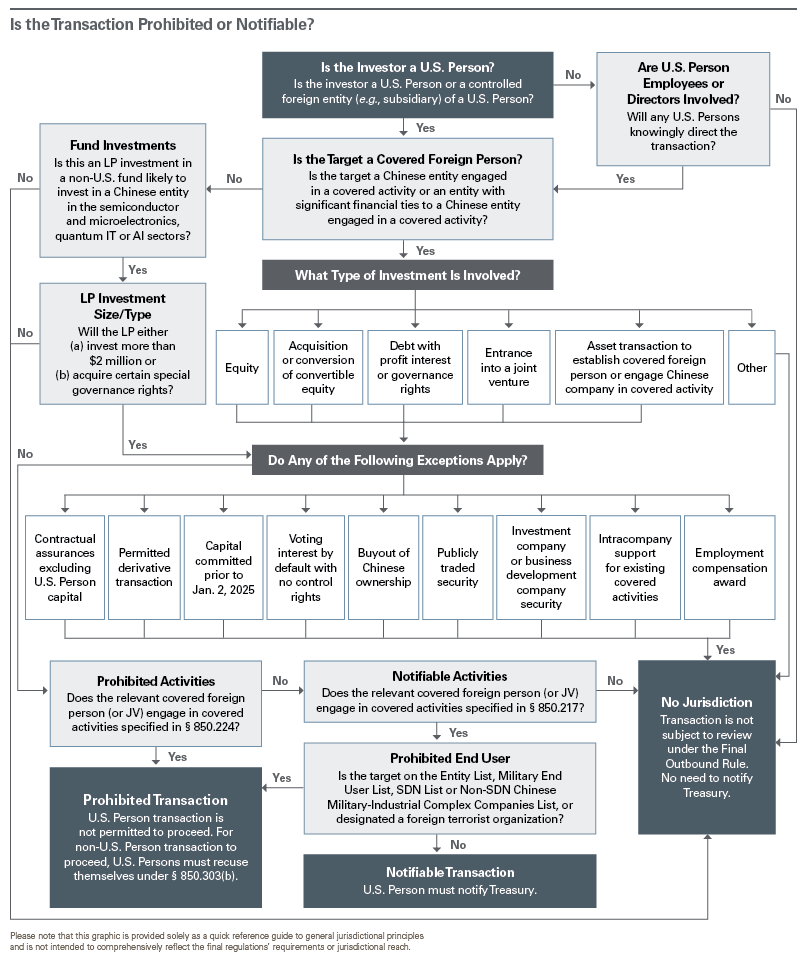
Group 1 - Manus has optimized its domestic business team, relocating over 40 core technical personnel to its headquarters in Singapore, while the rest have been laid off [1] - Manus, developed by the Chinese startup "Butterfly Effect," officially launched in March 2025, showcasing its AI's ability to execute complex tasks, which has drawn significant attention [1] - The company received a $75 million investment from Benchmark in April 2025, shortly before being investigated by the U.S. Treasury Department under the new OISP regulations [1][2] Group 2 - The OISP prohibits certain transactions involving "U.S. persons" and entities with specific ties to China, particularly in sensitive technology sectors like semiconductors and AI [2][3] - Violations of OISP can result in civil penalties of up to double the transaction value and potential criminal charges, with no pre-approval mechanism in place [3][4] Group 3 - The U.S. Treasury has begun actively enforcing OISP, sending inquiries to U.S. investors involved in potentially covered transactions [6][7] - The Treasury's inquiries focus on how investors considered OISP compliance during their due diligence processes [7] Group 4 - Benchmark Capital consulted multiple U.S. law firms before investing in Manus, arguing that the investment would not trigger OISP penalties due to Manus's operational model [9][10] - The classification of Manus as a non-Chinese company is debated, as its parent company is registered in the Cayman Islands and operates globally [10][12] Group 5 - The investment by Benchmark has faced criticism within the Silicon Valley investment community, with some arguing it effectively supports the Chinese government [13] - Concerns have been raised about the implications of such investments on U.S. national security and technological competition with China [17][18] Group 6 - To navigate OISP scrutiny, companies may consider joint venture structures that limit control by Chinese entities, ensuring compliance with OISP regulations [14][15] - Proper governance and ownership structures can help avoid classification as "covered persons" under OISP, even if a joint venture involves a Chinese entity [15][16]
从“一码难求”到“账号清空”:Manus为何错失中国AI黄金窗口期?
Sou Hu Cai Jing· 2025-07-15 00:46
Core Viewpoint - Manus, once a popular AI Agent product, has cleared its official social media accounts, leading to speculation about its potential exit from the market. This follows recent layoffs and a strategic shift to relocate core technical staff to Singapore, indicating a possible connection between these events [2][3]. Group 1: Company Actions and Strategic Decisions - Manus has laid off staff in its domestic operations and moved key technical personnel to Singapore, citing operational efficiency as the reason for these adjustments [2]. - The company received $75 million in Series B funding led by Benchmark, with a valuation of $500 million, but faced scrutiny from the U.S. Treasury due to investment restrictions related to AI technology in China [2]. - The decision to clear social media accounts aligns with the company's relocation to Singapore, which was reportedly a requirement from Benchmark [3]. Group 2: Market Position and Competition - Manus initially gained attention through a registration system that made its product hard to access, leading to high demand for invitations. However, as other AI products matured, Manus's visibility diminished [4][5]. - The company missed the opportunity to capitalize on its initial popularity and failed to establish a strong user base compared to competitors like deepseek, which successfully engaged a wide audience [5]. Group 3: Capital and Investment Trends - Manus's approach has focused heavily on capital, with its founder having a background in mobile internet and previous ventures supported by significant investment [6]. - The global venture capital landscape is experiencing a slowdown in the number of deals, while larger transactions are becoming more common, indicating a trend towards concentration in the market [7][8]. Group 4: Importance of the Chinese Market - The Chinese AI market is seen as a critical growth area, with a mature user base and significant investment from major tech companies. Manus's move away from China raises questions about its future success [9][10]. - Statistics indicate that by June 2025, China's AI core industry is expected to exceed 1.2 trillion yuan, with an application penetration rate of 38%, highlighting the market's potential [10]. Group 5: Lessons for the Industry - Manus's decline serves as a cautionary tale for other AI players, emphasizing the need to focus on product development and market engagement rather than solely relying on capital [11]. - Companies in the AI sector should prioritize deepening their presence in the Chinese market to leverage its growth potential and avoid the pitfalls experienced by Manus [11].

X @Bloomberg
Bloomberg· 2025-07-14 20:06
When Benchmark led a $75 million funding round in startup Manus, it was surprised to find other investors crying foul. https://t.co/EYw9Y5lV43 ...