
医渡科技

Search documents
医疗智能体,正火速蹿红
3 6 Ke· 2025-07-07 01:56
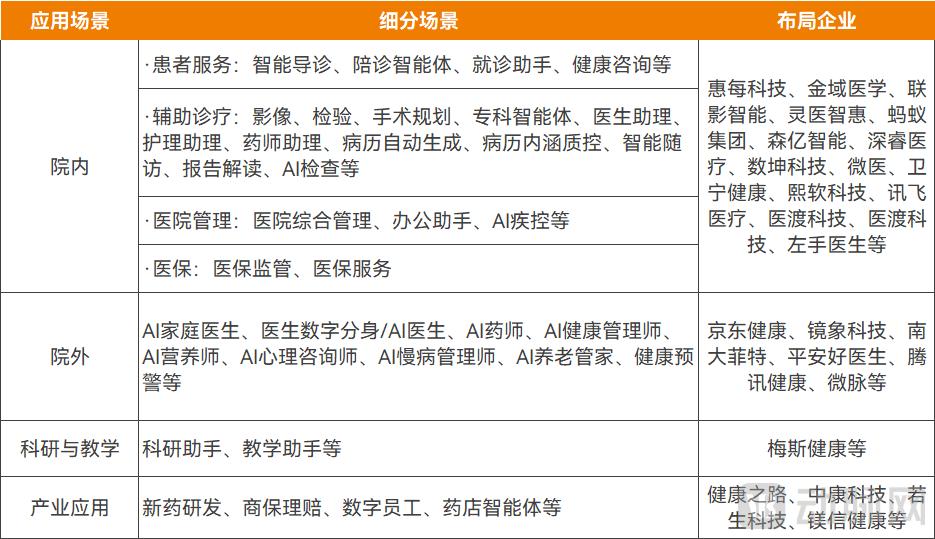
Core Insights - The emergence of medical AI agents marks a significant shift in the healthcare industry, transitioning from a focus on large models to intelligent agents that enhance service delivery and operational efficiency [1][2][3] Group 1: Development of Medical AI Agents - The relationship between large models and intelligent agents is characterized by a division of labor, where large models handle cognitive tasks while agents perform actions based on environmental inputs [2] - Medical AI agents are being deployed across various healthcare scenarios, including patient services, diagnostic assistance, hospital management, and even in research and education [3][4] Group 2: Application Scenarios and Key Players - In-hospital applications include patient services, diagnostic assistance, and hospital management, with companies like 惠每科技, 金域医学, and 微医 leading the charge [4] - Out-of-hospital applications feature AI family doctors and health management systems, with key players such as 京东健康 and 平安好医生 [4] - Specialized AI agents are emerging in fields like drug development and insurance claims, with companies like 健康之路 and 中康科技 involved [4] Group 3: Personalization and Specialization - The trend towards personalization in AI agents includes the creation of virtual personas and unique names to enhance user engagement and trust [5][6] - Specialized diagnostic agents are being developed to address specific medical conditions, such as the "腹痛诊疗智能Agent" for abdominal pain management [8][9] Group 4: Challenges and Future Directions - Current medical AI agents are primarily iterative upgrades and have not yet achieved breakthroughs in foundational models [12][14] - The development of specialized agents requires deep involvement from clinical experts to ensure effectiveness and relevance [15] - The advancement of foundational AI capabilities is crucial for the realization of fully functional medical AI agents [16]

2025年中国AI医疗器械行业产业链图谱、产业环境、市场规模及未来趋势研判:产业发展环境不断优化,AI医疗器械获批上市数量日益增多[图]
Chan Ye Xin Xi Wang· 2025-06-30 01:15
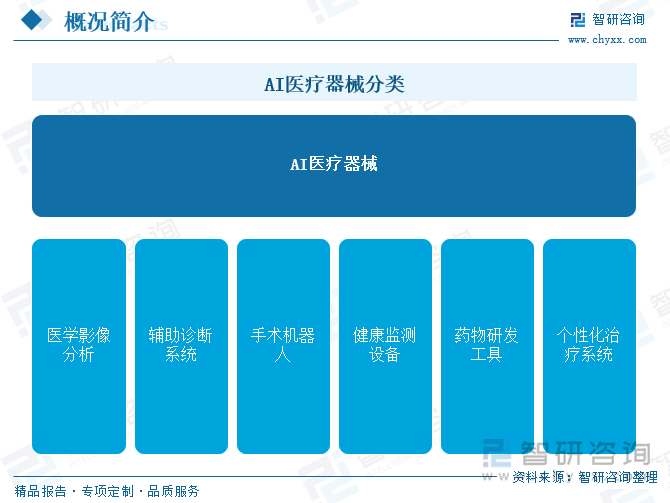
Core Viewpoint - The AI medical device industry in China is experiencing rapid growth driven by policy support, technological advancements, and market demand, with the market size projected to reach 242.3 billion yuan by 2025, up from 94.61 billion yuan in 2024 and 2.92 billion yuan in 2020 [1][12]. Industry Overview - AI medical devices utilize artificial intelligence to assist in diagnosis, monitoring, and optimizing medical processes, categorized into six main types: medical imaging analysis, diagnostic assistance systems, surgical robots, health monitoring devices, drug development tools, and personalized treatment systems [2][4]. - The industry has formed a multi-dimensional ecosystem involving traditional healthcare providers, internet companies, AI algorithm developers, and medical device manufacturers, creating a closed-loop industry ecology [4]. Industry Environment - The AI chip market, crucial for the smart capabilities of medical devices, is projected to reach 141.2 billion yuan in 2024, growing by 17.1% year-on-year, providing strong technical support for the AI medical device sector [6]. - The machine vision market, which enhances the precision of medical devices, is expected to grow to 207.17 billion yuan in 2024, with an 11.9% increase, indicating significant advancements in this technology [8]. Social Environment - The aging population and uneven distribution of medical resources in China are driving strong demand for AI medical devices, which play a vital role in early disease screening and long-term monitoring [10]. - There is a growing consumer demand for personalized services, prompting AI medical devices to focus on customized offerings through deep learning and big data analysis [10]. Current Industry Status - The AI medical device industry in China is in its early commercialization stage, with a significant increase in product approvals, as evidenced by a 50% year-on-year rise in the number of approved Class III AI medical devices in 2023 [14]. - By mid-2024, 92 Class III AI medical imaging products had been approved, covering various diseases such as cardiovascular, pulmonary, and neurological conditions [14]. Competitive Landscape - Leading companies in the AI medical device sector include United Imaging, Pushang Medical, and Sukun Technology, each leveraging core technology and deep integration with clinical scenarios to establish a differentiated competitive landscape [16]. - United Imaging leads the market with a comprehensive product line and strong partnerships with top-tier hospitals, while Pushang Medical and Sukun Technology focus on specific areas like lung AI imaging and cardiovascular AI [16][17]. Future Trends - The industry is expected to see enhanced technological innovation and accelerated product iterations, driven by advancements in deep learning and computer vision [22]. - Market competition is intensifying, with companies adopting differentiated strategies in niche areas, particularly in medical imaging [23]. - The internationalization of Chinese AI medical device companies is accelerating, facing global competition and regulatory challenges as they expand into overseas markets [25].


基金经理南下如何选股?这个指标很关键
券商中国· 2025-06-29 07:57
Core Viewpoint - Cash is becoming a new aesthetic for many fund managers seeking opportunities and safety in the Hong Kong stock market, with a focus on cash flow and reserves influencing stock selection and valuations [1][2][5]. Group 1: Cash Reserves and Stock Selection - Fund managers are increasingly prioritizing companies with strong cash reserves, as these can mitigate the negative impacts of low revenue and losses [3][4]. - The market's heightened risk aversion has led to a surge in the stock prices of companies with substantial cash reserves, such as Meitu, which saw a price increase of over 25% in June, reaching a market cap of 35 billion HKD [2]. - Companies like Jing Tai Holdings, despite low revenue, are valued highly due to their significant cash reserves, which exceed 3.3 billion HKD [3]. Group 2: Impact of Cash Flow on Valuation - The disparity between net profit and operating cash flow is critical in assessing a company's long-term growth potential, with companies generating substantial cash flow being viewed as undervalued [7]. - The case of Funbo Group illustrates that despite a high revenue growth of 24%, its lack of cash reserves led to a significant stock price decline, highlighting the importance of cash flow over profit [6][7]. - The valuation differences between companies in the same sector, such as the vending machine industry, demonstrate that cash reserves and operating cash flow are key factors influencing market perception and stock performance [9]. Group 3: Market Trends and ETF Influence - The recent surge in the issuance of free cash flow ETFs, with nearly 30 funds launched this year, is expected to further shape fund managers' stock selection criteria [11]. - The regulatory environment is also evolving, with insurance funds being encouraged to invest in high-dividend stocks, enhancing the attractiveness of cash flow and dividend-paying companies [12].

医疗AI应用ToC的拐点
Minsheng Securities· 2025-06-27 02:53
Investment Rating - The report maintains a "Hold" rating for the AI healthcare sector [5] Core Insights - The AI healthcare industry is experiencing high demand and significant growth, with Ant Group's new AI health application "AQ" addressing essential healthcare needs and connecting over 5,000 hospitals and nearly 1 million doctors [1][3] - Shenzhen has established a comprehensive AI healthcare application ecosystem, aiming to enhance clinical health management for a population exceeding 10 million [2] - Ant Group is actively exploring new paths in AI healthcare, collaborating with major medical institutions and enhancing its AI product offerings to create a three-dimensional service system that integrates healthcare providers, doctors, and patients [3] Summary by Sections - **Event Overview**: Ant Group launched the "AQ" AI health application, which offers a wide range of AI functionalities and connects users with extensive healthcare resources [1] - **Market Trends**: The AI healthcare sector is witnessing increasing demand, with forums discussing the challenges and strategies for sustainable AI healthcare ecosystems [1] - **Strategic Collaborations**: Ant Group has signed agreements with medical institutions to innovate AI healthcare services and has upgraded its AI product system to improve service delivery [3] - **Investment Recommendations**: The report highlights the rapid development of China's AI healthcare industry, emphasizing the potential for breakthroughs in chronic disease management and the integration of smart hardware [4]
医渡科技20260626
2025-06-26 15:51
Summary of Yidu Technology Conference Call Company Overview - **Company**: Yidu Technology - **Fiscal Year**: 2025 - **Key Financials**: - Total revenue: 715 million RMB - Net loss: 135 million RMB, a decrease of 38.9% year-on-year [2][3][10] - Operating cash flow outflow: 250 million RMB, a decrease of 23.8% year-on-year [2][4][11] Key Business Segments 1. AI for Medical - Revenue growth: 10.3% year-on-year in the big data platform and solutions segment [2][10] - AI platform deployed in over 30 top-tier hospitals, reducing medical record writing time to 30 seconds and TNM staging assessment time by 70% [5][14][33] - AI diagnostic assistant served 26,000 patients from February to June 2025 [9][12] 2. AI for Life Science - Revenue: 270 million RMB, a decrease of 23.7% year-on-year [18] - Active clients: 132, with 16 out of the top 20 global pharmaceutical companies as clients [8][18] - Completed 411 clinical trials and 275 real-world studies [7][18] 3. AI for Care - Revenue: 122 million RMB, a decrease of 28% year-on-year [22] - Main operator for Shenzhen and Beijing's health insurance programs, with over 6 million and 15 million insured individuals respectively [24][30] Operational Efficiency - Operating expenses (OPEX) decreased by 23% year-on-year, with OPEX as a percentage of revenue down by 10 percentage points [2][11] - Sales expenses as a percentage of revenue decreased from 26% to 20% [11] - R&D expenses as a percentage of revenue decreased from 29% to 26% [11] AI Model Development - Self-developed medical model's hallucination rate decreased by 80%, trained on over 500 billion tokens [8][10] - Performance in medical scenarios rated better than Deepseek R1 [9] Strategic Initiatives - Launched "1+N+X" product matrix for physician dictation, integrating multiple large models to enhance the entire medical process [5][14] - New data platform EVA 5.0 significantly improved data processing efficiency by over 4 times [15] Future Outlook - Expected revenue growth of approximately 20% in AI for Medical for FY 2026 [29][30] - Focus on high-quality revenue growth in AI for Life Science, with a target to exceed industry growth rates [29][30] - Plans for stock buyback due to current low stock prices, with sufficient cash reserves of approximately 3.78 billion RMB [30] Additional Insights - The company has established a strong presence in the healthcare AI sector, with significant partnerships and projects in various hospitals and research institutions [17][18][35] - Continuous investment in AI technology and data management to maintain competitive advantages in the healthcare market [34][35]
荣昌生物BD变局引爆17%闪崩!高波动常态下恒生医疗ETF(513060)成资金避风港
Xin Lang Cai Jing· 2025-06-26 06:34
Core Viewpoint - The Hong Kong stock market experienced a decline in major indices, with the Hang Seng Index and the Hang Seng China Enterprises Index falling by 0.48% and 0.51% respectively, ending a four-day rally, while the Hang Seng Tech Index remained flat. The decline was particularly pronounced in innovative drug stocks and coal stocks, with Rongchang Biopharmaceuticals dropping nearly 17% [1]. Group 1: Market Performance - The Hang Seng Medical ETF (513060) saw a nearly 3% drop during trading, with a transaction volume exceeding 1.2 billion and a turnover rate over 15%, indicating strong buying interest despite the decline [1]. - Most component stocks within the ETF experienced declines, with notable drops including Yidu Tech (over 12%), and several others like Medlive Technology, Green Leaf Pharmaceutical, and Innovent Biologics falling over 5% [1]. Group 2: Rongchang Biopharmaceuticals - Rongchang Biopharmaceuticals entered a significant overseas licensing agreement for Taitasip with Vor Bio, with a headline amount of $1.25 billion upfront plus up to $4.1 billion in milestone payments. However, the core terms fell short of market expectations [1][2]. - The upfront payment structure was less favorable than anticipated, with only $45 million in cash and the remainder in warrants, leading to lower actual cash inflow compared to previous licensing deals [2]. - The milestone payments of up to $4.1 billion are contingent on multiple conditions, including clinical and regulatory approvals, with high uncertainty regarding the development of Taitasip for U.S. SLE indications [2]. Group 3: Risk Factors - The unique risk structure of innovative drug companies makes their stock prices sensitive to single events, such as critical data releases for ongoing clinical trials [3]. - Rongchang Biopharmaceuticals reported a loss of nearly 1.47 billion in 2024, with Q1 2025 operating cash flow still negative at 188 million [4]. - The competitive landscape for Taitasip faces challenges from FcRn inhibitors and other therapies, raising questions about the sustainability of clinical advantages [4]. Group 4: Industry Insights - The volatility observed in individual stocks is not isolated, as similar fluctuations have been noted in the innovative drug sector, highlighting the sensitivity and fragility of stock prices to news [2]. - The Hang Seng Medical Healthcare Index, which includes 68 companies, limits the impact of individual stock volatility on the overall index performance [4]. - The Hang Seng Medical ETF (513060) serves as a diversified tool to mitigate individual stock event risks, with a significant concentration in the top ten component stocks [4][5]. - The index is currently at a historical low valuation, with a PE-TTM of 27.49, indicating a potential opportunity for investors to diversify through the ETF while sharing in the overall industry growth [5].

医渡科技(02158)2025财年爆点:经调整EBITDA持续盈利 AI医疗长跑加速度
智通财经网· 2025-06-26 03:26
Core Insights - Yidu Technology reported total revenue of 715 million RMB for the fiscal year ending March 31, 2025, with adjusted EBITDA showing a 25.6% year-on-year increase, indicating sustained profitability after a previous loss [1] - The company reduced its annual loss to 135 million RMB, a 38.9% decrease compared to the previous year, supported by improved operational efficiency and enhanced synergy across business segments [1] - The order backlog reached 789 million RMB, reflecting strong demand for the company's services [1] Business Performance - The AI for Medical segment generated revenue of 346 million RMB, a 10.3% increase year-on-year, with a total of 110 clients from well-known hospitals and 44 clients from regulatory bodies [3] - The AI for Life Science segment achieved revenue of 247 million RMB, with 132 active clients and an 87.51% revenue retention rate among the top 20 clients, including 16 of the top 20 multinational pharmaceutical companies [4] - The AI for Care segment reported revenue of 122 million RMB, with significant participation in health insurance projects, covering over 6.09 million people in Shenzhen and more than 15 million in Beijing [5] Technological Advancements - The YiduCore algorithm engine processed over 6 billion authorized medical records, covering more than 4,000 hospitals and providing insights into thousands of diseases [1] - The company developed an AI platform that integrates multiple large models to enhance various medical scenarios, achieving deployment in over 30 top-tier hospitals within three months [2] - The iEDC solution for clinical data management significantly improved data governance processes, while the iRecruitment tool enhanced patient recruitment accuracy by over three times [5] Future Outlook - Yidu Technology plans to deepen the application of AI in healthcare, focusing on product iteration and operational efficiency to drive the intelligent upgrade of the medical industry [6]
中国倡导合作开放,各方提振发展信心,夏季达沃斯应对国际经贸变局
Huan Qiu Shi Bao· 2025-06-25 22:55
【环球时报赴天津特派记者 尹野平 马晶晶 环球时报记者 陈子帅 任重 裴茗】25日上午,国务院总理李强在天津出席2025年夏季达沃斯论坛开 幕式并致辞。厄瓜多尔总统诺沃亚、新加坡总理黄循财、吉尔吉斯斯坦总理卡瑟马利耶夫、塞内加尔总理松科、越南总理范明政,以及来自90 多个国家和地区的1700余名各界代表出席。李强表示,当前国际经贸格局正在发生深刻变化。我们应当顺应正道和大势,拿出智慧和担当,采 取积极的态度和建设性的行动,坚定不移拥抱普惠包容的经济全球化,维护自由贸易和多边主义,促进世界经济稳定发展。一名参加论坛活动 的土耳其商界人士25日对《环球时报》记者表示,中方及时传递了关于合作与开放的非常清晰、正确的信息,"这一信息不仅重要,而且其内 涵也正是当今世界所需要的"。在地缘政治动荡、充满不确定性的复杂形势下,中国持续与合作伙伴共享发展机遇受到与会者的广泛赞赏,中 国在全球经济中所发挥的"稳定性力量"再次凸显。清华大学战略与安全研究中心特约专家余翔接受《环球时报》记者采访时表示,在夏季达沃 斯论坛上,中国再次展现了作为科技领导者、开放经济体和全球合作倡导者的大国形象,并表明了中国致力于推动全球在贸易、气候融 ...

AI减少大量入门级白领岗位?专家这样说→
第一财经· 2025-06-25 15:52
2025.06. 25 本文字数:1573,阅读时长大约3分钟 作者 | 第一财 经 吴斯旻 在人工智能(AI)大模型时代,"机器换人"对劳动力市场的冲击有多大? 24日-26日,世界经济论坛第十六届新领军者年会(夏季达沃斯论坛)在天津举行。论坛期间,上述 话题引起来自政企学界与会代表的共同关注。 根据Cognizant劳动力市场分析数据,人工智能技术对高技能岗位(如编程、互联网开发、数据库管 理和图像设计)的任务替代率已达理论峰值的50%,到2032年可能升至80%。 但基安·卡坦福鲁什认为,初级程序员主要是一些基础的脚本工作,高级程序员需要处理整个产品层 面的编码。对于初级程序员,他们的单点工作可能会被AI取代,或者因为AI的使用,他们可以显著 提升基础性工作的效率,但对于高级程序员而言,现阶段,AI技术增强或取代效应均不显著。 中国国际经济交流中心资深专家委员、国际货币基金组织原副总裁朱民持相近观点。"未来就业结构 会发生根本变化,一线的、简单的重复劳动都可以被替代,更多人会走向研发工作。" 在医疗领域,医渡科技董事长兼创始人宫如璟在接受第一财经采访时则提出,"人工智能不可能取代 医生,甚至可以说产生这 ...

医渡科技(02158)2025财年业绩:大模型加速落地!30家三甲医院实现多场景突破
智通财经网· 2025-06-25 09:53
Group 1 - The core viewpoint of the articles highlights the significant progress and achievements of Yidu Technology in the AI healthcare sector, showcasing a reduction in annual losses and advancements in AI technology applications [1][2] - In the fiscal year 2025, Yidu Technology reported revenues of RMB 715 million, with annual losses reduced to RMB 135 million, marking a substantial year-on-year loss reduction of 38.9% [1] - YiduCore, the company's core algorithm engine, has processed and analyzed over 1.15 billion patient visits and 6 billion authorized medical records, developing insights into thousands of diseases and covering over 90 disease categories in its specialized disease database [1] Group 2 - The AI platform has gained high recognition from clients due to its technical depth and adaptability to various scenarios, achieving significant penetration across different customer segments [2] - The AI platform has been deployed in over 30 top-tier hospitals, with the AI diagnostic assistant serving a total of 26,000 patients from February to June 2025 [2] - Notable collaborations include the launch of China's first liver cancer diagnostic intelligent system in partnership with a team led by Academician Teng Gaojun, demonstrating the platform's capability in specialized medical applications [2]