平安银行

Search documents
“首刷”大战一触即发!中国发行的Visa信用卡,首次登陆Apple Pay
券商中国· 2026-01-15 14:27
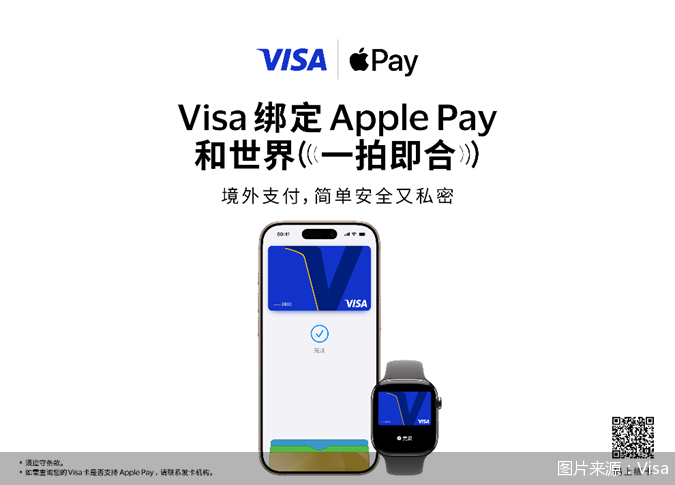
Core Viewpoint - Visa has announced support for Chinese-issued Visa cards to be linked to Apple Pay, breaking the previous exclusivity of UnionPay cards in China [1][2][3] Group 1: Initial Banks and Partnerships - The first eight banks to support this initiative include Industrial and Commercial Bank of China, Bank of China, Agricultural Bank of China, Bank of Communications, China Merchants Bank, CITIC Bank, Ping An Bank, and Industrial Bank [2] - Visa is also collaborating with Shanghai Pudong Development Bank, China Construction Bank, Minsheng Bank, and China Everbright Bank for future support [2] Group 2: Consumer Benefits and Promotions - Consumers can now use Apple Pay with Visa cards for contactless payments abroad, eliminating the need to carry a physical Visa card [2][4] - Various promotional activities have been launched by the initial banks to attract customers, including cashback offers and incentives for using Apple Pay with Visa cards [4][5] - For example, China Merchants Bank offers a 1% cashback on all overseas transactions made with Apple Pay linked Visa cards, while Ping An Bank provides a $5 cashback for transactions over $5.01 [4][5] Group 3: Technological Advancements - Visa has emphasized its investment in data and payment security, introducing payment tokenization services to enhance security in cross-border transactions [6][8] - Payment tokenization removes sensitive information during online or mobile shopping, significantly reducing fraud risks [6] - The integration of Visa cards with Apple Pay allows for the application of payment tokenization in more overseas payment scenarios, improving convenience and security for cardholders [6][7] Group 4: Security Features - When a China Merchants Bank Visa card is linked to Apple Pay, the actual card number is not stored on the device or Apple's servers, enhancing security [8] - A unique Device Account Number is generated and encrypted for secure storage, ensuring that payment information is protected [8]





银行治理结构20年大变革:首席合规官接棒监事会,“硬制衡”取代“软监督”
Xin Lang Cai Jing· 2026-01-15 14:14
Core Viewpoint - The governance structure of Chinese commercial banks, which has been in place for over 20 years, is undergoing significant changes as the supervisory board is being replaced by Chief Compliance Officers (CCOs) in response to regulatory requirements [3][32][57] Group 1: Regulatory Changes - The "Compliance Management Measures for Financial Institutions" was released on December 25, 2024, mandating the establishment of CCO positions at financial institutions [4][32] - By March 1, 2025, all financial institutions must complete the appointment of CCOs and related compliance structures, marking the end of the supervisory board's role [4][32] - As of early 2026, at least 56 financial institutions have had their CCO qualifications approved by regulators, with over 20 banks and branches already in compliance [3][6][35] Group 2: Transition from Supervisory Board to CCO - The supervisory board, which has been in place for over 20 years, is officially being phased out, leaving only the board of shareholders and the board of directors [3][32] - The transition signifies a shift from "soft supervision" to "hard checks and balances" within the governance framework of Chinese commercial banks [3][32][57] - The responsibilities of the supervisory board will now be taken over by the CCO, who will have enhanced authority and independence [4][32] Group 3: CCO Responsibilities and Powers - CCOs are tasked with compliance risk monitoring, internal audits, and ensuring compliance with new products and business strategies [4][32] - The CCOs will have significant independence, with the authority to access all internal documents and data necessary for compliance assessments [21][25] - CCOs will also have the power to halt operations on projects that pose compliance risks and will be involved in the performance evaluations of business line leaders [23][25] Group 4: Historical Context and Need for Change - The effectiveness of the supervisory board has been questioned, as it has not met the expectations of policymakers regarding compliance oversight [8][39] - Regulatory scrutiny has intensified since 2018, with a shift in focus from growth to compliance, leading to increased penalties for violations [10][39] - The transition to CCOs is seen as a necessary evolution to address the shortcomings of the previous governance structure [8][39][48]

Visa宣布支持中国消费者 Apple Pay绑卡
Sou Hu Cai Jing· 2026-01-15 13:29
Core Insights - Visa announced support for Chinese cardholders to link their Visa cards to Apple Pay, enabling payments in various scenarios such as overseas merchants, mobile apps, and online websites. Currently, 79% of global offline transactions are made via contactless payments [1]. Group 1: Company Strategy - Visa's China President, Yin Xiaolong, emphasized the growing demand for mobile payment solutions and the company's commitment to providing diverse payment options for Chinese cardholders, ensuring a secure payment experience regardless of location [4]. - Visa is increasing investments in data and payment security, launching tokenization services for cross-border applications, and collaborating with Apple and financial institutions to enhance mobile payment experiences for Chinese consumers [4]. Group 2: Technical Details - Apple Pay allows consumers to make contactless payments by double-clicking the side button on their iPhone or Apple Watch, with security verification through Face ID, Touch ID, or device password, ensuring transaction security [5]. - When adding a Visa card, the actual card number is not stored on the device or Apple's servers. Instead, a unique device account number generated by Visa's tokenization technology is encrypted and securely stored in the device's secure element [5].
银联手机Pay,不仅是把银行卡「装」进手机里
36氪· 2026-01-15 13:24
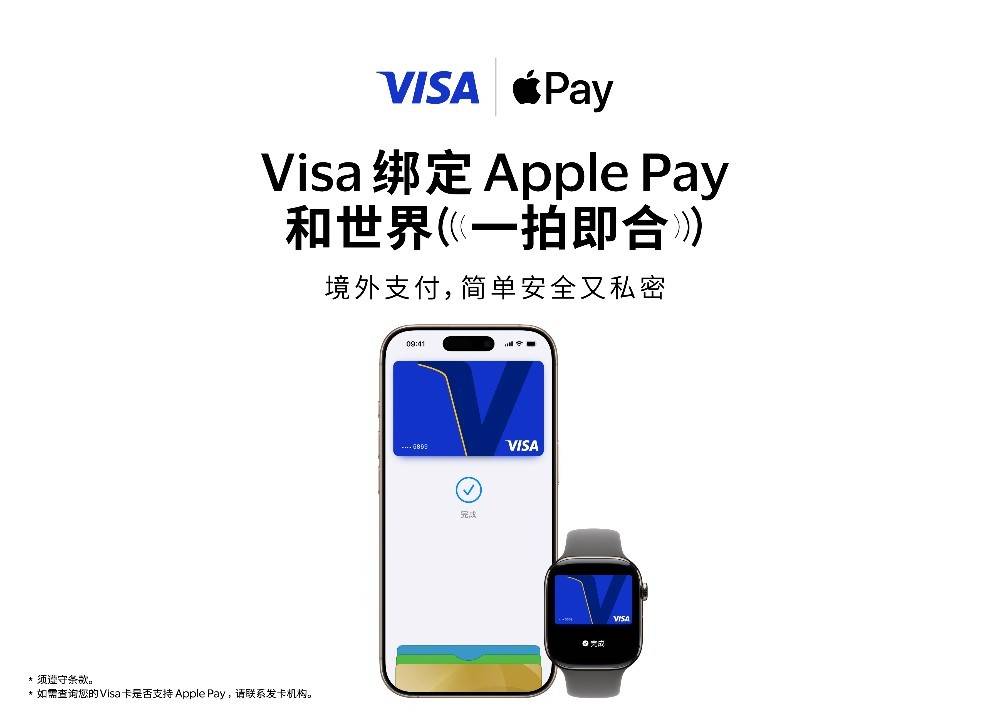
Core Viewpoint - The article emphasizes the need for a universal payment tool that bridges user experience gaps and adapts to various global payment environments, particularly through the promotion of UnionPay's mobile payment services [6]. Group 1: Global Payment Experience - Mobile payment is enhancing the travel experience for users, particularly for Chinese tourists accustomed to QR code payments, who face challenges in regions where contactless card payments are the norm [3][4]. - The disparity in payment habits reflects a fragmented global payment market, with QR code payments dominating in China and Southeast Asia, while contactless card payments are well-established in Europe and Australia [5]. - UnionPay has been actively promoting its mobile payment products, with over 100 countries supporting UnionPay mobile payment services, and a significant increase in cross-border transaction amounts and counts by over 30% and 50% respectively in the first three quarters of 2025 [6]. Group 2: Technology and User Experience - The necessity of mobile payment is underscored by the advantages of NFC (Near Field Communication) technology, which allows for seamless transactions without the need for app activation or stable internet connections, particularly in high-frequency scenarios like subway commuting [9][11]. - UnionPay's mobile payment service has expanded to cover 38 cities' subways and 1,760 public transport systems, with over 200 transportation merchants in more than 10 countries supporting the service [11]. - The service also caters to various daily consumption scenarios, allowing users to make instant payments across multiple platforms, thus changing the domestic payment ecosystem [13]. Group 3: Security and User Trust - Security concerns are addressed through Tokenization technology, which protects users' real card information during transactions, thereby mitigating risks associated with data interception [14][15]. - The requirement for biometric verification (fingerprint, facial recognition, or password) adds an additional layer of security, fostering user trust in mobile payment [15]. Group 4: Market Positioning and Strategy - UnionPay's mobile payment is currently the most mainstream mobile payment product in China, supporting nearly all major smartphone brands and over 400 banks, which provides a competitive edge in understanding local user habits [17][18]. - The "card-code fusion" design allows UnionPay to adapt to both QR code and contactless payment ecosystems, facilitating a smooth user experience across different environments [19]. - UnionPay's strategy includes partnerships with major banks to offer cashback and discounts, enhancing user engagement and transaction frequency [27]. Group 5: Future Trends and Innovations - The payment industry is shifting focus from mere tool efficiency to embedding services throughout the user journey, with predictions of a significant increase in non-cash payment transactions by 2030 [28]. - UnionPay is exploring AI-driven payment solutions, indicating a transition from a simple payment tool to an intelligent service that integrates with various applications, potentially transforming mobile payment into a seamless bridge between the physical and digital worlds [29][30].
【数据分享】上市公司数据资产(2003-2024年)
Sou Hu Cai Jing· 2026-01-15 13:03
Group 1 - The concept of "data assets" refers to identifiable and measurable data resources held by enterprises that can generate economic benefits, distinguishing it from traditional asset types [1][2] - Data assets include key indicators such as trading financial assets, derivative financial assets, net fixed assets, net intangible assets, total market value, and corporate data assets [1] - The measurement of corporate data assets is defined as: Corporate Data Assets = ln(Market Value - Fixed Assets - Financial Assets - Intangible Assets) [1] Group 2 - The core content of data assets encompasses the determination of data ownership, pricing of data assets, and the trading and circulation of data [2] - Data assets possess characteristics such as intangibility, dependency, shareability, and processability [2] - The formation of data assets requires clear ownership rights (exploration rights, usage rights, ownership), value and usability, and the ability to be priced and measured for economic benefits [2] Group 3 - The data set covers A-share listed companies from 2003 to 2024, sourced from annual reports of listed companies [3][6] - The data is intended for educational purposes only and cannot be used for commercial purposes [6]




根植中国 联通世界: 银联手机Pay的无界支付生态实践
Sou Hu Wang· 2026-01-15 12:01
Core Insights - The evolution of digital payment tools is not solely based on technological advancements but also on their ability to meet real human needs and integrate into daily life [1] Group 1: Collaborative Ecosystem - UnionPay International and Samsung Electronics will launch a joint payment service based on the "Card-Code Integration" mobile payment solution on January 9, 2026, allowing overseas residents to use NFC or QR code payments flexibly [2] - UnionPay Mobile Pay adopts an "ecological neutrality" and "broad compatibility" strategy, collaborating with major Android manufacturers like Huawei, Vivo, OPPO, Xiaomi, and Meizu, ensuring that most Android smartphone users in China can easily access UnionPay Mobile Pay [2] - This extensive compatibility allows users to choose devices based on personal preferences while enjoying equal access to secure and convenient payment services, reflecting the essence of fintech for good [2] Group 2: Deep Usage Scenarios - The true value of payment tools lies in their ability to provide reliable services in various scenarios, with UnionPay Mobile Pay aiming for deep penetration in domestic markets and a seamless global experience [3] - UnionPay Mobile Pay's service network has expanded to cover over 30 cities' subways and 300 cities' buses, enhancing efficiency and convenience for users [3] - The platform employs Token 2.0 technology for full-chain security, supporting features like "no card number input" and multiple biometric verifications, while several banks have increased transaction limits to accommodate larger purchases [3] Group 3: Global Integration - UnionPay Mobile Pay's value is highlighted by its ability to extend reliable domestic experiences through a global network, allowing users to maintain familiar payment methods abroad [4] - The service is integrated with a network spanning over 100 countries and regions, enabling users to make payments at merchants displaying the UnionPay logo using their bound mobile payment methods [4] - UnionPay collaborates with banks like Agricultural Bank of China, CITIC Bank, China Merchants Bank, and Ping An Bank to offer exclusive benefits such as "1% cashback on every transaction" for cardholders [5] Group 4: Inclusive Payment Ecosystem - UnionPay Mobile Pay is not limited to regional markets but reveals a clear evolution path from local practices to global contributions, embodying UnionPay's global strategy of inclusivity and collaboration [6] - The core value lies in addressing the essence of payment: enabling seamless transitions between domestic and international scenarios, accommodating a wide range of devices, and integrating into the global digital lifestyle [6] - The ongoing exploration focuses on deeper connections and integration, emphasizing open collaboration, addressing nuanced needs, and ensuring security in every innovation [6]
股份制银行板块1月15日跌0.37%,光大银行领跌,主力资金净流出3850.97万元
Zheng Xing Xing Ye Ri Bao· 2026-01-15 08:58
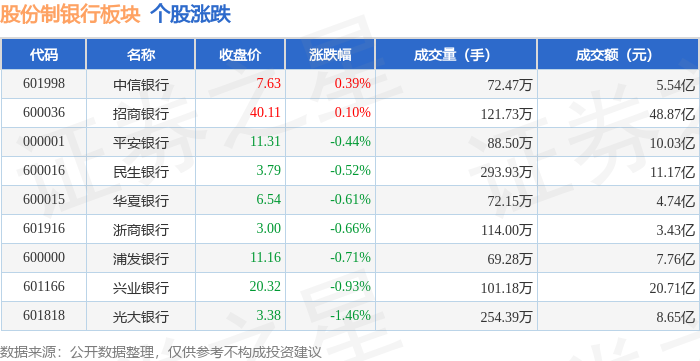
Group 1 - The banking sector experienced a decline of 0.37% on January 15, with Everbright Bank leading the drop [1] - The Shanghai Composite Index closed at 4112.6, down 0.33%, while the Shenzhen Component Index rose by 0.41% to 14306.73 [1] - The trading volume and turnover for various banks showed mixed results, with CITIC Bank closing at 7.63, up 0.39%, and Everbright Bank at 3.38, down 1.46% [1] Group 2 - The net outflow of main funds from the banking sector was 38.51 million yuan, while retail investors saw a net inflow of 42.9 million yuan [1] - The detailed fund flow data indicated that Industrial Bank had a net inflow of 13.72 million yuan from main funds, while CITIC Bank had a net outflow of 12.12 million yuan [2] - Retail investors showed varying trends, with CITIC Bank experiencing a net outflow of 7.91 million yuan, while Industrial Bank had a net inflow of 23.6 million yuan [2]



出境支付更便捷!Visa宣布:支持中国持卡人Apple Pay绑卡支付,首批8家银行
Mei Ri Jing Ji Xin Wen· 2026-01-15 08:28
Core Insights - Visa has become the first international card organization to support Apple Pay for Chinese cardholders, allowing them to link their Visa cards to Apple Pay [1][3]. Group 1: Visa Card Support - The card linking feature covers both Visa single and dual-branded cards, with initial support from eight banks including Industrial and Commercial Bank of China, Bank of China, Agricultural Bank of China, and others [3]. - Users can add their Visa cards to Apple Wallet through the latest bank apps or directly via the Wallet app on their iPhone, Apple Watch, or iPad [3]. Group 2: Future Expansion - More banks, including Shanghai Pudong Development Bank, China Construction Bank, China Minsheng Bank, and China Everbright Bank, are expected to issue Visa credit cards that will support this feature in the coming months [5]. - Mastercard is also preparing to launch similar support for some issuing institutions in the near future [5]. Group 3: User Experience and Security - The integration allows Chinese users to use their local Visa credit and debit cards for contactless payments both domestically and internationally, addressing previous limitations of Apple Pay in China [7]. - Visa's tokenization technology ensures that actual card numbers are not stored on devices or Apple servers, enhancing payment security [7][8]. - In case of device loss, Visa can immediately disable the digital account number stored on the device, ensuring user protection [8].
国内持卡人可绑定信用卡至苹果支付 首批 8 家银行率先上线
Jin Rong Jie· 2026-01-15 08:27
Core Insights - Visa has officially announced support for Chinese cardholders to link their Visa cards to Apple Pay, enabling convenient payments in various scenarios such as overseas merchants, mobile applications, and online websites [1] - The global trend shows that 79% of offline transactions are completed through contactless payment methods [1] Group 1: Company Strategy - Visa aims to provide diverse payment options for Chinese cardholders, enhancing their payment experience globally [1] - The collaboration with Apple is a significant step in Visa's long-term commitment to the Chinese market, focusing on data and payment security [1] Group 2: Partnerships and Implementation - Initial banks supporting this service include major institutions such as Industrial and Commercial Bank of China, Bank of China, Agricultural Bank of China, and others [1] - Visa and Apple are working with additional banks like Shanghai Pudong Development Bank and China Construction Bank to advance system integration, with features expected to roll out in phases [1]
八家银行率先落地Visa支持Apple Pay绑卡,加码跨境支付场景布局
Bei Jing Shang Bao· 2026-01-15 08:14
Core Insights - Visa and Apple Pay have launched a collaboration to allow Chinese cardholders to link their Visa cards to Apple Pay for seamless cross-border payments, enhancing the efficiency and experience of international transactions [1][3][6] Group 1: Collaboration Details - The partnership enables Chinese cardholders to use Apple Pay for payments at overseas merchants, mobile apps, and online platforms, facilitating contactless transactions [3][4] - The initial participating banks include Industrial and Commercial Bank of China, Bank of China, Agricultural Bank of China, and others, with more banks expected to join in the future [4][6] Group 2: Consumer Benefits - The integration of Visa and Apple Pay allows for a streamlined payment process, reducing the need for repeated entry of card information, thus enhancing user convenience [5][6] - Apple Pay's standardized interface is designed to lower the usage threshold for consumers, making it easier to conduct transactions abroad [5][6] Group 3: Security Features - The collaboration incorporates advanced security measures, such as the use of a unique device account number generated by Visa's tokenization technology, which helps mitigate fraud risks [6][7] - Sensitive payment information is not stored on devices or Apple servers, ensuring a higher level of security for users [6][7] Group 4: Bank Strategy - This partnership represents a strategic move for banks to deepen their cross-border financial services and enhance customer engagement by embedding their card products into global mobile payment scenarios [6] - Banks are also launching promotional activities to encourage users to link their Visa cards to Apple Pay, enhancing the overall value proposition for consumers [5][6]