Perplexity

Search documents
据英国金融时报:人工智能创业公司Perplexity估值在最新一轮融资数月后突破180亿美元。
news flash· 2025-07-17 19:02
据英国金融时报:人工智能创业公司Perplexity估值在最新一轮融资数月后突破180亿美元。 ...

OpenAI’s ChatGPT is reportedly launching its own web browser.
Yahoo Finance· 2025-07-17 16:30
Market Threat - ChatGPT's potential browser poses a real threat to Google due to perceived lack of innovation in browser enhancements [1] - Generative AI has been around for two years, Google should have embedded it into its browser to assist users [2] - Google's failure to lead the market with its established market share is concerning [3] Competitive Landscape - Companies like Perplexity are bringing AI agent assistance to the browser market [2] - The browser itself can be smarter, and Google likely has similar projects in development [3] Potential Disruption - The current period is marked by disruption, potentially leading to significant changes in the browser market [3]



黄仁勋第三次访华:英伟达4万亿市值血洗AI算力焦虑;DeepSeek爆火后遭遇滑铁卢;Manus大撤退!|混沌AI一周焦点
混沌学园· 2025-07-17 09:15
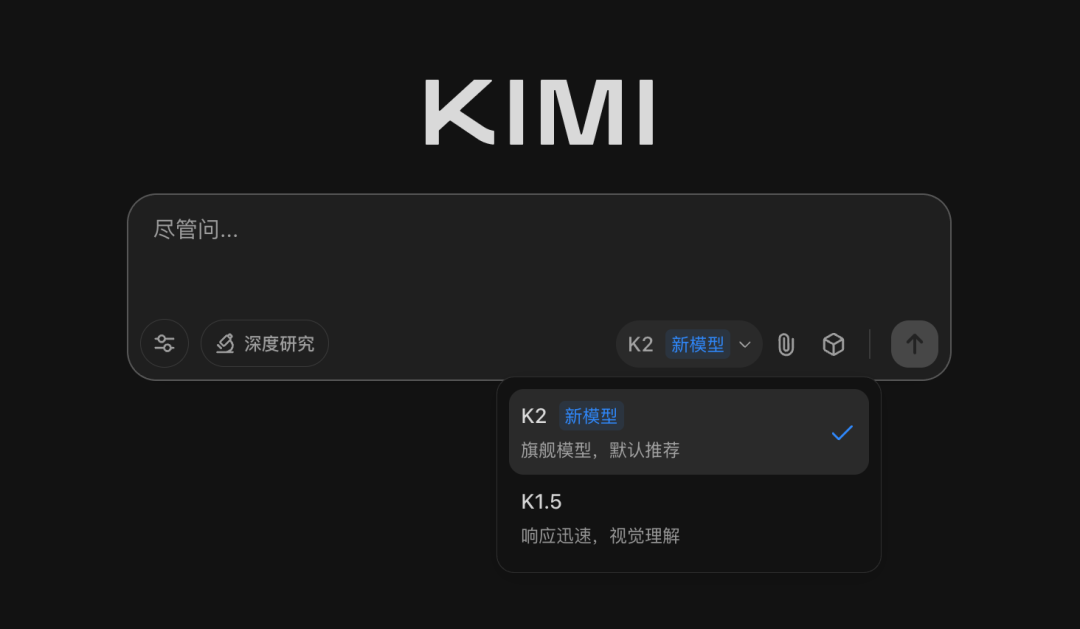
Core Trends - The article highlights the trend of "dislocated competition," where vertical capabilities are building barriers, and the shift of Chaos AI consultants towards strategic partnerships, emphasizing differentiated capabilities over homogeneous model competition [1][4]. Browser Reconstruction - AI-driven browsers are reshaping human-computer interaction, transitioning from tools to intelligent agent collaborative network entry points, with examples like Aura and Comet [2]. Computing Power Breakthrough - Nvidia's H20 chip has been re-approved for sale in China, alleviating computing power anxiety and accelerating local model iterations and low-cost applications [3][10]. Business Validation - The withdrawal of Manus and the decline of DeepSeek serve as warnings that pure model competition is unsustainable; there is a need to enhance service stability and cost control [4][13]. Strategic Leap - The upgrade of Chaos AI strategic consultants to version 2.0 marks a significant transition from tool-based to strategic intelligent partners, focusing on deep intent recognition and dynamic decision-making frameworks [5][6]. Core Capability Breakthrough - The deep intent recognition engine and intelligent framework decision system are key advancements, allowing for automatic parsing of user analysis intentions and dynamic selection of optimal analysis tools [7][6]. Market Dynamics - DeepSeek's monthly active users have dropped to 169 million, a 5.1% decline, with website traffic down 29%, indicating challenges in model iteration speed and computing power reserves [13][15]. - Kimi's K2 model has been launched, featuring a 1 trillion MoE architecture, outperforming DeepSeek in performance and offering competitive pricing [14][21]. Competitive Landscape - The launch of DeepResearch by Mita has significantly improved research efficiency, directly challenging overseas AI products like ChatGPT and Gemini [17]. - Perplexity aims to establish its AI browser Comet as a "cognitive operating system," with a valuation of $14 billion, positioning itself against Google [18]. Industry Shifts - Manus has retreated from the market, indicating challenges in user retention and high model costs, prompting a strategic shift towards globalization [22]. - xAI's Grok 4 model has been released, boasting a tenfold increase in reasoning capabilities, directly challenging OpenAI and Google [23][25].


Meta Platforms Is Going All-In On AI
Seeking Alpha· 2025-07-17 03:56
Meta Platforms (NASDAQ: META ) has announced substantial investment initiatives in recent months to drive AI innovation, potentially shifting the foundation of the organization into an AI powerhouse to compete with peer models like OpenAI and Perplexity. With hundreds of billions of dollarsMichael Del Monte is a buy-side equity analyst with over 5 years of industry experience. Prior to working in the investment management industry, Michael spent over a decade in professional services working across industri ...


梁文锋等来及时雨
36氪· 2025-07-16 10:19
Core Viewpoint - The article discusses the competitive landscape of AI large models, focusing on DeepSeek's challenges and the emergence of new players like Kimi, which are rapidly gaining market attention and user engagement [3][4][10]. Group 1: DeepSeek's Performance and Challenges - DeepSeek experienced a significant decline in monthly active users, dropping from a peak of 1.69 billion in May, reflecting a 5.1% decrease [4]. - The user engagement for DeepSeek has fallen from a peak of 7.5% in January to 3% by the end of May, with a 29% decrease in website traffic [4][5]. - The company has faced delays in launching its R2 model due to unexpected export restrictions on the H20 chip, which has limited its computational resources [5][8]. Group 2: Competitive Landscape - Other AI players, referred to as the "AI Six Dragons," are set to release new foundational models, intensifying competition against DeepSeek [3][4]. - Kimi's K2 model has achieved state-of-the-art performance in various benchmarks, surpassing DeepSeek in tasks related to coding and mathematical reasoning [14]. - The pricing strategy of Kimi K2 aligns closely with DeepSeek's API pricing, making it a direct competitor in terms of cost [15]. Group 3: Market Dynamics and User Preferences - DeepSeek's reputation for cost-effectiveness is being challenged as competitors like Alibaba, ByteDance, and Baidu offer lower-priced alternatives [13]. - The lack of significant upgrades in DeepSeek's models has led to a perception shift, with users increasingly viewing it as less competitive compared to newer models [12][13]. - The context window limitation of DeepSeek's models (64K) is significantly smaller than that of competitors like Kimi K2 (128K) and MiniMax-M1 (1 million), impacting its performance [22][23]. Group 4: Future Considerations - To regain market interest, DeepSeek must expedite the release of new models and enhance its capabilities, particularly in multi-modal functionalities, which are becoming increasingly important in the AI landscape [28][30]. - The article suggests that DeepSeek's focus on open-source development should also align with commercial viability to maintain user engagement and developer activity [24][25].
扎克伯格回应AI人才争夺战:除了钱,他们还有两个要求
Feng Huang Wang· 2025-07-16 01:37
Group 1 - The core point of the articles highlights the increasing competition among tech giants for top AI talent, with a focus on salary and computational resources as key factors for recruitment [1][2] - Meta CEO Mark Zuckerberg emphasizes that AI researchers are now more interested in having fewer direct reports and access to maximum GPU resources, which are crucial for building and training AI models [1] - The demand for NVIDIA's H100 GPUs has surged, as they are considered essential for AI research, and companies are willing to offer substantial compensation packages to attract talent [1][2] Group 2 - Other AI companies, like Perplexity, confirm the trend, stating that significant computational resources are necessary to attract top talent, with one researcher reportedly refusing an offer due to insufficient GPU availability [2] - Meta is actively recruiting from competitors such as Google, Anthropic, and OpenAI, offering signing bonuses that can reach up to $100 million [2]
美国科技圈再迎中国AI冲击波,科学家:该醒来了
Nan Fang Du Shi Bao· 2025-07-15 15:15
Core Insights - The Kimi K2 model, developed by the Chinese AI startup "月之暗面," has made a significant impact in the global tech community, showcasing China's ability to innovate under resource constraints [1][2][3] - The model has been praised for its programming capabilities and cost-effective API pricing, leading to widespread adoption by various tech companies and tools [1][4] - Kimi K2's release has prompted discussions about the competitive landscape of AI models, particularly highlighting the gap between Chinese and Western advancements in open-source models [2][8] Model Performance - Kimi K2 features a total parameter count of 1 trillion, with 32 billion active parameters, surpassing many existing open-source models and approaching the performance of leading closed-source models from OpenAI and Google [3][4] - The model has achieved a training peak of zero, indicating high efficiency and stability, which has impressed industry experts [6] Industry Reactions - The CEO of Perplexity, an AI search company, has expressed intentions to conduct further training on the Kimi K2 model, marking a notable endorsement from the U.S. tech sector [4] - HuggingFace's co-founder remarked on the impressive capabilities of K2, emphasizing its challenge to existing closed-source models at a fraction of the cost [4] Technological Advancements - Kimi K2 is designed to excel in coding and general agent tasks, representing a shift in the focus of foundational models towards these capabilities [10] - The model can analyze complex datasets and generate professional reports, showcasing its advanced analytical skills [10][11] Future Prospects - While Kimi K2 lays a solid foundation for general agent capabilities, further advancements in reasoning and visual understanding are anticipated in future iterations [11] - The competitive landscape is tightening, with major players like OpenAI, Google, and others vying for dominance, necessitating Kimi to prove its value and navigate commercialization challenges [14]
Every Software CEO Is Terrified Of This AI Innovation - Travis Kalanick
All-In Podcast· 2025-07-15 15:02
Consumer Software Industry Concerns - Consumer software CEOs are worried about agents taking over, leading to a paradigm shift away from web pages [1] - The rise of agents could make the traditional browser obsolete, reducing it to a glorified markup reader [6] Perplexity's Strategic Opportunities - Perplexity has the potential to replace Bloomberg in the financial information and data sector, a market worth $100 billion [4][5] - Focusing on a specific vertical and owning it is a good strategy for Perplexity, especially with unique data sources [10] Apple's Potential Acquisition of Perplexity - There is speculation that Apple might acquire or partner with Perplexity for distribution, given the Justice Department case against Google [9] - However, acquiring Perplexity may not solve Apple's AI challenges, as Apple has missed previous AI opportunities [10] Bloomberg's Weaknesses - Bloomberg's terminal is considered atrocious, terrible, and limited, presenting an opportunity for a better product [4] - Bloomberg's core usability and UI have not evolved, despite its messaging platform being valuable for trading [14]

一个200美元的AI浏览器,想重新教会我“上网”
虎嗅APP· 2025-07-15 11:15
Core Viewpoint - The article discusses the launch of Comet, an AI Agent browser developed by Perplexity, which aims to redefine the browsing experience by integrating AI capabilities to enhance information understanding and utilization rather than just access [3][4][6]. Group 1: Comet's Features and Innovations - Comet is designed to address the challenge of understanding and utilizing information, transforming traditional browsing into a more intelligent and integrated experience [6][10]. - The browser features a Comet Assistant that combines contextual awareness and action execution, allowing users to interact with multiple web pages seamlessly [9][14]. - Users can issue complex commands to the Comet Assistant, which can read and synthesize information from various sources, creating structured reports and filling documents automatically [15][22]. Group 2: Strategic Positioning and Market Challenges - Comet represents a radical shift in browser design, positioning itself as an "environment reconstruction" tool rather than just an enhanced browser, aiming to create a continuous, intelligent interaction space [25][31]. - The pricing strategy for Comet, requiring a $200 monthly subscription, has sparked controversy and disappointment among existing users, potentially limiting its initial user base [26][28]. - The article highlights the challenge of user adaptation, as the innovative features of Comet may require users to learn a new way of interacting with the browser, which could hinder widespread adoption [30][31]. Group 3: Future Implications - Comet's development is seen as a bold step towards redefining the relationship between users and information, suggesting a future where browsers serve as intelligent partners rather than mere tools [31][32]. - The success of Comet will depend not only on Perplexity's technological advancements but also on users' willingness to embrace this new browsing paradigm [31].

AI初创公司:谷歌Chrome浏览器将迎巨大挑战
财富FORTUNE· 2025-07-15 11:14
Core Viewpoint - A wave of AI startups is transforming the way online searches are conducted, posing a threat to Google's dominance established since the late 1990s [1] Group 1: AI Startups and Market Disruption - San Francisco-based startup Perplexity, valued at $14 billion, has launched an AI-based browser targeting Google's search dominance [2] - Perplexity's AI browser, Comet, includes an AI chatbot and an assistant capable of automating tasks like scheduling meetings and summarizing information [3] - The entry of AI products coincides with a potential "opportunity period" for disruption due to ongoing antitrust challenges faced by Google [3] Group 2: Google's Market Position - Google Chrome maintains a strong position with over 3 billion users, holding approximately 68% of the market share [5] - The challenge of switching browsers presents a significant hurdle for new entrants [6] - Despite competition, Google's established capabilities in search, AI, and browser technology create a formidable barrier for newcomers [9] Group 3: Consumer Behavior and AI Adoption - A recent survey indicated that 29% of consumers frequently use OpenAI, while 30% use Google's Gemini, highlighting a competitive landscape [7] - For AI browsers to succeed, they must offer significantly superior technology compared to existing products [8] - The perception of Google's dominance is reinforced by its comprehensive integration of search and AI functionalities [9] Group 4: Future Outlook - Investors believe that Perplexity is well-positioned to make significant advancements despite the challenges posed by Google's market strength [9][10] - The technology monopoly in the sector presents substantial opportunities for startups, indicating that established players will face challenges [11]