DeepMind

Search documents
刚刚,真正好用的Windows版「Cowork」上线了
机器之心· 2026-02-04 01:04
编辑|杜伟、泽南 天工 Skywork 桌面版旗帜鲜明地将 Windows 平台作为首发阵地,为全球用户提供开箱即用的「Cowork 平替」。 终于,Windows 原生「Cowork」问世了! 过去两周,AI 圈被火遍硅谷的 ClawdBot(现已改名为 OpenClaw)持续刷屏。 人们一边震撼于这个智能体助理带来的自动化效率提升,另一边也在吐槽其对 Windows 系统的适配。比如,根据一些用户的反馈,如果严格按照官网提供的命令 行在 Windows 上安装 ClawdBot,将导致 Skills 功能彻底失效。 这并不是 ClawdBot 一个智能体助手的选择性倾向,上个月发布的 Claude Cowork 以及 OpenAI 昨天亮相的智能体式 Codex 应用同样优先适配 macOS 系统。这种生 态上的失衡在今天迎来了转机。 国产大模型玩家昆仑天工正式发布了全新的 Agent 产品 —— 天工 Skywork 桌面版,旗帜鲜明地将 Windows 平台作为首发阵地 ,为全球用户带来了开箱即用的 「Cowork 平替」。 Skywork 原生支持 Windows 系统,无需繁琐的迁移或适配,即可对 ...


腾讯研究院AI速递 20260203
腾讯研究院· 2026-02-02 16:10
1. 火遍全球的AI社交平台Moltbook上线仅四天即崩溃,服务器账单达天文数字,被爆料150万AI中实际仅有约2万个 真正运行的Agent; 2. 平台存在严重安全漏洞,84%信息可被抽取,91%提示注入攻击直接生效,API密钥和敏感信息面临泄露风险; 3. OpenClaw极度消耗token,用户20小时烧光100美元,有人一晚烧掉5000万token,被称为"token熔炉"。 https://mp.weixin.qq.com/s/vEwZgpG6pN9zTNWEYHLKbA 生成式AI 一、上线120小时Moltbook全球瘫痪!150万AI服务器已炸? 二、Claude sonnet 5或将发布,自动组建多智能体开发团队 1. 传Anthropic将于2月3日发布Claude Sonnet 5,代号"耳廓狐",谷歌Vertex AI日志意外曝光模型标识符; 2. 新功能Claude Code Evolution可自动生成并调度后端、QA测试、研究员等多个子代理协同工作,实现任务委派 式全流程自动化; 3. 价格比Opus 4.5便宜50%但性能全面超越,SWE-Bench编程测试得分超80.9%, ...
AppLovin Stock Is a Buy, Analyst Says. Why Google's ‘Project Genie' Isn't a Threat.
Barrons· 2026-02-02 15:00
Group 1 - Benchmark maintains a Buy rating on AppLovin, indicating confidence in the company's growth potential [1] - The introduction of Google DeepMind's new AI game-creation tool is expected to positively impact AppLovin's advertising and monetization strategies [1]


深度|谷歌DeepMind CEO:中国在AI技术能否实现重大突破尚未验证,发明新东西比复制难一百倍
Sou Hu Cai Jing· 2026-02-02 07:26
Core Insights - Google DeepMind is at the forefront of AI research, focusing on breakthroughs that impact science, business, and society, particularly in the context of the AGI race [1][3][4] - The company has made significant advancements, including the development of Gemini, which is now competitive with ChatGPT, and has roots in technologies originally developed by Google [3][4][28] - The investment made by Google in DeepMind in 2014, approximately £400 million (around $540 million), has potentially grown to hundreds of billions, highlighting the strategic importance of this acquisition [4][28] Company Overview - Google DeepMind was founded in 2010 in London by Demis Hassabis, Shane Legg, and Mustafa Suleyman, with the latter now working at Microsoft [2][3] - The company has been pivotal in Google's AI advancements, particularly with consumer-facing products like Gemini, which leverage DeepMind's foundational technologies [4][28] Technological Developments - The AI landscape has evolved significantly since the emergence of ChatGPT, with Google facing internal restructuring to adapt to the competitive environment [3][4] - DeepMind's previous breakthroughs, such as AlphaGo and AlphaFold, have set the stage for its current innovations, emphasizing the company's commitment to solving fundamental scientific problems [4][5] AGI and Future Prospects - The pursuit of AGI is a long-term mission for DeepMind, with expectations of achieving significant milestones within the next 5 to 10 years [10][11] - Current AI systems, including LLMs, face limitations in achieving true AGI, particularly in areas like continuous learning and creative hypothesis generation [7][8][10] Energy and Efficiency Challenges - There are physical limitations in AI development, particularly concerning energy consumption and computational power, which need to be addressed as the field progresses [11][12] - Innovations in model efficiency, such as the use of Distillation, are expected to enhance performance significantly, with annual improvements projected at around 10 times [12][13] Competitive Landscape - The AI industry is experiencing intense competition, with many players, including startups and established tech giants, vying for leadership [28][29] - Concerns about potential financial bubbles in the AI sector are acknowledged, with some segments showing signs of unsustainable valuations [32][33] Global AI Dynamics - The competition between the U.S. and China in AI development is intensifying, with Chinese companies like DeepSeek and Alibaba making notable advancements [35][36] - Despite rapid progress, there are questions about whether Chinese firms can achieve significant innovations beyond existing technologies [36][38] Collaboration and Integration - Google DeepMind operates as a central hub for AI research within Google, integrating technologies across various products and ensuring rapid deployment of new capabilities [41][42] - The collaboration between DeepMind and Google is characterized by a close iterative process, allowing for swift adjustments to strategic goals and product development [42][43]

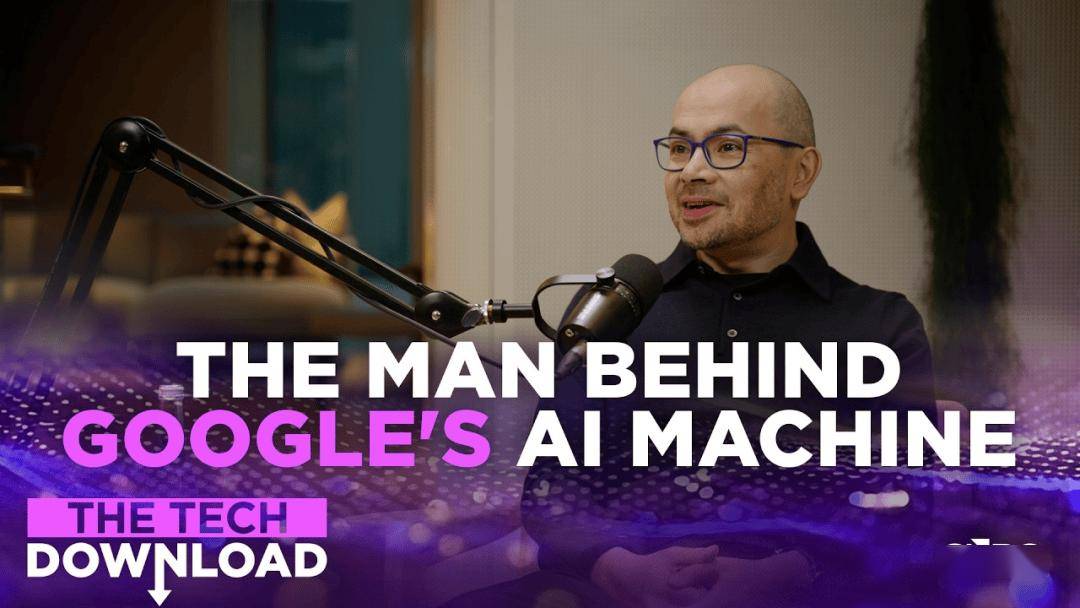
深度|谷歌DeepMind CEO:中国在AI技术能否实现重大突破尚未验证,发明新东西比复制难一百倍
Z Potentials· 2026-02-02 05:00
图片来源: Youtube 的。外界曾有一种看法,认为Google让ChatGPT把这项技术抢先用起来了。但在我看来,现在的Gemini已经几乎可以和ChatGPT平起平坐,甚至在某些方面 表现更好。 Arjun: Google DeepMind在这当中起着核心作用。我之前提到,它成立于2010年,而Google在2014年将其收购。当时我刚刚进入科技报道行业,Google 为DeepMind支付了大约4亿英镑,也就是2014年约5.4亿美元。按照现在的估算,这笔投资的价值可能已经达到数百亿,甚至上千亿美元。 Arjun: 实际上,DeepMind对Google的AI发展至关重要。以Gemini这个面向消费者发布的聊天机器人为例,它的背后技术很大程度上都来自DeepMind。 但早在这些之前,DeepMind就已经有过一些重大突破。几年前,他们推出了名为AlphaGo的系统,引起了全球轰动。这是第一个能够击败围棋世界冠军的 计算机程序。围棋是一种非常复杂的棋类游戏,当时被视为AI的重大挑战之一,因为它的变化极其多样,可能的组合数量非常庞大。 Z Highlights: 2026 年 1 月 16 日由 Arj ...
大模型的第一性原理:(二)信号处理篇
机器之心· 2026-01-30 08:49
Core Viewpoint - The article discusses the transformation of natural language processing problems into signal processing problems through semantic vectorization, emphasizing the importance of token embedding in large models and its connection to signal processing and information theory [2][32]. Semantic Embedding / Vectorization - The concept of using vectors to model semantics dates back to Luhn's 1953 paper, but significant breakthroughs were achieved in 2013 by Mikolov and others, who successfully trained neural network models to convert tokens into semantic vectors [6][9]. - The ideal semantic vectorization has not been fully realized, but the inner product of semantic vectors can represent semantic relevance at the token level [7][11]. - The semantic vector space can be modeled as a probability-inner product space, balancing complexity and effectiveness by using a unit sphere to define the space [8][10]. Optimal Semantic Vectorization - The optimal semantic encoding is closely related to downstream tasks, with the goal of predicting the next token. The semantic encoder should maximize the conditional mutual information between the next token and the current sequence [13][14]. - The article highlights that existing methods like Contrastive Predictive Coding (CPC) optimize the upper bound of the semantic encoder but may not achieve the optimal solution [15][19]. Transformer as a Nonlinear Time-Varying Vector Autoregressive Time Series - The Transformer model is identified as a self-regressive large language model that predicts the next token based on the input token sequence and previously generated tokens [21][30]. - The attention mechanism in Transformers can be mathematically expressed as a nonlinear time-varying vector autoregressive time series, which is crucial for predicting the next token [22][24]. Signal Processing and Information Theory - The article establishes a relationship between signal processing and information theory, noting that signal processing implements information theory principles in specific computational architectures [32][33]. - The transition from BIT in the information age to TOKEN in the AI era is proposed as a way to apply Shannon's information theory to the mathematical principles behind large models [36].
Google Deepmind just dropped Genie 3... (WOAH)
Matthew Berman· 2026-01-29 21:44
Google DeepMind just dropped Genie 3. This is one of the first cuttingedge interactive world models. Basically, if JGPD produces text, this produces fullon worlds.Now, you may notice that I am not Matt. My name is Alex. I run pretty much all of the content here on Matt's channel.And Matt was feeling a bit under the weather, so we decided I would take over for him so that we didn't miss the release of Genie 3. Hope you like it. Now, DeepMind released an entire blog here, but we'll dig into that later.Let's g ...

未来十年,AI将治愈所有疾病?谷歌基因解码模型准确率已达90%
第一财经· 2026-01-29 12:25
Core Insights - DeepMind's AlphaGenome can decode 98% of human genetic "dark matter" with an accuracy of 90% [3][5] - The model predicts 11 different gene regulatory processes and analyzes complex gene splicing mechanisms [5] - AlphaGenome processes over 1 million API calls daily, with over 3,000 users across 160 countries [5] Industry Implications - AI's role in drug development is expected to enhance efficiency significantly, with McKinsey predicting a 35% to 45% increase in clinical development efficiency over the next five years [6] - Major pharmaceutical companies like Eli Lilly, AstraZeneca, Novartis, and Pfizer are investing heavily in AI for drug discovery [6] - Analysts suggest that while AI applications in pharmaceuticals are widespread, it may take one to three years for investors to see returns from accelerated drug development [6] Future Outlook - DeepMind's CEO predicts that AI will be able to cure all diseases within the next decade [5] - The latest version of AlphaFold has accurately predicted 98.5% of human protein structures, indicating a significant advancement in biological research [6] - Clinical trials for AI-designed drugs are anticipated to begin soon, marking a new phase in pharmaceutical innovation [6]

世界模型混战,蚂蚁炸出开源牌
AI前线· 2026-01-29 10:07
作者 | 姚戈 世界模型领域迎来了一个重要开源模型。 今天,蚂蚁集团旗下的具身智能公司"蚂蚁灵波",正式发布并开源其通用世界模型 LingBot-World。 与许多闭源方案不同,蚂蚁灵波选择 全面开源代码和模型权重,而且不绑定任何特定硬件或平台 。 去年 DeepMind 发布的 Genie 3,让人们看到了世界模型能够根据文本或图像提示,实时生成一个可 探索的动态虚拟世界。LingBot-World 沿袭了这条路线,并在交互能力、高动态稳定性、长时序连贯 性以及物理一致性等维度取得了突破。 更令人惊喜的是, LingBot-World 呈现出从"生成"到"模拟"的跨越 。随着模型规模的扩大,灵波团 队观察到,LingBot-World 开始表现出远超普通视频生成的复杂行为,涌现出对空间关系、时间连续 性和物理规律的理解。 可以看到,鸭子腿部蹬水的动作、水面对扰动的响应、以及鸭子身体与水之间的相互作用都比较符合 物理规律。 这显示出模型不仅记住了视觉表象,还在某种程度上理解了流体力学等基础物理机制。同时,水面对 扰动的反应,显示出模型对因果关系的理解。 用户切换视角后再回来时,环境中的智能体(比如这只猫)仍 ...

谷歌基因解码模型准确率已达90%!未来十年,AI将治愈所有疾病?
Di Yi Cai Jing· 2026-01-29 09:39
Core Insights - DeepMind's AlphaGenome aims to address the challenges in drug development by decoding human genes, potentially completing the "last piece of the puzzle" in discovering new molecules for significant medical advancements [1][3] Group 1: AI in Gene Research - AlphaGenome can decode 98% of genetic "dark matter" with an accuracy of 90%, allowing for comprehensive predictions of 11 different gene regulatory processes [1][3] - The tool analyzes complex gene splicing mechanisms and identifies how single genes can produce multiple proteins, which is crucial for understanding disease [3] Group 2: Industry Impact and Adoption - Over 1 million API calls are processed daily by AlphaGenome, with more than 3,000 users across 160 countries, indicating its growing adoption in tackling complex biological challenges [3] - Major pharmaceutical companies like Eli Lilly, AstraZeneca, Novartis, Pfizer, Amgen, and GSK are investing heavily in AI for drug discovery to enhance the success rates of new drug development [5] Group 3: Future Predictions and Clinical Trials - DeepMind's CEO predicts that AI will be able to cure all diseases within the next decade, highlighting the transformative potential of AI in healthcare [1][3] - Clinical trials for AI-designed drugs are set to begin, as stated by the CEO at the recent Davos Forum, indicating a shift towards practical applications of AI in drug development [4] Group 4: Efficiency and Market Expectations - McKinsey predicts that autonomous AI could improve clinical development efficiency by 35% to 45% over the next five years without human intervention [6] - Analysts from TD Cowen suggest that while AI is already prevalent in the pharmaceutical industry, it may take one to three years for investors to see returns from AI in accelerating drug development [6]