AlphaGenome

Search documents
人工智能促变革 美企滥用引风波——2026年首月全球AI产业动态
Xin Hua She· 2026-02-03 07:40
Group 1: AI Technology Development - In January, global AI chip computing power and large model innovations continued to show competitive advancements, with Nvidia launching a system-level AI computing platform called "Vera Rubin" and Microsoft releasing the AI chip Maia 200 [2] - Chinese company Alibaba's semiconductor arm, Tsinghua Unigroup, introduced the AI chip "Zhenwu 810E," utilizing self-developed parallel computing architecture and inter-chip communication technology [2] - Alibaba's Qwen3-Max-Thinking model, with over one trillion parameters, set a record for model iteration scale, while other companies like Moon's Dark Side and Deep Seeking also released significant AI models [2] Group 2: AI Applications and Breakthroughs - The AI agent Clawdbot (renamed OpenClaw) gained global popularity for its ability to perform complex tasks, enhancing work efficiency across various fields [3] - AI-driven breakthroughs in scientific research were highlighted, including the AlphaGenome model that decodes the human genome's "dark genome," aiding in genetic disease research and drug development [3] - AI applications have extended to space, with China's Qwen3 model deployed in a space computing center and NASA's Perseverance rover completing a route-planning task using AI on Mars [3] Group 3: AI Governance and International Cooperation - The misuse of AI by the US company xAI's chatbot "Grok" led to international backlash, prompting countries like Indonesia and the UK to impose restrictions and investigate the platform [4] - The necessity for enhanced global AI governance was emphasized during discussions at the World Economic Forum, with countries like South Korea and Kazakhstan implementing laws for safe AI development [4] - Officials from various countries expressed a desire for strengthened cooperation with China in AI, highlighting Malaysia's focus on capacity building and Saudi Arabia's recognition of China's technological strength in AI [6]
特稿丨人工智能促变革 美企滥用引风波——2026年首月全球AI产业动态
Xin Hua She· 2026-02-03 05:51
Core Insights - The global AI industry is experiencing transformative impacts across various sectors, with significant advancements in technology and applications, while also facing challenges related to misuse and governance [1][4][5] Group 1: Technological Advancements - Global AI chip computing power is being upgraded, with notable releases such as NVIDIA's "Vera Rubin" AI computing platform and Microsoft's Maia 200 AI chip, which enhances deep reasoning capabilities [2] - Chinese companies are also innovating, with Alibaba's Qwen3-Max-Thinking model achieving over one trillion parameters, and other models like Kimi K2.5 and DeepSeek-OCR 2 showcasing advancements in various AI applications [2] - Google's DeepMind has made strides by releasing tools based on the Genie 3 model, allowing users to create interactive 3D virtual worlds through natural language [2] Group 2: AI Applications and Breakthroughs - The AI application landscape is evolving, exemplified by the global popularity of the intelligent agent Clawdbot (now OpenClaw), which can perform complex tasks and enhance work efficiency [3] - Significant breakthroughs in scientific research have been reported, such as the AlphaGenome model decoding the "dark genome," which could lead to advancements in genetic disease understanding and drug development [3] - AI applications have even reached space, with China's Qwen3 model deployed in a space computing center and NASA's Perseverance rover completing AI-planned tasks on Mars [3] Group 3: Governance and International Cooperation - The misuse of AI, particularly by the US company xAI's chatbot "Grok," has sparked international controversy, leading to restrictions and investigations in several countries [4] - The necessity for enhanced global AI governance has been highlighted, with discussions at the World Economic Forum focusing on establishing international regulatory frameworks [5] - Many countries, including Malaysia and Saudi Arabia, are expressing a desire for strengthened cooperation with China in AI development, recognizing its technological capabilities as vital for advancing their own AI and digital economies [6]
特稿|人工智能促变革 美企滥用引风波——2026年首月全球AI产业动态
Xin Hua She· 2026-02-03 04:36
Core Insights - The global AI industry is experiencing transformative impacts across various sectors, with significant advancements in technology and applications, while also facing challenges related to misuse and governance [1][4]. Group 1: Technological Advancements - Global AI chip computing power is being upgraded, with notable releases such as NVIDIA's "Vera Rubin" AI computing platform and Microsoft's AI chip Maia 200, which enhances reasoning capabilities [2]. - Chinese companies are also innovating, with Alibaba's Qwen3-Max-Thinking model achieving over one trillion parameters, and other models like Kimi K2.5 and DeepSeek-OCR 2 showcasing advancements in various AI applications [2]. - Google's DeepMind has made strides by allowing users to create interactive 3D virtual worlds using natural language, indicating progress in simulating real-world scenarios [2]. Group 2: AI Applications - The AI agent Clawdbot (now OpenClaw) has gained popularity for its ability to perform complex tasks, potentially revolutionizing efficiency in various fields [3]. - AI is making significant contributions to scientific research, exemplified by the AlphaGenome model that decodes crucial parts of the human genome, aiding in genetic disease research and drug development [3]. - AI applications have even reached space, with China's Qwen3 model deployed in a space computing center and NASA's Perseverance rover using AI for route planning on Mars [3]. Group 3: Governance and International Cooperation - The misuse of AI, particularly by xAI's chatbot "Grok," has led to international backlash and calls for stronger governance, highlighting the need for a multilateral regulatory framework for AI [4]. - Countries like South Korea and Kazakhstan are taking steps to establish legal frameworks for AI development, emphasizing safety and trust [4]. - There is a growing expectation for enhanced cooperation with China in AI, as countries like Malaysia and Saudi Arabia recognize China's technological strength in the field [5][6].



本周观点
SINOLINK SECURITIES· 2026-02-01 10:45
Investment Rating - The report indicates a neutral investment rating for the industry, expecting a fluctuation range of -5% to 5% relative to the market over the next 3-6 months [50]. Core Insights - The coffee and tea industry remains in a high-growth phase, with brands actively opening new stores despite seasonal fluctuations. Price competition is expected to ease following the end of promotional pricing by Kudi [3][11]. - The e-commerce sector is under pressure, with a projected online retail sales growth of 5.2% by 2025, reaching 13,092.3 billion yuan, accounting for 26.1% of total retail sales. The overall performance is subdued due to domestic consumption conditions, although AI is expected to enhance advertising efficiency [3][12]. - Music streaming platforms are highlighted as valuable internet assets driven by domestic demand, with a recommendation to focus on subscription platforms due to their profitability potential [3]. - The virtual assets and trading platforms are facing macroeconomic uncertainties and limited policy catalysts, with cryptocurrency prices experiencing volatility [3][25]. - The automotive service sector is seeing new developments, such as JD's entry into the modification market with its first modification center in Wuhan [3][39]. - The AI and cloud sectors are witnessing advancements in foundational model capabilities, with a focus on AI applications. Major tech companies continue to invest heavily in AI infrastructure, indicating a positive outlook for the industry [3][44]. Summary by Sections 1.1 Consumer & Internet - The Hang Seng non-essential consumer index showed a cumulative decline of 0.53%, outperforming the Hang Seng index by 2.92 percentage points. Notable stock performances include Yum China (+1.57%) and Luckin Coffee (-0.15%) [8][10]. 1.1.1 Coffee and Tea - The coffee sector is experiencing sustained high demand, with brands continuing to expand despite seasonal challenges. Kudi's promotional pricing has ended, and coffee bean prices are rising, leading to a potential slowdown in price competition [3][11]. 1.1.2 E-commerce & Internet - The Hang Seng internet technology index fell by 1.16%, with a notable performance gap compared to the Hang Seng technology index. Luckin Coffee opened 200 new stores, with a significant portion in first and second-tier cities [12][13]. 1.2 Platform & Technology 1.2.1 Streaming Platforms - The Hang Seng media index decreased by 0.98%, with Tencent Music (+3.07%) and iQIYI (+1.96%) showing positive movements [19][20]. 1.2.2 Virtual Assets & Trading Platforms - The global cryptocurrency market capitalization dropped to 29,604 billion USD, with Bitcoin and Ethereum prices falling by 5.9% and 8.4%, respectively [25][27]. 1.2.3 Automotive Services - The automotive service sector is active, with JD's new modification center opening and a notable increase in vehicle transfer registrations, indicating a vibrant used car market [33][39]. 1.2.4 O2O - The Hang Seng internet technology index saw a decline of 1.16%, with notable stock performances from Beike-W (+5.48%) and Didi Global (-5.04%) [38][42]. 1.2.5 AI & Cloud - The Nasdaq internet index fell by 1.45%, with significant stock movements from Meta (+8.77%) and Google A (+3.07%) [44][46].
宇树王兴兴:谁能把机器人用的大模型做出来,谁就是全世界最厉害的AI公司和机器人公司;蚂蚁灵波开源具身世界模型LingBot-VA丨AIGC日报
创业邦· 2026-01-31 01:12
Group 1 - Kimi K2.5 has quickly gained popularity, becoming the highest called model on Kilo Code and ranking in the top three globally according to OpenRouter, with overseas revenue surpassing domestic and a fourfold increase in global paid users [2] - Ant Group's LingBot-VA has been open-sourced, introducing a self-regressive video-action world modeling framework that integrates large-scale video generation capabilities with robotic control, allowing robots to "predict and act" simultaneously [2] - DeepMind's AlphaGenome model can decode 98% of the human genome's "dark genome," which is crucial for health, potentially aiding in understanding genetic diseases and improving gene testing for new therapies [2] - Yushu Technology's founder Wang Xingxing stated that the company aims to create a large model for robots, asserting that whoever achieves this will be the leading AI and robotics company globally, with the potential for Nobel Prize recognition [2]


挪威主权财富基金2025年获利近2500亿美元;理想新设人形机器人和软件本体部门;Sora下载量暴跌45%丨邦早报
创业邦· 2026-01-31 01:12
Group 1 - Sora's mobile downloads have dropped by 45% month-on-month, with consumer spending decreasing by 32% to $367,000, indicating a significant user loss after previously reaching the top of the App Store [1] - Ideal Auto has restructured its R&D organization, creating new teams for humanoid robots and software, with many autonomous driving employees moving to the base model team [3] - Wang Xingxing from Yushu Technology stated that the company that successfully develops large models for robots will be the leading AI and robotics company globally [3] Group 2 - Nvidia's proposed $100 billion investment in OpenAI is reportedly stalled due to internal doubts, despite initial expectations for a swift agreement [5] - Tencent has recruited young AI talent, with scientist Pang Tianyu joining to explore advanced reinforcement learning algorithms [6] - Kimi K2.5 has quickly become one of the top three models globally in terms of usage, significantly increasing Kimi's overseas revenue and user base [8] Group 3 - CATL's sodium battery brand "Sodium New" is set to enter passenger vehicle testing, with models from various manufacturers participating [8] - Apple is prioritizing the production of high-end iPhone models for 2026, delaying standard versions to optimize resource allocation amid rising memory chip prices [8] - Apple's Q1 2026 revenue reached a record $143.76 billion, with a 38% growth in the Greater China region, and a 23% increase in iPhone revenue [9] Group 4 - The Norwegian Sovereign Wealth Fund is projected to earn nearly $246.5 billion in 2025, with a 15.1% annual return driven by strong performance in technology and financial sectors [18] - Omdia forecasts that global smartphone shipments will reach 1.25 billion units in 2025, the highest since 2021, with Apple expected to maintain its position as the largest smartphone manufacturer [18] - Meta's Ray-Ban Display smart glasses component orders have been revised upward, predicting a significant increase in global AR glasses shipments in 2026 [18]


国际最新研发深度学习模型:可预测DNA变异影响助力开发新疗法
Zhong Guo Xin Wen Wang· 2026-01-30 06:15
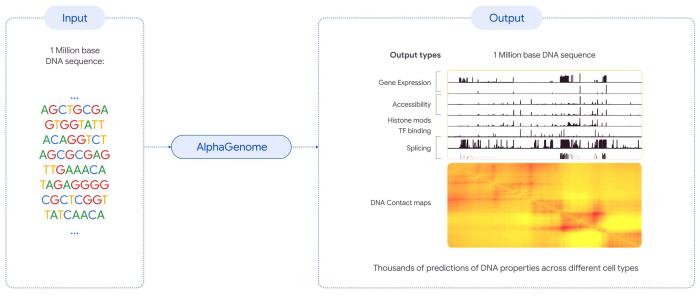
Core Insights - The article discusses the development of a deep learning model called AlphaGenome by Google's research team, which can predict the functional impact of DNA sequence variations up to 1 million base pairs long [1][3]. Group 1: Model Capabilities - AlphaGenome is designed to predict how DNA sequence variations affect various biological processes, aiding in the understanding of genetic diseases and improving gene testing [1][3]. - The model has been trained on human and mouse genomes to learn how DNA sequences influence different biological outcomes, allowing it to predict 5,930 human and 1,128 mouse genetic signals related to specific functions such as gene expression, splicing, and protein modification [3][4]. - In evaluations of 26 variant effect predictions, AlphaGenome performed comparably or better than existing top models in 25 cases, showcasing its ability to make multiple predictions across various genetic signals and biological outcomes [3]. Group 2: Future Applications - The research team suggests that further improvements to AlphaGenome could expand its applications, such as increasing the range of species covered or enhancing the model's ability to identify non-coding sequences [4]. - There is potential for AlphaGenome to deepen the understanding of complex biological outcomes resulting from DNA sequence variations in the future [4].

腾讯研究院AI速递 20260130
腾讯研究院· 2026-01-29 16:01
Group 1: Generative AI Developments - MiniMax Music 2.5 has been released, achieving breakthroughs in paragraph-level control and high-fidelity sound, supporting 14 structural tags for precise emotional and instrumental configuration [1] - Skywork AI has launched the open-source video generation model SkyReels-V3, featuring capabilities such as image-to-video generation and audio-driven virtual avatars, surpassing mainstream models in consistency metrics [2] - Ant Group has open-sourced the interactive world model LingBot-World, designed for real-time control with stable generation for nearly 10 minutes and 16 FPS interaction [3] Group 2: Office Automation and AI Integration - Kimi K2.5 Agent has upgraded office capabilities, supporting intelligent formatting in Word, visual design in PDF, data analysis in Excel, and automatic PPT generation, significantly reducing task completion time [4] Group 3: Breakthroughs in Genomics - Google DeepMind's AlphaGenome has been featured on the cover of Nature, capable of processing 1 million base pairs of DNA sequences and predicting thousands of gene regulatory signals, achieving state-of-the-art performance in 22 out of 24 genomic trajectory prediction tasks [5] Group 4: Robotics and Automation - Figure has released Helix 02, a humanoid robot capable of performing complex tasks autonomously, with a valuation of $39 billion and plans to produce 100,000 units in four years [7] - Elon Musk announced the discontinuation of Model S and Model X to focus on humanoid robot production, projecting a future valuation of Tesla at $25 trillion [8] Group 5: Programming and AI Evolution - Andrej Karpathy predicts a split among programmers into two types by 2026, as workflows shift from manual coding to AI-assisted coding, leading to an expansion of capability boundaries [9] Group 6: AI Innovations and Community Engagement - The founders of "月之暗面" held an AMA session, discussing the advancements in Kimi K2.5 and the anticipated improvements in Kimi K3, emphasizing the importance of innovation under constraints [10]


未来十年,AI将治愈所有疾病?谷歌基因解码模型准确率已达90%
第一财经· 2026-01-29 12:25
Core Insights - DeepMind's AlphaGenome can decode 98% of human genetic "dark matter" with an accuracy of 90% [3][5] - The model predicts 11 different gene regulatory processes and analyzes complex gene splicing mechanisms [5] - AlphaGenome processes over 1 million API calls daily, with over 3,000 users across 160 countries [5] Industry Implications - AI's role in drug development is expected to enhance efficiency significantly, with McKinsey predicting a 35% to 45% increase in clinical development efficiency over the next five years [6] - Major pharmaceutical companies like Eli Lilly, AstraZeneca, Novartis, and Pfizer are investing heavily in AI for drug discovery [6] - Analysts suggest that while AI applications in pharmaceuticals are widespread, it may take one to three years for investors to see returns from accelerated drug development [6] Future Outlook - DeepMind's CEO predicts that AI will be able to cure all diseases within the next decade [5] - The latest version of AlphaFold has accurately predicted 98.5% of human protein structures, indicating a significant advancement in biological research [6] - Clinical trials for AI-designed drugs are anticipated to begin soon, marking a new phase in pharmaceutical innovation [6]

谷歌基因解码模型准确率已达90%!未来十年,AI将治愈所有疾病?
Di Yi Cai Jing· 2026-01-29 09:39
Core Insights - DeepMind's AlphaGenome aims to address the challenges in drug development by decoding human genes, potentially completing the "last piece of the puzzle" in discovering new molecules for significant medical advancements [1][3] Group 1: AI in Gene Research - AlphaGenome can decode 98% of genetic "dark matter" with an accuracy of 90%, allowing for comprehensive predictions of 11 different gene regulatory processes [1][3] - The tool analyzes complex gene splicing mechanisms and identifies how single genes can produce multiple proteins, which is crucial for understanding disease [3] Group 2: Industry Impact and Adoption - Over 1 million API calls are processed daily by AlphaGenome, with more than 3,000 users across 160 countries, indicating its growing adoption in tackling complex biological challenges [3] - Major pharmaceutical companies like Eli Lilly, AstraZeneca, Novartis, Pfizer, Amgen, and GSK are investing heavily in AI for drug discovery to enhance the success rates of new drug development [5] Group 3: Future Predictions and Clinical Trials - DeepMind's CEO predicts that AI will be able to cure all diseases within the next decade, highlighting the transformative potential of AI in healthcare [1][3] - Clinical trials for AI-designed drugs are set to begin, as stated by the CEO at the recent Davos Forum, indicating a shift towards practical applications of AI in drug development [4] Group 4: Efficiency and Market Expectations - McKinsey predicts that autonomous AI could improve clinical development efficiency by 35% to 45% over the next five years without human intervention [6] - Analysts from TD Cowen suggest that while AI is already prevalent in the pharmaceutical industry, it may take one to three years for investors to see returns from AI in accelerating drug development [6]