Stability AI

Search documents
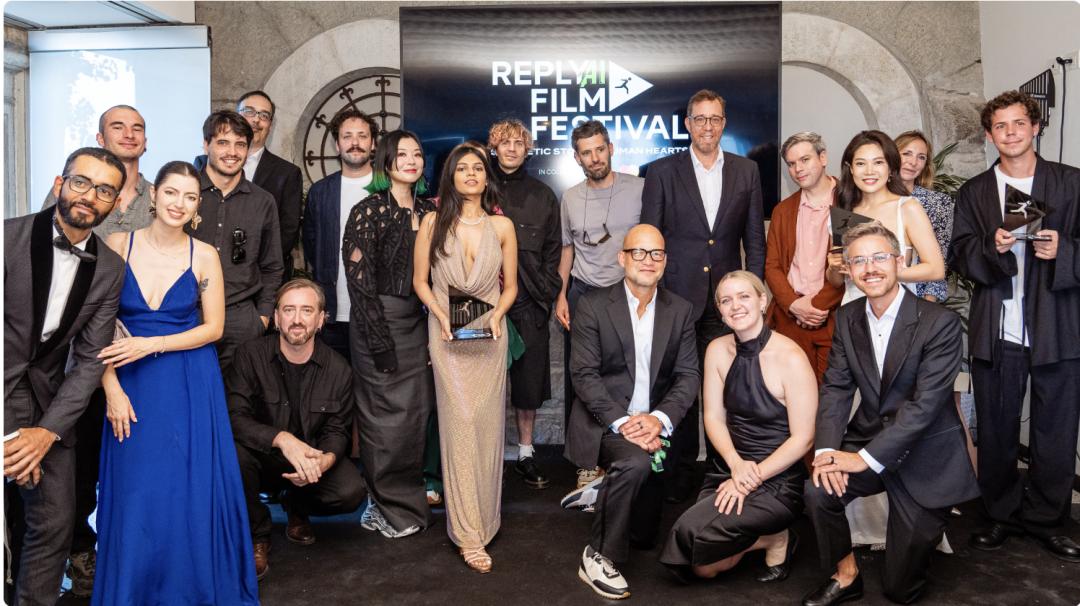
苹果首款无显示屏智能眼镜或12至16个月内推出;Stable Audio 2.5企业级音频生成AI模型发布丨AIGC日报
创业邦· 2025-09-16 00:08
Group 1 - Blackstone plans to invest £500 million (approximately $700 million) in UK data center infrastructure, highlighting the rapid growth in demand for digital infrastructure driven by AI and cloud computing technologies [2] - Apple is expected to enter the smart glasses market within the next 12 to 16 months with a display-less model, aiming to compete with Meta's Ray-Bans, with the ultimate goal of developing true AR glasses in the future [2] - Stability AI has launched the enterprise-level audio generation model Stable Audio 2.5, which claims to create a 3-minute audio track in just 2 seconds, enhancing audio detail and generation speed [2] - Microsoft is heavily investing in the computational power needed for developing its own cutting-edge AI models, with plans to train models on clusters significantly larger than its current MAI-1-preview [2]




AI抢饭碗还是送外挂?好莱坞大咖们吵翻了
3 6 Ke· 2025-09-10 09:53
Core Viewpoint - The film industry is experiencing a significant divide between supporters and opponents of AI, with concerns about job security and the artistic integrity of filmmaking at the forefront of the debate [3][5][6]. Group 1: Opposition to AI - Many filmmakers, including prominent figures, express fears that AI will take away jobs and undermine the art of filmmaking, leading to a loss of dignity and livelihood [6][7]. - The Writers Guild of America (WGA) has made AI protection a core demand during strikes, fearing that AI could reduce writers to mere "polishers" of AI-generated scripts, thus diminishing their roles and compensation [8][10]. - Artists like Red Sosen report significant income drops due to studios increasingly using AI tools for concept art, which they view as a direct threat to their livelihoods [10][13]. - Actors are concerned about their likenesses being cloned by AI without consent or compensation, raising issues of identity and artistic integrity [13][16]. - Major studios, including Disney and Universal, have taken legal action against AI companies for copyright infringement, highlighting the industry's sensitivity to intellectual property rights [17][20]. Group 2: Support for AI - Some filmmakers view AI as a powerful tool that can enhance creativity and reduce production costs, allowing for more ambitious storytelling [32][34]. - Directors like Damian Osser and James Cameron are exploring how AI can assist in visual effects and filmmaking processes without compromising artistic vision [34][37]. - The use of AI in projects like "Ancestra" demonstrates the potential for blending human creativity with AI-generated content, suggesting a collaborative future [40][46]. - AI is seen as a means to empower filmmakers, especially those with limited budgets, to tell unique stories that might otherwise be unfeasible [32][34]. - The industry is witnessing a shift where AI is perceived as an upgrade rather than a replacement, with technical experts leveraging AI to accomplish tasks that were previously impossible or prohibitively expensive [44][49]. Group 3: Future Implications - The impact of AI on the film industry is uneven, with the greatest threats to roles that are repetitive and execution-focused, while strategic and integrative roles may benefit from AI [53][56]. - Historical parallels are drawn to the advent of sound in film and the rise of CGI, suggesting that while AI may cause disruption, it could also lead to new artistic forms and job opportunities [53][56]. - Filmmakers are encouraged to embrace AI as a tool rather than fear it, as the ability to adapt and harness AI will be crucial for future success in the industry [56].
AI圈版权劫:从谷歌2.5亿罚单到Meta的成人片诉讼,巨头们都在忙应诉
3 6 Ke· 2025-09-07 00:27
Core Viewpoint - Leading AI companies such as Anthropic, OpenAI, Meta, Midjourney, and Google are facing unprecedented copyright infringement lawsuits, posing a significant challenge to the AI industry's development and the future of data acquisition and content creation [1][2][3]. Group 1: Anthropic - Anthropic has agreed to a settlement of at least $1.5 billion after being accused of large-scale copyright infringement for using pirated books to train its AI model Claude [3]. - The company is also facing allegations from major music publishers for illegally scraping lyrics from over 500 songs, with claims reaching up to $150,000 per song [3]. - Reddit has filed a lawsuit against Anthropic for illegally scraping millions of user comments to train Claude, contrasting with other companies that have secured licensing agreements [4]. Group 2: OpenAI - OpenAI is embroiled in a significant legal battle, being one of the most sued companies in the AI sector, with lawsuits alleging unauthorized use of millions of copyrighted articles to train ChatGPT [5][7]. - The New York Times has initiated a lawsuit against OpenAI and Microsoft, claiming that the generated content closely resembles original articles, impacting their subscription and advertising revenue [5]. - Multiple lawsuits from authors and media organizations accuse OpenAI of using copyrighted works without permission, with some cases being merged into multi-district litigation [7]. Group 3: Meta - Meta is facing several copyright infringement lawsuits, including accusations from authors for unauthorized use of their books to train AI models LLaMA 1 and LLaMA 2 [10]. - The company is also being sued by adult film production companies for illegally downloading and using copyrighted adult films for training its AI models, with claims reaching up to $359 million [11]. - In Europe, Meta is facing lawsuits from various authors and organizations for the unauthorized use of copyrighted content in training AI models [12]. Group 4: Midjourney and Stability AI - Midjourney and Stability AI are facing lawsuits for allegedly using copyrighted content to train their image generation models, with major entertainment companies filing claims [13][15]. - Disney and NBC Universal have accused Midjourney of using their intellectual property without authorization, while visual artists have also filed lawsuits against both companies for using their works [15]. - Stability AI has been sued by Getty Images for unauthorized use of millions of copyrighted images in training its models, with ongoing litigation [15]. Group 5: Google - Google has been fined €250 million by the French Competition Authority for using news content without permission to train its AI chatbot Bard, violating EU copyright laws [16]. - The ongoing legal disputes with the American Writers Association date back to 2005, with recent lawsuits alleging that Google’s use of scanned books for AI training violates copyright law [18]. Conclusion - The current wave of lawsuits indicates a shift in the AI industry from denial of infringement to seeking settlements and compliance, highlighting the ongoing struggle to balance technological innovation with copyright protection [18].


OpenAI发布端对端语音模型GPT-Realtime,助力开发者构建语音智能体
3 6 Ke· 2025-08-30 16:34
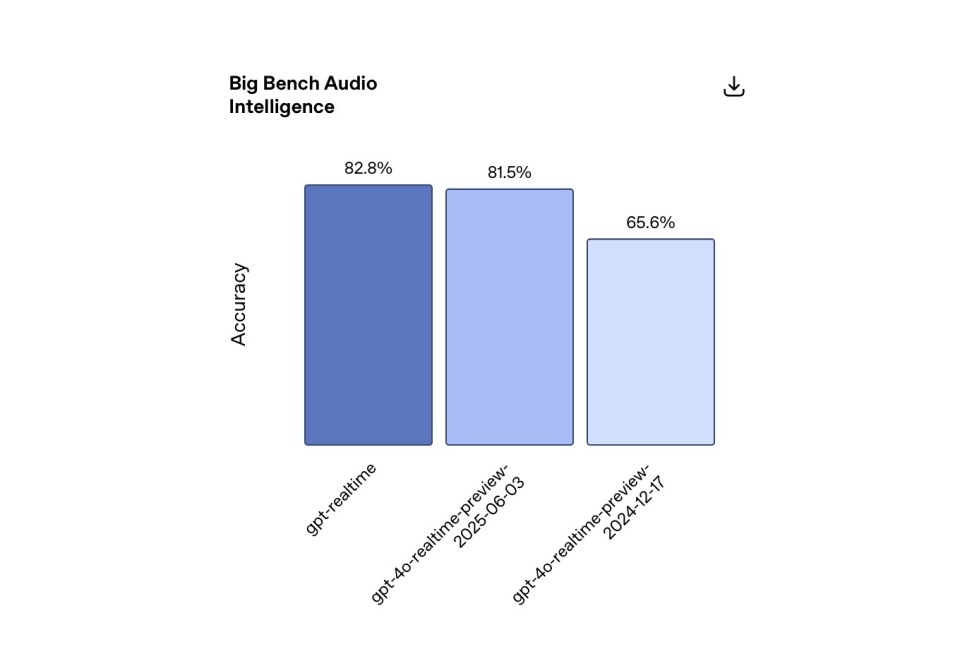
Core Insights - OpenAI has launched its most advanced end-to-end speech model, GPT-Realtime, which aims to provide developers with a more efficient and cost-effective way to build voice agents [1][3][11] - The pricing for GPT-Realtime has been significantly optimized, reducing costs by 20% compared to the previous model, GPT-4o-Realtime-Preview [1][11] - The new model demonstrates substantial improvements in performance, including better audio quality, expressiveness, and the ability to follow complex instructions [3][5][7][10] Pricing and Cost Efficiency - GPT-Realtime's pricing is set at $32 per million audio input tokens and $64 per million audio output tokens, compared to the previous model's $40 and $80 respectively [1] - The new pricing structure allows developers to create efficient voice agents at a lower cost while enjoying superior performance [1] Model Performance Enhancements - GPT-Realtime shows a significant leap in performance metrics, achieving an accuracy of 82.8% in the Big Bench Audio reasoning test, up from 65.6% for the previous model [5] - The model's instruction-following accuracy reached 30.5% in the MultiChallenge Audio test, surpassing the previous model's performance [7] - In the ComplexFuncBench Audio test, GPT-Realtime achieved a function call accuracy of 66.5%, indicating improved capabilities in using external tools [10] Developer Empowerment and API Upgrades - The Realtime API has reached production-level standards, allowing for direct audio processing and reducing latency [11] - New features include support for remote model context protocol (MCP) servers, enabling easier integration with external data sources [12] - The API now supports image input, allowing for multimodal conversations and expanding use cases for voice agents [12] Competitive Landscape - The release of GPT-Realtime occurs amid intense competition in the voice AI market, with companies like Anthropic and Meta making significant advancements [13][14] - OpenAI's enhancements aim to provide a more user-friendly and cost-effective solution, positioning the company favorably in the competitive landscape [14]
百元造出科幻大片?AI视频生成“钱景”初显
Bei Jing Ri Bao Ke Hu Duan· 2025-08-23 01:12
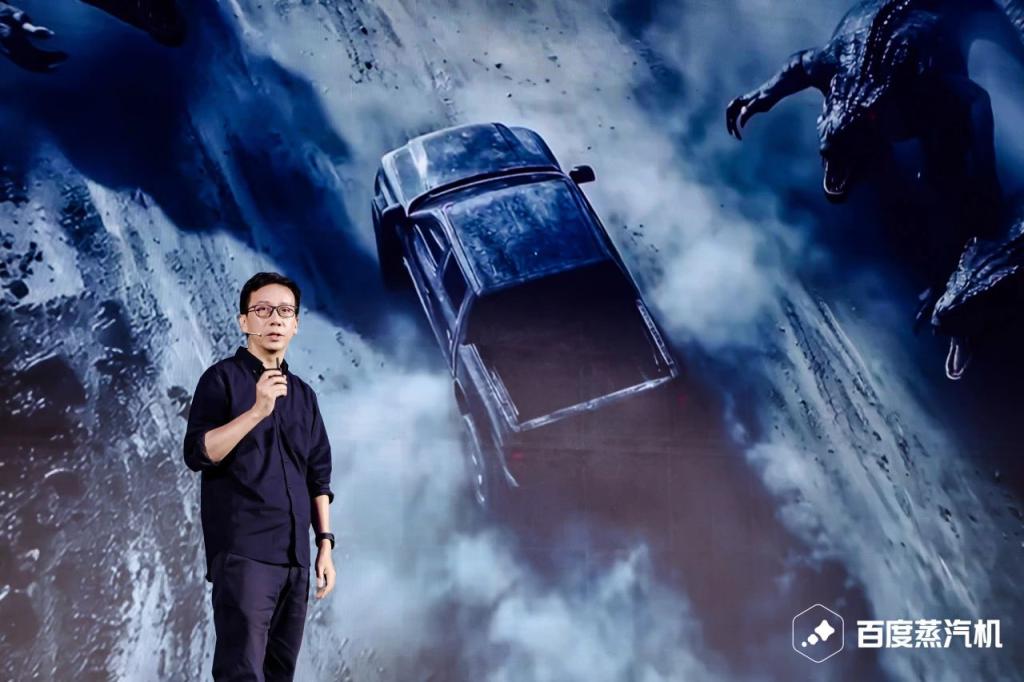
Core Insights - AI video generation technology is rapidly advancing, allowing for the production of high-quality short films at a fraction of the traditional cost, with some projects costing as little as 330.6 RMB [1][5][8] - Major tech companies and startups are competing in the AI video generation space, with various models being developed to enhance content creation efficiency and quality [7][8] Industry Developments - The AI-generated short film "Return" was created by renowned visual effects supervisor Yao Qi, showcasing the capabilities of AI tools in producing cinematic quality content with minimal resources [3][5] - The "Steam Engine" model from Baidu has achieved significant upgrades, enabling integrated audio and video generation, which is a first in the industry [5][8] - The market is witnessing a surge in AI-generated content, with platforms like Douyin reporting high viewership and revenue from AI-generated series [7][8] Financial Performance - Companies like Shengshu Technology reported annual recurring revenue exceeding 20 million USD (approximately 140 million RMB) within eight months of launching their video model [7] - Kuaishou's revenue from its AI tool exceeded 250 million RMB in Q2, a significant increase from 150 million RMB in Q1 [7] Market Trends - The use of AI-generated content is reshaping the industry landscape, with a reported 393.9% year-on-year increase in usage time for AI-generated content [8] - Baidu views its AI video generation model as a key driver for enhancing overall ecosystem engagement, with a notable increase in AI-generated content in search results [8] Technical Challenges - Despite rapid advancements, AI video generation still faces technical limitations, particularly in producing longer videos and achieving real-time generation [10][11] - Current models primarily generate short clips, and significant breakthroughs in technology are required to support industrial-scale production of longer content [11]

七款AI写歌工具横评:从年会BGM到模仿周杰伦,谁能唱出未来?
锦秋集· 2025-08-19 15:55
Core Viewpoint - The article emphasizes the rapid evolution of AI music generation products, highlighting the need for a comprehensive evaluation of their capabilities in real-world applications [2][3]. Group 1: Overview of AI Music Generators - Seven representative AI music generation products were selected for evaluation, including Suno, ElevenLabs, Udio, and others, showcasing a mix of international and Chinese companies [5][6]. - The evaluation focused on practical tasks relevant to everyday users, assessing aspects like generation speed, cost, seamless looping, lyric matching, Chinese pronunciation, and export formats [4][9]. Group 2: Evaluation Process - The evaluation involved five representative use cases to simulate the process of generating music from scratch, ensuring a realistic assessment of each product's performance [9][10]. - All products were tested under default settings to reflect the experience of ordinary users without any adjustments [10]. Group 3: Performance Results - For background music suitable for corporate events, Suno and ElevenLabs were noted for their alignment with commercial needs, although neither supported seamless looping [13]. - In the meditation music category, ElevenLabs, Udio, and Suno excelled in creating a natural atmosphere, with Suno particularly noted for its emotional control [17][20]. - For suspenseful horror film openings, Suno and ElevenLabs demonstrated strong atmospheric creation, while Udio was recognized for its intense rhythm suitable for promotional content [18][23]. - In the R&B category, Suno and Udio showed strong structural awareness, effectively completing song structures based on provided lyrics [28]. - For mimicking Jay Chou's style, Suno and Mureka performed best, but overall results indicated significant challenges in accurately replicating specific musical styles [32][34]. Group 4: Product Differentiation - The AI music products displayed clear differentiation in functionality, creative paths, and application scenarios, contrasting with the more integrated approach seen in AI video products [36]. - Suno was highlighted as a versatile platform with excellent stability and completion rates, while ElevenLabs focused on visualizing song structures for precise control [37]. Group 5: Future Predictions - The future of AI music products is expected to follow two parallel paths: one aimed at professional creators for efficiency and inspiration, and the other catering to general users for quick content generation [40]. - Innovations may lead to collaborative AI systems that assist in music creation, moving beyond simple one-click generation to more interactive processes [41]. - The development of clearer copyright regulations and style imitation guidelines is anticipated as the industry matures [42].

Gaxos Labs Launches Art-Gen, an AI Image and Video Creation Platform Targeting Multi-Billion Dollar Market
Globenewswire· 2025-08-19 12:00
Core Insights - Gaxos.ai Inc. has launched Art-Gen.AI, an AI image and video creation platform aimed at simplifying professional-grade content creation for users globally [1][2] - The generative AI market is projected to reach hundreds of billions of dollars in annual revenue over the next decade, positioning Gaxos to capture significant market share through a subscription-based model [2][3] Company Overview - Gaxos.ai is focused on developing AI applications across high-growth sectors, including health, wellness, and gaming, aiming to redefine the human-AI relationship [5] - The company emphasizes long-term value creation for shareholders by empowering creators and enterprises with advanced content production capabilities [3] Product Features - Art-Gen.AI offers features such as instant image and video generation from text prompts, smart image transformation, one-click upscaling, dynamic video creation, and an AI prompt writer [7] - The platform includes style presets for various visual themes and a live creative gallery for user inspiration [7]

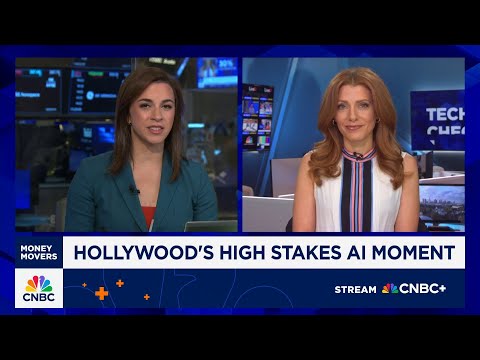
Hollywood's high stakes AI moment
CNBC Television· 2025-08-18 17:01
Industry Trends & Partnerships - The AI film festival, hosted by Runway in partnership with IMAX, highlights Hollywood's complex relationship with AI technology [1] - Studios are exploring AI tools to reduce production costs, but face potential backlash from creators, unions, and intellectual property concerns [2] - Runway AI, valued at approximately 35 亿 (three and a half billion) 美元, offers AI tools for scene editing and is partnering with IMAX, AMC Networks, and Lionsgate [2][3] - Netflix, Fox, and Disney have also reportedly engaged with Runway's AI tools [3] - Amazon Prime Video utilized Runway and other AI tools for over 70 shots in "House of David" to manage budget constraints [4] - Stability AI has James Cameron as an investor and board member, focusing on streamlining pre and post-production processes [4] Financial Implications & Cost Reduction - Morgan Stanley projects that generative AI tools could lead to a 30% reduction in costs for film and TV companies [6] Concerns & Considerations - The WGA and SAG-AFTRA unions have expressed concerns about AI's potential impact on their members' jobs [7] - The industry is focused on using AI to streamline processes and cut costs while preserving the integrity of filmmaking and the roles of creators [9] - Disney and Universal have jointly sued Midjourney, an AI company, alleging plagiarism [6]
这家新创公司的AI颠覆了电影业
财富FORTUNE· 2025-07-17 12:40
Core Viewpoint - The article discusses the evolution of AI in the creative industry, particularly focusing on Runway, an AI video startup, and its impact on art and storytelling through technology [1][6]. Group 1: Runway and AI Film Festival - Runway, valued at $3 billion, hosted the AI Film Festival (AIFF) showcasing AI-generated short films, with submissions increasing from 300 to 6,000 in one year [3][6]. - The winning film, "Total Pixel Space," reflects Runway's vision of AI-generated experiences that go beyond storytelling to world-building [3][4]. Group 2: Technological Evolution in Art - The evolution of technology in art is described in three stages: making technology work, mimicking existing art forms, and creating unique forms, with the industry currently entering the third stage [11][12]. - The article highlights the philosophical implications of AI in art, questioning the nature of creativity and the potential for AI to generate meaningful images [3][5]. Group 3: Future Directions and Market Position - Runway aims to simulate the physical world and is planning to launch an interactive gaming experience, indicating a shift towards more immersive media [5][6]. - The company has raised over $500 million from investors like SoftBank and Nvidia, and faces competition from other AI video companies [6][12]. Group 4: Historical Context and Concerns - The article draws parallels between past technological disruptions in art, such as the printing press, and the current rise of AI, noting concerns about job displacement [7][8]. - The narrative emphasizes the need for creative exploration in the face of technological advancements, suggesting that AI should be viewed as a tool rather than a replacement for human creativity [12].
从「塑料人」到「有血有肉」:角色动画的物理革命,PhysRig实现更真实、更自然的动画角色变形效果
机器之心· 2025-07-10 08:35
Core Viewpoint - The article discusses the limitations of traditional Linear Blend Skinning (LBS) in character animation and introduces a new framework called PhysRig, which aims to enhance the realism and control of character animations through physics-based modeling [2][3][9]. Summary by Sections Introduction to the Problem - Current animation techniques often result in characters appearing unrealistic, with issues such as volume loss and distortion, particularly in soft materials like skin and fat [2][6][11]. PhysRig Framework - PhysRig integrates a rigid skeleton with a deformable soft body model, utilizing differentiable physics simulation to achieve more natural character deformation [3][9]. - The framework consists of three key components: a differentiable physics simulator, a driving point system, and an optimization strategy [10][13]. Physics Simulation and Optimization Strategy - The optimization process involves inferring internal skeletal movements and material parameters from observed animation results, ensuring stability and efficiency through temporal consistency and local frame optimization [15][17][20]. Comprehensive Evaluation and Dataset - A dataset was created to validate PhysRig's effectiveness, including 17 character types and 120 animation sequences, with metrics such as user ratings and Chamfer distance showing significant improvements over traditional methods [19][22]. Applications and Future Directions - PhysRig allows for pose transfer, enabling the generation of natural volume animations based on skeletal angles from existing animations [24][26]. - The project aims to transition from traditional rigging to physically realistic binding, with plans to open-source the code and dataset and develop a Blender plugin for animation artists [29][30].