
LG

Search documents
当硬件厂商也要“吃广告”:惠普如何把PC变成广告平台?
Jing Ji Guan Cha Bao· 2025-07-17 16:08
Core Insights - The article discusses how hardware manufacturers, particularly HP, are transforming their devices into advertising platforms to capture advertising budgets in a saturated market [1][2][5]. Group 1: Advertising Platform Development - HP has launched the "HP Media Network," which covers over 100 million devices and reaches 830 million monthly active users globally, with 160 million monthly active users in the U.S. alone [3][4]. - The network is expanding by approximately 2 million devices each month, indicating a steady growth in its advertising reach [3]. Group 2: Advertising Offerings - HP is selling various advertising products, including system-level native ads (like "Toast" notifications), brand exposure through email and social media, and partnerships with ad tech companies for external placements [4]. - The "Toast" ad format achieved over 5 million impressions and a 2.6% click-through rate during the 2024 holiday season, showcasing its effectiveness [4]. Group 3: Market Context and Competition - HP's entry into the advertising space reflects a broader trend among device manufacturers facing stagnation in traditional PC sales, particularly against competitors like Apple and Lenovo [5][6]. - Samsung's advertising platform has already generated significant revenue, indicating the potential profitability of this model for hardware manufacturers [5]. Group 4: User Engagement and Data Utilization - With increased usage of PCs for streaming and remote work, HP estimates users spend over 3 hours daily on their devices, creating a natural environment for advertising [6]. - HP's ability to collect first-party data allows for precise targeting of ads based on user behavior, enhancing the effectiveness of advertising campaigns [7]. Group 5: Future Implications - The shift towards advertising on devices may redefine the user experience, potentially transforming PCs into platforms with algorithmic recommendations and interactive ads [8]. - HP's strategy indicates a move towards a closed-loop ecosystem combining devices, content, and advertising, positioning itself as more than just a hardware manufacturer [9].

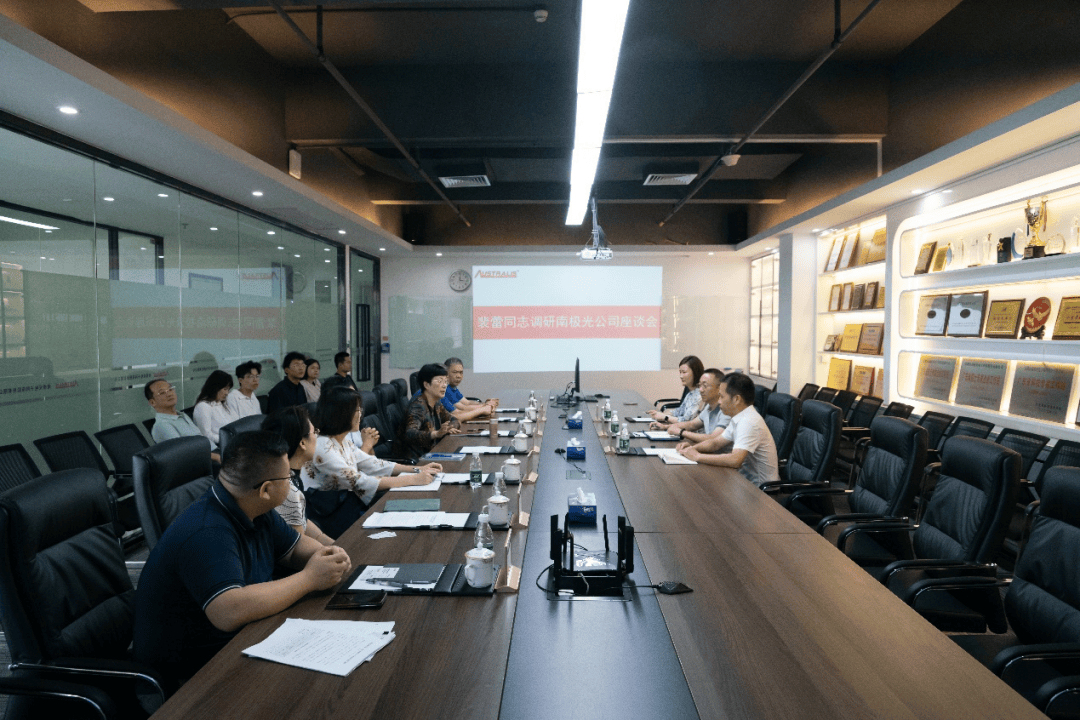
南极光董事长潘连兴:将聚焦新消费趋势 适时推进AI相关布局
Sou Hu Cai Jing· 2025-07-17 07:32
Core Viewpoint - The company, Nanji Guang, is focusing on increasing R&D investment and expanding into cutting-edge display technologies to provide high-quality display solutions for customers, while implementing a dual-track strategy for product layout [1][3]. Group 1: Company Strategy - Nanji Guang aims to focus on new consumer trends and the iteration of consumer electronics, specifically targeting segments such as e-sports, gaming, handheld devices, and outdoor wearables, to build differentiated competitive advantages [1]. - The company plans to closely monitor developments in AI and leverage existing solutions and technological reserves to strategically advance in related fields [1]. Group 2: Market Position and Clientele - Nanji Guang is recognized as a leading provider of backlight display module solutions in China, specializing in the R&D, production, and sales of LED backlight modules used in various display applications [3]. - The company's products are widely utilized in tablets, laptops, gaming, smart wearables, smartphones, automotive displays, medical displays, industrial control displays, home appliance displays, and other consumer electronics [3]. - Notable clients include major brands such as OPPO, VIVO, Xiaomi, Huawei, Honor, Samsung, LG, Lenovo, Haier, Midea, Honeywell, Panasonic, Canon, BYD, and SAIC Group [3]. Group 3: Government Support and Collaboration - The Shenzhen Municipal People's Congress emphasizes the importance of companies leveraging government resources and services, including industry support policies, talent introduction plans, financing support, market expansion guidance, and industry-academia-research cooperation platforms [3][5]. - The company recognizes the need to better utilize the diverse service systems and policy resources provided by the government to enhance its development [5]. - Nanji Guang plans to systematically review and study the various business-friendly policies and services introduced by the Shenzhen government to convert policy benefits into tangible outcomes for the company [5].


中国冰箱正在改写越南市场
Jin Tou Wang· 2025-07-17 03:27
Core Insights - The Vietnamese refrigerator market, previously dominated by Japanese and Korean brands, is experiencing a shift with Chinese brand Haier leading the charge [1][2] - In the first five months of 2025, the overall Vietnamese refrigerator market declined by 5.1%, while Haier's sales surged by 22%, achieving a market share of 21.9% and ranking second in the industry [1] Industry Overview - The Vietnamese refrigerator market has been characterized by a long-standing dominance of brands like Samsung, LG, and Panasonic, which have relied on technological advancements and established distribution channels [1] - The market is currently facing challenges such as slow product updates and severe homogenization, which do not meet the diverse needs of consumers [1] Company Strategy - Haier's success in Vietnam is attributed to its commitment to global branding while focusing on local market needs, including climate, dietary habits, and family structures [1] - The Haier TM700 series refrigerator exemplifies this strategy, featuring design elements tailored to tropical climates and local consumption patterns, such as dual water dispensers and ice-making modules [1] - The TM700 series also includes innovative features like dual MIGIC temperature zones for precise food storage and privacy modules for multi-generational households [1] Product Innovation - The TM700 series refrigerator has a modern aesthetic with a continuous handle and interactive breathing light, enhancing user convenience and appealing to younger consumers [2] - This product has not only achieved sales of over 50,000 units in Vietnam but has also expanded into markets across Southeast Asia, the Middle East, Africa, Australia, Europe, and South America [2] Globalization and Localization - The rise of Chinese refrigerator brands in Vietnam highlights the importance of deep localization as a foundation for successful globalization [2] - The best global products are those that deeply understand and cater to local user needs [2]

苹果首款折叠iPhone来袭:预计起售价1800美元起
3 6 Ke· 2025-07-16 12:18
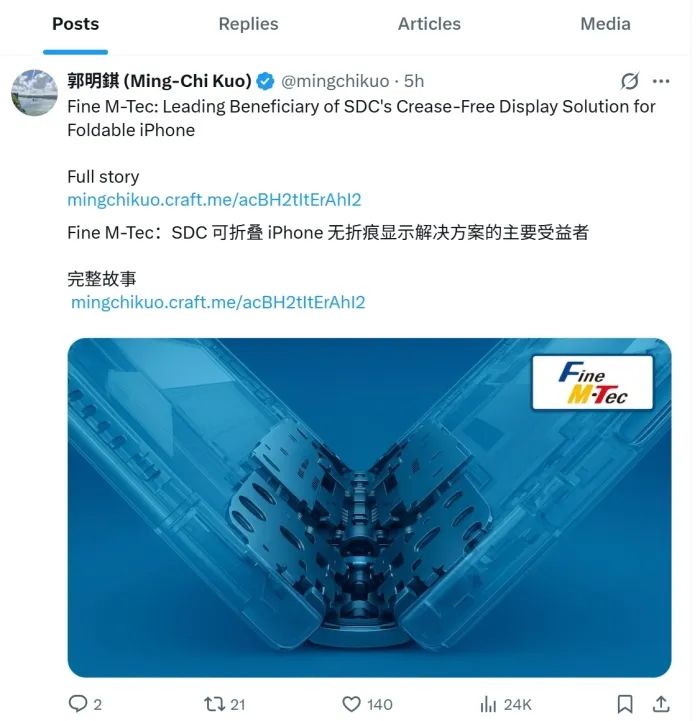
Core Insights - Apple plans to launch a foldable iPhone using Samsung Display's no-fold display solution, aiming for stable mass production in the second half of 2026 [1][3] - Apple has abandoned its own design for the foldable iPhone and will collaborate with Fine M-Tec for internal hinges, which are also used in Samsung's latest foldable devices [3][5] - The expected supply of hinges from Fine M-Tec is projected to start in Q1 2026, with a unit price of $30-35, and total shipments estimated between 13-15 million units [5] Cost and Pricing Analysis - The BOM (Bill of Materials) cost for Apple's foldable iPhone is estimated at $759, approximately 4% lower than Samsung's Z Fold SE [8] - Initial pricing for the iPhone Fold is anticipated to be between $1800 and $2000, with a profit margin of 53%-58%, which is higher than the iPhone 16 series [8] - Initial production capacity is expected to be limited to 10-15 million units, reflecting the technical complexity and high price point of foldable devices [8] Supply Chain and Component Suppliers - Samsung Display is expected to be the main supplier of 7-inch foldable OLED panels, with an annual production capacity of up to 15 million units [9] - The device may feature a titanium shell and liquid metal hinge, benefiting suppliers like Lens Technology, Amphenol, and Hon Hai [9] - Foxconn is anticipated to handle initial assembly, with Luxshare Precision as a secondary partner, showcasing Apple's established manufacturing ecosystem [9] Market Impact - The launch of the foldable iPhone is expected to boost market sentiment and stock prices for Apple, positively impacting its supply chain [8][11] - The anticipation surrounding the foldable iPhone reflects significant interest in how it will reshape the foldable smartphone market and contribute to Apple's product legacy [11]

韩国宣布:25亿发力Micro LED、QD LED等显示技术
WitsView睿智显示· 2025-07-16 09:39
Core Viewpoint - The South Korean government plans to invest 484 billion KRW (approximately 350 million USD, 2.51 billion CNY) in developing iLED (Inorganic Light-Emitting Diode) display technology by 2032, aiming to establish a complete local industrial ecosystem and find new growth engines for the display industry [1][3][9]. Group 1: Current Market Position - South Korea currently leads the OLED market but lags in the iLED sector, heavily relying on imports for LED epitaxy, chips, and materials [3][4]. - Chinese companies, supported by their government, have rapidly risen in the display market, surpassing South Korea in LCD panels and closing the gap in OLED technology [5][6]. Group 2: iLED Technology Advantages - iLED technology is seen as the next-generation display technology that could potentially disrupt OLED, offering better lifespan, brightness, picture quality, and energy efficiency, while avoiding issues like "burn-in" [5][6]. - The manufacturing and transfer of micro-level LED chips in iLED technology align more closely with the semiconductor industry, which poses a competitive challenge for South Korean firms [6][7]. Group 3: Government Investment Goals - The investment aims to address three main issues: reversing the technological lag in the iLED field, reducing reliance on foreign-made key LED chips and materials, and finding new economic growth engines post-OLED [7][9]. - The initiative is part of a broader strategy to secure a competitive edge in the global display industry and ensure supply chain security [9]. Group 4: Future Implications - The investment is expected to influence the global evolution of display technology, with the competition in the iLED sector already underway [9].

锂电&其他板块季报总结
2025-07-16 06:13
Summary of Conference Call Records Industry Overview - The records primarily discuss the electric vehicle (EV) and battery industry, focusing on sales performance and market dynamics in Europe, the United States, and China. Key Points and Arguments Electric Vehicle Sales Performance - In Europe, cumulative EV sales from January to April reached nearly 25%, with some countries like the Soviet Union exceeding 28% [1] - In the U.S., EV sales growth was reported at 10% for the first quarter, while traditional vehicles saw a higher growth rate of approximately 16% [1] Battery Procurement Trends - European automakers are expected to increase battery procurement significantly starting in Q2, following a period of inventory digestion in Q1 [1] - The overall battery procurement volume is anticipated to rise in the second half of the year, with a target growth rate of around 25% for Europe [1] Domestic Market Insights - In China, the market remains robust, with major automakers maintaining a penetration rate above 50% in the first four months of the year [2] - The expected annual growth rate for the domestic market is projected to be between 25% to 30% [2] Energy Storage and Power Supply - The energy storage sector has seen substantial growth, with some manufacturers reporting nearly 70% year-over-year increases in shipments [2] - The overall performance of energy storage manufacturers is expected to remain strong, with stable growth rates around 30% [2] Profitability and Market Share - Companies like LG are struggling with profitability, with a reported annual profit margin of only 6%, and many overseas manufacturers have yet to achieve profitability [6] - The market share for certain manufacturers has been declining, with some reporting a drop to below 10% [6] Production Capacity and Future Outlook - Companies are ramping up production capacity, with expectations to exceed 80% of planned output for the year [4] - The average operating rate is projected to remain above 10%, with hopes of achieving 4% to 5% credit rates in the latter half of the year [4] Regional Production Plans - Companies are expanding their production capabilities in Asia-Pacific, Europe, and the U.S., with plans to increase production capacity significantly in the second half of the year [5] - The overall production capacity is expected to reach 50% to 60% by the end of the year, with potential for further increases [5] Cost and Pricing Dynamics - The cost of raw materials and production has been impacted by price fluctuations, with some companies reporting significant cost increases due to supply chain issues [8] - Companies are also facing challenges related to pricing strategies, particularly in the context of rising costs and competitive pressures [9] Future Developments and Innovations - Companies are focusing on innovation, with new product developments aimed at meeting customer demands for lighter and more efficient products [12] - The introduction of new technologies and materials is expected to enhance product offerings and improve market competitiveness [12] Conclusion - The electric vehicle and battery industry is experiencing dynamic changes, with varying growth rates across regions and segments. Companies are adapting to market demands through increased production capacity, innovation, and strategic procurement practices. The overall outlook remains positive, with expectations for continued growth in the coming quarters.

两部门发布!这类新能源技术限制出口,国内龙头有望长期保持竞争力
Xuan Gu Bao· 2025-07-15 23:31
Group 1 - The Ministry of Commerce and the Ministry of Science and Technology have adjusted the "Directory of Technologies Prohibited from Exporting and Restricted from Exporting" [1] - The adjustment includes the addition of battery cathode material preparation technology and modifications to non-ferrous metal metallurgy technology [2] - The new technologies include lithium iron phosphate preparation technology and lithium extraction technologies, which are aimed at enhancing domestic competitiveness and preventing core technology leakage [2][3] Group 2 - The lithium iron phosphate battery is favored for its high safety, long cycle life, and good thermal stability, making it suitable for energy storage applications [2] - Domestic battery manufacturers are expected to maintain a competitive edge during the transition period as overseas companies ramp up their production lines [2] - Leading companies in the industry include CATL, Fulin Precision, and Deyang Nano [4]
华源证券:首次覆盖远航精密给予增持评级
Zheng Quan Zhi Xing· 2025-07-15 10:23
Group 1 - The core viewpoint of the report highlights the growth potential of Yuanhang Precision due to the rapid development of the new energy vehicle and energy storage markets, as well as advancements in solid-state battery technology [1] - The solid-state battery industry is evolving, with lithium battery shipments in China expected to reach 1175 GWh in 2024, representing a year-on-year increase of 32.6% [1] - The global composite current collector market is projected to grow from 1.8 billion yuan in 2023 to nearly 30 billion yuan by 2025, driven by high demand in the new energy vehicle and energy storage sectors [1] Group 2 - Yuanhang Precision's main products include nickel strips, foils, and precision structural components, with expected revenues of 615 million yuan and 200 million yuan from nickel strips and foils respectively in 2024 [2] - The company has established partnerships with major clients such as Panasonic, LG, and BYD, focusing on battery manufacturers and precision component processors [2] - The company's revenue is projected to reach 852 million yuan in 2024, with a year-on-year growth of 5.25%, and a net profit of 67.44 million yuan, reflecting a significant year-on-year increase of 113.37% [2] Group 3 - Yuanhang Precision holds 89 patents and produces nickel strips and foils with nickel content exceeding 99.8%, surpassing the industry standard of 99.5% [3] - The company has advanced manufacturing capabilities, allowing for precise control over the thickness and width of its products, with a maximum roll weight of 3,000 kg [3] - The company is expected to launch new production capacities by 2025 and 2026, which will support its growth trajectory [3] Group 4 - Profit forecasts indicate that the company's net profit is expected to reach 82 million yuan, 100 million yuan, and 125 million yuan from 2025 to 2027, with corresponding price-to-earnings ratios of 36.8, 30.0, and 24.0 [4] - The report emphasizes the alignment of the company's business with industry growth driven by demand for new energy vehicles and energy storage, as well as technological upgrades in solid-state batteries [4] - The initial coverage of the company has been rated as "Buy" based on its strong market positioning and stable partnerships [4]