DeepSeek

Search documents
幻方量化去年狂赚57%,跻身百亿级量化基金业绩榜第二!
Hua Er Jie Jian Wen· 2026-01-12 11:20
Group 1 - The core viewpoint of the articles highlights the strong performance of Huansheng Quantitative, which ranks second among China's quantitative funds with an average return rate of 56.6% in 2025, providing substantial financial support for its incubated AI company, DeepSeek [1][2] - Huansheng Quantitative's impressive performance is attributed to its strategic transformation, shifting focus from market-neutral strategies to a pure long-only product line aimed at outperforming stock benchmark indices, which has become the core driver of its growth [2] - The overall performance of the Chinese quantitative industry in 2025 is also noteworthy, with an average return rate of 30.5%, significantly higher than the global average, and a notable increase in the number of quantitative fund companies managing over 5 billion RMB [3] Group 2 - The company, under the leadership of its founder Liang Wenfeng, has ceased accepting external funds, maintaining majority ownership while leveraging its strong financial position to support DeepSeek's research and development [1][2] - The average return of products managed by co-founder Xu Jin reached 58.6%, while CEO Lu Zheng's products averaged a 56% increase, with Lu Zheng's stock strategy achieving a Sharpe ratio of 2.8, ranking first among leading quantitative institutions [2] - The rapid expansion of the quantitative fund industry is evidenced by the increase in the number of firms managing over 5 billion RMB, rising from 63 to 91 within a year, reflecting a trend towards concentration in management scale [3]
股指连阳,“春季躁动”背后的逻辑
李迅雷金融与投资· 2026-01-12 11:15
Group 1 - The core narrative of the market has shifted from "growth" to "competitiveness," driven by external factors such as the U.S.-China tech competition and the need for self-sufficiency in key industries [17][33] - The A-share market has shown resilience despite economic pressures, with the performance of leading companies in global competition being a key driver of market valuation rather than domestic consumption or income growth [18][27] - The current investment logic emphasizes sectors like AI, power, and critical resources, which are experiencing rapid capital expenditure growth, while traditional consumer sectors face challenges [26][28] Group 2 - The divergence between corporate competitiveness and household income growth reflects a broader transformation in the economic structure, where companies are optimizing costs to enhance global competitiveness [28][31] - Historical examples illustrate that market performance can diverge from economic fundamentals, as seen in the U.S. during WWII and China's market in the early 2000s, where investor sentiment and risk premiums played significant roles [9][14][16] - The current market environment suggests that the valuation of leading companies is increasingly decoupled from traditional economic indicators, focusing instead on their long-term competitive advantages [5][8][18] Group 3 - The rise in valuations for sectors like commercial aerospace, AI, and semiconductors reflects a belief in China's ability to compete and innovate in critical areas, despite short-term economic challenges [18][19] - The shift in demand dynamics, particularly in the context of AI and energy infrastructure, is driving a new cycle of investment that differs from traditional recovery patterns [19][24] - The market's focus on a few core assets, which contribute significantly to overall market capitalization, indicates a concentration of value creation in leading firms rather than a broad-based economic recovery [5][8][18] Group 4 - The ongoing adjustments in corporate cost structures and labor compensation models are indicative of a strategic response to global competition, which may lead to increased income volatility for workers [28][31] - The institutional differences between China's centralized policy approach and the more fragmented Western model highlight the advantages of sustained support for key industries in fostering long-term competitiveness [33][34] - The current macroeconomic landscape is characterized by a complex interplay of geopolitical uncertainty, technological competition, and evolving consumer behaviors, necessitating a nuanced investment strategy [35][36]


A股成交额创新高!三大指数均涨超1%
Jin Rong Shi Bao· 2026-01-12 10:47
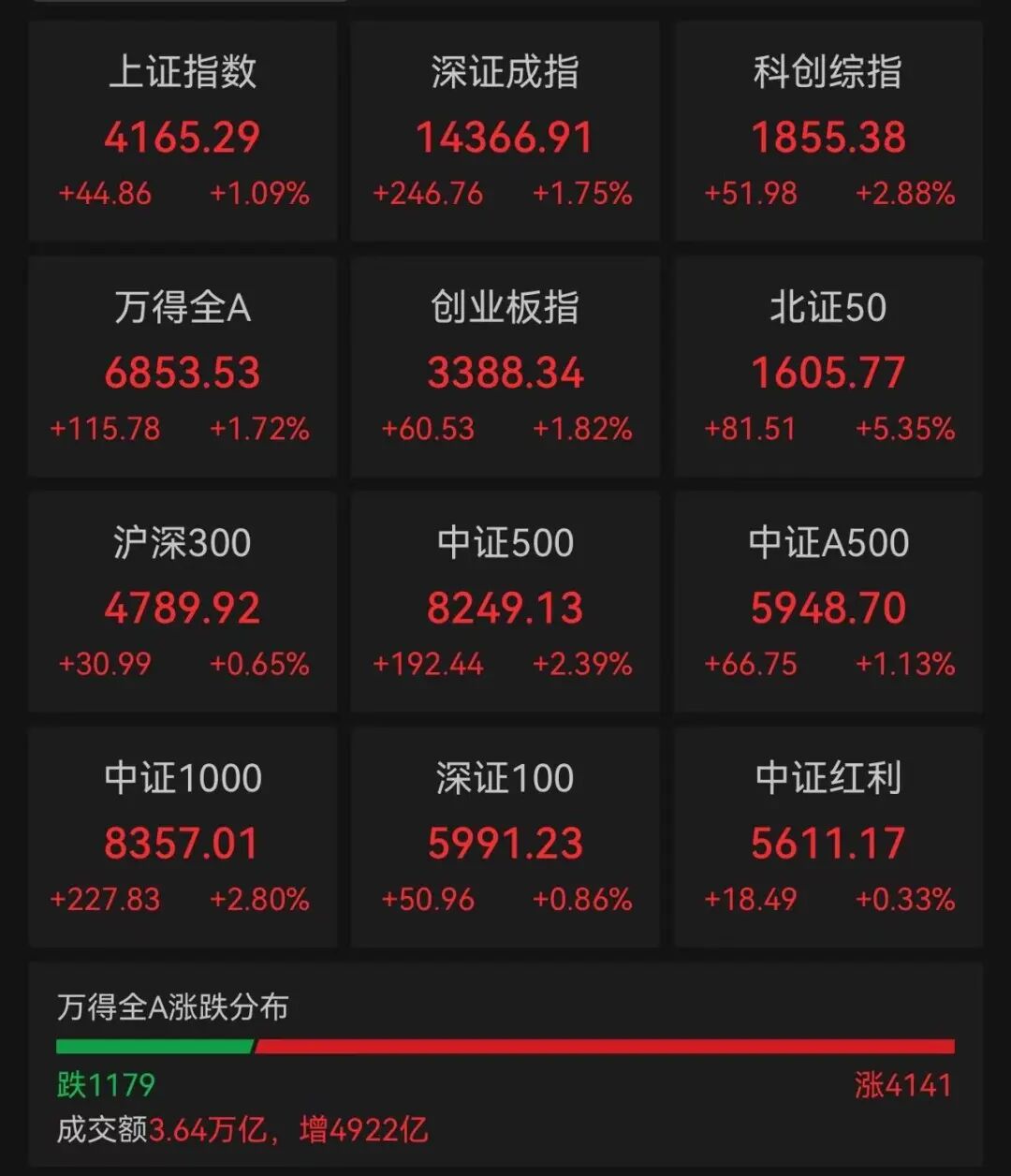
Market Performance - The A-share market continued its upward trend on January 12, with the Shanghai Composite Index, Shenzhen Component Index, and ChiNext Index rising by 1.09%, 1.75%, and 1.82% respectively [1] - The total market turnover reached 3.64 trillion yuan, marking the second consecutive trading day above 3 trillion yuan, setting a new historical record [1][2] Sector Performance - The AI application sector experienced significant growth, with the Wande Internet Index and Software Index increasing by 9.81% and 7.75% respectively, and over 20 stocks, including Tianrun Technology and Zhongcheng Technology, hitting the daily limit [2][5] - The commercial aerospace sector also showed strong performance, with stocks like Guobo Electronics and Ligong Navigation seeing daily limit increases [6] AI Industry Developments - Domestic and international AI dynamics are intensifying, with major financing activities reported, including xAI's completion of a Series E funding round raising $20 billion (approximately 140 billion yuan) [5] - Domestic large model companies, such as Zhipu and MiniMax, have recently listed on the Hong Kong Stock Exchange, with stock price increases of 80% and 141% respectively [5] - The AI application is in an accelerated penetration phase, supported by government policies aimed at enhancing digital infrastructure and increasing the penetration rate of intelligent agents to 70% by 2027 [6] Technological Advancements - Recent breakthroughs in domestic large models are expected to enhance programming capabilities and support longer context windows, facilitating the deployment of intelligent agents in complex scenarios [6] - Upcoming AI platforms, such as NVIDIA's "Rubin platform" and AMD's "Helios" platform, are set to advance AI computing capabilities [5]
DeepSeek的资金后盾 梁文锋幻方量化2025收益率曝光
Feng Huang Wang· 2026-01-12 10:23
Group 1 - DeepSeek's founder Liang Wenfeng's quantitative hedge fund achieved over 50% return last year, enhancing DeepSeek's potential funding reserves [1] - According to data from Shenzhen Paipai Network Investment Management Co., the average return of funds under Huansheng Quantitative is 56.6% in 2025, managing over 70 billion RMB (approximately 10 billion USD) in assets [1] - Huansheng Quantitative ranks second among Chinese quantitative funds managing over 10 billion RMB, only behind Ningbo Lingjun Investment Management, which leads with over 70% return [1] Group 2 - Liang Wenfeng's strong performance at Huansheng Quantitative is expected to provide more funding support for DeepSeek, which was incubated by Huansheng Quantitative in 2023 [1] - The successful performance of the fund may generate over 700 million USD in revenue based on a 1% management fee and 20% performance fee, significantly exceeding DeepSeek's reported budget of less than 6 million USD for developing its AI model [2] - DeepSeek's research funding comes from Huansheng Quantitative's R&D budget, as previously stated by Liang Wenfeng [3]


杀疯了!两大顶流赛道引爆全市场
Ge Long Hui· 2026-01-12 09:27
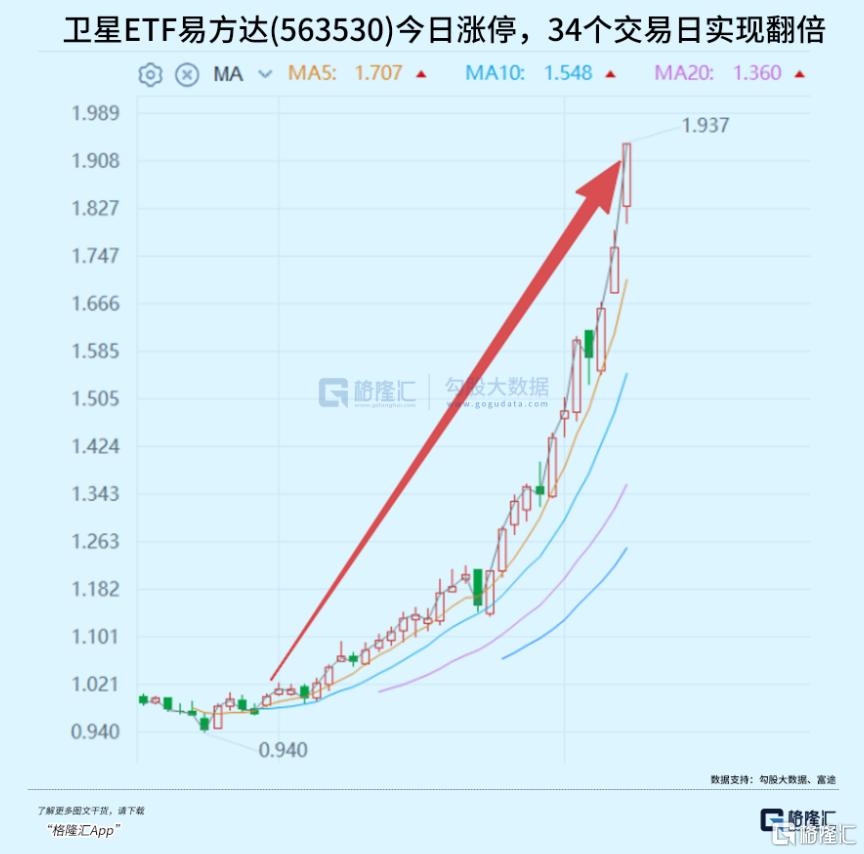
Core Insights - The article highlights the explosive growth of the satellite and AI application sectors, marking the beginning of a strong market trend in 2026, with A-shares achieving a 17-day consecutive rise and nearing 4200 points [1][24]. Group 1: Satellite Industry Developments - China has submitted a record application to the International Telecommunication Union (ITU) for approximately 203,000 satellites, covering 14 constellations, aiming to secure essential resources for satellite internet development over the next decade [6][26]. - The U.S. Federal Communications Commission (FCC) has approved SpaceX's deployment of an additional 7,500 second-generation Starlink satellites, indicating a competitive race for scarce space resources [7][8]. - The satellite industry is experiencing a significant increase in investment, with a notable rise in institutional fund inflows exceeding 150% in key sectors such as satellite manufacturing and rocket support [16][17]. Group 2: AI Application Advancements - The AI sector is witnessing a shift from "Chat" to "Agent" models, with major tech companies accelerating their entry into AI healthcare and other applications [11][12]. - The cost of AI services has decreased by over 90% in the past 18 months, making complex AI applications economically viable for large-scale commercialization [25][28]. - Significant investments are being made in AI, with SoftBank investing $41 billion in OpenAI and ByteDance partnering with NVIDIA for a $14 billion chip collaboration [20][22]. Group 3: Market Trends and Investment Opportunities - The satellite ETF E Fund (563530) has seen a net inflow of 860 million yuan, reflecting strong investor interest in the satellite industry, which is expected to benefit from a long-term growth cycle [18][20]. - The software ETF E Fund (562930) has increased by 213% in size compared to the previous year, indicating a robust interest in AI application companies [20][22]. - The convergence of satellite technology and AI applications is anticipated to create substantial commercial value, with both sectors poised for significant growth in 2026 [30][31].
2025 AI 年度复盘:读完200篇论文,看DeepMind、Meta、DeepSeek ,中美巨头都在描述哪种AGI叙事
3 6 Ke· 2026-01-12 08:44
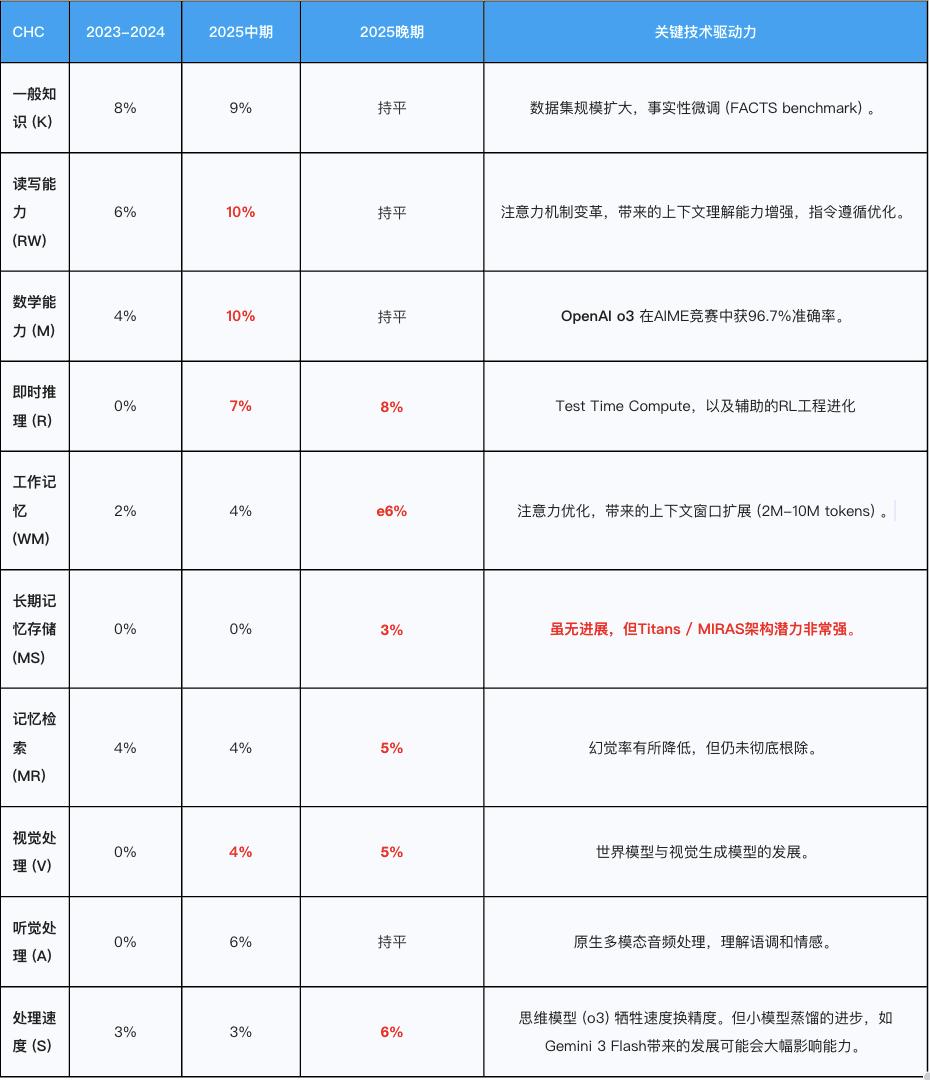
Core Insights - The article discusses the evolution of artificial intelligence (AI) in 2025, highlighting a shift from merely increasing model parameters to enhancing model intelligence through foundational research in areas like fluid reasoning, long-term memory, spatial intelligence, and meta-learning [2][4]. Group 1: Technological Advancements - In 2025, significant technological progress was observed in fluid reasoning, long-term memory, spatial intelligence, and meta-learning, driven by the diminishing returns of scaling laws in AI models [2][3]. - The bottleneck in current AI technology lies in the need for models to not only possess knowledge but also to think and remember effectively, revealing a significant imbalance in AI capabilities [2][4]. - The introduction of Test-Time Compute revolutionized reasoning capabilities, allowing AI to engage in deeper, more thoughtful processing during inference [6][10]. Group 2: Memory and Learning Enhancements - The Titans architecture and Nested Learning emerged as breakthroughs in memory capabilities, enabling models to update their parameters in real-time during inference, thus overcoming the limitations of traditional transformer models [19][21]. - Memory can be categorized into three types: context as memory, RAG-processed context as memory, and internalized memory through parameter integration, with significant advancements in RAG and parameter adjustment methods [19][27]. - The introduction of sparse memory fine-tuning and on-policy distillation methods has mitigated the issue of catastrophic forgetting, allowing models to retain old knowledge while integrating new information [31][33]. Group 3: Spatial Intelligence and World Models - The development of spatial intelligence and world models was marked by advancements in video generation models, such as Genie 3, which demonstrated improved physical understanding and consistency in generated environments [35][36]. - The emergence of the World Labs initiative, led by Stanford professor Fei-Fei Li, focused on generating 3D environments based on multimodal inputs, showcasing a more structured approach to AI-generated content [44][46]. - The V-JEPA 2 model introduced by Meta emphasized predictive learning, allowing models to grasp physical rules through prediction rather than mere observation, enhancing their understanding of causal relationships [50][51]. Group 4: Reinforcement Learning Innovations - Reinforcement learning (RL) saw significant advancements with the rise of verifiable rewards and sparse reward metrics, leading to improved performance in areas like mathematics and coding [11][12]. - The GPRO algorithm gained popularity, simplifying the RL process by eliminating the need for a critic model, thus reducing computational costs while maintaining effectiveness [15][16]. - The exploration of RL's limitations revealed a ceiling effect, indicating that while RL can enhance existing model capabilities, further breakthroughs will require innovations in foundational models or algorithm architectures [17][18].


创历史新高!沪深两市成交额3.6万亿,流金科技30cm涨停
2 1 Shi Ji Jing Ji Bao Dao· 2026-01-12 08:16
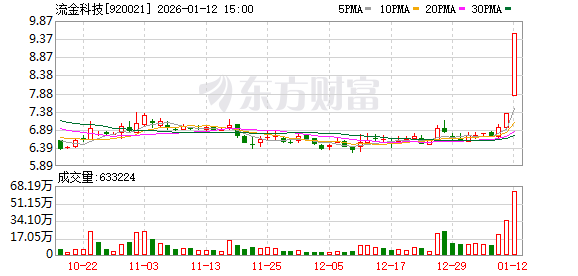
1月12日,A股市场震荡拉升,三大指数均涨超1%。沪深两市成交额3.6万亿创历史新高,连续第2个交 易日突破3万亿。板块方面,AI应用再度大爆发,Sora概念股集体狂欢,流金科技30cm涨停,福石股 份、拓尔思、易点天下、值得买、万兴科技等多股20cm涨停。 消息面上,据报道,DeepSeek计划在未来几周内发布新一代AI模型V4,预计发布时间在2月中旬(春 节)前后,但具体时间仍可能调整。报道称,根据DeepSeek内部基准测试结果,V4在编程任务上的表 现超越了目前市场上的主流模型。 平安证券认为,全球AI算力基础设施能力的持续提高,与全球大模型的持续迭代升级共振,将推动全 球AI产业持续蓬勃发展。当前,智谱、MINIMAX等我国大模型算法公司陆续登录资本市场,我国大模 型商业化的进程有望进一步加快。坚定看好我国AI产业的发展前景,建议持续关注AI主题的投资机 会,关注AI算力、AI算法和应用两个方向的投资机会。 (文章来源:21世纪经济报道) ...

AI应用,为何大爆发?重仓软件开发行业的——信创ETF基金(562030)飙涨7%,三六零等8股涨停!
Xin Lang Cai Jing· 2026-01-12 06:46
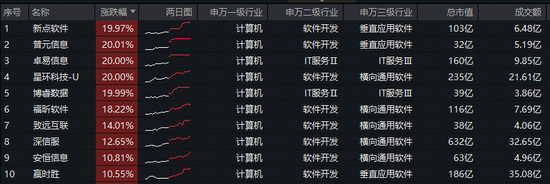
Core Viewpoint - The AI application sector has experienced a significant surge, with multiple stocks reaching their daily limit up, indicating strong market interest and potential investment opportunities in this area [1][8]. Group 1: Market Performance - Five stocks, including Puyuan Information and New Point Software, hit a 20% limit up, while three others, such as Yonyou Network, achieved a 10% limit up [1][9]. - The Innovation ETF (562030), heavily invested in the software development sector, saw its price rise by 7%, indicating strong market momentum [9]. Group 2: Reasons for AI Application Surge - The recent strong market performance of domestic large model companies MiniMax and Zhipu, which have listed on the Hong Kong stock market, signals the successful establishment of a "capital closed loop" for domestic large models, marking the beginning of the "commercial value realization" of AI applications [3][10]. - Three new hotspots in AI applications have emerged: AI for Science (AI4S), Generative Engine Optimization (GEO), and AI in healthcare, with significant user engagement reported for new AI health features [3][10]. - New advancements in large model technology include the release of Qwen3-VL-Embedding and Qwen3-VL-Reranker models, as well as a new architecture proposed by DeepSeek [3][10]. Group 3: Investment Recommendations - Key investment directions in AI applications include: 1. Super entrance: Large models have evolved into dominant traffic entry points in the AI era [4][11]. 2. AI Infrastructure: Software-defined computing is expected to yield stable returns [4][11]. 3. High growth: AI technology is driving commercialization in marketing and entertainment sectors [4][11]. 4. High barriers: Data flow and workflow integration in sectors like healthcare and manufacturing present significant opportunities [4][11]. Group 4: Industry Outlook - The domestic innovation industry is expected to see a recovery in sentiment due to large-scale debt measures and proactive fiscal policies [4][11]. - The current geopolitical climate and the push for self-sufficiency in technology highlight the urgent need for development in the innovation sector, supported by government initiatives [13].

多重利好带动AI概念走强 大模型企业智谱拉升超60%领跑
Zhi Tong Cai Jing· 2026-01-12 06:38
Group 1 - AI concept stocks saw significant gains, with Zhihui (02513) up 61.41% to HKD 256, MINIMAX (00100) up 29.91% to HKD 448.2, and Maifushi (02556) up 26.08% to HKD 48.92 [1] - DeepSeek is set to release its next-generation flagship model V4 in the coming weeks, which reportedly outperforms mainstream models like Claude and ChatGPT in code generation capabilities [1] - CITIC Securities believes that the current dynamics in the AI industry, including financing activities from overseas companies like xAI and Anthropic, along with domestic policies promoting "AI + manufacturing," will lead to a new wave of AI application enthusiasm following the launch of DeepSeek-V4 [1] Group 2 - Zhihui's stock surged over 60%, leading the AI sector, with its market capitalization surpassing HKD 100 billion [2] - The company announced a strategic partnership with Didi to explore key technologies in general artificial intelligence (AGI) and their applications in the transportation sector [2] - Dongwu Securities expressed optimism about Zhihui's strengths in local model technology, open-source ecosystem, and localized implementation capabilities, anticipating benefits from the long-term trend of transitioning from localized deployment to cloud services in China's large model industry [2]
DeepSeek下一代AI 模型V4有望发布,低费率云计算ETF华夏(516630)涨超6%规模再创新高
Xin Lang Cai Jing· 2026-01-12 06:31
Group 1 - The AI sector is experiencing significant momentum, with the low-fee cloud computing ETF Huaxia (516630) rising by 6.47% as of 13:35, marking a three-day consecutive increase [1] - Key stocks within the ETF, including Tuolisi, Hand Information, and Yidian Tianxia, have hit the daily limit up, while other companies like Wanxing Technology and Zhongke Xingtou are also seeing gains [1] - Over the past week, the Huaxia cloud computing ETF has accumulated a rise of 9.33% as of January 9, 2026 [1] Group 2 - According to招商证券, investors are advised to focus on sectors with clear industrial trends such as AI, policy-driven sectors like Xinchuang, and financial technology that benefits from a bullish market [2] - The Huaxia cloud computing ETF (516630) tracks the cloud computing index (930851) and has the lowest fee rate, with a significant focus on domestic AI hardware and software computing power [2] - The index has a combined weight of 83.7% in computer software, cloud services, and computer equipment, with deep seek and AI applications each exceeding 40% [2]