
智元机器人

Search documents
Optimus量产前夕,“新T链”们,来了!
Robot猎场备忘录· 2026-01-02 05:31
Core Viewpoint - The article discusses the recent surge in the T-chain market, driven by the anticipated mass production of Tesla's Optimus robot, indicating a shift towards a more focused selection of key T-chain companies as the market evolves towards 2026 [1][11]. Summary by Sections T-chain Market Dynamics - The T-chain market has transitioned from an "expansion" phase to a "contraction" phase, with a focus on fewer, more reliable companies as mass production approaches [2][3]. - Initially, over 70 T-chain companies were identified, which increased to over 80 by October, but the number is expected to decrease significantly as the market narrows down [2]. Key Developments and Predictions - The T-chain market's performance is closely linked to the progress of Tesla's projects, with significant rebounds noted in mid-November and December due to positive developments in core companies [3]. - Recent communications and agreements with North American partners have led to a surge in orders and confirmations for T-chain companies, indicating strong market interest [3][5]. Emerging Technologies and Opportunities - The article highlights the importance of new technologies such as GaN (Gallium Nitride) and other innovations that are gaining traction in December, with several companies experiencing notable stock performance [9][10]. - The focus on new materials and technologies, including ceramics and integrated sensors, is expected to drive further interest and investment in the T-chain sector [10]. Market Sentiment and Future Outlook - The T-chain sector is currently experiencing a major upward trend, with expectations for continued growth leading into 2026 as more positive developments are anticipated [11]. - The article emphasizes the need for ongoing monitoring of key T-chain companies and their developments, as the market is expected to evolve rapidly with new opportunities emerging [10][12].


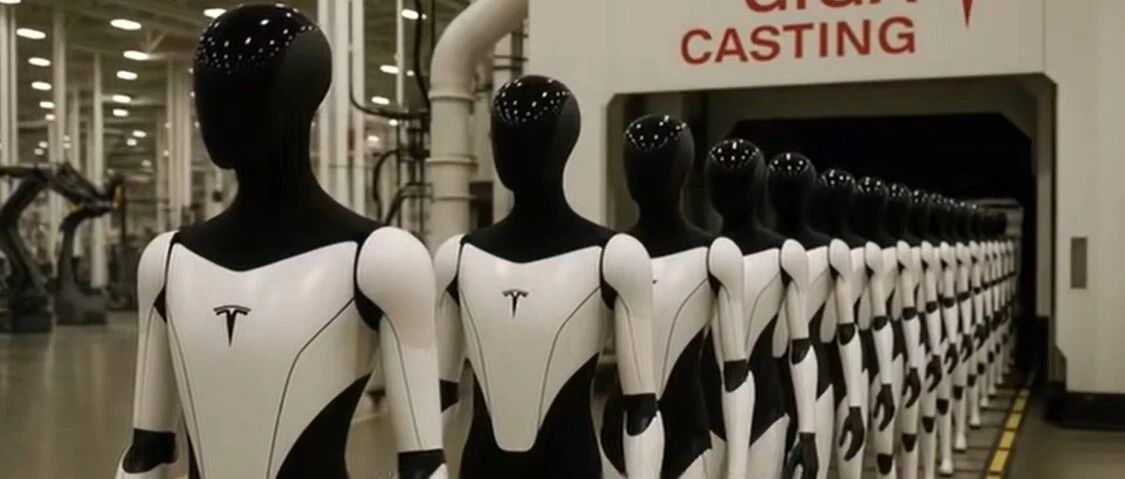
技术同源驱动制造迁移,汽车产业“跨界”抢滩人形机器人
Huan Qiu Wang· 2026-01-02 02:54
Group 1 - The core viewpoint is that the humanoid robot market is rapidly evolving, with significant production targets set by companies like Zhiyuan Robotics and Tesla, indicating a competitive landscape in the industry [1][3] - Zhiyuan Robotics announced the production of its 5,000th robot in December 2025, with expectations to exceed 10,000 units in cumulative shipments by 2026, while Tesla aims for a production target between 50,000 to 100,000 units in the same year [1] - The automotive industry is increasingly becoming a key player in the robotics sector, with companies like Chery Automobile and Dongfeng Motor developing their own robotic solutions, leveraging their existing technological capabilities [3] Group 2 - The commercialization of humanoid robots is still in its early stages, with entertainment applications being the most developed, while industrial applications are beginning to emerge, such as the deployment of robots for material sorting and handling in automotive logistics [4] - Market expectations are driving competition, with Morgan Stanley predicting a global humanoid robot market size of $5 trillion by 2050 and Bain & Company forecasting annual sales of 6 to 10 million units by 2035, with a market size of $120 billion to $260 billion [4] - Cost remains a significant barrier to entry, particularly for core components like AI chips and high-precision sensors, which require further performance breakthroughs and optimization for mass production [4]


DeepSeek元旦发布新论文,开启架构新篇章;安克创新回应“裁员30%”;陈天桥再押注,中国首家超声波脑机接口公司成立丨邦早报
创业邦· 2026-01-02 01:09
Group 1 - Gestala, China's first ultrasound brain-computer interface company, was officially established, focusing on innovative technology for brain signal reading and analysis [3] - Ideal Auto delivered 44,246 vehicles in December 2025, with a total of 1,540,215 vehicles delivered since inception [4] - NIO delivered 48,135 vehicles in December 2025, a year-on-year increase of 54.6%, with total deliveries for the year reaching 326,028 vehicles, up 46.9% [4] Group 2 - Xpeng Motors delivered 37,508 vehicles in December 2025, a 2% year-on-year increase, with total deliveries for the year at 429,445 vehicles, up 126% [4] - Zeekr delivered 30,267 vehicles in December 2025, a historical high, with total annual deliveries of 224,133 vehicles [5] - Leap Motor achieved 60,423 vehicle deliveries in December 2025, a 42% year-on-year increase, with total annual deliveries of 596,555 vehicles, up 103% [5] Group 3 - DeepSeek published a new paper introducing a new architecture called mHC, aimed at addressing instability in large-scale model training while maintaining performance gains [4] - Anker Innovation responded to rumors of a 30% layoff, stating that the adjustments were part of a normal personnel restructuring for strategic upgrades [9] - Neuralink plans to start mass production of brain-computer interface devices in 2026, transitioning to a streamlined, nearly fully automated surgical process [10][12] Group 4 - The Chinese film box office for 2025 reached 51.832 billion yuan, a year-on-year increase of 21.95%, with domestic films accounting for 79.67% of the total [27] - The box office for the 2026 New Year's Day period surpassed 300 million yuan, with "Zootopia 2," "Avatar 3," and "Killing" leading the box office [29] - ListenHub's parent company MarsWave completed a $2 million funding round, with an annual recurring revenue (ARR) exceeding $3 million [23]

人形机器人离我们有多近?现实就在眼前→
Xin Lang Cai Jing· 2026-01-01 11:27
6月18日,在广西柳州市北部生态新区机器人产业园,工人检查工业版人形机器人。新华网发 作为培育新质生产力的重要抓手,人形机器人正通过"机器人即服务"等新模式深刻改变生产组织方式, 未来随着核心技术持续突破与成本下降,将在工业制造、物流运输、医疗康养等更多领域实现规模化应 用,在全球科技竞争格局中展现中国产业力量。 不用再好奇机器人离我们有多近,这个视频,记录的是已经发生的现实↑ 人形机器人产业爆发已在眼前 工信部《人形机器人创新发展指导意见》中指出,到2027年国内人形机器人整机年产量要达到100万 台,通过场景牵引加速行业成熟。国务院发展研究中心预判,2030年产业规模将达4000亿元,2035年突 破万亿元。"十五五"期间我国人形机器人产业有望完成从百亿向千亿规模的跨越并为万亿级产业规模奠 定基础。 2025年春晚舞台上,宇树机器人的舞姿还历历在目。2025年末,智元机器人已经完成了5000台量产的交 付。 人形机器人离我们有多近? 2025年,机器人早已走出实验室,进入真实的生活现场。我们走进商场、街道、工厂,用镜头记录机器 人从概念走向应用的全过程。在不断切换的工作与生活场景中,镜头有时贴近人类的操作 ...
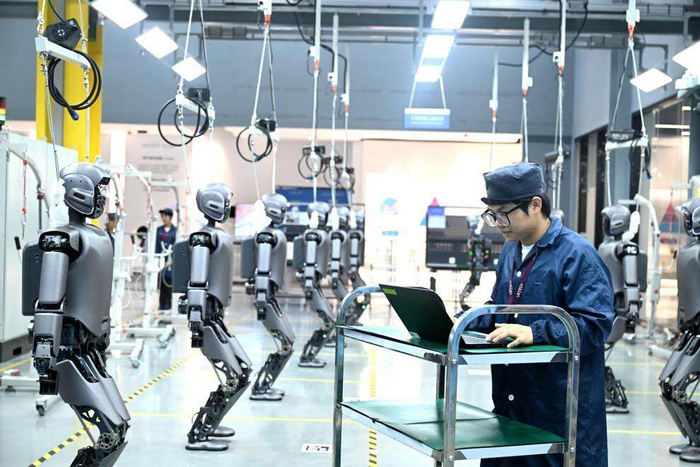
新材料龙头,发布全球首个“个人机器人”!
DT新材料· 2025-12-31 22:06
Core Viewpoint - The article discusses the launch of the world's first personal robot, the Q1, by Shangwei New Materials, which aims to make advanced robotic technology accessible to the general public [2][3]. Group 1: Product Introduction - The Q1 robot stands approximately 0.8 meters tall and can be folded to fit into a 30-35L backpack, making it portable and user-friendly [2]. - The product is positioned as "the first personal robot for everyone," indicating a shift towards consumer-oriented robotics [2]. Group 2: Technological Innovations - The Q1's size reduction to about 1/8 of full-sized humanoid robots enhances its durability, making it more resistant to drops and impacts, thus lowering the cost of trial and error in research [6][11]. - The core innovation lies in the miniaturization of joints using Quasi-Direct Drive (QDD) technology, which allows for high power density and dynamic response while maintaining compactness [10]. Group 3: Market Applications - The Q1 is designed for various applications, including research and interactive scenarios, such as educational interactions with children [14]. - The robot features an AI platform that supports natural dialogue and can assist users in learning activities, such as language practice [14]. Group 4: Customization and User Engagement - The Q1's external structure is fully open-source, allowing users to 3D print custom parts and create personalized designs [16]. - It supports a no-code platform for users to modify actions, voice, and behavior logic, promoting creativity and user engagement [16].

稚晖君重磅发布,上纬新材首款\"个人机器人\"来了!0.8米全身力控,能折叠塞进书包,还可3D打印外壳
Xin Lang Cai Jing· 2025-12-31 16:03
Core Viewpoint - The company has launched the world's first full-body force-controlled small humanoid robot "Qiyuan Q1," marking its entry into the personal robotics market under the "Shangwei Qiyuan" brand [1][12][25] Group 1: Product Features and Innovations - Qiyuan Q1 stands at 0.8 meters tall and compresses laboratory-level capabilities into a backpack-sized form, indicating a clear direction for the company's personal robotics business [1][12] - The core breakthrough of Qiyuan Q1 lies in overcoming the miniaturization challenge of high-performance joints, reducing the QDD direct drive joint to a size smaller than an egg while retaining full-size model performance [1][4][18] - The size reduction to one-eighth of the original volume enhances durability and significantly lowers research and development costs, while also minimizing the gap between simulation and reality [1][4][18] Group 2: Target User Groups - Qiyuan Q1 is positioned as a co-creation platform for three core user groups: researchers, creators, and family users [8][20] - For researchers and learners, Qiyuan Q1 is designed as a "portable laboratory," allowing for safe and low-cost experimental development with its backpack-sized design and open SDK/HDK interfaces [8][20] - For creators and tech enthusiasts, the robot's structure is fully open-source, supporting 3D printing of custom shells and modular head designs, enabling users to create robots without programming knowledge [10][22] - For family users, Qiyuan Q1 features natural language interaction and educational capabilities, making it suitable for daily learning and knowledge sharing [10][22] Group 3: Strategic Business Direction - The launch of Qiyuan Q1 is the first clear business direction announced after the acquisition and integration of Shangwei New Materials by Zhiyuan Robotics, which acquired at least 63.62% of the company [3][12][24] - The election of Peng Zhihui as chairman of the board at the age of 32 signifies a new leadership direction, focusing on transforming advanced robotic technology into personal devices that are accessible and usable by the general public [3][25] - The "Shangwei Qiyuan" brand aims to engage users in the co-creation and exploration of personal robotics, with the potential impact on the company's future business landscape still to be observed [12][25]
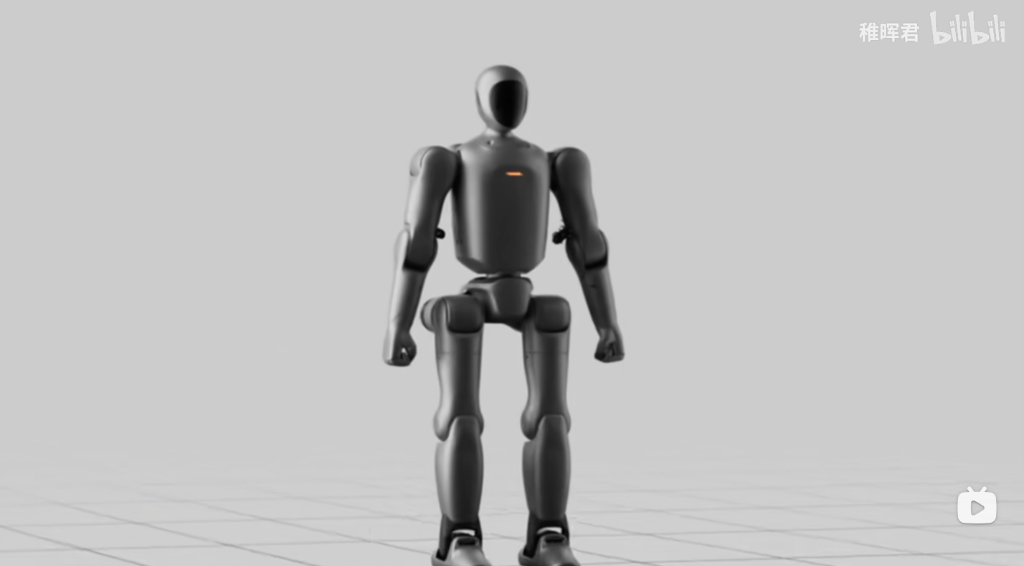
刚刚,90后“天才少年”稚晖君发布人形机器人Q1,折叠后能塞进书包!一个月前当选上纬新材董事长,公司股价半年涨超1500%
Xin Lang Cai Jing· 2025-12-31 16:02
Group 1 - The robot, named Q1, is approximately 80 centimeters tall and targets geek players, families, and educational sectors [1][11] - Q1 is recognized as the world's smallest fully controllable humanoid robot, achieving breakthroughs in joint systems, overall size, and application scenarios, condensing laboratory-level humanoid robot capabilities into a backpack-sized form [6][15] - The size of the robot has been reduced to 1/8 of its original volume, leading to a decrease in weight and lowering the research and development trial costs, which helps in accurately replicating actions and strategies trained in virtual environments [6][15] Group 2 - On July 8, the company announced that Zhiyuan Robotics plans to gain control through a combination of "agreement transfer + tender offer," resulting in a significant increase in the company's stock price [8][17] - By December 31, the company's stock price had increased by 1537.15% from July 9 to December 31, with multiple instances of abnormal fluctuations [8][17] - The company’s humanoid robot business is still in the product development stage, has not yet achieved mass production or scaled sales, and is not expected to generate revenue or profit in 2025 [9][18]

90后“天才少年”稚晖君发布人形机器人Q1 折叠后能塞进书包
Di Yi Cai Jing· 2025-12-31 13:52
Group 1 - The core point of the article is that Shangwei New Materials has achieved a record high stock price of 127.37 yuan per share, with an annual increase of 1820.29%, making it the top performer in the A-share market excluding newly listed stocks [1] - The company unveiled its "C-end robot" business, featuring the world's first full-body force-controlled small humanoid robot, Shangwei Qiyuan Q1, which is approximately 80 centimeters tall and designed for enthusiasts, families, and educational purposes [1] - The robot can be folded and packed into a backpack, showcasing its portability and innovative design [1] Group 2 - Shangwei New Materials indicated that its embodied intelligent robot business is still in the prototype stage and is in the initial phase of promotion, with no expected positive impact on the company's performance for the fiscal year 2025 [3] - The company cannot predict the revenue and profit impact for the fiscal year 2026, advising investors to be cautious about trading risks [3] - Shangwei New Materials was established in October 2000, with a registered capital of approximately 400 million yuan, and its business scope includes the sale and manufacturing of synthetic materials and specialized chemical products [3]
全球首个“个人机器人”来了
财联社· 2025-12-31 13:30
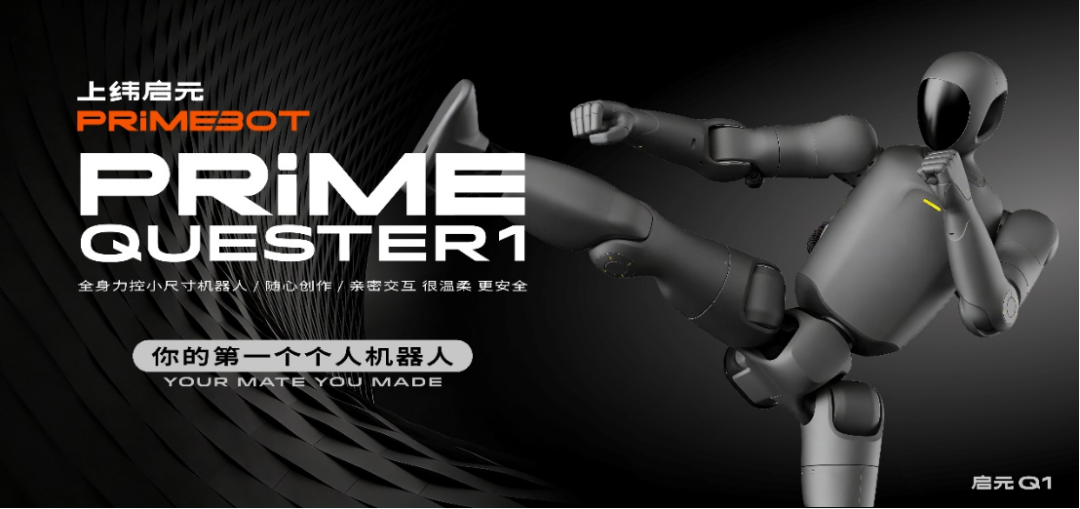
为什么要做小? 试错成本 是Sim2Real(仿真到现实)的一大痛点。Q1尺寸减半意味着它的体积和重量只有全尺寸机器人的约1/8,更加耐摔耐炸,小体型 意味着更低的试错成本和更高的迭代效率,有利于加快科研节奏。 就在刚刚,智元机器人联合创始人彭志辉在B站发布他在2025年的最后一个作品,介绍了新产品—— 全球首个个人机器人,即小尺寸全身 力控人形机器人产品:启元Q1。 视频末尾附有"上纬启元"品牌logo。 启元Q1的站立高度约为0.8米,收纳模式的机身长度在0.5米左右。可以折叠后装进一个30-35L左右的双肩包里。 Q1面向怎样的场景?主要是科研、交互。 正如前面提到的,启元Q1规避了全尺寸人形机器人的重量问题,耐摔、耐炸的属性极大减小了科研人员在真机上验证模拟算法时的试错成 本。这次智元还展示了儿童陪伴场景,如Q1机器人与孩子互动、教英语。通过内置的"智元灵心"AI平台,Q1机器人支持进行自然对话、百 科问答,可以教用户跳舞或练习英语口语。 另外,启元Q1的外观结构件完全开源,用户可以自行为它3D打印各种外观件,进行模块化"换头",打造专属IP形象,这款机器人同时支持 零代码平台创作,自行调整骑动作、语 ...

AI进化速递丨上纬启元发布首款全身力控小尺寸人形机器人
Di Yi Cai Jing· 2025-12-31 13:13
Group 1 - Suzhou is promoting artificial intelligence application scenarios with a maximum reward of 10 million yuan [1] - The company Weiqi Qiyuan has launched its first small-sized humanoid robot with full-body force control [1] - Zhiyuan Robotics has released the Act2Goal solution [1] Group 2 - Alibaba's Tongyi Qwen-Image-2512 has been open-sourced [1] - Hezhima Intelligent has reached a strategic cooperation with Lenovo Research Institute's robotics laboratory [1]