恒大

Search documents
恒大退市前被讨债3199亿,清盘人手握资金不足14亿
Sou Hu Cai Jing· 2025-08-14 09:05
Core Viewpoint - Evergrande has been delisted from the Hong Kong Stock Exchange after 18 months of suspension, marking the end of its 16-year listing journey, with significant implications for its creditors [1][2]. Group 1: Financial Status - Evergrande's peak market value reached HKD 400 billion in 2017, but it has plummeted to only HKD 21 billion before delisting [1]. - The company has accumulated debts totaling CNY 2.4 trillion, making it one of the largest financial scandals in Chinese corporate history [1]. - As of the end of July, creditors have filed claims totaling CNY 319.9 billion, while the liquidators currently control assets valued at only CNY 24.68 billion [1][2]. Group 2: Asset Liquidation - The liquidators have reported that the cash available for debt repayment is merely CNY 1.8 billion, with only CNY 746.7 million coming directly from Evergrande [1]. - The most valuable asset of Evergrande is its property management division, which is prioritized for liquidation [3].
恒大退市倒计时10天,许家印夫妇400亿分红追讨悬顶
Sou Hu Cai Jing· 2025-08-13 01:36
Core Viewpoint - Evergrande's delisting from the Hong Kong Stock Exchange marks a significant end to its once-prominent status in the real estate sector, highlighting the severe consequences of its financial mismanagement and the ongoing legal challenges faced by its executives [1][3]. Group 1: Delisting and Financial Consequences - Evergrande has officially given up on its efforts to reverse its delisting, acknowledging its fate without meeting any of the previously set conditions for resumption [3]. - The company has effectively closed off its financing avenues, with no access to capital markets, as only 24% of its domestic debt restructuring has been approved [3]. - The transition from a successful listing in 2009 to being the largest delisted real estate company in Hong Kong signifies a rapid decline in its market position [3]. Group 2: Legal and Financial Challenges - The Hong Kong court is pursuing 41.8 billion HKD in illegal dividends distributed during the debt crisis, which is seen as a method of extracting value from the company [4]. - The freezing of over 50 billion HKD in domestic assets is primarily a judicial measure to prevent asset transfer rather than a new discovery of hidden assets [4]. - The total liabilities of Evergrande amount to 2.4 trillion HKD, making the frozen assets insufficient to address its financial obligations [4]. Group 3: Ongoing Risks and Future Outlook - The appointment of liquidators by the Hong Kong court indicates that investigations into Evergrande's assets and potential cross-border claims are just beginning [5]. - The current approval rate for domestic debt restructuring is below 30%, and failure to achieve a successful restructuring could lead to a wave of lawsuits [5]. - Criminal accountability for the company's executives remains unresolved, with potential charges of financial fraud and misappropriation of funds looming [5]. Group 4: Lessons for Investors - The situation serves as a warning against high dividend payouts during cash flow crises, which may indicate asset stripping rather than financial health [6]. - The belief that large companies are too big to fail is challenged by Evergrande's collapse, emphasizing the risks of unchecked expansion [6]. - The essence of business success in the real estate sector ultimately relies on product quality rather than financial maneuvering [6].

X @Bloomberg
Bloomberg· 2025-08-12 23:17
今日必读📉美联储9月大手笔降息预期升温🥁特朗普讽高盛掌门不如改行当DJ🏚️恒大清盘人排除整体重组可能获取免费中文电子报《彭博财经早茶》,洞悉全球市场动态。Catch up on what's moving China's markets in our free Chinese language newsletter. https://t.co/FVlgFO2EiC ...
国内房价为什么这几年开始跌了?
Sou Hu Cai Jing· 2025-08-08 03:59
Group 1 - The decline in domestic housing prices is a result of multiple intertwined factors, primarily characterized by "high leverage expansion + demographic dividend decline + policy correction" [1] Group 2 - Structural imbalance in supply and demand is evident, with new housing inventory reaching 750 million square meters, requiring 5.7 years to digest [4] - The surge in second-hand housing listings is notable, with cities like Chongqing and Wuhan exceeding 200,000 listings [4] - The national housing vacancy rate stands at approximately 15%, equating to 380 billion square meters, with severe issues in third and fourth-tier cities [4] Group 3 - Demand continues to shrink, with urbanization rate at 65.2% and the annual growth rate of urban population decreasing from 20 million to 10 million [4] - The primary home-buying demographic (ages 25-44) has decreased by 60 million since 2015 [4] - The birth rate has dropped to 1.09, lower than Japan, with marriage numbers expected to fall below 5 million in 2024 [4] Group 4 - The "housing is for living, not for speculation" policy has deepened, with investment home purchases dropping from 23% to 11% [4] - The financial risks are exposed, with developers like Evergrande having debts of 2.4 trillion and residents' leverage rate reaching 63% [4] Group 5 - Economic growth faces pressure from pandemic impacts and trade friction, affecting consumer confidence [4] - The aging population, currently at 14.9% for those over 65, is projected to exceed 30% by 2035, reducing new housing demand [4] Group 6 - Core cities like Beijing and Shanghai are less affected due to industrial upgrades attracting high-end demand [4] - Non-core cities, such as Hegang and Ordos, are experiencing drastic price drops [4] - Population flow is polarized, with new first-tier cities seeing net inflows exceeding 500,000, while northeastern regions face an outflow rate of 819% [4] Group 7 - A trend reversal has formed, with short-term policy stimuli like the "517 new policy" expected to have only a temporary effect [4] - Long-term recovery relies on industrial transformation and demographic structure optimization, emphasizing the need to focus on the integration of industry and city in core urban areas [4]
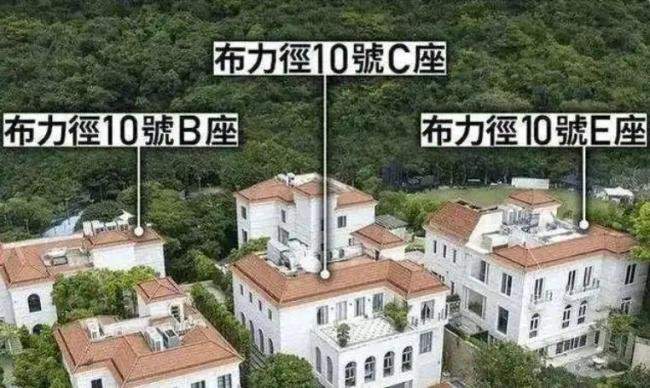
前恒大老板许家印当年25亿港元购入香港大宅被曝违建,挖出464㎡地牢遭勒令清拆!许家印前妻丁玉梅海外资产价值数亿美元
Ge Long Hui· 2025-08-06 08:18
Group 1 - Former Evergrande owner Xu Jiayin's offshore company is reported to have significant illegal constructions in his luxury Hong Kong properties, including a dungeon [1][3] - In 2010, Xu purchased three luxury homes in Hong Kong for HKD 2.5 billion, with a total usable area exceeding 450 square meters [1] - The properties are now listed for sale at a significant discount, with two villas priced at HKD 900 million, down from a previous valuation of HKD 1.5 billion, representing a 60% decrease [1] Group 2 - The Hong Kong Buildings Department discovered illegal constructions exceeding 6,000 square feet in one of the unsold properties, including a raised platform and a dug-out dungeon estimated at about 464.5 square meters [3] - The Buildings Department has issued demolition orders for the illegal structures and is overseeing the compliance process [3] - Court documents reveal that Xu Jiayin owns multiple high-value assets, including private jets, yachts, luxury cars, and extensive real estate holdings, all facing potential court freezes and liquidation [3]
二十多年房地产市场野蛮生长给国家与人民带来什么?
Sou Hu Cai Jing· 2025-08-02 20:22
Core Insights - The report by the Ministry of Housing and Urban-Rural Development reveals a national housing vacancy rate of 21.3%, indicating approximately 120 million units are idle, significantly exceeding the internationally accepted standard of 5% [1] - The severe imbalance in the real estate market is attributed to local governments' reliance on land finance, which has led to excessive real estate development despite declining population trends [1][3] - The average housing price-to-income ratio in first-tier cities is 18.7, making home ownership increasingly unattainable for average families, particularly in lower-tier cities where the ratio is still high [1] Group 1 - The national housing vacancy rate stands at 21.3%, with first-tier cities averaging 16.5% and third- and fourth-tier cities reaching 26.4% [1] - The report highlights a direct correlation between the overdevelopment of real estate and the land finance model, which has contributed to a significant waste of resources [1][3] - Population decline is evident, with 2023 seeing a birth rate drop below 9 million and a natural growth rate of -0.15%, further exacerbating the housing demand issue [1] Group 2 - Approximately 38% of urban housing is for investment purposes, with nearly 40% of these properties remaining vacant, indicating a shift from housing as a necessity to a financial asset [3] - The real estate market's overreliance on investment has led to a disconnect between supply and actual housing needs, resulting in inflated prices and economic pressure on families [3][4] - The rapid urbanization in China has been criticized for mimicking Western models without considering local conditions, leading to a housing market that is out of sync with real demand [3][4]

透视涂丨上市是涂料企业的“救命稻草”还是“达摩克利斯之剑”?
Sou Hu Cai Jing· 2025-07-27 14:12
Core Viewpoint - The listing of companies in the paint industry has become a double-edged sword, often leading to decline rather than growth, with many once-prominent firms now struggling to survive [1][19][25] Group 1: Performance of Listed Paint Companies - Many listed paint companies have shown disappointing performance, with a notable decline in revenue and profitability [3][5][9] - Companies like Yushanshan and Jinlitai have faced severe operational challenges, including leadership instability and financial losses [5][9][15] - The overall trend indicates that the majority of listed paint companies are experiencing a downward trajectory, with only a few exceptions like Sanjiao Tree showing stable growth [1][19] Group 2: Historical Context and Challenges - Historical leaders in the paint industry, such as Xibei Chemical and Shuanghu, have seen their fortunes decline after decades of development, often becoming targets for capital manipulation [3][5][7] - The rapid expansion and subsequent failures of companies like Xibei Chemical highlight the risks associated with aggressive growth strategies [5][9] - The case of Tianjin Lighthouse illustrates how some companies have managed to survive through strategic acquisitions, while others have faded into obscurity [3][5] Group 3: Market Dynamics and Future Outlook - The paint industry is facing significant external pressures, including market downturns and declining demand, which are exacerbating the struggles of listed companies [11][15] - Companies like Aishichuangneng and Feilu are grappling with substantial losses and strategic uncertainties, indicating a broader industry malaise [11][13] - The overall sentiment suggests that the pursuit of listing may not be the panacea for growth, as many firms are finding that it can lead to increased pressure and potential decline [19][25]





财达证券晨会纪要-20250716

Caida Securities· 2025-07-16 03:21
Summary of Key Points Core Insights - The report highlights the signing of a memorandum between China and Australia regarding the implementation and review of the China-Australia Free Trade Agreement, indicating a strengthening of trade relations between the two countries [1]. Company Listings - The report notes the initial inquiry dates for the following companies: - Hanguo Group (001221) starting on July 16, 2025 - N Huaxin (600930) listed on July 16, 2025 [1]. Special Suspensions - The report details the suspension of trading for several companies due to various reasons: - Zhongsheng Gaoke (002778) suspended due to control change planning starting July 16, 2025 [2]. - Multiple bonds from Zhonglin Group (e.g., 23 Zhonglin Group SCP003, SCP004, etc.) suspended starting November 21, 2023 [2]. - Other notable suspensions include: - Sany Convertible Bond (110032) suspended since March 20, 2019 [3]. - Antai 01 (112045) suspended since March 28, 2023 [3]. Additional Suspensions - The report lists further suspensions for various financial instruments, including: - H6融创03 (114821) suspended since May 27, 2025 [4]. - 21苏电01 (114923) suspended since December 27, 2021 [4]. - A range of other bonds and securities have also been suspended for various reasons, indicating ongoing market adjustments and regulatory actions [5][6][7][8][9][10].
3.6万亿巨雷,比恒大更猛,中植系背后15万中产家庭被套牢!
Sou Hu Cai Jing· 2025-07-14 04:53
Core Viewpoint - The sudden bankruptcy of Zhongzhi Group, once the largest private financial group in China, has raised significant concerns in the financial industry, with implications that may surpass the previous Evergrande crisis [3][8]. Group 1: Company Overview - Zhongzhi Group was established in 1995 and initially profited from the timber business before diversifying into various sectors including mining, clothing, catering, and cement [4]. - The group entered the real estate market in 1997 and later shifted focus to the more lucrative financial sector, engaging in equity acquisitions of small and medium enterprises and wealth management [4]. Group 2: Financial Structure and Impact - Zhongzhi Group controlled or held stakes in six licensed financial institutions and had nine publicly listed companies under its control, making it a significant player in the financial industry [6]. - The group managed assets that peaked at 3.6 trillion, surpassing Evergrande's scale, but is now facing liabilities exceeding 400 billion, leading to a severe insolvency situation [3][6]. Group 3: Reasons for Bankruptcy - The group's financial troubles were exacerbated by poor investment decisions, including significant losses from investments in problematic stocks like LeEco and Kangde Xin, and the death of its founder in 2021, which destabilized the organization [11]. - Zhongzhi Group's aggressive investments in the real estate sector during a downturn, particularly from 2021 onwards, resulted in substantial financial losses [12]. - High-yield financial products offered by its wealth management companies attracted investors with promised returns of 10%-12%, but the inability to meet these obligations has led to significant losses for investors [14]. Group 4: Investor Impact - The bankruptcy has affected approximately 150,000 high-net-worth individuals, with total claims reaching 230 billion, and many investors facing losses of over 3 million each [8][14]. - The likelihood of recovering investments post-bankruptcy is extremely low, as remaining assets will first cover employee wages and debts to banks and creditors before any potential returns to investors [14].
刘锋:如何以资产锚定突破人民币国际化中的信用困境|政策与监管
清华金融评论· 2025-07-09 09:26
Core Viewpoint - The article emphasizes the urgent need to address two key issues in building and improving the international credit system for the Renminbi: the transformation of vast domestic economic and financial assets into a solid credit foundation for Renminbi internationalization, and the potential of digital technology to enhance the international recognition and attractiveness of Renminbi-denominated assets [1][2]. Group 1: Cross-Border Credit and Internationalization Challenges - The internationalization of the Renminbi has entered a critical phase, with significant issues such as frequent defaults on offshore bonds by Chinese real estate companies, totaling $147 billion since 2021, and a cash recovery rate of only 0.6% for investors, highlighting severe obstacles in the cross-border liquidity and credit conversion mechanisms of domestic assets [2][4]. - The real estate sector, once a crucial pillar of credit, is now trapped in a liquidity crisis, with high levels of offshore debt defaults and low asset disposal rates due to restrictions on the cross-border flow of core assets like land and commercial real estate [4][5]. Group 2: Marketization and Legalization Shortcomings - Capital flow controls limit foreign investors' ability to freely allocate Renminbi assets, with the current reliance on quota mechanisms like QFII/RQFII hindering the attractiveness of Renminbi-denominated high-risk, high-return assets [7]. - Legal recognition issues are prominent, as cross-border restructuring processes often fail due to ineffective judicial enforcement, exemplified by the lack of force of Hong Kong court orders on mainland assets, which increases institutional costs [7]. Group 3: Digital Asset Credit Anchoring and Cross-Border Flow Issues - Real World Assets (RWA) tokenization, utilizing blockchain technology to convert tangible and intangible assets into digital tokens, has not yet effectively addressed the credit anchoring of assets in the context of digital Renminbi applications [8][9]. - The current focus of digital Renminbi on enhancing payment efficiency does not resolve the asset credit anchoring issue, leading to an imbalance where offshore markets are more active than onshore [9]. Group 4: Strategies for Enhancing International Credit - The article proposes leveraging RWA to activate real estate liquidity and reassess market value, with examples of successful tokenization projects that lower investment barriers and enhance transparency and liquidity [11]. - Establishing a dual-anchor system to strengthen the synergy between sovereign credit and market credit is suggested, including the issuance of offshore digital bonds and allowing Chinese banks to issue offshore Renminbi stablecoins [13]. Group 5: Breaking Down Cross-Border Regulatory Barriers - The article advocates for judicial recognition between mainland China and Hong Kong to clarify the legal claims of foreign investors on domestic assets, and the introduction of dynamic valuation mechanisms to prevent inflated collateral values [14]. - A multi-layered credit anchor system is proposed, focusing on activating existing asset liquidity and enhancing legal frameworks to support cross-border transactions [15][16]. Group 6: Internationalization of Sovereign Digital Assets - The issuance of digital bonds backed by RWA and the inclusion of Renminbi RWA in the IMF's Special Drawing Rights (SDR) basket are highlighted as crucial steps towards enhancing the international status of the Renminbi [17]. - The ultimate goal is to transform the Renminbi from a settlement tool into a value container, thereby responding to Western financial hegemony and contributing to the diversification of the global financial system [17].