
Synchron

Search documents
千万级融资!入耳式脑机接口完成天使轮
思宇MedTech· 2025-09-04 03:39
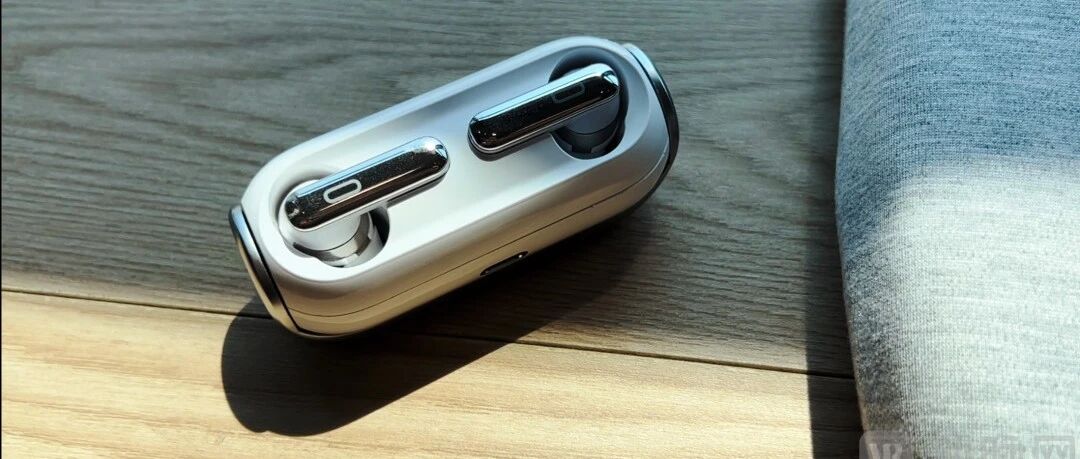
Core Viewpoint - The article highlights the rapid development of the brain-computer interface (BCI) industry, focusing on the innovative approach of Shanghai Brain Rhythm Technology Co., Ltd. with its non-invasive ear-wearable EEG device, aiming to make BCI technology more accessible and mainstream [2][10]. Company and Team Background - Brain Rhythm Technology was established in April 2024 and is headquartered in Shanghai, specializing in brain-computer interfaces and consumer electronics [4]. - The founder, Wang Zhaoyang, has a strong background in consumer electronics and smart hardware, having participated in the NASDAQ listing of Yunmi Technology [4]. Product and Technical Features - The company's ear-wearable EEG device weighs only 6 grams, making it the lightest consumer-grade EEG product globally [5]. - The device features a non-invasive design that reportedly matches the monitoring effectiveness of professional BCI equipment, addressing comfort and signal stability for long-term use [5]. Industry Background and Trends - The BCI industry is experiencing rapid growth, with international companies like Neuralink and Synchron advancing invasive products, while domestic startups explore non-invasive options [10]. - Brain Rhythm Technology's strategy focuses on consumer electronics to bring BCI technology to the mass market [10]. Policy Support - On July 30, 2025, several Chinese government agencies released implementation opinions to promote innovation and development in the BCI industry, aiming for breakthroughs in key technologies by 2027 [13][15]. - Local governments are also creating tailored policies to support BCI development, with cities like Beijing, Shanghai, Guangdong, and Sichuan focusing on different aspects of the industry [16][18][19][21].

清华教授高小榕:大脑的未来,或许没有那么科幻
3 6 Ke· 2025-08-30 16:33
Core Viewpoint - The brain-computer interface (BCI) technology is advancing rapidly, with companies like Neuralink and Synchron making significant strides in clinical trials, aiming to restore lost functions in patients with paralysis or neurological diseases. However, there is a growing divide between the optimistic visions promoted by tech leaders and the ethical considerations surrounding the technology's potential applications [1][2][3]. Group 1: Current Developments in BCI Technology - Neuralink has completed craniotomy implants in a small number of patients, focusing on restoring motor and speech functions, with plans to conduct speech cortex experiments by Q4 2025 [1]. - Synchron has validated the safety and partial recovery of daily functions for paralyzed patients through minimally invasive vascular implants [1]. - The technology is being explored for various applications, including movement compensation, speech recovery, and potential treatments for conditions like schizophrenia and autism [8][9]. Group 2: Ethical Considerations and Limitations - The concept of "superhuman" capabilities through BCI, such as consciousness uploading, is deemed ethically unacceptable and currently unrealistic [2][3][7]. - The focus of BCI technology is on repair and assistance rather than enhancement, with a clear distinction between restoring normal function and exceeding natural human abilities [3][4]. - The potential for BCI to facilitate human-machine collaboration is emphasized, particularly in bridging communication gaps between human and artificial intelligences [4]. Group 3: Future Prospects and Challenges - The timeline for achieving mature BCI technology has been revised to approximately 15 to 20 years, although significant limitations remain, such as the lifespan of implanted devices [17][18]. - The advancement of AI is expected to play a crucial role in overcoming current challenges in data processing and signal interpretation within BCI systems [10]. - There is a notable difference in research focus between the US and China, with China leading in non-invasive and semi-invasive methods, while the US excels in invasive techniques [16].
奥尔特曼向马斯克发起新挑战
第一财经· 2025-08-13 09:16
Core Viewpoint - OpenAI is entering the brain-computer interface (BCI) sector, aiming to compete with Elon Musk's Neuralink, which is already in clinical trials and has a valuation nearing $10 billion [3][4]. Group 1: Market Potential and Competition - OpenAI plans to invest in Merge Labs with an estimated valuation of $850 million, indicating a strategic move into the BCI market [3]. - The BCI market is projected to reach a size of $400 billion, but revenue is expected to be less than $1.5 billion by 2035, highlighting the early-stage development and opportunities within the industry [3]. - Neuralink aims to receive FDA approval for its BCI products by 2029, with a target of implanting 20,000 devices within two years, potentially generating over $1 billion in revenue [3]. Group 2: Developments in the U.S. and China - The U.S. BCI market is highly competitive, with companies like Precision Neuroscience, Synchron, Onward, and Paradromics initiating or planning clinical trials [4]. - 2025 is considered a pivotal year for China's BCI industry, with multiple research teams announcing clinical trials and achieving significant milestones in patient rehabilitation [5]. - The largest funding round in China's invasive BCI sector this year reached 350 million RMB, indicating strong investor interest [5]. Group 3: Technological Implications - Experts highlight the transformative potential of BCI technology, which could not only restore movement for paralyzed patients but also enable future applications like human-AI thought integration and memory storage [5]. - Current applications focus on helping paralyzed patients regain motor functions, with successful cases reported by major hospitals [5].

奥尔特曼向马斯克发起新挑战,瞄准千亿美元量级脑机接口市场
Di Yi Cai Jing· 2025-08-13 08:34
Core Insights - Brain-computer interface (BCI) technology has the potential to help paralyzed patients regain mobility and may eventually enable human-machine thought interconnection, memory storage, and even consciousness uploading, fundamentally reshaping human-technology interaction [1][2] - OpenAI is planning to invest in a new BCI startup, Merge Labs, with an estimated valuation of approximately $850 million, intensifying competition with Elon Musk's Neuralink, which is already in clinical trials [1] - The BCI market is projected to reach a size of $400 billion, but revenue from global BCI products is expected to be less than $1.5 billion by 2035, indicating that the industry is still in its early development stages with significant opportunities [1] Company Developments - Neuralink has implanted devices in 7 patients and is valued at nearly $10 billion, with expectations to receive FDA approval for its BCI products by 2029 and to implant 20,000 devices within two years, generating over $1 billion in revenue [1] - In the U.S. market, competition in the BCI sector is intensifying, with companies like Precision Neuroscience, Synchron, Onward, and Paradromics announcing or preparing to initiate clinical trials [2] Industry Trends - 2025 is anticipated to be a pivotal year for the BCI industry in China, with multiple research teams announcing or nearing clinical trials and claiming to have completed the world's first clinical treatments to help patients regain motor functions [2] - The largest round of financing in China's invasive BCI sector this year reached 350 million RMB, secured by JieTi Medical [2] - Experts highlight the disruptive potential of BCI technology, emphasizing its current applications in restoring mobility for paralyzed patients and future possibilities such as capturing emotional signals and achieving "thought downloading," leading to a true integration of carbon-based and silicon-based life [2]
中信证券:脑机接口行业生态快速演进 建议关注三大类公司
Zhi Tong Cai Jing· 2025-08-13 01:32
中信证券发布研报称,脑机接口行业生态正在快速演进,商业化路径日益清晰。脑机接口技术发展可以 恢复身体功能、提升认知能力,实现人与机器协同工作,最后从长远来看,脑机接口技术将推动人类与 机器的共同进化,这不仅将改变我们的生活方式,还将带来新的社会和经济结构。建议关注:1)医疗级 产品快速落地的领先企业;2)消费级产品培育能力优秀的创新公司;3)具有脑机接口关键技术积累的公 司。 中信证券主要观点如下: 脑机接口生态持续演进,商业化落地迎来曙光 脑机接口是一种接连接大脑与外部设备的技术,其核心技术在于解析大脑复杂神经活动中蕴含的信息, 突破传统神经肌肉传导路径的限制,实现大脑与设备之间的双向通信与控制。(半)侵入式脑机接口在疾 病诊疗市场大有可为,非侵入式是消费市场的主流选择。根据Precedence Research研究数据,全球BCI 市场规模有望从2023年的23.5亿美元成长至2033年的108.9亿美元,对应CAGR为16.6%;根据《脑机接口 技术发展与应用研究报告(2023年)》(中国信通院),医疗是主要产业化方向,占比56%,工业、军事、 娱乐等其他场景占比44%,商业化空间广阔。 严肃医疗领域研 ...

国盛证券:技术进步与政策支持共振 脑机接口迎来商业化曙光
Zhi Tong Cai Jing· 2025-08-12 07:25
Core Insights - The brain-computer interface (BCI) industry is entering a phase of application popularization driven by technological advancements and policy support [1][2][3] Technological Progress - Significant advancements in underlying technologies such as microelectronics, materials science, chips, neuroscience, and algorithms have laid the foundation for breakthroughs in BCI [1] Policy Support - The National Healthcare Security Administration (NHSA) has initiated pricing projects for BCI technologies, paving the way for clinical application and reimbursement starting July 2025 [2] - In January 2025, Beijing and Shanghai released action plans for BCI development, followed by a detailed implementation opinion from multiple government departments in August 2025 [3] Global Development Trends - Neuralink has sparked a global surge in BCI research, with the first surgery completed in January 2024 and seven patients implanted by June 2025 [4] - Other companies like Apple and Synchron are also advancing BCI technologies, with Apple demonstrating thought-controlled iPad technology for ALS patients [4] Domestic Industry Progress - Domestic companies are rapidly advancing BCI research, with significant milestones achieved in clinical trials, including the first clinical implant by Tsinghua University and Xuanwu Hospital in October 2023 [5] - The first complete paraplegic patient regaining the ability to stand and walk was reported in March 2025, showcasing the potential for commercial applications [5]
陈天桥联手清华教授代季峰首发最强开源AI模型项目,全力打造下一个DeepSeek
Tai Mei Ti A P P· 2025-08-10 23:52
Core Insights - The article discusses the establishment of a new company focused on General Artificial Intelligence (AGI) led by Dai Jifeng, a professor at Tsinghua University, and Chen Tianqiao, an entrepreneur and philanthropist [2][12] - The MiroMind AI team has launched the MiroMind Open Deep Research (Miro ODR) project, which is a high-performance, fully open-source deep research initiative, achieving a GAIA score of 82.4, surpassing other models like OpenAI's Deep Research and Manus [3][4] Company Overview - MiroMind aims to create a collaborative environment for building AI rather than providing AI directly, emphasizing community involvement in the development process [5][12] - The company has released four sub-projects on platforms like GitHub and Hugging Face, with plans for monthly updates to enhance the deep research model [5][10] Technical Achievements - MiroMind ODR's GAIA score of 82.4 positions it as the strongest open-source deep research model available, outperforming competitors [4][9] - The project includes various components such as MiroFlow, MiroThinker, MiroVerse, and MiroTrain, each contributing to different aspects of deep research and model training [10][12] Research and Development Focus - The MiroMind team is concentrating on three key areas: AI-driven business decision-making, innovative content distribution algorithms, and AI services tailored for aging and youth demographics [12] - The MiroMind-M1 model, based on 7 billion parameters, has shown superior performance in mathematical reasoning tasks compared to other models [9][11] Leadership and Background - Dai Jifeng has a strong academic and professional background in AI and computer vision, having published over 80 papers and received more than 60,000 citations [7][8] - Chen Tianqiao has a history of investing in brain-computer interface technologies and aims to support long-term, stable investments in hard tech innovations [15][17]


Synchron vs. Neuralink: BCI Brain Implants for Thought-Control
CNET· 2025-08-10 12:00
BCI Technology Overview - Synchron and Neuralink are leading companies in the Brain Computer Interface (BCI) field, developing brain implants to enable users to control digital devices with their thoughts [1][2][3] - Both companies aim to assist individuals with paralysis by enabling them to control digital devices using their thoughts [12] Device and Technology - Synchron's Stentrode uses a minimally invasive approach, implanting a stent-based device into a blood vessel near the brain's motor cortex with 16 electrodes or channels [3][4][7] - Neuralink's Telepathy involves a more invasive process, directly inserting threads into the brain using a surgical robot, featuring 1,000 electrodes or channels [7][9] - Neuralink aims to triple the number of electrodes next year and implant their first patient with blind sight [7] Implant Process and Risks - Synchron's Stentrode implantation carries the risk of blood clots, managed with medication, with the risk decreasing over time [8] - Neuralink's implantation risks include thread retraction or movement, potentially reducing usable channels [10] Development Stage and Vision - Synchron expects the Stentrode to cost between $50,000 and $100,000, comparable to other implantable medical devices [11] - Neuralink is currently in clinical trials and has received approval to launch trials in Canada, the UK, and the United Arab Emirates [11] - Neuralink envisions expanding access to implants beyond medical needs, aiming for bidirectional communication with the brain and increased bandwidth [12]
脑机接口新进展,渐冻症患者用意念操控苹果设备;苹果供应商押注印度制造iPhone,可获得关税减免丨智能制造日报
创业邦· 2025-08-08 03:41
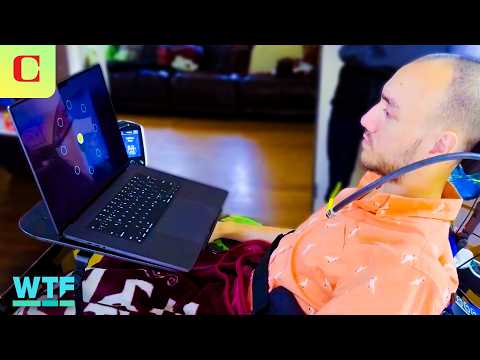
Group 1 - Apple suppliers are betting on large-scale production of new iPhones in India, expecting to avoid the 50% tariffs imposed by Trump on products from India [2] - Yunfan Hydrogen Energy has completed Series A financing to accelerate its development in hydrogen fuel cells and PEM electrolysis technology [2] - The world's first humanoid robot 4S store, Robot Mall, will open in Beijing, showcasing over 50 robots across seven categories, aiming to create an integrated model of experience, sales, and service delivery [2] - Synchron has demonstrated a brain-machine interface that allows ALS patients to control Apple devices using their thoughts, marking a significant advancement in native input methods for technology [2]


OpenAI推出GPT-5;ChatGPT-4.5错误率升高;英特尔回应特朗普批评
Guan Cha Zhe Wang· 2025-08-08 01:17
Group 1 - OpenAI announced the launch of GPT-5, which significantly outperforms previous models in various fields including coding, mathematics, writing, health, and visual perception. The model will be available for free users and paid ChatGPT subscribers, with paid users having higher usage limits [1] - OpenAI reported an increase in error rates for the ChatGPT-4.5 model and is actively working to reduce these errors [2] - Baidu plans to launch a new reasoning model by the end of August that can handle more complex tasks [4] Group 2 - Elon Musk intends to introduce advertisements in the responses of the AI chatbot Grok on the X platform to boost the platform's declining advertising business [3] - Intel reaffirmed its commitment to advancing U.S. national and economic security through investments in semiconductor research and manufacturing, including a new fabrication plant in Arizona [5] - The U.S. government, under President Trump, plans to impose approximately 100% tariffs on chips and semiconductors, while exempting companies like Apple that manufacture in the U.S. [6][5] Group 3 - Synchron demonstrated a brain-machine interface that allows ALS patients to control Apple devices using their thoughts, marking a significant advancement in assistive technology [6] - Seven government departments in China, including the Ministry of Industry and Information Technology, released implementation opinions to promote innovation in the brain-machine interface industry, focusing on the development of auxiliary devices and high-precision surgical robots [7]

