Vivo

Search documents
“手机无卡时代”到来,但必须去线下营业厅办理?
Hu Xiu· 2025-10-23 01:21
Core Viewpoint - The launch of the iPhone Air, a pure eSIM phone, marks a significant shift towards a "SIM-less" future, but the actual implementation and user experience reveal complexities and limitations that may hinder widespread adoption [1][10][30]. Group 1: Product Launch and Market Response - Apple CEO Tim Cook announced the iPhone Air, which will be available in China starting October 22, emphasizing the transition to eSIM technology [1]. - The iPhone Air sold out within five minutes of its pre-sale, indicating strong initial demand, but subsequent concerns about eSIM activation processes have emerged [3][6]. - Analysts predict that Apple may reduce production by 1 million units due to lower-than-expected sales, influenced by mixed international market reactions [3][6]. Group 2: eSIM Technology and User Experience - The iPhone Air supports a maximum of two eSIM numbers, and users must visit physical stores to activate eSIMs, which complicates the process compared to traditional SIM cards [2][17]. - Users must present identification and visit their phone number's local service provider to activate eSIMs, which contrasts with the convenience of online activation for physical SIM cards [18][19]. - The eSIM technology allows for easier switching between carriers and eliminates the need for physical SIM cards, but the current implementation in China is cumbersome and requires in-person visits [12][28]. Group 3: Industry Implications and Challenges - The introduction of eSIM technology is seen as a potential game-changer for mobile devices, allowing for more internal space and innovative designs [35][36]. - However, the reluctance of Chinese telecom operators to fully embrace eSIM technology due to concerns over user retention and security has created barriers to its adoption [37][40]. - The current eSIM process in China resembles the traditional SIM card experience, limiting its advantages and leading to frustration among users [30][26].


苹果iPhone Air在华首发遇冷,已暂停生产?
Hu Xiu· 2025-10-22 10:51
Core Insights - The launch of the iPhone Air in China has been underwhelming, failing to replicate the previous excitement seen with other iPhone releases [1][4] - Many customers are showing interest in the iPhone Air's design but are primarily engaging in trial rather than making purchases [6][7] Sales Performance - On the launch day, there were no long queues at major Apple retail stores in Beijing and Shanghai, indicating a lack of strong demand [2][5] - Despite some color options selling out, the overall customer traffic did not translate into robust sales [5][6] Consumer Feedback - Consumers find the iPhone Air's lightweight design and new colors appealing, but most are opting to try the device rather than buy it [7][8] - The pricing strategy, with a starting price of 7999 yuan, is perceived as high compared to competitive Android flagship models [8][12] Production Status - Reports suggest that iPhone Air production has been paused due to disappointing sales both domestically and internationally, with plans to cut production by one million units by the end of 2025 [14] - Current inventory is deemed sufficient, leading to a temporary halt in production until further orders are accumulated [14] Competitive Landscape - Apple is facing intense competition in the Chinese market from local brands like Huawei, Xiaomi, and Oppo, which offer more competitively priced products [18][20] - Recent launches of flagship models by local competitors further intensify the competitive environment [19] Overall Market Demand - Despite the lackluster performance of the iPhone Air, the overall demand for the iPhone 17 series remains strong, with a 14% increase in sales compared to the previous generation during the first ten days post-launch [21][22] - The success of the iPhone 17 series is attributed to its redesign and enhancements, showcasing Apple's brand strength and ecosystem loyalty [23]
终于等来国内首个不用插电话卡的iPhone,结果跑线下营业厅才能办感觉在用2005年的小灵通?
3 6 Ke· 2025-10-22 09:48
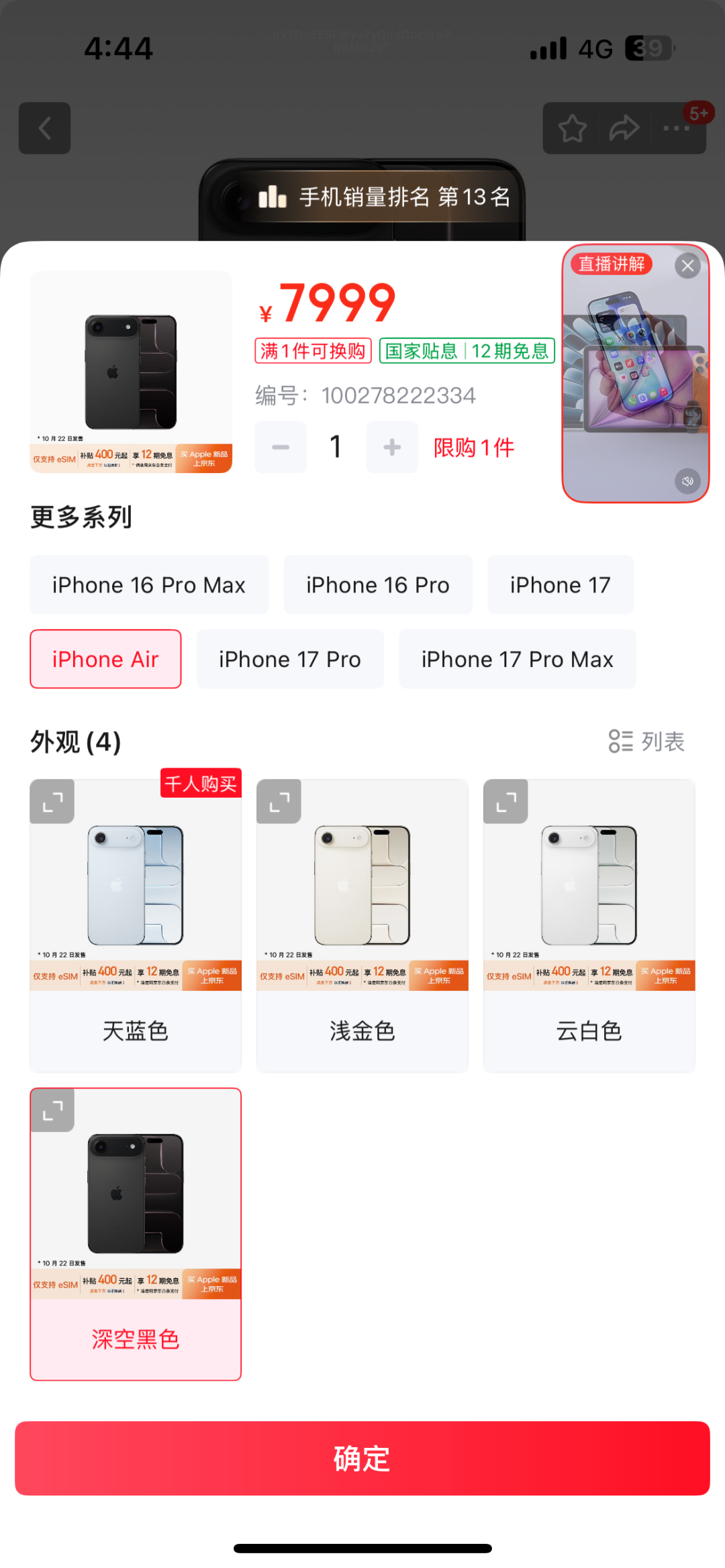
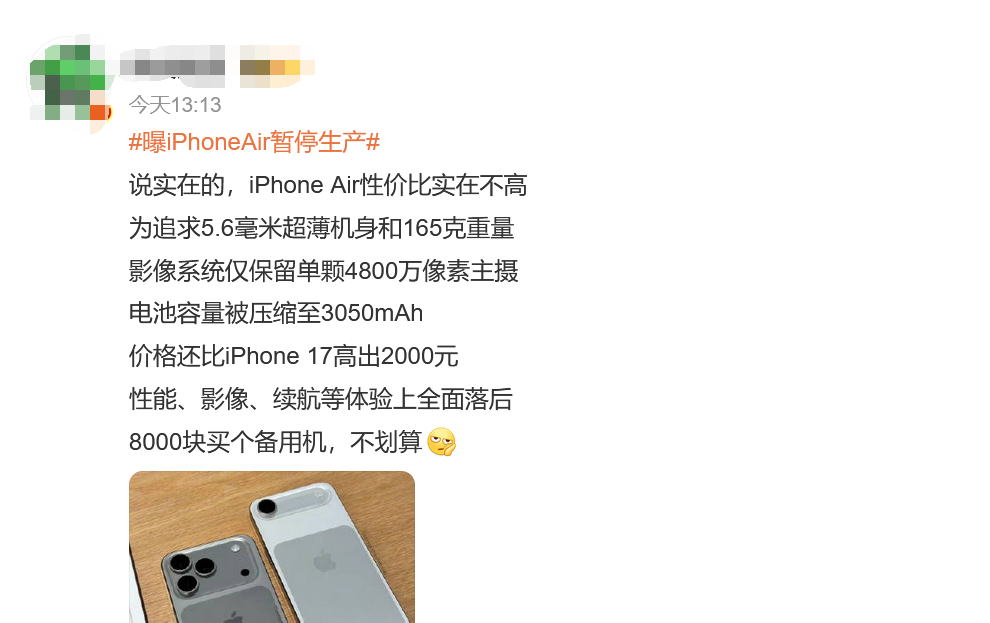
"手机无卡时代"仿佛到来了,但又和所有人想象的不太一样。 上周,苹果CEO库克在直播间里正式宣布纯eSIM手机iPhone Air将于10月22日正式在国内发售。有人兴奋预测,"插卡打电话"这件事再过十几年就会成为 这一代人的历史记忆。就像被15后问到:为什么说到"打电话"时用的手势是比一个"6"在耳边,而你只能感叹时光飞逝。几年后的孩子也会问,为什么家 里的旧手机侧边有个带圆孔的小槽? 按理说eSIM的出现大大省去了你办卡的麻烦:未来买手机,开机后在屏幕上点两下,扫码激活eSIM卡,就能联网、打电话;去到另一个国家也不需要再 线上办实体卡。 但当三大运营商接连宣布启动eSIM办理,兴致勃勃预定了iPhone Air的打工人才傻了眼:一个手机最多绑定两个eSIM号码;办理eSIM必须去线下营业 厅,还得是手机号归属地。 "明天你买的iPhone Air就到了,结果eSIM要回老家办。" 不插手机卡的手机终于要来了 但这部"史上最薄iPhone"其实相当奢侈:256g的价格7999元,比普通版iPhone 17贵了2000元。只有一个主摄镜头,拍照变焦2倍。为了节省内部空间,原 来分别位于机身顶部和底部的扬声器 ...

Apple’s iPhone Air gets muted reception in China debut
BusinessLine· 2025-10-22 05:40
Core Insights - The launch of Apple's iPhone Air in China received a muted consumer response, contrasting with the international rollout of the iPhone lineup which saw long queues [1][2] - The iPhone Air, priced at 7,999 yuan ($1,120), only supports eSIM, which has been slowly adopted by local carriers, leading to limited consumer interest [1][3] - Despite the lack of excitement for the iPhone Air, Apple has reported sales growth in the greater China region after a prolonged period of declining revenue [4] Consumer Response - At the Sanlitun store in Beijing, more customers were interested in the iPhone 17 Pro models rather than the iPhone Air, which was available for immediate purchase [2] - In Shanghai, the iPhone Air had no queues, indicating a lack of urgency among consumers, although some color options sold out quickly [2] - Consumers expressed curiosity about the iPhone Air's design and colors but were more inclined to try the device rather than make a purchase [2] Competitive Landscape - The iPhone Air's design prioritizes battery capacity over physical SIM card support, unlike the iPhone 17 series [3] - Local competitors like Huawei, Xiaomi, and Oppo have launched similarly thin foldable models, intensifying competition in the premium smartphone market [6] - The iPhone Air is considered expensive by Chinese standards, as consumers can find high-end Android devices at lower prices [6] Sales Performance - Demand for Apple's new iPhones has been strong, particularly for the redesigned iPhone 17 Pro and the new Air model [7] - The iPhone 17 series has outperformed the previous iPhone 16 series, with a 14% increase in sales during the first 10 days of availability in the US and China [7]
Liquidmetal Technologies (OTCPK:LQMT) Conference Transcript
2025-10-21 20:02
Liquidmetal Technologies Conference Summary Company Overview - **Company**: Liquidmetal Technologies (OTCPK:LQMT) - **Founded**: 1987, with technology originating from Caltech in 1962 - **IPO**: 2002 on NASDAQ with initial orders from Samsung for flip phone hinges [2][3] - **Current Focus**: Manufacturing and commercialization of liquid metal technology, particularly for hinges and other applications in various industries [1][9] Key Technology Insights - **Liquid Metal Technology**: Utilizes amorphous alloys, primarily a zirconium-based alloy, which is 70% zirconium and includes titanium, nickel, and aluminum [4][5] - **Manufacturing Process**: Involves a hybrid die-cast injection molding machine, allowing for the production of parts that are stronger than titanium and have superior hardness and elasticity [5][6] - **Unique Selling Proposition**: Capable of producing parts that are thinner (0.3 mm) and lighter, making them ideal for modern mobile devices [6][7] Target Industries - **Medical Devices**: High potential for complex, high-tolerance parts such as surgical tools and pacemaker housings [7][15] - **Robotics and Electric Vehicles (EVs)**: Applications in robotics (e.g., Tesla Optimus) and EV components, including parts for Tesla Model X [8][15] - **Consumer Products**: Prototyping for various consumer items, including health rings, credit cards, earbuds, and sunglasses [8][15] Future Growth and Manufacturing Plans - **New Manufacturing Plant**: Set to open in Hangzhou, China in 2026, leveraging local innovation and manufacturing expertise [9][10] - **Chairman’s Role**: Professor Lugee Li, who invested $63 million in 2016, is leading the operations and has a strong background in manufacturing [10][11] Market Potential - **Foldable Devices Market**: Estimated to grow from $1 billion in 2024 to $7 billion in 10 years, with significant revenue potential from hinge production [12][13] - **Revenue Opportunities**: Potential to manufacture millions of parts, translating to substantial revenue from single applications [12][13] Competitive Landscape - **Main Competitors**: CNC machining and metal injection molding (MIM) processes, with Liquidmetal's technology being more cost-effective and precise [19][20] - **Cost Structure**: Parts priced between $1 to $10, depending on complexity and production volume, making them competitive against traditional manufacturing methods [19][20] Intellectual Property and Market Position - **Patents**: Approximately 40 patents held, with plans to focus on developing additional patents to protect technology [22] - **Market Leadership**: Positioned as the foremost authority in amorphous alloy technology, with a strong brand recognition compared to smaller players in China [15][22] Financial Health - **Current Stock Price**: Ranges from $0.13 to $0.15, with a healthy balance sheet showing about $40 million in liquid cash and assets [17] - **Future Plans**: Aiming for potential re-listing on NASDAQ by 2026, with no immediate plans to raise additional funds [17][18] Conclusion - **Outlook**: The future appears bright for Liquidmetal Technologies, with numerous revenue opportunities and a strong focus on innovation and market expansion in various high-demand industries [18][23]
iPhone 17系列卖爆了!苹果公司股价创下历史新高,市值飙升到3.85万亿美元【附智能手机行业市场分析】
Qian Zhan Wang· 2025-10-21 04:23
Core Insights - Apple's stock price reached an all-time high of $262.24, with a market capitalization of $3.89 trillion, surpassing Microsoft to become the second-largest company in the U.S. [2] - The surge in stock price is primarily driven by strong sales of the iPhone 17 series, which saw a 14% increase in sales compared to the iPhone 16 series during the first 10 days post-launch in China and the U.S. [2] - The iPhone 17 standard model has been particularly appealing to consumers due to its enhanced hardware features while maintaining the same price as the previous model, effectively addressing consumer demand for value [2][10] Sales and Pricing Strategy - Apple announced a price reduction for the iPhone 17 Pro series as part of the Tmall "Double 11" promotion, with the iPhone 17 Pro and Pro Max both seeing a price drop of 300 yuan [3] - The standard version of the iPhone 17 will not participate in this price reduction, indicating Apple's strategy to maintain its pricing power while promoting the Pro series [3] - Additional incentives such as trade-in subsidies are available, further lowering the cost for consumers and aiming to boost sales of the iPhone 17 series [3] Market Position and Competition - In the global smartphone market, Apple holds a leading market share of 18.7% as of 2024, ranking first [4] - The Chinese smartphone market is stable, with Vivo leading at 17.2% market share, followed by Huawei and Apple, which has seen a resurgence in market presence [6] - The competitive landscape is tightening, with major players like Vivo and Huawei showing strong performance, while Apple continues to grow its market share [8] Industry Trends - The average global smartphone price is projected to rise from $357 in 2024 to $370 in 2025, driven by a trend towards higher-end devices and consumer preferences for advanced features [9] - Domestic smartphone manufacturers are urged to invest in original innovation to enhance competitiveness, as the previous strategy of rapid imitation is becoming less effective [9][10] - The success of the iPhone 17 highlights a shift in consumer expectations, where high-end does not necessarily mean high price, emphasizing the importance of delivering superior features and experiences [10]

广发银行东莞分行深耕科创沃土,赋能东莞制造业当家
2 1 Shi Ji Jing Ji Bao Dao· 2025-10-17 13:25
Core Viewpoint - Dongguan is actively pursuing a new journey of "technological innovation + advanced manufacturing," with Guangfa Bank's Dongguan branch providing comprehensive financial support to local enterprises for high-quality economic development [2][5]. Group 1: Financial Support for Enterprises - Guangfa Bank's Dongguan branch has developed a systematic and full-cycle "Guangfa Sci-Tech Financial Service Model" to support the growth of sci-tech enterprises [2]. - A national high-tech enterprise in Dongguan is planning to invest over 500 million yuan in its "smart manufacturing base" project, which is crucial for its strategic transformation [2]. - Guangfa Bank has significantly increased its credit support for this enterprise from 30 million yuan to 140 million yuan, addressing urgent funding needs and reducing financing costs [2]. Group 2: Tailored Financial Solutions - The bank has provided over 100 million yuan in loans to the enterprise, enabling it to focus on technology research and market expansion [2]. - In the Songshan Lake High-tech Zone, the bank extended its services to a newly established subsidiary of a core supplier for major global brands, overcoming traditional collateral limitations by offering 200 million yuan in pure credit [3]. - A loan of 100 million yuan was successfully issued to meet the subsidiary's raw material procurement needs for peak season orders [3]. Group 3: Service Model Evolution - Guangfa Bank has transitioned from single-client support to empowering entire industrial chains, evolving from providing working capital to offering comprehensive financial accompaniment for strategic transformations [4]. - The bank aims to continue enhancing its sci-tech financial service system and systematically promote successful experiences derived from serving "technological innovation + advanced manufacturing" [5].

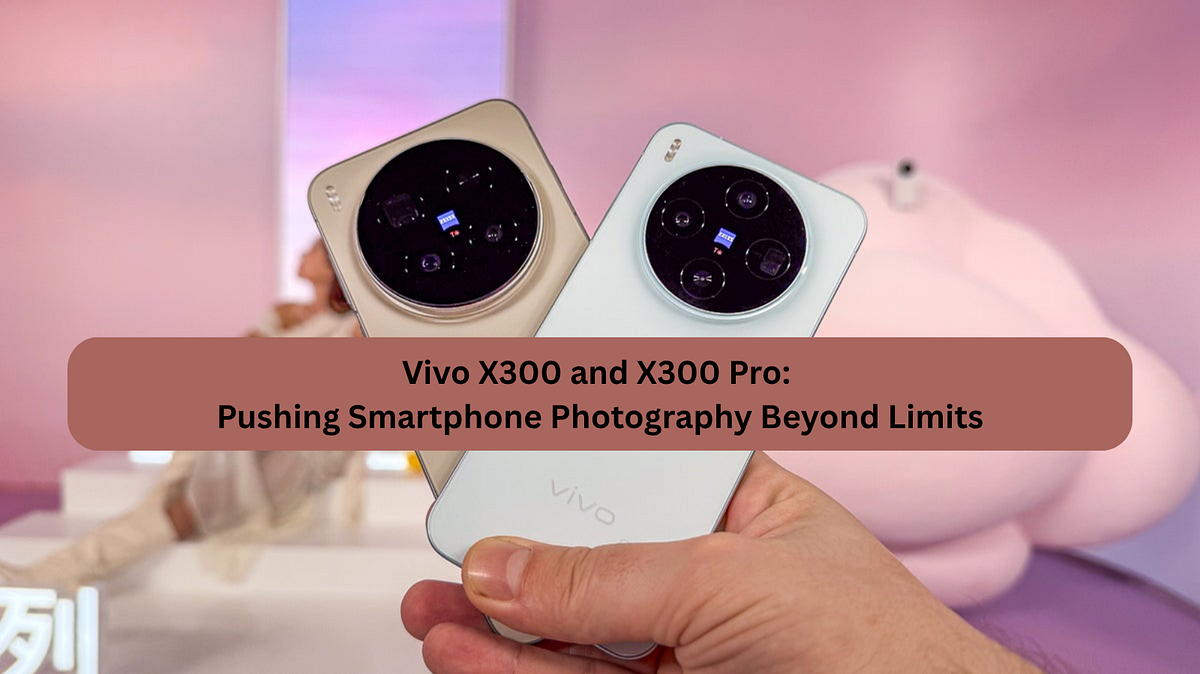
Vivo X300 and X300 Pro: Pushing Smartphone Photography Beyond Limits
Medium· 2025-10-14 06:00
Core Insights - Vivo is launching its X300 and X300 Pro flagship smartphones, enhancing its reputation in smartphone innovation and photography [1][2] Camera Innovation - Both models feature a 200-megapixel HPB imaging sensor co-engineered with Samsung, with the X300 Pro utilizing it for a telephoto lens [3] - The main camera on the X300 Pro incorporates the Sony LYT-828 sensor for improved light capture and detail rendering [5] - Both devices support 4K, 120fps, and 10-bit Log video recording, positioning them as elite options for mobile photography [5] Telephoto Extender - The telephoto extender, a 2.35x optical add-on lens, is available for both models, enhancing long-distance photography capabilities [6][7] Design and Durability - Both models are slim (under 8mm thick) and have IP68 and IP69 ratings for durability [9] - The X300 Pro has a 6,510mAh battery, while the standard model has a 6,040mAh battery, showcasing Vivo's optimization in battery technology [9] Performance - The X300 series is powered by the MediaTek Dimensity 9500 chipset, competing with Qualcomm's Snapdragon 8 Elite Gen 5 [10] - Both models support 90W wired and 40W wireless charging for quick power replenishment [10] Data Transfer - Smart Transfer app facilitates seamless data transfer between devices, enhancing user experience [11][12][13] Pricing and Availability - The X300 is priced at approximately $620, while the X300 Pro is around $745, with the telephoto extender priced separately at $180 [14] Future Developments - An X300 Ultra is anticipated in early 2026, promising advanced features [15] Overall Experience - The X300 series exemplifies Vivo's commitment to combining design, engineering, and camera technology, creating a unique user experience [18]

How does one of the best phone cameras on the market right now compare with vintage film?
The Verge· 2025-10-08 14:00
How does one of the best phone cameras on the market right now compare with vintage film? I took my '70s Canon EF SLR out on the streets of London together with the Vivo X200 Ultra to see how two very different cameras handle the exact same shots. Which do you prefer? Subscribe: http://goo.gl/G5RXGs Like The Verge on Facebook: https://goo.gl/2P1aGc Follow on Twitter: https://goo.gl/XTWX61 Follow on Instagram: https://goo.gl/7ZeLvX Follow on TikTok: http://bit.ly/42VeCVU Watch The Vergecast on YouTube: https ...

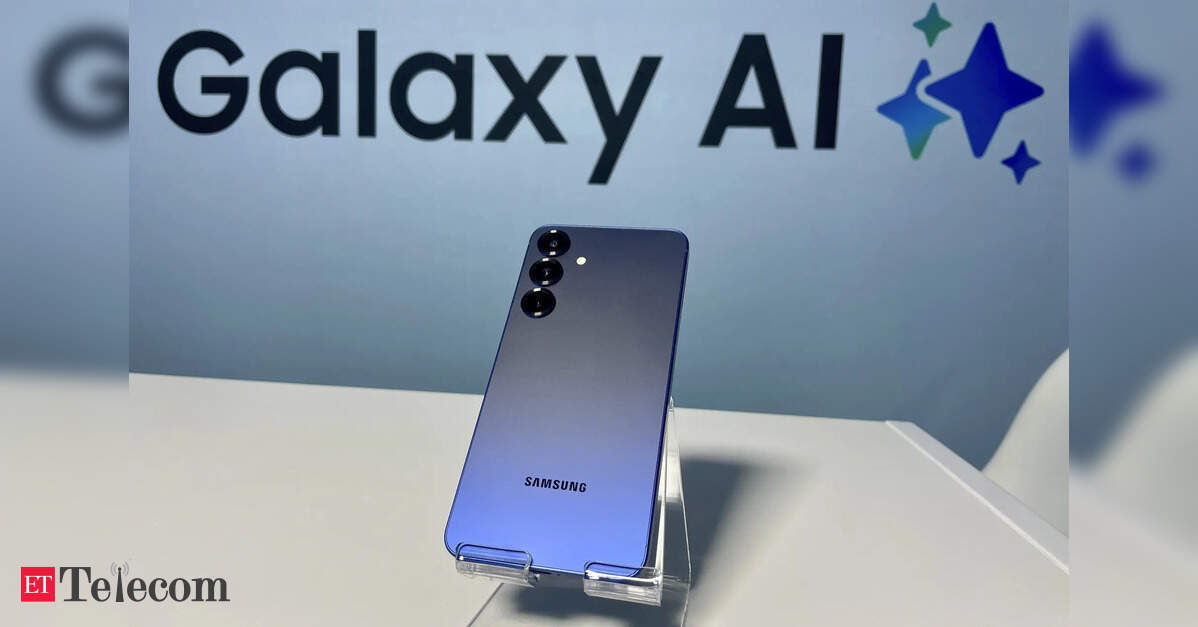
Festive boom, GST relief help Samsung India clock record sales of premium smartphones, TVs
ETTelecom.com· 2025-10-08 01:02
Core Insights - Samsung India reported record sales growth during the Navratri-Dussehra period for premium smartphones and televisions, driven by a reduction in GST rates which improved consumer sentiment [6] - Premium smartphone sales, priced above ₹30,000, increased 1.4 times compared to the same period last year, while premium television sales doubled [6] - The first wave of India's festive season from September 22nd to October 2nd, 2025, saw a 5-6% increase in smartphone sales in units and an 11-12% increase in sales by value compared to the previous year [3][6] Company Performance - Samsung's premium smartphones, including models like Z Fold7, Galaxy S25, and Galaxy S24, contributed significantly to the sales growth during the festive period [6] - The company achieved a 2x increase in sales of premium televisions (55 inches and above) compared to the same festive period last year, attributed to deals, extended warranties, and the GST rate cut [6] - Samsung led the smartphone market during the first wave of the festive season with an 18% market share, closely followed by Apple and Vivo [3][6] Market Trends - The government reduced GST rates on various consumer products, including large screen televisions, dishwashers, and refrigerators, which positively impacted sales [6] - Although there was no revision in GST rates for smartphones, refrigerators, and washing machines, these products also experienced increased sales due to consumer perception of lower prices and overall savings [2][6] - The second wave of festive season sales is expected to commence soon, concluding with Dhanteras and Diwali [6]