中科曙光

Search documents
两融余额三连降 10股仍获杠杆资金大幅加仓
Zheng Quan Shi Bao Wang· 2025-12-19 02:51
融资余额增幅降幅榜 两融余额连降期间,58.38%的标的股融资余额下滑,融资余额降幅超20%的共有19只股,南矿集团其间 融资余额降幅最大,最新融资余额为9540.29万元,其间下降41.16%;其次是太阳电缆,最新融资余额 2.33亿元,降幅为37.80%,融资余额降幅居前的还有海马汽车、驰诚股份等。 融资余额逆市增加的个股中,10股增幅超50%,美之高其间融资余额增幅最大,最新融资余额为817.60 万元,其间增长208.60%;其次是中诚咨询,最新融资余额481.26万元,增幅为107.00%,融资余额增幅 居前的还有北矿检测、凯华材料等。 融资余额增减幅度排行榜 两融余额连续缩水,最新市场两融余额24993.66亿元,连续3个交易日减少,其间杠杆资金大比例增减 仓个股引关注。 证券时报·数据宝统计显示,截至12月18日,沪深北两融余额为24993.66亿元,较上一交易日减少34.80 亿元,其中融资余额24825.56亿元,较上一日减少33.24亿元。分市场来看,沪市两融余额为12666.44亿 元,较上一日减少43.70亿元,深市两融余额12250.06亿元,较上一日增加9.01亿元,北交所两融余额 ...
半月11起 半导体并购新叙事如何走
2 1 Shi Ji Jing Ji Bao Dao· 2025-12-19 02:20
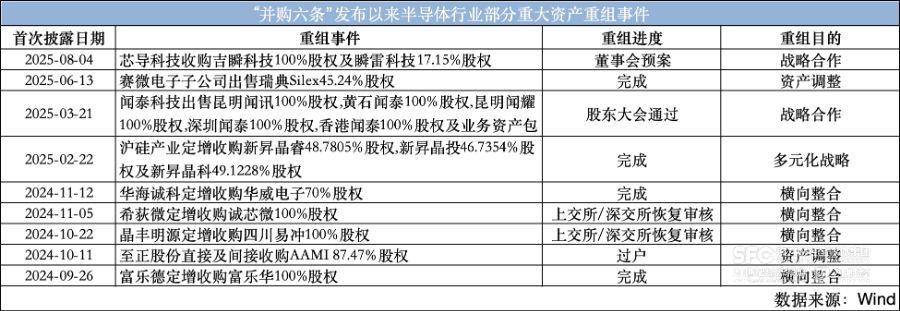
Group 1 - The semiconductor industry has become a hotbed for mergers and acquisitions, with 206 related events reported since the announcement of the "merger six rules" last September, averaging one event every two days, including 16 major asset restructurings [1][2] - However, since December, there has been a noticeable slowdown in A-share semiconductor mergers, with several companies, including Haiguang Information and SIRUI, announcing the termination of significant asset restructuring plans [1][5] - Cross-industry mergers are increasingly common, with companies from different sectors, such as outdoor brands and retail, entering the semiconductor space to diversify and seek new growth opportunities [1][8] Group 2 - The semiconductor sector is viewed as the foundation of digitalization and intelligence, making it a focal point for global competition and resource allocation [2][10] - Mergers and acquisitions are seen as essential for companies to overcome technological barriers and expand market share, necessitating clear industry judgment and effective post-merger integration capabilities [2][9] - Recent statistics indicate that 11 semiconductor-related merger announcements were made in early December alone, covering various fields such as semiconductor equipment and chip design [4] Group 3 - Notable recent mergers include the acquisition of a 49% stake in Zhuhai Noah Changtian Storage Technology by Puran Co., which aims to enhance its non-volatile storage product layout [4] - Conversely, several companies, including Haiguang Information and Chipone, have terminated their merger plans due to disagreements on core transaction terms and market conditions [5][7] - Industry experts suggest that the current trend of merger terminations is normal, as various factors influence negotiations, and future opportunities for mergers may still arise [7][12] Group 4 - The end-of-year surge in semiconductor mergers is attributed to a combination of capital market dynamics, policy support, and industry growth, with over 20 companies currently pursuing IPOs in the semiconductor sector [10][11] - The semiconductor industry is characterized by high research and development risks and significant capital requirements, making cross-industry mergers particularly challenging for traditional companies [12]


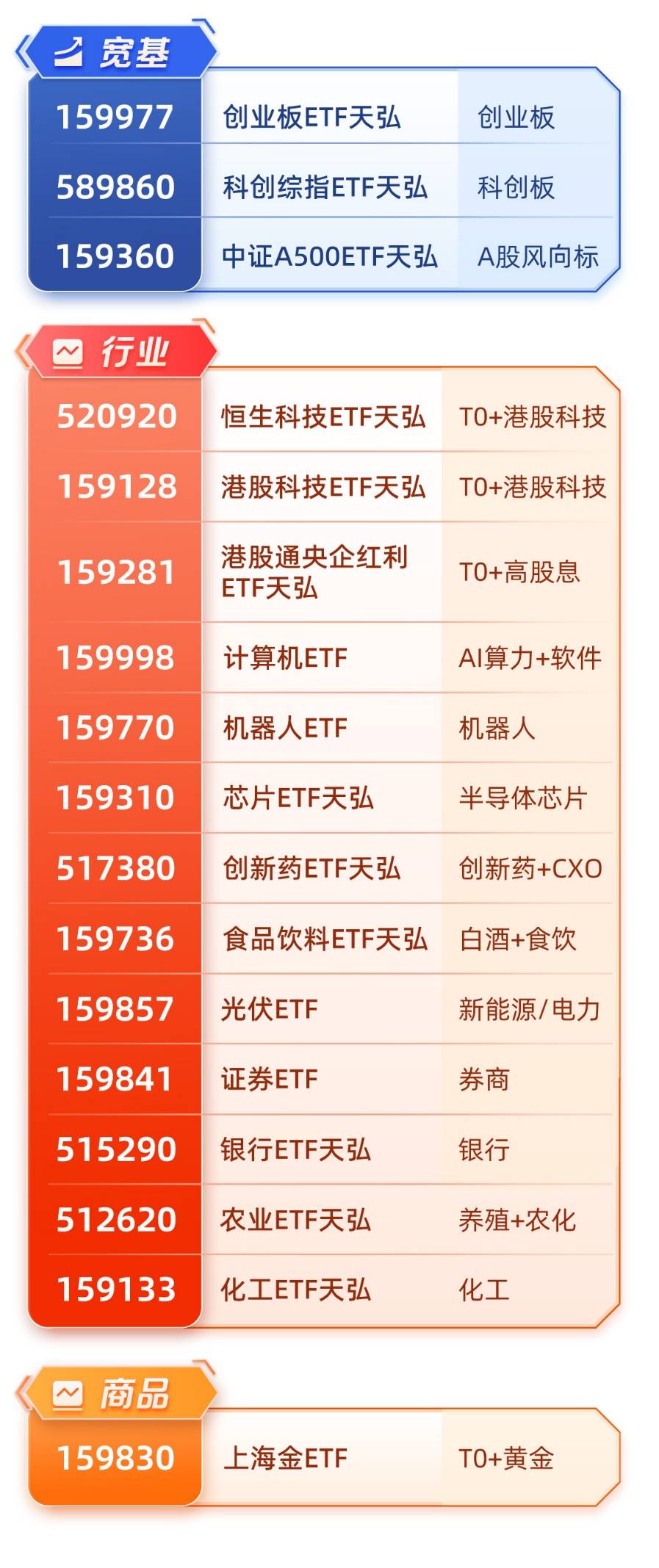
机器人ETF(159770)份额站稳百亿关口,连续6日“吸金”近3亿元深市同类居首!商汤、大晓机器人、中科曙光三方联手攻坚具身智能国产化
Sou Hu Cai Jing· 2025-12-19 01:52
Group 1 - The Robot ETF (159770) has seen significant growth, with a recent increase of 14.57 billion yuan in the last three months, reaching a total share of 10.075 billion, a record high since its inception [1] - The ETF has attracted a total net inflow of 296 million yuan over the past six days, ranking first among similar products in the Shenzhen market [1] - The ETF's constituent stocks cover various segments of the robotics industry, including humanoid robots, industrial robots, and service robots, providing investors with a comprehensive investment opportunity in the robotics supply chain [1] Group 2 - SenseTime, Daxiao Robotics, and Inspur have formed a strategic partnership to build a domestic ecosystem for embodied intelligence, focusing on AI infrastructure and key technologies [2] - Woan Robotics has launched a global public offering, aiming to become the first publicly listed company for AI embodied home robots, with plans to list on the Hong Kong Stock Exchange on December 30 [3] - Woan Robotics boasts a strong competitive edge due to its comprehensive technology stack, including proprietary technologies in robot positioning, AI visual control, and distributed neural control networks [3] Group 3 - The commercialization of humanoid robots is progressing steadily, with a clear path for industrial applications, particularly in handling and quality inspection tasks [4] - According to Guotai Junan Securities, the key to commercial success lies in achieving a balance in return on investment (ROI) by reducing prices to around 100,000 yuan and improving efficiency to match human levels [4] - By 2035, the demand for humanoid robots in China's automotive manufacturing, electronics manufacturing, and logistics sectors is expected to reach 484,000 units, representing a market potential exceeding 48 billion yuan [4]
两融余额三连降,累计减少63.04亿元
Zheng Quan Shi Bao Wang· 2025-12-19 01:41
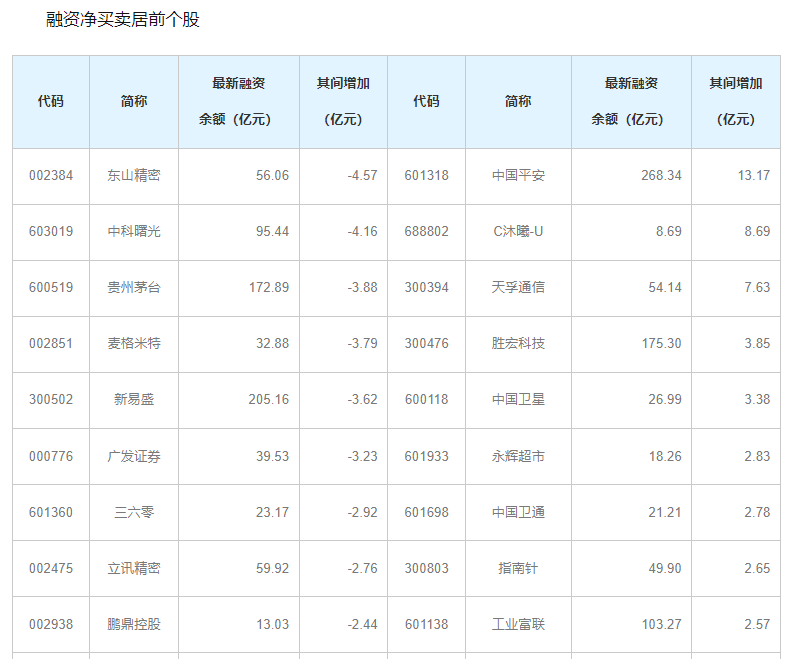
Summary of Key Points Core Viewpoint - As of December 18, the margin financing balance in the Shanghai and Shenzhen markets decreased to 24,993.66 billion yuan, marking a reduction of 34.80 billion yuan from the previous trading day, continuing a downward trend for three consecutive trading days with a total decrease of 63.04 billion yuan [1] Group 1: Margin Financing Decrease - The largest decrease in margin financing balance was observed in Dongshan Precision (002384), which saw a reduction of 4.57 billion yuan [2] - Other notable decreases in margin financing included Zhongke Shuguang (603019) with a reduction of 4.16 billion yuan and Kweichow Moutai (600519) with a decrease of 3.88 billion yuan [1][2] Group 2: Margin Financing Increase - In contrast, the stocks with the largest increases in margin financing were China Ping An (601318), which increased by 13.17 billion yuan, followed by C Muxi-U (688802) with an increase of 8.69 billion yuan, and Tianfu Communication (300394) with an increase of 7.63 billion yuan [1][2]




中信证券:看好超节点服务器整机环节 建议关注产业链相关公司
智通财经网· 2025-12-19 00:55
Core Insights - The report from CITIC Securities indicates that the supernode solution is expected to scale rapidly, serving as a fundamental computing unit for future AI infrastructure, with advantages such as efficient communication bandwidth and native memory semantics [1][2] Group 1: Supernode Development - The MoE (Mixture of Experts) architecture imposes new hardware requirements, leading to the emergence of scale-up supernodes [2] - Supernodes face complex systemic challenges compared to traditional eight-card servers, including heat dissipation, stability issues from mixed optical and copper interconnects, and long-term reliability concerns [2][3] - The current phase of supernode solutions is characterized by a variety of competing technologies, with domestic solutions like Huawei's CloudMatrix384 and Alibaba's Panjiu emerging [3] Group 2: Technical Challenges and Solutions - As computing density increases, liquid cooling solutions with a PUE closer to 1, such as phase change immersion cooling, may see greater development opportunities if stability issues can be resolved [4] - The complexity of supernode servers has significantly increased, requiring deep consideration of chip integration, heat dissipation, and interconnects, transforming server manufacturers into core system integrators [5] Group 3: Investment Strategy - The supernode technology is in its early stages, with the MoE architecture likely to become mainstream, presenting new adaptive requirements for hardware development [7] - The report suggests that companies with customization capabilities and supply chain management skills in the server manufacturing sector are likely to see significant growth opportunities [7]

破解“性能墙”“生态墙”,首届光合组织AI创新大会锚定智算开放方向
Guo Ji Jin Rong Bao· 2025-12-19 00:39
Group 1 - The first Artificial Intelligence Innovation Conference (HAIC2025) was held in Kunshan, Jiangsu, gathering over 2,500 representatives from various industries, experts, and leaders to showcase China's AI computing open architecture and ecological prosperity [1] - AI has transitioned from an auxiliary tool to a core production factor, with significant advancements in scientific models and embodied intelligence, leading to unprecedented demands for computing power [2][3] - Challenges such as insufficient high-end computing supply, poor hardware-software compatibility, inconsistent technical standards, and high application costs are significant barriers for small and medium enterprises [2][3] Group 2 - The conference emphasized the need for an open, efficient, secure, and stable intelligent computing infrastructure, advocating for a collaborative and win-win industrial pattern [2][3] - Notable innovations presented included the scaleX supercluster, designed for trillion-parameter models, which consists of 16 scaleX640 supernodes interconnected by a high-speed network, marking a key breakthrough in building world-class large-scale intelligent computing infrastructure [5] - Strategic collaborations were established among companies like SenseTime, Inspur, and others to optimize AI computing hardware and software systems, focusing on innovations in world models and embodied intelligence applications [5]

范波会见国家先进计算产业创新中心主任历军一行
Su Zhou Ri Bao· 2025-12-19 00:20
Core Viewpoint - The meeting between Suzhou's municipal secretary and the director of the National Advanced Computing Industry Innovation Center emphasizes the collaboration to enhance the AI-driven economy in Suzhou, with a focus on expanding investment and innovation resources in the region [1][2]. Group 1: Investment and Collaboration - The National Advanced Computing Industry Innovation Center, led by its president, plans to increase its investment in Suzhou, aiming to attract more upstream and downstream enterprises in the computing power industry [2]. - The collaboration between the Guanghe Organization and Suzhou has progressed well, with expectations for further investment and the establishment of innovative projects in the city [1]. Group 2: Economic and Industrial Development - Suzhou is recognized for its strong economic foundation, complete industrial system, and dense innovation resources, which are key factors in attracting the National Advanced Computing Industry Innovation Center [2]. - The city is actively working towards becoming an "AI+" city, aligning with national strategies to enhance technological capabilities and contribute to building a strong technological nation [1].
直击HAIC 2025: 开放架构破“墙”而立 国产AI计算生态协同出击
Xin Lang Cai Jing· 2025-12-18 23:54
Core Insights - The HAIC 2025 conference showcased the evolution of AI computing in China, emphasizing a shift from single-point technological breakthroughs to a systematic and ecological high-quality development phase in AI computing [1][10]. Group 1: Hardware Innovations - The scaleX万卡超集群, a significant hardware innovation, consists of 16 supernodes and supports 10,240 AI accelerator cards, achieving a total computing power exceeding 5 EFLOPS, with a power usage effectiveness (PUE) as low as 1.04 [3][12]. - The system's design based on "AI computing open architecture" allows compatibility with multiple brands of accelerator cards and optimizes over 400 mainstream large models [3][12]. - The commercial status of supernodes is promising, with expected increases in orders for the coming year, and liquid cooling technology is anticipated to become a primary development direction due to rising CPU/GPU power consumption [3][12]. Group 2: System-Level Breakthroughs - The focus on system-level architecture is crucial for enhancing domestic computing capabilities, as highlighted by industry experts who noted that the growth of domestic computing has exceeded 10 times in the past two years [4][13]. - The transition from "single cabinet" to "万卡集群" represents a systemic engineering innovation that breaks through the bottleneck of computing scale expansion, indicating a shift in AI computing competition towards system engineering capabilities and software collaboration [4][13]. Group 3: Open Ecosystem Development - The conference emphasized "open" and "ecosystem" as key themes, addressing the software layer bottlenecks in domestic intelligent computing and the need for affordable high-efficiency computing for SMEs and research institutions [5][14]. - The current AI computing ecosystem faces challenges such as high application migration costs and resource mismatches, which the open architecture aims to resolve by establishing unified interfaces and standards [6][15]. - Several companies showcased solutions based on a unified software stack, which includes optimizations that significantly reduce end-to-end latency and enhance the availability of large-scale clusters to 99.99% [6][15]. Group 4: Collaborative Ecosystem Initiatives - The conference served as a platform for strategic collaborations among major companies, focusing on AI computing hardware and software system optimization, as well as innovations in world models and embodied intelligence applications [8][18]. - Initiatives such as the "光耀百城2.0" aim to promote the large-scale implementation of open architecture products and solutions across various sectors, with a focus on reducing barriers for SMEs [8][18]. - The industry is increasingly focused on collaborative efforts to tackle system-level hardware and software adaptation challenges under the open architecture framework, facilitating the integration of AI and computing technologies into sectors like intelligent manufacturing and automotive [9][18].
商汤科技进军具身智能 大晓机器人走“开源+生态协同”之路
2 1 Shi Ji Jing Ji Bao Dao· 2025-12-18 23:19
Core Insights - SenseTime's Xiaodao Robot is set to debut by the end of 2025, focusing on ecosystem collaboration within the AI industry chain, unlike its peers [1] - The company emphasizes a human-centered approach to address real-world needs with integrated hardware and software products [1] - The transition to embodied intelligence requires a fundamental paradigm shift in data collection and model training due to a significant data volume gap [1][2] Data and Technology - The ACE embodied research paradigm allows for the collection of tens of millions of hours of data annually, significantly enhancing the value of real data [2] - Current embodied intelligence data is limited to 100,000 hours, while Tesla's FSD V14 achieves a training equivalent to 400 million hours of human driving experience daily [1] - The ACE paradigm utilizes environmental data collection through multi-modal devices, providing comprehensive data support for model training [4] Industry Trends - The global humanoid robot market is projected to reach 6 million units sold by 2035, with a market size exceeding $120 billion, potentially rising to $260 billion in optimistic scenarios [6] - Investment institutions are increasingly focusing on the humanoid robotics sector, anticipating a shift towards mass production and diverse business models [6] Challenges and Solutions - The current data collection methods are costly and inefficient, leading to a lack of general cognitive and adaptive capabilities in robots [4] - The industry consensus is that the true value of robots lies in their ability to solve real-world application challenges rather than their physical form [5] - Key obstacles to large-scale deployment include the need for improved data protection and the replicability of industrial applications [6] Cost Reduction and Future Outlook - Key components like planetary roller screws and six-dimensional torque sensors account for about 40% of total costs, with potential reductions of 70% to 80% as domestic supply chains mature [7] - Breakthroughs in AI chips, battery management, and thermal management are expected to take 5 to 10 years, impacting overall cost structures [7] - As costs decrease, humanoid robots may surpass human labor in investment returns, marking a critical point for large-scale replacement of human workers [7]

商汤科技、大晓机器人与中科曙光达成战略合作;南方航空接入千问,打造“天盾”大模型|数智早参
Mei Ri Jing Ji Xin Wen· 2025-12-18 23:13
Group 1 - Strategic cooperation established between SenseTime, Daxiao Robotics, and Inspur to promote AI infrastructure and embodied intelligence technologies [1] - The collaboration signifies a shift in the AI industry from "digital intelligence" to "physical intelligence," focusing on creating a comprehensive stack of capabilities [1] - The success of this partnership in closing the loop from computing power to execution will be a critical indicator of China's AI industry's practical application capabilities [1] Group 2 - Southern Airlines and Alibaba Cloud launched the "Tian Dun" security model, which integrates multimodal capabilities for flight training, flight alerts, and fault repair [2] - This model represents a significant advancement in applying large model technology to the high-stakes aviation safety sector, transitioning from post-event analysis to real-time alerts and intelligent handling [2] - The reliability, interpretability, and accountability of model decisions will be key issues to address in the industry [2] Group 3 - Google introduced the Gemini 3 Flash AI model, which outperforms its predecessor Gemini 2.5 Pro with a speed increase of approximately three times and lower operational costs [3] - The model balances cutting-edge capabilities, response speed, and commercial costs, addressing market concerns about the high costs of AI application deployment [3] - This development intensifies the trend towards lightweight, high-performance models, compelling competitors to respond in terms of cost-effectiveness [3]