
赛诺菲

Search documents
Nurix Therapeutics, Inc. (NRIX) Discusses Clinical and Preclinical Updates on BTK, STAT6, and IRAK4 Degrader Programs Transcript
Seeking Alpha· 2025-10-22 22:53
Core Insights - Nurix Therapeutics is advancing a pipeline of innovative targeted protein degrader drugs in oncology and inflammation and immunology, each with best-in-class potential [2] Group 1: Lead Program Update - The call will focus on an important update regarding the lead program in chronic lymphocytic leukemia (CLL), specifically the drug bexobrutideg (NX-5948 or Bexdeg) [2] - Key discussions will include pivotal clinical development plans and new data supporting differentiation and dose selection for registrational trials of Bexdeg [2] Group 2: Partnered Pipeline Insights - New preclinical data from the partnered inflammation and immunology pipeline will be shared, specifically from the STAT6 and IRAK4 programs [3] - The STAT6 program is partnered with Sanofi, marking the first public disclosure of preclinical data profiling [3]

Medicenna Therapeutics (OTCPK:MDNA.F) 2025 Conference Transcript
2025-10-22 18:32
Summary of Medicenna Therapeutics Conference Call Company Overview - Medicenna Therapeutics is a publicly listed company on the TSX main board and OTCQX under the symbol MDNA, focused on developing immunotherapies for late-stage diseases, particularly cancer [1][2] - The company specializes in a class of molecules known as cytokines, aiming to develop enhanced versions called Superkines [1][2] Core Points and Arguments Development and Collaborations - Medicenna licensed the Superkines platform from Stanford University in 2016 and has exclusive worldwide rights [2] - The company has a clinical collaboration with Merck, utilizing Keytruda, the world's best-selling drug, in combination with its own therapies [2][3] Clinical Trials and Data - Medicenna is preparing to provide updates on its Superkine MDNA11, with over 100 patient data points collected [3][6] - The company has received FDA agreement on a phase 3 design for its brain cancer drug, indicating significant progress in its development pipeline [3][5] - MDNA11 has shown promising results, with tumor shrinkage observed in 30% to 50% of patients who have previously failed other therapies [12][14] Market Opportunity - Keytruda, which is set to go off patent in 2028, currently generates nearly $30 billion in annual sales, highlighting a significant market opportunity for alternatives like MDNA11 [11][12] - Medicenna's valuation is approximately $60 million USD, with potential for substantial growth given the response rates observed in clinical trials compared to competitors [18][19] Competitive Landscape - The company is positioned against competitors like Replimune and Iovance, which have higher valuations despite similar response rates [19][20] - Recent multibillion-dollar transactions in the bispecific molecule space, such as the $11.2 billion deal between Takeda and Innovent, indicate a growing interest in this area [21][22] Pipeline and Future Developments - Medicenna is advancing multiple drugs, including MDNA113, a bispecific molecule combining anti-PD-1 and IL-2, with data expected soon [21][23] - The brain cancer program shows potential for significant market impact, with an estimated $4 billion opportunity across various brain cancer types [25][26] Important but Overlooked Content - The company has a strong advisory team, including leading experts in brain cancer and skin cancer, which enhances its credibility and potential for success [4] - Medicenna's approach to IL-2 therapy addresses previous challenges with safety and efficacy, aiming to provide a safer treatment option that effectively shrinks tumors [10][11][13] - The company has a cash runway into Q3 of the following year, allowing it to continue its development efforts without immediate financial pressure [26][40] Upcoming Milestones - Key data readouts are expected by the end of the year, particularly at a major cancer conference in the UK [27][40] - The company plans to meet with regulators to discuss pathways for accelerated approval based on upcoming clinical trial results [28][40]


Thermo Fisher Scientific(TMO) - 2025 Q3 - Earnings Call Transcript
2025-10-22 13:32
Financial Data and Key Metrics Changes - Revenue grew 5% in Q3 to $11.12 billion, with adjusted operating income increasing 9% to $2.59 billion [5][21] - Adjusted operating margin expanded by 100 basis points to 23.3%, and adjusted EPS grew 10% to $5.79 per share [5][21] - Full-year revenue guidance raised to a range of $44.1 billion to $44.5 billion, with adjusted EPS guidance increased to $22.60 to $22.86 per share [17][27] Business Line Data and Key Metrics Changes - In pharma and biotech, mid-single-digit growth was achieved, driven by bioproduction and analytical instruments [6] - Academic and government revenue declined in the low single digits, showing modest improvement [6] - Industrial and applied revenue grew in the mid-single digits, led by electron microscopy [6] - Diagnostics and healthcare revenue growth improved but remained down low single digits, primarily due to conditions in China [6][45] Market Data and Key Metrics Changes - North America grew low single digits, while Europe and Asia-Pacific both grew mid-single digits; China experienced a mid-single-digit decline [21] - The diagnostics market in China faced weak conditions due to pricing and reimbursement challenges, but the impact on the overall business was modest [45][70] Company Strategy and Development Direction - The growth strategy focuses on high-impact innovation, trusted partner status with customers, and a strong commercial engine [7][10] - Collaborations with OpenAI aim to enhance product development and operational efficiency [11][13] - Recent acquisitions, including a filtration and separation business and a Sterile Fill Finish site, are expected to strengthen the company's capabilities in bioprocessing and drug product manufacturing [14][15] Management's Comments on Operating Environment and Future Outlook - Management expressed confidence in navigating government policies and reshoring activities, which are expected to benefit the company [33][34] - The company anticipates a stable funding environment in the academic and government sectors, which could remove headwinds over time [38] - Overall, management remains optimistic about midterm and long-term growth prospects, maintaining a 3% to 6% organic growth outlook [53][54] Other Important Information - The company repurchased $1 billion of shares in Q3, bringing total repurchases for the year to $3 billion [15][22] - Free cash flow for the year is expected to be around $7 billion, with net capital expenditures projected between $1.4 billion and $1.7 billion [29] Q&A Session Summary Question: Market conditions and customer conversations in pharma - Management noted excitement around scientific breakthroughs and confidence in pipelines, with customers looking to navigate government policies effectively [33][34] Question: Update on academic and government market conditions - Management indicated slight improvement in Europe and stable conditions in the U.S., with potential delays in expenditures due to the government shutdown [37][38] Question: Strengths in analytical instruments - Growth was driven by electron microscopy and chromatography, with a strong underlying health of the business despite headwinds in some segments [44] Question: Impact of China on diagnostics - The company has a smaller presence in China, and while conditions are weak, the impact on overall business is modest [45][70] Question: Demand from small and emerging biotech - There was positive momentum in clinical research and early activities in pharma services, indicating a potential reinvestment cycle [66][67] Question: Onshoring announcements and CapEx implications - Management highlighted incremental demand from new facilities and equipment, but noted that overall drug volumes would remain stable [73][74] Question: Tariff impacts on EPS - The impact of tariffs in Q3 was favorable, with expectations for Q4 to hold steady without significant changes [76][77]

Nurix Therapeutics (NasdaqGM:NRIX) Update / Briefing Transcript
2025-10-22 13:02
Summary of Nurix Therapeutics Conference Call (October 22, 2025) Company Overview - **Company**: Nurix Therapeutics (NasdaqGM:NRIX) - **Focus**: Development of targeted protein degrader drugs in oncology and inflammation/immunology (INI) with best-in-class potential Key Points on Lead Program: Vexer-Brutideg (NX-5948) - **Clinical Development**: - Initiation of pivotal trials in Chronic Lymphocytic Leukemia (CLL) has been announced, with regulatory alignment on dose selection for registrational purposes achieved with the FDA and other global authorities [4][5][39] - The selected dose for registrational trials is 600 mg once daily, based on favorable safety profiles observed in phase 1 studies [5][6] - The first pivotal trial, named the Daybreak study, is a single-arm phase 2 study targeting approximately 100 patients with relapsed refractory CLL [6][19] - **Efficacy Data**: - Objective response rate (ORR) of 80.9% observed in patients with high unmet medical need, including those with TP53 and/or BTK mutations [15][66] - Median time to response is less than two months, with durable treatment effects noted [16][17] - **Mechanism of Action**: - Vexdeg is effective against wild-type BTK and clinically relevant BTK mutations, addressing both the scaffolding function of BTK and promoting tumor cell growth [8][9] - Demonstrates catalytic action, degrading 10,000 to 20,000 BTK proteins per hour, which is a significant advantage over traditional inhibitors [8] - **Regulatory Designations**: - Vexdeg has received fast-track status in the U.S. and PRIME designation in the EU, facilitating expedited development [4][12] Pipeline Developments - **Partnerships**: - Nurix has partnered with Sanofi for the STAT-6 program and Gilead Sciences for the IRAK4 program, with potential for co-development in the U.S. [2][32] - New preclinical data for both partnered programs has been disclosed, highlighting their differentiation potential [2][32] - **Future Studies**: - A confirmatory phase 3 trial is planned for the first half of 2026, targeting a broader patient population [20][39] - Combination studies with other agents are also being explored to enhance patient outcomes [21] Financial Position - **Cash Position**: - Nurix anticipates a pro forma cash balance of $678 million, providing a runway into 2028 [39] Market Context - **CLL Market**: - Approximately 120,000 patients initiate new treatment each year across major markets, with 50% in the second line or later [18] - The company aims to address the needs of relapsed and refractory CLL patients, particularly those who are triple-exposed to existing therapies [19][61] Competitive Landscape - **Differentiation**: - Vexdeg is positioned as a potentially best-in-class BTK degrader, with superior potency, mutation coverage, and selectivity compared to existing therapies [25][26][76] - The market for degraders is expected to be large, with potential for multiple drugs to coexist, but Nurix believes Vexdeg will capture significant market share due to its profile [76] Conclusion - Nurix Therapeutics is advancing its lead program Vexer-Brutideg towards pivotal trials in CLL, with promising efficacy data and strong regulatory support. The company is well-positioned financially and strategically to capitalize on the growing market for targeted protein degraders in oncology and inflammation.
Press Release: Sanofi’s efdoralprin alfa met all primary and key secondary endpoints in alpha-1 antitrypsin deficiency emphysema phase 2 study
Globenewswire· 2025-10-22 05:00
Core Viewpoint - Sanofi's efdoralprin alfa has shown positive results in the ElevAATe phase 2 study for treating alpha-1 antitrypsin deficiency (AATD) emphysema, meeting all primary and key secondary endpoints, indicating its potential as a new therapeutic option for patients with this rare disease [1][3][5]. Group 1: Study Results - Efdoralprin alfa met all primary and key secondary endpoints when administered every three weeks (Q3W) or four weeks (Q4W) in adults with AATD emphysema [1]. - The treatment demonstrated a statistically significant greater mean increase in functional AAT levels compared to weekly plasma-derived therapy at week 32, with a p-value of less than 0.0001 [1]. - Key secondary endpoints included a superior mean increase in fAAT average concentration and a higher percentage of days above the lower limit of the normal range for both Q3W and Q4W dosing regimens [1][7]. Group 2: Safety and Tolerability - Efdoralprin alfa was well tolerated, exhibiting a similar adverse event profile to plasma-derived therapy [2]. - Additional safety follow-up will be conducted in the ElevAATe OLE phase 2 study [2]. Group 3: Expert Commentary - Christopher Corsico, Global Head of Development at Sanofi, emphasized the significance of achieving higher normal functional AAT levels with less frequent dosing, which could improve the treatment experience for AATD patients [3]. - Igor Barjaktarevic, MD, highlighted the potential of efdoralprin alfa to provide a more convenient treatment option that maintains normal AAT levels without reliance on blood donation programs [3]. Group 4: Regulatory Status and Future Plans - Efdoralprin alfa has received fast track and orphan drug designation from the FDA for AATD emphysema treatment [3][6]. - Sanofi plans to present the study data at an upcoming medical meeting and engage with global regulatory authorities regarding next steps [3]. Group 5: About AATD - AATD is a rare inherited disorder characterized by low or absent levels of AAT, leading to progressive lung and liver damage [4]. - Approximately 235,000 individuals worldwide are affected by AATD, with nearly 100,000 in the US, and about 90% of cases remain undiagnosed [4]. Group 6: About Efdoralprin Alfa - Efdoralprin alfa is a recombinant human AAT-Fc fusion protein being investigated as a restorative therapy for AATD emphysema, with dosing regimens of Q3W or Q4W [5]. - The treatment aims to normalize and maintain functional AAT levels, representing a significant improvement in convenience over weekly plasma-derived therapies [5].


外资持续加码投资中国、深化全产业链布局 对中国经济韧性与市场机遇投下信任票
Yang Shi Wang· 2025-10-22 03:11
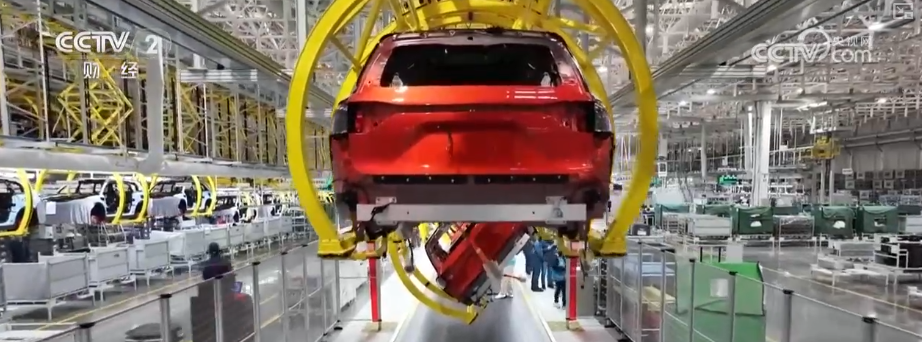
Group 1: Investment Trends in China - Since 2025, China has increased innovation investment and expanded production in emerging sectors, attracting foreign investment and enhancing the resilience of its economy [1] - The automotive industry in China is rapidly transitioning towards intelligence and electrification, drawing overseas suppliers to increase innovation investments [3][5] - The large-scale equipment renewal policy has shown significant results, with equipment purchase investment growth consistently above 10%, becoming a key driver of investment growth [7] Group 2: Key Developments in Specific Companies - Valeo Group has established a new manufacturing base in Shanghai focused on intelligent driving technologies, highlighting China's role in upgrading automotive component manufacturers' technologies [3] - Otis, the largest elevator manufacturer globally, is deeply involved in China's residential elevator renewal projects, covering 34 cities, and views the Chinese market as crucial for future growth [9][11] - Sanofi has launched a production base in Beijing with an investment of €1 billion (approximately 6.7 billion RMB), marking its largest single investment in China, reflecting confidence in the long-term development of the Chinese market [13][15]

多款进口药退出中国 涉及抗过敏、肿瘤等领域的畅销品
Guo Ji Jin Rong Bao· 2025-10-21 15:28
Core Viewpoint - The recent decision by the National Medical Products Administration to cancel the registration certificates of 80 drugs, including commonly used medications, has led to significant price increases for certain products, such as the compound drug Taining suppository, which is now priced over 900 yuan for a box of six [1][2]. Group 1: Drug Cancellations - The cancellation includes various commonly used drugs, such as loratadine tablets, finasteride tablets, and vitamin B2 tablets, all of which were voluntarily requested by the companies, indicating a strategic business decision rather than a response to safety concerns [2][3]. - The majority of the cancelled drugs are not exclusive products, meaning that other companies holding similar product registrations can continue their production and sales, mitigating potential supply shortages [2][3]. Group 2: Foreign Pharmaceutical Companies - Over 40 of the cancelled drugs are produced by foreign companies, reflecting a strategic adjustment in response to the implementation of national centralized procurement policies that have significantly reduced drug prices [2][3]. - Notable products among the cancellations include loratadine tablets from Fecar Huari, salbutamol inhalation solution from GlaxoSmithKline, and the compound drug Taining suppository from Xi'an Janssen, all of which were once market leaders [2][3]. Group 3: Market Dynamics - The cancellation of these drugs is indicative of a broader trend where foreign pharmaceutical companies are shifting their focus to more competitive innovative drugs due to declining profit margins on original drugs amid increasing competition from generic products [3][4]. - The market for inhalation medications, such as salbutamol, is becoming increasingly competitive as domestic companies improve their product quality and pricing, leading to a loss of market share for original products [4][5]. - The ongoing price control measures for chronic disease medications, including diabetes drugs, are further squeezing the profit margins of original drugs, prompting companies to rationally decide to cancel their product registrations when market returns do not cover operational costs [5].
多家外企看好中国经济韧性 持续加码投资中国
Sou Hu Cai Jing· 2025-10-21 14:57
Group 1: Investment Trends - China continues to increase innovation investment and expand production in emerging sectors, attracting foreign enterprises to deepen their industrial chain layout [1] - Valeo Group has established a new manufacturing base in Shanghai focused on intelligent driving technologies, highlighting China's role in upgrading automotive component manufacturers [3][5] - Otis Elevator Company is actively involved in China's residential elevator upgrade projects, reflecting the significant market for modernization due to the aging population and building adaptations [7][9] Group 2: Foreign Investment in China - Sanofi has announced a significant investment of €1 billion (approximately 6.7 billion RMB) for a new production base in Beijing, indicating strong confidence in the long-term development of the Chinese market [11] - Sanofi's CEO emphasized the importance of China as a strategic market and the company's commitment to enhancing local production capabilities to better serve Chinese patients [13]
多款进口药退出中国,涉及抗过敏、肿瘤等领域的畅销品
Guo Ji Jin Rong Bao· 2025-10-21 14:36
Core Viewpoint - The recent decision by the National Medical Products Administration to cancel the registration certificates of 80 drugs, including commonly used medications, has led to significant price increases for certain products, such as the compound drug Taining suppository, which is now priced over 900 yuan for a box of six [1][3]. Group 1: Drug Cancellations - A total of 80 drugs, including popular medications like loratadine tablets and finasteride tablets, have been voluntarily deregistered by the manufacturers, indicating a strategic business decision rather than regulatory enforcement [3][5]. - The deregistered drugs are not exclusive products, allowing other companies with similar generic products to continue production and sales, which mitigates potential supply shortages [3][5]. - Over 40 of the deregistered drugs are produced by foreign companies, reflecting a response to the implementation of national centralized procurement policies that have significantly reduced drug prices [3][4]. Group 2: Market Impact - The deregistration of drugs like Taining suppository and loratadine tablets is attributed to a lack of sustainable raw material supply and the need for foreign companies to adjust their sales strategies to maintain profit margins [5][6]. - The cancellation of key oncology drugs, such as doxorubicin injection, highlights the challenges faced by original drug manufacturers due to the rapid growth of generic alternatives and ongoing price pressures from centralized procurement policies [5][6]. - The market for inhaled medications, such as salbutamol solutions, is also affected, as domestic companies are increasingly able to produce high-quality generics at competitive prices, further squeezing the market share of original products [6][7].
多款知名进口药告别国内市场,个别集采品种注销
Guan Cha Zhe Wang· 2025-10-21 13:13
Core Viewpoint - The National Medical Products Administration (NMPA) has announced the cancellation of registration certificates for 80 drugs, including Fecarwei's Loratadine tablets, indicating a shift in the pharmaceutical landscape where foreign and joint-venture companies are withdrawing products in response to domestic competition and policy changes [1][2]. Group 1: Drug Cancellations - The cancellation of the Loratadine tablets (10mg) by Fecarwei is a voluntary decision, reflecting a commercial choice rather than regulatory enforcement [1][2]. - Over 55% of the cancelled products are from foreign companies, highlighting the impact of domestic pharmaceutical policies on international players [1]. - The cancellation of older registration numbers, such as that of Loratadine, suggests a strategic withdrawal from the market rather than a response to safety concerns [2][3]. Group 2: Market Dynamics - The domestic pharmaceutical industry has undergone significant changes due to centralized drug procurement and price negotiations, leading to the rise of local companies and the reevaluation of foreign companies' strategies in China [1][2]. - The presence of multiple manufacturers for Loratadine in China (35 for 10mg and 16 for 5mg) indicates a competitive market where the impact of a single product's cancellation is minimal for patients [3]. - Other notable cancellations include GSK's inhalation solution for Salbutamol and Pfizer's Doxorubicin injection, both of which are significant in their respective therapeutic areas [4][6]. Group 3: Implications for Future Products - The trend of foreign companies withdrawing from the market is evident with the cancellation of products like Metformin and Empagliflozin tablets by Boehringer Ingelheim, indicating a strategic retreat from upcoming centralized procurement rounds [5]. - The cancellation of high-revenue drugs, such as Doxorubicin, suggests a shift in focus towards more profitable or competitive products, as seen with the lipid formulation of Doxorubicin which has a much larger market presence [6]. - The withdrawal of drugs like Liraglutide by Sanofi reflects the challenges faced by older GLP-1 drugs in maintaining market share against newer entrants [8][9].