福田汽车

Search documents
自动驾驶向商业化应用迈出关键一步(经济新方位)
Ren Min Ri Bao· 2025-12-19 22:10
Core Insights - The approval of the first batch of L3 conditional autonomous driving vehicles in China marks a significant step towards the commercialization of autonomous driving technology [1][2][3] Group 1: Significance of Approval - The approval signifies a transition from technical validation to mass production application in the autonomous driving industry [2][3] - L3 level autonomous driving allows vehicles to operate independently under specific conditions, requiring driver intervention only when prompted by the system [2][3] Group 2: Differences from Testing Licenses - The newly approved L3 vehicles will be able to obtain formal licenses for road use, distinguishing them from previous testing licenses [3] - The approval opens a legal pathway for the autonomous driving industry to move from laboratory settings to real-world applications [3] Group 3: Conditions for Operation - L3 autonomous driving is conditional, requiring clear definitions of applicable road types, weather conditions, driver status, and vehicle conditions [3][4] - Vehicles must operate within designated trial areas and at specified speed limits, with Beijing's vehicles allowed up to 80 km/h and Chongqing's up to 50 km/h [4] Group 4: Vehicle Requirements - The approved models are equipped with advanced sensor technology, including 34 high-performance sensors, to ensure comprehensive environmental perception [4][5] - Safety measures include a "seven-fold redundancy architecture" to maintain vehicle operation even in the event of system failures [5] Group 5: Consumer Access - Currently, the trial vehicles are not available for direct consumer purchase; they are limited to specific trial organizations [6] - Consumers can experience the autonomous driving features through ride-hailing services via a mini-program [6] Group 6: Future Plans - A consortium led by BAIC Group plans to initiate operations in specific scenarios by Q1 2026 to gather practical experience [6] - The unique terrain of Chongqing provides a challenging environment for testing the capabilities of L3 vehicles, enhancing their potential to handle complex road conditions [6]
首批L3级车型获准入许可 自动驾驶向商业化应用迈出关键一步(经济新方位)
Ren Min Ri Bao· 2025-12-19 21:53
Core Insights - The approval of the first batch of L3 conditional autonomous driving vehicles in China marks a significant step towards the commercialization of autonomous driving technology [1][2][3] Group 1: Significance of Approval - The L3 level represents conditional automation, allowing vehicles to drive autonomously in specific scenarios, while requiring the driver to be ready to take control when prompted by the system [2][3] - This approval differentiates from previous testing licenses, as it allows for formal licensing and road use, indicating a shift from technology validation to mass production applications [3] Group 2: Conditions for Operation - L3 autonomous driving is conditional on specific road types, weather conditions, driver status, and vehicle conditions, emphasizing the need for a collaborative safety framework involving people, vehicles, and infrastructure [3][4] - The vehicles can only operate on designated routes at limited speeds, with the Beijing model allowing up to 80 km/h and the Chongqing model focusing on congested traffic conditions at a maximum of 50 km/h [4] Group 3: Vehicle Requirements - The vehicles are equipped with advanced sensor technology, including 34 high-performance sensors, to ensure comprehensive environmental perception and decision-making capabilities [4][5] - A redundancy architecture is implemented in the L3 vehicles, ensuring that critical systems can maintain safe operation even in the event of a failure [5] Group 4: Consumer Access and Future Plans - Currently, the trial vehicles are not available for direct consumer sales, but consumers can experience the technology through ride-hailing services [6] - A consortium led by BAIC Group plans to initiate operations in specific scenarios by Q1 2026, aiming to gather practical experience and accelerate the commercialization of L3 autonomous driving technology [6]


圆满落幕!2025(第三届)氢储运关键技术发展论坛
DT新材料· 2025-12-19 13:47
Core Viewpoint - The 2025 Hydrogen Storage and Transportation Key Technology Development Forum, hosted by DT New Energy and co-organized by Xiangshang Hydrogen Energy, focused on advancements in hydrogen storage and transportation technologies, aiming to contribute to the energy structure transformation under the dual carbon goals [2][5]. Group 1: Forum Overview - The forum took place on December 17-18 in Suzhou, gathering over 150 representatives from domestic and international enterprises, research institutions, and end-users to discuss key technologies in hydrogen storage and transportation [2][5]. - The event featured nearly 20 presentations covering topics such as high-pressure hydrogen storage technology, low-temperature liquid hydrogen technology, and transportation methods [2][5]. Group 2: Key Presentations - A presentation by Bai Yong discussed the current status and challenges of high-pressure hydrogen storage bottles, including optimization strategies for manufacturing processes and failure analysis [8]. - Zou Jianxin presented on the development and application progress of high-performance solid-state hydrogen storage materials, highlighting their advantages such as high storage density and safety [10][11]. - The liquid hydrogen industry is transitioning from pilot exploration to a more structured phase, with potential cost reductions of over 60% for liquefaction at a scale of 100 tons per day [12]. Group 3: Transportation Technologies - The importance of long-distance, large-scale hydrogen pipeline transportation technology was emphasized, noting that storage and transportation costs account for 30%-40% of total costs in the hydrogen supply chain [18]. - The National Electric Power Research Institute has completed several demonstrations of hydrogen blending in existing natural gas pipelines, moving from technical validation to regional pilot demonstrations [18]. Group 4: Safety and Testing - Liu Xu introduced testing methods for hydrogen storage and transportation equipment, focusing on performance evaluations under hydrogen environments, including high-pressure and low-temperature conditions [27][28]. - The establishment of multiple hydrogen testing platforms in China aims to support the safe operation and healthy development of hydrogen energy equipment [28]. Group 5: Future Applications - The hydrogen energy sector is expanding its application scenarios beyond transportation to include industrial, electrical, and chemical fields, promoting the integration of various energy networks [21]. - The development of organic liquid hydrogen storage technology is highlighted as a key area, with ongoing research addressing economic and efficiency challenges [49][51].

估值200亿!人形机器人最大融资诞生
DT新材料· 2025-12-19 13:47
Core Insights - The article discusses the recent funding round of Galaxy General, which raised over $300 million, led by China Mobile Chain Long Fund, with participation from various significant investment platforms and industry giants [1][2]. Funding and Valuation - Galaxy General has set new records in domestic embodied intelligence financing, with a total valuation reportedly reaching $3 billion (over 20 billion RMB) and cumulative financing amounting to approximately $800 million [2]. - The company completed a series of funding rounds, including a 700 million RMB angel round in June last year and a 500 million RMB strategic round in November, with substantial investments from notable firms such as Meituan and IDG Capital [2]. - In June of this year, Galaxy General secured over 1.1 billion RMB in a new funding round, attracting investments from major players like CATL and the National Development Bank [2]. Company Background - Galaxy General was founded in May 2023 by Wang He, a professor at Peking University, who has a strong academic background in electronics and artificial intelligence [3]. - The company has developed the world's first cross-ontology, all-domain panoramic navigation base model, NavFoM, enabling robots to understand the essence of movement and navigate autonomously in complex environments [3]. Industry Applications - Galaxy General has achieved significant milestones in deploying humanoid robots in real-world applications, particularly in industrial manufacturing, collaborating with leading companies such as CATL, Bosch, and Toyota [4]. - The company has received thousands of orders for its humanoid robots, marking a breakthrough in autonomous operations within factories [4].
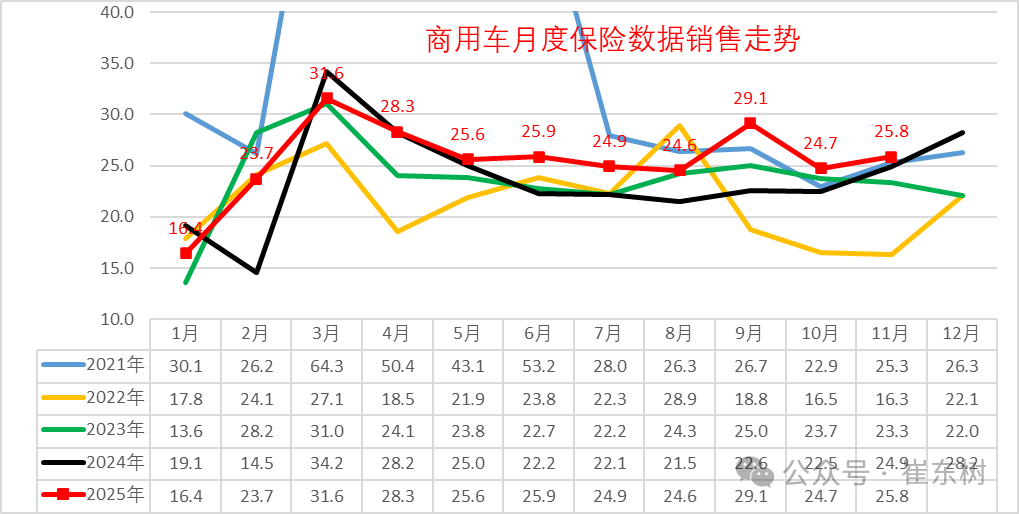
全国商用车国内保险特征—2025年11月
Xin Lang Cai Jing· 2025-12-19 12:49
Core Insights - The domestic commercial vehicle market is experiencing a strong growth trend, particularly in the new energy commercial vehicle segment, driven by policy support and increasing demand for vehicle upgrades [1][2][10]. Commercial Vehicle Market Analysis - In November 2025, domestic commercial vehicle sales reached 260,000 units, a year-on-year increase of 4% and a month-on-month increase of 4% [5]. - From January to November 2025, total commercial vehicle sales amounted to 2.81 million units, representing a 9% year-on-year growth [5]. - The new energy commercial vehicle sales for the same period reached 770,000 units, showing a significant year-on-year increase of 54% [8]. New Energy Commercial Vehicle Performance - The penetration rate of new energy commercial vehicles has risen sharply, reaching 27% from January to November 2025, up 7 percentage points year-on-year [12]. - By November 2025, the penetration rate for new energy commercial vehicles reached 36%, an increase of 11 percentage points compared to the same month last year [12][10]. Market Trends and Dynamics - The market for new energy commercial vehicles is characterized by a strong upward trend from March to November 2025, with November sales peaking at 92,000 units, a 45% year-on-year increase [10][8]. - The overall commercial vehicle market has shown a recovery from previous lows, with 2025 marking a significant improvement compared to the previous years [5][4]. Competitive Landscape - Major players in the commercial vehicle sector include Beiqi Foton, SAIC-GM-Wuling, Dongfeng Motor, and China National Heavy Duty Truck Group, with Foton and Wuling leading in light truck and bus markets respectively [14]. - The new energy segment is seeing increased competition, particularly among companies like Geely and Chery, which are gaining traction in the new energy light truck market [20].



混动赛道内卷正酣,福田欧曼银河为何能“赢在未来”?
Xin Lang Cai Jing· 2025-12-19 12:48
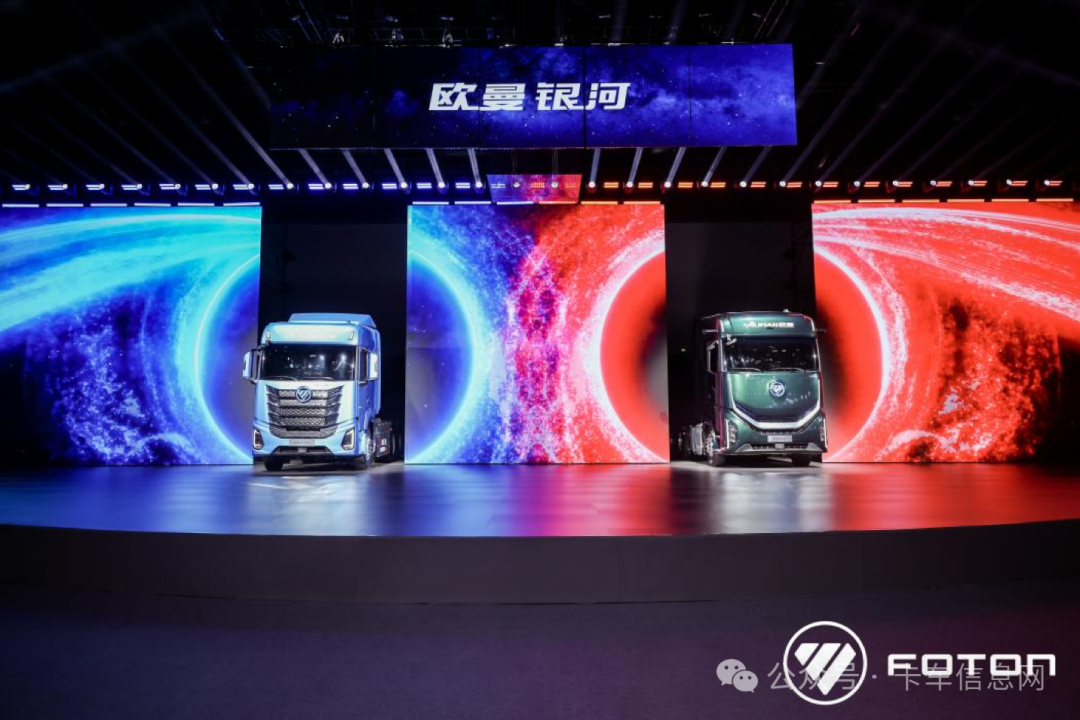
近年来,国内商用车混动赛道竞争日趋白热化,各品牌纷纷推出技术方案,试图在节能、动力、场景适应性等方面建立优势。然而,同质化竞争与"参数 内卷"也让行业陷入新的瓶颈。在此背景下,福田汽车于近期正式发布的欧曼银河全新一代混动重卡,却以一套系统化、平台化、场景化的"超级混动 3.0"架构,给出了不一样的答案。它不仅是一系列新产品的亮相,更预示着中国重卡混动技术正式迈入以"智慧全场景"为核心的高质量发展新阶段。 架构升维 从"技术叠加"到"智慧平台" 福田欧曼的混动技术演进路径清晰:从2022年的1.0破冰,到2024年2.0性能跃升,再到如今的超级混动3.0智能平台化架构,实现了从单一技术突破到系统 性平台构建的跨越。这是银河混动区别于众多"技术拼凑"型产品的根本所在。 该架构以"智慧升维、包罗万象"为理念,从动力、能源、车身、底盘等六大维度进行一体化设计。其核心在于"灵活"与"统一" : 动力与能源灵活组合:覆盖HEV、PHEV两种混动形式,以及油电混、气电混两种能源方案。这意味着用户可根据自身运营场景(如燃料成本、补能便利 性、路权政策)进行个性化选择,打破了以往混动车型路线单一的局限。 核心部件平台化开发:架 ...
L3级自动驾驶商业化进程加速 小米汽车获路测牌照
Xin Lang Cai Jing· 2025-12-19 12:48
Core Insights - The Ministry of Industry and Information Technology has issued the first batch of L3 conditional autonomous driving vehicle permits, with Xiaomi Auto being the latest company to obtain an L3 road testing license in Beijing [1][14] - The report indicates that by September 2025, 23 companies, including Xiaomi, have accumulated over 60.27 million kilometers of operation with 750 autonomous passenger vehicles [1][14] - The L3 autonomous driving permit process follows a structured pathway, and companies are categorized into those with official "entry permits" and those with "road licenses" for internal testing [1][14] Company Developments - Changan Automobile's "Deep Blue SL03" has received L3 permit for operation in specific congested areas in Chongqing [2][15] - BAIC Blue Valley's "ARCFOX Alpha S" has been granted L3 permit for operation on specific highways in Beijing [2][15] - BYD was the first to obtain an L3 road testing license in July 2023 and has begun large-scale road validation [3][16] - Seres (Wenjie) has obtained L3 testing permits primarily in Chongqing and Shenzhen for its Wenjie M9 model [4][17] - SAIC Group has received two L3 road permits, making it one of the companies with the most licenses [4][17] - NIO has been selected for the first batch of L3/L4 autonomous driving permits and road testing trials [5][17] - GAC Group has made progress in L3 autonomous driving technology [6][18] - JAC Motors has obtained L3 road testing permits [7][19] - Foton Motor has completed the development and acceptance of L3 autonomous driving prototypes [8][20] - Yutong Bus is the first in the bus industry to enter the L3 autonomous driving pilot program [9][21] - FAW Jiefang's high-level autonomous driving truck J7 L3 has completed road testing [10][22] Industry Trends - The transition to L3 autonomous driving represents a significant technological milestone, shifting driving control and accident liability from the driver to the system itself [10][22] - Multiple institutions emphasize the hardware upgrade logic due to the increased safety and reliability requirements associated with L3 [11][23] - The regulatory framework for L3 permits indicates a closed loop in product safety, network security, and accident liability, alleviating long-standing compliance concerns for automakers [12][23] - The commercialization of L3 is expected to drive the mass application of intelligent chassis technologies, including active suspension, electronic brake-by-wire (EMB), and steer-by-wire (SBW) systems [12][23][24] - Specific components benefiting from this trend include active suspension systems from companies like Baolong Technology and Top Group, EMB systems from Bertel and Asia Pacific Holdings, and SBW systems from companies like Nexperia [12][24]



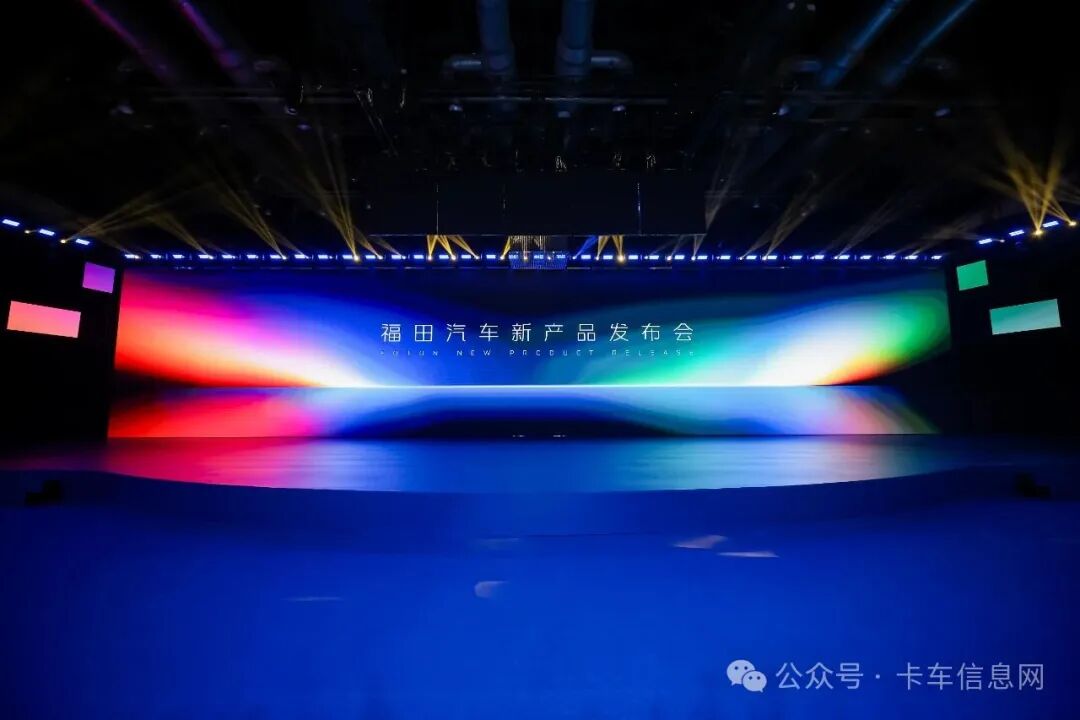
福田汽车打响“十五五破局”硬仗
Xin Lang Cai Jing· 2025-12-19 12:43
Core Viewpoint - Foton Motor's 2026 Business Conference emphasizes its strategic shift towards becoming a world-class commercial vehicle enterprise amid industry adjustments, marking a transition from scale leadership to value leadership in China's commercial vehicle sector [1][26]. Group 1: Strategic Goals - Foton aims to achieve a market share of 17% by 2025, double its heavy truck business, and a 90% year-on-year growth in new energy vehicles [3][16]. - The company has set ambitious targets for the "14th Five-Year Plan," including a 50% penetration rate for new energy vehicles and 30% overseas market share [7][19]. Group 2: Transformation Insights - The growth in new energy vehicles, while impressive at 90%, is based on a relatively small base, indicating a need for cautious optimism [6][18]. - Foton is not only focusing on electric vehicle electrification but is also innovating across its entire product matrix, enhancing product quality satisfaction by 42% [6][18]. Group 3: Three Comprehensive Strategies - Foton's strategy includes comprehensive internationalization, new energy adoption, and smart technology integration, requiring a shift from simple product exports to localized operations [9][21]. - The company recognizes the complexity of commercial vehicle operations and adopts a dual approach of pure electric and hybrid solutions, alongside multiple fuel options [9][21]. Group 4: Market Positioning - The company acknowledges the end of the era of scale expansion and the beginning of value competition, focusing on precise operations and ecological expansion [11][23]. - Foton's approach to new energy transition emphasizes a gradual and market-driven strategy, avoiding blind leaps into electrification [25][26]. Group 5: Organizational Change - Achieving the goal of becoming a world-class commercial vehicle enterprise requires not only technological advancements but also profound changes in organizational structure and business ecosystems [14][26].
讯飞、美团押注的人形机器人公司,估值200亿,超越宇树
AI研究所· 2025-12-19 12:32
Core Viewpoint - The article highlights the significant financing success of Beijing Galbot General Robotics Co., Ltd., which raised over $300 million in its latest funding round, marking a record in the domestic embodied intelligence sector and elevating its valuation to over 20 billion RMB [1][16]. Financing Journey - Galbot has accumulated a total of $800 million in funding within just over two years since its establishment in May 2023, showcasing a rapid rise in capital interest [4]. - The company attracted attention from top-tier venture capital firms early on, with notable investments from iFlytek Venture Capital and others during its seed and angel rounds [5][6]. - The funding rounds include: - Seed Round (June 2023): Initial investments from major VCs shortly after establishment [6]. - Angel Round (June 2024): Secured 700 million RMB, marking a significant investment in the embodied intelligence field [9]. - A Round (November 2024): Received 500 million RMB with participation from state-owned funds [13]. - B Round (June 2025): Led by CATL, raising over 1.1 billion RMB, marking CATL's first investment in the embodied intelligence sector [14][15]. - B+ Round (December 2025): Raised $300 million, with participation from international capital for the first time, pushing the valuation to $3 billion [16][17]. Business Model and Market Strategy - Galbot focuses on practical applications of robotics, emphasizing functionality over aesthetics, which has led to securing substantial orders in various sectors [20][29]. - The company has established partnerships with major industrial players like CATL and Bosch, focusing on automating repetitive tasks in manufacturing [24]. - By addressing labor shortages and repetitive tasks, Galbot's robots have gained traction in sectors such as retail and healthcare, with innovative solutions like the "Galactic Space Capsule" for smart retail [27][28]. - The company's approach is to provide cost-effective and manageable robotic solutions, leading to large-scale orders and commercial viability [20][29]. Industry Insights - The article suggests that 2026 will be a pivotal year for the commercialization of humanoid robots in China, with the potential for the country to replicate the success seen in the electric vehicle sector [31][32]. - The support from capital and industry resources is crucial for the rapid deployment and profitability of robotic solutions in various applications [30].

崔东树:2025年国内商用车交强险数据强势增长 11月商用车国内销量同比增4%
智通财经网· 2025-12-19 11:49
Core Insights - The commercial vehicle market in China is experiencing significant growth, particularly in the new energy vehicle (NEV) segment, driven by policy support and increasing demand for vehicle upgrades [1][2][12] - In November 2025, the domestic sales of commercial vehicles reached 260,000 units, marking a 4% year-on-year and month-on-month increase, while total sales from January to November 2025 reached 2.81 million units, a 9% increase compared to the previous year [1][6] - The penetration rate of new energy commercial vehicles has risen sharply, reaching 36% in November 2025, up 11 percentage points from the same month last year [2][12] Commercial Vehicle Market Analysis - The commercial vehicle market has shown a strong upward trend from February to November 2025, with sales driven by the growth of new energy vehicles [4][10] - The sales data indicates a recovery from previous years' lows, with 2025 expected to see stable performance compared to 2024, which had a total of 2.85 million units sold [5][6] - The market dynamics are shifting, with traditional fuel vehicles requiring effective policy support to compete with the rapidly growing new energy segment [2][12] New Energy Vehicle Performance - The cumulative sales of new energy commercial vehicles from January to November 2025 reached 770,000 units, reflecting a 54% year-on-year increase [1][8] - The penetration rate of new energy vehicles in the commercial sector has increased significantly, from 3% in 2019-2021 to 27% in the first eleven months of 2025 [2][12] - In November 2025, new energy commercial vehicle sales reached 92,000 units, a 45% increase year-on-year and a 15% increase month-on-month [1][8] Market Structure and Competition - The market for commercial vehicles is characterized by stable structures in truck and bus segments, with significant growth in the new energy penetration rates for both [14][21] - Key players in the light truck market include Beiqi Foton, SAIC-GM-Wuling, and China National Heavy Duty Truck Group, with Foton and Wuling leading in sales [15][21] - The heavy-duty truck segment is dominated by companies like FAW Jiefang and China National Heavy Duty Truck Group, which have shown strong performance in the new energy sector [17][18] Regional Market Dynamics - The eastern and southern regions of China, particularly the Huabei and Huadong areas, show strong demand for light and heavy commercial vehicles, with increasing penetration of new energy vehicles [18][22] - The market for light commercial vehicles is particularly robust in economically developed regions, with significant sales growth in the southern and eastern parts of the country [19][23]