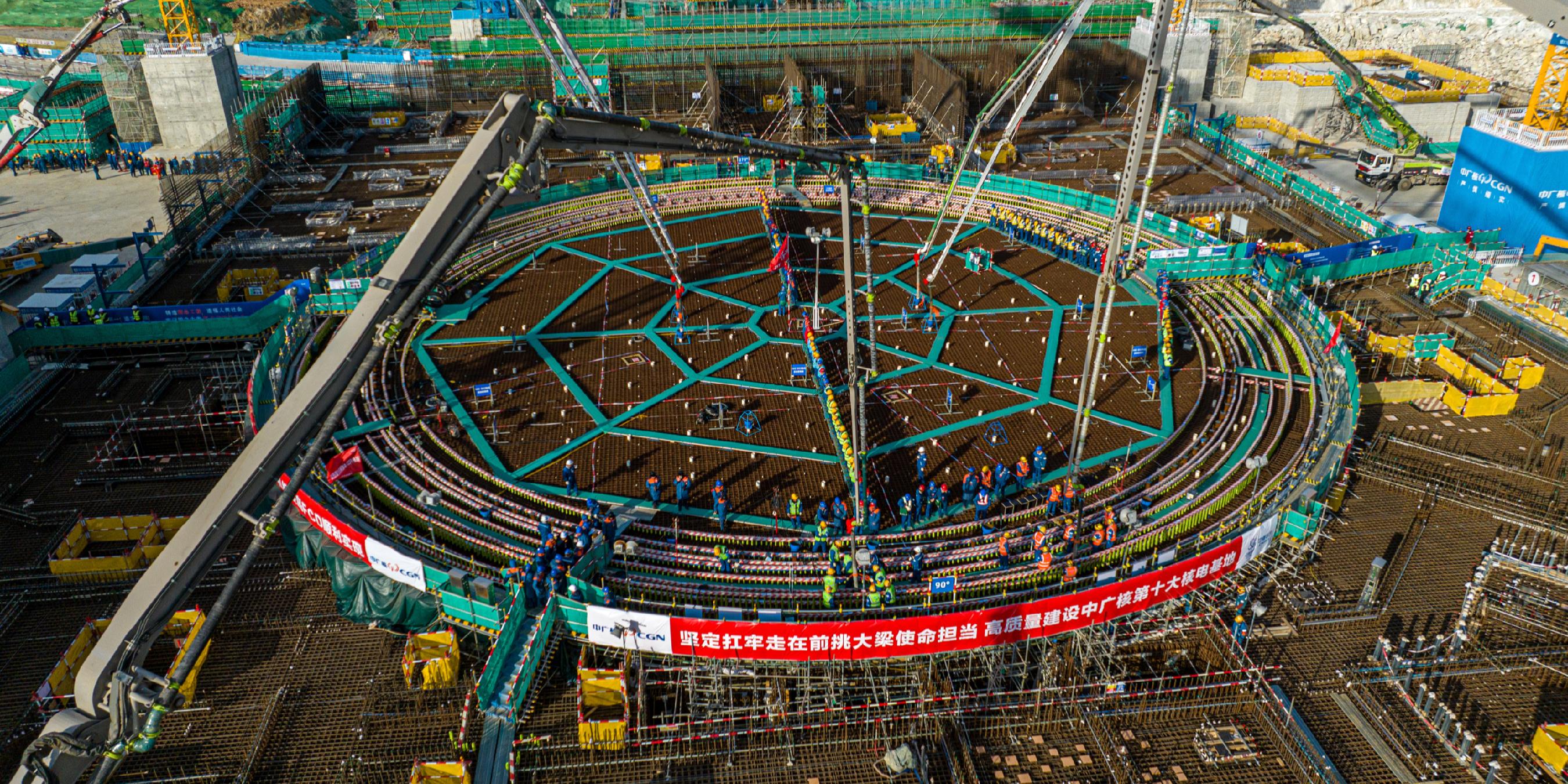
中国广核

Search documents
中国广核公布国际专利申请:“热分层现象的模拟方法、装置、设备、介质及程序产品”
Sou Hu Cai Jing· 2026-01-30 23:00
Group 1 - The core point of the article is that China General Nuclear Power Corporation (CGN) has filed an international patent application for a method and device related to the simulation of thermal stratification phenomena, with the application number PCT/CN2024/129483 and an international publication date set for January 29, 2026 [1] Group 2 - In 2023, CGN has published two international patent applications, which is consistent with the same period last year [4] - For the first half of 2025, CGN invested 524 million yuan in research and development, representing a year-on-year increase of 67.68% [4]


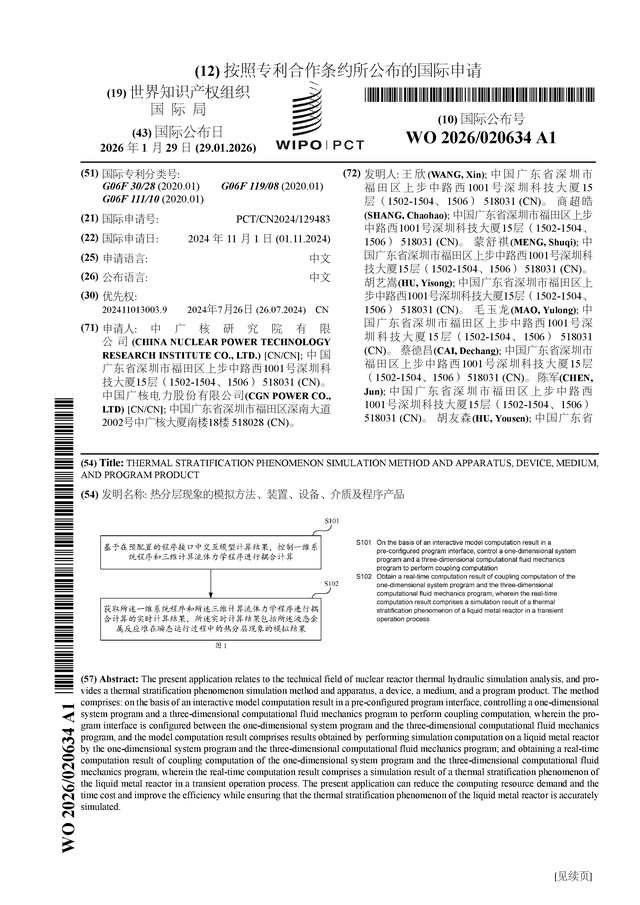
国家发展改革委 国家能源局关于完善发电侧容量电价机制的通知
国家能源局· 2026-01-30 09:29
Overall Thoughts - The notification aims to improve the capacity pricing mechanism on the generation side to ensure stable power supply, facilitate green development, and optimize resource allocation in the energy sector [4][5]. Classification of Capacity Pricing Mechanism - The capacity pricing mechanism for coal and natural gas power generation will be enhanced, with a recovery ratio of fixed costs for coal power plants increased to no less than 50% [5]. - The pricing mechanism for pumped storage power plants will continue to follow government pricing for plants that commenced construction before the issuance of the relevant guidelines, while new plants will have their capacity prices determined based on average costs [6]. - A new capacity pricing mechanism for independent new energy storage on the grid side will be established, with pricing based on local coal power capacity standards [7]. Establishing Reliable Capacity Compensation Mechanism - A reliable capacity compensation mechanism will be established to compensate power generation units based on their ability to provide stable power during peak demand periods [8]. - The compensation will cover coal, gas, and eligible independent new energy storage units, gradually expanding to include pumped storage [9]. Improving Supporting Policies - The adjustment of coal power long-term market trading prices will be allowed based on supply and demand, with flexibility in contract pricing mechanisms [10][11]. - The capacity fees and compensation will be included in local system operating costs, with specific pricing rules for energy storage facilities based on market conditions [12]. Implementation Organization - Provincial pricing authorities are tasked with coordinating the implementation of capacity pricing policies and establishing reliable capacity compensation mechanisms [13]. - An assessment system for users' economic capacity to bear electricity costs will be established to inform compensation standards [14].

国家发改委、国家能源局重磅发布!
中国能源报· 2026-01-30 08:23
Core Viewpoint - The article discusses the implementation of a refined capacity pricing mechanism for power generation, aimed at enhancing the stability and efficiency of the electricity market while supporting the transition to a green energy system [1][2]. Group 1: Overall Strategy - The strategy aims to adapt to the needs of a new power system and market structure, balancing power supply security, green energy transition, and efficient resource allocation [3]. - It emphasizes the need to categorize and improve capacity pricing mechanisms for coal, natural gas, pumped storage, and new energy storage [3]. Group 2: Classification of Capacity Pricing Mechanisms - The capacity pricing mechanism for coal and natural gas power generation will be improved, with a target to recover at least 50% of fixed costs through capacity pricing [4]. - For pumped storage, existing projects will continue to use government pricing, while new projects will have their capacity pricing determined based on average cost recovery principles [5]. - A new capacity pricing mechanism for independent new energy storage on the grid side will be established, based on local coal power capacity pricing standards [6]. Group 3: Establishing Reliable Capacity Compensation Mechanism - A reliable capacity compensation mechanism will be established to compensate power generation units based on their ability to provide stable power during peak demand periods [7]. - The compensation will cover coal, gas, and qualifying new energy storage units, gradually expanding to include pumped storage [8]. Group 4: Supporting Policy Improvements - The article outlines the need to enhance electricity market trading and pricing mechanisms, allowing for flexible pricing in long-term contracts based on market conditions [9]. - It also discusses the need for improved electricity billing policies, ensuring that capacity fees and compensation are integrated into local system operating costs [10]. Group 5: Implementation and Coordination - The article emphasizes the importance of collaboration among provincial pricing authorities and energy departments to effectively implement the capacity pricing policies [11]. - It highlights the establishment of an economic capacity assessment system to guide the determination of reliable capacity compensation standards [12].

近期风电招中标情况更新(1.19-1.23)
Guoxin Securities Co., Ltd· 2026-01-29 07:25
市场研究部 2026 年 1 月 27 日 投资建议 建议关注海风板块海缆、海工、桩基等领域,以及海外拿单能力优异 的企业投资机会。 风险提示 1、政策落地不及预期;2、产业链价格波动;3、投资不及预期。 近期风电招中标情况更新(1.19-1.23) 事件 2026 年 1 月 19 日-2026 年 1 月 23 日风电招中标情况。 风电招标规模合计 根据风电头条,2026 年 1 月 19 日-2026 年 1 月 23 日,共 8 个项目 2487.5MW 风机启动采购,开发商是大唐、中广核、华电。 风电中标规模合计 2026 年 1 月 19 日-2026 年 1 月 23 日,不含塔筒陆上风电项目共计 1 个,规模总计 120MW,项目中标单价为 1290 元/kW。 未经授权引用或转发须承担法律责任及一切后果,并请务必阅读文后的免责声明 看好 市场表现截至 2026.1.23 -20.00% -10.00% 0.00% 10.00% 20.00% 30.00% 40.00% 50.00% 60.00% 70.00% 2025-01- 23 2025-04- 10 2025-06- 23 2025- ...
中广核:“十四五”期间境内新能源在运装机容量较“十三五”末增长近三倍
Zheng Quan Ri Bao Zhi Sheng· 2026-01-29 03:10
在深耕国内市场的同时,中广核海外绿色足迹同样亮眼,境外新能源控股装机规模超过1300万千 瓦。"十四五"期间,新增在建、在运装机约580万千瓦,已累计为18个国家和地区提供清洁电力超3700 亿千瓦时,点亮"一带一路"万家灯火。 "我们深耕'一带一路'共建国家,积极融入能源领域国际合作,并在此过程中持续拓宽清洁能源合作'新 路径、新场景、新模式'。"在中国广核能源国际控股有限公司党委副书记、总经理欧阳孜看来,中广核 境外新能源发展正从电站投资者,向为合作国提供深度本地化能源解决方案的伙伴转型。 记者从中广核获悉,截至目前,其核电在运机组28台,在建机组20台,总装机容量超5600万千瓦。其 中,目前,有18台在建核电机组采用"华龙一号"。 作为我国核电走向世界的"国家名片","华龙一号"12项主要技术指标达国际最优水平,成功通过欧洲用 户要求认证和英国通用设计审查,是目前唯一无审查重大问题、无审查重大遗留问题的堆型。中广核工 程有限公司党委书记、董事长宁小平介绍,中广核"华龙一号"示范工程——广西防城港核电3、4号机组 于2024年高质量投产,全面验证了该技术的安全性、先进性和可靠性。随着"华龙一号"技术持续 ...
中国电力:2025 年风光装机超预期;电力需求增长符合预期-China – Power-2025 More Wind and Solar Installation Than Expected; Power Demand Growth In-line
2026-01-29 02:42
Summary of Key Points from the Conference Call Industry Overview - The report focuses on the **China Power** sector, specifically highlighting the growth in **wind and solar energy installations** in 2025, which exceeded expectations [1][5]. Core Insights and Arguments - **Power Demand Growth**: - National power consumption increased by **5.0% year-over-year (yoy)** in 2025, aligning with the China Electricity Council's (CEC) projections [8]. - Power demand by sector showed varied growth: - Primary: **9.9%** - Secondary: **3.7%** - Tertiary: **8.2%** - Residential: **6.3%** - This represents a moderation compared to 2024's growth rates [2]. - **Power Generation Statistics**: - Total power generation rose by **2.2% yoy** to **9,716 billion kWh** in 2025. - Solar and wind power generation increased significantly, with solar up **24.4%** and wind up **9.7%**, contributing **17%** of total generation (up from **14%** in 2024) [3]. - Thermal generation decreased by **1.0% yoy** to **6,295 billion kWh**, while hydro and nuclear generation rose by **2.8%** and **7.7%** respectively [3]. - **Capacity Additions**: - China added **543 GW** of power capacity in 2025, marking a **26.5% yoy** increase. This included: - **315 GW** of solar (up **13.7%**) - **119 GW** of wind (up **50.4%**) - **95 GW** of thermal, which accelerated from previous years [4]. - By the end of 2025, total installed power capacity reached **3,891 GW**, with solar and wind comprising **47.3%** of this total [4]. - **Sector-Specific Drivers**: - The major drivers for tertiary power consumption were identified as **electric vehicle (EV) charging** and **software & IT services**, which grew by **48.8%** and **17.0% yoy** respectively [8]. Additional Important Insights - The report indicates that the growth in renewable energy installations was higher than previously forecasted, with cumulative solar and wind capacity reaching **1,202 GW** and **640 GW** respectively by the end of 2025 [8]. - The thermal power installation for 2025 was below the CEC's forecast of **106 GW**, indicating a potential area of concern for future thermal energy investments [8]. This summary encapsulates the key findings and insights from the conference call regarding the state of the power sector in China, particularly focusing on the growth of renewable energy sources and the overall demand for power.
超千亿核电新账本:山东如何跑通商业路径?
经济观察报· 2026-01-29 02:40
Core Viewpoint - Shandong Province is pioneering the world's first commercial nuclear heating project, "Warm Nuclear No. 1," extending the nuclear energy industry chain from electricity generation to urban heating networks, marking a significant shift in energy structure and a revolution in the "nuclear+" business model [3][4]. Summary by Sections Nuclear Power Development Goals - By 2030, Shandong aims to have an operational nuclear power capacity exceeding 13 million kilowatts and a nuclear heating area targeting 200 million square meters, forming a nuclear energy industry cluster worth 500 billion [3][22]. Commercial Model and Challenges - The commercial model involves a collaboration between nuclear power plants, government platforms, long-distance pipeline companies, and heating companies, which is essential for the sustainable replication of the model [5][11]. - Key challenges include unstandardized design and construction, cross-regional coordination, and profit distribution mechanisms [5][4]. Economic Viability - The cost of nuclear heating is comparable to that of thermal power, with a cost control of 50 to 60 yuan per gigajoule within a 50-kilometer radius, significantly lower than traditional coal and natural gas heating [9][8]. Infrastructure and Coordination - A communication mechanism involving government leadership and enterprise participation has been established to facilitate the construction of a 83-kilometer main pipeline [14][11]. - The transition from local to cross-city coordination has increased complexity, necessitating repeated discussions on heat source distribution and maintenance responsibilities [13][14]. Technological and Market Dynamics - The nuclear power market in Shandong features diverse technological routes, including AP1000 and domestically developed technologies, which can lead to higher operational costs and challenges in standardization [17][18]. - The introduction of private capital into nuclear projects, such as the Zhaoyuan nuclear project, represents a significant shift in capital structure and aims to alleviate financial pressure on state-owned enterprises [19][20]. Local Industry Development - Local equipment manufacturing has gained opportunities due to the nuclear heating projects, with companies like Yantai Taihai Nuclear Power securing significant orders [20][19]. - The establishment of a long-distance pipeline company as a new commercial entity is crucial for the cross-regional replication of the nuclear heating model [20][21]. Strategic Planning for the 14th Five-Year Plan - The strategic layout of Shandong's nuclear power development has evolved to encompass a comprehensive energy system and a 500 billion-level nuclear energy industry cluster [22][21]. - The provincial energy bureau has set clear quantitative targets for nuclear power capacity, heating area, and industry scale by 2025 and 2030 [22][23]. Policy and Standardization Efforts - Shandong is exploring policy solutions to address challenges in standardization, coordination, and funding, including the establishment of a provincial-level coordination agency or fund [24][25]. - The focus is on creating a market-oriented, diversified financing mechanism to attract more social capital into the nuclear energy sector [25][24].

【热点直击】马斯克:中国AI的优势在于电力!数据中心驱动,关注电力ETF华宝(159146)
Xin Lang Cai Jing· 2026-01-29 01:32
Core Insights - Elon Musk stated that China's decisive advantage in the AI race lies in its large-scale power supply capabilities, highlighting the critical role of electricity in AI development [2] - The rapid advancement of AI technology has led to explosive growth in data center construction, which significantly increases electricity demand and is a major driver of power consumption [2] Industry Overview - The electricity demand driven by data centers is becoming a core growth engine, contributing to the power supply gap [2] - The current valuation of the electricity sector is at a historical low, with the China Securities Index for public utilities showing a price-to-earnings ratio (PE-TTM) of approximately 17 times, below most of the past decade's valuation levels, indicating a certain margin of safety [10][16] ETF and Market Composition - The Huabao Electric ETF tracks the China Securities Index for public utilities, which includes various power generation methods: thermal power (40.81%), hydropower (24.81%), wind power (14.25%), nuclear power (11.83%), and solar power (6.87%) [6][14] - The top ten weighted stocks in the index include leading companies such as Changjiang Electric Power, China Nuclear Power, and Three Gorges Energy, collectively accounting for 52.07% of the index [7][14] Key Stocks and Market Data - Key stocks in the index include: - Changjiang Electric Power: Market Cap 665.29 billion, Weight 10.02% [8] - China Nuclear Power: Market Cap 177.91 billion, Weight 8.36% [8] - Three Gorges Energy: Market Cap 116.92 billion, Weight 6.87% [8] - Guodian Power: Market Cap 89.89 billion, Weight 5.28% [8] - The index is classified into four levels by the China Securities Index Company, with data as of December 31, 2025 [6][14]



超千亿核电新账本:山东如何跑通商业路径?
Jing Ji Guan Cha Wang· 2026-01-29 01:28
Core Viewpoint - Shandong Province is advancing its nuclear power development strategy, focusing on integrating nuclear energy into heating solutions, thereby creating a new commercial model that extends beyond electricity generation [1][12]. Nuclear Power Development Goals - By 2030, Shandong aims to have an operational nuclear power capacity exceeding 13 million kilowatts and a nuclear heating area targeting 200 million square meters, forming a nuclear energy industry cluster worth 500 billion [1][12]. Commercial Model and Challenges - The commercial model involves a collaboration between nuclear power plants, government platforms, long-distance pipeline companies, and heating companies, but faces challenges such as inconsistent design standards and coordination issues across regions [2][5]. - The transition from a demonstration phase to a sustainable commercial model is a critical question for Shandong as it embarks on its 14th Five-Year Plan [2]. Economic Viability - The cost of nuclear heating is comparable to that of coal and natural gas heating, with a cost control range of 50 to 60 yuan per gigajoule within a 50-kilometer radius, potentially saving around 60 million yuan in heating costs for a season covering 5 million square meters [4]. Infrastructure and Coordination - A specialized technical team has been established to manage land acquisition and pipeline construction, with existing heating companies transitioning to nuclear heating operations [6]. - A communication mechanism involving government leadership and enterprise collaboration has been developed to address cross-regional coordination challenges [6]. Industrial Applications and Efficiency - The nuclear heating system is designed to prioritize residential heating in winter while increasing industrial steam supply in non-heating seasons, improving energy utilization rates from 36.69% to 55.9% [7]. - The model has successfully expanded from local to inter-city applications, maintaining principles that prevent price increases for residents and additional burdens on the government [7]. Technological Diversity and Industry Structure - Shandong's nuclear power market features diverse technological routes, including AP1000 and domestically developed CAP series technologies, which can lead to higher operational costs and challenges in standardization [8]. - The introduction of private capital into nuclear projects, such as the Zhaoyuan nuclear power project, represents a significant shift in capital structure and aims to alleviate financial pressures on state-owned enterprises [9][10]. Local Equipment Manufacturing Opportunities - Local companies have emerged as key players in the nuclear supply chain, providing essential equipment and services, which helps reduce construction and operational costs while fostering industry competitiveness [10]. Future Directions and Policy Initiatives - Shandong is exploring policy measures to standardize design, construction, and acceptance criteria for nuclear energy projects, aiming to resolve existing bottlenecks [14][15]. - The province is also considering establishing a provincial-level coordination body to address cross-city pipeline construction and heat source allocation issues [15]. Strategic Vision for the 14th Five-Year Plan - The 14th Five-Year Plan marks a pivotal shift for Shandong's nuclear power sector, transitioning from project-based development to a strategic, integrated energy system aimed at achieving a 500 billion industry scale [12][16].
山东两会|超千亿核电新账本:山东如何跑通商业路径?
Jing Ji Guan Cha Wang· 2026-01-29 01:15
Core Insights - Shandong Province is advancing its nuclear power development strategy, focusing on integrating nuclear energy into heating solutions, marking a shift from traditional electricity generation to a comprehensive energy service model [2][3][26] - The province aims to exceed 13 million kilowatts of operational nuclear capacity and provide heating for 200 million square meters by 2030, establishing a significant nuclear energy industry cluster valued at 500 billion [3][23] Group 1: Nuclear Energy Development - The Shandong government has outlined plans to construct the Haiyang Nuclear Power Phase III and expand clean heating projects, indicating a strategic shift towards nuclear energy applications beyond electricity [2][3] - The Haiyang Nuclear Power Station has initiated the world's first commercial nuclear heating project, "Warm Nuclear No. 1," which extends the nuclear energy supply chain into urban heating networks [2][3][17] Group 2: Economic Viability and Challenges - The cost of nuclear heating is comparable to that of coal and natural gas, with a projected savings of approximately 60 million yuan per heating season for a heating area of 5 million square meters [8][15] - Challenges include the need for standardized design and construction practices, as well as effective cross-regional coordination and profit-sharing mechanisms [4][22] Group 3: Business Model Innovation - A collaborative business model involving nuclear power plants, government platforms, long-distance pipeline companies, and heating companies is being developed to ensure the sustainability of nuclear heating [9][10] - The model aims to balance the interests of various stakeholders, including government, nuclear enterprises, and users, while maintaining stable pricing for residents [15][24] Group 4: Technological and Operational Developments - The integration of nuclear heating has led to technological advancements, such as the successful adaptation of AP1000 turbine technology for heating purposes, which has improved energy efficiency [7][18] - The Shandong nuclear power market features diverse technological routes, which, while fostering innovation, also present challenges in standardization and operational efficiency [18][19] Group 5: Future Directions and Policy Initiatives - The provincial government is exploring new financing mechanisms and collaborative models to attract private investment into nuclear projects, aiming to alleviate financial pressures on state-owned enterprises [20][25] - Future strategies include establishing a provincial-level coordination body to address cross-regional challenges and promote standardized practices in nuclear energy utilization [25][26]