
国家能源投资集团有限责任公司

Search documents
国家能源集团长源电力股份有限公司 关于拟变更内部控制审计会计师事务所的公告
Zhong Guo Zheng Quan Bao - Zhong Zheng Wang· 2025-12-05 00:07
Financial Service Agreement - The company has signed a new financial service agreement with Guoneng Finance due to increased financing needs for infrastructure projects during the 14th Five-Year Plan period. The new agreement allows for a daily balance of up to 20 billion yuan for loans and guarantees, and a deposit limit of 4 billion yuan [1][2]. Risk Assessment - The company conducts a risk assessment of its financial transactions with Guoneng Finance every six months, and has not identified any significant flaws in Guoneng Finance's risk management practices [1][2]. Transaction Purpose and Impact - Guoneng Finance, as a non-bank financial institution, provides various financial services to the company, which helps optimize financial management, improve capital efficiency, and reduce financing costs and risks, thereby supporting long-term development [2]. Related Party Transactions - From the beginning of the year to the disclosure date, the total amount of various related party transactions with the controlling shareholder is approximately 6.257 billion yuan [3]. Independent Director Review - The independent directors unanimously agreed that the expected related party transactions for 2026 are necessary for the company's normal operations and comply with fair trading principles, ensuring no harm to the interests of the company or its shareholders [4]. Sponsor's Opinion - The sponsor has confirmed that the expected related party transactions for 2026 have been approved by the independent directors and the board, and the decision-making process complies with relevant regulations [6].

携手国家能源集团,宁德时代进军水电!
Zhong Guo Dian Li Bao· 2025-12-04 14:00
在业内看来,国家能源集团与宁德时代此次在水电领域"深度握手",打破了传统大型水电项目多由国资主导的格局,为能源领域多元市 场主体协同参与重大项目建设提供了可复制的实践样本。 携手国家能源集团 宁德时代进军水电 "国家队"与"民资巨头"联手,水电领域迎来重磅合作。日前,国能大渡河(丹巴)水电开发有限公司(以下简称"丹巴公司")正式成 立,股权穿透背后,是国家能源投资集团有限责任公司(以下简称"国家能源集团")旗下国能大渡河流域水电开发有限公司持股 56.11%,宁德时代新能源科技股份有限公司(以下简称"宁德时代")持股10%。 据了解,丹巴公司注册资本36亿元,主要负责大渡河丹巴水电站项目的开发建设及管理运营,经营范围明确包含水力发电及风光发电技 术服务。丹巴水电站是国家、四川省"十四五"规划重点建设项目。工程开发以发电为主,兼顾促进地方经济社会发展,将于2025年核 准、2026年开工、2031年投产发电。电站投运后,预计每年可节约标准煤150.7万吨,减少二氧化碳排放301万吨。 公开资料显示,国家能源集团与宁德时代的此次携手源自"四川大渡河丹巴水电站项目引入民营企业投资入股推介公告"。今年8月,国家 能源 ...



国家能源局综合司关于调整电力行业网络与信息安全联席会议成员单位组成人员的通知
国家能源局· 2025-12-03 07:57
Core Points - The National Energy Administration has announced adjustments to the members of the Electric Power Industry Network and Information Security Joint Conference [2][3] - The conference aims to enhance network and information security within the electric power sector [2] Group 1: Leadership Structure - The convener of the conference is He Yang, a member of the Party Leadership Group and Deputy Director of the National Energy Administration [2] - The deputy conveners include key figures from major energy companies such as Huang Xue'nong from the National Energy Administration and Wang Gang from State Grid Corporation [2] Group 2: Member Units - The member units consist of high-ranking officials from various energy companies, including China Southern Power Grid, China Huaneng Group, and China Datang Corporation [2][3] - The list includes representatives from regulatory offices across different regions, ensuring comprehensive coverage of the electric power industry [3] Group 3: Office Structure - The Electric Power Industry Network and Information Security Joint Conference Office is established within the Electric Power Safety Supervision Department of the National Energy Administration [3] - The office is led by Wang Yongjun, who also serves as the Director of the Electric Power Safety Supervision Department [3]






组成人员调整,国家能源局公布!
中国能源报· 2025-12-03 05:06
Core Viewpoint - The National Energy Administration has announced adjustments to the members of the Electricity Industry Network and Information Security Joint Conference, indicating a focus on enhancing cybersecurity within the energy sector [1][5]. Group 1: Leadership Structure - The convenor of the conference is He Yang, a member of the Party Leadership Group and Deputy Director of the National Energy Administration [1]. - The deputy conveners include key figures from major energy companies, such as Huang Xue'nong from the National Energy Administration and Wang Gang from State Grid Corporation [1][2]. Group 2: Member Composition - The member list includes high-ranking officials from various energy companies, such as Li Xinsong from China Energy Construction Group and Meng Yanbin from China National Nuclear Corporation, highlighting a collaborative approach to cybersecurity [2][3]. - The conference also includes representatives from regulatory bodies within the National Energy Administration, ensuring a comprehensive oversight mechanism [2][3]. Group 3: Operational Details - The Electricity Industry Network and Information Security Joint Conference Office is established within the Electric Safety Supervision Department of the National Energy Administration, indicating a structured approach to managing cybersecurity initiatives [3][5]. - The office is led by Wang Yongjun, the Director of the Electric Safety Supervision Department, ensuring that cybersecurity efforts are aligned with regulatory standards [5].


从"可行"迈向"经济" 海上光伏正崛起
Zheng Quan Ri Bao· 2025-12-03 01:53
Core Insights - The offshore photovoltaic industry is transitioning from demonstration to large-scale development, driven by supportive policies and the need to address land resource constraints [1][2][3] - The cumulative installed capacity of offshore photovoltaic in China is expected to exceed 60 million kilowatts by 2027, highlighting the rapid growth of this sector [3] - The integration of offshore photovoltaic with other industries such as wind power and aquaculture is becoming a key strategy for promoting the "Marine Power Nation" initiative [1][2] Industry Development - The offshore photovoltaic sector is gaining momentum due to increasing policy support and market interest, with a collaborative investment landscape involving state-owned enterprises and private companies [3][6] - Major state-owned enterprises like China Energy Investment Corporation and China Huaneng Group are leading large-scale project developments, while private firms like LONGi Green Energy and TCL Zhonghuan are focusing on equipment manufacturing and technological innovation [3][6] Economic and Technical Challenges - Despite its potential, the offshore photovoltaic industry faces significant challenges related to economic viability and construction costs due to harsh marine environments [4][5] - The need for improved system efficiency, safety, and reliability in offshore conditions is critical, necessitating long-term empirical testing and validation [4][5] Technological Innovations - Companies are actively pursuing technological breakthroughs to reduce costs and enhance the durability of offshore photovoltaic systems [6][7] - For instance, LONGi Green Energy's BC2.0 components can significantly reduce sea area usage and initial investment costs for offshore projects [6] - The introduction of the first 110 kV offshore photovoltaic transformer station by TBEA marks a significant advancement in the industry, enhancing energy collection and transmission efficiency [7][8] Operational Efficiency - The industry is exploring "minimal human, unmanned" smart management to lower lifecycle operation and maintenance costs [9] - Innovative integration models, such as "photovoltaic + wind power" and "photovoltaic + aquaculture," are enhancing the economic viability of offshore photovoltaic projects [9]


从“可行”迈向“经济” 海上光伏正崛起
Zheng Quan Ri Bao Zhi Sheng· 2025-12-02 16:08
Core Insights - Offshore photovoltaic (PV) development is accelerating towards large-scale implementation, driven by supportive policies and the need to address land resource constraints in onshore PV projects [1][2][3] Industry Trends - The transition from onshore to offshore PV is becoming a new path for the industry, addressing issues such as land scarcity and increasing electricity consumption pressure [2] - By 2027, the cumulative installed capacity of offshore PV in China is expected to exceed 60 million kilowatts, highlighting the rapid growth of this sector [3] Market Dynamics - The investment landscape is evolving with a mix of state-owned enterprises and private companies participating in offshore PV projects, creating a collaborative investment environment [3] - Major state-owned enterprises like China Energy Investment Corporation and China Huaneng Group are leading large-scale project developments, while private firms like LONGi Green Energy and TCL Zhonghuan are focusing on equipment manufacturing and technological innovation [3] Technological Challenges - Offshore PV faces significant economic and technical challenges, including harsh marine environments that demand high durability and reliability from components [4][7] - The industry is still in its early stages, requiring advancements in system efficiency, safety, and operational maintenance capabilities [4][5] Innovations and Solutions - Companies are actively pursuing technological breakthroughs to reduce costs and improve the economic viability of offshore PV projects [6][9] - For instance, LONGi Green Energy's BC2.0 components can significantly reduce sea area usage and initial investment costs for offshore projects [6] Collaborative Development - The integration of offshore PV with other industries, such as wind power and aquaculture, is enhancing economic efficiency and resource utilization [9][10] - Innovative construction methods and smart management solutions are being explored to lower operational costs and improve project efficiency [8][9] Regional Developments - Coastal regions like Shandong, Jiangsu, Zhejiang, and Shanghai are accelerating their offshore PV initiatives, indicating a growing regional focus on this sector [10] Future Outlook - The offshore PV industry is entering a new phase characterized by technological maturity, market-driven cost structures, and diversified applications [11]
央企提质增效拓蓝海
Jing Ji Ri Bao· 2025-11-30 05:36
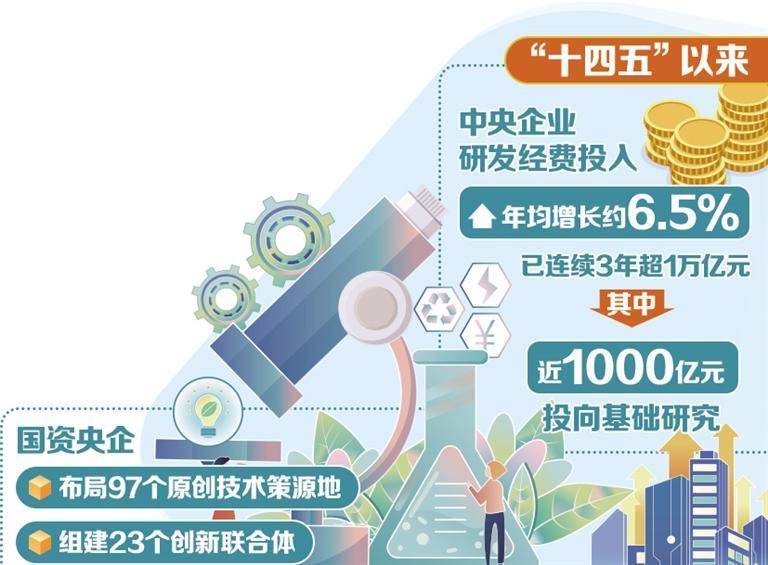
Group 1: Core Insights - The State-owned Assets Supervision and Administration Commission (SASAC) released the "Central Enterprises High-Quality Development Report (2025)", highlighting major initiatives and achievements in enhancing core functions and competitiveness of central enterprises [1] - Central enterprises invested over 800 billion yuan in upgrading old equipment and digital and green transformations, significantly supporting domestic demand [1] - The report emphasizes breakthroughs in critical technologies in integrated circuits and industrial mother machines, addressing key technological bottlenecks [1] Group 2: Industry Upgrading - During the 14th Five-Year Plan period, central enterprises are encouraged to collaborate with various enterprises to promote industrial upgrading and explore new growth areas for high-quality development [2] - The focus is on intelligent, green, and integrated development, optimizing traditional industries while nurturing emerging sectors [2] - The goal is to establish a modern industrial system centered on advanced manufacturing to support the foundation of the real economy and promote sustainable economic growth [2] Group 3: Innovation and Development - Central enterprises prioritize technological innovation, with R&D expenditure averaging a 6.5% annual increase since the 14th Five-Year Plan, exceeding 1 trillion yuan for three consecutive years [4] - Nearly 100 billion yuan has been allocated to basic research, with 97 original technology sources and 23 innovation alliances established [4] - The emphasis is on enhancing self-reliance in technology and accelerating the application of major scientific achievements [4] Group 4: Supply Chain and Ecosystem - The 20th National Congress emphasizes building a modern industrial system and strengthening the real economy, focusing on the resilience of industrial chains [7] - Central enterprises are expected to play a strategic role in leading, organizing resources, and ensuring key supplies to enhance supply chain resilience [7] - The importance of small and medium-sized enterprises (SMEs) in the industrial chain is highlighted, with over 140,000 specialized and innovative SMEs cultivated [7][8] Group 5: Collaborative Development - Starting from September 2023, SASAC and the Ministry of Industry and Information Technology initiated the Central Enterprises Supply Chain Collaborative Development Action, organizing over 40 matching activities [8] - The aim is to create a competitive and open industrial ecosystem, enhancing the resilience and security of supply chains [8] - Future efforts will focus on improving the cultivation system for quality enterprises and promoting deep integration among large, medium, and small enterprises [8]
去年在老旧设备更新等方面投资超8000亿元—— 央企提质增效拓蓝海
Jing Ji Ri Bao· 2025-11-29 23:02
Group 1: Core Insights - The State-owned Assets Supervision and Administration Commission (SASAC) released the "Central Enterprises High-Quality Development Report (2025)", highlighting major initiatives and achievements in enhancing core functions and competitiveness of central enterprises [1] - Central enterprises invested over 800 billion yuan in upgrading old equipment and digital and green transformations, significantly supporting domestic demand [1] - The report emphasizes breakthroughs in critical technologies in fields like integrated circuits and industrial mother machines, addressing key technological bottlenecks [1] Group 2: Industry Upgrading - During the 14th Five-Year Plan period, central enterprises are encouraged to collaborate with various enterprises to promote industrial upgrading and explore new growth areas for high-quality development [2] - The focus is on intelligent, green, and integrated development, optimizing traditional industries while nurturing emerging industries [2] - The National Energy Investment Group is advancing the high-end, diversified, and low-carbon development of coal chemical industries to enhance the green and intelligent aspects of the industry [2] Group 3: Innovation and Development - Central enterprises prioritize technological innovation, with R&D expenditure averaging a 6.5% annual growth since the 14th Five-Year Plan, exceeding 1 trillion yuan for three consecutive years [4] - The establishment of 97 original technology sources and 23 innovation alliances aims to enhance collaboration with universities and research institutions [4] - The focus is on integrating technology and industry innovation to boost self-reliance in technology and develop new productive forces [4] Group 4: Collaborative Development - The 20th National Congress emphasizes building a modern industrial system and strengthening the foundation of the real economy through collaboration among large, medium, and small enterprises [6] - The SASAC highlights the importance of innovation and collaboration to enhance the resilience of industrial and supply chains [7] - The Ministry of Industry and Information Technology reports over 140,000 specialized and innovative small and medium-sized enterprises, playing a crucial role in supporting the industrial chain [7][8] Group 5: Action Initiatives - Starting from September 2023, SASAC and the Ministry of Industry and Information Technology initiated the "Central Enterprises Industry Chain Collaborative Development Action", organizing over 40 matching activities in key areas [8] - The action aims to create an open and shared industrial ecosystem, enhancing the resilience and safety of supply chains [8]
去年在老旧设备更新等方面投资超8000亿元——央企提质增效拓蓝海
Sou Hu Cai Jing· 2025-11-29 22:57
近年来,通过深入实施央企产业焕新、未来产业起航、"人工智能+"等专项行动,传统产业转型步伐明显加 快,战略性新兴产业积厚成势,为企业未来可持续发展提供了新的增长点。"面向'十五五',要坚持智能化、 绿色化、融合化方向,做强做优增量、盘活存量,优化提升传统产业,因地制宜培育壮大新兴产业和对外产 业,努力开辟增长'第二曲线',加快推动构建以先进制造业为骨干的现代化产业体系,为巩固壮大我国实体 经济根基、推动经济持续健康发展提供有力支撑。"张玉卓说。 党的二十届四中全会提出建设能源强国目标,要求"十五五"初步建成新型能源体系,全面提升电力系统安全 韧性水平。国家能源投资集团有限责任公司相关负责人介绍,国家能源集团持续推动煤化工高端化、多元 化、低碳化发展,着力增加产业含绿量、含智量。 国务院国资委近日发布《中央企业高质量发展报告(2025)》,聚焦去年以来,中央企业在增强核心功能、 提高核心竞争力、推动高质量发展等方面的主要举措与成效。报告显示,中央企业在老旧设备更新、数字化 绿色化改造等方面投资超8000亿元,有力支撑内需提振;在航天、能源、通信等领域打造了一批重大工程、 国之重器;在集成电路、工业母机等领域突破 ...
长源电力增资至34.8亿,增幅约27%
Zhong Guo Neng Yuan Wang· 2025-11-27 03:21
Group 1 - The core point of the article is that Changyuan Electric Power has increased its registered capital from approximately 2.75 billion RMB to about 3.48 billion RMB, representing an increase of around 27% [1] - The company has undergone changes in several key personnel [1] Group 2 - Changyuan Electric Power Co., Ltd. was established in April 1995 and is legally represented by Wang Dong [1] - The company's business scope includes heat production and supply, research and development of emerging energy technologies, and manufacturing of basic chemical raw materials [1] - Shareholder information indicates that the company is jointly held by China Energy Investment Corporation, China Energy Construction Group Co., Ltd., and Hubei Railway Development Fund Co., Ltd. [1]