
Mistral

Search documents
经济学人:英美情报界如何使用AI模型?
Sou Hu Cai Jing· 2025-07-31 06:22
Core Insights - The emergence of DeepSeek's large language model (LLM) has raised concerns in the U.S. regarding China's advancements in AI, particularly in intelligence and military applications [1][8] - The Biden administration is pushing for more aggressive testing and collaboration with leading AI labs to ensure the U.S. does not fall behind in AI capabilities [1][2] - Significant contracts have been awarded to AI companies like Anthropic, Google, and OpenAI to develop "agentic" AI models that can perform complex tasks autonomously [1][2] Group 1: U.S. Intelligence and Military AI Initiatives - The U.S. intelligence community is increasingly integrating AI models into their operations, with all agencies reportedly using AI for data analysis [2] - AI companies are customizing models based on intelligence needs, with specific versions like Claude Gov designed to handle classified information [2] - The Pentagon has awarded contracts up to $200 million to various AI firms for testing advanced AI models [1][2] Group 2: European AI Developments - European countries, particularly the UK and France, are also advancing their AI capabilities, with the UK intelligence community accessing high-security LLM functionalities [3] - Mistral, a leading AI company in Europe, is collaborating with France's defense AI agency to enhance language processing capabilities [3] - The Israeli military has significantly increased its use of OpenAI's GPT-4 model since the outbreak of the Gaza conflict, indicating a growing reliance on advanced AI technologies [3] Group 3: Challenges and Concerns - Despite advancements, the application of AI in national security is not meeting expectations, with some agencies still lagging behind in utilizing cutting-edge models [4][6] - Concerns have been raised about the reliability and transparency of AI models, with a focus on reducing "hallucination" rates in intelligence applications [6][7] - Experts emphasize the need for a shift in how AI is utilized in intelligence, advocating for new architectures that can handle causal reasoning [7][8] Group 4: Competitive Landscape and Future Directions - There is a consensus that the U.S. is struggling to monitor China's advancements in AI, with limited insights into how DeepSeek is being applied in military and intelligence contexts [8] - The Trump administration has mandated regular assessments of the U.S. national security system's AI applications to keep pace with competitors like China [8] - The potential for AI to transform intelligence operations is recognized, but there is a cautionary approach to its implementation due to the risks involved [6][7]



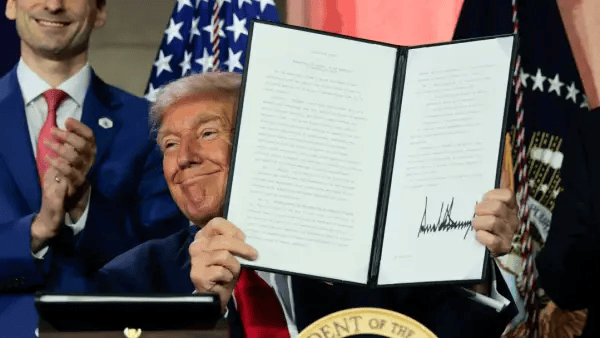
英美情报界如何使用AI模型?
Guan Cha Zhe Wang· 2025-07-31 05:52
Core Insights - The emergence of DeepSeek's large language model (LLM) has raised concerns in the U.S. regarding China's advancements in AI, particularly in intelligence and military applications [1][8] - The Biden administration is responding by accelerating AI experimentation within intelligence agencies and the Department of Defense, collaborating with leading AI firms like Anthropic, Google, and OpenAI [1][2] - The U.S. intelligence community is increasingly utilizing AI models, with significant contracts awarded to companies for developing "agentic" AI models capable of executing complex tasks [1][2] Group 1: U.S. Developments - The Pentagon awarded contracts up to $200 million to companies like Anthropic and Google for testing agentic AI models [1] - All U.S. intelligence agencies are now widely using AI models, with firms customizing models based on specific agency needs [2] - Despite advancements, the application of AI in national security is still not meeting expectations, with agencies struggling to adapt existing technologies effectively [4] Group 2: European Initiatives - The UK intelligence community is also integrating advanced LLM capabilities, with companies like Mistral leading efforts in Europe [3] - Mistral's Saba model is specifically trained for regional language processing, enhancing its utility in intelligence operations [3] - The Israeli military has significantly increased its use of OpenAI's GPT-4 model, indicating a growing reliance on advanced AI technologies in military contexts [3] Group 3: Challenges and Concerns - Experts express concerns about the reliability and transparency of AI models, emphasizing the need for consistency in intelligence applications [6][7] - The current focus on developing advanced agentic models may overlook the necessity for models that can perform causal reasoning and understand real-world logic [7] - There are warnings that China may be advancing faster in AI applications for military and intelligence purposes, potentially outpacing U.S. efforts [7][8]
Google joins EU code for powerful AI models rebuffed by Meta
TechXplore· 2025-07-30 09:20
This article has been reviewed according to Science X's editorial process and policies . Editors have highlighted the following attributes while ensuring the content's credibility: Credit: Unsplash/CC0 Public Domain Google on Wednesday said it would join the likes of ChatGPT-maker OpenAI and sign the EU's set of recommendations for the most powerful artificial intelligence models that has been rebuffed by Meta. The European Union this month published long-delayed recommendations for a code of practice th ...


欧盟AI法案关键条款8月生效,45家欧企联名反对,Meta公开拒签欧盟新规
第一财经· 2025-07-23 13:32
Core Viewpoint - The article discusses the contrasting positions of major tech companies regarding the EU's General AI Act and the voluntary AI Code of Conduct, highlighting the implications for innovation and regulatory compliance in the AI sector [1][4][7]. Group 1: EU AI Regulation and Industry Response - The EU's General AI Act will come into effect on August 2, 2025, with key provisions affecting general AI models [1][8]. - Over 45 influential European companies have called for a two-year pause on the strictest requirements of the AI Act, expressing concerns that current regulations may hinder innovation and competitiveness [8][9]. - Meta is the only major tech company to explicitly refuse to sign the AI Code of Conduct, citing legal uncertainties and additional requirements beyond the AI Act [6][9]. Group 2: Company Positions on the AI Code of Conduct - French AI company Mistral was the first to commit to the AI Code of Conduct, followed by OpenAI, which emphasized the importance of simplifying regulatory requirements [5][6]. - Anthropic also announced plans to sign the Code, highlighting its commitment to transparency and accountability in AI development [5][6]. - Microsoft indicated a strong likelihood of signing the Code, aiming to play a rational role in AI governance amid geopolitical tensions [6]. Group 3: Regulatory Challenges and Industry Concerns - The EU's AI Act employs a risk-based regulatory model, imposing strict limitations on high-risk AI applications while requiring transparency and accountability from other AI systems [8][10]. - Critics argue that the EU's regulatory approach may stifle innovation, with many small and medium enterprises facing burdensome administrative processes [10]. - The EU is working on proposals to streamline conflicting legal requirements and reduce compliance burdens, aiming to create a more favorable environment for innovation in AI [10].

欧盟AI法案关键条款8月生效,45家欧企联名反对,Meta公开拒签欧盟新规
Di Yi Cai Jing· 2025-07-23 10:05
Core Viewpoint - Meta warns that the EU's AI regulations will stifle technological innovation and claims that Europe is heading in the wrong direction regarding AI [1] Group 1: EU AI Regulations - The EU's AI Act, which includes key provisions for general AI models, will officially take effect on August 2 [1] - The EU Commission released the "General AI Code of Conduct" on July 10, which provides a non-binding framework for AI companies to comply with the AI Act [1][4] - Over 45 influential European companies have called for a two-year suspension of the most stringent requirements of the AI Act due to concerns about excessive regulation [1][7] Group 2: Company Responses - French AI company Mistral was the first to commit to the General AI Code of Conduct, followed by OpenAI and Anthropic, while Meta has explicitly refused to sign [4][5] - OpenAI emphasized the importance of the EU market for its business and called for simplification of the regulatory framework [5] - Meta's global affairs head, Joel Kaplan, stated that the code introduces legal uncertainties and additional requirements beyond the AI Act [5][6] Group 3: Industry Concerns - The AI Act employs a risk-based regulatory model, imposing strict limitations on high-risk AI applications and requiring transparency and accountability [7] - Industry leaders, including Airbus and Siemens Energy, have expressed that the current regulatory path could severely undermine Europe's innovation and competitiveness [7][8] - The EU Commission remains firm on its implementation timeline despite industry pushback, with concerns that bureaucratic processes hinder AI development [9][10]

X @TechCrunch
TechCrunch· 2025-07-17 15:23
Mistral's Le Chat chatbot gets a productivity push with new ‘deep research' mode | TechCrunch https://t.co/EOciUlJtdx ...
Mistral发布其首个开源AI音频模型Voxtral;亚马逊云科技发布集成开发环境Kiro丨AIGC日报
创业邦· 2025-07-16 23:55
Group 1 - Mistral launched its first open-source AI audio model series, Voxtral, which can transcribe up to 30 minutes of audio and understand up to 40 minutes, supporting multiple languages including English, Spanish, French, Portuguese, Hindi, German, Dutch, and Italian [1] - OpenAI reported that ChatGPT users are experiencing an elevated error rate, and the team is working on mitigation measures [1] - Amazon Web Services introduced Kiro, a preview version of an integrated development environment designed for AI Agents, aimed at streamlining the development process from concept to production [1] Group 2 - During a dialogue at the "SoftBank World" conference, OpenAI CEO Sam Altman and SoftBank founder Masayoshi Son discussed the necessity of expanding computing power due to the immense demand driven by AI, with Altman noting that as AI costs decrease, user adoption will increase [1][2] - Son plans to deploy 1 billion AI Agents within SoftBank Group this year and is designing an operating system for them, emphasizing the potential of AI Agents to enhance productivity through autonomous learning capabilities [2]



估值120亿,融资20亿美元!OpenAI前CTO创业,Andreessen Horowitz领投,英伟达和Jane Street参投
Hua Er Jie Jian Wen· 2025-07-16 00:24
Core Insights - Thinking Machines Lab, founded by former OpenAI CTO Mira Murati, has raised $2 billion in seed funding, achieving a post-money valuation of $12 billion, marking one of the largest early-stage financings in Silicon Valley history [1] - The funding round was led by Andreessen Horowitz, with participation from major investors including Nvidia, AMD, Accel, and Jane Street, although the company's specific business details remain highly confidential [1][3] - Murati indicated that the company plans to release a product in the coming months that will include "open-source components" aimed at assisting researchers and startups in developing customized AI models [1] Company Background - Mira Murati, at 36 years old, has a notable background in the AI industry, having contributed to the development of key products at OpenAI, including ChatGPT and Dall-E [2] - Prior to her role at OpenAI, Murati worked at Tesla as a senior product manager, where she was involved in the development of the Model X [2] Investor Composition - The investor lineup for this funding round highlights significant participation from key players in the AI supply chain, with Nvidia and AMD being critical suppliers of AI chips necessary for training and running powerful AI models [3] - Jane Street has been actively investing in startups since 2020, focusing on AI and decentralized finance, and is also an investor in Anthropic [3] - Andreessen Horowitz has a long-standing reputation as a major supporter of tech startups, and its involvement adds further confidence in the project [3]

谷歌将投资250亿美元在美国建设数据中心和AI基础设施;苹果首款折叠屏手机有望于2026年发布丨全球科技早参
Mei Ri Jing Ji Xin Wen· 2025-07-16 00:05
Group 1: Google Investment - Google announced an investment of $25 billion in the U.S. over the next two years for data centers and AI infrastructure [1] - An additional $3 billion will be spent on modernizing two hydroelectric plants in Pennsylvania to meet the growing power demands of data centers and AI [1] - This move strengthens Google's AI strategic layout and may enhance investor confidence in its long-term technological advantages [1] Group 2: Anthropic AI Services - Anthropic launched a financial AI analysis solution called Claude, aimed at helping financial professionals with compliance, auditing, financial modeling, and investment monitoring [2] - The company has established real-time data supply agreements with multiple data providers to offer diversified services to banks, insurance, asset management, and fintech firms [2] - This initiative may raise market expectations for AI's role in enhancing enterprise efficiency and attract investors in the tech-finance crossover sector [2] Group 3: Apple and MP Materials - Apple announced a $500 million investment in MP Materials, the only fully integrated rare earth mining company operating in the U.S. [3] - The investment includes purchasing U.S.-made rare earth magnets developed by MP Materials and collaborating on a rare earth recycling production line in California [3] - This partnership may boost investor confidence in the supply chain, with short-term focus on the scarcity of rare earth resources [3] Group 4: Mistral AI Model - Mistral launched its first enterprise audio model series called Voxtral, capable of transcribing up to 30 minutes of audio and understanding up to 40 minutes [4] - Voxtral allows users to ask questions about audio content, generate summaries, and convert voice commands into real-time actions [4] - The model supports multiple languages, enhancing expectations for AI applications in the tech sector [4] Group 5: Apple Foldable iPhone - Reports indicate that Apple is nearing the launch of its first foldable iPhone, expected to be released in the second half of 2026 [5] - The iPhone Fold is anticipated to be priced between $1,800 and $2,000, with initial production estimates of 10 to 15 million units [5] - This development may heighten expectations for high-end innovative products in the tech sector and increase attention on Apple's supply chain [5]

X @TechCrunch
TechCrunch· 2025-07-15 15:20
AI Model Release - Mistral released Voxtral, its first open source AI audio model [1]