ABB

Search documents
电网设备:全球分接开关与变压器需求保持强劲-Global Power Grid Equipment Global Tap Changer and Transformer Demand Remains Strong
2026-01-14 05:05
Summary of Global Power Grid Equipment Conference Call Industry Overview - **Industry**: Power Grid Equipment - **Key Company**: Maschinenfabrik Reinhausen (MR), a leading manufacturer of high voltage tap changers Transformer Market Outlook United States - **Demand Growth**: Expected to grow at an 8-10% CAGR from 2026-2030, driven by data centers, renewable energy projects, nuclear power plants, and public grid replacements [3][4] - **Public Grid Replacement**: Two-thirds of demand is attributed to public grid replacement, while one-third comes from new projects like renewables and data centers [3] - **Aging Infrastructure**: The US has one of the oldest grid infrastructures, with transformer service life reaching 30 to 60 years, leading to strong replacement demand [4] Europe - **Demand Growth**: Anticipated 4-6% CAGR from 2026-2030, influenced by electrification and decarbonization [6] - **Regional Variation**: Demand varies by country; France will see less demand due to reliance on nuclear power, while Germany, Poland, Italy, and Spain will experience higher demand due to transitions from fossil fuels [6] Middle East - **Demand Growth**: Expected 4-5% CAGR from 2026-2030, with a recent sharp increase driven by Saudi Arabia [7] - **Solar Projects**: Some projects, like NEOM, have been shelved due to financial reasons, indicating a potential slowdown [7] South Korea - **Demand**: Over 65% of tap changer demand is export-related, with less than 30% for domestic use [11] Supply & Pricing - **US Supply**: Two-thirds of transformers are imported, with tariffs and high domestic costs keeping prices high [5] - **Pricing Trends**: MR has increased prices annually for the past 3-4 years, but not as dramatically as power transformer prices, which have nearly doubled in some areas [18] Tap Changer Capacity Expansion - **Global Capacity**: Significant production increases planned, particularly in Europe, where capacity is expected to rise from 15,000 units in 2024 to 25,000 units by 2028 [13] - **US Capacity**: Current capacity remains at 2,500 units, with potential expansion postponed due to flattening demand [14] - **China Capacity**: Existing capacity is 4,000 units, with potential to increase to 8,000 units within 18-24 months if needed [15] Delivery Times - **US**: 15-20 weeks for delivery of tap changers [16] - **China**: Less than 10 weeks, preferred for logistical benefits [16] - **Europe**: 15-20 weeks for smaller tap changers, with higher-end models potentially taking up to six months [17] Market Share Strategy - **Market Share Defense**: MR aims to defend its market share rather than aggressively pursue growth, focusing on output growth in line with main markets [19] Valuation Comparison - **Global Companies**: Valuation metrics for various companies in the power grid equipment sector are provided, indicating a range of price targets and potential upside [20] Conclusion The power grid equipment industry is poised for growth, particularly in the US and Europe, driven by infrastructure needs and renewable energy projects. However, challenges such as high import costs and regional demand variations must be navigated. Companies like MR are focusing on capacity expansion and market share defense strategies to capitalize on these trends.
合格评定引领国产机器人崛起—— 访上海电器科学研究所(集团)有限公司副总裁郑军奇
Zhong Guo Zhi Liang Xin Wen Wang· 2026-01-13 06:56
Core Insights - The article discusses the advancements in the certification system for industrial robots in China, highlighting the role of Shanghai Electric Appliance Research Institute (SEARI) in promoting high-quality development through certification [1][2]. Group 1: Certification System Development - SEARI has established a comprehensive certification technical system covering key components, complete machines, and system integration, which includes 19 certification implementation rules and over 100 technical specifications and standards [1][2]. - The CR certification system has evolved to include a comprehensive certification framework that combines compliance and grading, with levels ranging from L1 (basic) to L5 (ideal) [2]. Group 2: Industry Impact - Nearly 300 companies have obtained CR certification, including major domestic brands like Siasun and Estun, with applications across various sectors such as manufacturing, logistics, and emergency rescue [3]. - The localization rate of key components has significantly increased, with controllers and servo motors achieving basic domestic replacement, and the localization rates for harmonic and RV reducers exceeding 70% [3]. Group 3: Quality Improvement and Market Share - The introduction of quantifiable metrics like MTBF (Mean Time Between Failures) has enabled domestic robots to improve quality, with leading companies achieving MTBF levels of up to 120,000 hours [3]. - In 2023, the domestic market share of Chinese robots surpassed 50%, reaching 52.45%, and is projected to approach 60% by 2025 [4]. Group 4: Policy Support and International Recognition - The CR certification system has received support from multiple industrial policies from the Ministry of Industry and Information Technology, and its results have been widely accepted in significant events like the 2022 Beijing Winter Olympics [4]. - Collaboration with international certification bodies has led to CR certification results being recognized for CE and other international certifications, facilitating the entry of Chinese robots into global markets [4].



AIDC-800-VDC生态-安全阀-固态断路器迎来0→1拐点
2026-01-13 05:39
Summary of AIDC Conference Call Industry Overview - The conference call focuses on the AIDC (Artificial Intelligence Data Center) industry, particularly the transition towards 800 VDC (voltage direct current) systems and the adoption of solid-state circuit breakers (SSCB) [1][3][4]. Key Points and Arguments - **Transition to 800 VDC**: The domestic 800 VDC pilot projects are being implemented, marking a significant shift towards direct current and high voltage systems, which will drive the evolution of UPS (Uninterruptible Power Supply) to HVDC and SST (Solid-State Transformer) [1][3]. - **Solid-State Circuit Breakers (SSCB)**: The application of SSCBs in 800 V systems is accelerating, with companies like Eaton, ABB, and domestic firms such as Liangxin, Taiyong Changzheng, and Chint Electric actively investing in this technology [1][5]. - **Market Acceptance**: There is an increasing acceptance of direct current power supply solutions in the market. Companies like ByteDance are testing DC UPS and 800 V HVDC systems, indicating a growing willingness to adopt these technologies [1][6]. - **Investment Potential**: Companies such as Zhongheng Electric, Keda, and Oulutong are identified as having significant investment potential due to their strategic positions and partnerships with major players like Alibaba and ByteDance [1][7]. - **Impact of Overseas Markets**: The North American market shows a significant influence on high voltage direct current systems, with companies benefiting from the new cycle of internet infrastructure investment [1][8]. - **Future Demand for SSCBs**: The demand for SSCBs is expected to grow significantly, with projections indicating a market space of 2 billion yuan by 2027 if the penetration rate of 800 V HVDC reaches 20% [2][13]. Additional Important Insights - **Economic Benefits of SSCBs**: The adoption of SSCBs in data centers is expected to yield substantial economic benefits, including reduced maintenance costs and increased electrical lifespan [12][13]. - **Application Scenarios**: SSCBs are particularly suited for high-frequency operations and compact requirements in data centers, with applications in various scenarios such as multi-ecological access and high-voltage DC relay upgrades [14][15]. - **Market Forecast**: The global market for SSCBs is projected to reach 30 billion yuan by 2027, with a significant portion of this market driven by overseas demand due to higher penetration rates and pricing [13]. This summary encapsulates the key discussions and insights from the AIDC conference call, highlighting the industry's transition towards high voltage direct current systems and the growing role of solid-state circuit breakers.




福达合金:前三季度公司海外业务同比增幅达50%左右
Zheng Quan Ri Bao Wang· 2026-01-08 13:13
Core Viewpoint - Fuda Alloy (603045) has established itself as a leader in the domestic electrical contact materials industry and plans to focus on expanding its overseas and high-end business segments in the future [1] Group 1: Business Growth and Strategy - The company's overseas business experienced a year-on-year growth of approximately 50%, surpassing the overall revenue growth, primarily due to recognition from overseas clients such as Schneider, Siemens, and ABB in high-end applications like data centers [1] - The gross margin of overseas business is over 10 percentage points higher than that of domestic business, contributing positively to the overall operating performance [1] - The company aims to first consolidate its domestic market position while gradually accumulating overseas orders, with plans to initiate overseas factory construction once the overseas business reaches a certain scale [1] Group 2: Innovation and Market Expansion - To better serve overseas clients, the company is innovating its overseas consignment model and is accelerating the establishment of a global marketing and service system to continuously expand its share in the high-end market [1] - A newly developed automotive wire material is currently undergoing validation with a well-known domestic auto parts manufacturer, with completion expected by mid-2026, which is anticipated to contribute incremental revenue due to its high profit margins in the high-end application market [1] - The company plans to leverage the successful introduction of the automotive wire material to promote it in the market and further enhance its market share [1]

福达合金:公司已与西门子、施耐德等国际企业建立长期稳定的业务合作关系
Zheng Quan Ri Bao Wang· 2026-01-08 13:13
Core Viewpoint - Fuda Alloy has established long-term stable business relationships with leading international companies such as Siemens, Schneider, ABB, Fuji Electric, Omron, and Panasonic, achieving comprehensive coverage of overseas top downstream customers [1] Group 1: Business Development - The company has over 30 years of development and accumulation in the industry [1] - A customer project department has been established to focus on breakthroughs through customer project development [1] - The company aims to leverage its competitive advantages to further increase sales scale with these international leading enterprises [1] Group 2: Recent Achievements - In the first half of this year, the company successfully expanded its supply of contact materials for Schneider's contactors [1] - The company achieved breakthroughs in supplying contact materials for Siemens Group and ABB Group's framework circuit breakers [1] - The company is also supporting the business expansion of leading suppliers for low-voltage equipment in North American data centers [1]
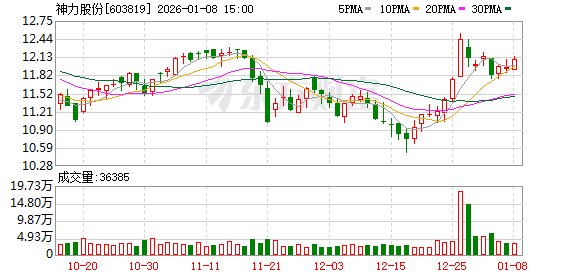
神力股份:公司与包括上海三菱、ABB、西门子在内的多家国际电机制造企业建立了稳定的合作关系
Zheng Quan Ri Bao· 2026-01-08 12:41
Group 1 - The core viewpoint of the article is that Shenli Co., Ltd. has established stable partnerships with several international motor manufacturers, including Shanghai Mitsubishi, ABB, and Siemens, primarily in the fields of wind power and elevators [2] - The company's main business focuses on the research and production of core components for motors, which are mainly applied in diesel generators, rail transit, wind power generation, and elevator manufacturing [2] - Currently, the company does not engage in the commercial aerospace sector, but it will fulfill its information disclosure obligations in a timely manner if there are any developments in this area in the future [2]

黄仁勋的“物理AI”,对中国制造来说真不是好消息
虎嗅APP· 2026-01-07 13:23
Core Viewpoint - The article emphasizes the urgency of the threat posed by the advancement of Physical AI, as represented by NVIDIA, which is pushing AI into real-world manufacturing, potentially reviving the U.S. manufacturing sector and diluting China's engineering and skilled labor advantages [7][20]. Group 1: NVIDIA's Strategy and Physical AI - NVIDIA's CEO Jensen Huang's keynote at CES focused on reducing the development costs of Physical AI, which is essential for AI factories [10][20]. - Physical AI enables autonomous systems to perceive, understand, reason, and perform complex actions in the physical world, contrasting with generative AI that primarily processes language [13][14]. - The training costs for Physical AI are significantly higher than for generative AI due to the complexity of understanding real-world physics [15][16]. Group 2: Technological Advancements and Implications - The introduction of the Vera Rubin platform by NVIDIA significantly enhances inference performance, reducing costs to one-tenth of the previous generation, which will decrease the demand for GPUs in AI enterprises [19][20]. - The Cosmos model allows for pre-trained multimodal models that facilitate the development of Physical AI, enabling virtual training for robots without the need for real-world trials [19][20]. Group 3: Competitive Landscape and Market Dynamics - NVIDIA's shift from a GPU supplier to a competitor in the autonomous driving market poses a significant threat to existing players, particularly in China's emerging electric vehicle sector [22][24]. - The collaboration between NVIDIA and companies like Mercedes for smart driving cars indicates a strategic move to integrate AI systems into manufacturing, potentially disrupting the industry [22][25]. Group 4: Future Directions and Recommendations - The article suggests that China must enhance its AI infrastructure investment to match the U.S. dominance in computational power and data centers, which currently sees the U.S. holding over 70% of global computing power [32][33]. - The need for a unified approach within China's AI industry is highlighted, emphasizing the importance of collaboration to develop competitive alternatives to NVIDIA's Physical AI [31][32].

黄仁勋的“物理AI”,对中国制造来说真不是好消息
Xin Lang Cai Jing· 2026-01-07 10:53
Core Insights - The core message of Jensen Huang's speech at CES is focused on reducing the development costs of Physical AI, which is essential for AI factories [4][32] - The U.S. is strategically pushing AI into real-world production, aiming to revive its manufacturing sector, which poses a significant threat to other countries, particularly China [3][31] Group 1: Physical AI and Its Implications - Physical AI enables autonomous systems like cameras, robots, and self-driving cars to perceive, understand, reason, and perform complex actions in the physical world [4][32] - Training Physical AI is more costly than training generative AI due to the deeper level of reasoning required [9][38] - The introduction of the Vera Rubin platform significantly enhances inference performance, potentially reducing costs to one-tenth of the previous Blackwell platform, thus decreasing the demand for GPUs [9][38] Group 2: Competitive Landscape and Market Dynamics - NVIDIA is transitioning from being a GPU supplier to a competitor in the autonomous driving market, exemplified by its collaboration with Mercedes-Benz on a new smart driving car set to launch in Q1 2026 [13][42] - The rise of Physical AI could lead to a significant dilution of China's engineering and skilled labor advantages, as U.S. manufacturing could be revitalized [12][41] - The collaboration between SoftBank and companies like ABB indicates a broader trend of integrating AI with robotics to innovate in manufacturing [15][44] Group 3: Strategic Recommendations for China - To counter the advancements in Physical AI by companies like NVIDIA, China must enhance its AI infrastructure investment, as the current distribution of computing power is heavily skewed in favor of the U.S. [21][50] - The need for a unified approach within the Chinese AI industry is critical to develop competitive alternatives to NVIDIA's offerings [19][49] - China's extensive experience in practical applications of AI could serve as an advantage, despite the current technological disparities [53][54]
电力设备:海外需求高景气,国内电网15.5规划解析
2026-01-07 03:05
Summary of Conference Call on Power Equipment Industry Industry Overview - The power equipment industry is experiencing significant growth in overseas demand, particularly in North America, with a notable increase in exports from China to the region. [1][2] - In the first 11 months of 2025, China's transformer exports to North America surged by 154%, with exports to the U.S. increasing by 173%. [2] Key Insights and Arguments - **Foreign Brands Performance**: Major foreign brands like Eaton, GE, and ABB have shown strong performance in the North American market, with Eaton reporting a 70% increase in new orders and a 40% rise in revenue. GE's orders doubled, and ABB's orders also saw significant growth. [3] - **Supply-Demand Gap**: The U.S. market faces a substantial supply-demand gap, with medium and high-voltage transformers in demand exceeding supply by 30% and 10%, respectively. The shortage is most severe for transformers rated at 330 kV and above. [4] - **Pricing and Profit Margins**: Transformer prices in the U.S. are approximately 3-4 times higher than in China, with a 138 kV transformer priced around $2.6 million, potentially exceeding $3 million for urgent deliveries. Profit margins for 35 kV distribution transformers exceed 50%. [5] Domestic Companies Opportunities - Domestic companies such as Siyi Electric, Jiangsu Huapeng, and Jinpan Technology are poised to expand their business in North America. Siyi Electric anticipates a net profit growth of about 40% in 2025 and 2026, while Jinpan Technology expects a 25% growth in 2026. [6] Saudi Arabia's Investment in Power Equipment - Saudi Arabia plans to invest approximately 930 billion RMB (around $500 billion) in power transmission and distribution from 2024 to 2030, with a significant increase in renewable energy capacity expected. [7] - The country requires a 75% localization rate by 2030, prompting many domestic companies to consider establishing manufacturing facilities in Saudi Arabia. [8] Company-Specific Developments - **Hua Ming Equipment**: The company is seeking partnerships in Saudi Arabia, with an estimated demand for 7,000 high and ultra-high voltage transformers. [9] - **TBEA**: The company has made significant inroads in Saudi Arabia, winning a bid for 1,200 high and ultra-high voltage transformers, with plans to establish a production base in the region. [11] - **Samsung Medical**: The company has seen substantial growth in overseas distribution orders, particularly in Europe, Saudi Arabia, and Latin America, and plans to expand its product line and country coverage. [12] Domestic Investment Trends - The domestic power grid investment is expected to grow at a compound annual growth rate of 5% during the 14th Five-Year Plan, with a focus on accelerating investment in the latter half of the plan. [13] - Price increases for domestic distribution equipment have been noted, with margins recovering from previous lows, indicating a potential turning point in profitability. [14] Conclusion - The power equipment industry is positioned for growth, driven by strong demand in North America and significant investments in regions like Saudi Arabia. Domestic companies are well-placed to capitalize on these opportunities, with favorable market conditions and increasing profitability expected in the coming years.


Top Robotics Stocks That Could Drive Impressive Returns in 2026
ZACKS· 2026-01-06 16:16
Industry Overview - The American robotics industry is experiencing significant growth, driven by commercial breakthroughs, venture capital, and FDA approvals, positioning the U.S. as a leader in global automation [1] - The humanoid robotics market is projected to reach $15.26 billion by 2023, with a compound annual growth rate (CAGR) of 39.2% [2] - The global robotics market is expected to grow to $124.37 billion, with the surgical robotics market alone projected to reach $14.45 billion by 2026 [3] Investment Landscape - Global robotics funding surpassed $10.3 billion in 2025, the highest since 2021, with U.S. companies capturing the majority of this investment [3] - Notable funding rounds include Figure AI raising over $1 billion at a valuation of $39 billion and Physical Intelligence securing $400 million from investors [3] - SoftBank's acquisition of ABB's robotics division for $5.375 billion indicates a consolidation trend in the robotics sector [3] Healthcare Robotics - Recent FDA approvals for robotic surgery systems, including Medtronic's Hugo and CMR Surgical's Versius Plus, are expected to accelerate the adoption of healthcare robotics [4] - Johnson & Johnson's Ottava system is advancing through clinical trials, with FDA submission anticipated in early 2026 [4] Defense and Space Applications - The Pentagon allocated $13.4 billion for autonomous systems in its fiscal 2026 budget, with $5.3 billion specifically for unmanned vessels [5] - Upcoming missions, such as NASA's Artemis II and Astrobotic's Griffin lunar mission, will further validate U.S. capabilities in space robotics [5] Collaborative Robotics - The collaborative robotics segment is experiencing over 20% annual growth, with nearly half of small and medium manufacturers now integrating collaborative robots (cobots) [6] - Universal Robots is expanding its manufacturing capabilities, creating over 200 jobs in Michigan [6] Company Highlights - UiPath has transitioned from traditional robotic process automation to AI orchestration, achieving its first GAAP profitable quarter in Q3 of fiscal 2026, with revenues increasing 16% year over year to $411 million [9][10] - NVIDIA unveiled a comprehensive robotics ecosystem at CES 2026, including the Isaac GR00T N1.6 model and the Blackwell-powered Jetson T4000 module, enhancing its position in physical AI [11] - Cadence Design Systems is acquiring Hexagon's Design & Engineering business for $3.18 billion, enhancing its capabilities in robotics simulation [12] - Intuitive Surgical expanded its market presence with FDA clearance for the da Vinci Single Port system for various surgical procedures, supported by over 500 peer-reviewed publications [13]