
Alpamayo自动驾驶模型

Search documents
掘金CES 2026:AI全域渗透加速,应用端投资机会将至?
智通财经网· 2026-01-09 00:55
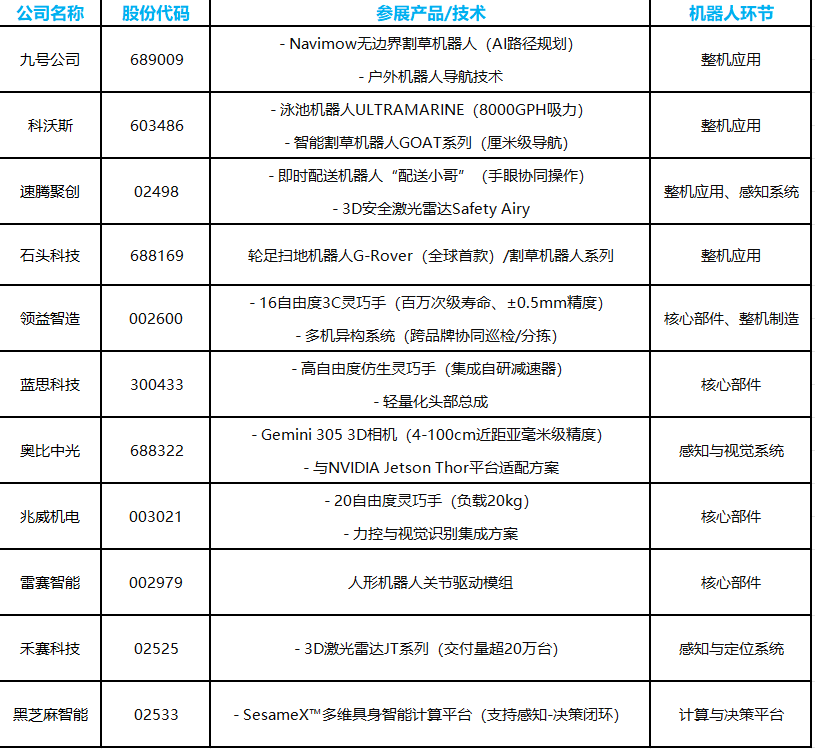
Group 1: CES 2026 Overview - CES 2026, known as the "Spring Festival Gala" of the tech industry, commenced on January 6 in Las Vegas, focusing on "defining the physical boundaries of AI" [1] - The event featured 207 Chinese companies across various cutting-edge fields, including AI, smart wearables, and smart home technologies, showcasing over 120 small and medium-sized tech firms [1] - The technologies presented by leading Chinese companies reflect the country's technological strengths and outline key directions for global industry evolution [1] Group 2: Robotics and AI Technologies - AI and robotics technologies were a major highlight at CES 2026, with global leaders showcasing various robots and core components [2] - NVIDIA's CEO announced that the robotics sector has entered its "ChatGPT moment," introducing world models to enhance robots' understanding of physical properties and spatial relationships [2] - Chinese companies, including Yushu Technology and Fourier, presented a wide range of innovative products, covering industrial applications, daily life, medical assistance, and emergency rescue [2][3] Group 3: Key Exhibitors and Innovations - Notable exhibitors included Ninebot, Ecovacs, and SUTENG, showcasing advanced robotic solutions such as AI path-planning lawn mowers and delivery robots capable of complex tasks [4][5] - Companies like Lingyi Zhi Zao and Zhaowei Electric displayed high-freedom dexterous hands and collaborative systems, indicating significant advancements in robotics [5] - The emergence of a cohesive display of robotics indicates a breakthrough in China's robotics industry, transitioning from fragmented to integrated solutions [5] Group 4: Automotive Innovations - The automotive sector at CES 2026 emphasized the transformation of vehicles into "smart partners" with emotional resonance and autonomous capabilities [6] - NVIDIA introduced the world's first open-source autonomous driving model, aiming to address challenges in extreme weather and construction detours [6] - Chinese automakers, including Great Wall Motors and Geely, showcased innovative models and technologies, highlighting the integration of smart features and collaboration with supply chain partners [6][7] Group 5: Wearable Devices and AI Glasses - Wearable devices, particularly AI glasses, gained significant attention at CES 2026, with over 60% of the showcased products coming from Chinese brands [10][11] - Innovations included independent communication-capable AR glasses and various health monitoring devices, indicating a shift towards mass production and consumer adoption [10][11] - The advancements in display and optical technologies for AI glasses reflect a robust ecosystem supporting the transition from concept to widespread use [12][13] Group 6: Industry Trends and Future Outlook - The CES 2026 event signaled a clear shift in AI's role from mere technology demonstration to deep integration within industry value chains [14] - The trend of AI becoming a physical entity is accelerating, with applications in robotics, smart driving, and wearable devices becoming observable realities [14] - Investors are encouraged to focus on the transition from technology validation to commercial scale, marking a critical window for capturing scene-based opportunities in 2026 [14]





黄仁勋的“物理AI”,对中国制造来说真不是好消息
虎嗅APP· 2026-01-07 13:23
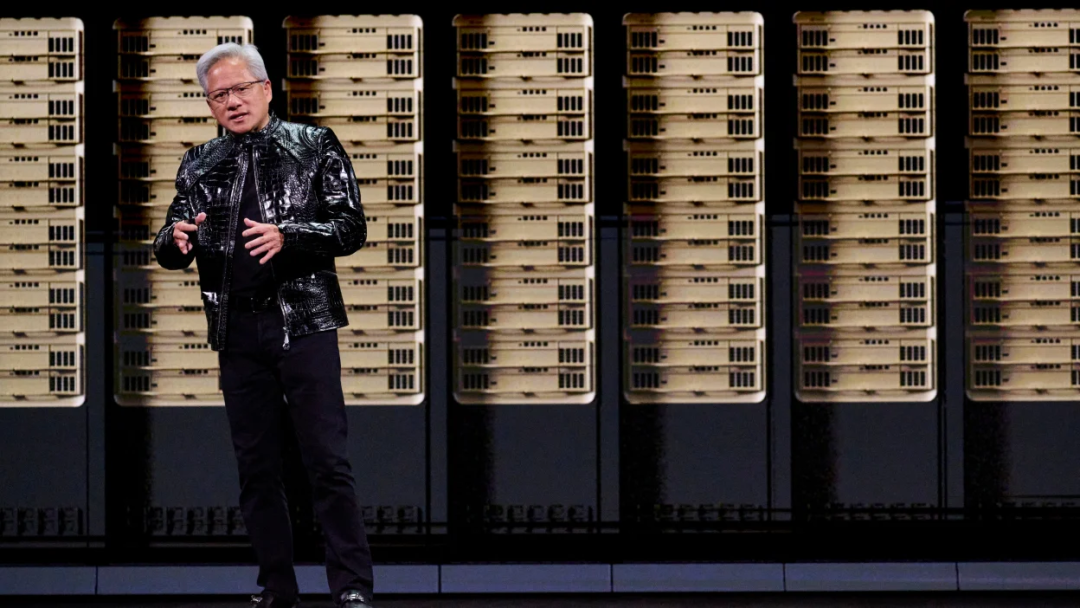
Core Viewpoint - The article emphasizes the urgency of the threat posed by the advancement of Physical AI, as represented by NVIDIA, which is pushing AI into real-world manufacturing, potentially reviving the U.S. manufacturing sector and diluting China's engineering and skilled labor advantages [7][20]. Group 1: NVIDIA's Strategy and Physical AI - NVIDIA's CEO Jensen Huang's keynote at CES focused on reducing the development costs of Physical AI, which is essential for AI factories [10][20]. - Physical AI enables autonomous systems to perceive, understand, reason, and perform complex actions in the physical world, contrasting with generative AI that primarily processes language [13][14]. - The training costs for Physical AI are significantly higher than for generative AI due to the complexity of understanding real-world physics [15][16]. Group 2: Technological Advancements and Implications - The introduction of the Vera Rubin platform by NVIDIA significantly enhances inference performance, reducing costs to one-tenth of the previous generation, which will decrease the demand for GPUs in AI enterprises [19][20]. - The Cosmos model allows for pre-trained multimodal models that facilitate the development of Physical AI, enabling virtual training for robots without the need for real-world trials [19][20]. Group 3: Competitive Landscape and Market Dynamics - NVIDIA's shift from a GPU supplier to a competitor in the autonomous driving market poses a significant threat to existing players, particularly in China's emerging electric vehicle sector [22][24]. - The collaboration between NVIDIA and companies like Mercedes for smart driving cars indicates a strategic move to integrate AI systems into manufacturing, potentially disrupting the industry [22][25]. Group 4: Future Directions and Recommendations - The article suggests that China must enhance its AI infrastructure investment to match the U.S. dominance in computational power and data centers, which currently sees the U.S. holding over 70% of global computing power [32][33]. - The need for a unified approach within China's AI industry is highlighted, emphasizing the importance of collaboration to develop competitive alternatives to NVIDIA's Physical AI [31][32].
黄仁勋的“物理AI”,对中国制造来说真不是好消息
Xin Lang Cai Jing· 2026-01-07 10:53
Core Insights - The core message of Jensen Huang's speech at CES is focused on reducing the development costs of Physical AI, which is essential for AI factories [4][32] - The U.S. is strategically pushing AI into real-world production, aiming to revive its manufacturing sector, which poses a significant threat to other countries, particularly China [3][31] Group 1: Physical AI and Its Implications - Physical AI enables autonomous systems like cameras, robots, and self-driving cars to perceive, understand, reason, and perform complex actions in the physical world [4][32] - Training Physical AI is more costly than training generative AI due to the deeper level of reasoning required [9][38] - The introduction of the Vera Rubin platform significantly enhances inference performance, potentially reducing costs to one-tenth of the previous Blackwell platform, thus decreasing the demand for GPUs [9][38] Group 2: Competitive Landscape and Market Dynamics - NVIDIA is transitioning from being a GPU supplier to a competitor in the autonomous driving market, exemplified by its collaboration with Mercedes-Benz on a new smart driving car set to launch in Q1 2026 [13][42] - The rise of Physical AI could lead to a significant dilution of China's engineering and skilled labor advantages, as U.S. manufacturing could be revitalized [12][41] - The collaboration between SoftBank and companies like ABB indicates a broader trend of integrating AI with robotics to innovate in manufacturing [15][44] Group 3: Strategic Recommendations for China - To counter the advancements in Physical AI by companies like NVIDIA, China must enhance its AI infrastructure investment, as the current distribution of computing power is heavily skewed in favor of the U.S. [21][50] - The need for a unified approach within the Chinese AI industry is critical to develop competitive alternatives to NVIDIA's offerings [19][49] - China's extensive experience in practical applications of AI could serve as an advantage, despite the current technological disparities [53][54]
黄仁勋在2026CES上的发言,创新和增量在哪里?|0106
Hu Xiu· 2026-01-06 16:24
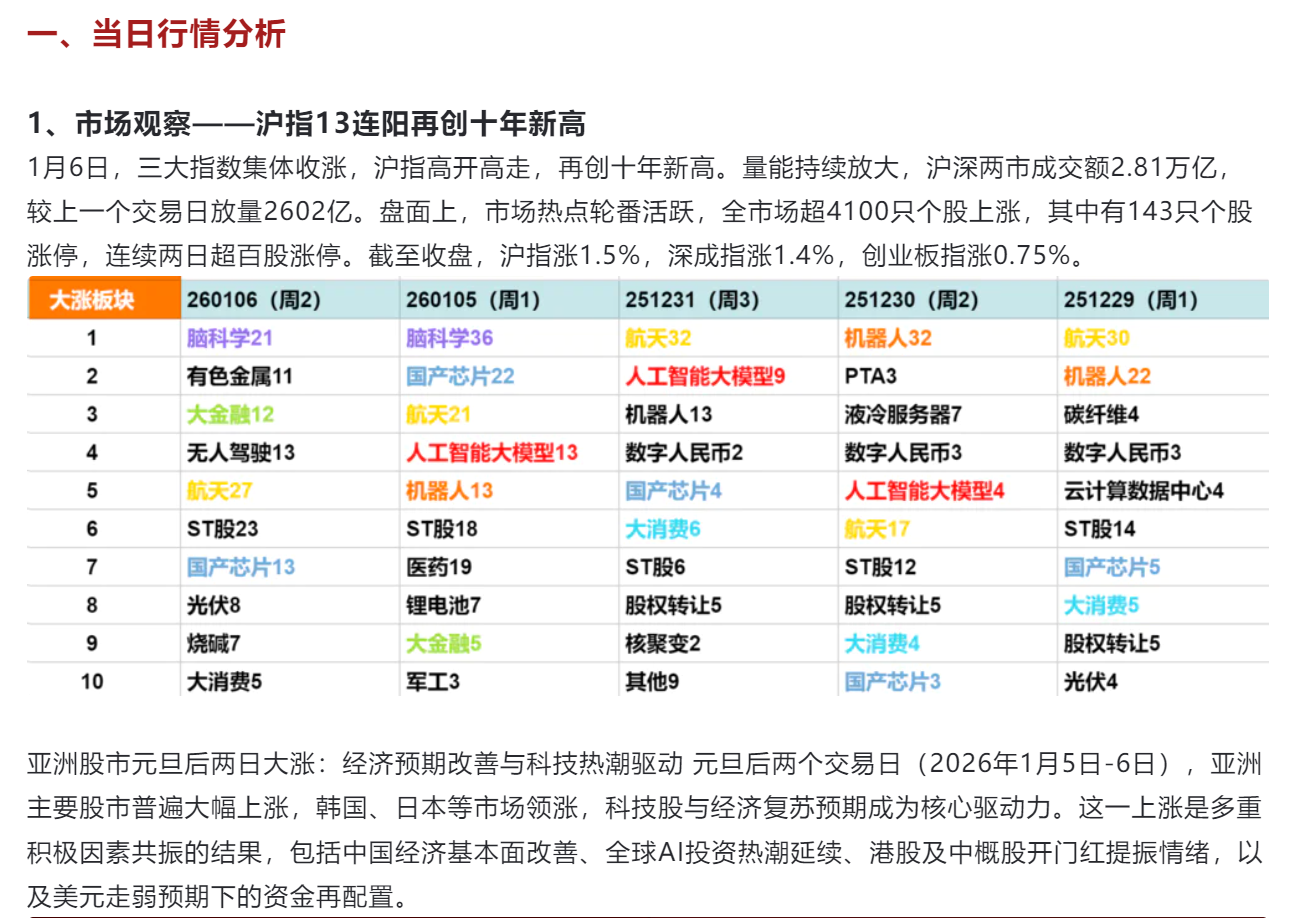
Market Overview - The Shanghai Composite Index achieved a 13-day consecutive rise, reaching a ten-year high on January 6, with a closing increase of 1.5% [1] - The total trading volume in the Shanghai and Shenzhen markets was 260.2 billion, indicating a significant increase in market activity [1] - Over 4,100 stocks in the market rose, with more than 100 stocks hitting the daily limit for two consecutive days [1] Sector Performance - Major sectors that saw significant gains included brain science, non-ferrous metals, and large financial institutions, with respective increases of 21, 11, and 12 stocks [2] - The technology sector, particularly AI and robotics, continued to drive market enthusiasm, with notable performances from companies like Samsung Electronics and TSMC [4][5] Global Market Trends - Asian stock markets experienced substantial gains post-New Year, driven by improved economic expectations and a surge in technology stocks [2] - The KOSPI index in South Korea rose by 5.65%, while Japan's Nikkei 225 increased by 4.33%, reflecting a broader regional trend of recovery [5] Investment Shifts - A significant amount of fixed-term deposits, approximately 32 trillion yuan, is set to mature in 2026, leading to a "deposit migration" phenomenon as investors seek higher returns [6] - Insurance products, particularly dividend insurance, are becoming attractive alternatives for low-risk investors, contributing to a surge in the insurance sector's stock prices [6] Policy Developments - A new policy encouraging large state-owned insurance companies to increase their investments in A-shares is expected to inject thousands of billions into the stock market annually [7] - This policy aims to channel a portion of new insurance premiums into the stock market, providing a crucial source of incremental capital [7] Technological Innovations - At CES 2026, advancements in AI and robotics were highlighted, including the introduction of a household humanoid robot named Neo, which signifies a new era in home automation [8] - The launch of a mass-producible all-solid-state battery by Donut Lab was announced, showcasing significant improvements in energy density and charging speed compared to traditional lithium-ion batteries [10] AI Developments - NVIDIA's CEO Huang Renxun announced breakthroughs in AI technology, emphasizing the transition from digital intelligence to physical AI, supported by new hardware architectures and memory storage solutions [11][12] - The introduction of the Rubin GPU, which significantly enhances processing capabilities and reduces inference costs, marks a pivotal advancement in AI computing [13][20] Industry Applications - The emergence of GPU-native databases is transforming data processing in AI applications, allowing for more efficient handling of high-concurrency requests [26][28] - Companies like Demingli are focusing on full-stack self-research capabilities, enhancing their competitive edge in the storage market through proprietary technology [30][33] Aerospace and Navigation - The company Hezhong Shizhuang is actively participating in the commercial aerospace sector, leveraging its high-precision positioning technology for rocket recovery and satellite applications [34][36] - Their self-developed chips and systems are crucial for providing real-time precise positioning in complex environments, enhancing the reliability of aerospace operations [36]
马斯克对英伟达挑战特斯拉的企图不以为然
Xin Lang Cai Jing· 2026-01-06 16:16
Core Viewpoint - Nvidia is attempting to challenge Tesla and a few other companies in the autonomous vehicle sector, while Tesla's CEO Elon Musk expresses no concern about this competition [1][4]. Group 1: Nvidia's Developments - Nvidia launched a series of open-source autonomous driving models named Alpamayo, which are designed to make "human-like" decisions and handle rare or tricky scenarios through reasoning rather than traditional rule-based methods [5][6]. - The new model series is expected to enhance Nvidia's influence in the growing autonomous vehicle industry, which the company views as a significant opportunity [6]. - Nvidia's CEO Jensen Huang stated that the company has been developing autonomous vehicle technology for eight years and has thousands of employees dedicated to this sector [6]. Group 2: Industry Reactions and Competitors - Companies like Uber, Jaguar Land Rover, and Lucid Group are interested in using Alpamayo to develop fully autonomous vehicles, and they have previously collaborated with Nvidia on autonomous technology [6]. - Mercedes-Benz announced plans to launch a CLA model equipped with advanced driver assistance features similar to those offered by Tesla later this year [6]. - Lucid and Uber also unveiled a near-production vehicle designed for autonomous taxi services this week [6]. Group 3: Market Impact - Following Nvidia's announcements, its stock rose by 1.6%, while Tesla's stock faced selling pressure, dropping approximately 3% [7]. - Nvidia introduced its next-generation AI, the Vera Rubin series of chips, which is expected to significantly improve performance and cost-effectiveness compared to the current Blackwell platform [7]. - Tesla plans to reduce its reliance on Nvidia chips in its data centers, while xAI is collaborating with Nvidia to build a large data center in Saudi Arabia, expected to utilize the Rubin platform [7][3].
