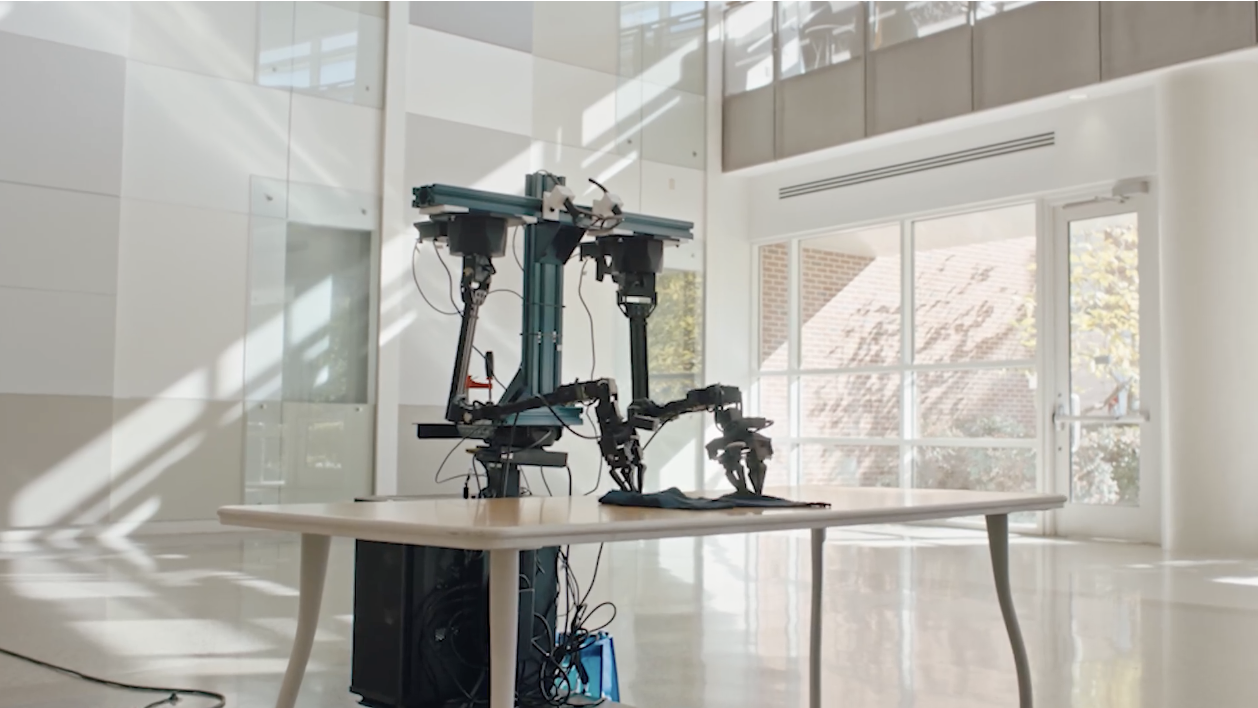
Cosmos模型

Search documents
英伟达机器人负责人:AI智能体将引爆机器人领域"ChatGPT时刻"
Hua Er Jie Jian Wen· 2026-03-21 04:47
Core Insights - Nvidia is extending its investment in AI agents to the robotics sector, aiming to address the core challenges of large-scale robot deployment [1] - The company's strategy is shifting from hardware and simulation software to higher-level agent orchestration software, potentially expanding market space and business models [1] Group 1: AI Agents in Robotics - AI agents are envisioned as the "brain" of robots, capable of automatically generating training data and evaluating AI models [2] - In multi-robot scenarios, a single AI agent can act as "air traffic control," breaking down overall goals into specific tasks and ensuring safe collaboration among robots and human workers [2] Group 2: Market Logic Behind ChatGPT Analogy - The success of ChatGPT is attributed to its versatility and low barrier to entry, which are also necessary for the robotics industry [3] - Nvidia's CEO highlighted the potential for open-source agents to run within robots, indicating a significant trend in the industry [3] Group 3: Cosmos World Model - The current status of Nvidia's Cosmos model, which is set to release in January 2025, is cautiously optimistic, with ongoing updates and increasing adoption [4] - The maturity of various technologies within the Cosmos model varies, affecting their suitability for specific applications [4] - The primary computational power in robotics is currently focused on model training, with data scarcity being a core bottleneck for developing a general-purpose robotic brain [4]


黄仁勋的Agentic AI,闯入全球市值最高药厂
Sou Hu Cai Jing· 2026-01-13 08:03
Core Insights - Nvidia plans to collaborate with Eli Lilly to invest $1 billion in a joint AI lab aimed at transforming the healthcare sector through advanced AI technologies [3][25] - The focus of the collaboration is to address the global shortage of healthcare professionals by deploying AI agents in the medical field, with a significant emphasis on the rapid adoption of AI in healthcare compared to other industries [5][12] - Nvidia's CEO highlighted the importance of physical AI and its impact on the pharmaceutical industry, with advancements in AI models and robotics enhancing laboratory automation and drug development processes [6][10] Group 1: Collaboration and Investment - Nvidia and Eli Lilly will establish a joint AI lab with a $1 billion investment to integrate top scientists and AI researchers [3][25] - The partnership aims to accelerate drug discovery and laboratory automation, shifting the current model from 90% wet lab work to a more balanced approach with increased computational methods [25][29] Group 2: AI in Healthcare - The healthcare sector is experiencing unprecedented speed in the deployment of technology, with AI expected to play a crucial role in addressing the projected shortage of millions of healthcare workers by 2030 [12][11] - Nvidia's AI models and tools are being utilized to enhance clinical workflows, allowing healthcare professionals to save significant time and improve patient care [13][31] Group 3: Technological Advancements - Nvidia's advancements in AI, such as the Cosmos model and Isaac robotics platform, are designed to improve laboratory efficiency and quality control in drug manufacturing [6][19] - The company is also focusing on open-source models and tools to democratize access to AI technologies, enabling a wider range of companies to innovate in the healthcare space [9][22] Group 4: Future Outlook - The emergence of AI scientists and agents is expected to revolutionize the pharmaceutical industry, with a projected $300 billion market for drug development being reshaped by these technologies [18][25] - Nvidia's collaboration with Eli Lilly is seen as a pivotal moment in the integration of AI into scientific research, potentially leading to breakthroughs in drug discovery and development [25][28]


2026市场热点周报1月5日-1月11日
Sou Hu Cai Jing· 2026-01-12 14:10
Global Capital Markets - The global market is characterized by a simultaneous rise in risk appetite and demand for safe-haven assets, with A-shares experiencing a strong start to the year, as the Shanghai Composite Index returns to the 4000-point mark, driven by technology themes [2][3] - The US stock market sees the Dow Jones and S&P 500 indices reaching historical highs, supported by expectations of interest rate cuts and a rally in technology stocks [5][6] A-Share Market - The A-share market shows a strong performance with the ChiNext 50 Index surging nearly 10%, indicating a significant increase in risk appetite among investors [2][3] - The brain-computer interface concept emerges as a major highlight, with related stocks experiencing substantial gains, driven by technological breakthroughs and domestic industry acceleration [3][4] US Stock Market - The US stock market indices collectively rise, with the Dow Jones and S&P 500 achieving record closing highs, driven by expectations of a stable labor market and potential interest rate cuts [5][6] - Technology stocks, particularly semiconductor companies, are at the forefront of this rally, with significant gains observed in major players like Intel and Micron Technology [7] Commodity Markets - The international precious metals market sees significant price increases, with gold and silver prices rising sharply, driven by geopolitical tensions and expectations of liquidity easing [8][9] - Global official gold reserves surpass the value of overseas US Treasury bonds for the first time in 30 years, indicating a shift in the global reserve asset landscape [9][10] Semiconductor Industry - The semiconductor sector experiences a boom, particularly in storage chips, driven by surging demand from AI servers, with significant price increases reported [16][17] - Advanced process technology sees progress, with Qualcomm and Samsung discussing 2nm chip foundry cooperation, marking a new phase in the semiconductor industry's competitive landscape [18] AI Technology and Applications - The CES 2026 showcases significant advancements in AI technology, with major companies like NVIDIA and AMD unveiling new products that enhance AI capabilities [19][20] - Chinese manufacturers actively participate in the AI wearable sector, demonstrating technological strength and innovation, contributing to the global proliferation of AI devices [21][22] Commercial Space Industry - The commercial space sector witnesses intensified competition for frequency resources, with SpaceX receiving approval for additional Starlink satellites and China submitting large-scale satellite applications [23][24] - The rapid development of the space economy is anticipated, with projections indicating that the market could exceed $1 trillion in the coming years [25] Consumer Electronics - Rising storage chip prices are beginning to impact consumer electronics, leading to increased costs for smartphones, PCs, and electric vehicles, prompting companies to adjust their product strategies [26][27] - The smartphone market exhibits signs of "covert price increases," with manufacturers reducing configurations or shrinking discounts to offset rising costs [27][28] Global Market Interconnectivity - The global market shows enhanced interconnectivity, with the performance of the technology sector influencing asset allocation strategies across different markets [29] - The expectation of US Federal Reserve interest rate cuts is becoming a core variable in global asset pricing, affecting capital flows and investment strategies [29][30]

ces上ai 物理!
小熊跑的快· 2026-01-12 03:32
Group 1 - The core theme of the article highlights the significant presence of AI and robotics at CES, with over 4,100 exhibitors from more than 150 countries, including over 1,300 from the US (approximately 33%) and over 1,200 from China (approximately 30%) [1] - Notably, there were 38 humanoid robot exhibitors, with 21 from China, representing over half of the total [1] - NVIDIA introduced key components and simulation-based evaluation models, particularly the Cosmos model, which is positioned as a "world model" for physical AI, aiding machines in "seeing, understanding, and acting" in the physical world [1] Group 2 - OpenAI is advancing into the wearable device sector through a collaboration with renowned designer Jony Ive, indicating a strategic move beyond mere marketing [2] - The future of robotics, automotive, PCs, wearable devices, and smart home products emphasizes the need for physical AI to operate efficiently and reliably on-site [3] - The integration of AI into physical applications is becoming increasingly prevalent in daily life [4]

黄仁勋的“物理AI”,对中国制造来说真不是好消息
虎嗅APP· 2026-01-07 13:23
Core Viewpoint - The article emphasizes the urgency of the threat posed by the advancement of Physical AI, as represented by NVIDIA, which is pushing AI into real-world manufacturing, potentially reviving the U.S. manufacturing sector and diluting China's engineering and skilled labor advantages [7][20]. Group 1: NVIDIA's Strategy and Physical AI - NVIDIA's CEO Jensen Huang's keynote at CES focused on reducing the development costs of Physical AI, which is essential for AI factories [10][20]. - Physical AI enables autonomous systems to perceive, understand, reason, and perform complex actions in the physical world, contrasting with generative AI that primarily processes language [13][14]. - The training costs for Physical AI are significantly higher than for generative AI due to the complexity of understanding real-world physics [15][16]. Group 2: Technological Advancements and Implications - The introduction of the Vera Rubin platform by NVIDIA significantly enhances inference performance, reducing costs to one-tenth of the previous generation, which will decrease the demand for GPUs in AI enterprises [19][20]. - The Cosmos model allows for pre-trained multimodal models that facilitate the development of Physical AI, enabling virtual training for robots without the need for real-world trials [19][20]. Group 3: Competitive Landscape and Market Dynamics - NVIDIA's shift from a GPU supplier to a competitor in the autonomous driving market poses a significant threat to existing players, particularly in China's emerging electric vehicle sector [22][24]. - The collaboration between NVIDIA and companies like Mercedes for smart driving cars indicates a strategic move to integrate AI systems into manufacturing, potentially disrupting the industry [22][25]. Group 4: Future Directions and Recommendations - The article suggests that China must enhance its AI infrastructure investment to match the U.S. dominance in computational power and data centers, which currently sees the U.S. holding over 70% of global computing power [32][33]. - The need for a unified approach within China's AI industry is highlighted, emphasizing the importance of collaboration to develop competitive alternatives to NVIDIA's Physical AI [31][32].
黄仁勋的“物理AI”,对中国制造来说真不是好消息
Xin Lang Cai Jing· 2026-01-07 10:53
Core Insights - The core message of Jensen Huang's speech at CES is focused on reducing the development costs of Physical AI, which is essential for AI factories [4][32] - The U.S. is strategically pushing AI into real-world production, aiming to revive its manufacturing sector, which poses a significant threat to other countries, particularly China [3][31] Group 1: Physical AI and Its Implications - Physical AI enables autonomous systems like cameras, robots, and self-driving cars to perceive, understand, reason, and perform complex actions in the physical world [4][32] - Training Physical AI is more costly than training generative AI due to the deeper level of reasoning required [9][38] - The introduction of the Vera Rubin platform significantly enhances inference performance, potentially reducing costs to one-tenth of the previous Blackwell platform, thus decreasing the demand for GPUs [9][38] Group 2: Competitive Landscape and Market Dynamics - NVIDIA is transitioning from being a GPU supplier to a competitor in the autonomous driving market, exemplified by its collaboration with Mercedes-Benz on a new smart driving car set to launch in Q1 2026 [13][42] - The rise of Physical AI could lead to a significant dilution of China's engineering and skilled labor advantages, as U.S. manufacturing could be revitalized [12][41] - The collaboration between SoftBank and companies like ABB indicates a broader trend of integrating AI with robotics to innovate in manufacturing [15][44] Group 3: Strategic Recommendations for China - To counter the advancements in Physical AI by companies like NVIDIA, China must enhance its AI infrastructure investment, as the current distribution of computing power is heavily skewed in favor of the U.S. [21][50] - The need for a unified approach within the Chinese AI industry is critical to develop competitive alternatives to NVIDIA's offerings [19][49] - China's extensive experience in practical applications of AI could serve as an advantage, despite the current technological disparities [53][54]
黄仁勋“带货”Rubin,A股谁有望受益?
天天基金网· 2026-01-06 05:18
Core Insights - NVIDIA's CEO Jensen Huang highlighted the transformative impact of next-generation accelerated computing and AI across industries during his keynote at CES 2026 [2] - The demand for AI training and inference computing is surging, with the Rubin architecture entering full-scale production and expected to launch in the second half of 2026, offering up to a 10x reduction in token costs compared to the previous Blackwell generation [2][4][5] NVIDIA Rubin Platform - The NVIDIA Rubin platform features six new chips designed for extreme collaboration, significantly reducing training times and inference token costs [4] - The six chips include NVIDIA Vera CPU, NVIDIA Rubin GPU, NVIDIA NVLink 6 Switch, NVIDIA ConnectX-9 SuperNIC, NVIDIA BlueField-4 DPU, and NVIDIA Spectrum-6 Ethernet Switch [4] - Innovations in the Rubin platform include the latest NVIDIA NVLink interconnect technology, a Transformer engine, confidential computing, and RAS engine [4] AI Model Advancements - The Rubin platform accelerates intelligent agent AI, advanced reasoning, and large-scale mixture of experts (MoE) model inference, reducing the number of GPUs needed for training MoE models by four times compared to previous generations [5] - The platform introduces a new generation of AI-native storage architecture designed for gigascale inference context, enhancing response capabilities and throughput [5] Market Deployment and Partnerships - NVIDIA Rubin products will be available through partners like AWS, Google Cloud, Microsoft, and others in the second half of 2026 [5] - CoreWeave will collaborate with NVIDIA to leverage Rubin's advancements in inference and MoE models, while major server manufacturers like Cisco, Dell, HPE, Lenovo, and Supermicro are expected to launch Rubin-based servers [6] Physical AI and Open Source Models - Huang announced the arrival of "physical AI's ChatGPT moment," with machines beginning to understand and act upon real-world data [12][13] - NVIDIA introduced the open-source physical AI foundational model, Cosmos, which has been pre-trained on vast datasets to understand the workings of the world [13] - The Alpamayo series of open-source AI models aims to accelerate the development of safe, reasoning-based autonomous vehicles, garnering interest from industry leaders [14] Robotics and Ecosystem Development - Global robotics leaders are developing products based on NVIDIA's Isaac platform and GR00T foundational model, covering various applications from industrial to consumer robotics [15] - NVIDIA emphasizes the importance of building an open-source AI ecosystem, with models like DeepSeek R1 demonstrating rapid industry adoption and collaboration [15] Industry Implications - The introduction of the Vera Rubin platform is expected to drive demand for high-speed optical modules and CPO technology, with companies in the supply chain already preparing for this shift [9][10] - The increased power requirements of the Rubin GPU, estimated at around 1800 watts, will elevate the demands on power supply and cooling systems [10]
杨立昆的“反ChatGPT”实验,能救Meta吗?
Di Yi Cai Jing· 2025-06-12 09:20
Core Viewpoint - Meta is adopting a dual strategy to navigate the competitive landscape of AI, focusing on both a non-mainstream "world model" approach led by Yann LeCun and a mainstream "superintelligence" initiative spearheaded by Mark Zuckerberg [1][2][12] Group 1: Meta's AI Strategy - Meta's recent struggles with its Llama 4 model have prompted a reevaluation of its AI strategy, leading to the development of two distinct paths: the world model and superintelligence [1][10] - CEO Mark Zuckerberg has returned to a "founder mode," actively recruiting top AI talent and investing heavily in AI startups to bolster Meta's capabilities in the AGI space [2][11] - The company is reportedly planning to recruit around 50 top AI experts for its superintelligence team, offering substantial compensation packages [11] Group 2: Yann LeCun's World Model - Yann LeCun has been critical of the mainstream self-regressive LLM approach, advocating for a world model that allows AI to understand and predict real-world interactions [4][10] - The V-JEPA 2 model, a product of this world model approach, is designed to enhance AI's ability to interact with unfamiliar objects and environments, boasting 1.2 billion parameters [6][12] - LeCun's vision emphasizes the importance of a world model in enabling AI to plan actions based on predictions of how the world will respond [5][6] Group 3: Investment and Future Outlook - Meta has made significant investments, including a reported $15 billion in Scale AI, to enhance its data capabilities and support its AI initiatives [12] - The company anticipates total capital expenditures of $64-72 billion by 2025, reflecting its commitment to expanding data centers and infrastructure for AI [12] - The outcome of Meta's dual strategy could determine its position in the AI landscape and its ability to reclaim leadership in the field [12]