LG Display

Search documents
Universal Display (OLED) 2025 Conference Transcript
2025-09-04 18:32
Summary of Universal Display Corporation (UDC) Conference Call Industry Overview - The conference focused on the OLED market, particularly in the context of smartphones, TVs, and IT products [3][4][5] - UDC's guidance for the year is between $640 million and $700 million, with a midpoint of $675 million, indicating strong performance expectations [4][5] Key Market Segments - **Smartphones**: Approximately 60% penetration of OLED technology, with premium models reaching nearly 100% [11][12] - **IT Market**: Expected to see significant growth due to low current penetration rates and increasing OEM adoption of OLED products [5][6] - **TV Market**: Also growing, but at a slower rate compared to the IT market [5][6] - **Automotive Market**: Currently less than 1 million out of 85 million annual units globally incorporate OLEDs, but interest is increasing, especially in electric vehicles (EVs) [27] Technological Developments - **Gen 8.6 OLED Fabs**: Major customers like Samsung Display, BOE Technology Group, and Visionox are investing a collective $20 billion in new capacity to meet rising demand, particularly in the IT market [7][8] - **Phosphorescent Blue Development**: UDC is working on phosphorescent blue materials, which could increase energy efficiency by 25% when integrated into displays [13][14][15] - **Hybrid Tandem Structures**: LG Display has successfully produced a device using a hybrid structure, combining phosphorescent and fluorescent layers, marking a significant milestone [16][19] Financial Performance - UDC maintains a strong gross margin of approximately 76% to 77% [42] - The company is focused on maximizing value through customer contracts and improving manufacturing efficiencies [42][43] Strategic Initiatives - UDC is exploring M&A opportunities, particularly in acquiring OLED-related patent portfolios [45][46] - The company has a buyback authorization of $100 million and continues to prioritize dividends as a method of returning capital to shareholders [48] Supply Chain Management - UDC has been navigating geopolitical tensions and trade issues by balancing production between the U.S. and Ireland, ensuring efficient supply chain management [29][30] Emerging Applications - Beyond traditional markets, UDC sees potential in automotive displays, wearables, AR/VR, and even robotics, indicating a broadening scope for OLED applications [41] Conclusion - UDC is well-positioned in the OLED market with strong growth prospects across multiple segments, ongoing technological advancements, and a solid financial foundation. The company is actively pursuing new opportunities while managing supply chain challenges and exploring strategic partnerships.

LG Display:Q2面板售价重回1000美元以上
WitsView睿智显示· 2025-08-15 06:50
Core Viewpoint - LG Display has seen a significant increase in the average selling price of its panel products, surpassing $1000 for the first time in over a year, primarily due to the suspension of lower-priced LCD panel sales [1][2]. Group 1: Pricing and Market Share - In Q2, LG Display's average panel price exceeded $1000, marking a notable recovery in pricing [1]. - The company's market share in the global large-sized panel segment was 12.9% in the first half of the year, down from 15.7% in the same period of 2024 [1]. Group 2: Strategic Focus and R&D Investment - Chinese manufacturers are increasing investments to expand their share in the LCD panel market, prompting Korean companies to focus on OLED panel development [2]. - LG Display plans to allocate 10.4% of its sales revenue to OLED technology research and development in the first half of 2025, up from 8.4% in the previous year [2]. - The company is gradually exiting the liquid crystal television business and shifting towards an OLED-centric business structure, with OLED products accounting for 56% of total revenue in Q2, a 4% increase year-on-year [2]. Group 3: Future Outlook - The CFO of LG Display has indicated that the company's performance is expected to rebound significantly in the second half of the year as the scale of the OLED business expands [2].

Omdia:预计2025年全球汽车显示面板营收将达136亿美元 高端化趋势加速
智通财经网· 2025-08-12 06:36
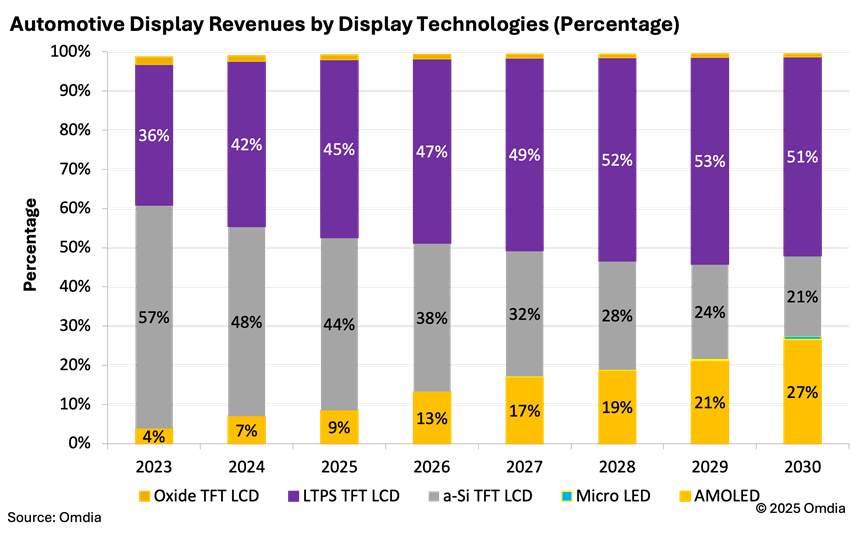
Core Insights - The global automotive display market is projected to experience significant growth, with revenue expected to reach $13.6 billion in 2025, representing an 8% year-over-year increase. By 2030, the market size is anticipated to grow to $18.3 billion [1] - The revenue growth is driven by the increasing adoption of high-end and high-priced display panel technologies, particularly OLED and LTPS TFT LCD, rather than by shipment volume [1] - In 2025, LTPS TFT LCD is expected to account for 45% of the total automotive display market revenue, while OLED will represent 9%. The share of a-Si TFT LCD is projected to decrease from 48% to 44% [1] Market Trends - LTPS TFT LCD and OLED are becoming the mainstream display technologies in the automotive sector, with LTPS TFT LCD expected to exceed 50% of shipment revenue by 2028, and OLED anticipated to dominate the high-end automotive cockpit segment with over 20% share [5] - The average selling prices (ASP) of LTPS TFT LCD and OLED are higher than traditional a-Si TFT LCD, indicating a market shift towards higher-value technologies [2] Technological Advancements - LTPS TFT LCD offers several advantages over traditional a-Si TFT LCD, including higher resolution, brightness, lower power consumption, and better touch panel integration, which are crucial for the growing electric vehicle sector [1] - OLED is expanding its application range in central displays, instrument panels, and passenger displays due to its lightweight design, high contrast, and efficient power consumption [2] Future Outlook - The introduction of Micro LED displays is expected to occur in the automotive display market after 2028, marking the next wave of advanced display technology [5] - Major panel manufacturers such as AUO, BOE, and LG Display are aggressively entering the automotive sector to pursue higher value and revenue, while leading OLED manufacturers are developing new designs to accelerate their presence in the automotive market [5][6]
美降息预期带动亚太股,亚洲货币有望重启升值但呈现分层
2 1 Shi Ji Jing Ji Bao Dao· 2025-08-10 23:47
Market Overview - The Asia-Pacific stock markets experienced a general rise, driven by the ongoing expectations of interest rate cuts by the Federal Reserve [1][3] - Southeast Asian markets mostly saw gains, with Thailand's SET index rising 3.34%, Vietnam's Ho Chi Minh index up 6.09%, and Singapore's Straits index increasing by 2.07% [1] Sector Performance - Asian chip-related stocks showed mixed performance following the announcement of a potential 100% tariff on imported semiconductor products by the U.S. [2] - South Korean semiconductor manufacturers like Samsung Electronics and SK Hynix saw increases of 3.31% and 0.79%, respectively, while Japanese chip equipment manufacturers had varied results [2] Economic Impact - The proposed U.S. tariffs on semiconductor imports raised concerns among Southeast Asian countries, particularly the Philippines, where the semiconductor and electronics sector accounts for 53.4% of total exports [2][3] - The Philippines Semiconductor and Electronics Industries Association expressed that the tariff could have a "devastating" impact on the country's export industry [2] Investment Trends - Recent weeks have seen foreign capital outflows from Southeast Asian markets, with Indonesia experiencing its largest net sell-off in a month, totaling $7.65 million on July 31 [3][4] - Malaysia's stock market faced continuous net selling for nine consecutive days, with a net outflow of $4.13 million on August 6 [3][4] Currency Movements - Asian currencies fluctuated against the U.S. dollar, with the Thai baht and Singapore dollar appreciating, while the Japanese yen depreciated slightly [5] - The outlook for Asian currencies suggests potential for appreciation, particularly for countries benefiting from AI capital inflows and current account surpluses [5] Structural Changes - South Korea's government has been actively pursuing corporate governance reforms, which have attracted significant foreign investment, leading to a net inflow of over $3 billion in July [6] - However, concerns remain regarding potential tax policy changes that could negatively impact the stock market and investor sentiment [6]
电子行业周报:英伟达有望采用GaN,看好化合物机会-20250808
Yong Xing Zheng Quan· 2025-08-08 10:39
Investment Rating - The industry investment rating is "Maintain Overweight" for the electronics sector [8] Core Insights - The collaboration between InnoPhase and NVIDIA aims to promote the 800VDC power architecture in AI data centers, which is expected to enhance efficiency and reduce power consumption significantly [18][36] - Essilor Luxottica reported a 5.5% increase in revenue to €14 billion (approximately $16.2 billion) in the first half of 2025, driven by a twofold increase in sales of Ray-Ban Meta AI glasses, indicating strong growth potential in the AI eyewear market [19][36] - LG Display anticipates a rise in large-size OLED panel shipments, with an expected output of around 6 million units in 2025, reflecting a growing demand for gaming monitors and other applications [20][36] - The U.S. Department of Justice announced that EDA giant Cadence agreed to plead guilty and pay over $140 million in fines for violating export regulations, highlighting the increasing trend towards domestic supply chain independence in the semiconductor industry [21][36] Summary by Sections Computing Industry - InnoPhase's partnership with NVIDIA is set to introduce new power devices into the supply chain, particularly GaN and SiC technologies, which are expected to drive growth in related industries [18][22] AI Edge - The significant revenue growth of Essilor Luxottica, particularly from AI glasses, suggests a robust market for smart eyewear, with continued consumer acceptance anticipated [19][22] Consumer Electronics - The increase in large-size OLED panel shipments is expected to drive product upgrades and sales growth in the consumer electronics sector, with LG Display projecting a notable rise in the share of display products in its OLED shipments [20][22] Domestic Substitution - The recent penalties imposed on Cadence underscore the trend towards domestic supply chain development, particularly in high-end manufacturing sectors like semiconductors, reinforcing confidence in domestic supply chain opportunities [21][22]

2025年中国背光显示面板品牌推荐:背光新势力,中国品牌如何在技术与供应链中脱颖而出?
Tou Bao Yan Jiu Yuan· 2025-08-05 11:58
Investment Rating - The report does not explicitly state an investment rating for the backlight display panel industry Core Insights - The backlight display panel industry in China has experienced significant growth, with market size increasing from 50.64 billion in 2017 to 217.29 billion in 2022, reflecting a steady growth trend driven by consumer demand for high-quality displays and advancements in technologies like MiniLED [4][7] - Major players in the industry include BOE Technology Group, TCL, and Innolux, which have established strong positions in both domestic and international markets through technological innovation and capacity expansion [4][12] - The industry is characterized by intense competition among leading companies, with a focus on technological advancements, market expansion, and internationalization [11][12] Market Background - The backlight display panel industry involves manufacturers and suppliers producing panels for electronic products such as TVs, computer monitors, and smartphones, primarily categorized into LCD and EPD technologies [4][5] - The market has evolved from a nascent stage (2000-2010) to a rapid growth phase (2010-2020) and is currently in a high-growth period, with Chinese companies gaining significant global competitiveness [6] Market Status - The market size has shown steady growth, with a compound annual growth rate driven by consumer upgrades and the rapid development of new display technologies [7] - Supply dynamics indicate a complex cost structure influenced by raw material prices, with leading manufacturers maintaining dominance despite the entry of new players [8] - Demand for backlight display panels continues to rise, fueled by the proliferation of electronic devices and the increasing popularity of high-end products like 4K ultra-high-definition TVs [9] Market Competition - The competitive landscape is diverse and highly competitive, with leading companies like BOE, TCL, and Innolux dominating the market through technological expertise and extensive production capabilities [12] - The industry is witnessing a trend towards deeper integration of the supply chain to enhance efficiency and reduce costs, alongside an acceleration of internationalization efforts by Chinese firms [11][15] Development Trends - The industry is expected to see accelerated technological innovation with the emergence of MiniLED and MicroLED technologies, enhancing display quality and meeting consumer demands [15] - Market demand is projected to continue growing, particularly in emerging sectors such as smart home and automotive displays [15] - The trend of industry consolidation is anticipated to deepen, with companies seeking to collaborate closely with upstream and downstream partners to enhance overall competitiveness [15]


iPhone 18或将搭载双层串联OLED
WitsView睿智显示· 2025-08-05 09:08
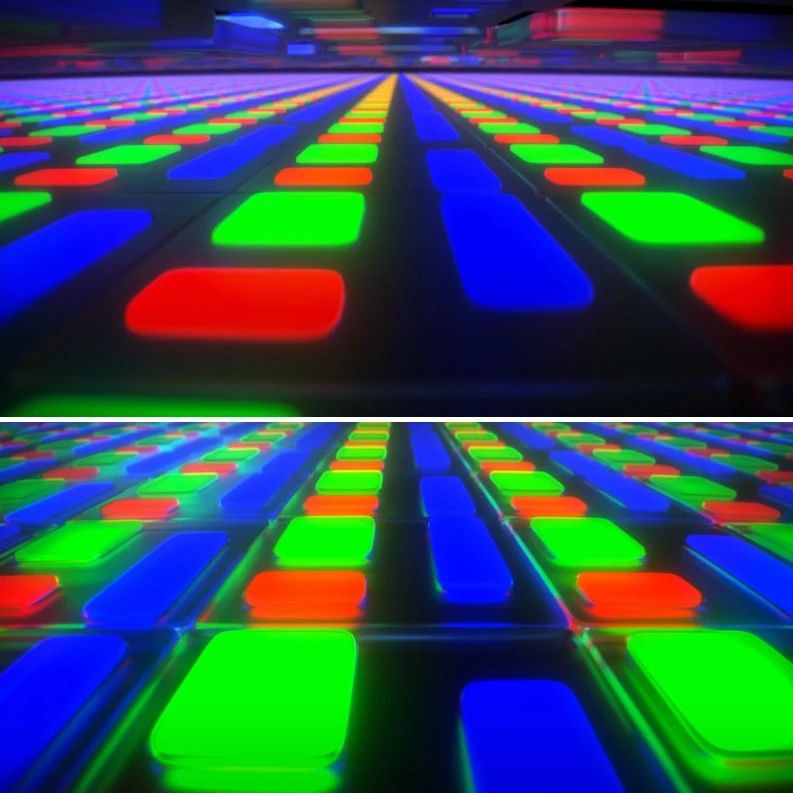
Core Viewpoint - LG Display proposed a simplified tandem OLED technology to Apple, which could potentially be used in future iPhone models, but any implementation is unlikely before 2028 [1][3]. Group 1: Technology Overview - The simplified tandem OLED technology involves stacking the blue sub-pixels in two layers while keeping the red and green sub-pixels in a single layer, enhancing efficiency and reducing power consumption [1][2]. - Current iPhone OLED screens utilize a single-layer stacking method for RGB sub-pixels, while the proposed technology aims to improve brightness and battery life [1]. Group 2: Competitive Landscape - LG Display has been more proactive in proposing tandem OLED technology to Apple compared to Samsung Display, which is reportedly lagging in this area [5]. - Apple has previously adopted dual tandem OLED technology for its iPad, indicating a willingness to explore advanced OLED solutions in its product lineup [2][3]. Group 3: Supply Chain Dynamics - Apple is likely to engage multiple suppliers, including Samsung Display and BOE, to maintain negotiation leverage and avoid dependency on a single manufacturer [5]. - In 2024, LG Display is expected to supply more OLED panels for iPads than Samsung Display, reflecting its growing role in Apple's supply chain [3].

TCL华星CEO:越南模组厂预计9月量产
WitsView睿智显示· 2025-08-01 10:26
Core Viewpoint - The article highlights the growing trend of display module manufacturers, including TCL Huaxing, BOE, and AUO, establishing production capacities in Vietnam and Thailand to meet the demands of major IT brands like Dell and HP, reflecting a strategic shift in the global display industry [10]. Group 1: TCL Huaxing's Expansion - TCL Huaxing's new module factory in Vietnam is expected to achieve mass production by September 2023, primarily serving the IT product market [1]. - The company has planned display (MNT) and laptop (NB) module capacities in Vietnam, both set to enter mass production in the second half of 2023 [1]. Group 2: Competitors' Strategies - Other panel manufacturers, including BOE, AUO, and LG Display, are also establishing display and laptop module capacities in Vietnam, with some already reaching mass production status [2]. - AUO, LG Display, and BOE are utilizing different strategies for capacity expansion, with AUO and LG Display achieving mass production, while BOE's capacity is expected to reach mass production by Q3 2025 [3][5]. Group 3: Investment in Overseas Projects - Companies like Tianma Microelectronics and Hanbo High-tech are investing in overseas display module projects, with Tianma planning a factory in Thailand with an investment of 1.08 billion yuan [8]. - Hanbo High-tech's factory in Vietnam aims for a monthly capacity of 1.4 million backlight sources and 500,000 LCMs, expected to be fully automated by 2025 [8]. Group 4: Market Dynamics - The article notes that the capacity layout of liquid crystal modules reflects the current global display industry landscape, with leading companies extending their production lines to overseas locations to mitigate supply chain risks and adapt to international trade changes [10]. - The ongoing technological innovations and capacity expansions in the display module sector are anticipated to drive a new wave of growth and transformation [10].
Universal Display(OLED) - 2025 Q2 - Earnings Call Transcript
2025-07-31 22:00
Financial Data and Key Metrics Changes - The company reported record performance in Q2 2025 with revenue of $172 million, up from $159 million in Q2 2024, representing an increase of approximately 8.2% [6][14] - Net income for Q2 2025 was $67 million, or $1.41 per diluted share, compared to $52 million, or $1.10 per diluted share in the same period last year, reflecting a year-over-year increase of 28.8% in net income [18] - The company raised the low end of its 2025 revenue guidance to a range of $650 million to $700 million [6][14] Business Line Data and Key Metrics Changes - Total material sales in Q2 2025 were $89 million, down from $95 million in Q2 2024 [15] - Green emitter sales were $64 million, compared to $72 million in the prior year, while red emitter sales increased slightly to $24 million from $23 million [15] - Royalty and license fees increased to $76 million in Q2 2025 from $60 million in Q2 2024 [15] Market Data and Key Metrics Changes - The OLED market is projected to grow significantly, with IT units expected to double from 23 million in 2024 to 48.6 million in 2027 [6] - Automotive OLED display shipments are forecasted to grow by over 300% from 2.8 million units in 2024 to 9.1 million units in 2029 [8] - The company noted that OLED adoption in the automotive sector is expanding, particularly among luxury brands and new energy vehicles [8] Company Strategy and Development Direction - The company aims to maintain its leadership position in the OLED ecosystem by focusing on innovation and product leadership [20] - The strategic foundation includes a robust global infrastructure, a flexible supply chain, and deepening customer relationships [20] - The company is committed to advancing its proprietary AIML platform to enhance material research and development [11][20] Management's Comments on Operating Environment and Future Outlook - Management expressed optimism about the OLED industry's growth trajectory despite macroeconomic uncertainties [6] - The company believes that the OLED industry is entering a new phase of expansion driven by increasing demand in consumer electronics and automotive markets [6] - Management highlighted the importance of upcoming Gen 8.6 OLED fabs from major manufacturers as a pivotal shift in medium-sized OLED manufacturing [7] Other Important Information - The company ended the quarter with approximately $932 million in cash, cash equivalents, and investments [18] - A quarterly dividend of $0.45 was approved and paid to shareholders [18] Q&A Session Summary Question: Benefits from foldable phones versus traditional smartphones - The company sees incremental revenues from foldable phones due to increased surface area, estimating material usage could be 2 to 3 times that of traditional smartphones [24][25] Question: Revenue from Blue development emitter - The company recorded $1.1 million in Blue revenues for the quarter, totaling $2.2 million for the first half of the year [28] Question: Increase in contract research service revenue - The increase is attributed to recent successes in the Adhesives business, which operates independently from the OLED business [32][34] Question: Use of AI and ML in material research - AI and ML have accelerated the determination of successful pathways in OLED development, supported by a large OLED database [36] Question: Revenue guidance and seasonality - The company indicated that the strong first half of the year aligns with their original plans, and they expect the rest of the year to continue as forecasted [41][43] Question: Design activity in tandem architecture - Tandem architecture is primarily used in IT and automotive segments, with significant growth opportunities as OLED penetration in IT is currently low [52][54]
韩媒:LGD OLED电视面板DDI数量明年起将减半
WitsView睿智显示· 2025-07-29 09:40
Core Viewpoint - LG Display plans to adopt Double Rate Drive (DRD) technology for its OLED TV panels starting next year, aiming to reduce manufacturing costs and improve efficiency [1][3]. Group 1: DRD Technology Implementation - DRD technology will double the signal transmission capacity of the source driver IC (DDI), allowing the number of DDI required for displays to be halved [2]. - For the 65-inch OLED TV panels set to launch in 2026, the number of required DDIs will decrease from 16 to 8, and for panels larger than 75 inches, it will also drop from 16 to 8 [2]. Group 2: Cost Reduction and Production Expectations - LG Display is optimistic about its Guangzhou OLED factory, which has recently completed depreciation, leading to further reductions in manufacturing costs [5]. - The company expects to ship approximately 6.5 million large-size OLED units this year, covering both TV and monitor products [5]. - The president of LG Display emphasized the importance of strengthening customer relationships, particularly with major clients like Samsung Electronics, to achieve profitability in the large-size OLED business this year [5].