
化合物半导体

Search documents
聚灿光电(300708) - 聚灿光电2025年年度报告解读
2026-04-01 07:38
Financial Performance - Revenue reached 3.127 billion CNY [4] - Net profit attributable to shareholders was 205 million CNY, reflecting a year-on-year increase of 4.82% [4] - Net cash flow from operating activities was 528 million CNY, with a year-on-year growth of 0.58% [4] Business Strategy - The company focuses on "resource concentration and strengthening core business" as a long-term development strategy [10] - Emphasis on high-end LED chips, including Mini LED, automotive lighting, plant lighting, backlighting, and direct display [10] - Aiming for an annual production capacity of 2.4 million red and yellow light epitaxial wafers and chips [11] Innovation and Efficiency - Commitment to high-intensity R&D investment to support technological breakthroughs [11] - Implementation of strategies to optimize structure, enhance performance, and create brand value [13] - Focus on cost reduction and efficiency improvement to enhance operational efficiency [14] Marketing and Brand Value - Strengthening marketing innovation to build brand value through excellent craftsmanship, strong delivery management, and comprehensive after-sales service [15] - Gaining widespread trust and market recognition from customers [15] Future Outlook - The company anticipates rapid growth in its main business, with strong fundamentals and conditions for long-term performance improvement [16] - Plans to continue focusing on core business and enhancing governance and decision-making mechanisms to improve core competitiveness by 2026 [17] - The GaAs-based red and yellow light LED business is expected to become the next "cash cow" for the company [18]
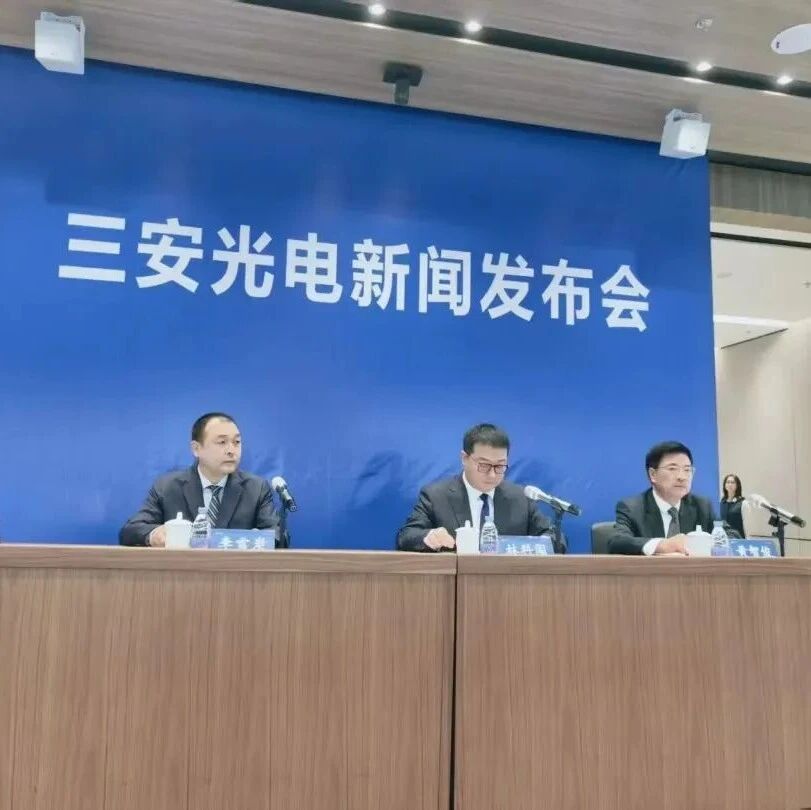
三安光电,最新回应
半导体芯闻· 2026-03-30 10:36
Core Viewpoint - The recent legal issues surrounding the actual controller of Sanan Optoelectronics have raised concerns, but the company assures that its operations remain stable and unaffected by these events [6][10]. Group 1: Company Response to Challenges - Sanan Group has established a "Risk Disposal Working Group" to address current difficulties and is actively seeking strategic partners to ensure normal operations [7][8]. - The government and relevant departments are involved in coordinating efforts to resolve debt issues, indicating a supportive environment for the company [7][8]. - Sanan Group emphasizes its commitment to maintaining contractual obligations and protecting the rights of creditors while ensuring the normal operation of its business segments [8]. Group 2: Operational Stability - Sanan Optoelectronics reports that its production and management are operating normally, with all business activities progressing as planned [10]. - The company maintains a robust organizational structure and governance system, ensuring independence from its controlling shareholder [10]. - The ongoing partnership with STMicroelectronics in the joint venture, Anystar Semiconductor, is advancing, with projects entering the mass production phase, which is expected to significantly impact the global silicon carbide market [10]. Group 3: Market Confidence Initiatives - To bolster market confidence, the chairman and vice chairman of Sanan Optoelectronics plan to increase their shareholdings in the company, with intended investments of no less than RMB 20 million and RMB 5 million, respectively [11].


三安光电,实控人被留置、立案调查!
DT新材料· 2026-03-22 16:04
Core Viewpoint - The article discusses the recent investigation of Lin Xiucheng, the actual controller of Sanan Optoelectronics, by the National Supervisory Commission, which may impact the company's operations and governance [2][3]. Group 1: Company Background - Sanan Optoelectronics is primarily engaged in the research, production, and sales of compound semiconductor materials and devices, focusing on materials such as sapphire, gallium arsenide, gallium nitride, silicon carbide, indium phosphide, and aluminum nitride [3]. - Lin Xiucheng, the founder of Sanan Group, has been the chairman and general manager since its establishment in 1992, transitioning the company into the LED optoelectronic industry in 2000 and successfully listing on the capital market in 2008 [2][3]. Group 2: Shareholding Structure - As of now, Sanan Group holds a direct stake of 5.14% in Sanan Optoelectronics and an indirect stake of 24.33% through its subsidiary, Sanan Electronics, making it the controlling shareholder [3]. - Lin Xiucheng directly owns 59.68% of Sanan Group, while he and his son Lin Zhiqiang collectively hold 71.83% of the group, maintaining control over Sanan Optoelectronics [3]. Group 3: Financial Performance and Future Outlook - The company forecasts a net loss of between 200 million to 300 million yuan for 2025, with a non-recurring net profit loss expected to be between 750 million to 850 million yuan [4]. - The losses are attributed to an increased proportion of high-end LED products, reduced government subsidies, rising R&D expenses, and adjustments in investment income due to price discrepancies in precious metal waste sales [4]. - Future business development will focus on increasing the proportion of high-end LED products and accelerating the expansion of the integrated circuit business, with current production capacity in the integrated circuit sector at 2,750 wafers per month [4].
800亿A股龙头,实控人被留置、立案调查!
券商中国· 2026-03-22 13:23
Core Viewpoint - Sanan Optoelectronics (600703) announced that its actual controller, Lin Xiucheng, has been placed under investigation by the National Supervisory Commission, but the company asserts that this will not significantly impact its operations [1][3]. Group 1: Company Background - Lin Xiucheng has not held any position in the company since July 10, 2017, and the company's operational management remains normal with a well-established organizational structure [3]. - Sanan Group directly holds 5.14% of the listed company’s shares and indirectly controls 24.33% through its subsidiary, Sanan Electronics [6]. - Lin Xiucheng and his son, Lin Zhiqiang, collectively hold 71.83% of Sanan Group, making them the actual controllers of the listed company [6]. Group 2: Financial Performance - As of now, Sanan Optoelectronics has a total market value of approximately 82.5 billion yuan, with the latest stock price at 16.54 yuan per share [4]. - The company is expected to report a net loss of 200 million to 300 million yuan for 2025, marking its first loss since going public [7]. - The decline in profit is attributed to a higher proportion of high-end LED products, reduced government subsidies, increased R&D expenses, and adjustments in investment income due to fluctuating precious metal prices [7]. Group 3: Future Business Development - The company plans to focus on two main areas for future growth: increasing the proportion of high-end LED products and accelerating the expansion of its integrated circuit business [8]. - In the integrated circuit sector, the company currently has a production capacity of 2,750 wafers per month and aims to expand its core process capacity to 6,000 wafers per month [8]. - Sanan Optoelectronics is one of the few vertically integrated manufacturers in the silicon carbide industry, with significant production capacities for both 6-inch and 8-inch silicon carbide substrates and chips [8].

调研速递|凯德石英接待中信证券等4家机构调研 化合物半导体订单增长、研发合作及控股权转让成焦点
Xin Lang Cai Jing· 2026-03-18 00:12
Core Viewpoint - Beijing Kaide Quartz Co., Ltd. is actively engaging with institutional investors regarding its business development, R&D plans, and the transfer of control, indicating a focus on growth in the compound semiconductor sector and strategic partnerships for technological advancement [1][3][5]. Group 1: Investor Relations Activity - The investor relations activity was conducted as an on-site visit from March 13 to March 16, 2026, at the company's conference room [2][7]. - Participating institutions included CITIC Securities, Shenwan Hongyuan, Huatai-PineBridge Fund, and Dongfang Securities, with the company’s board secretary, Nan Shuyu, leading the discussions [2][7]. Group 2: Compound Semiconductor Business - The company reported a clear growth in orders for its compound semiconductor products, primarily supplying indium phosphide and gallium arsenide to its main customer, Tongmei Crystal [3][8]. - The applications for indium phosphide substrates are diverse, including use in optical modules, laser devices, wearable technology, and health monitoring devices, as well as in automotive displays, signage, and LED lighting [3][8]. - The company anticipates that orders for quartz products used in compound semiconductors will show an upward trend, with detailed data to be disclosed in the upcoming 2025 annual report [3][8]. Group 3: R&D Plans - Kaide Quartz has signed a cooperation agreement with Zhejiang University’s Hangzhou International Innovation Center to establish a joint laboratory focused on high-purity quartz material detection technology [4][9]. - The research will focus on three main areas: impurity-defect collaborative detection and correlation analysis, multi-scale microstructure dynamic characterization technology, and extreme environment performance testing and lifespan assessment [4][9]. - The joint laboratory aims to develop new detection and analysis technologies for high-purity quartz materials to support the safe development of strategic emerging industries in China [4][9]. Group 4: Control Transfer - The company confirmed that Jiangfeng Electronics has approved the proposal for the acquisition of control over Beijing Kaide Quartz at its first temporary shareholders' meeting on February 27, 2026 [5][10]. - The company has disclosed the progress of the control change and related transactions, indicating that subsequent procedures are proceeding normally [5][10]. - The company will provide timely updates on the progress of this matter to investors [5][10].
三安光电(600703):"碳"索未来,光联万物
China Post Securities· 2026-03-10 07:06
Investment Rating - The report assigns a "Buy" rating for the company, marking its first coverage [1][8]. Core Insights - The company is positioned in a high-growth phase driven by AI computing, with a focus on developing a full-speed optical chip matrix, including 400G, 800G, and 1.6T technologies. The optical communication sector is experiencing significant growth, supported by increasing bandwidth demands and the adoption of next-generation technologies [4]. - The company has established a vertically integrated manufacturing platform for silicon carbide (SiC), with production capabilities across various stages of the supply chain. This positions the company to meet the growing demand in sectors such as new energy vehicles and data centers [5]. - The LED industry is witnessing a recovery in terminal demand, with some product prices stabilizing. The company plans to enhance its high-end LED product offerings and has announced a $239 million acquisition of Lumileds to accelerate its entry into high-end markets [6]. Financial Projections - Revenue projections for the company are estimated at 161.06 billion, 182.41 billion, 217.43 billion, and 257.39 billion yuan for the years 2024, 2025, 2026, and 2027 respectively, with growth rates of 14.61%, 13.26%, 19.20%, and 18.38% [10][11]. - The company is expected to report a net profit attributable to the parent company of -2.4 billion, 4.5 billion, and 9.8 billion yuan for the years 2025, 2026, and 2027, indicating a significant turnaround from a loss in 2025 to profitability in subsequent years [8][10].
郝跃院士:建议推动化合物半导体、光电显示、新型传感器等产业形成规模化、高竞争力的全球布局
DT新材料· 2026-03-08 16:05
Core Viewpoint - The article emphasizes the importance of focusing on both overcoming key technological bottlenecks in the semiconductor industry and strengthening areas where China is already competitive to secure a leading position globally in the integrated circuit sector during the 14th Five-Year Plan period [1]. Group 1: Semiconductor Industry Development - The 14th Five-Year Plan is seen as a critical turning point for China's integrated circuit industry, transitioning from a follower to a leader in certain emerging sectors [1]. - Key areas where China has competitive advantages include third-generation semiconductors (such as gallium nitride and silicon carbide), fourth-generation semiconductors (like gallium oxide and diamond), photonic chips, and low-dimensional semiconductor materials [1]. - China controls over 95% of the global gallium resources and has implemented export controls on key semiconductor materials, which provides a unique industrial leverage [1]. Group 2: Emerging Memory Technologies - In the emerging memory sector, China has made significant technological progress in Flash memory, ferroelectric memory, magnetic RAM (MRAM), and phase-change memory (PCM), which have gained global influence [2]. - There is a need for increased support for emerging fields such as fourth-generation semiconductors and new memory technologies, as current investment mechanisms tend to favor more mature companies [2]. Group 3: Talent Development - The cultivation of innovative talent that meets industry needs is urgent, especially in light of the 14th Five-Year Plan and future demands [3]. - Universities are encouraged to enhance their educational frameworks by integrating science and education, fostering international cooperation, and focusing on developing students' responsibility, innovative thinking, and practical skills [3].
亚舍立科技发布2026年展望,股价近期跑赢行业
Jing Ji Guan Cha Wang· 2026-02-12 17:30
Group 1 - The core viewpoint of the news is that Asher Technology has announced its financial outlook for 2026 and progress on new products, including a pending merger with Veeqo, aimed at enhancing its position in the semiconductor equipment sector through technological synergies and market collaboration [1] - The company expects its revenue for Q1 2026 to be similar to that of Q4 2025, approximately $215 million, and is optimistic about the growth of compound semiconductors driven by AI and electrification demands [1][4] - New products such as the Purium Power plus series and GSD Ovation es high-energy injectors have been launched, focusing on power devices and advanced logic applications [1] Group 2 - Over the past week, Asher Technology's stock price has shown a volatile upward trend, with a range increase of 10.86% and a fluctuation of 18.33%, reaching a high of $94.52 and a low of $79.35 [2] - On February 10, the stock closed at $89.05, up 4.19%; on February 11, it closed at $91.82, up 3.11%; and on February 12, the latest price was $91.75, a slight decrease of 0.08% [2] - During the same period, the semiconductor sector in the U.S. experienced a decline of 0.78%, indicating that the company's stock performance outperformed the industry average [2] Group 3 - In February 2026, multiple institutions updated their ratings for Asher Technology, with 14% recommending buy or hold, 71% holding, and 15% recommending sell, with a target average price of $96.33 [3] - Institutions predict that revenue for Q4 2025 will be approximately $215 million, reflecting a year-over-year decline of 12.24%, with non-GAAP earnings per share expected to be $1.12 [3] - The semiconductor industry is expected to be driven by AI and electrification in the long term, but short-term profit forecasts are under pressure [3] Group 4 - Based on the Q3 2025 earnings call, the management of the company anticipates that Q1 2026 revenue will remain steady at around $215 million, similar to Q4 2025 [4] - Institutions forecast a year-over-year decline of 12.24% in revenue for Q4 2025, primarily influenced by product mix and market demand [4] - The company emphasizes the long-term growth potential of compound semiconductors like silicon carbide, while short-term attention is needed on the recovery pace of the memory market [4]
亚舍立科技公布2026年财务展望及新产品进展
Jing Ji Guan Cha Wang· 2026-02-11 20:59
Core Viewpoint - Axcelis Technologies is focused on semiconductor chip manufacturing ion implantation equipment and is undergoing a merger with Veeqo to enhance its market position and technological capabilities [2]. Recent Events - The company announced a pending merger with Veeqo in November 2025, aiming to create a leading semiconductor equipment company, which is expected to bring technological synergies and enhance customer service capabilities [2]. Performance and Operations - Management indicated that revenue for Q1 2026 is expected to be similar to Q4 2025, around $215 million. The company is optimistic about the growth in compound semiconductors driven by AI and electrification demands, as well as a potential recovery in the memory market [3]. Business Developments - Recent product launches include the Purium Power plus series and GSD Ovation es, focusing on power devices and advanced logic applications, which may support future growth, particularly in the silicon carbide and high-end implantation sectors [4]. Industry Conditions - The company anticipates a quarter-over-quarter increase in orders for Q4 2025, primarily driven by memory customers' capacity expansions. Geopolitical factors and tariff impacts are also expected to be areas of focus in 2026 [5]. Stock Performance - In January 2026, Axcelis Technologies' stock experienced multiple fluctuations, with increases of 5.02% on January 2, 5.11% on January 6, and 5.21% on January 9, reflecting market interest in semiconductor industry trends [6].

三安光电20260205
2026-02-10 03:24
Summary of Sanan Optoelectronics Conference Call Company Overview - Sanan Optoelectronics focuses on the research and production of compound semiconductor epitaxial chips and has expanded into materials. The main business segments are UED (compound semiconductors) and integrated circuits [2][3]. Key Business Insights - **UED Business**: The target for high-end products in the UED segment has been raised to 60%, currently at about 20%. High-end products have a gross margin approximately 30 percentage points higher than low-end products. Prices for low-end products will see a slight increase starting January 1, 2026, reflecting cost pressures [2][3]. - **Integrated Circuits**: This segment includes RF front-end (GaAs, GaN), optical technology, and power batteries. Both GaN and GaAs RF segments are currently profitable, while filters are expected to reach breakeven or profitability by 2026 [2][3]. - **GaAs Solar Cells**: The GaAs division aims for a conversion efficiency of 34.5% by 2025, with projected revenue of approximately 170 million yuan, accounting for about 10% of the division's revenue. The focus is on rigid three-junction epitaxial chips and expanding flexible solar cell orders [2][5]. Flexible Solar Wing Development - The flexible solar wing weighs only a quarter of the rigid version and has higher conversion efficiency. Since the second half of 2024, there has been significant interest from domestic and international clients, indicating a potential increase in order share [2][6]. - Current production scale for flexible batteries is 1%-2% of total capacity, with a yield of 93%-95%, lower than the 97%-98% yield of rigid batteries. However, as production increases, costs are expected to drop to half or even a third of rigid battery costs [2][7]. Market Demand and Future Projections - The international market for GaAs solar cells is expected to surpass the domestic market by 2025, with demand projected to grow 3 to 5 times by Q3 2026 and potentially reach 8 times the current level by 2027 [2][9]. - If all 124 MOCVD machines are dedicated to solar cell production, conservative revenue estimates exceed 1 billion yuan, with a potential upper limit of 9 billion yuan and a gross margin exceeding 30% [2][13]. Competitive Landscape - The company has a significant market share in the LED sector, which constitutes 90% of its overall business. The technology used in LED production is applicable to flexible solar cells, enhancing production efficiency [2][8]. - Flexible solar cells are expected to gain a larger market share as production scales up, with the company confident in its competitive advantages in technology and production processes [2][28]. R&D and Future Directions - Sanan Optoelectronics invests over 10% of its revenue annually in R&D, aiming to create a comprehensive range of compound semiconductor products. Despite previous challenges in matching investment with output, the company is focused on improving revenue and returns for investors [2][33][34]. Conclusion - Sanan Optoelectronics is positioned for growth in the compound semiconductor and solar cell markets, with strategic plans to enhance product offerings and expand market share through technological advancements and increased production capacity.