Manus

Search documents
Meta's $2 Billion Manus Deal Meets Regulatory Scrutiny in China
PYMNTS.com· 2026-01-08 17:11
Chinese regulators are investigating Meta’s $2 billion purchase of artificial intelligence startup Manus, CNBC reported Thursday (Jan. 8).By completing this form, you agree to receive marketing communications from PYMNTS and to the sharing of your information with our sponsor, if applicable, in accordance with our Privacy Policy and Terms and Conditions .Complete the form to unlock this article and enjoy unlimited free access to all PYMNTS content — no additional logins required.The probe will focus on whet ...



备用标题:智谱MaaS ARR破5亿:校准中国版OpenAI估值锚点
Ge Long Hui· 2026-01-08 14:19
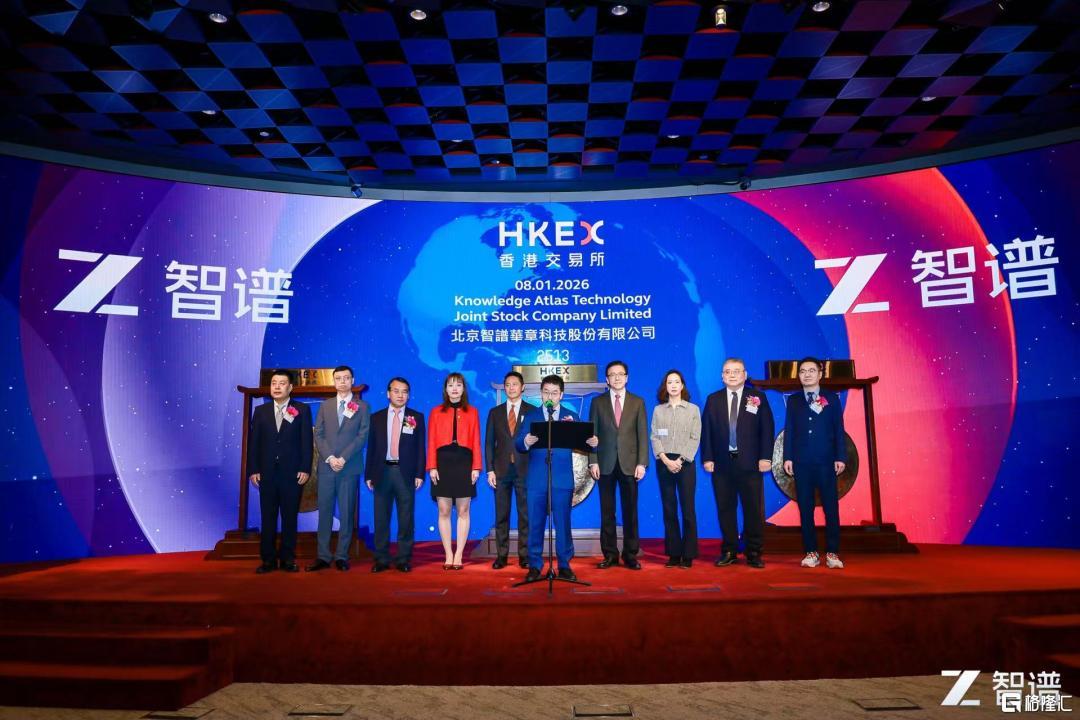
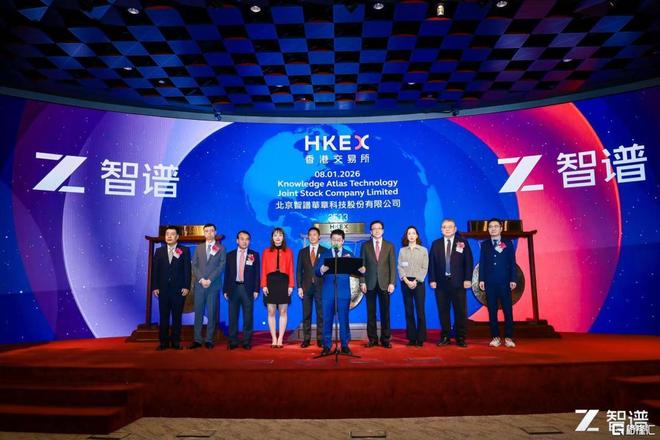
Core Insights - The article discusses the debut of Zhiyu, which opened at HKD 120 per share and reached a market capitalization of nearly HKD 60 billion, marking it as the "first global large model stock" [1][3] - The valuation of Zhiyu, approximately USD 6.6 billion, is considered modest compared to the valuations of Manus (USD 5 billion) and OpenAI (USD 500 billion), highlighting the disparity in perceived value within the AI sector [3][19] - The article emphasizes the shift in valuation models for AI companies, suggesting that traditional financial metrics are becoming less relevant in assessing their worth [9][10] Company Overview - Zhiyu is recognized as China's equivalent to OpenAI, with significant advancements in foundational AI technologies, including the launch of the GLM framework and various large models [5][19] - The company has established a strong foothold in the B2B market, with over 8,000 enterprise clients, primarily in the internet sector, and aims to increase its revenue from its MaaS (Model as a Service) platform to 50% [7][8][12] - The company's growth trajectory is characterized by a rapid increase in annual recurring revenue (ARR), which surged from CNY 57.4 million in 2022 to CNY 312.4 million in 2024, reflecting a compound annual growth rate of over 130% [10][12] Market Position and Strategy - Zhiyu's strategy diverges from OpenAI's consumer-focused approach, opting instead for a B2B model that does not heavily rely on government projects, which is a departure from traditional AI companies [7][8] - The company has achieved significant milestones in the AI space, including being the first to release a hundred billion model and a thousand billion model in China, positioning itself competitively against global players [5][19] - The article notes that Zhiyu's MaaS platform is gaining traction, with a goal to enhance its revenue contribution significantly, driven by a strong network effect from its developer community [12][14] Future Outlook - The article suggests that the valuation of Manus serves as a benchmark for Zhiyu's long-term potential, indicating that AI applications are rapidly capturing user engagement [18][19] - Zhiyu's foundational capabilities are gaining recognition in international markets, suggesting that it is well-positioned to benefit from the global AI application surge [19] - The company is also involved in initiatives to support AI infrastructure in countries along the Belt and Road Initiative, further expanding its influence [17]
8个月干到1亿美金,盘点全球最赚钱9家AI应用,AI 商业逻辑彻底变了
3 6 Ke· 2026-01-08 13:07
Group 1 - The core point of the article is the rapid growth of AI companies achieving over $100 million in Annual Recurring Revenue (ARR), highlighting a shift in business models from selling capabilities to selling results [1][2][30] - Manus was acquired by Meta for $2 billion, and its ARR reached $125 million shortly before the acquisition, marking it as one of the fastest companies to reach this milestone [1][25] - Nine AI application companies have joined the "1 billion ARR club" this year, including notable names like Cursor, Lovable, and Perplexity, showcasing a trend of rapid commercialization in the AI sector [1][2] Group 2 - The speed of growth among these companies is striking, with Lovable achieving $100 million ARR in just 8 months, Cursor in 12 months, and Perplexity in 14 months [2][28] - The shift in commercial value is evident as companies focus on delivering credible results rather than just capabilities, indicating a fundamental change in how success is measured in the AI industry [2][30] - Investors are increasingly prioritizing single customer revenue over traditional profit margins as a key metric for evaluating AI companies, suggesting a new standard for what constitutes a successful AI business [2][28][37] Group 3 - Perplexity, valued at $20 billion, operates a subscription-based model with various tiers, and its ARR has shown significant growth, reaching $120 million by May 2025 [5][9] - ElevenLabs, valued at $6.6 billion, has a diverse client base and achieved $100 million ARR within 22 months, with plans to reach $300 million by the end of 2025 [7][9] - Lovable, also valued at $6.6 billion, reached $100 million ARR in 8 months and aims to double that figure within a year [10][11] Group 4 - Replit, valued at over $3 billion, transitioned from traditional code completion to a more integrated platform, achieving $150 million ARR in 18 months [12][13] - Suno, an AI music generation tool, reached over $100 million in annual revenue within three years, indicating strong market demand [15][16] - Gamma, an AI presentation tool, achieved $100 million ARR in a relatively short time, demonstrating effective monetization strategies [18][19] Group 5 - The article emphasizes that the fastest-growing companies are those that effectively transition from consumer to enterprise markets, enhancing their average revenue per user (ARPU) [29][30] - The trend indicates that AI companies are increasingly starting from consumer markets, which allows them to scale more rapidly [30][31] - The article also raises concerns about the sustainability of growth, as some companies face significant losses despite high ARR figures, highlighting the need for a deeper understanding of what constitutes a successful AI business [33][34][36]

美股盘前要点 | 特朗普拟猛增军费预算,商务部回应审查Meta收购Manus
Ge Long Hui· 2026-01-08 12:37
Group 1 - U.S. stock index futures are all down, with Nasdaq futures down 0.25%, S&P 500 futures down 0.17%, and Dow futures down 0.34% [1] - Major European stock indices are collectively down, with Germany's DAX down 0.08%, UK's FTSE 100 down 0.31%, France's CAC down 0.25%, and the Euro Stoxx 50 down 0.32% [2] - Chevron is reportedly negotiating with the U.S. government to expand its operating license in Venezuela to increase crude oil exports [7] - ExxonMobil expects a decrease in fourth-quarter profits by $800 million to $1.2 billion due to falling oil prices [8] - Lockheed Martin delivered a record 191 F-35 fighter jets to the U.S. and its allies last year [9] - Morgan Stanley will replace Goldman Sachs as Apple's credit card business partner [10] - Ford plans to launch an L3 level driving assistance system by 2028, allowing drivers to free their eyes and hands [11] - Disney leads the global box office with $6.58 billion, according to the 2025 Hollywood box office rankings [12] - Alibaba Cloud has released a multimodal interaction development kit applicable to AI glasses and robots [15] - JD.com has established a "Chameleon Business Unit," with the second batch of self-developed AI toys set to launch in mid-January [16] - XPeng will release four new cars at the beginning of the year and plans to scale production of humanoid robots and flying cars this year [17] - FF announced the FX Super One three-phase delivery robot strategy, expecting positive cash flow within three years [19]
China Warns AI Startups Seeking to Emulate Meta Deal: Not So Fast
WSJ· 2026-01-08 12:01
Core Viewpoint - The acquisition of startup Manus for $2.5 billion raises concerns in Beijing about encouraging more entrepreneurs to pursue similar paths [1] Group 1 - The $2.5 billion acquisition is seen as a significant move that may set a precedent for other startups [1] - Beijing's worries stem from the potential increase in entrepreneurial activities that could follow this acquisition [1]

商务部回应Meta收购Manus:将会同有关部门评估调查
Nan Fang Du Shi Bao· 2026-01-08 11:29
Core Viewpoint - The Chinese government supports enterprises in conducting cross-border operations and international technology cooperation in accordance with laws and regulations, while evaluating the compliance of Meta's acquisition of Manus with relevant legal frameworks [1][2]. Group 1: Acquisition Details - Meta has completed the acquisition of Manus for over $2 billion, marking it as the third-largest acquisition in Meta's history, following WhatsApp and Scale AI [2]. - Manus, an AI technology company founded in China, has processed over 147 trillion tokens and created over 80 million virtual computers since its launch [1]. Group 2: Regulatory Considerations - The Chinese Ministry of Commerce will assess the acquisition's compliance with laws regarding export control, technology transfer, and foreign investment [1]. - The focus of technology export control is on whether controlled technologies developed in China are transferred abroad without permission, which includes algorithms, system architectures, and training methods in the AI sector [3]. Group 3: Company Operations and Future Outlook - Manus CEO expressed optimism about the partnership with Meta, emphasizing that it will allow Manus to grow sustainably without altering its operational methods [2]. - Manus plans to continue providing products and subscription services through its app and website while operating from Singapore [1].
今晚9点30,美国重要数据公布;3nm制程供不应求,台积电股价上涨;特朗普:禁止囤房;商务部回应审查Meta收购Manus【美股盘前】
Mei Ri Jing Ji Xin Wen· 2026-01-08 11:23
Group 1 - Major U.S. stock index futures are experiencing declines, with Dow futures down 0.23%, S&P 500 futures down 0.15%, and Nasdaq futures down 0.23% [1] - Brain-computer interface company Neuralink saw a pre-market surge of 27%, following a 157% increase over the past three days, driven by Elon Musk's announcement regarding mass production [1] - Defense and aerospace stocks are rising in pre-market trading, with Lockheed Martin up over 7% and Northrop Grumman also increasing by over 7%, following Trump's call for a significant increase in the U.S. defense budget to $1.5 trillion by 2027 [1] Group 2 - JPMorgan will replace Goldman Sachs as the new issuer of Apple credit cards, with the transition expected to take 24 months [1] - The Chinese Ministry of Commerce is reviewing Meta's acquisition of AI platform Manus, emphasizing compliance with Chinese laws and regulations for cross-border mergers and investments [2] - S&P Global forecasts a 50% increase in global copper demand by 2040, driven by growth in AI and defense sectors, with a potential annual supply gap exceeding 10 million tons if recycling and mining efforts are not intensified [2] Group 3 - Revolution Medicines, a cancer drug developer, saw a pre-market decline of over 9% after AbbVie announced it was not in talks to acquire the company [3] - TSMC's 3nm process technology remains in high demand, with a 1.4% increase in stock price, as the company maintains high capacity utilization and has temporarily halted new projects due to overwhelming orders [3]

商务部:将会同相关部门对Meta收购Manus开展评估调查
Xin Hua Wang· 2026-01-08 11:06
Group 1 - The Ministry of Commerce of China is conducting an evaluation of Meta's acquisition of the AI platform Manus, focusing on compliance with export controls, technology import and export, and foreign investment regulations [1] - The Chinese government supports enterprises in conducting cross-border operations and international technology cooperation in accordance with laws and regulations [1] - Companies engaging in foreign investment, technology export, data outbound, and cross-border mergers and acquisitions must comply with Chinese laws and regulations and follow legal procedures [1]
突发特讯!中国商务部回应审查Meta收购Manus:一场没有硝烟的主权攻防战
Sou Hu Cai Jing· 2026-01-08 10:41
Group 1 - The core message of the news is that China's Ministry of Commerce has responded to Meta's proposed acquisition of the AI platform Manus, emphasizing that any cross-border mergers involving foreign investment, technology exports, or data outflow must comply with Chinese laws and regulations [1][2]. - Meta's acquisition of Manus is seen as a strategic move to enhance its AI capabilities, but it raises concerns regarding compliance with Chinese laws, particularly if the technology or data involved has connections to China [2][3]. - The Chinese government's stance reflects a broader global trend where data sovereignty and technology scrutiny are becoming critical issues among major economies, highlighting the importance of regulatory frameworks in the digital age [5][10]. Group 2 - The statement from the Ministry of Commerce carries three significant strategic implications: it establishes the necessity for multinational companies to adhere to Chinese laws, acts as a safeguard for national security, and serves as a bargaining chip in the context of international relations [7]. - The historical context indicates that unregulated technology diffusion and capital expansion can lead to significant consequences, including the emergence of digital monopolies and the loss of critical technologies, which can jeopardize national strategies [9]. - The review of Meta's acquisition of Manus signifies a shift towards a new type of globalization based on mutual respect for sovereignty and rules, indicating that future competition and cooperation will occur within a framework that respects national laws and rights [10].

智谱MaaS ARR突破5亿,10个月增长25倍,重新校准“中国版OpenAI”估值锚点
Ge Long Hui· 2026-01-08 10:37
Core Insights - The article highlights the significant valuation shifts in the AI sector, particularly with the debut of Zhiyu, which opened at HKD 120 per share and peaked at HKD 135, achieving a market capitalization of nearly HKD 60 billion [1][2] - The rapid valuation increase of AI companies, exemplified by Manus's valuation skyrocketing from USD 14 million to USD 5 billion within nine months, indicates a departure from traditional valuation models in the AI hardware space [1][4][6] - Zhiyu is positioned as China's equivalent to OpenAI, with a focus on foundational technology rather than just application-level innovations [7][9] Company Valuation and Market Position - Zhiyu's market valuation of approximately USD 6.6 billion is modest compared to Manus's USD 5 billion and OpenAI's USD 500 billion, suggesting a potential undervaluation given its technological capabilities [4][6] - Both Zhiyu and Manus are among the few companies with successful pre-trained frameworks, with Zhiyu launching China's first pre-trained model framework, GLM, in 2021 [9] - Zhiyu's business model emphasizes a B2B approach, with over 8,000 enterprise clients, primarily in the internet sector, and less than 20% of revenue from government projects [11] Revenue Growth and Business Model - Zhiyu's revenue from its MaaS platform has seen a significant increase, with annual recurring revenue (ARR) growing from RMB 20 million to over RMB 500 million in just ten months, indicating a robust growth trajectory [12] - The company aims to increase the proportion of MaaS revenue to 50%, leveraging a flywheel effect that attracts developers and enhances model performance through increased usage [19] - Zhiyu's overseas revenue is also growing, accounting for 9.8% of total revenue in the first half of 2025, with significant usage of its models on global platforms [20] Future Outlook and Competitive Landscape - The article suggests that the long-term potential of Zhiyu is validated by the high valuation of Manus, indicating a strong demand for AI applications [26] - Zhiyu's foundational model capabilities position it favorably in the global AI ecosystem, allowing it to benefit from both domestic and international market trends [26] - The valuation disparity between Zhiyu and its competitors like OpenAI and Anthropic highlights its unique position as one of the few companies with self-developed general foundational models [26]