
Tencent

Search documents
Meta to acquire AI agent company Manus
Yahoo Finance· 2025-12-30 12:08
Acquisition Overview - Meta Platforms has agreed to acquire Manus, an AI firm based in Singapore, with the deal reportedly valued at over $2 billion [1][2] - The financial terms of the transaction have not been disclosed by Meta [1] Manus's Business and Technology - Manus specializes in developing autonomous general-purpose agents capable of performing various tasks such as market research, coding, and data analysis [1] - The company launched its general-purpose AI agent earlier this year, which can produce research reports and create websites using models from AI companies like Anthropic and Alibaba [3] Performance Metrics - Since its launch, Manus has served millions of users and businesses, processed over 147 trillion tokens, and generated more than 80 million virtual computers [3] - Manus reported reaching $100 million in annual recurring revenue just eight months after its release [4] Company Background - Manus was initially established as Butterfly Effect in 2022 and later moved its headquarters to Singapore after receiving investment from Benchmark [5] - The company raised $75 million in April prior to the acquisition talks, achieving a valuation of $500 million at that time [5] Leadership and Integration - Xiao Hong, co-founder and CEO of Manus, will join Meta and report to COO Javier Olivan following the acquisition [4] - Meta plans to continue operating and selling Manus's services while integrating its technology into its own product suite [2]

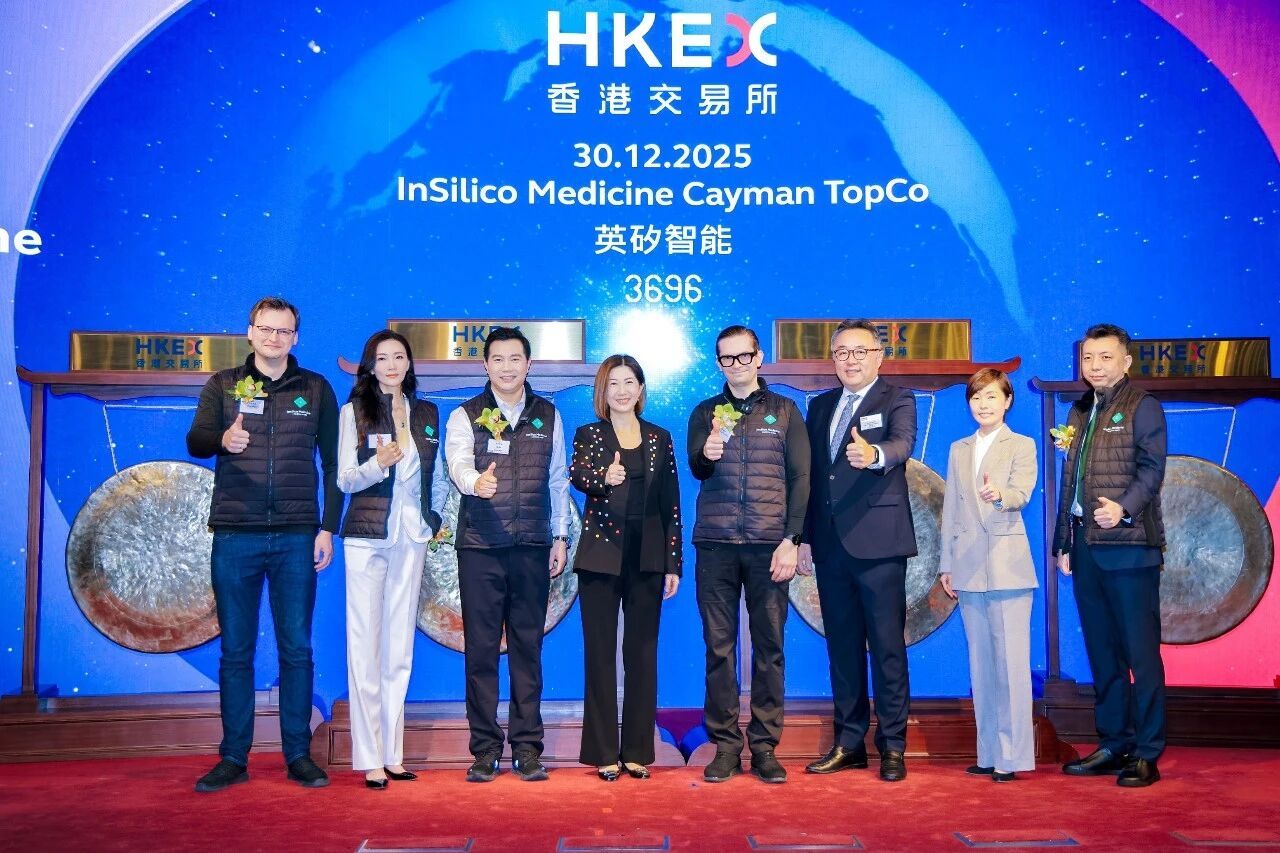
InSilico Medicine Debuts on HKEX With Market Cap Exceeding ~US$2.4B, Leading the Year’s Largest Biotech IPO in Hong Kong
Pandaily· 2025-12-30 08:04
Core Insights - InSilico Medicine Cayman TopCo became the first AI-driven biopharmaceutical company to list on the Main Board of the Hong Kong Stock Exchange under Rule 8.05 on December 30, 2025 [1] IPO Highlights - The IPO raised HK$2.277 billion (approximately US$294 million), marking it as the largest biotech IPO in Hong Kong by proceeds in 2025 [2] - The Hong Kong public offering was oversubscribed by 1,427.37 times, with over HK$328.35 billion (approximately US$42.4 billion) frozen in capital, while the international tranche was oversubscribed by 26.27 times, both ranking first among peer IPOs this year [2] Investor Interest - The company attracted 15 global cornerstone investors, including notable firms such as Eli Lilly and Company, Tencent, Temasek, and Schroders [3] Stock Performance - On debut, shares surged by 42.04% from the offer price, reaching HK$34.16 (approximately US$4.41) by 11:00 a.m., valuing the company at over HK$19 billion (approximately US$2.4 billion) [3] Company Overview - Founded in 2014, InSilico Medicine operates a dual-engine model based on its proprietary Pharma.AI platform, which combines AI platform licensing with internal drug pipeline development [4] - The company has established a pipeline of over 30 innovative programs [4] Key Drug Development - The flagship asset, Rentosertib (ISM001-055), is a TNIK-targeting drug candidate for idiopathic pulmonary fibrosis (IPF) discovered entirely using AI [5] - In April 2025, Rentosertib was recommended for Breakthrough Therapy Designation by China's Center for Drug Evaluation (CDE) and is expected to move directly into Phase III clinical trials after completing Phase IIa trials, potentially becoming the world's first fully AI-discovered drug to enter Phase III [5] Financial Performance - Revenue grew from US$30.15 million in 2022 to US$85.83 million in 2024, with gross margin expanding from 63.4% to 90.4% [6] - Net losses narrowed significantly from US$222 million to US$17.1 million during the same period [6] - The company plans to allocate approximately 48% of IPO proceeds towards advancing key clinical-stage programs [6]

中国股票策略_中证 1000 沪深 300 指数已有 100%88% 披露 2025 年第三季度业绩_聚焦互联网平台与 AI 板块亮点
2025-12-29 01:04
Summary of Key Points from the Conference Call Industry Overview - The conference call primarily discusses the performance of the **MXCN** (Mainland China Index) and **CSI300** (China Securities Index 300) for the third quarter of 2025, highlighting trends in various sectors including **Healthcare**, **IT**, **Financials**, **Materials**, **Property**, and **Consumer Discretionary** [4][9]. Core Insights and Arguments - **MXCN Performance**: As of December 22, 2025, approximately 88% of MXCN's market capitalization reported 3Q25 results, showing an **EPS growth of +8.1% year-on-year (y-y)**, with a **net profit margin (NPM) contraction of 44 basis points (bps)** and **sales per share growth of +12% y-y**. Sectors like **Healthcare**, **IT**, **Financials**, and **Materials** reported over **30% EPS growth y-y** [4][7]. - **CSI300 Results**: All CSI300 constituents reported 3Q25 results, with **EPS growth momentum increasing from +2.5% y-y in 2Q25 to +11.6% y-y in 3Q25**. This was supported by **sales per share growth of +3.4% y-y** and **NPM expansion of 76 bps y-y**. The **Materials** and **IT** sectors exhibited the largest EPS growth at **+50.4%** and **+49% y-y**, respectively [4][9]. - **4Q25 EPS Outlook**: The outlook for 4Q25 indicates a potential **EPS decline of -9.1% y-y**, suggesting that the current consensus for **2.5% EPS growth y-y for 2025** may be conservative. Financials and Communications Services are expected to require significant ramp-up in EPS growth to meet consensus estimates [4][8]. Sector-Specific Highlights - **Food Delivery and E-Tailing**: Competition remains intense, particularly for higher-frequency users. Companies like **Alibaba** and **Meituan** reported improved unit economics in 3Q25, but ongoing competition for affluent consumers is anticipated. Domestic consumption growth in online retail is moderating, with **Alibaba's customer management revenue** growing **+10% y-y** and **PDD's online marketing revenue** increasing **+8% y-y** [4][5]. - **AI Adoption**: Different strategies for AI are being adopted by major players: - **Baidu** reported **Rmb9.6 billion** in AI-related revenue, constituting **30.8% of total revenue** in 3Q25, with significant growth in AI-native marketing services [6]. - **Alibaba** experienced a **34% y-y growth** in cloud revenue, with AI-related revenue growing at triple digits [6]. - **Tencent** is taking a more cautious approach, focusing on integrating AI into existing services rather than aggressive investment in AI infrastructure [6]. - **PC and Server Demand**: Rising memory prices are curbing demand, but **Lenovo** reported double-digit revenue growth across its segments. **Huaqin Technology** is gaining market share with a **59% y-y net profit growth** in 3Q25, driven by strong performance in smartphones and PCs [6]. Additional Important Insights - The **4Q25 reporting season** is set to begin in January 2026, with expectations for peak reporting in March-April 2026 [4]. - The **real estate sector** is facing significant challenges, with the largest EPS declines reported at **-315% y-y** for the sector [4][9]. - Overall, the trends indicate a mixed outlook for various sectors, with some showing strong growth while others face headwinds, particularly in consumer discretionary and real estate [4][8].
Nvidia Investors Just Got Incredible News for 2026
The Motley Fool· 2025-12-27 16:04
Core Viewpoint - Nvidia is set to reopen a significant revenue source in the Chinese market, which could lead to substantial financial gains in the upcoming fiscal year [1][2]. Group 1: Market Performance - Nvidia's stock has increased by 37% this year, outperforming the Nasdaq Composite's 21% rise [2]. - The company is entering the new year with a favorable outlook due to the potential reopening of the Chinese market for its advanced GPUs [2]. Group 2: Revenue Potential - Nvidia plans to start shipping H200 processors to Chinese customers before mid-February 2026, with initial shipments estimated between 40,000 and 80,000 units [5][6]. - Each H200 processor is priced at approximately $32,000, which could result in sales of $1.28 billion to $2.56 billion in the first quarter of fiscal 2027 [6]. Group 3: Strategic Developments - Nvidia's agreement with the Trump administration requires the company to share a quarter of its Chinese revenue with the U.S. government, marking a significant shift after being restricted from this market in April 2025 [7]. - The company is expected to increase its production capacity for Chinese customers, indicating confidence in demand for the H200 processors [8]. Group 4: Competitive Landscape - The H200 processor is significantly more powerful than the previously sold H20 processor, attracting interest from major Chinese tech firms like Alibaba, ByteDance, and Tencent [8]. - There may be a mandate from Chinese officials for companies to purchase both homegrown chips and the H200, potentially easing market entry for Nvidia [9]. Group 5: Financial Outlook - Nvidia has a backlog of data center chip orders valued at around $275 billion, which is likely to increase with renewed access to the Chinese market [10]. - Analysts have raised earnings expectations for Nvidia in 2026, with a projected earnings per share of $7.52, indicating a potential 60% increase from the current fiscal year's estimated earnings of $4.69 [11][13].


Can ERNIE 5.0 and Qianfan Strengthen Baidu's AI Cloud Advantage?
ZACKS· 2025-12-24 17:31
Core Insights - Baidu's AI Cloud business is becoming strategically important as the company focuses on scaling its foundation model ecosystem and enhancing enterprise applications [1] - The launch of ERNIE 5.0, which features native omni-modal capabilities, is expected to strengthen Baidu's position in the competitive AI infrastructure market in China [1] - Qianfan, Baidu's Model-as-a-Service platform, has been upgraded to support enterprise AI adoption, integrating ERNIE 5.0 and expanding its model library [2] Financial Performance - In Q3 2025, AI Cloud Infrastructure revenue reached RMB 4.2 billion, a 33% year-over-year increase, while subscription-based AI accelerator infrastructure revenue surged by 128% [2] - The Zacks Consensus Estimate for Baidu's Q4 2025 revenues is $4.62 billion, reflecting a 1.09% year-over-year decline due to investments in AI Search and cloud infrastructure [3] - Baidu's shares have appreciated 42.9% over the past six months, underperforming the Zacks Internet - Services industry's growth of 73.4% [5] Competitive Landscape - Baidu's AI Cloud expansion is occurring amid increasing competition from Alibaba and Tencent, both of which are implementing similar enterprise AI strategies [4] - Market differentiation among Baidu, Alibaba, and Tencent will depend on demonstrating measurable enterprise value and achieving profitability in AI Cloud services [4] Valuation Metrics - Baidu's forward 12-month price/earnings ratio is 19.35X, which is below the industry average of 28.31X [9] - The Zacks Consensus Estimate for Baidu's Q4 2025 earnings is $1.5 per share, indicating a 42.97% year-over-year decline [11]


Chinese AI stocks rise: Investors bet on Alibaba, Tencent, Metax, and Moore Threads
The Economic Times· 2025-12-24 16:02
Core Insights - Global investors are increasingly investing in Chinese AI companies, seeking the next big opportunity like "DeepSeek" while diversifying their portfolios [1][3] - Concerns about a potential AI bubble in the U.S. market are prompting investors to look towards China, where government support for tech independence is seen as a positive factor [1][2] Investment Trends - Ruffer, a UK asset manager, is focusing on Alibaba due to its AI chip unit and significant investments in cloud infrastructure, indicating a shift in competitive dynamics between the U.S. and China [2][3] - UBS Global Wealth Management has rated Chinese tech as "most attractive," highlighting the benefits of diversification and strong policy support for AI development in China [3] Market Valuation - The U.S. Nasdaq trades at 31 times earnings, while Hong Kong's Hang Seng Tech trades at 24 times, making Chinese stocks like Alibaba and Baidu more appealing for investment [4][16] ETF Investments - KraneShares' KWEB ETF, which includes Tencent, Alibaba, and Baidu, has seen significant growth, reaching nearly $9 billion this year, reflecting strong investor interest in Chinese tech [6][16] - Another KraneShares ETF focuses on Chinese onshore tech stocks, including Cambricon and Montage Technology, which have also experienced growth [7][16] Competitive Landscape - While the U.S. leads in AI innovation, China is noted for its strengths in engineering, manufacturing, and power supply, providing a competitive edge in the AI race [7][16] - The urgency in the AI sector is drawing attention to Chinese companies, as noted by KraneShares' Chief Investment Officer [6][16] Company Performance - Chinese AI chipmaker MetaX saw a 700% increase in its Shanghai debut, while Moore Threads rose 400%, indicating a strong market response despite warnings about valuation support driven by hype [10][16] - Fund managers caution that many listed chip companies lack valuation support and are primarily driven by market hype [10] Strategic Recommendations - Investors are advised to selectively add companies benefiting from China's self-reliance push in AI and semiconductors while maintaining exposure to global leaders [11][12][16] - There is an expectation of increased investment in AI and robotics, with a focus on identifying potential leaders in these high-tech segments [12][16] Popular Companies - Key Chinese AI companies attracting investor interest include Alibaba, Baidu, Tencent, MetaX, Moore Threads, and Cambricon [14][16]



Global investors turn to Chinese AI stocks amid Wall Street valuation concerns
The Economic Times· 2025-12-24 05:14
Core Insights - Demand for Chinese AI firms is driven by Beijing's push for technological self-reliance and rapid listings of domestic chipmakers, indicating a strategic effort to close the technology gap with the U.S. [1][16] - Foreign investors are increasingly viewing China as a viable AI investment destination due to policy support for local chipmakers and software developers, coinciding with concerns over high valuations of U.S.-listed AI stocks [2][16] - Large Chinese technology companies like Alibaba, Baidu, and Tencent are benefiting from this shift, attracting investor interest due to their investments in AI chips and cloud infrastructure [3][16] Investment Trends - A wave of AI startups listing on mainland exchanges and in Hong Kong has strengthened investor appetite, highlighted by the rise of DeepSeek, which has reignited global interest in China's AI capabilities [4][5][16] - The Sino-U.S. technology rivalry is a central factor driving demand for Chinese AI assets, with strong policy backing and rapid AI monetization being key elements of renewed investor interest [7][16] - Valuation gaps between U.S. and Chinese tech stocks are influencing investment decisions, with Hong Kong's Hang Seng Tech Index offering cheaper access to Chinese AI leaders compared to the Nasdaq [8][16] Market Dynamics - New investment products, including exchange-traded funds focused on Chinese tech stocks, have seen strong inflows, reflecting rising confidence in the sector's long-term prospects [10][16] - China's AI and semiconductor industries are demonstrating rapid innovation, particularly in chip design and manufacturing, with competitive advantages in engineering scale and manufacturing efficiency [11][16] - U.S. technology restrictions have reshaped China's innovation strategy, prompting domestic firms to invest heavily in core technologies and develop alternatives [12][16] Cautionary Notes - Some fund managers caution that recent market moves may be ahead of fundamentals, with concerns that the sector may be driven more by hype than by valuation support [13][16] - Skeptics argue that many listed chip companies lack proven earnings visibility, making them vulnerable to corrections, leading some investors to prefer established firms with disciplined AI spending [14][16] - Market experts advise a selective approach, focusing on companies benefiting from China's self-reliance push in AI and semiconductors while maintaining exposure to global technology leaders [15][16]
Why the S&P 500 could hit 8,500, plus Apple's year-in-review
Youtube· 2025-12-23 22:04
Economic Growth - The US economy expanded at a rate of 4.3% in the third quarter, driven primarily by consumer spending, which increased by 3.5% [2][3][5] - The growth rate exceeded expectations by a full percentage point, with significant contributions from healthcare spending and trade [3][5] - Business investment grew by over 5%, while exports rose nearly 8%, indicating a robust economic environment [5][6] Consumer Spending - Consumer goods spending in real terms increased by over 3%, with recreation and transportation spending both up around 7% [4][5] - Anecdotal evidence from the holiday shopping season suggests strong consumer spending trends [4] Business Investment - Capital expenditures (capex) grew over 5%, although investment in non-residential structures contracted at a pace of 6.3% [5][6] - The slowdown in business investment is attributed to high interest rates, which are impacting both residential and non-residential investments [9][10] Federal Reserve and Interest Rates - The Federal Reserve may have the capacity to lower interest rates if the economy sustains a growth rate of around 3%, as this would indicate lower inflation [12][13] - The current yield curve is flat, suggesting that monetary policy remains somewhat restrictive despite strong economic growth [13][14] Labor Market - There is a noted decoupling between GDP growth and job growth, with some analysts suggesting that the labor market may take time to catch up with economic recovery [14][16] - The private sector is expected to see job growth as the economy continues to expand, with a three-month moving average of private employment trending upward [17][18] Consumer Sentiment - Despite strong GDP growth, consumer sentiment has declined to levels not seen since April, indicating concerns over affordability and living standards [20][21] - Policies aimed at increasing after-tax wages are expected to improve consumer sentiment over time [19][20] Market Outlook - The stock market is anticipated to continue its upward trajectory, with a target of 8,500 for the S&P 500 in 2026, supported by earnings growth [24][25] - Investors are advised to prepare for potential volatility and consider opportunities in sectors that may be undervalued [26][27] International Relations and Trade - The US-China relationship is expected to evolve, with potential for improved relations and targeted stimulus measures in China to support domestic consumption [50][51] - Chinese technology companies listed in Hong Kong are viewed as undervalued compared to their US counterparts, presenting investment opportunities [45][46] Manufacturing Sector - The manufacturing sector is projected to improve in 2026, driven by increased certainty and advancements in smart manufacturing technologies [102][103] - Smart manufacturing is characterized by the integration of AI, automation, and improved operational efficiencies, which are expected to enhance product quality and reduce costs for consumers [107][110]


VXUS vs. VT: Global Exposure With Major Differences
Yahoo Finance· 2025-12-21 21:55
Core Insights - The article discusses the differences between two Vanguard ETFs: VT (Vanguard Total World Stock ETF) and VXUS (Vanguard Total International Stock ETF), highlighting their investment strategies and sector allocations. Group 1: Investment Strategy - VT invests in both U.S. and foreign companies, with a significant allocation to technology (28%), followed by financial services (16%) and industrials (11%) [1] - VXUS aims to replicate the FTSE Global All Cap ex US Index, holding 8,663 stocks primarily in non-U.S. markets, with a sector mix leaning towards financial services (22%), industrials (16%), and technology (15%) [2] - VT has a 63% exposure to U.S. stocks, making it suitable for investors seeking both international and U.S. equity exposure [7] Group 2: Performance and Cost - VXUS is noted for having a slightly lower expense ratio and a higher dividend yield compared to VT, which may attract cost-conscious or income-focused investors [3][6] - Over the past twelve months, VXUS has outperformed VT, making it potentially more attractive for investors [6] Group 3: Portfolio Composition - VT's global approach results in a different sector blend and performance profile compared to VXUS, which exclusively invests outside the U.S. [4][8] - Each ETF serves a specific role in a portfolio, and the choice between them should consider individual investment goals beyond just performance and yield [9]

东方电缆:斩获 310 亿元新电缆订单
2025-12-21 11:01
Summary of Key Points from the Conference Call Industry Overview - The conference call focuses on the developments in the **China AI industry**, particularly in the context of mobile applications and AI video generation technologies. Key Themes and Developments 1. **Advancements in AI Models**: - Significant breakthroughs in frontier AI models and agentic capabilities have been noted, with performance gaps between US and Chinese AI models narrowing to 3-6 months. Notable releases include OpenAI's GPT-5.2 and Xiaomi's MiMo-V2-Flash model, which ranks among the top open-source models globally [1][8][10]. 2. **Emergence of AI Mobile Assistants**: - The launch of Bytedance's Doubao Phone Assistant marks a potential new era for AI mobile assistants, which could significantly impact app user traffic in the long term. Other companies like Xiaomi and Z.ai are also developing similar technologies [1][7][10]. 3. **Surge in AI Inference Demand**: - AI inference demand is experiencing hypergrowth, with Bytedance's Doubao Large Model exceeding 50 trillion daily tokens in December 2025, up from 30 trillion in October. This growth is driven by both consumer (To-C) and business (To-B) demands [1][10][11]. 4. **Global Market Penetration of Chinese Multi-Modal Models**: - Chinese multi-modal AI models are making inroads into global markets, with companies like Alibaba and Tencent launching new models that emphasize cost-effectiveness, open-source capabilities, and speed [1][10][11]. 5. **Chip Supply Dynamics**: - The evolving dynamics of domestic and foreign chip supply are highlighted, particularly regarding Nvidia's H200 chips. Chinese hyperscalers are expected to ramp up domestic chip supply, reducing reliance on foreign sources [1][10][11]. Company-Specific Insights - **Alibaba**: - Continues to offer unique full-stack AI solutions across various layers, with expected EPS recovery next year. The company is positioned as a key beneficiary in the AI sector, particularly in cloud and data centers [1][10][11]. - **Tencent**: - Exhibits steady EPS growth and is identified as a significant player in AI applications. The company is also expected to benefit from the ongoing AI advancements [1][10][11]. - **Bytedance**: - Dominates the AI To-C chatbot market and is noted for its high daily token consumption. The company is also expanding its AI functionalities across various verticals [1][10][11]. Market Projections - The global AI video generation model Total Addressable Market (TAM) is projected to grow from **US$1 billion in 2025** to **US$39 billion by 2033**, reflecting a **56% CAGR** over eight years. The professional segment is expected to account for **64% of the total TAM** in 2025 [2][6][23]. Additional Observations - **Engagement Trends**: - The overall time spent on the top 400 mobile apps increased by **5% year-over-year** in November 2025, with notable growth in AI engagement and eCommerce sectors [1][11][16]. - **Regulatory Challenges**: - Cross-border eCommerce faces increasing regulatory pressures, particularly with the EU's new customs duties on low-value parcels set to take effect in July 2026 [1][15]. - **Investment Recommendations**: - The report recommends focusing on cloud/data centers as the top preferred sub-sector, with key investment ideas including Alibaba, GDS, and VNET, followed by Tencent and NetEase in gaming, and Kuaishou in eCommerce [1][10][11]. This summary encapsulates the critical insights and projections discussed during the conference call, providing a comprehensive overview of the current landscape and future outlook for the China AI industry.
