
海信视像

Search documents
这场战争,日本彻底败了
Xin Lang Cai Jing· 2025-11-27 11:32
Core Viewpoint - Chinese home appliance companies have significantly penetrated the Japanese market, overtaking traditional Japanese brands that once dominated the industry [1][3][10]. Group 1: Market Penetration - Chinese brands now hold a substantial market share in Japan, with Hisense leading the television market at 41.1% and Haier dominating the white goods sector [4][7][10]. - Approximately 70% of products in major Japanese retail stores are now Chinese brands, indicating a dramatic shift in consumer preferences [3][4]. - Hisense's market share in Japan's television sector has surged from 2.4% in 2017 to 41.1% in 2024, showcasing rapid growth [4][10]. Group 2: Competitive Landscape - Japanese brands like Panasonic and Sony have seen their market shares plummet, with Panasonic's television market share dropping to 1.2% [10][11]. - The once-dominant Japanese home appliance giants are now struggling, with many exiting the market entirely [11][12]. - The competitive edge of Chinese brands is not solely based on low prices; they have also made significant advancements in high-end product offerings [4][10]. Group 3: Cultural and Market Dynamics - Japanese consumers have historically held biases against foreign brands, which has complicated market entry for Chinese companies [14][19]. - Despite these biases, Chinese brands have successfully integrated into the Japanese market by acquiring local companies and adapting to consumer preferences [29][34]. - The cultural perception of Chinese products as inferior is gradually changing as Chinese brands innovate and meet local demands [36][38]. Group 4: Industry Evolution - The Japanese home appliance industry, once a global leader, is now fragmented and struggling to keep pace with technological advancements [12][52]. - In contrast, Chinese companies have embraced an open supply chain model, allowing for rapid innovation and responsiveness to market changes [27][50]. - The shift in market dynamics reflects broader trends in global supply chains, with China emerging as a manufacturing powerhouse [52][54].




海信视像:公司在海外与全球顶级的内容公司均保持长期友好合作
Zheng Quan Ri Bao· 2025-11-27 11:13
Core Viewpoint - Hisense Visual maintains long-term friendly cooperation with top global content companies, including Netflix [2] Group 1 - Hisense Visual engages in overseas partnerships with leading content providers [2] - The company emphasizes its commitment to collaboration with major players in the content industry [2]

海信视像:在AI显示布局方面,公司已围绕“端-云-芯”一体化架构
Zheng Quan Ri Bao· 2025-11-27 11:13
Core Insights - Hisense Visual has made significant advancements in AI display technology, focusing on an integrated "end-cloud-core" architecture to enhance multimodal interaction capabilities [2] - The company is leading the development of the IEEE international standard for "Multimodal Large Model Technical Requirements in Smart Home Scenarios," marking a transition from technology output to standard leadership [2] - Hisense is entering the smart wearable market by collaborating on the development of AI smart headphones and lightweight AI glasses, aiming to provide users with next-generation smart wearable experiences [2]
海信视像:截至2025年9月30日共有普通股股东34566户
Zheng Quan Ri Bao· 2025-11-27 11:13
Group 1 - The core point of the article is that Hisense Visual has reported a total of 34,566 common stock shareholders as of September 30, 2025, according to its Q3 report [2] Group 2 - The company encourages investors to pay attention to its periodic reports for updates on shareholder numbers [2]
海信视像(600060.SH):持续推进AI智能耳机、轻量化AI眼镜等智能终端产品的研发与落地
Ge Long Hui· 2025-11-27 08:13
Core Insights - The company is actively expanding into the smart wearable sector, focusing on the development and implementation of AI smart headphones and lightweight AI glasses [1] - The company officially launched the Vidda G11 smart glasses product in October 2025 [1] - The company plans to continue prioritizing user needs and drive technological iterations and scenario expansions for smart terminal products [1]
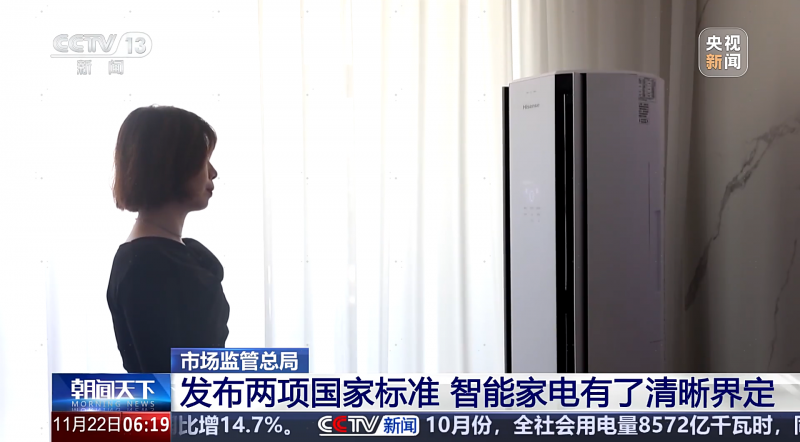
家电是否智能有了“新国标” 海信空调参与智能空调“新国标”制定
Zhong Guo Fa Zhan Wang· 2025-11-27 07:42
Core Viewpoint - The recent release of two national standards for smart home appliances by the State Administration for Market Regulation marks a significant step towards standardized development in China's smart appliance industry, with Hisense playing a key role in the formulation of these standards [1][3]. Group 1: New National Standards - The new standards define smart appliances based on "smart capabilities" and "scenario effects," establishing a five-level grading system from L1 to L5 to quantify the intelligence level of home appliances [1][3]. - The standards delineate nine typical smart home application scenarios, providing unified guidance for product innovation and ecological interconnectivity [1][3]. Group 2: Hisense's Innovations - Hisense has been a major contributor to the standards, leveraging its extensive experience in smart technology and innovative practices in scenario applications [1][3]. - The Hisense air conditioner, featuring the "Healthy Smart Wind" concept, has led the industry in a comprehensive upgrade, showcasing advanced smart interaction capabilities [3]. - The Hisense Brilliant U6 air conditioner, launched in September, is the first to support the Star Flash Human Sensing 2.0 technology, enabling precise and intelligent air control based on user proximity [3]. Group 3: Environmental and Health Management - The new standards specify technical requirements for environmental management, health management, and energy resource management across nine application scenarios [3][5]. - Hisense's new air conditioning model, the Deep Sleep Treasure X5, introduces a CO₂ sensor that visually indicates air quality and automatically activates fresh air circulation when CO₂ levels exceed safe limits [5]. - The Brilliant U6 series is equipped with a TVOC sensor to monitor indoor volatile organic compounds, ensuring compliance with the stringent health management requirements of the new standards [5]. Group 4: Future Implications - The new national standards will officially take effect on May 1 next year, further regulating the smart appliance market and providing authoritative references for consumers [7]. - Hisense plans to increase investment in smart technology research and development, focusing on personalized and scenario-based smart living solutions to enhance user experience [7].
海信2025年第三季度领跑全球100英寸和激光电视市场
Huan Qiu Wang· 2025-11-27 07:36
海信持续领跑激光电视市场——2025年最新超短焦投影仪对比评测结果证实了这一点。在混合室内使 用、专用影音室及整体画质等类别评测中,海信L9Q均拔得头筹;PX3-PRO则获评"性价比之王",且在 画质表现上名列前茅。 通过与帝瓦雷合作,L9Q带来奢华家庭影院体验。它支持最高200英寸投影尺寸,具备5000 ANSI流明亮 度、5000:1对比度,还获得IMAX Enhanced和杜比视界认证,真正把影院"搬"回了家。 从技术研发到市场拓展,海信始终引领行业向更高品质、更强创新的方向演进。通过掌握核心技术,并 将其转化为提升全球家庭娱乐标准的产品,海信不仅改变了人们的观看内容,更重新定义了世界对显示 未来的想象。 来源:美通社 青岛2025年11月26日 /美通社/ -- 根据Omdia发布的最新数据,2025年第三季度,全球消费电子与家电领 军品牌海信,再度在全球100英寸及以上电视细分市场以56.6%的出货份额,以及激光电视细分市场 68.9%的出货份额,位居全球第一。这一成绩表明,海信凭借持续创新和对消费者需求的精准把握,确 立了行业领导地位。 作为RGB MiniLED技术的开创者,海信不断为大屏显示技 ...
中东家电电子展览会聚焦绿色和智能化
Xin Hua Wang· 2025-11-27 03:04
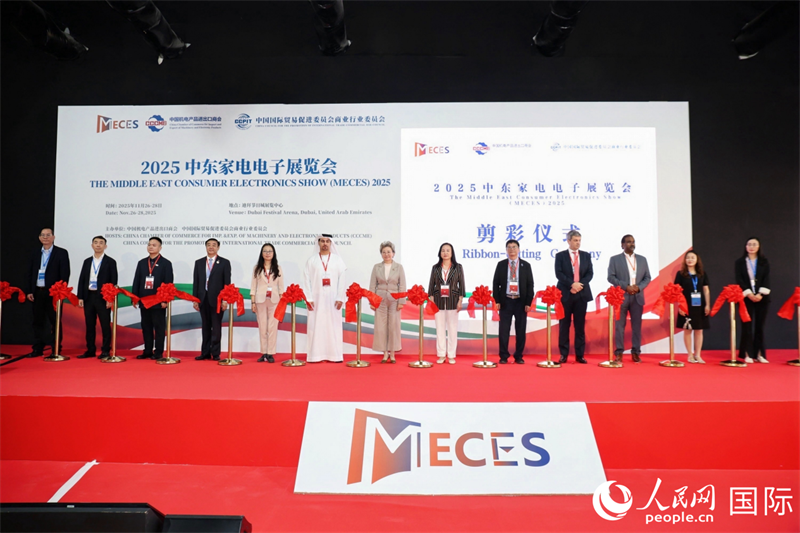
中国机电产品进出口商会副会长刘春表示,期待展会能成为联通中国与中东市场的坚实桥梁,助力更多 中国企业与地区伙伴建立起长期稳定的合作关系。 阿联酋外贸部副部长法赫德·杰尔贾维介绍,阿联酋消费电子市场增长由年轻且懂科技的消费群体驱 动,他们对智能化、可持续和提升生产力的技术需求不断增长。中国企业在满足区域市场需求方面发挥 着关键作用。他说,第二届展会体现中东及北非地区与中国深化合作的积极趋势。 展会将持续至28日。由中国贸促会主办的"中国贸促"(中东)绿色和创新合作展览会及中阿经贸合作论 坛等活动也将同期举行。 新华社迪拜11月26日电(记者夏晓)由中国机电产品进出口商会和中国贸促会商业行业委员会联合主办 的第二届中东家电电子展览会26日在阿联酋迪拜节日城展览中心开幕。展会聚焦家电电子产品绿色化、 智能化趋势,吸引众多国内外知名企业和专业采购商参展。 本届展会以"万物智能"为主题,集中展示来自中国约300家企业的最新和热门产品,其中既包括海尔、 海信、美的、格力等智能家电领域龙头企业,也有一批国内智能家居领域的创新型中小企业。展品涵盖 人工智能驱动的智能家居生态系统、节能环保型绿色家电、5G+物联网场景化应用以及 ...
中国家电企业迪拜展风采
人民网-国际频道 原创稿· 2025-11-27 02:50
Core Insights - The 2025 Middle East Home Appliances and Electronics Exhibition and the "China Council for the Promotion of International Trade" (Middle East) Green and Innovation Cooperation Exhibition opened in Dubai, attracting over 300 Chinese enterprises [1] Group 1: Trade and Economic Cooperation - The China-UAE economic and trade cooperation has deepened in recent years, with bilateral trade in electromechanical products doubling over the past five years, particularly in automobiles, electronic consumer goods, and home appliances [4] - The UAE is recognized as the leading country in the Middle East for digital development, making it a preferred destination for Chinese electronic product exports and related enterprises [4] - The Middle East consumer electronics market is projected to maintain an average annual growth rate of 6%, with China being a key partner in the home appliance and electronics market [4] Group 2: Exhibition Highlights - Major Chinese home appliance companies such as Hisense, Haier, Midea, and Gree showcased innovative products including smart interconnected refrigerators, washing machines, AI smart TVs, and AI air purifiers [5] - Hisense presented products like a 116-inch RGB-Mini LED TV and the world's first four-in-one heat pump washing and drying machine [5] - The exhibition also featured a concurrent "China Council for the Promotion of International Trade" (Middle East) Green and Innovation Cooperation Exhibition, covering over 1,000 square meters with exhibits in AI, machinery, new energy vehicles, medical supplies, and high-end consumer goods [9]
加强品牌建设 推动高质量发展
Ren Min Ri Bao· 2025-11-26 22:06
Group 1: Haier's Innovation and Market Strategy - Haier launched a washing machine with three tubs, achieving over 100,000 sales in just 48 minutes, and has since delivered over 200,000 units, emphasizing user co-creation in product development [1] - The company introduced a four-tub washing machine based on user feedback, showcasing its commitment to diverse laundry scenarios [1] - Haier's CEO opened a personal social media account to enhance communication with users, aiming to integrate user needs into the company's management and innovation processes [1][2] Group 2: Vivo's Technological Advancements - Vivo has invested heavily in R&D, focusing on chip technology, imaging, and battery performance, collaborating with partners like Zeiss to enhance user experience in photography [3] - The company has developed its own 6nm imaging chips, significantly improving image quality and processing speed [3] - Vivo's technology has led to a surge in mobile phone rentals for events, demonstrating its impact on the market [3][4] Group 3: China Export Credit Insurance Corporation's Green Initiatives - The corporation is implementing a Green Finance Development Strategy for 2024, with six action plans to support green trade and the Belt and Road Initiative [5] - It has provided risk guarantees for over 30 export enterprises in the agricultural sector, aiding their transition to greener practices [5][6] - The corporation has issued credit insurance for renewable energy projects, including a 63 MW wind power project in Argentina, expected to generate approximately 200 million kWh of clean electricity annually [5][6] Group 4: Micro Bank's Digital Financial Services - Micro Bank has served over 430 million individual customers and more than 600,000 small and micro enterprises, addressing their financing challenges with innovative products [7][8] - The bank's "Micro Business Loan" product integrates digital and intelligent services throughout the loan process, with over 70% of its small business clients having annual revenues below 10 million [7] - Micro Bank is transitioning to an "AI-native bank," leveraging AI technology to enhance its digital financial services [7][8] Group 5: Hisense's Product Development and Market Position - Hisense has launched RGB three-dimensional control color LCD technology, enhancing its position in the display industry [9] - The company has maintained the highest global market share for 100-inch televisions for three consecutive years, indicating strong demand for its high-end products [9][10] - Hisense is adapting to consumer trends by developing products like foldable laser TVs and various home appliances tailored to younger consumers' needs [9][10] Group 6: Three Trees' Integrated Service Model - Three Trees is shifting from single product sales to an integrated model of "product + service + construction," enhancing its competitive edge in the paint market [12] - The company has upgraded its "Immediate Living" model, focusing on product quality and digital tools for better service management [12] - Three Trees aims to open 50,000 to 100,000 community stores nationwide, promoting a "light, short, and fast" approach to home decoration [12] Group 7: Sais Group's Commitment to Innovation - Sais Group emphasizes technological self-reliance and innovation in the electric vehicle sector, collaborating with Huawei to launch multiple new energy models [13] - The company has achieved significant sales milestones, with over 800,000 units of its AITO series delivered, challenging foreign brands in the luxury car market [13] - Sais Group plans to continue its innovation strategy to strengthen its market position and contribute to China's automotive industry transformation [13] Group 8: Master Kong's Sustainable Development Practices - Master Kong has evolved from a noodle manufacturer to a diversified brand, reaching over 800 million consumers annually [14] - The company integrates innovation in product development and supply chain management, promoting sustainable agricultural practices [14][15] - Master Kong is committed to ESG principles, utilizing recycled materials in its products and participating in initiatives to promote resource recycling [15] Group 9: Citic Baixin Bank's Digital Transformation - Citic Baixin Bank focuses on digital transformation to enhance financial services for small and micro enterprises, achieving a 39.58% increase in its micro-loan balance [16][17] - The bank employs a cloud-native architecture to streamline loan processes, enabling instant approvals and customized solutions [16] - Citic Baixin Bank aims to deepen its integration of technology and finance, supporting national strategies for high-quality development [17]