银河通用

Search documents
王田苗:具身智能产业“破局”,先找能算过来账的垂类环境 | 最前线
3 6 Ke· 2025-08-12 13:40
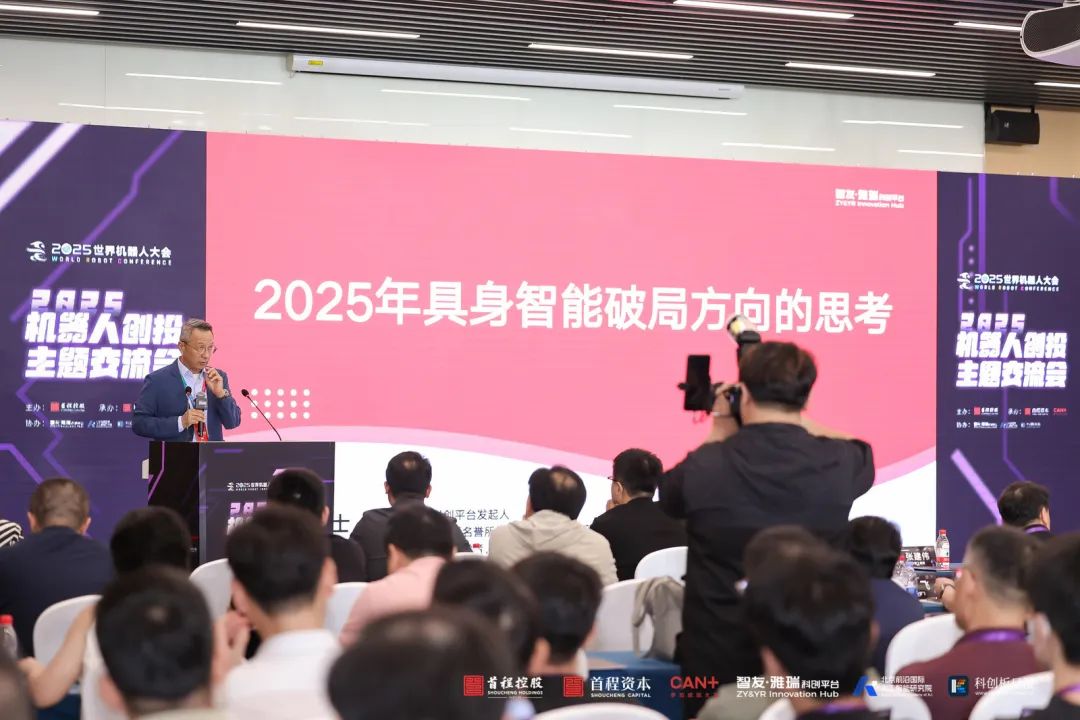
作者:富充 编辑:苏建勋 产业化落地,仍是当下具身智能领域最受关注的话题。 2025 年世界机器人大会期间,首程控股举办"2025机器人创投主题交流会"。智友·雅瑞科创平台发起人、北航机器人研究所名誉所长王田苗等学者及知名 投资人,围绕具身智能的研究与商业前景分享了观点。 智友·雅瑞科创平台发起人、北航机器人研究所名誉所长王田苗,图片:论坛提供 "我们认为,当前制约机器人产业发展的关键不在供应链,而在成熟应用场景的缺乏。短期内会更多使用'尚不聪明但稳定可用'的机器人产品。"首程控股 董事会办公室总经理康雨在接受36氪采访时表示。这一观察与王田苗的判断相互印证。 在康雨看来,严肃工业的落地往往是"点状突破",一旦通用性和方案能力成熟,便有望催生明星企业。产业趋势上,今年"小脑"(运动控制)更趋成熟, 本体企业加快出货;而"大脑"(具身智能)仍在快速进化中。 首程控股近年持续投资具身智能企业。2024 年,公司参与设立并管理规模 100 亿元人民币的"北京机器人产业发展投资基金",目前已布局宇树科技、银 河通用、加速进化等近 20 家具身智能企业。 关于 2025 年具身智能的产业"破局"方向,王田苗指出,下一个 ...

透过2025年 WRC,看见具身智能的真实进度
3 6 Ke· 2025-08-12 10:44
Core Insights - The focus of humanoid robots has shifted from mere mobility to practical applications and deployment capabilities, with an emphasis on multi-robot collaboration and system integration [2][5][8] - The 2025 World Robot Conference showcases a significant change in the presentation logic, highlighting the ability of robots to be deployed in real-world scenarios rather than just demonstrating their capabilities [8][9] Group 1: Technological Advancements - The integration of multi-modal large models and embodied intelligence has significantly improved the stability of robots in perception, understanding, and execution [6] - The decline in hardware costs and the increased penetration of domestic components have made it possible for more products to be defined as SKUs and deployed in bulk [6][21] - Robots are now capable of receiving vague semantic instructions and autonomously completing tasks such as grasping and transporting, indicating progress from laboratory testing to pilot operations [20][22] Group 2: Market Trends - The number of participating companies and the focus on usable and replicable products have increased compared to 2024, with manufacturing, medical, and service industries becoming key areas for deployment [5][6] - The shift from showcasing technology to discussing pricing, delivery cycles, and maintenance mechanisms reflects the industry's movement towards commercialization and practical application [18][19] - The emergence of a clear mechanism for "scene + policy + enterprise linkage" has facilitated the testing and implementation of robots in various local settings [24][26] Group 3: Industry Applications - Humanoid robots are now being demonstrated in near-real work scenarios, performing tasks such as material handling and collaborative operations, moving away from being mere prototypes [9][11] - Service robots have become more focused on high-frequency, stable, and sustainable scenarios, such as retail and indoor delivery, indicating a shift towards practical applications [14][15] - The medical and rehabilitation robot sector is showing trends towards systematization and platformization, with robots being deployed in real healthcare settings [17] Group 4: Future Challenges - The next phase of robot deployment will focus on deepening scene penetration and maturing business models and operational systems [27][28] - Reliability issues remain a concern, as robots may face challenges in real-world environments due to factors like lighting and temperature [30] - The integration costs associated with seamlessly connecting robots to existing systems like WMS and MES can hinder deployment speed and scalability [31]

人形机器人行业快评报告:世界机器人大会于北京亦庄开幕
Wanlian Securities· 2025-08-12 09:35
Investment Rating - The industry investment rating is "Outperform the Market," indicating an expected relative increase of over 10% in the industry index compared to the broader market within the next six months [7]. Core Insights - The World Robot Conference held in Beijing marks a significant milestone for the humanoid robot industry, showcasing over 1,500 exhibits from more than 200 domestic and international companies, with over 100 new products launched [2]. - The conference theme emphasizes making robots smarter and more capable, reflecting a shift from conceptual demonstrations to practical applications in real-world scenarios [2]. - The humanoid robot industry is expected to enter a phase of mass production in 2025, with China poised to lead globally due to advantages in supply chain cost reduction and innovative applications [3]. - Key challenges include insufficient AI generalization capabilities, high costs of training real-world data, and a gap between consumer price expectations and current costs [3]. - The next 3-5 years are seen as a critical window for scaling up production, particularly in industrial applications, while household adoption will depend on breakthroughs in general AI and cost reductions [3]. Summary by Sections Event Overview - The World Robot Conference opened on August 8, 2025, in Beijing, showcasing advancements in humanoid robotics [1]. Investment Highlights - The conference highlighted a transition from "conceptual showcases" to practical scenario validations, with significant orders received by companies like UBTECH and ZhiYuan, validating the feasibility of humanoid robots in industrial tasks [2]. - Major investments from giants like JD.com and Meituan are driving the development of embodied intelligence, facilitating the penetration of technology into logistics, healthcare, and commercial services [2]. Industry Challenges - The humanoid robot industry faces three main challenges: inadequate AI capabilities, high training costs for real-world data, and a disparity between consumer price expectations and current production costs [3]. Future Outlook - The report suggests that the acceleration of the humanoid robot industry, along with breakthroughs in domestic core components, will be key investment themes moving forward [3].
我们去全球首家机器人4S店看了看
财联社· 2025-08-12 08:35
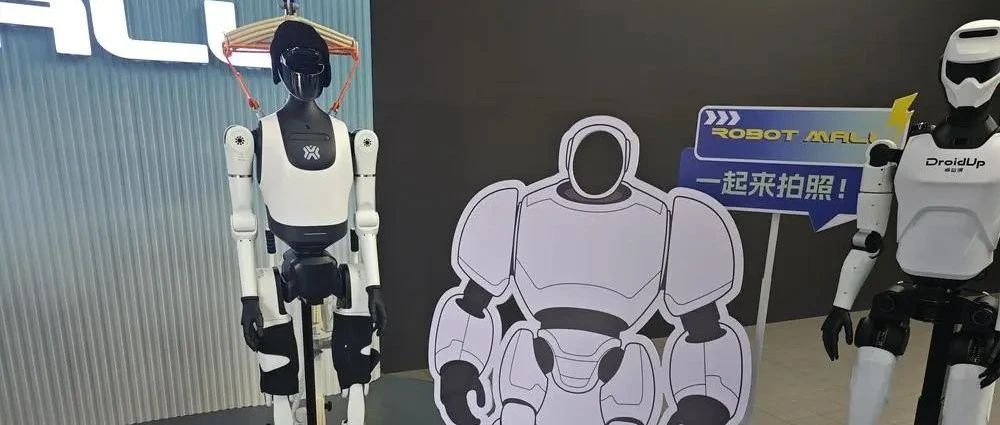
Core Viewpoint - The opening of the world's first humanoid robot 4S store in Beijing signifies a growing market for robotics and artificial intelligence, providing a platform for consumers to purchase, service, and experience various types of robots [2][21]. Group 1: Store Overview - The Robot Mall spans 4,000 square meters and features four distinct areas: Intelligent Manufacturing Selection Area, Future Interaction Area, Smart Maintenance Area, and Exclusive Consensus Area [6]. - The store showcases products from over 40 domestic robot manufacturers, totaling 50 different types of robots, categorized into five functional areas: humanoid robots, industrial applications, health care, home services, and interactive experiences [11]. Group 2: Product Offerings - The price range for robots varies widely, from several thousand yuan to several million yuan, with affordable desktop AI robots being the current sales leaders, priced between 300 to 3,500 yuan after discounts [12][14]. - Educational companion robots are priced between a few thousand to ten thousand yuan, with specific models like the "Wukong" priced at 3,820 yuan [13]. Group 3: Sales and Distribution - For personal purchases, robots are delivered directly from the warehouse, while corporate purchases involve signing a sales contract and arranging for production and delivery [20]. - The store aims to address the pain points of robot companies in transitioning from technology development to practical application, acting as a bridge between manufacturers and consumers [21]. Group 4: Future Plans - The 2.0 version of the robot 4S store is set to open in November, promising an immersive experience and accommodating more enterprises compared to the current version [20].
机器人能跑能跳能搏击,为何仍陷“成长烦恼”?
Di Yi Cai Jing· 2025-08-12 07:59
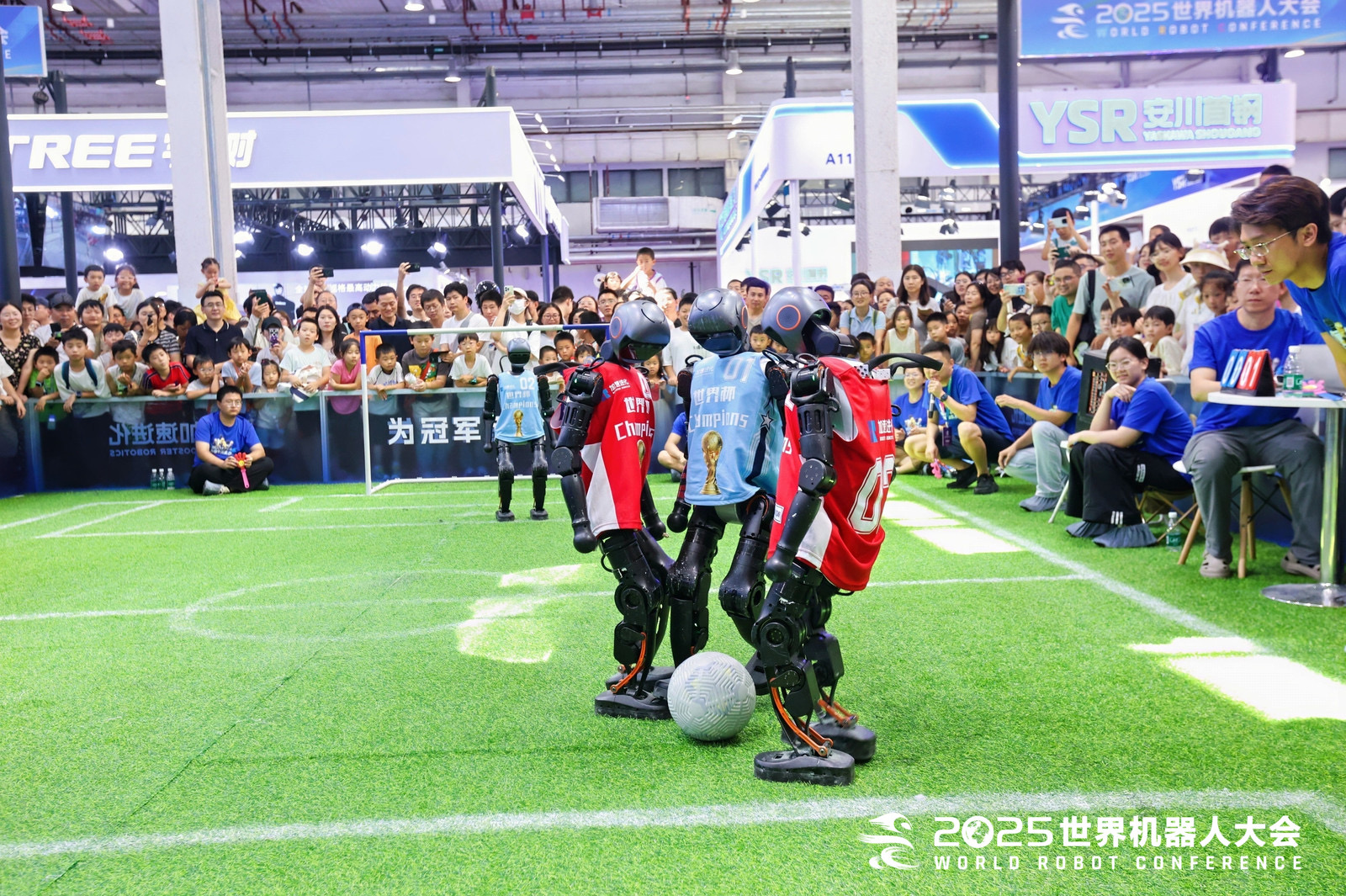
宇树科技CEO王兴兴在2025世界机器人大会(WRC)论坛上发表完对VLA(视觉-语言-动作)路线的质疑观点后,多位模型厂商代表在台下表达了不同看 法,"这个观点不对,核心还是机器人本身不行,大脑没有问题。" 2025年的WRC大会相较往年的不同点,除了更多的具身厂商莅临参展,更多的机器人产品能跑、能跳,还有很多AI大模型厂商与互联网厂商代表来到现 场。 在国家地方共建人形机器人创新中心(简称"创新中心")首席科学家江磊观察来看,虽然今年有AI厂商参与,但在行业发展层面,具身厂商与大模型厂商之 间尚未形成联动效应。而对VLA技术路线、软硬件关系、数据获取方式的不同看法,也折射出目前具身智能复杂产业链背景下,不同技术路线之间的关 系。 具身每个场景都建立了一套独立系统,这样的硬件堆砌方式无法带来最终的智能进化,只会带来商业牢笼。 热闹表象下的多项挑战 据国际数据公司(IDC)报告,在国家政策引导下,中国人形机器人行业正通过"应用验证—技术突破"的双向循环模式加速发展,吸引多元化厂商积极入 局,市场整体呈现出强劲增长态势。2024年,中国人形机器人商用销售出货量约为两千台,预计到2030年近六万台,复合增长率达9 ...

世界机器人大会洞察:机器人智能化进阶,应用场景持续拓展
Bei Ke Cai Jing· 2025-08-12 06:25
Core Insights - The 2025 World Robot Conference (WRC) held in Beijing focuses on enhancing robot intelligence and physical capabilities, highlighting the growing importance of humanoid robots in various sectors such as manufacturing, logistics, security, and healthcare [1][4][12] - The conference showcases advancements in embodied intelligence and the commercialization of humanoid robots, with companies emphasizing the need for suitable application scenarios to integrate technology and products effectively [4][11] Industry Trends - The application scenarios for humanoid robots are expanding, with companies like Zhiyuan and Qingbao Robotics demonstrating various robots capable of performing tasks in simulated environments, indicating a shift towards practical applications [4][5][10] - The market demand is evolving from experimental research to practical implementation, with a focus on robots solving specific industry pain points and adapting to complex environments [11][12] Technological Developments - Significant advancements in humanoid robot capabilities were showcased, including improved interaction features such as facial expressions and tactile sensing, which enhance user engagement [10][11] - Companies are addressing challenges such as battery life and operational stability, with innovations like automatic battery swapping and enhanced durability being introduced to improve robot reliability [10][11] Investment and Financing - Investment activity in the robotics sector is robust, with companies like Zhongqing Robotics securing nearly 1 billion yuan in funding, indicating strong investor confidence in the industry's growth potential [4][5] Future Outlook - The future of humanoid robots is expected to evolve into a platform-level ecosystem, similar to the development of smartphone ecosystems, emphasizing the importance of supply chain capabilities and customer willingness to pay [12]
人形机器人将从“演员”变“同事”
21世纪经济报道· 2025-08-12 04:48
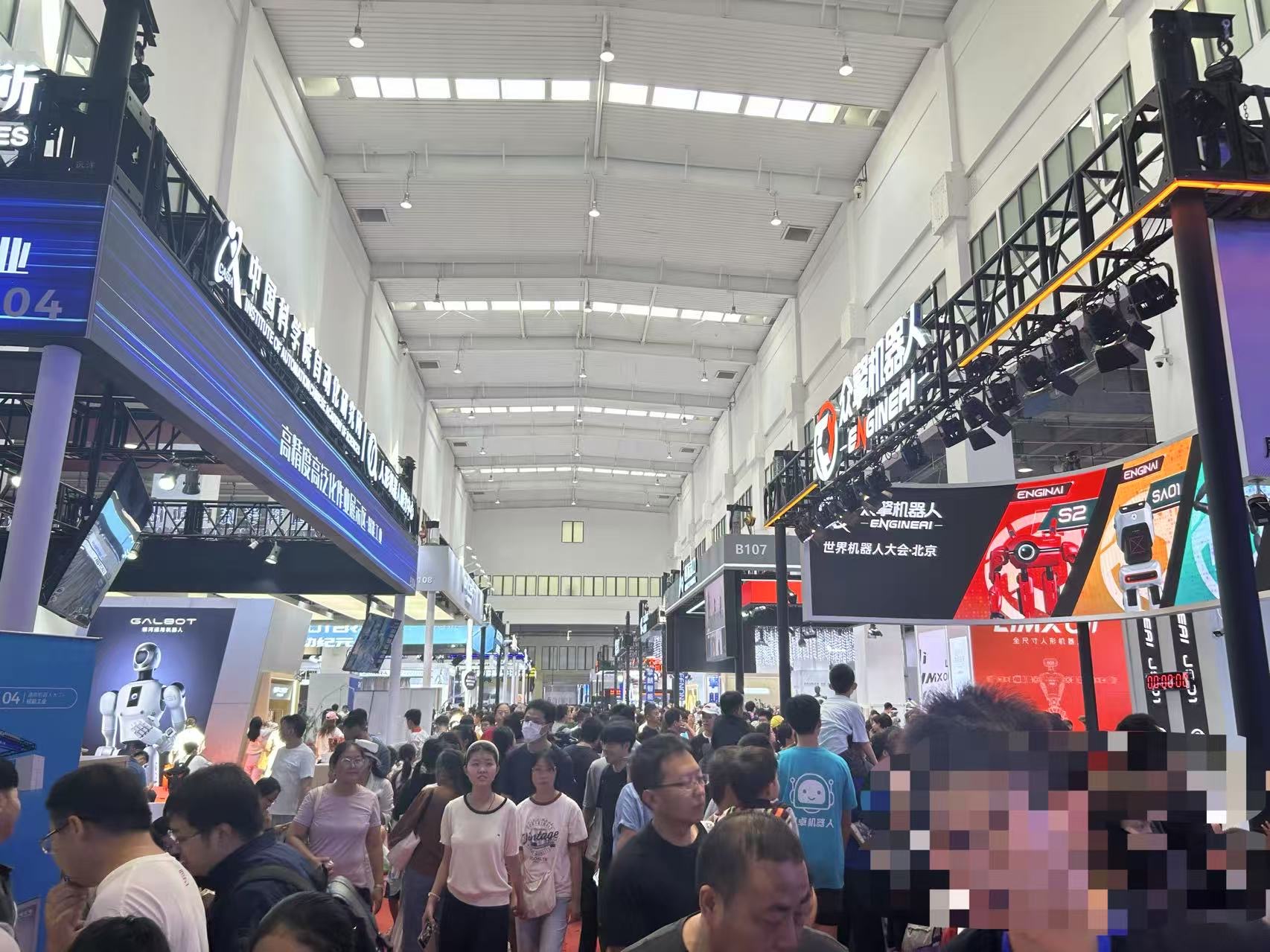
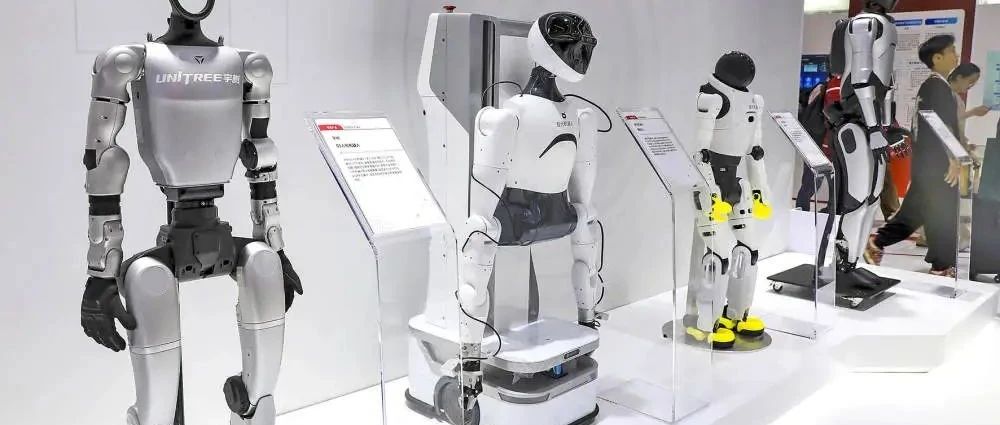
Core Insights - The 2024 World Robot Conference (WRC) showcased a significant increase in humanoid robots, with 27 models exhibited and over 200 participating companies, marking a substantial growth from the previous year [1][2] - The event attracted 1.3 million registered visitors, indicating a broad interest from various demographics, including industry professionals and the general public [2] - Many exhibitors emphasized the transition of robots from performance roles to practical applications in labor, aiming to enhance productivity [2][10] Group 1: Humanoid Robots and Performances - The main attractions at WRC included leading humanoid robot companies, with notable performances from robots like Yushutech's G1, which demonstrated advanced boxing skills and improved motion fluidity [4][6] - The event highlighted the evolution of robots from video demonstrations to live performances, showcasing their enhanced capabilities and stability [6][10] - Companies like ZhiJing and others displayed robots capable of complex movements, indicating advancements in robotic control and interaction [5][6] Group 2: Industrial Applications and Labor Potential - A growing number of exhibitors focused on demonstrating the labor potential of robots, with companies like UBTECH showcasing multiple models designed for various tasks, including sorting and guiding [8][10] - Robots with wheeled bases or AGVs were increasingly presented, emphasizing their stability and suitability for industrial applications [9][10] - The ultimate goal for many companies is to integrate humanoid robots into factory settings, with aspirations for them to perform household tasks in the future [10][12] Group 3: Commercialization and Market Expansion - The commercialization of service robots is progressing, with companies like Yunji and Qinglang showcasing their successful implementations in hospitality and other sectors [12][14] - Despite advancements, many humanoid robots still face challenges in versatility and adaptability to complex tasks, limiting their current applications [12][14] - The industry is exploring the integration of embodied intelligence and multimodal AI to enhance robot capabilities, with several companies presenting their developments in this area [13][14]
英伟达高层与王兴兴、王鹤罕见同框,深聊人形机器人的“命门”与“钱途”
3 6 Ke· 2025-08-12 04:15
Core Insights - The discussion during the World Robot Conference highlighted the challenges and opportunities in the commercialization of humanoid robots, emphasizing that cost is not the primary barrier to scaling [1][3][4] - Companies like NVIDIA, Yushu Technology, and Galaxy General are at the forefront of developing humanoid robots and AI solutions in China, leveraging their technological capabilities and partnerships [1][2][18] Group 1: Commercialization Challenges - The main challenge for humanoid robots is not cost but the speed and capability of deployment in factories [3][4] - Current limitations include the versatility of embodied intelligent models and the ability of robots to perform a wider range of tasks effectively [4][5] - A robust target recognition and positioning system is essential for unlocking the humanoid robot market, which is projected to reach a scale of hundreds of billions in the next five years [5][6] Group 2: Technological Advancements - NVIDIA is enhancing its computing capabilities with the Jetson Thor platform, which significantly improves performance metrics such as computational power and bandwidth [42][44] - The integration of simulation technology is crucial for training robots, allowing for the generation of synthetic data that enhances the learning process [33][34][56] - Galaxy General's robots are utilizing advanced models for navigation and object manipulation, showcasing the potential for real-world applications in retail and healthcare [54][55] Group 3: Market Potential - The humanoid robot market is expected to surpass the total value of industrial robotic arms, with projections indicating exponential growth in production and sales over the next decade [11][12] - China is positioned uniquely in the physical AI and robotics sector due to its scale, talent pool, and manufacturing capabilities, which support rapid development and deployment [19][20] Group 4: Future Applications - Humanoid robots are anticipated to find widespread applications across various sectors, including industrial, service, and household environments, although ethical and safety concerns may slow adoption in domestic settings [22][24] - The collaboration between companies like NVIDIA and local firms is essential for driving innovation and ensuring the successful integration of AI and robotics into everyday life [58][59]

物理AI如何变革机器人产业?英伟达与宇树、银河通用创始人闭门会全实录
3 6 Ke· 2025-08-12 03:22
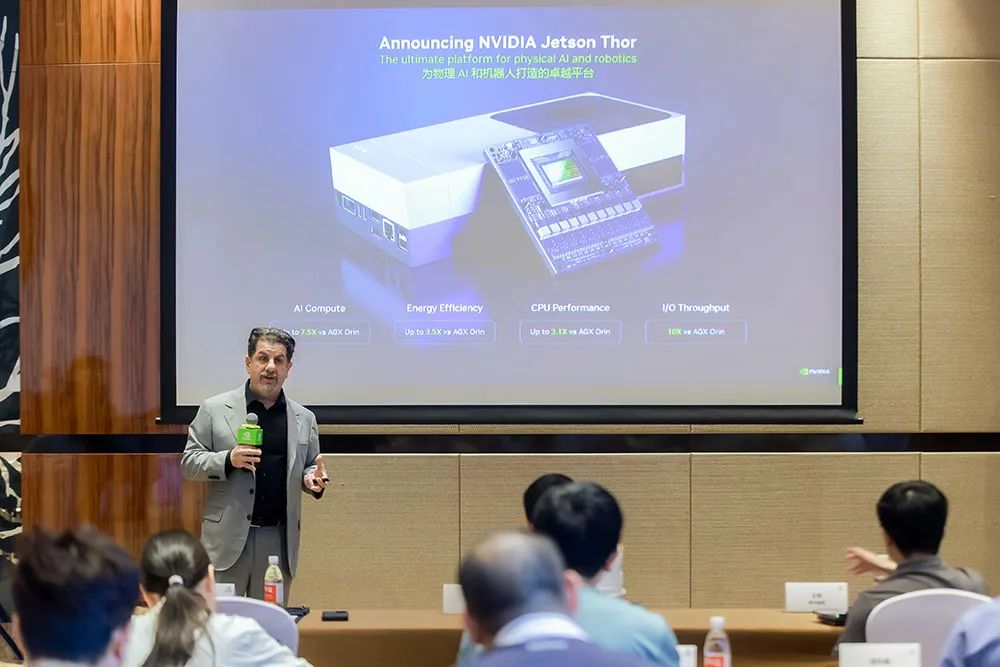
Group 1 - NVIDIA is actively developing "Physical AI," which aims to enhance the capabilities of robots and autonomous vehicles to interact with the real world, marking a revolutionary breakthrough in robotics [1][5] - The potential market for Physical AI is enormous, with estimates suggesting it could tap into a trillion-dollar physical economy, significantly larger than the $5 trillion IT industry [1][5] - NVIDIA's Rev Lebaredian highlighted China's unique advantages in the Physical AI and robotics sectors, including scale, talent, and manufacturing capabilities, which provide a solid foundation for rapid development [2][6] Group 2 - NVIDIA's Jetson Thor is a supercomputer designed for intelligent reasoning in the physical world, boasting performance improvements of up to 10 times compared to previous generations [7][12] - The Isaac platform integrates hardware and software necessary for robotics, including simulation tools and training frameworks, facilitating the development of robots capable of understanding and interacting with their environments [7][12] - The company emphasizes the importance of simulation in training robots, as it allows for safe and efficient testing of AI systems before deployment in real-world scenarios [28][32] Group 3 - The collaboration between NVIDIA and companies like Galaxy General and Yushu Technology aims to create general-purpose robots that could revolutionize various industries, potentially leading to a market worth trillions [18][19] - Galaxy General's robots utilize NVIDIA's Jetson Thor chip, showcasing advanced motion performance and real-time processing capabilities, which are crucial for effective navigation and task execution [19][20] - The development of synthetic data is seen as key to accelerating the deployment of embodied intelligence, with Galaxy General generating vast datasets to enhance the robustness and adaptability of their models [20][21] Group 4 - The future of robotics is expected to see significant advancements in humanoid robots, with projections indicating a market value exceeding 100 billion RMB within the next decade [43] - The industry faces challenges in achieving the versatility and practical application of embodied intelligence models, which are critical for the widespread commercialization of humanoid robots [45][46] - As technology progresses, the potential for robots to perform complex tasks in various environments, including industrial and domestic settings, is anticipated to grow, leading to increased adoption [46][47]

「宇树科技」王兴兴:推进合规、稳健的上市流程,VLA是一个相对傻瓜式的架构
Robot猎场备忘录· 2025-08-12 00:03
Core Viewpoints - The humanoid robot industry is currently in a stage where technology is not yet mature enough for large-scale, complex tasks, but the annual shipment of humanoid robots is expected to double, with potential breakthroughs leading to significant increases in output in the next 2-3 years [4][5][6] - The competition in the humanoid robot sector extends beyond products and markets to include founder interviews and public speaking engagements [4] - The race to complete an IPO is critical for companies like Yushu Technology and Zhiyuan Robotics, as being the first to go public can provide substantial funding support [5][6] Industry Insights - Hardware for humanoid robots is currently adequate but requires further improvement for larger scale, lower cost, and higher reliability [7] - The biggest challenge in the humanoid robot sector is the AI model rather than data, with a need for better model architecture to enhance performance [7] - The commercial viability of humanoid robots is questioned, as many companies focus on entertainment rather than practical applications [10][11] Company Strategies - Yushu Technology focuses on educational and research applications, while Zhiyuan Robotics and others emphasize strong AI capabilities [10][11] - The commercial logic for Yushu Technology involves leveraging impressive robotic performances and low pricing to quickly secure orders, but sustainability remains a concern [10][15] - The software-focused companies often announce high revenue figures but lack transparency regarding order numbers and actual product deliveries [11] Market Dynamics - The humanoid robot market is characterized by a divide between "hardware-focused" companies like Yushu Technology and "software-focused" companies like Zhiyuan Robotics, leading to different commercialization strategies [10][12] - The current trend shows that many humanoid robot startups are struggling with effective commercialization and face challenges in scaling production and real-world application [12][15] - The industry is witnessing a shift towards self-developed foundational models, with leading startups like Figure AI taking the lead [13]