新大陆

Search documents
政策推动加生态适配-数币有望加速发展-数字人民币专题
2025-12-29 15:51
政策推动加生态适配,数币有望加速发展 - 数字人民币专 题 20251229 摘要 数字人民币从央行负债转为商业银行负债,并纳入准备金和存款保险, 旨在应对金融脱媒风险,保证宏观调控有效性,并赋予商业银行在运营、 流通及反洗钱等方面的收益机会,如余额付息和资产负债管理。 商业银行将更有动力推广数字人民币,因其可通过数码钱包余额赚取息 差并进行资产负债管理,拓展业务空间,提升用户使用意愿,同时增强 现有金融体系的兼容性和跨境合作适配性。非银支付机构仍执行 100% 准备金制度。 数字人民币发展旨在维护货币主权和稳定金融体系,应对加密货币冲击。 中国具备推行能力和意愿,通过提升跨境支付效率、降低成本推进人民 币国际化,而美国因可能削弱美元地位及缺乏健全支付体系而转向稳定 币。 数字人民币采用双层架构,央行负责发行,商业银行及运营机构(如支 付宝、微信)负责流通及支付业务,包括合规监管、钱包建设和支付体 系搭建。商业银行通过推广数字人民币可获得息差收入。 Q&A 中国人民银行最新发布的数字人民币行动方案主要解决哪些问题? 最新的数字人民币行动方案主要解决四个问题。首先,针对新兴货币类支付工 具对央行货币体系的冲击, ...
数字人民币应用场景持续丰富 部分概念股备受机构资金青睐
Xin Lang Cai Jing· 2025-12-29 10:32
Core Insights - The application scenarios for digital RMB are continuously expanding, moving from personal consumption to broader fields such as industrial finance, cross-border trade, and public services [1] Group 1: Digital RMB Development - The "14th Five-Year Plan" suggests a steady development of digital RMB [1] - A total of 64 A-share companies are involved in digital RMB-related businesses, with the computer industry having the highest representation at 43 companies [1] - The communication industry has 6 companies, while the non-bank financial and electronics industries each have 3 companies [1] Group 2: Institutional Investment - Some digital RMB concept stocks are favored by institutional investors, with 8 stocks being heavily held by social security funds or pension funds as of the end of Q3 [1] - The total market value of these holdings amounts to 2.939 billion yuan [1] - Notable new heavy holdings include companies like Unisplendour, Newland, StarNet, and Zhongke Jin Cai, while Newland and Guotou Intelligent have seen an increase in shareholding compared to the previous period [1]

新大陆涨2.07%,成交额2.15亿元,主力资金净流入136.75万元
Xin Lang Cai Jing· 2025-12-29 05:37
Core Viewpoint - Newland Technology Co., Ltd. has shown a significant increase in stock price and financial performance, indicating potential growth in the technology sector, particularly in digital payment and information recognition products [1][2]. Group 1: Stock Performance - On December 29, Newland's stock rose by 2.07%, reaching 27.06 CNY per share, with a trading volume of 215 million CNY and a turnover rate of 0.80%, resulting in a total market capitalization of 27.414 billion CNY [1]. - Year-to-date, Newland's stock price has increased by 37.11%, with a 3.01% rise over the last five trading days and a 4.97% increase over the last 20 days, although it has decreased by 3.43% over the last 60 days [1]. - The company has appeared on the "Dragon and Tiger List" twice this year, with the most recent instance on May 12, where it recorded a net purchase of 53.6706 million CNY [1]. Group 2: Financial Performance - For the period from January to September 2025, Newland achieved a revenue of 5.987 billion CNY, reflecting a year-on-year growth of 15.17%, and a net profit attributable to shareholders of 918 million CNY, up by 12.15% [2]. - Since its A-share listing, Newland has distributed a total of 2.694 billion CNY in dividends, with 1.062 billion CNY distributed over the past three years [2]. Group 3: Shareholder and Institutional Holdings - As of November 28, Newland had 67,400 shareholders, a decrease of 4.42% from the previous period, with an average of 14,953 circulating shares per shareholder, an increase of 4.63% [2]. - As of September 30, 2025, Hong Kong Central Clearing Limited was the second-largest circulating shareholder, holding 34.9898 million shares, an increase of 10.6021 million shares from the previous period [2].

融资客4.4亿力挺!金融科技ETF(159851)右侧三连阳,行情要启动?
Xin Lang Cai Jing· 2025-12-28 11:30
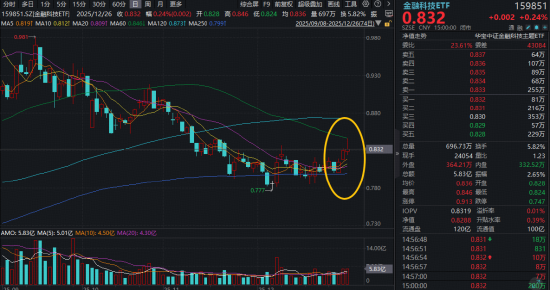
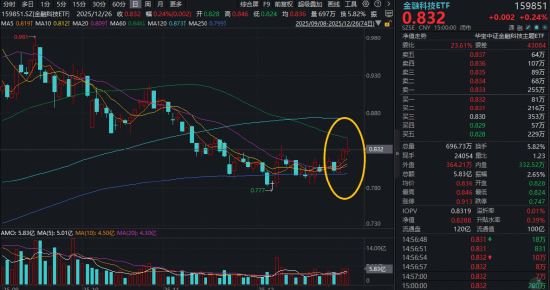
Core Viewpoint - The financial technology sector is experiencing a mix of performance, with internet brokerages and financial IT companies showing strength, while cross-border payment stocks are declining. The financial technology ETF (159851) has shown signs of bullish reversal, indicating potential growth opportunities in the sector [1][8]. Market Performance - On December 26, the financial technology sector saw a slight increase, with mixed performance among constituent stocks. Internet brokerages and financial IT companies, such as Guoao Technology and Electronic Science Digital, led gains of over 5%, while cross-border payment stocks like Zhongyi Technology fell by more than 3% [1][8]. - The financial technology ETF (159851) experienced fluctuations, initially rising nearly 2% before closing up 0.24% with a total trading volume of 583 million yuan. Technical analysis suggests it may have broken out of a consolidation phase, signaling a bullish trend [1][8]. Funding Analysis - As of December 23, the financing balance for the financial technology ETF (159851) exceeded 440 million yuan, marking a historical high and indicating strong bullish sentiment among investors [3][10]. Future Market Outlook - The financial technology sector is poised for positive developments due to several factors. The A-share market has reached a record trading volume of over 400 trillion yuan, which is expected to benefit internet brokerages in terms of performance release in 2025 and 2026 [5][12]. - AI is becoming a core driver in the financial sector, enhancing product value and industry barriers through applications like smart investment advisory and big data risk control. This trend is expected to create new growth opportunities for leading financial IT firms [5][12]. - Current valuations in the financial technology sector have adjusted to near six-month lows, providing a safety margin for investors. The sector's low valuation combined with high market activity expectations and AI integration presents a timely opportunity for investment [6][13]. Investment Recommendations - Investors are encouraged to focus on the financial technology ETF (159851) and its associated funds, which cover a broad range of themes including internet brokerages, financial IT, cross-border payments, and AI applications. The ETF has demonstrated superior liquidity compared to its peers, averaging 800 million yuan in daily trading volume over the past six months [6][13].

第三方支付“进与退”
Guo Ji Jin Rong Bao· 2025-12-26 16:20
Group 1 - The payment industry is entering a long-term licensing era by 2025, with a shift towards a focus on financial infrastructure attributes, leading to a more regulated environment where capital strength, corporate governance, and compliance capabilities are critical for payment institutions [1] - The domestic third-party payment industry has reached a peak in overall growth, with both transaction scale and user frequency entering a plateau phase, resulting in a shift from incremental expansion to stock competition [1] - By 2026, the number of payment licenses is expected to continue to decline slowly, with smaller institutions lacking sustainable business models likely to exit the market [1] Group 2 - As of December 26, 11 payment licenses have been revoked this year, totaling 107 licenses since the inception of the licensing system, leaving 164 licensed payment institutions [2] - The People's Bank of China has been actively revoking licenses, with a notable increase in the number of revocations from 2015 to 2024, indicating ongoing structural adjustments within the third-party payment sector [2][3] - The pressure for structural adjustment is particularly focused on prepaid card institutions, which face shrinking application scenarios and rising compliance costs [3] Group 3 - Internet platforms are increasingly acquiring payment licenses as they recognize the importance of payment systems in building commercial ecosystems and reducing transaction costs [4][6] - Companies like Xiaohongshu and Tongcheng Group have recently acquired payment licenses, indicating a trend of internet firms consolidating payment capabilities [5][6] - The acquisition of payment licenses is seen as a strategic move to enhance compliance and facilitate future growth in e-commerce and financial services [6] Group 4 - Cross-border payment is emerging as a new growth area for payment institutions, with several players obtaining domestic payment licenses to facilitate international transactions [7][8] - Companies like Newland and Lakala have reported significant growth in cross-border payment volumes, indicating a shift in focus towards international markets [8] - Smaller institutions are expected to emphasize local compliance and operational capabilities in their overseas expansions, rather than merely replicating domestic models [9]
第三方支付“进与退”|回顾展望
Guo Ji Jin Rong Bao· 2025-12-26 16:00
Industry Overview - The payment industry is entering a long-term licensing era by 2025, with a focus on its financial infrastructure attributes, shifting regulatory emphasis from cyclical reviews to institutionalized governance [1] - The domestic third-party payment industry has reached a peak in overall growth, with both transaction scale and user frequency entering a plateau phase, leading to a shift from incremental expansion to stock competition [1] - The number of payment licenses is expected to decline slowly in 2026, with smaller payment institutions lacking sustainable operational capabilities likely to exit the market [1] License Cancellation - As of December 26, 2023, the central bank has disclosed the cancellation of 11 payment licenses this year, totaling 107 licenses since the first issuance in May 2011, leaving 164 licensed payment institutions [2] - The cancellation trend has been consistent, with annual license cancellations varying from 1 to 23 over the past years [2] Structural Adjustments - The pressure to reduce the number of payment institutions may extend to bank card acquiring licenses, with many institutions lacking technical or merchant service capabilities facing limited survival space [3] - The focus of market clearing pressure is primarily on prepaid card institutions, which are experiencing a contraction in application scenarios and facing rising compliance and operational costs [3] Internet Platforms Acquiring Licenses - Internet platforms are increasingly acquiring payment licenses as they view them as essential infrastructure for building commercial ecosystems, reducing payment channel costs, and enhancing user data for future financial services [4][7] - Companies like Xiaohongshu, Tongcheng Group, and 58.com have recently acquired payment licenses to strengthen their market positions [6] Cross-Border Payment Opportunities - Cross-border payments are becoming a new focal point for growth in the domestic third-party payment market, with various players obtaining payment licenses in China [8] - Companies like Payoneer and PingPong have successfully acquired overseas licenses, indicating a trend towards international expansion [9][10] - The cross-border payment sector is expected to be a significant growth engine for many payment institutions, with substantial increases in transaction volumes reported [9][10] Future Directions - By 2026, the focus on international expansion will continue, but companies will need to adjust their strategies to include local compliance and partnerships with local wallets or banks [11] - Smaller institutions are encouraged to focus on niche markets such as cross-border education payments and overseas remittances rather than broad expansion [11]
金融科技右侧三连阳,融资客成看多主力,什么信号?
Sou Hu Cai Jing· 2025-12-26 11:41
Core Viewpoint - The financial technology sector is experiencing a mixed performance with significant movements in various stocks, driven by positive market trends and technological advancements in AI [1][5]. Group 1: Market Performance - On December 26, the financial technology sector saw a slight increase, with mixed results among constituent stocks; internet brokerages and financial IT companies performed well, while cross-border payment stocks declined [1]. - The financial technology ETF (159851) showed volatility, initially rising nearly 2% before closing up 0.24%, with a total trading volume of 583 million yuan [1]. - The financing balance for the financial technology ETF reached a record high of 440 million yuan on December 23, indicating strong bullish sentiment among investors [3]. Group 2: Catalysts for Growth - The A-share market has achieved a historic high in trading volume, exceeding 400 trillion yuan, which is expected to benefit internet brokerages in terms of performance release in 2025 and 2026 [5][6]. - AI is becoming a core driver in the financial sector, enhancing product value and industry barriers through applications like smart investment advisory and big data risk control [5][6]. - The current valuation of the financial technology sector has significantly decreased, providing a safety margin for investors, making it an opportune time for low-position investments [5][6]. Group 3: Investment Recommendations - Investors are advised to focus on the financial technology ETF (159851) and its associated funds, which cover a wide range of themes including internet brokerages, financial IT, cross-border payments, and AI applications [6]. - The financial technology ETF has demonstrated superior liquidity, averaging 800 million yuan in daily trading over the past six months, leading among similar ETFs [6].
扩大人民币跨境使用,数字人民币迎发展新机遇
国泰海通· 2025-12-26 07:16
Investment Rating - The report assigns an "Accumulate" rating for the industry [1] Core Insights - The People's Bank of China and eight other departments have issued opinions to enhance financial support for the construction of the Western Land-Sea New Corridor, which will optimize the cross-border trade settlement system and further expand the use of the Renminbi [2][4] - The report emphasizes the importance of the Western Land-Sea New Corridor as a significant international logistics channel, connecting the Silk Road Economic Belt and the 21st Century Maritime Silk Road, which will facilitate the expansion of Renminbi usage [4] - Digital Renminbi is expected to see new development opportunities, leveraging its advantages in payment and settlement, and exploring its application in various scenarios [4] Summary by Sections Financial Support Measures - The report outlines 21 key measures aimed at improving the financial organization collaboration system, constructing a high-quality capital circulation system, and enhancing cross-border financial regulatory cooperation [4] Cross-Border Trade Settlement - The report supports banks in facilitating compliant trade settlements for quality enterprises and encourages the use of Renminbi in cross-border transactions, particularly with Southeast Asia and Central Asia [4] Digital Renminbi Development - The report highlights the potential for digital Renminbi to create innovative solutions through smart contracts and expand its cross-border application [4] Investment Recommendations - The report suggests focusing on related industry chains such as banking IT systems, payment ecosystems, and financial infrastructure, recommending specific companies for investment [4][5]
自行修复量子计算机问世!计算机ETF(159998)实时净申购1680万份,科创综指ETF天弘(589860)跟踪指数涨超1%冲击五连涨
Sou Hu Cai Jing· 2025-12-25 06:40
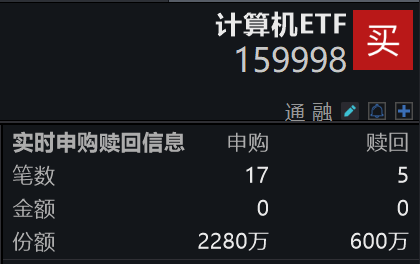
Group 1 - The Computer ETF (159998) has seen a turnover of 4.32% with a transaction volume of 97.6068 million yuan, while the tracked CSI Computer Theme Index (930651) increased by 0.66% [1] - Notable stocks within the Computer ETF include Zhongke Xingtu (688568) up by 6.02%, Tongfang Co., Ltd. (600100) up by 3.93%, and Aerospace Information (600271) up by 3.60% [1] - The Computer ETF has received significant capital inflow with a net subscription of 16.8 million units [1] Group 2 - Over the past year, the Computer ETF (159998) has grown by 12 million yuan, indicating substantial growth [3] - The Tianhong Sci-Tech Index ETF (589860) has a turnover of 8.9% with a transaction volume of 27.2589 million yuan, while the tracked SSE Sci-Tech Innovation Board Composite Index (000680) has increased by over 1% [3] - Key stocks in the Tianhong Sci-Tech Index ETF include Sainuo Medical (688108) up by 18.62% and Zhenlei Technology (688270) up by 17.08% [3] Group 3 - The Computer ETF (159998) focuses on the hard technology sector, covering software, hardware, and cloud computing, aligning with trends in the digital economy and AI development [3] - The Tianhong Sci-Tech Index ETF (589860) closely tracks the Sci-Tech Innovation Index, featuring leading technology companies with strong brand advantages and research capabilities [3] Group 4 - A significant advancement in quantum computing has been reported with the introduction of a self-repairing neutral atom quantum computer by "Atomic Computing," overcoming atomic loss challenges [4] - An Australian startup, SQC, has developed a silicon-based atomic processor achieving stable connectivity of 11 quantum bits, marking a notable progress in quantum computing [5] - The quantum technology sector is prioritized in China's "14th Five-Year Plan," with expectations for the global quantum computing market to exceed 800 billion USD by 2035 [5]
旧地图找不到新大陆,新地图藏在小红书
Sou Hu Cai Jing· 2025-12-25 03:32
Core Insights - The article discusses the shift in business strategies from chasing short-term traffic to nurturing long-term user relationships, emphasizing the need for companies to adapt to changing consumer demands and market conditions [3][4][6][17]. Group 1: User Engagement and Retention - Companies are realizing that true growth comes from establishing deep connections with users rather than merely seeking traffic [5][6]. - Many brands face challenges such as misalignment between target and actual consumer demographics, regional barriers, and product functionality not matching real-life scenarios [5][6]. - Successful brands are focusing on user retention and building comprehensive user engagement strategies that span from initial contact to conversion and retention [6][9]. Group 2: Evolving Consumer Demands - The consumer landscape has evolved, with users now prioritizing emotional and experiential aspects over mere functionality and specifications [10][11]. - Brands must shift their focus from traditional parameter-based competition to understanding and addressing the nuanced needs of consumers [11][13]. - The case of Hisense illustrates how brands can leverage community insights to connect with specific user groups, such as gamers, by translating technical specifications into relatable experiences [11][13]. Group 3: Quality Over Scale - The article highlights a transition from a focus on rapid scale to a commitment to high-quality growth, where brands prioritize genuine consumer needs over mere sales volume [14][15][19]. - The example of the tomato brand "Yike Da" demonstrates how targeted marketing and community engagement can lead to sustainable growth without succumbing to price wars [15][19]. - Companies are encouraged to adopt a long-term perspective on growth, utilizing data-driven strategies to ensure that marketing efforts translate into real user value [17][18][19]. Group 4: Strategic Transformation - The concept of "effectiveness in grass planting" is introduced as a new business paradigm that emphasizes user-centric thinking and cross-departmental collaboration [20]. - Companies are urged to view user engagement as a core business strategy rather than a mere marketing tactic, fostering a holistic approach to growth [20]. - By understanding and addressing the deeper motivations behind consumer behavior, brands can create sustainable competitive advantages in a rapidly changing market [20].