Twilio Inc.

Search documents
Undervalued and Ignored: 1 Artificial Intelligence (AI) Stock With Room to Run
Yahoo Finance· 2025-09-18 09:09
Core Insights - Artificial intelligence (AI) stocks have shown significant gains recently due to the rapid adoption of AI technology, benefiting companies involved in AI-related hardware and software [1] - Some companies have not yet fully leveraged AI's potential, presenting investment opportunities, particularly for those that are positioned to benefit from AI-driven growth [2] Company Overview - Twilio (NYSE: TWLO) has underperformed the broader technology sector, with its stock down approximately 5.5% in 2025, while the Nasdaq Composite is up 15.7% [4] - The current price-to-sales ratio for Twilio is 3.4, which is a discount compared to the Nasdaq Composite's ratio of over 5 [4] - Twilio's forward earnings multiple stands at 19, which is attractive given its healthy growth rate [5] AI Integration and Market Potential - Twilio specializes in application programming interfaces (APIs) that facilitate various communication channels for businesses, and it is integrating AI tools into its offerings [5] - The company's APIs have transformed traditional contact centers, allowing customer service associates to operate remotely with just an internet connection and a computer [6] - Twilio's AI tools are enhancing customer support by automating functions, transcribing interactions for insights, providing real-time suggestions to agents, and personalizing customer communications [7] Growth Prospects - The cloud-based contact center market presents significant growth potential, and Twilio is strategically using AI to capitalize on this opportunity [8] - The company has reported solid results that indicate a healthy growth trajectory, supported by an expanding customer base and increased spending from existing customers [8]

高盛TMT大会:华尔街对AI“热情高涨”
美股IPO· 2025-09-13 13:10
Core Insights - The article highlights a significant divide in the tech industry driven by AI, with companies like Oracle experiencing a 359% increase in contract revenue due to AI partnerships, while traditional software firms face scrutiny over their AI monetization strategies [1][2][4]. Group 1: AI Impact on Companies - Oracle's stock surged due to a projected 359% increase in future contract revenue, largely attributed to its deal with OpenAI, showcasing the direct valuation impact of AI on the market [2][4]. - Companies directly involved in AI infrastructure, such as Nvidia and OpenAI, attracted significant investor interest, contrasting sharply with traditional software firms that struggled to demonstrate their AI capabilities [2][3]. - Investors are demanding clear monetization paths for AI from software companies, with a focus on how customers are utilizing AI features and whether they are willing to pay for them [3][5]. Group 2: AI Monetization Strategies - Google Cloud's Thomas Kurian reported that Google has already earned billions through AI, emphasizing the importance of clear AI monetization examples to investors [5]. - Twilio discussed its AI tools that enhance revenue through features like text-to-speech, indicating a growing trend among companies to showcase specific AI applications that drive income [5]. - Grindr's CEO highlighted how their AI features could generate potential matches for paid users, reflecting the ongoing exploration of AI's impact on business models within software companies [5][6]. Group 3: Data Infrastructure Companies - Companies like Databricks, Snowflake, and MongoDB are gaining investor favor as they provide essential support for AI infrastructure, managing the vast amounts of data generated by AI [6]. - The stock performance of data infrastructure companies has been strong, with Snowflake's stock up 43% and MongoDB's up 37% this year, indicating a robust market recognition of their value in the AI ecosystem [6]. - Databricks recently completed a $1 billion funding round and reported annualized revenue exceeding $1 billion from its AI products, underscoring the critical role of data processing capabilities in the AI era [6].



高盛TMT大会:华尔街对AI“热情高涨”
Hua Er Jie Jian Wen· 2025-09-13 11:38
Core Insights - The focus of the Goldman Sachs annual technology conference was on artificial intelligence (AI), highlighting a clear divide in the tech industry between companies at the forefront of AI infrastructure and those struggling to demonstrate their AI strategy's value [1][2][3] Group 1: AI Market Dynamics - Oracle's stock surged due to a projected 359% increase in future contract revenue, largely attributed to a deal with OpenAI, showcasing AI's direct impact on market valuations [1] - Nvidia and OpenAI's presentations were the most popular, indicating a strong investor interest in companies directly involved in AI, while presentations from Meta and Alphabet attracted less attention [1][2] Group 2: Investor Sentiment - Companies not directly involved in AI, particularly traditional software manufacturers, faced scrutiny from investors who demanded clear evidence of AI monetization capabilities [2][3] - High expectations were placed on software companies to quickly adapt their narratives to meet customer demands for AI integration [3] Group 3: AI Monetization Examples - Google Cloud's Thomas Kurian highlighted that Google has already earned billions through AI, emphasizing the market's desire for clear AI monetization cases [4] - Twilio reported significant annual revenues from AI startup clients, while Grindr's CEO discussed how new AI features could enhance subscription services [4][5] Group 4: Data Infrastructure Companies - Database companies like Databricks, Snowflake, and MongoDB received significant investor attention for their critical roles in supporting AI infrastructure and managing large volumes of data [5] - Snowflake's stock rose by 43% and MongoDB's by 37% this year, reflecting the market's recognition of data processing capabilities as essential assets in the AI era [5]
Analysts Love This Key AI Stock Trading at an ‘Inflection Point.’ Should You Buy Shares Here?
Yahoo Finance· 2025-09-11 20:15
Core Viewpoint - Twilio is experiencing a financial turnaround with accelerating revenue growth and improving margins, leading to renewed analyst interest and a "Buy" rating from Rosenblatt Securities with a target price of $140 [1][2]. Financial Performance - Twilio has seen a decade-long investment finally yielding results, with significant revenue growth, widening margins, and material free cash flow generation [2]. - The company's market capitalization is approximately $16 billion [3]. Stock Performance - Over the past 52 weeks, Twilio's share price rebounded from a low of $58.76 to a high of $151.95, currently settling around $103 as of September 11 [4]. - Despite the rebound, shares remain significantly lower than their pandemic-era highs, indicating greater volatility compared to the Nasdaq Composite Index [4]. Valuation Metrics - Twilio has a high trailing and forward price-to-earnings multiple of 77.54 and 63.78, respectively, which is considered expensive compared to most software peers, but is justified by the accelerating profitability growth [5]. - The price-to-sales multiple stands at 3.68, reflecting renewed confidence in revenue growth, while the price-to-cash flow multiple is 43.6, indicating a premium for free cash flow growth [5]. - The company maintains a manageable debt-to-equity ratio of 0.12, suggesting that debt levels are under control [5]. Business Strategy - Unlike more mature software companies, Twilio does not pay dividends, opting instead to reinvest profits for growth and higher margins [6].
招聘最猛的竟不是OpenAI,这家陷入间谍案的HR初创,正在狂招工程师
3 6 Ke· 2025-09-04 08:22
Group 1 - The U.S. tech job market has undergone significant changes since the launch of ChatGPT in November 2022, with some positions experiencing drastic declines while others remain in high demand [1] - The largest wave of layoffs in U.S. history began in 2023, impacting the IT job market, but hiring activities are gradually recovering, albeit with limited new positions [2] - The average tenure of software engineers at major tech companies has increased significantly, indicating a slowdown in hiring and a reluctance among employees to change jobs [6][80] Group 2 - The demand for AI engineers has surged since mid-2023, making it the hottest position in the tech industry, with a notable increase in job openings [29] - Major tech companies like Apple, IBM, and Amazon are leading in job openings, with Apple having the highest number at 2,177 positions [13] - Over half of the open positions are at senior levels, and there is a notable decrease in vacancies for senior engineers, prompting them to apply for lower-level positions [21][24] Group 3 - The San Francisco Bay Area remains the dominant hub for tech jobs, accounting for nearly 20% of global tech job openings, with a total of 9,072 positions [72][74] - The average tenure at major tech companies has increased by about two years over the past three years, reflecting a more stable workforce amid hiring slowdowns [80] - The trend of internal mobility among major tech firms is prevalent, with companies primarily hiring from each other, leading to longer tenures [85] Group 4 - Remote job opportunities have decreased, with the proportion of remote positions falling from 25% to 20% over the past year, although AI engineering roles still see a slight increase in remote opportunities [98][100] - The salary for remote positions has generally declined by 10-15%, as supply exceeds demand, making high-paying remote jobs a rare privilege [102]
美国知名风投 BVP 年度 AI 报告:Memory 和 Context 将是新的护城河
Founder Park· 2025-08-19 13:40
Core Insights - Bessemer Venture Partners released a report titled "The State of AI 2025," analyzing 20 high-growth AI startups and summarizing the current state and future trends in AI entrepreneurship [2][11]. Group 1: Current State of AI - The current landscape of AI has both positive and negative aspects, with increased competition in browser technology and the emergence of video generation as a key area for development [3][12]. - Chinese AI companies have become significant players in the open-source domain, indicating a shift in the competitive landscape [4]. Group 2: AI Startup Characteristics - The report identifies two types of AI startups: "Supernovas," which achieve rapid growth, and "Shooting Stars," which follow a more stable growth path [15][18]. - Supernovas typically reach an ARR of $40 million in their first year and $125 million in their second year, with gross margins around 25% [16]. - Shooting Stars have a more gradual growth trajectory, with an ARR of $3 million in the first year and $12 million in the second year, achieving gross margins of 60% [16]. Group 3: Future Trends in AI - The AI industry is expected to shift from merely proving AI's problem-solving capabilities to building systems that define, measure, and solve problems through experience and clarity [30]. - Memory and context are becoming critical components of AI applications, with companies that can integrate these elements likely to lead in the next generation of AI systems [40][44]. - The adoption of vertical AI is accelerating, particularly in industries traditionally resistant to technology, such as healthcare and legal services [42][43]. Group 4: Predictions for 2025 - The report predicts that browsers will evolve into core interfaces for Agentic AI, enabling more sophisticated interactions and automation [56][58]. - 2026 is anticipated to be a pivotal year for generative video technology, with significant advancements expected in quality and accessibility [61][62]. - AI evaluation methods will transition towards privatization and contextualization, driving a tenfold increase in enterprise AI deployment [67][68]. Group 5: Challenges and Opportunities - Despite the rapid growth in AI, challenges remain, including the need for effective evaluation frameworks and the integration of AI into existing workflows [66][70]. - The report highlights the importance of addressing consumer pain points and the potential for AI to transform various sectors, including education, real estate, and mental health [46][51].



What Are the 2 Top Artificial Intelligence (AI) Stocks to Buy Right Now?
The Motley Fool· 2025-08-15 17:19
Group 1: AI Market Overview - Significant investment in AI hardware and software is occurring globally as organizations and governments seek efficiency and productivity gains [1][2] - Gartner forecasts a 76% increase in generative AI spending by 2025, reaching $644 billion, indicating a robust growth opportunity in the sector [2] Group 2: Taiwan Semiconductor Manufacturing (TSMC) - TSMC is a leading player in the AI revolution, manufacturing high-end chips for various devices, and is the largest third-party chip foundry globally [4] - TSMC's revenue increased by 38% year-over-year in the first seven months of 2025, driven by strong demand from major clients like Nvidia, Apple, AMD, and Broadcom [5] - The company raised its 2025 revenue growth guidance to 30%, up from mid-20% expectations, with potential for further growth due to AI-related catalysts [6] - Sales of generative AI-capable smartphones are expected to rise by 68% in 2025, benefiting TSMC's largest customer, Apple, which reported a 13.5% increase in iPhone revenue [7] - TSMC's diverse customer base and focus on advanced chip packaging position it for healthy double-digit revenue growth in the coming years [9][11] - The stock is currently trading at an attractive valuation of 24 times forward earnings, below the Nasdaq-100 index's multiple of 30, making it a potentially good investment [12] Group 3: Twilio - Twilio is experiencing growth due to increased spending on generative AI services and software, with Gartner estimating a 119% rise to nearly $65 billion by 2025 [13] - The company's APIs facilitate customer communication across various channels, and its AI tools enhance customer service and marketing efforts [14] - Twilio reported a 57% year-over-year increase in large communications deals and a 10% rise in active customer accounts [15] - The dollar-based net expansion rate improved by 5 percentage points to 108%, indicating increased spending from existing customers [16] - Twilio's organic revenue growth estimate for 2025 has been raised by 1.5 percentage points, reflecting a positive growth outlook [16] - The stock is trading at 3 times sales, slightly below the S&P 500's sales multiple, presenting a favorable investment opportunity [19]


OPEN's August Rally Fueled by Meme-Stock Mania and Investor Backing
ZACKS· 2025-08-14 13:06
Core Insights - Opendoor Technologies Inc.'s stock surged 31.5% in August due to renewed speculative enthusiasm and endorsements from high-profile investors [1][6] - The company has transitioned to an agent-led model, which has increased listing conversions fivefold and doubled customer engagement compared to its previous process [2] - Hedge fund manager Eric Jackson's announcement to join Opendoor's board and push out CEO Carrie Wheeler has intensified market speculation [3] Company Developments - The agent-led model was rolled out in Q2 2025, focusing on agent collaboration, improved tools, and training [2] - In July, Opendoor launched the Key Agent iOS app and Cash Plus, a hybrid product aimed at diversifying revenue and enhancing margin stability [2] - The stock has been highly volatile, with a peak gain of over 245% in July, followed by a decline of more than 40% after a second-quarter earnings miss [3] Market Performance - Year-to-date, Opendoor's stock has increased by 51.2%, contrasting with a 3.4% decline in its Zacks Peer Group [4] - Competitors Twilio Inc. and Toast, Inc. have seen declines of 5.9% and gains of 21.7%, respectively, during the same period [4] - The stock's performance has been characterized by sentiment-driven rallies and sharp corrections, indicating a speculative nature [5]


monday.com Q2: I'm Making This My Largest Software Holding
Seeking Alpha· 2025-08-12 14:43
Company Overview - monday.com Ltd. (NASDAQ: MNDY) is gaining market share, which has led to a positive rating of the stock as a Buy [1] Investment Strategy - The investment strategy of a boutique family office fund focuses on sustainable, growth-driven companies that aim to maximize shareholder equity [1] - The fund's objective is to meet growth-oriented goals while investing capital [1] Leadership and Expertise - Amrita, who leads the investment strategy for the family fund, has a background in high-growth supply-chain start-ups and venture capital [1] - Her experience includes maximizing returns for clients during the pandemic through effective user acquisition strategies [1] Financial Literacy - A cornerstone of the work is to democratize financial literacy and simplify complex macroeconomic concepts for better understanding [1] - The newsletter, The Pragmatic Optimist, has been recognized as a top finance newsletter, indicating a strong focus on portfolio strategy and valuation [1]


AI 产品定价指南
Hu Xiu· 2025-08-12 13:41
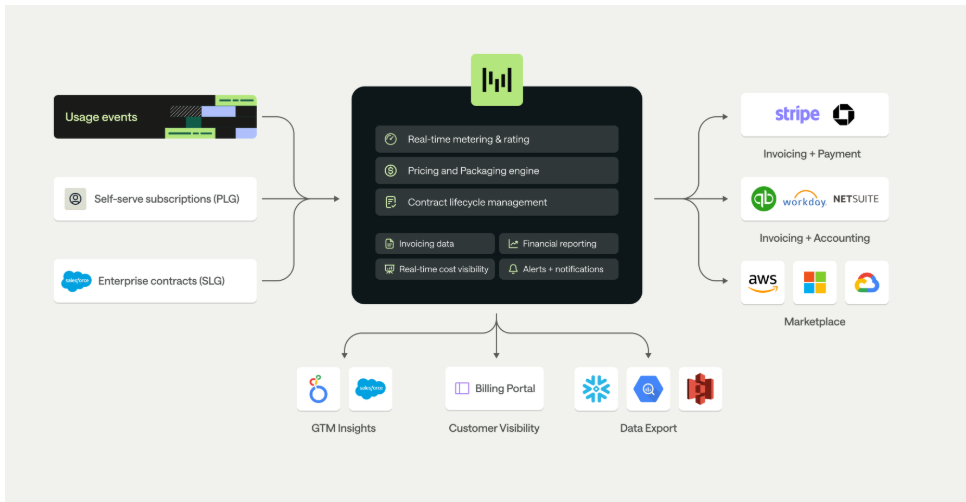
Group 1 - The core viewpoint of the article is that AI is fundamentally changing the pricing logic of software, moving from traditional seat-based pricing to usage-based or outcome-based pricing models [2][12][66] - AI enhances human efficiency, leading to a decrease in the number of software users, which challenges the traditional seat-based pricing model [12][15] - The implementation of usage-based pricing faces challenges such as the need for real-time billing systems, dynamic pricing models, and the retention of large-scale real data [2][18][21] Group 2 - CEOs need to focus on sales compensation structures and the division of sales responsibilities when transitioning to usage-based pricing [22][28] - The current trend among SaaS companies is to adopt a hybrid business model that combines both seat-based and usage-based pricing [15][16] - The pricing model for AI products can be analyzed based on attribution capability and autonomy, with stronger pricing power associated with high attribution and autonomy [42][46] Group 3 - The evolution of billing models has transitioned from on-premise software licenses to cloud-based seat subscriptions, and now to AI-driven value-based pricing [11][12] - Companies must continuously adapt and remain agile in their pricing strategies to capture value effectively [58][66] - The strategic significance of usage-based pricing is that it directly ties revenue to the value created for customers, allowing for a more flexible and responsive business model [22][66] Group 4 - The challenges of implementing usage-based pricing include the need for real-time monitoring of usage and the complexity of dynamic pricing models [18][21] - Companies must ensure that their financial teams evolve into real-time data hubs to support the new pricing models [33][66] - The shift to usage-based pricing requires a fundamental transformation in business operations, including sales, customer support, and product development [25][67] Group 5 - The most common pricing model for AI products is currently a hybrid model, reflecting a transition from traditional seat-based pricing to usage-based pricing [47][66] - The future may see an increase in outcome-based pricing models, with predictions that the proportion of companies adopting such models could rise from 5% to 25% in the next three years [48][66] - Companies need to focus on enhancing product autonomy and attribution capabilities to unlock greater commercial value [48][66]