
京东方

Search documents
同花顺果指数概念涨2.45%,主力资金净流入15股
Zheng Quan Shi Bao Wang· 2025-12-01 09:07
Core Insights - The Tonghuashun Fruit Index concept rose by 2.45%, ranking 10th among concept sectors, with 16 stocks increasing in value, including Desay Battery and Pengding Holdings reaching their daily limit [1] - The leading gainers in the sector included Lens Technology, Linyu Intelligent Manufacturing, and Crystal Optoelectronics, with increases of 4.22%, 4.17%, and 3.93% respectively [1] - The stocks with the largest declines were Changying Precision, Industrial Fulian, and Zhongshi Technology, which fell by 2.24%, 1.50%, and 0.49% respectively [1] Market Performance - The top-performing concept sectors today included Smart Speakers with a rise of 3.71%, AI Phones at 3.39%, and Zinc Metals at 2.86%, while the worst performers included the Horse Racing concept down by 0.92% and Digital Watermark down by 0.75% [2] - The Tonghuashun Fruit Index concept saw a net inflow of 321 million yuan, with 15 stocks receiving net inflows, and 8 stocks exceeding 100 million yuan in net inflow [2] - Pengding Holdings led the net inflow with 734 million yuan, followed by Linyu Intelligent Manufacturing, Lens Technology, and Desay Battery with net inflows of 344 million yuan, 283 million yuan, and 280 million yuan respectively [2] Fund Flow Ratios - The stocks with the highest net inflow ratios included Pengding Holdings at 23.80%, Desay Battery at 22.87%, and Crystal Optoelectronics at 10.65% [3] - The detailed fund flow for the top stocks showed Pengding Holdings with a daily increase of 9.99% and a turnover rate of 2.77%, while Desay Battery increased by 10.00% with a turnover rate of 10.88% [3][4] - Other notable stocks included Linyu Intelligent Manufacturing with a 4.17% increase and a turnover rate of 3.19%, and Lens Technology with a 4.22% increase and a turnover rate of 2.12% [3][4]






上市公司股份回购暴露出来的问题值得重视
Guo Ji Jin Rong Bao· 2025-12-01 09:05
其二,回购金额大幅增长。这不仅体现在单个上市公司上,也体现在总金额上。与此前上千万元、数亿 元相比,如今抛出十数亿元甚至数十亿元资金实施回购的上市公司也不在少数。从总额上看,在2020 年、2021年期间,年度回购金额还维持在1000至1300亿元左右的水平,2024年则攀升至1586亿元并创出 新高,今年到目前已突破2200亿元。考虑到年内还有一个多月的时间,目前的纪录有可能进一步刷新。 其三,将回购股份予以注销的上市公司越来越多。上市公司回购股份的用途主要有三种,或用于员工持 股计划,或用于股权激励,或予以注销。此前回购股份用于员工持股计划或股权激励的占多数,如今予 以注销的上市公司则越来越多。像贵州茅台、京东方等均拟巨资回购股份后予以注销。 但伴随着上市公司股份回购规模的水涨船高,个中暴露出来的问题也越来越多,其所产生的负面影响显 然也是不可忽视的。 据统计,截至11月24日,今年A股已有1859个回购方案实施完毕,涉及1365家上市公司,年内回购金额 高达2275亿元,刷新历史纪录。个人以为,在上市公司回购股份如火如荼的背景下,其中暴露出的问题 也有必要引起足够重视。 上市公司回购股份,对提振投资者信 ...
京东方A:累计回购约2.44亿股
Mei Ri Jing Ji Xin Wen· 2025-12-01 08:55
每经头条(nbdtoutiao)——5年期大面积下线,3年期利率低至1.5%仍一单难求:要么"售罄"要么"额度 紧张"!中长期大额存单为何在消失? (记者 曾健辉) 2025年1至6月份,京东方A的营业收入构成为:显示器件业务占比83.27%,物联网创新业务占比 17.96%,MLED事业占比4.29%,智慧健康服务占比0.91%,传感器及解决方案事业占比0.22%。 截至发稿,京东方A市值为1459亿元。 每经AI快讯,京东方A12月1日晚间发布公告称,截至2025年11月30日,公司通过回购专用证券账户, 以集中竞价方式实施回购公司股份,累计回购A股数量约为2.44亿股,占公司A股的比例约为0.6642%, 占公司总股本的比例约为0.6519%,本次回购最高成交价为4.25元/股,最低成交价为3.83元/股,支付总 金额约为9.75亿元。 ...
京东方A(000725) - 关于回购部分社会公众股份事项的进展公告
2025-12-01 08:15
| 证券代码:000725 | 证券简称:京东方 | A | 公告编号:2025-090 | | --- | --- | --- | --- | | 证券代码:200725 | 证券简称:京东方 | B | 公告编号:2025-090 | 京东方科技集团股份有限公司 关于回购部分社会公众股份事项的进展公告 本公司及董事会全体成员保证信息披露的内容真实、准确、 完整,没有虚假记载、误导性陈述或重大遗漏。 京东方科技集团股份有限公司(以下简称"公司")分别于 2025 年 4 月 18 日、2025 年 5 月 23 日召开第十一届董事会第四次会议和 2024 年度股东大会,审议通过了《关于回购公司部分社会公众股份 的议案》(内容详见公司于 2025 年 4 月 22 日披露的《关于回购公司 部分社会公众股份方案的公告》,公告编号:2025-029)。并于 2025 年 6 月 10 日披露了《关于回购公司部分社会公众股份的报告书》(公 告编号:2025-045)。 根据《京东方科技集团股份有限公司关于回购公司部分社会公众 股份方案的公告》,若公司在回购期内实施派息、送股、资本公积金 转增股本、股票拆细、缩股、配 ...
显示与非显示应用拓展驱动,预计2029年Micro LED芯片产值将达4.608亿美元
TrendForce集邦· 2025-12-01 06:43
Core Insights - Micro LED technology is gradually penetrating various display applications, benefiting from improved manufacturing processes and the introduction of new products like AR glasses and smartwatches, with the chip value expected to reach $4.608 billion by 2029 [2] - In non-display applications, Micro LED is expanding into the optical interconnects sector, driven by AI server demand, which may enhance technology advancement and chip demand [2] Display Applications - The launch of Garmin's first Micro LED smartwatch, Fenix 8 Pro, signifies the industry's initial steps into high-value applications, although high power consumption and costs pose challenges for market acceptance compared to OLED [4] - Long-term trends indicate that Micro LED can meet the high brightness demands of outdoor environments for sports watches and has potential for integration with health monitoring and navigation features [4] Optical Interconnects - The increasing demand for data centers is driving the search for more economical light sources, with Micro LED offering low power efficiency, higher data transmission density, and better temperature stability, potentially leading to rapid cost reductions in the coming years [6]

消费电子ETF(561600)涨超1.3%,AI主线持续催化
Xin Lang Cai Jing· 2025-12-01 06:21
Core Insights - The consumer electronics sector is experiencing a significant rise, with the CSI Consumer Electronics Theme Index (931494) increasing by 1.26% as of December 1, 2025, driven by strong performances from key stocks such as Beijing Junzheng (300223) up 16.00% and Pengding Holdings (002938) up 9.99% [1][2] - The integration of AI into consumer electronics is advancing, highlighted by ByteDance's release of the Doubao Phone Assistant, which aims to collaborate with multiple smartphone manufacturers without developing its own hardware [1] - The terminal AI industry is heating up, with companies like Alibaba and Apple making significant strides in smart hardware and AI integration, indicating a strategic focus on the intelligent upgrade of consumer electronics [2] Industry Summary - The CSI Consumer Electronics Theme Index includes 50 companies involved in component production and brand design, reflecting the overall performance of the consumer electronics sector [2] - As of November 28, 2025, the top ten weighted stocks in the index account for 56.39% of the total index, with notable companies including Luxshare Precision (002475) and Cambricon Technologies (688256) [2] - The Consumer Electronics ETF (561600) closely tracks the CSI Consumer Electronics Theme Index, indicating a growing interest in this sector among investors [2][3]
端侧AI再迎催化!豆包发布手机助手预览版,消费电子50ETF(159779)冲击两连涨
2 1 Shi Ji Jing Ji Bao Dao· 2025-12-01 05:57
Group 1 - The consumer electronics sector is experiencing a resurgence, with the Consumer Electronics 50 ETF (159779) rising by 1.46%, marking two consecutive days of gains [1] - Notable stocks within the sector include Beijing Junzheng and Transsion Holdings, both rising over 10%, while companies like Lingyi iTech, Lens Technology, and Zhaoyi Innovation saw increases of nearly 5% [1] - The launch of the Doubao APP mobile assistant, an AI tool that integrates with smartphone operating systems, is expected to enhance user interaction through voice commands and is being developed in collaboration with multiple smartphone manufacturers [1] Group 2 - Dongwu Securities highlights that the development of AI on mobile devices is driving hardware upgrades, potentially leading to a new wave of smartphone replacements [2] - The evolution of on-device large models is shifting AI from a mere interactive tool to an "embodied intelligent agent," expanding its application from voice assistance to multimodal understanding and personalized productivity tasks [2] - The Consumer Electronics 50 ETF (159779) tracks the CSI Consumer Electronics Theme Index, which includes leading companies in AI smartphones and AIPC, with top holdings such as Luxshare Precision, SMIC, and Cambrian [2]
【人民日报】柔性屏,打开“显示”新视窗
Ren Min Ri Bao· 2025-12-01 03:29
Core Insights - The article discusses the rapid advancement of flexible display technology, highlighting significant breakthroughs in materials and applications that are reshaping the industry landscape [3][4][6]. Group 1: Technological Advancements - Recent developments include the successful creation of high-performance stretchable polymer light-emitting diodes (PLED) by the Chinese Academy of Sciences, which show improved optical performance and mechanical stability [3]. - LG Display has showcased a prototype of a stretchable display capable of approximately 53% deformation, indicating significant progress in flexible display technology [3]. - The flexible display market is projected to exceed $173 billion by 2031, with a compound annual growth rate (CAGR) of 34.3% [6]. Group 2: Material and Structural Innovations - Achieving flexible displays requires a multi-layered approach, including flexible substrate materials, core electronic components, and advanced packaging technologies [4][5]. - Commonly used flexible substrate materials like polyimide and polyester can be as thin as 0.1 mm and withstand high temperatures and thousands of folds without deformation [4]. - The integration of high-performance electronic materials, such as oxide semiconductors and organic semiconductors, is crucial for ensuring rapid current flow and self-emission capabilities in flexible displays [5]. Group 3: Application Expansion - Flexible displays are increasingly being utilized across various sectors, including smart terminals, wearable devices, automotive, healthcare, and public services [6][7][8]. - In the automotive sector, flexible displays are enhancing user interaction, with companies like Mercedes and BMW integrating large OLED screens into their vehicles [7]. - The healthcare industry is adopting flexible displays for real-time monitoring, with products like flexible health patches and wearable medical devices becoming more prevalent [8]. Group 4: Future Prospects - The development of intrinsic flexible materials aims to address challenges such as fragility and resolution loss, potentially leading to new applications in smart homes and IoT [9][10]. - Intrinsic flexibility allows displays to bend and stretch without relying on external structures, enhancing durability and stability [10]. - Future flexible displays may incorporate sensors and AI algorithms for real-time data analysis and adaptive interaction, transforming user experiences and expanding the scope of applications [10].
湖北两企业入选首批领航级智能工厂 制造业智能化转型走在全国前列
Chang Jiang Shang Bao· 2025-12-01 00:45
Core Insights - Two companies from Hubei, Changfei Fiber and Wuhan BOE, have been recognized as the first batch of "leading intelligent factories" in China, showcasing the province's strong position in the smart manufacturing sector [1][3] Group 1: Intelligent Manufacturing Recognition - The Ministry of Industry and Information Technology announced a list of 15 leading intelligent factories, with Hubei's two companies tying for the highest number of selections alongside Shanghai, Jiangsu, Shandong, and Zhejiang [1] - The leading intelligent factory designation represents the highest standard of intelligent manufacturing in China, integrating advanced technologies and management practices [2] Group 2: Company Highlights - Changfei Fiber's factory focuses on extreme craftsmanship and has developed an intelligent scheduling system that allows for the parallel production of hundreds of fiber optic cables, achieving a production rate of 10,000 kilometers in 72 hours without changing the preform [3][4] - Wuhan BOE's factory emphasizes efficiency, with an AI defect management system that ensures a product yield rate exceeding 98%, and it operates the largest single production line for liquid crystal displays globally [4] Group 3: Hubei's Smart Manufacturing Landscape - Hubei has established a comprehensive gradient cultivation system for intelligent factories, with a total of 2 leading, 24 excellent, 1,034 advanced, and 1,249 basic intelligent factories recognized to date [4]
柔性屏 打开“显示”新视窗(国际科技前沿)
Ren Min Ri Bao· 2025-11-30 22:04
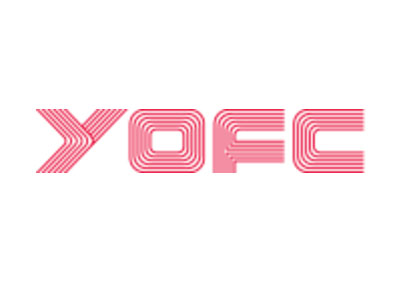
Core Insights - The display technology is rapidly transitioning from "rigid" to "flexible," with flexible displays being increasingly utilized in consumer electronics, commercial spaces, and smart interactions [1] - Recent advancements include the development of high-performance stretchable polymer light-emitting diodes (PLED) by a research team from the Chinese Academy of Sciences, and a prototype of a stretchable display by LG Display, capable of approximately 53% deformation [1] Group 1: Flexible Display Technology - Flexible displays are not merely traditional glass screens bent; they require a multi-layered structure where each layer must possess flexibility to ensure overall bending and folding while maintaining display quality and durability [2] - Key components include flexible substrate materials, core electronic components, and packaging technology, all of which must innovate collaboratively [2][3] - Common flexible substrate materials include polyimide and polyester, which can be as thin as 0.1 mm and withstand high temperatures and thousands of folds without deformation [2] Group 2: Core Electronic Components - Core electronic components such as thin-film transistors (TFT) and organic light-emitting diodes (OLED) rely on high-performance electronic materials, including oxide semiconductors and organic semiconductors [3] - These components work together to ensure rapid current flow, self-emission of light, and effective stress release during bending, maintaining the integrity and functionality of the display [3] Group 3: Market Expansion and Applications - The global market for flexible displays is expanding, with projections indicating that by 2024, shipments of flexible active matrix organic light-emitting diode (AMOLED) panels will reach 631 million units, accounting for 42% of the smartphone screen market [4] - By 2031, the flexible display market is expected to exceed $173 billion, with a compound annual growth rate (CAGR) of 34.3% [4] - Applications are diversifying across various sectors, including smart terminals, wearable devices, automotive, healthcare, and public services [4][5][6] Group 4: Innovations in Automotive and Healthcare - In the automotive sector, flexible displays are enhancing human-vehicle interaction, with companies like Mercedes and BMW integrating flexible OLED screens into their vehicles for improved display and energy efficiency [5] - In healthcare, flexible displays are being utilized in wearable medical devices, providing real-time health data monitoring and improving clarity and portability [6] Group 5: Future of Intrinsic Flexibility - Current flexible displays still rely on external structures for deformation, facing challenges such as fragility and resolution loss [7] - The development of intrinsic flexible materials aims to address these issues by enabling the display itself to withstand deformation through molecular structure and micro-design [7][8] - This innovation could lead to new applications, allowing displays to adapt to various devices and user needs, enhancing the overall user experience [8]