具身智能体

Search documents
广东:加快建设国家人工智能应用中试基地
Di Yi Cai Jing· 2026-02-04 08:40
Core Viewpoint - Guangdong has issued implementation opinions to accelerate the high-quality construction of a digital society, emphasizing the strengthening of artificial intelligence (AI) application foundations [1] Group 1: AI Infrastructure Development - The plan includes the integration of trusted computing platforms and digital identity authentication systems to support AI applications [1] - There is a focus on accelerating the establishment of national AI application pilot bases and encouraging local governments to develop specialized pilot platforms based on regional industrial characteristics [1] Group 2: AI Application and Service Chain - The initiative promotes the construction of AI business middle platforms and common platforms for industry applications, aiming to create a comprehensive AI application service chain [1] - The strategy includes exploring application scenarios for technologies such as embodied intelligence [1]
东风2025年自主品牌占比超六成,冯长军解码汽车消费新潜力
Zhong Guo Qing Nian Bao· 2026-01-24 07:42
Group 1 - Dongfeng Motor is focusing on technological innovation and product upgrades to meet market demands and create user value as a key operational priority [2] - The vehicle trade-in policy is seen as a significant driver for market growth, with its effectiveness stemming from the collaboration between supply and demand [2] - Dongfeng Motor aims to build a brand structure that covers various market segments, projecting sales of 1.04 million new energy vehicles by 2025, a year-on-year increase of 21%, and over 1.5 million for its self-owned brands, with a growth rate exceeding 9% [2] Group 2 - As a major state-owned automotive enterprise, Dongfeng Motor's operational trends are viewed as a barometer for industry development [3] - The core challenge for traditional automakers is to achieve brand elevation and market breakthroughs through electrification and intelligent transformation during the 14th Five-Year Plan period [3] - Dongfeng Motor's insights on technological innovation and market strategy reflect the evolving policies and market environment, which will significantly impact the health of the industry chain and the release of consumer potential [3]



紫光展锐徐志昆:无人机、无人车、机器人是未来终端的“新三大件”
Xin Lang Cai Jing· 2026-01-15 10:01
Core Insights - The "2025 Technology Wind and Cloud List" annual event was held on January 15, 2026, in Beijing, focusing on the theme "Inspiring New Intelligence, Embarking on a New Journey" [2][6] - Key discussions included the future of 6G technology, emphasizing the need for deep integration of "communication, sensing, computing, and intelligence" capabilities into wireless networks to surpass 5G [2][6] Group 1: 5G Development - The success of China's 5G is attributed to two main factors: the rapid iteration of the entire 5G industry chain and continuous government policy support [2][6] - Initial challenges for 5G included high terminal costs and power consumption, but advancements in standards, technology upgrades, and industry collaboration have led to significant breakthroughs in cost control, power optimization, and market penetration [2][6] Group 2: 6G Development - 6G should focus on upgrading traditional interactive communication to leverage high-speed advantages and create immersive virtual interaction experiences [3][7] - There is a need to explore the real demands of emerging intelligent entities in traditional industries, such as how robots will require 6G support in specific scenarios [3][7] - The vision for 6G includes a diverse range of terminals, with traditional smartphones evolving into AI phones, and the emergence of new devices like drones, autonomous vehicles, and robots as key components of the future [3][7]

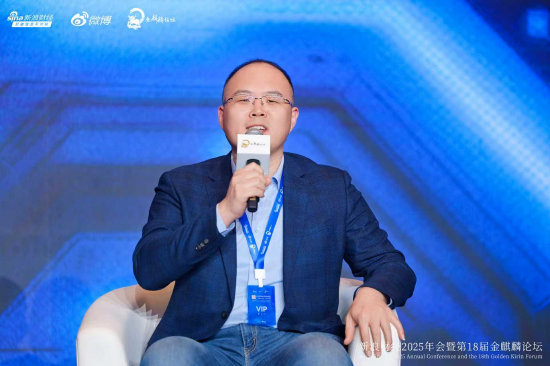
金融大家评 | 李礼辉:金融智能体应用的三道“必答题”
清华金融评论· 2026-01-14 12:34
Core Viewpoint - The article discusses the evolution and application of financial AI agents, emphasizing their potential to transform the financial industry by enhancing efficiency and accuracy in various tasks, particularly in high-value, technology-intensive areas rather than low-value, labor-intensive sectors [4][5][9]. Group 1: Evolution of AI Technology - Recent advancements in AI technology can be categorized into three main areas: transitioning from unimodal to multimodal capabilities, evolving from AI assistants to AI agents, and reducing energy consumption through innovative algorithms [5][6]. - The latest AI models can process and generate various types of unstructured data, including text, audio, video, images, and code, thus expanding their applicability across different tasks [5]. - AI agents, particularly financial agents, are designed to perform complex tasks in various scenarios, potentially surpassing traditional productivity levels [5]. Group 2: Application Environment of Financial AI Agents - Financial AI agents are being deployed across banking, insurance, securities, funds, and wealth management sectors, gradually replacing human roles, especially in knowledge-intensive positions [7][9]. - For instance, Baidu's digital credit manager can draft due diligence reports in one hour with over 98% accuracy, significantly reducing the time required for such tasks [9]. - The integration of AI in financial advisory roles could lead to a potential replacement of over 60% of investment advisor positions, indicating a shift in the human resource structure within the financial industry [9]. Group 3: Reliability and Economic Viability - The deployment of financial AI agents necessitates advanced security technologies to mitigate risks such as data poisoning and algorithmic biases, ensuring the integrity and reliability of financial transactions [11][12]. - High reliability, interpretability, and economic efficiency are crucial for the successful implementation of financial AI agents, which must be trusted by clients, markets, and regulators [12]. - The focus should be on creating trustworthy AI models that can handle market analysis, customer segmentation, and investment advisory tasks with minimal errors [12]. Group 4: Data Quality and Sharing - The financial sector is data-intensive, and the current data-sharing environment faces challenges such as administrative fragmentation and insufficient circulation of non-public data [14][15]. - To enhance data quality and availability, there is a need for public data to be shared more openly and for private data to be utilized in a market-oriented manner, ensuring privacy and security [15][16]. - Establishing a comprehensive financial database that integrates various data types and sources is essential for the effective functioning of financial AI agents [16].

东风汽车总经理冯长军:以科技创新和场景驱动创造、满足差异化消费需求
Zhong Guo Jing Ying Bao· 2026-01-14 09:06
Core Viewpoint - Dongfeng Motor emphasizes its commitment to safety and user value in the automotive industry, positioning itself as a leading partner in green intelligent mobility services [1][2]. Group 1: Strategic Goals and Market Position - Dongfeng Motor aims to achieve over 1 million sales of new energy vehicles by 2025, with a year-on-year growth of 21% and a penetration rate increase of 7 percentage points [1]. - The company targets overall sales of 3.25 million vehicles by 2026, including 1.7 million new energy vehicles and 600,000 vehicle exports [1][8]. - Dongfeng Motor's self-owned brand sales are expected to exceed 1.5 million units, with a year-on-year growth of over 9% and a market share of over 60% [1]. Group 2: Technological Innovation and Product Development - Dongfeng Motor is focusing on integrating technology and innovation to enhance user experience, with plans to launch the "Tianyuan Intelligent" technology brand by 2025 [3]. - The company has developed L2.9 level urban NOA core algorithms and is conducting demonstration operations for L4 level intelligent driving across 15 provinces and 35 cities [3]. - The introduction of luxury electric off-road vehicles and intelligent SUVs aims to provide users with enhanced driving experiences [2]. Group 3: Market Trends and Consumer Behavior - The Chinese automotive market is projected to see a retail sales volume of approximately 23.74 million vehicles in 2025, with new energy vehicles accounting for 12.81 million units, reflecting a year-on-year growth of 17.6% [6]. - The "old-for-new" vehicle replacement policy has significantly boosted consumer demand, with over one-third of total sales attributed to this initiative [6]. - Technological advancements in battery performance and driving assistance systems are encouraging consumers to upgrade their vehicles [6]. Group 4: Financial Performance and Future Challenges - Dongfeng Motor anticipates a 30% increase in operating efficiency by 2025, with profitability in its self-owned new energy passenger vehicles turning around [7]. - The company is preparing for a new competitive landscape starting in 2026, with the introduction of a 5% vehicle purchase tax, which may increase consumer costs [7]. - Dongfeng Motor plans to enhance its operational management and risk defense mechanisms while pursuing digital transformation across its value chain [7][8].

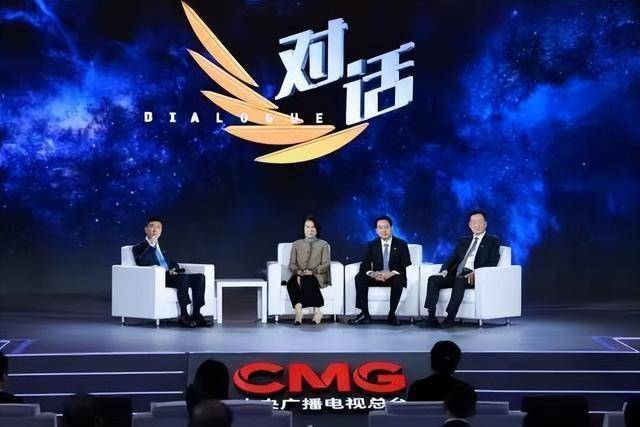
董明珠、冯长军亮相央视《对话》:家电汽车行业共谋消费新潜力
Sou Hu Cai Jing· 2026-01-11 11:51
Core Insights - The dialogue between industry leaders highlights the new trends in China's consumption market, emphasizing the importance of new demand leading to new supply and vice versa [1] - The shift from "price competition" to "value competition" is a significant transformation in the Chinese consumer market, as companies focus on quality and innovation [3][20] Group 1: Industry Trends - The Chinese consumer market is undergoing profound changes, with a focus on high-quality development and consumer satisfaction [3] - The automotive industry is experiencing growth driven by both supply and demand, with technological innovations encouraging consumers to upgrade their vehicles [5] - The automotive market has stabilized in pricing since 2025, leading to improved profit margins across the industry [6] Group 2: Company Strategies - Dongfeng Motor has achieved a historic milestone with over 1 million electric vehicles sold in 2025, marking a 21% year-on-year increase [7] - Dongfeng's success is attributed to its commitment to high-level technological self-reliance and innovation, with significant advancements in hybrid engine efficiency [9] - Gree Electric's vision has evolved from producing "good air conditioners" to "good appliances," reflecting a broader ambition in product quality [12] Group 3: Technological Innovations - Both companies emphasize the importance of smart technology, with Gree focusing on whole-home smart systems and Dongfeng transforming vehicles into "third living spaces" [16] - Dongfeng's "Tianyuan Smart" technology brand aims to establish a comprehensive intelligent system, achieving L4-level autonomous driving in multiple regions [11] - The integration of smart home devices with automotive technology is seen as a key area for future development, enhancing user experience through seamless connectivity [16] Group 4: Future Outlook - The dialogue indicates a shared commitment to innovation and value creation, with both industries aiming to meet and create new consumer demands [20] - The automotive sector is set to implement large-scale applications of L3 and L4 autonomous driving during the "14th Five-Year Plan" period [20] - Both Gree and Dongfeng are positioned to lead their respective industries towards a more intelligent, green, and integrated future, contributing to the revitalization of the domestic consumption market [20]

2026-AI之光引领成长-反内卷周期反转
2026-02-02 02:22
Summary of Key Points from the Conference Call Industry Overview - The main trend in the A-share market for 2026 is a technology-driven bull market, with AI leading the growth sectors. Other growth sectors are expected to have relatively lower elasticity. The emphasis on cyclical reversal and growth emergence will continue into 2026, particularly in commercial aerospace and humanoid robotics, which are anticipated to see sustained growth and market attention [2][3]. Sector Performance and Reversal - Industries that performed poorly in 2025, such as shipbuilding and rail transit, are expected to experience a reversal in 2026. These sectors had strong performances in 2024 but underwent an adjustment period in 2025. The commercial aerospace and humanoid robotics sectors are projected to continue their growth trends in 2026 [3][4]. - The engineering machinery sector's leading companies are expected to achieve a compound annual growth rate (CAGR) of 20%-30% over the next three years, with companies like XCMG Machinery showing significant growth potential [3][5]. AI Industry Chain - The AI industry chain is currently driven by capital expenditure, with significant demand for upstream infrastructure such as optical modules and optical equipment. The transition of computing power from data centers (DC) to internet data centers (IDC) is increasing the demand for infrastructure like liquid cooling technology, providing development opportunities for related companies. By 2026, applications of embodied intelligent agents, including humanoid robots, autonomous driving, and drones, are expected to see more opportunities [6]. Commercial Aerospace - Commercial aerospace is viewed as a critical field combining high technology and future industries. The expectations include reduced costs for reusable rockets and satellite manufacturing, which will facilitate commercialization and open up larger market spaces. Opportunities in space computing, space energy, and lunar commercial activities present significant growth potential [7]. Lithium Battery Equipment Sector - The lithium battery equipment sector is recovering after an adjustment period from 2022 to 2024, with a new capacity cycle starting in 2025. Revenue and net profit growth turned positive in 2025, with a stock price increase of 103%. The demand for power lithium batteries and energy storage lithium batteries is fully recovering, and the expansion cycle of leading domestic battery manufacturers is expected to continue into 2026 [12]. - The solid-state battery industry is anticipated to reach a turning point in industrialization between 2026 and 2027, driven by technological improvements, demand growth, and policy support. The market size for solid-state batteries is projected to grow over 15 times from 2025 to 2030 [13]. Investment Recommendations - Key sectors and stocks to focus on include: - Engineering machinery, with XCMG Machinery recommended as a key stock due to its significant growth over the past three years and future potential [5][9]. - Humanoid robotics and commercial aerospace as emerging fields with vast industrial space [5]. - Specific companies in the lithium battery equipment sector, including leading equipment manufacturers and those involved in solid-state battery production, are recommended for their strong cash flow and technological advantages [14]. Solar Industry Insights - The solar industry has seen a significant increase in component prices, with prices for Trina Solar components rising from approximately 0.7 to over 0.82, and some exceeding 1. This price increase indicates a gradual reversal in the solar industry. If these price increases can be accepted by the power station end, the overall market may no longer incur losses, leading to a reversal [11]. This summary encapsulates the key insights and recommendations from the conference call, highlighting the anticipated trends and investment opportunities across various sectors.
翻开启境供应商名单,每一页都写着“必胜”
21世纪经济报道· 2025-12-31 09:37
Core Viewpoint - The article discusses how Qijing, a new luxury electric vehicle brand, is positioning itself in the competitive Chinese automotive market by leveraging high-end suppliers to establish a premium perception among consumers [1][4]. Supplier Strategy - Qijing's strategy includes a supplier list featuring top-tier brands like BASF for paint, Bosch for braking systems, and Fuyao for glass, which helps to create a high-quality perception of its first vehicle [4][6]. - The use of luxury suppliers allows Qijing to avoid the lengthy brand-building process typical for new entrants, instead quickly establishing a high-end image [4][5]. Technological Integration - Qijing's core competitive advantage lies in the comprehensive release of Huawei's HiCar solutions, which include L3 conditional autonomous driving, smart cockpit, and vehicle control technologies [4][5]. - The collaboration between Huawei and GAC has resulted in a new paradigm in the automotive market, with deep integration of technology and design [5][6]. Aesthetic and Performance Focus - Qijing's first product is marketed as the "most beautiful hunting-style sedan," with a focus on aesthetics achieved through high-quality materials and design [6][7]. - The vehicle's paint, developed in collaboration with BASF, aims for a luxurious finish that rivals high-end brands like Rolls-Royce [7][8]. Advanced Features - The vehicle will feature advanced glass technology from Fuyao, including a three-layer silver coating for superior heat reflection and privacy [10]. - Qijing emphasizes performance with a "control triangle" consisting of Bosch braking systems, Continental brake calipers, and premium tires, ensuring a high level of driving dynamics [10][12]. Intelligent Driving Capabilities - Qijing's first model will be equipped with Huawei's advanced ADS 4 Max system, which utilizes a new architecture to simulate extreme driving scenarios, addressing a key challenge in autonomous driving [13][14]. - The system's capabilities include advanced safety features that can predict and respond to potential hazards, enhancing overall driving safety [15][19]. Safety Standards - Qijing has set rigorous safety standards, exceeding national requirements in various tests, including water immersion and mechanical impact tests [19]. - The collaboration between Huawei and GAC reflects a commitment to safety, with extensive testing protocols to ensure the highest safety standards for consumers [19].


汽车视点丨三大现实难题待解——从数字环驾大赛看新能源汽车下半场
Xin Hua Cai Jing· 2025-12-29 08:14
Core Insights - The "2025 China Digital Automotive Competition" concluded on December 28, showcasing a new industry model that integrates "competition, research, and application" through real-world testing of over 10 mainstream electric vehicle brands across 18,000 kilometers and various climates [1][2] Group 1: Event Overview - The competition involved a 30-day journey through more than 10 provinces, testing the performance of electric vehicles in terms of range, intelligent driving, and adaptability to extreme environments [1] - The event was co-hosted by several institutions, including the China Economic Information Agency and the China Society of Automotive Engineers, emphasizing collaboration between academia and industry [2] Group 2: Integration of Education and Industry - The competition aimed to deeply integrate "production, learning, research, and application," allowing university teams to tackle real industry challenges [2][3] - Feedback from participating universities highlighted the value of real-world data for research in fault prediction, model optimization, and system reliability [2] Group 3: Key Findings from Testing - The competition revealed significant issues in the performance of electric vehicles, particularly regarding energy consumption, charging experience, and intelligent driving systems [4][5] - A notable "north-south difference" in energy consumption was observed, with northern regions showing a 50%-60% range achievement in low temperatures, while southern regions maintained 60%-80% [4] Group 4: Recommendations for Industry Development - The report suggests a shift in focus from "parameter competition" to "scene definition" in technology development, emphasizing the need for real-world scenario assessments [6] - It highlights the importance of system integration capabilities and the establishment of a comprehensive service energy station network to enhance user experience [7] Group 5: Future Directions - The competition's insights will drive the establishment of a long-term operational base aimed at continuous innovation and data-driven decision-making in the electric vehicle sector [8][9] - Plans for future competitions include expanding testing to extreme environments and deepening collaborations with universities to enrich the database relevant to Chinese road conditions [5][6]
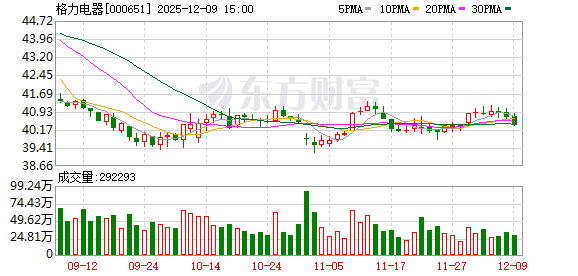
格力电器:目前公司已开发可用在人形机器人上的关节模组等核心零部件
Mei Ri Jing Ji Xin Wen· 2025-12-09 12:50
Group 1 - The company has made significant advancements in the research of core components and key technologies for industrial robots, including servo motors, servo drives, motion controllers, reducers, and robot dynamics [1] - The company has successfully developed a full range of robotic products, including six-axis robots, SCARA robots, welding robots, and collaborative robots, with payload capacities ranging from 3kg to 600kg [1] - The company is focusing on the development of core components for humanoid robots, such as joint modules, and will continue to monitor the development of the humanoid robot industry [1] Group 2 - An investor inquired about the company's plans to develop humanoid robots, especially in light of recent product launches by competitors like Midea [2] - The company is recognized for its advanced technology accumulation in industrial machinery, suggesting potential opportunities in the emerging humanoid robot market [2]