
可折叠手机

Search documents
早报|特朗普称心中已定美联储下任主席;万科郁亮辞去所有职务;海底捞回应锅里被扔尿不湿事件;雷军宣布小米未来5年研发再投2000亿
虎嗅APP· 2026-01-09 00:10
Group 1 - The next Federal Reserve chairman is yet to be announced, but President Trump has indicated he has a decision in mind [2] - Minimax's IPO in Hong Kong saw a subscription rate of 1,837.17 times for retail investors, raising a total of 4.8 billion HKD [3] - Apple is reportedly accelerating succession planning for CEO Tim Cook, with potential internal candidates being groomed for the role [4] Group 2 - Nestlé (China) is under scrutiny for recalling specific batches of infant formula following preventive measures taken in Europe [5] - Trump claims the U.S. has begun profiting from Venezuelan oil resources, expecting to control the country long-term [6][7] - OpenAI has acquired the core team of executive coaching AI tool Convogo to enhance its AI cloud business [8] Group 3 - Vanke's executive vice president, Yu Liang, has resigned due to retirement [10] - Huiyuan Group has announced plans to regain control of the Huiyuan brand amid disputes with its restructuring party [11] - Sinopec and China Aviation Oil are undergoing a restructuring process approved by the State Council [12] Group 4 - Wang Teng, former Xiaomi executive, has founded a new company named "Today Yixiu" focused on sleep health products [15] - IKEA China will close seven stores starting February 2, citing a need for resource reallocation and efficiency improvement [21][22] - Aima Technology has faced rumors of significant layoffs, but the company claims the adjustments are normal and not as severe as reported [23] Group 5 - Shanghai Mobile has denied allegations of pressuring employees to disconnect customers' internet services for revenue generation [24] - MiniMax is set to list on the Hong Kong Stock Exchange today, with shares priced at the upper limit of 165 HKD [25] - The Shanghai Futures Exchange is implementing measures to cool down the silver futures market due to overheating [26]




【人民日报】柔性屏,打开“显示”新视窗
Ren Min Ri Bao· 2025-12-01 03:29
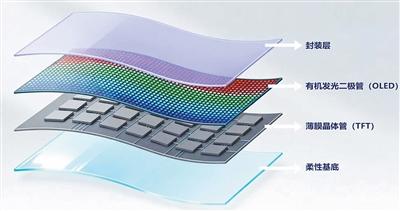
Core Insights - The article discusses the rapid advancement of flexible display technology, highlighting significant breakthroughs in materials and applications that are reshaping the industry landscape [3][4][6]. Group 1: Technological Advancements - Recent developments include the successful creation of high-performance stretchable polymer light-emitting diodes (PLED) by the Chinese Academy of Sciences, which show improved optical performance and mechanical stability [3]. - LG Display has showcased a prototype of a stretchable display capable of approximately 53% deformation, indicating significant progress in flexible display technology [3]. - The flexible display market is projected to exceed $173 billion by 2031, with a compound annual growth rate (CAGR) of 34.3% [6]. Group 2: Material and Structural Innovations - Achieving flexible displays requires a multi-layered approach, including flexible substrate materials, core electronic components, and advanced packaging technologies [4][5]. - Commonly used flexible substrate materials like polyimide and polyester can be as thin as 0.1 mm and withstand high temperatures and thousands of folds without deformation [4]. - The integration of high-performance electronic materials, such as oxide semiconductors and organic semiconductors, is crucial for ensuring rapid current flow and self-emission capabilities in flexible displays [5]. Group 3: Application Expansion - Flexible displays are increasingly being utilized across various sectors, including smart terminals, wearable devices, automotive, healthcare, and public services [6][7][8]. - In the automotive sector, flexible displays are enhancing user interaction, with companies like Mercedes and BMW integrating large OLED screens into their vehicles [7]. - The healthcare industry is adopting flexible displays for real-time monitoring, with products like flexible health patches and wearable medical devices becoming more prevalent [8]. Group 4: Future Prospects - The development of intrinsic flexible materials aims to address challenges such as fragility and resolution loss, potentially leading to new applications in smart homes and IoT [9][10]. - Intrinsic flexibility allows displays to bend and stretch without relying on external structures, enhancing durability and stability [10]. - Future flexible displays may incorporate sensors and AI algorithms for real-time data analysis and adaptive interaction, transforming user experiences and expanding the scope of applications [10].
美股三大指数涨跌不一,热门中概股普涨
Feng Huang Wang Cai Jing· 2025-08-18 13:53
Group 1 - U.S. stock indices showed mixed performance on August 18, with the Dow Jones up 0.05%, S&P 500 up 0.02%, and Nasdaq down 0.02% [1] - Novo Nordisk's stock rose over 5% after launching a cash-pay version of its weight loss drug Ozempic at $499 per month, half the list price [1] - Chinese stocks saw significant gains, with Xunlei up over 21%, iQIYI up over 16%, and Douyu up over 10% [1] Group 2 - Wall Street is focused on the upcoming Jackson Hole meeting, where Federal Reserve Chairman Jerome Powell will discuss economic and interest rate outlooks, potentially influencing rate cut bets [2] - The Nifty 50 index in India experienced its best single-day performance in three months, rising 1.6% to 25,022 points, driven by positive tax reform rumors [3] Group 3 - The Nikkei 225 index in Japan reached a historical high, rising 0.95% to 43,789.19 points, supported by a weaker yen boosting auto exports [4] - XPeng Motors secured a strategic cooperation agreement with CITIC Bank, receiving a credit line of 10 billion yuan to support its operations and development [5] Group 4 - Samsung's market share in the U.S. smartphone market surged from 23% to 31% in Q2, while Apple's share dropped from 56% to 49%, indicating a renewed competition between the two companies [6] - Tesla is offering significant discounts to UK leasing companies, with rental costs for its electric vehicles down to just over half of what they were a year ago, in response to declining sales [7]
苹果AI大反攻:桌面机器人、新Siri与智能家居齐发力
Jin Shi Shu Ju· 2025-08-14 06:40
Core Insights - Apple is preparing to re-enter the AI market with ambitious plans to launch a series of new devices, including a desktop robot, a new Siri, smart speakers with displays, and home security cameras, aiming for a 2027 release for the desktop robot [2][4] - The desktop robot is positioned as a virtual companion, while the smart speaker is set to mark Apple's entry into the entry-level smart home market [2][4] - Apple's CEO Tim Cook emphasizes the need for the company to succeed in AI, hinting at a remarkable product pipeline that includes redesigned iPhones, smart glasses, and foldable devices [4][5] Product Development - The desktop robot will feature a design similar to an iPad mounted on a movable arm, capable of following users and engaging in conversations, with FaceTime as a key function [5] - A new version of Siri, capable of participating in multi-user conversations and managing tasks, will be central to the robot's operation [5][7] - Apple is also developing a simplified smart display, code-named J490, which will launch mid-next year, focusing on home control and communication features [6] Software and Systems - The new devices will run on a new operating system called Charismatic, designed for multi-user interaction and personalized experiences [6] - Apple is working on an upgraded Siri, based on large language models, expected to launch in spring next year, with a new visual interface for iPhone and iPad [7] Home Security Market - Apple is developing a security camera, code-named J450, featuring facial recognition and infrared detection, aimed at automating home tasks [8] - The company plans to create a comprehensive security hardware and software ecosystem, integrating with iCloud+ for video storage [8]

暴跌56%!三星Q2业绩“崩了”
Ge Long Hui· 2025-07-08 17:36
Core Viewpoint - Samsung Electronics reported a significant decline in its second-quarter performance, with operating profit expected to drop by 56% year-on-year and 31.24% quarter-on-quarter, reaching the lowest level in six quarters, which is substantially below market expectations [1] Group 1: Financial Performance - The company's operating profit for Q2 is projected at 4.6 trillion KRW, while revenue is expected to slightly decrease to 74 trillion KRW, reflecting a minor year-on-year decline of 0.1% [1] - Analysts predict that Samsung's operating profit may have bottomed out in Q2, with expectations for gradual improvement in Q3 driven by a rebound in memory chip prices [6] Group 2: Semiconductor Business Challenges - Samsung's semiconductor division, particularly the "Device Solutions" sector, faced profit declines due to inventory value adjustments and U.S. export restrictions on advanced AI chips to China [1][5] - The company is struggling with its high-bandwidth memory (HBM) chip business, as its latest HBM version has not yet received performance certification from Nvidia, causing it to miss out on the AI chip boom [2][3] - Samsung's foundry business is also experiencing losses, with estimates suggesting over 4 trillion KRW in losses in the first half of 2025, attributed to low yields, diminished customer confidence, and widening technology gaps compared to TSMC [4] Group 3: Market Dynamics and Future Outlook - U.S. export restrictions on AI chips have negatively impacted Samsung's foundry business, although the company anticipates a gradual recovery in demand and a narrowing of operating losses in the second half of the year [5] - The company is facing challenges in its consumer electronics segment due to U.S. tariffs affecting sales of TVs and home appliances, alongside a 7% appreciation of the Korean won against the dollar, which has weakened its price competitiveness in overseas markets [6] - Samsung plans to launch a new lightweight foldable smartphone to regain market share, as its share in the foldable smartphone market has decreased from 54% to 45% despite a 12% increase in global shipments [6]
AI需求持续扩张,集成电路ETF(159546)盘中涨超1%
Mei Ri Jing Ji Xin Wen· 2025-06-16 05:09
Group 1 - AMD expects the data center AI accelerator market to exceed $500 billion, with AI inference demand projected to grow at an annual rate of over 80% in the coming years, driving value increases in servers and optical modules [1] - Counterpoint Research indicates that foldable phone sales in Europe will account for only 1.5% of the market share by Q1 2025, remaining a niche market, while upstream sectors such as passive components, digital SoC, RF, and storage are showing signs of recovery [1] - TrendForce predicts a 19.1% growth in the global foundry market by 2025, driven by strong demand for advanced processes and packaging technologies, with domestic equipment continuing to promote self-sufficiency in advanced manufacturing [1] Group 2 - The integrated circuit ETF (code: 159546) tracks the CSI Integrated Circuit Index (code: 932087), which is compiled by the China Securities Index Co., Ltd., selecting listed companies involved in IC design, manufacturing, packaging, testing, and related materials and equipment from the A-share market [1] - This index reflects the overall performance of China's integrated circuit industry chain, characterized by high industry concentration and growth potential, providing investors with a precise investment tool to grasp industry developments [1]