
深圳数据交易所

Search documents
第九届数字中国建设峰会招展招商推介会在深圳举办
Zheng Quan Ri Bao Wang· 2025-12-24 14:14
"数字中国建设峰会是数字领域盛会,更是成果展示的重要平台。"华为中国政企营销总监张志成表示, 华为已连续八届参会,全面参与主论坛、体验展等活动,展示数字技术与基础设施领域最新成果,2026 年华为将扩大参展规模。 南网传媒品牌科技(广州)有限公司温志鹏也表示,公司连续多届参会并开展系列交流活动,收获广泛 认可,期待2026年再聚福州。 新华三集团解决方案专家张文春介绍,作为峰会"老朋友",企业通过这一国家级平台充分展示技术实 力,深化上下游合作,同时精准把握数字中国建设政策导向与行业趋势,与伙伴共探技术发展方向。 本报讯 (记者刘晓一)12月24日,第九届数字中国建设峰会招展招商推介会在深圳举行。政府部门、 龙头企业、行业协会等嘉宾代表齐聚一堂,共探数字经济发展新机。 福州市数据管理局相关负责人介绍,福州作为数字中国建设最早实践地,20多年来持续推进"数字福 州"建设,将其作为高质量发展的基础性先导性工程,积极融入国家数字经济创新发展试验区建设,集 中力量发展数字经济。 一组数据见证了"数字福州"的蝶变:全市数字经济规模从2018年的2800亿元增长至2024年的超7900亿 元,连跨5个千亿元大关,占GDP ...
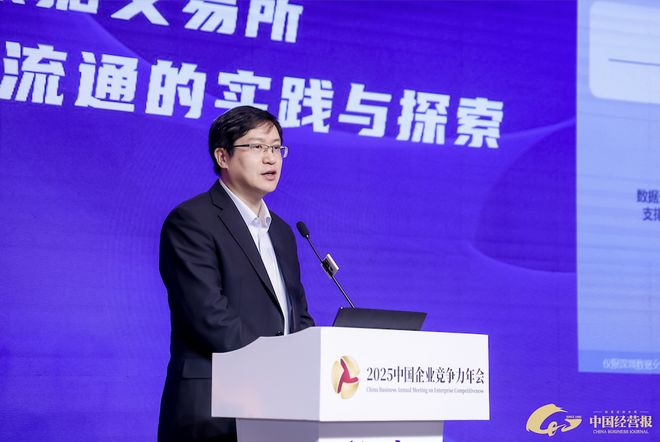
深数所古亮:以“交易所+流通服务中心”双身份提升数据价值化
Zhong Guo Jing Ying Bao· 2025-12-11 05:11
Group 1 - The establishment of Shenzhen Data Exchange (深数所) is a response to market demand, evolving from a data trading platform to a comprehensive data circulation service center [2] - The core goal of the exchange is to reduce market circulation costs and enhance data value through resource aggregation, product development, and the establishment of a neutral platform [2] - The data factor market is still in its early stages, and the next five years will be crucial for rule improvement, with ongoing explorations in compliance systems and data application scenarios [3] Group 2 - Shenzhen Data Exchange has launched three major platforms: a supply-demand matching commercial platform, a data assetization service platform, and a data property registration service platform [3] - The exchange is expanding its national service network by establishing 25 city stations and focusing on technical standards and data governance in sectors like healthcare and energy [4] - The exchange is actively participating in the standardization of contracts and other processes to facilitate the replication and incubation of successful data application cases [5] Group 3 - Successful practical cases have been demonstrated, such as the collaboration in the meteorological field that won a national award and completed its first transaction [5] - The exchange is exploring data financing, data trusts, and data asset-backed securities (ABS) to create a compliant closed loop in data assetization and capitalization [5] - A cross-border data circulation infrastructure is being developed, focusing on the Guangdong-Hong Kong-Macao Greater Bay Area to meet cross-border demands [5]

深圳福田区产业发展新动向:“AI+时尚”!
Nan Fang Du Shi Bao· 2025-12-06 14:04
Core Insights - The first Global (Shenzhen) "AI + Fashion" Innovation Application Competition was launched on December 5, 2023, aiming to establish Shenzhen's Futian District as a core area for AI and fashion integration, promoting innovation and collaboration in the Greater Bay Area fashion industry [1][3]. Group 1: Competition Overview - The competition is themed "AI New Fashion · Digital Intelligence Creates the Future," focusing on the integration of artificial intelligence, the fashion industry, and data elements [3]. - The competition will run from December 5, 2025, to July 2026, with global recruitment for entries starting in early 2026, targeting key domestic and international universities [5]. - Two main tracks are set: "Creative Design" for the university group and "Innovative Solutions" for the corporate group, emphasizing originality, technical innovation, and market potential [5]. Group 2: Industry Collaboration and Innovation - The event featured the release of the "Bay Area Sustainable Fashion White Paper," analyzing AI's role in reducing carbon emissions and promoting resource recycling in the fashion industry [6]. - Strategic partnerships were formed between fashion brands and AI companies across various sectors, including design, music, advertising, and marketing, to facilitate the application of AI in fashion [8]. - The Shenzhen Data Exchange and the Bay Area Sustainable Fashion Alliance initiated a "Fashion + Data" strategic cooperation, launching a trusted data space for the fashion industry [11]. Group 3: International Expansion and Knowledge Sharing - The establishment of the Bay Area Sustainable Fashion Alliance's European office aims to provide one-stop services for local brands to enter international markets [13]. - A themed exchange meeting focused on the Paris Fashion Week provided practical guidance for Chinese brands looking to expand internationally, sharing experiences from various fashion representatives [15]. - The event included a series of activities showcasing AI applications in creative design, emphasizing the vibrant ecosystem and cultural inclusivity of Futian's fashion industry [15]. Group 4: Economic Impact and Future Directions - The fashion industry is one of the three major industries in Futian District, with significant revenue generation, including over 110 billion yuan from the Chegongmiao area [16]. - Futian is committed to exploring "Fashion + Technology," showcasing innovations such as AI-generated music and virtual scenes at major fashion events [19]. - The district aims to strengthen its position as a global hub for fashion digital innovation by leveraging its industrial concentration and innovative advantages [19].

十月数据交易市场产品上新量回落,透明度短板难突破
2 1 Shi Ji Jing Ji Bao Dao· 2025-11-07 09:41
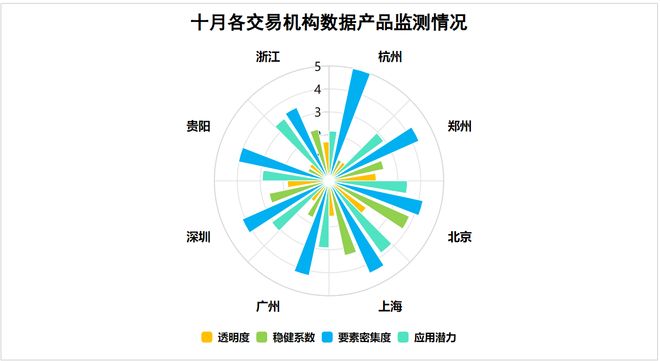
Core Insights - The data trading market in China has shown a decrease in the number of data products listed, with a total of 296 products in October, down by 124 from September [4] - Key performance indicators have shown mixed results, with "element density" and "robustness coefficient" improving, while "application potential" has slightly declined and "transparency" remains low [4] Group 1: Measurement Results - In October, the "element density" score reached 4.22, reflecting a high degree of data core driving and multi-source data integration in new data products [4][6] - The "robustness coefficient" increased by 15.08% from the previous month, indicating enhanced compliance risk identification and safety control among data trading institutions [4][10] - The "application potential" score decreased from 3.23 to 3.08, suggesting a slight pullback in the market adaptability and growth elasticity of new data products [4][12] - The "transparency" score remained unchanged at 1.53, highlighting ongoing issues in price transparency and information disclosure mechanisms within the industry [4][8] Group 2: Element Density - The "element density" metric includes "data participation" and "data integration" sub-indicators, with the former showing overall stability across institutions [6] - Notably, the Hangzhou Data Exchange saw a significant recovery in "data participation" from 2.31 to 4.03 [6] - Beijing International Big Data Exchange leads in "data integration," while other exchanges need to improve their multi-source data fusion and optimization of data structures [6] Group 3: Transparency - The "transparency" score is evaluated based on "basic information disclosure" and "price transparency," with Beijing and Zhengzhou leading in basic information disclosure [8] - Zhejiang Data Exchange achieved the highest score in price transparency, with nearly 40% of products disclosing actual prices [8] - Other exchanges need to enhance their disclosure of product prices and basic information to improve overall transparency [8] Group 4: Robustness Coefficient - The "robustness coefficient" score improved from 1.99 to 2.29, indicating progress in data compliance and safety [10] - Beijing scored the highest in "data classification," while several exchanges lagged significantly, indicating a need for improvement in data classification management [10] - The "data source" dimension saw notable improvement, particularly for Zhejiang Data Exchange, while others still require enhancements in compliance [10] Group 5: Application Potential - The "application potential" score reflects the market adaptability and growth elasticity of data products, with a slight decline observed this month [12] - Most exchanges maintained a low score in "update frequency," indicating a lack of regular maintenance for new data products [12] - The "reusability" score showed a slight increase, with Zhejiang Data Exchange achieving the largest gain among the sample institutions [12]
八月数据交易市场“短期热度”降温,数据产品查询量回落
2 1 Shi Ji Jing Ji Bao Dao· 2025-09-12 07:44
Core Insights - The data trading market in China is experiencing a significant increase in the number of data products launched, with a total of 477 products introduced in August, up by 162 from July [2] - Despite the increase in product offerings, key performance indicators have shown a decline, indicating structural issues within the market [2][5] - The "application potential" score has dropped sharply by 25.25% from July, reaching its lowest point in six months, highlighting a decrease in market interest and engagement [2][5] Market Performance - In August, the four core indicators of the data trading market saw varying degrees of decline, with "application potential" experiencing the most significant drop [2] - The "element density" score decreased from 4.25 to 4.04, while the "stability coefficient" slightly fell to 2.08 [2] - "Transparency" remains the weakest area, scoring only 1.50, which has been a long-term constraint on market development [2][4] Product Insights - The majority of high-scoring data products are concentrated in data sets and data interfaces, with 328 products in these categories, accounting for over 60% of the total [3] - "Data participation" scores remain high across institutions, while "data integration" scores have shown fluctuations, particularly declining in several exchanges [3] Governance and Compliance - The "stability coefficient" scores vary significantly among institutions, with Beijing and Shanghai leading in compliance [4] - The Zhengzhou Data Trading Center has the highest score in "data grading" but shows weaknesses in "data sources" and "usage constraints," indicating potential governance issues [4] - Overall, the market lacks effective regulations on key aspects such as data product limitations and cross-border circulation, necessitating a comprehensive data supervision framework [4] Application Potential - The decline in the "application potential" score is primarily driven by a significant drop in the "attention" metric, with several institutions reporting a halving of their scores [5] - The overall "reusability" scores have also decreased, reflecting insufficient motivation for optimizing data products [5] - The "update frequency" scores have remained stagnant for most institutions, indicating a lack of innovation and responsiveness in the data trading market [5]
全国一体化数据市场建设提速!多维探索破局路径
证券时报· 2025-09-08 00:35
Core Viewpoint - The construction of a national integrated data market is accelerating, with significant progress in interconnectivity among data infrastructure across various regions and entities, but it still faces multiple challenges in recognition, institutional frameworks, and circulation barriers [1][4][6]. Group 1: Current Progress - As of now, 28 cities, 6 provincial-level regions, and 6 enterprises have completed interconnectivity verification for data infrastructure [1]. - The national data infrastructure interconnectivity system allows for user access and data deployment across regions, laying the foundation for large-scale data flow [1][4]. - The core systems for data ownership, classification, and benefit distribution have been preliminarily established, clarifying the separation of data ownership, usage, and operational rights [4][8]. Group 2: Challenges and Bottlenecks - There is a cognitive bias in some regions that prioritizes data circulation over trading, leading to difficulties in monetizing government data [6]. - Institutional frameworks and rules need further development, particularly in data rights and the participation of small and medium enterprises in the data market [6][8]. - Local protectionism and inconsistent regulatory standards create barriers to data circulation across regions [6][8]. Group 3: Strategic Recommendations - The national data bureau is working on policy documents to foster the integrated data market, with plans to introduce over ten new regulations related to data property rights [8]. - Key tasks for infrastructure development include unifying protocols and interfaces, establishing unique identifiers for data entities, and enhancing delivery facilities for secure data flow [8]. - Data trading is essential for creating a fair pricing mechanism and fostering innovation, with data exchanges acting as facilitators to integrate supply and demand [8].

全国一体化数据市场建设提速多维探索破局路径
Zheng Quan Shi Bao· 2025-09-07 18:28
Core Viewpoint - The construction of the national integrated data market is accelerating, with significant progress in interconnectivity and infrastructure, but it still faces multiple challenges in recognition, regulation, and circulation [1][4]. Group 1: Current Progress - As of this year, 28 cities, 6 provincial-level regions, and 6 enterprises have completed interconnectivity verification for data infrastructure nodes [1]. - The national data infrastructure interconnectivity system allows for "one-point access, nationwide passage," "one-point release, all-region visibility," and "one-point deployment, cross-region applicability" [1]. - The national data infrastructure interconnectivity system has covered 20 provinces, enabling cross-domain multi-source data processing and high-speed data transmission [3]. Group 2: Challenges Faced - There is a cognitive bias in some regions that prioritizes data circulation over transaction, making it difficult for government data to realize value through trading [4]. - The system and rules for the data market need further improvement, and data rights need more theoretical and practical exploration [4][5]. - Local protectionism and inconsistent regulatory standards create barriers to data circulation across regions [4][5]. Group 3: Strategic Directions - The focus of the national integrated data market should be on "integration," emphasizing the construction of market systems, rule standards, infrastructure layout, and cross-departmental cooperation [2]. - The national data market infrastructure construction should concentrate on three main tasks: unifying protocols and interfaces, establishing unique identifiers for data entities, and improving delivery facilities for orderly data flow [5]. - Data trading is crucial for the national integrated data market, enabling fair pricing, diverse scenarios, secure governance, and active innovation [5]. Group 4: Initiatives and Future Outlook - The national data bureau is developing policy documents to foster the national integrated data market, with plans to introduce over ten new systems related to data property rights [5]. - Various data exchanges, such as the Shenzhen Data Exchange and Shanghai Data Exchange, are actively exploring paths for the construction of the national integrated data market [5].
全国一体化数据市场建设提速 多维探索破局路径
Zheng Quan Shi Bao· 2025-09-07 18:26
Core Insights - The construction of a national integrated data market is accelerating, with 28 cities, 6 provinces, and 6 enterprises having completed interconnectivity verification of data infrastructure nodes [1] - The national data infrastructure interconnectivity system allows for seamless data access and application across regions, laying the foundation for large-scale cross-domain data flow [1][3] - Despite progress, challenges remain, including a lack of understanding of data trading, inadequate institutional frameworks, and regional protectionism that hinders data circulation [1][4][5] Group 1: Market Construction and Strategy - The national integrated data market is not a single trading venue but emphasizes "unity and collaboration" under a unified standard, aiming to break regional and industry segmentation [2] - The market's development aligns with the broader strategy of establishing a unified national market, which includes unified market infrastructure and regulatory standards [2][3] - Key tasks for the infrastructure include standardizing protocols and interfaces, establishing unique identifiers for data entities, and enhancing delivery facilities for secure data flow [5] Group 2: Challenges and Solutions - There is a cognitive bias in some regions that prioritizes data circulation over trading, leading to difficulties in monetizing government data [4] - Institutional frameworks need further development, particularly in data rights and the participation of small and medium enterprises in the data market [4][5] - Local protectionism and inconsistent regulatory standards create barriers to cross-regional data flow, necessitating a top-down approach to integrate data market reforms into broader planning [5] Group 3: Industry Initiatives - Various data exchanges are actively exploring pathways for the national integrated data market, with Shenzhen and Shanghai leading initiatives to enhance data trading mechanisms and establish a cohesive market ecosystem [5]

在更高起点、更高层次、更高目标上深化改革、扩大开放 深圳综改升级锚定四大方面
Shen Zhen Shang Bao· 2025-08-10 22:39
Core Viewpoint - Shenzhen is advancing its comprehensive reform pilot program, achieving significant economic growth and setting ambitious goals for further reform and opening up [1][2]. Economic Growth - Shenzhen's GDP increased from 2.78 trillion yuan in 2020 to 3.68 trillion yuan in 2024, with an average annual growth rate of 5.5% [1]. - The city's industrial output and added value have ranked first among national cities for three consecutive years [1]. Reform Initiatives - The issuance of the "Opinions on Deepening Reform and Innovation in Shenzhen's Comprehensive Reform Pilot" on June 10 marks a new phase for the reform pilot [1][3]. - The reform pilot has seen the implementation of 40 authorized measures and the promotion of 48 innovative initiatives nationwide [2]. Key Focus Areas - The reform emphasizes innovation in education and technology, aiming to create a globally influential industrial and technological innovation center [3]. - There is a strong focus on integrating innovation chains, industrial chains, financial chains, and talent chains to support key industries and enterprises [3]. - Expansion of cooperation with Hong Kong and Macau is prioritized, particularly in trade and personnel movement, to enhance international collaboration [3]. Healthcare and Data Innovation - At the AI Empowerment Conference for the pharmaceutical and medical device industry, Shenzhen Data Exchange introduced five medical data products to support AI companies [4]. - The exchange aims to drive reforms and innovations in the healthcare sector, contributing to the development of a globally influential digital city [4].
资本市场投下“信任票” 数据资产金融创新提速
Zhong Guo Zheng Quan Bao· 2025-08-01 21:02
Core Insights - The first approved data asset securitization project in China, "Huaxin-Xinxin-Data Asset 1-5 Phase Asset Support Special Plan," was officially issued on July 31, marking a significant step in recognizing data as a new asset class in the capital market [1][2] - The project demonstrates the feasibility of using data assets as collateral for financing, breaking the traditional reliance on physical assets and providing a new financing pathway for asset-light data companies [2][3] - The penetration rate of data asset recognition in financial statements is increasing, with a notable rise in the number of listed companies recognizing data assets, indicating a growing acknowledgment of data value [3][5] Data Asset Securitization - The launch of data asset securitization projects this year reflects the capital market's high recognition of data as a new asset class and serves as a breakthrough in facilitating the conversion of data from resources to assets to capital [2][3] - The first data asset-enabled securitization product was issued on July 17, further enriching the asset securitization product matrix and providing new financing options for technology-driven enterprises [1][2] Data Asset Recognition - Data asset recognition in financial statements is essential for the capitalization and marketization of data assets, with the implementation of new accounting regulations set to normalize this practice starting January 1, 2024 [2][3] - The number of listed companies recognizing data assets has significantly increased, from 12 companies with a total of 0.54 million yuan in Q1 2024 to 82 companies with a total of 33.43 million yuan in Q1 2025 [3][5] Market Ecosystem Optimization - Companies are encouraged to strategically plan their data asset management and establish comprehensive internal management systems to optimize the market ecosystem for data assets [5] - The establishment of data asset companies in China has surged, with 3,553 companies currently operating in this sector, indicating a growing market for data asset services [4]