
Advantest

Search documents
投资者-2026 年 2 月半导体生产设备月度技术报告-Investor Presentation-Semiconductor Production Equipment Tech Monthly Feb 2026
2026-02-24 14:17
February 20, 2026 04:20 PM GMT Investor Presentation | Japan M Foundation Semiconductor Production Equipment: Tech Monthly Feb 2026 Morgan Stanley MUFG Securities Co., Ltd.+ Suzune Tamura, CFA Equity Analyst Suzune.Tamura@morganstanleymufg.com +81 3 6836-8891 Tetsuya Wadaki Equity Analyst Tetsuya.Wadaki@morganstanleymufg.com +81 3 6836-8890 Semiconductor Production Equipment Japan Industry View Attractive Morgan Stanley does and seeks to do business with companies covered in Morgan Stanley Research. As a re ...
World shares are mixed after heavy selling of potential AI losers hits Wall Street
BusinessLine· 2026-02-24 10:13
World shares were mixed Tuesday after U.S. stocks slumped on heavy selling of shares in companies that could be losers in the artificial-intelligence boom.A report by Citrini Research, a New York-based financial services company, that outlined a future scenario in which AI's dominance caused the “human-centric consumer economy,” to wither away with dire consequences for employment, was the latest hit to confidence for companies that might be displaced by fast expanding use of the technology.“Policy response ...



Asian Shares Rally As AI Worries Ease
RTTNews· 2026-02-19 08:38
Market Overview - Asian shares ended mostly higher, supported by easing AI concerns and positive U.S. economic data, despite thin trading volumes due to Lunar New Year holidays in China, Hong Kong, and Taiwan [1] - The dollar remained firm, while gold prices rose above $5,000 an ounce amid reports of potential U.S. military strikes against Iran [2] - Oil prices extended gains after a more than 4% increase on Wednesday [2] Japan - The Nikkei average increased by 0.57% to 57,467.83, and the broader Topix index rose by 1.18% to close at 3,852.09, driven by tech stocks [3] - SoftBank and Tokyo Electron saw gains of 2.6% and 2.9%, respectively, while Advantest fell by 3.6% due to a ransomware cybersecurity incident [3] South Korea - The Kospi average surged by 3.09% to 5,677.25, marking a record high as traders returned from the Lunar New Year holiday [4] - Major semiconductor stocks led the gains, with Samsung Electronics up 4.9%, SK Hynix up 1.6%, and Hyundai Motor up 2.8% [4] Australia - Australian markets reached a four-month high, with the benchmark S&P/ASX 200 jumping 0.88% to 9,086.20, marking a fourth consecutive session of gains [6] - National Australia Bank rose by 2.4% following strong quarterly results, while BHP increased by 1.8% after reporting higher earnings and revenue for the half-year ended December 31, 2025 [6] New Zealand - New Zealand's S&P/NZX-50 index ended up 1.49% at 13,444.20 after a dovish hold from the Reserve Bank of New Zealand [7] U.S. Economic Data - U.S. industrial production growth for January exceeded market expectations, while new orders for manufactured durable goods declined less than expected in December [8] - Housing starts reached a five-month high, contributing to positive sentiment in the tech sector, particularly following Meta's announcement to deploy millions of Nvidia chips [8]


日经平均股指冲高回落,一度站上5.8万点
日经中文网· 2026-02-12 07:51
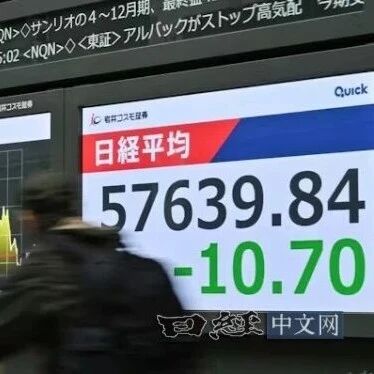
版权声明:日本经济新闻社版权所有,未经授权不得转载或部分复制,违者必究。 2月12日的日本股市中,日经平均指数涨幅一度超过300点,首次升至5.8万点区间。不过,众议院选举 后的急速上涨也开始显现疲态。受高位警惕情绪影响,部分权重股遭到抛售,日经平均在早盘冲高后转 为下跌…… 日经中文网 https://cn.nikkei.com 2月12日的日本股市中,日经平均指数涨幅一度超过300点,首次升至5.8万点区间。美国经济表现稳健 以及日本企业财报强劲,提振了买盘。不过,众议院选举后的急速上涨也开始显现疲态。受高位警惕情 绪影响,部分权重股遭到抛售,日经平均在早盘冲高后转为下跌。 日经平均收于57639点84,较前一交易日下跌10点70(0.02%)。今年以来大幅上涨的Advantest和Tokyo Electron遭遇集中抛售,两只股票合计将日经平均压低约250点。 此前周末日经平均还处于5.4万点区间,在8日投开票的众议院选举中自民党大胜后,本周一举突破5.5万 点等整数关口,并在12日上午一度突破5.8万点。从技术面看,股价相对25日移动均线的乖离率超过 7%,高于被视为"超买"的5%水平。短期涨幅较大的 ...
全球半导体及半导体资本设备:2025 年 12 月 WSTS 追踪-销售额环比 + 4.8%,高于典型值(2.2%);同比 + 41.3%;2025 财年增长 26% 至 7920 亿美元
2026-02-11 15:40
Summary of Semiconductor Industry Conference Call Industry Overview - The conference call focused on the global semiconductor industry, specifically discussing the WSTS report for December 2025, which tracks sales, units, and average selling prices (ASPs) across the semiconductor sector [2][27]. Key Financial Metrics - **2025 Semiconductor Sales**: Grew by 26% year-over-year, reaching approximately $792 billion, following a 20% increase in 2024 [3][28]. - **December 2025 Sales Growth**: Total semiconductor sales increased by 41.3% year-over-year, with memory sales growing by 67.6% year-over-year [3][29]. - **Monthly Sales Performance**: December sales rose by 4.8% month-over-month, significantly above the historical average of 2.2% [4][38]. Product Category Performance - **Logic Sales**: Increased by 40% year-over-year, leading the growth among product categories [28][32]. - **Memory Sales**: Grew by 35% year-over-year, with a notable 67.6% increase in December alone [3][29]. - **Analog Standard Linear**: Sales rose by 17%, while Discretes and Microcontroller Units (MCUs) saw declines of 1% each [28][32]. - **Monthly Performance by Product Group**: - Discretes: 18.3% growth vs. typical 14.5% - Optoelectronics: 14.2% vs. typical -0.1% - Logic: 3.7% vs. typical -1.1% - MCU: 13.8% vs. typical 11.6% [5][40]. Geographic Sales Insights - **Year-over-Year Sales Growth by Region**: - Americas: Up 32.5% - Europe: Up 23.3% - China: Up 40.3% - Asia Pacific/All Other: Up 77.6% - Japan: Down 11.3% [45]. - **Month-over-Month Sales Growth**: - Americas: Up 10.5% - China: Up 5.8% - Europe: Up 4.7% - Japan: Flattish at -0.7% - Asia Pacific/All Other: Down 1.2% [46]. Unit Shipments and ASPs - **Total Unit Shipments**: Increased by 9.6% month-over-month, with ASPs down by 4.4% [52]. - **Year-over-Year Shipment Growth**: Increased by 4.1%, with notable increases in Discretes, Optoelectronics, and Logic [53]. - **ASP Changes**: - ASPs increased for Discretes (6.3%), Optoelectronics (7.3%), and NAND (11.5%). - ASPs decreased for Sensors & Actuators (-4.6%) and Logic (-3.6%) [55][56]. Investment Implications - **ADI (Analog Devices)**: Rated Market-Perform with a target price of $270.00, executing well but shares considered expensive [11]. - **AMD (Advanced Micro Devices)**: Rated Market-Perform with a target price of $235.00, driven by high AI expectations and a new deal with OpenAI [11]. - **AVGO (Broadcom)**: Rated Outperform with a target price of $475.00, benefiting from a strong AI trajectory [11]. - **NVDA (NVIDIA)**: Rated Outperform with a target price of $275.00, with significant opportunities in the datacenter market [13]. - **QCOM (Qualcomm)**: Rated Outperform with a target price of $175.00, despite memory headwinds, shares are considered cheap [14]. Additional Insights - The semiconductor industry is experiencing robust growth driven by various product categories, particularly logic and memory, with significant regional disparities in performance. - The overall market sentiment remains positive, with several companies positioned for growth amid ongoing technological advancements and demand for semiconductors.


台湾半导体 -首予赢华科技、欣兴电子买入评级:AI 芯片测试接口升级带动强劲动量-Taiwan Semiconductors Initiate on WinWay and CHPT at Buy Solid Momentum Driven by AI Chip Test Interface Upgrade
2026-02-10 03:24
Summary of Conference Call on Taiwan Semiconductors and Companies WinWay and CHPT Industry Overview - The semiconductor industry is experiencing a paradigm shift where system performance is increasingly determined by interconnect density and power efficiency rather than just transistor scaling [2][12] - Advanced packaging has become a core architectural decision, moving from a backend consideration to a strategic bottleneck, creating a multi-year growth opportunity for interface leaders [2][12] Company Insights WinWay (Ticker: 6515.TW) - WinWay is recognized for its technical leadership in coaxial socket and hypersocket technologies, securing a position in the high-end AI GPU/ASIC supply chain [1][4] - The company is expected to benefit from the rising demand for advanced testing interfaces as AI chips evolve towards larger die sizes and higher thermal envelopes [1][4] - Target price set at NT$6,000 based on a 40x PE for 2027E, reflecting a projected earnings CAGR of 78% from 2025 to 2027 [4][21] - WinWay's dominance is attributed to its long-term partnerships with US AI GPU chipmakers and its strategic geographical proximity to Taiwan's semiconductor cluster [20][21] CHPT (Ticker: 6510.TWO) - CHPT is positioned to leverage its "All-in-House" integration capability to capture market share in the US AI GPU/ASIC testing process [1][4] - The company is expected to transition from a secondary supplier to a major supplier for next-gen AI CPU/GPU testing boards by 2026 [16][19] - Target price set at NT$5,000 based on a 40x PE for 2027E, with an estimated earnings CAGR of 102% from 2025 to 2027 [4][19] - CHPT has extended its technical edge into the high-value AI ASIC market and has entered the high-end burn-in board market [16][19] Key Market Dynamics - The transition to system-level testing (SLT) has become mandatory, creating a 4-5x volume multiplier for test sockets due to extended test durations [3][12] - The integration of advanced features such as 224G SerDes and 3,000W thermal envelopes is rendering traditional interfaces obsolete, favoring specialized companies like WinWay and CHPT [3][4] - The demand for high-performance test sockets is projected to grow at a CAGR of 6.1% from 2024 to 2029, with AI-specific sockets expected to outpace this growth [55][56] Financial Projections - WinWay's earnings for 2025-2027E are forecasted to grow at a CAGR of 78%, while CHPT's are expected to grow at 102% during the same period [4][19] - Both companies are positioned to capture significant value in the AI computing ecosystem due to their critical roles in the testing process [4][19] Risks and Considerations - Key risks for both companies include customer concentration and the potential for slow market expansion in system-level testing [21][19] - The evolving landscape of AI and HPC testing presents both opportunities and challenges, necessitating continuous innovation and adaptation [12][19] Conclusion - The semiconductor testing landscape is evolving rapidly, with WinWay and CHPT positioned as key beneficiaries of the AI supercycle. Their strategic advantages in testing interfaces and advanced packaging are expected to drive significant growth in the coming years [4][19][21]
日本众议院选举落定,日元日债为何下跌?“高市交易”重启?
第一财经· 2026-02-09 06:00
Core Viewpoint - The recent Japanese House of Representatives election resulted in a majority for the ruling coalition of the Liberal Democratic Party and the Japan Innovation Party, leading to a significant rise in the stock market and a historical high for the Nikkei 225 index, which surpassed 57,000 points for the first time [3][5][6]. Market Reaction - Following the election results, the Nikkei 225 index increased by 5.6% to 57,337 points, while the TOPIX index rose over 3%, reaching a new historical high [5]. - The real estate sector led the gains in the Nikkei index with an increase of over 7%, followed by healthcare and industrial sectors [6]. Economic Policy Implications - Analysts suggest that the election outcome may shift the government's focus from "old high market trading" characterized by fiscal expansion and a weak yen to "new high market trading" emphasizing structural and regulatory reforms [3][6]. - The success of the ruling coalition is viewed as a potential catalyst for strategic investments and tax reforms that could further boost the Japanese stock market [6]. Currency and Bond Market Dynamics - The yen has faced significant depreciation, dropping approximately 6% against the dollar and reaching a two-week low of 157.95 [8]. - The yield on 10-year Japanese government bonds rose nearly 4 basis points to 2.274%, indicating market concerns over Japan's fiscal sustainability [8][9]. Investment Sentiment - Investment professionals express a continued interest in Japanese assets, particularly in sectors like defense, artificial intelligence, and semiconductors, which are expected to benefit from increased government spending [7][9]. - Despite the negative outlook for the yen, there is a belief that if Japan's economy continues to grow, the currency may stabilize within a certain range [9]. Future Outlook - The election results are likely to increase the probability of the dollar-yen exchange rate moving from the previous range of 155-160 to 160-165 [10]. - Market participants are cautious about potential currency interventions by Japanese authorities, especially as the yen approaches critical levels that have previously triggered intervention [10].

日本众议院选举落定,日元日债为何下跌?“高市交易”重启?
Di Yi Cai Jing· 2026-02-09 04:18
Group 1 - The analysis from Nomura Securities indicates that rising US Treasury yields and a weak yen will compel the Kishida administration to shift its policy focus from "old Kishida trade" of fiscal expansion and a weak yen to "new Kishida trade" emphasizing structural and regulatory reforms [1][5] - Following the recent elections, the ruling coalition of the Liberal Democratic Party and Nippon Ishin gained a majority, leading to a significant rise in the Nikkei 225 index, which surpassed 57,000 points for the first time in history [3][4] - The real estate sector led the gains in the Nikkei index, with a rise of over 7%, while companies like CyberAgent Inc. and Advantest saw substantial stock price increases of over 16% and 12%, respectively [3][4] Group 2 - Investment institutions are optimistic about sectors such as defense, artificial intelligence, and semiconductors, which are expected to benefit significantly from Kishida's increased investments in these areas [5][6] - The yen has faced significant depreciation, dropping approximately 6% against the dollar and reaching historical lows against the euro and Swiss franc, which has raised concerns about potential currency intervention [5][7] - Analysts express skepticism about Japanese government bonds, particularly long-term bonds, due to fiscal concerns, although recent yield increases have made them more attractive to some investors [5][6][7]

Japan's Nikkei falls as tech shares drag; Astellas surges
The Economic Times· 2026-02-05 07:26
Group 1 - The Nikkei 225 Index fell 0.9% to close at 53,818.04, influenced by technology stocks amid valuation concerns and a broader Asian market slump due to rising AI investment costs [2][3] - SoftBank Group experienced a significant decline of 7% after its affiliated chip design firm Arm Holdings missed analysts' expectations on licensing revenues [2][3] - Semiconductor-related stocks saw notable drops, with Rohm down 9.1%, Advantest down 4.8%, and Disco down 4.4% in early Tokyo trading [2][3] Group 2 - The pharmaceuticals sector emerged as the top performer among the Tokyo Stock Exchange's 33 industry groups, driven by Astellas Pharma's 10% surge after the company raised its net profit forecast for the fiscal year by nearly five times [2][3] - There were 137 advancers on the Nikkei index compared to 88 decliners, indicating the significant influence of a few heavyweight tech names [2][3] - Despite the overall market decline, selective buying tied to earnings is expected to continue in Japan [2][3]




Asian Markets Mixed As AI Fears Hammer Software Stocks
RTTNews· 2026-02-04 08:44
Market Overview - Asian stocks ended mixed, with software stocks declining due to concerns over artificial intelligence impacting future growth [1] - Gold prices increased nearly 3 percent to $5,080 an ounce, while oil prices extended gains following a U.S. Navy incident involving an Iranian drone [2] - The Shanghai Composite index rose 0.85 percent to 4,102.20, driven by a surge in solar shares after visits from SpaceX and Tesla [2] Regional Indices Performance - Hong Kong's Hang Seng index marginally increased to 26,847.32, supported by gains in precious metals [3] - The Nikkei average fell 0.78 percent to 54,293.36, with software stocks leading the decline due to new AI developments [3] - The Kospi index in Seoul surged 1.57 percent to 5,371.10, bolstered by strong institutional buying and promises of capital market reforms [4] Company-Specific Movements - IT service management company TIS saw a significant drop of 15.8 percent, while NS Solutions and Trend Micro both fell by 7.4 percent [4] - Chip-related companies like Advantest and Tokyo Electron experienced declines of over 2 percent each [4] - Australian markets advanced, with the S&P/ASX 200 climbing 0.80 percent to 8,927.80, driven by a rebound in copper and gold prices [5] U.S. Market Impact - U.S. stocks experienced a decline from near-record levels, with the tech-heavy Nasdaq Composite dropping 1.4 percent, the S&P 500 down 0.8 percent, and the Dow decreasing by 0.3 percent [6]