DeepWay

Search documents
从烧钱拓荒到算账淘汰赛 新能源重卡赛道融资换挡
Zhong Guo Qi Che Bao Wang· 2026-01-16 09:29
Core Insights - The financing heat in the new energy heavy truck sector is rising, with companies like Kaven New Energy and Supao Technology securing billions in funding, indicating ongoing capital interest in the electrification of commercial vehicles [1] - The investment logic has shifted from early-stage technology concepts to a focus on commercial viability, requiring companies to demonstrate cost control, scalable delivery, and ecosystem integration capabilities [1] Financing Trends - In 2025, the total financing in the new energy heavy truck sector reached approximately 8 billion, with the top five companies capturing over 70% of this amount [2] - Kaven New Energy completed over 1.2 billion in Pre-A financing in June 2025, while Supao Technology secured over 1 billion in strategic financing, focusing on core technology development and global expansion [2] - Other notable financing includes Berai Technology's record-breaking 1 billion in the autonomous driving sector and Jiushi Intelligent's 100 million in B4 financing, highlighting the capital's recognition of technology implementation [2][3] Market Dynamics - A stark contrast exists between the financing fortunes of leading and trailing companies, with the latter facing unprecedented survival pressures and financing costs exceeding 10%, compared to 3.5%-5% for leading firms [3] - Many trailing companies are experiencing issues such as unpaid wages and team departures, indicating a rapid industry reshuffle [3] Shift in Investment Focus - The era of financing based solely on technology concepts has ended, with capital now favoring companies that have validated their business models and can demonstrate delivery capabilities [4] - Successful companies have clear paths to market and verifiable delivery results, with DeepWay and Proton Automotive exemplifying this trend through significant sales and operational achievements [4][5] Ecosystem and Global Expansion - The future of competition in the new energy heavy truck sector will hinge on technology differentiation, ecosystem building, and global market strategies [6] - Companies are expected to develop dual technology routes, such as pure electric and hydrogen, while also exploring alternative fuels like methanol [6] - Building an operational ecosystem that integrates vehicles, energy, and services will be crucial for companies to differentiate themselves in a crowded market [7] International Market Opportunities - Expanding into international markets is becoming essential for leading companies to enhance market share and brand influence, with several firms already making strides in Europe and North America [8] - However, challenges such as regulatory compliance and geopolitical factors will require companies to possess robust technology and localized operational capabilities to succeed globally [8]
卡车新势力为何集体沉寂?
Zhong Guo Qi Che Bao Wang· 2025-10-17 09:49
Core Insights - The domestic new energy commercial vehicle market has maintained a high operating status, with new energy heavy trucks showing a remarkable year-on-year growth of 180% [2] - Despite the booming market, new entrants in the truck sector have collectively captured less than 4% market share, highlighting the challenges faced by these "disruptors" [2][8] - The industry is transitioning from a capital-driven model to a value-driven phase, emphasizing the need for sustainable business practices [2][11] Market Dynamics - The new energy truck market has seen explosive growth, with heavy truck sales surpassing 10,000 units for the first time, reflecting a nearly threefold year-on-year increase [3] - Traditional truck manufacturers are actively expanding their new energy product lines to maintain their market dominance, while new entrants aim to disrupt the market through technological innovations [3][9] - The competition is characterized by a clear divide between traditional giants and new players, with the former leveraging their established advantages [4][9] Challenges for New Entrants - New energy truck startups face significant barriers, including high production costs, lack of manufacturing experience, and challenges in achieving scale [11][12] - Many new entrants are still in the "small batch trial production" phase, with only a few achieving stable deliveries [8] - The market share of new energy truck startups remains low, with only 3.25% as of July, indicating a stagnation in growth compared to the overall market [8] Competitive Landscape - Traditional truck manufacturers and cross-industry participants have shown strong competitive capabilities, capturing the majority of the new energy truck market [9] - Leading companies like FAW Jiefang and China National Heavy Duty Truck Group have reported sales exceeding 15,000 units, demonstrating robust growth [9] - The market is increasingly concentrated among top players, further squeezing the survival space for new entrants [9] Strategic Directions - New energy truck companies must focus on understanding the core needs of users and adapting their offerings accordingly to succeed in a competitive landscape [15][16] - A shift from merely selling vehicles to providing comprehensive lifecycle solutions is essential for new entrants to enhance their market position [17] - The industry is undergoing a value reconstruction, pushing companies to concentrate on core competencies and long-term viability rather than short-term gains [17]

新能源重卡7月渗透率突破26%创历史新高??
Jing Ji Guan Cha Bao· 2025-08-13 14:02
(原标题:新能源重卡7月渗透率突破26%创历史新高??) 8月13日,据最新行业数据显示,2025年7月全国新能源重卡单月销量达1.62万辆,同比激增185%,创 下历史单月增速纪录。1-7月累计销量突破8.22万辆,同比增长191%,远超传统燃油车增速。新能源重 卡市场渗透率从2023年6月的5.69%跃升至2024年的14.82%,2025年6月更是达到26.07%,两年内实现翻 倍式增长。此外,以年运营15万公里测算,纯电动重卡比燃油车节省19.1万元运营成本,维修费用更低 且电价更稳定。港口、矿区、城市渣土运输等固定路线场景成主力战场,部分场景渗透率超60%。三 一、徐工等工程机械巨头与传统车企(如中国重汽)及新势力(DeepWay)形成产业合力,推动产品多 元化。 ...
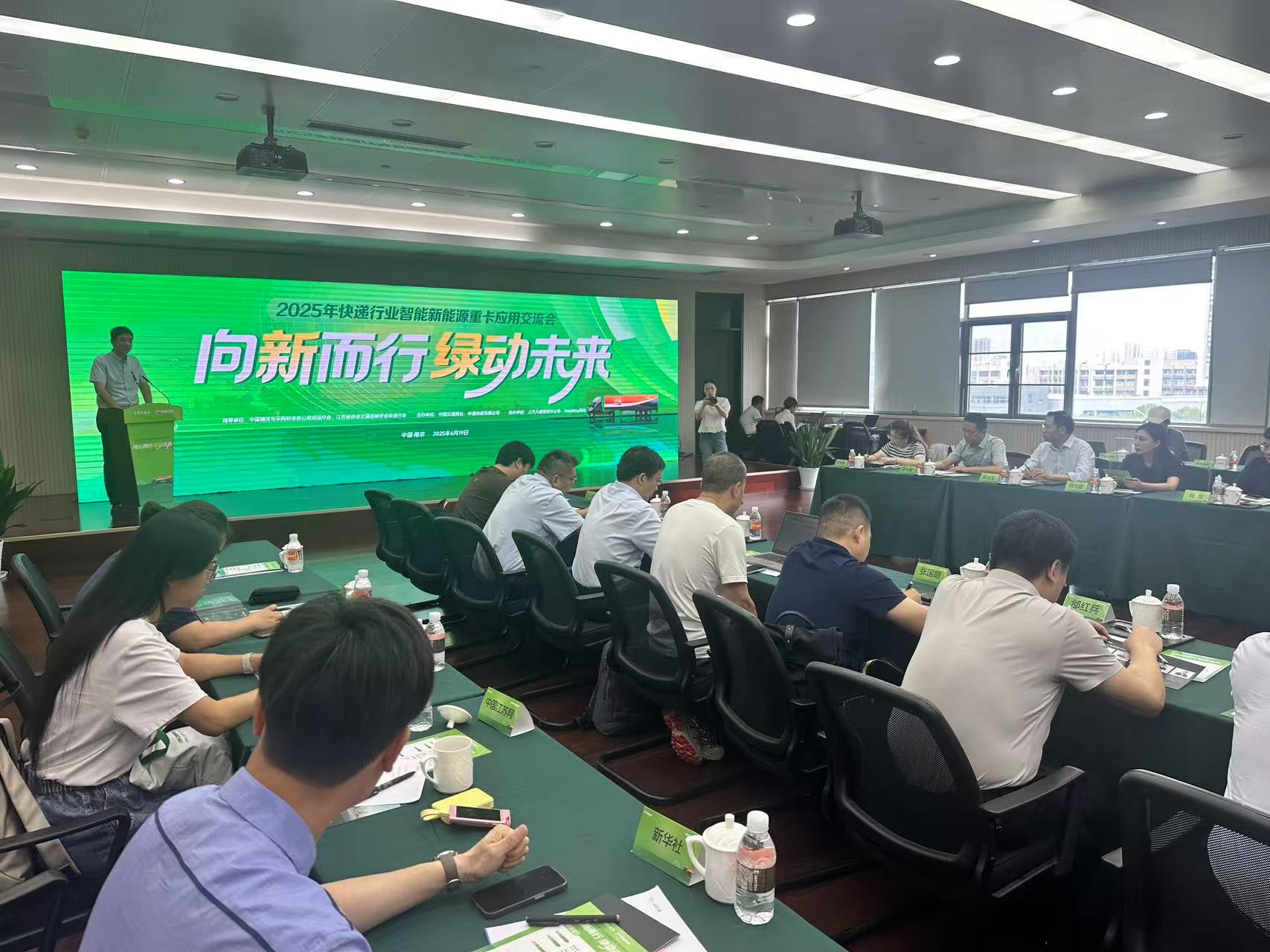
智能新能源重卡成快递干线降本新抓手 行业共议绿色物流未来
Guan Cha Zhe Wang· 2025-06-20 08:29
Core Insights - The conference themed "Moving Towards a Green Future" focused on the application of intelligent new energy heavy trucks in the express delivery industry, highlighting the latest advancements and future trends [1] Group 1: Industry Developments - The postal and express delivery industry is actively promoting energy-saving and low-carbon transportation methods, with policies supporting the purchase and use of new energy vehicles [3] - By the end of 2024, the number of new energy and clean energy vehicles in Jiangsu's postal and express delivery sector is expected to reach approximately 7,000, with over 80% of newly added or updated vehicles being new energy or clean energy vehicles [3] - New energy heavy trucks demonstrate significant advantages over traditional fuel heavy trucks in cost control, environmental protection, and technological innovation [3] Group 2: Economic Impact - New energy heavy trucks help express companies reduce transportation costs and improve economic efficiency, with suggestions for enhancing purchase subsidies, tax incentives, and road access rights to lower operational costs [3] - The average monthly mileage of Shentong Express's mainline vehicles exceeds 30,000 kilometers, significantly higher than the social average of 9,000 kilometers, indicating improved loading rates and operational efficiency [3] Group 3: Future Projections - In 2024, it is projected that 364,200 new energy logistics vehicles will be added nationwide, three times the number in 2021, although the proportion of new energy urban logistics vehicles remains low [4] - Fuel costs currently account for 31.85% of the transportation cost structure in self-owned vehicle fleets, indicating a strong need for new energy vehicles to reduce logistics costs [4] Group 4: Technological Advancements - Shentong Express has become the first express brand in China to scale the application of new energy heavy trucks, with significant cost savings observed during trial operations [5] - The use of intelligent driving technology has led to a 67% reduction in collision warnings and a 75% reduction in braking instances per 10,000 kilometers, effectively lowering labor costs by 4% [5] Group 5: Collaborative Efforts - The conference served as a platform for industry stakeholders, including representatives from CATL, DeepWay, Huawei, and SAIC, to discuss battery performance, service refinement for the express industry, and strategies for transitioning fleets to new energy [5] - The ongoing application of new energy heavy trucks in the express delivery sector is expected to inject new momentum into the comprehensive green transformation of the logistics industry [5]

宁德时代牵手中石化!
鑫椤锂电· 2025-04-03 07:36
Group 1 - The core viewpoint of the article is the strategic partnership between Sinopec and CATL to enhance the battery swapping ecosystem in China, aiming to build a nationwide network of battery swapping stations [1][2] - The agreement includes the construction of at least 500 battery swapping stations this year, with a long-term goal of establishing 10,000 stations [1] - Sinopec has a vast network of energy service capabilities, with 30,000 comprehensive energy stations and over 10,000 fast charging stations, serving more than 200 million customers daily [2] Group 2 - CATL is recognized as the world's largest power battery supplier, possessing advanced battery technology and battery swapping system development capabilities [2] - The collaboration aims to standardize energy and power systems, creating a smart energy microgrid that integrates solar, storage, charging, and battery swapping [2] - The partnership will also focus on expanding energy aggregation operations and building comprehensive energy infrastructure in China, contributing to global energy transition efforts [2]


宁德时代换电牵手能源“国家队”
高工锂电· 2025-04-02 11:07
Core Viewpoint - CATL aims to build no less than 500 battery swap stations this year, with a long-term goal of expanding to 10,000 stations, marking a significant step in establishing a comprehensive battery swap ecosystem in collaboration with Sinopec [1][2]. Group 1: Strategic Partnerships - CATL has signed a cooperation framework agreement with Sinopec to deepen their long-term strategic partnership, focusing on building a nationwide battery swap ecosystem that supports the "dual carbon" goals [2][5]. - The collaboration leverages Sinopec's extensive gas station network to establish battery swap stations, optimizing land resources and enhancing entry into the new energy service market [4][5]. Group 2: Industry Transformation - The battery swap model is a crucial part of CATL's transition from a pure battery manufacturer to an energy service provider, allowing for battery sharing and reducing vehicle ownership costs through battery leasing and swap services [4][6]. - This model promotes efficient energy replenishment and battery recycling, contributing to reduced energy consumption and carbon emissions, thus facilitating low-carbon transformation in the transportation and energy sectors [4]. Group 3: Market Expansion - CATL's battery swap ecosystem is rapidly expanding, with partnerships established with several major automotive manufacturers to develop compatible vehicles, including models from Chang'an, Aion, and FAW [6]. - The collaboration with Sinopec marks a new phase in the systematic construction of the battery swap ecosystem, aiming to create a nationwide integrated energy infrastructure [7].