
Froneri

Search documents
雀巢销售额下滑2%至7285.3亿元,提价策略遭遇全球挑战
Sou Hu Cai Jing· 2026-02-22 16:11
在2025年上半年,面对咖啡豆和可可成本的翻倍增长,雀巢采取了激进的提价策略,这一策略对全年销售额的增长贡献了2.8%,而实际的销量增长率仅为 0.8%。这种依赖价格增长的模式给这个历史悠久的品牌带来了巨大压力。在欧美市场,雀巢的糖果和咖啡业务的提价分别达到了10.6%和6.0%,这种策略一 度有效,但市场对价格的敏感度有限。随着雀巢产品价格的上涨,消费者开始转向超市的自有品牌,导致客户流失加剧。 在销售额小幅下滑的同时,雀巢的净利润同比下滑17%至90亿瑞士法郎,这一下滑幅度较为罕见。为了稳定局面,雀巢新管理团队试图通过缩减战线来换取 更确定的增长逻辑。在2月19日的财报电话会上,雀巢明确了未来四大核心支柱:咖啡、宠物护理、营养品以及食品与零食。前三大业务占据了集团销售额 的70%,且具备更强的抗周期属性。同时,集团宣布了三个业务调整计划:一是整合营养品与雀巢健康科学业务单元,后者目前是被集团直接管理的业务单 元,随着架构调整,雀巢健康科学的全球直管业务架构被撤销。在雀巢的战略转型清单上,冰淇淋业务的剥离是继饮用水之后最大的动作。2月19日公布的 细节显示,雀巢正处于出售剩余冰淇淋业务的"高级谈判阶段"。据 ...


“涨价”策略失灵叠加“黑天鹅”事件,雀巢忙“瘦身”自救
Jing Ji Guan Cha Wang· 2026-02-22 12:03
面对通胀压力与需求波动,雀巢集团"涨价"策略目前已触及顶点,在全球市场正面临"失灵"的窘境。这 家拥有160年历史的知名国际食品和饮料品牌企业,这次似乎走到了一个"十字路口"。 2月19日,雀巢集团正式对外披露了2025年财报,报告显示,集团全年销售额达到894.9亿瑞士法郎(约 合7285.3亿元人民币),同比下滑2%,尽管下滑幅度看似并不明显,但细查之下,却藏着诸多隐患。据 报道,2025年上半年,由于咖啡豆和可可成本翻倍上涨,雀巢采取了激进的"涨价"策略,这种策略为全 年销售额贡献了2.8%的增长,而反映真实销量的实际内部增长率仅为0.8%。 可以看出,定价驱动业绩增长的模式,让这个百年品牌承受了巨大的压力。在欧美市场,其糖果和咖啡 业务的定价驱动分别高达10.6%和6.0%,这种做法在通胀高企的欧美市场曾一度奏效。然而,消费市场 的耐受度是有限的。当雀巢的巧克力棒和胶囊咖啡变得昂贵,精打细算的家庭今年开始流向超市自营的 平替品牌,客户流失加剧。 在2月19日的财报电话会上,雀巢明确了未来四大核心支柱:咖啡、宠物护理、营养品以及食品与零 食。前三大业务占据了集团销售额的70%,且具备更强的抗周期属性。同 ...
Nestlé S.A. (OTC:NSRGY) Reports Strong Financial Performance
Financial Modeling Prep· 2026-02-19 15:00
Core Insights - Nestlé reported basic earnings per share of $4.55 and underlying EPS of $5.72, with underlying EPS down 1.8% in constant currency [3] - The company achieved revenue of approximately $115.9 billion, down 2.0% on a reported basis but with 3.5% organic growth [3] - Following the earnings announcement, Nestlé's shares rose by 3%, with a reported 4% organic sales growth rate in Q4, exceeding the consensus of 3.55% [3] Financial Performance - For 2025, Nestlé's underlying trading operating profit margin was 16.1%, with expectations for organic sales growth between 3% and 4% in 2026 [4] - The company has a price-to-earnings (P/E) ratio of approximately 19.84 and a price-to-sales ratio of about 2.25 [5] - Nestlé's debt-to-equity ratio is 2.26, indicating a higher level of debt compared to equity, and the current ratio is 0.71, reflecting its ability to cover short-term liabilities [5] Strategic Initiatives - Nestlé is undergoing a strategic restructuring, including plans to divest its water business and sell its remaining ice cream business to Froneri [4] - The divestment of the water business, which includes brands like Henniez and Perrier, is expected to be completed by 2027 [4] - This restructuring aligns with CEO Philipp Navratil's strategy to focus on the company's core strengths [4]

Nestle plans sale of ice cream business as fourth-quarter sales growth beats estimates
CNBC· 2026-02-19 08:28
Group 1 - Nestle shares increased by 3% following a fourth-quarter organic sales growth of 4%, surpassing analyst expectations of 3.55% [1] - For 2026, Nestle aims for organic sales growth of 3% to 4% and an improvement in its underlying trading operating profit margin, which was 16.1% in 2025 [1] Group 2 - Nestle plans to sell its remaining ice cream business to Froneri, a joint venture with PAI, and has initiated the process to divest its water business, expecting deconsolidation by 2027 [2] - Under the leadership of CEO Philipp Navratil and Chairman Pablo Isla, the company is focusing on streamlining operations and prioritizing resources on four core businesses [3] Group 3 - An infant formula recall has negatively impacted trust in the business, with Nestle indicating a 20 basis point negative impact on organic growth guidance and reporting 1.7 billion francs in restructuring costs related to the recall [4]
Nestle weighs reducing exposure to ice cream business, Bloomberg News reports
Reuters· 2026-02-18 19:24
Core Viewpoint - Nestle is considering reducing its involvement in the ice cream business, including a potential reduction of its stake in the Froneri joint venture, as it reviews various options [1]. Group 1: Company Actions - Nestle is evaluating options to decrease its presence in the ice cream sector, which may involve selling some of its fully-owned ice cream operations to Froneri [1]. - The company has not provided any comments regarding these deliberations, and Froneri has not responded to inquiries [1]. Group 2: Froneri Joint Venture - Froneri, a joint venture between PAI Partners and Nestle, was recently valued at 15 billion euros (approximately $17.69 billion) following investments from Goldman Sachs and the Abu Dhabi Investment Authority [1]. - PAI Partners may consider increasing its stake in Froneri if Nestle opts to reduce its shareholding, or Nestle could sell part of its stake to other investors like ADIA [1]. Group 3: Market Context - Froneri produces well-known ice cream brands such as Haagen-Dazs and Rowntree's, and it competes with the newly independent Magnum Ice Cream Company, which separated from Unilever last year [1].

新投资人当“接盘侠”、持续赚“管理费”--美国私募巨头的“庞氏游戏”
Hua Er Jie Jian Wen· 2026-01-04 04:16
Core Insights - The article highlights the alarming trend of private equity firms in the U.S. engaging in self-serving behavior by selling assets to themselves at record speeds, raising concerns about potential conflicts of interest and the sustainability of this practice [1][2][3]. Group 1: Industry Trends - Private equity firms are expected to raise an astonishing $107 billion through continuation vehicles by 2025, significantly up from $70 billion last year, indicating a growing reliance on internal funding mechanisms [1]. - Approximately 20% of private equity exits this year involved continuation funds, a notable increase from 12-13% in previous years, showcasing a shift in exit strategies amid frozen market conditions [3]. - Major players in the private equity sector, such as PAI Partners and Vista Equity, are increasingly utilizing continuation funds to retain core assets rather than seeking external buyers, transforming this strategy from a last resort to a preferred method [4]. Group 2: Conflicts of Interest - The self-dealing nature of these transactions raises significant concerns about pricing power, as private equity firms act as both buyers and sellers, potentially leading to undervaluation of assets to benefit new funds [5][6]. - The Abu Dhabi Investment Authority has initiated lawsuits against firms like Energy & Minerals Group for allegedly undervaluing assets in self-sales, highlighting the growing frustration among limited partners regarding valuation manipulation [5][6].
"自买自卖"规模突破千亿美元!私募基金"左手倒右手"交易创历史新高
Hua Er Jie Jian Wen· 2025-12-30 07:35
Core Insights - The scale of "continuation vehicles" transactions in private equity is expected to exceed $100 billion, reflecting a significant shift in how the industry returns cash to investors [1] - This strategy is being adopted due to difficulties in achieving desired valuations from external buyers or public markets, with such transactions projected to reach $107 billion by 2025, up from $70 billion last year [1][3] - The rise of continuation funds has led to concerns about conflicts of interest and valuation fairness, as the same management firm acts as both buyer and seller [1][5] Group 1: Market Dynamics - The surge in continuation fund transactions is attributed to buyout firms struggling to obtain ideal valuations from external buyers, prompting them to retain investments for potential future gains [3] - This structure not only addresses liquidity issues but also generates additional management fees and potential performance fees from previously held assets [3] - Notable firms like EQT and PAI Partners are utilizing continuation vehicles to manage their investments, indicating a trend towards retaining high-performing assets [3][4] Group 2: Investor Concerns - Investors, particularly pension funds, are expressing concerns over potential undervaluation of transferred assets, which could harm the interests of original fund supporters [5] - A significant portion of private equity investors still prefer traditional exit strategies such as sales or IPOs, indicating skepticism towards continuation funds [5] - Legal disputes have arisen, exemplified by the Abu Dhabi Investment Council suing Energy & Minerals Group for allegedly undervaluing assets during a transfer to a continuation vehicle [6]
CNBC's UK Exchange newsletter: The world’s biggest ice cream maker hopes the future’s sweet
CNBC· 2025-12-10 05:30
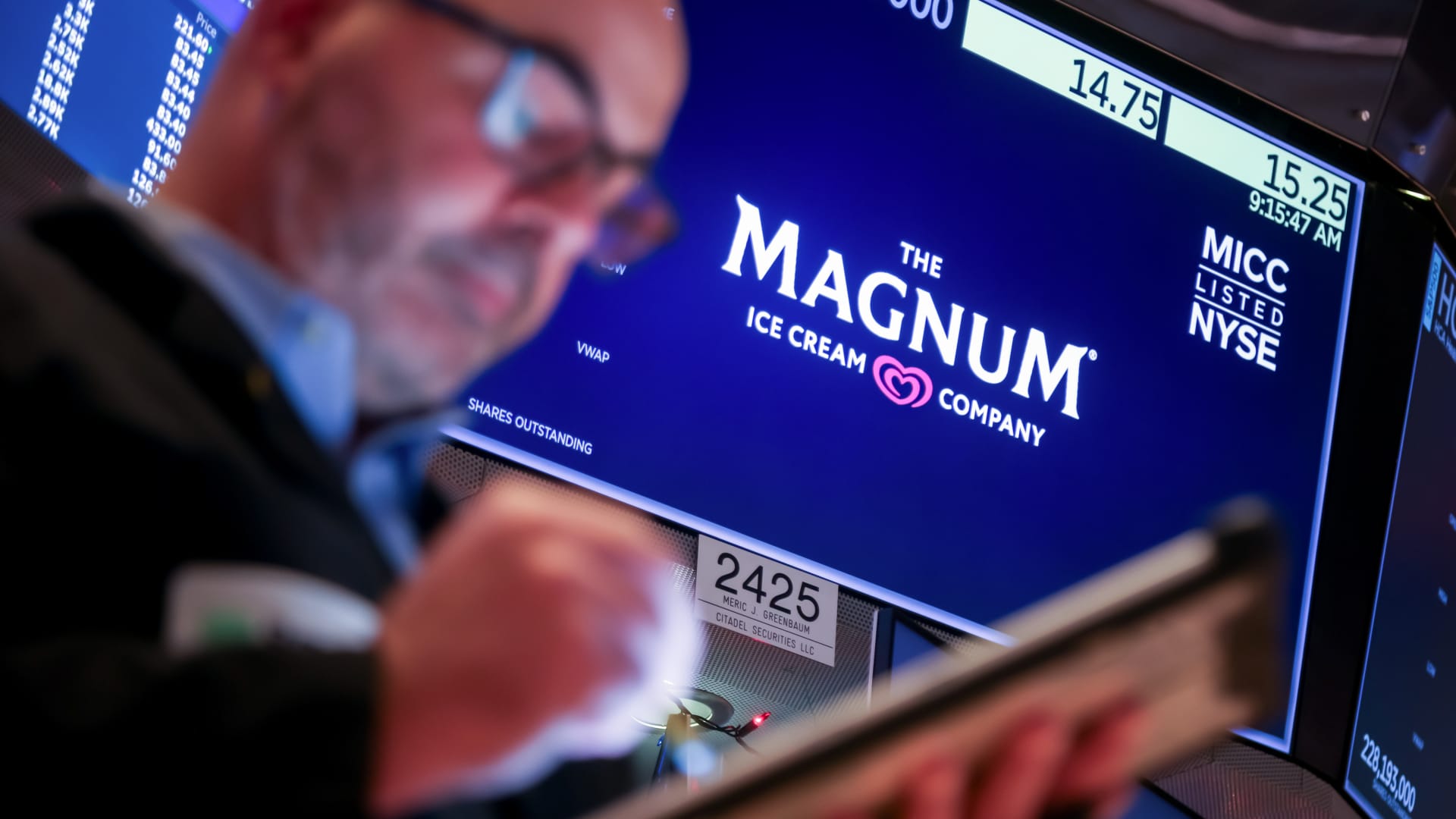
Core Viewpoint - The demerger of The Magnum Ice Cream Company (TMICC) from Unilever allows direct investment in popular ice cream brands, with TMICC valued at €7.8 billion ($9.1 billion) upon its debut on the stock market [2][3]. Company Overview - TMICC includes well-known brands such as Magnum, Cornetto, and Ben & Jerry's, and has been positioned as the world's largest ice cream producer [3]. - The company is not expected to qualify for major indices like the FTSE 100, which may lead to initial selling pressure from tracker funds [5]. Financial Insights - TMICC's valuation is competitive, being worth slightly more than Froneri, which holds an 11% market share in the $87 billion global ice cream market compared to TMICC's 21% [6]. - The absence of dividends in 2026 may deter some investors, impacting short-term share price prospects [5]. Growth Prospects - The CEO targets medium-term organic annual sales growth of 3%-5%, aligning with the long-term average achieved under Unilever [8]. - TMICC may have opportunities to enhance its supply chain investments, which were previously neglected under Unilever's broader portfolio [8]. Management and Governance - The management team, primarily composed of former Unilever employees, is expected to improve operational performance, although challenges remain, particularly with the Ben & Jerry's brand [9]. - Recent governance issues at Ben & Jerry's have raised concerns, with the CEO indicating potential changes in charitable contributions unless corporate governance issues are resolved [12]. Market Reactions - Unilever's stock rose by 3.6% following the debut of TMICC, indicating positive market sentiment towards the spin-off [32]. - The demerger is seen as a significant restructuring for Unilever, potentially leading to a re-rating of the company's market value as it focuses on its core brands [19][20].
TMICC begins new life as global ice-cream leader in positive stock market debut
Yahoo Finance· 2025-12-08 14:14
Core Insights - The Magnum Ice Cream Company (TMICC) aims to lead the frozen snacking market with a focus on innovation and customer service, backed by a clear growth strategy [2][5] - TMICC has a medium-term organic sales growth target of 3-5% annually, which is above Unilever's historical average of 3% [4][19] - TMICC is now the world's largest standalone ice-cream manufacturer, commanding a 21% global market share, nearly double that of its nearest competitor [5][27] Financial Performance - TMICC's revenue for the last year was reported at €7.95 billion, an increase from €7.62 billion the previous year, with adjusted operating profit rising to €964 million from €854 million [24] - The adjusted EBITDA margin improved to 16.9% from 15.9%, with adjusted EBITDA increasing to €1.34 billion from €1.21 billion [24] - Organic sales growth in 2024 was 2%, with the same rate maintained in the first half of 2025 [23] Market Strategy - TMICC plans to increase advertising and promotional spending to 13% of group revenues by 2026, up from 12.4% last year [7] - The company is focusing on e-commerce as a significant growth channel, complementing traditional retail and out-of-home sales, which account for about 40% of total turnover [17] - TMICC has implemented a €500 million productivity plan aimed at enhancing supply chain efficiency and tech-enabled productivity in manufacturing [20] Corporate Structure and Governance - TMICC is led by CEO Peter ter Kulve and CFO Abhijit Bhattacharya, with a board comprising experienced executives from various industries [22] - The company is addressing governance issues related to the Ben & Jerry's Foundation, which has been a point of contention following the demerger from Unilever [8][9] - TMICC's management is focused on capital allocation and innovation tailored to the ice-cream category, free from the broader priorities of Unilever [16][27] Future Outlook - Analysts suggest that TMICC's separation from Unilever will allow for improved performance and focus on higher-margin growth areas [27][28] - Unilever is reportedly considering divesting other food brands to concentrate on beauty and wellness sectors, indicating a strategic shift in its business model [25][26]
Private equity’s expanding exit playbook: why a slowdown in IPOs shouldn’t worry you
Yahoo Finance· 2025-11-25 14:00
Group 1 - The private equity industry is often misunderstood, characterized as opaque and aggressive, but it is actually dynamic, collaborative, and increasingly transparent, focusing on long-term value creation [1] - Private equity provides stability and strategic guidance to investee companies, especially during turbulent times, offering a sense of security to investors compared to volatile public markets [2] - A common misconception is that IPOs are the primary exit route for private equity firms, whereas the reality is more complex [3] Group 2 - IPOs account for only a small share of private equity exits, typically 10-20% during strong bull markets, and in the past year, this figure has been even lower, with 90% of exits at HarbourVest Global Private Equity achieved through mergers and acquisitions [4] - Most exits occur through trade sales to corporates or sponsor-to-sponsor transactions, which provide liquidity while keeping the company private, making them efficient and predictable [5] - Continuation vehicles have emerged as a new exit route, allowing private equity managers to retain ownership of high-performing assets while providing liquidity options for investors [6] - The market for continuation fund transactions has significantly grown since 2022, exemplified by HarbourVest's investment in Froneri, which is undergoing a €3.6 billion capital injection [7]