Ray-Ban Meta

Search documents
国泰海通证券每日报告精选-20260122
GUOTAI HAITONG SECURITIES· 2026-01-22 07:40
Group 1: Strategy Observation - The report highlights the strengthening of AI hardware demand and the continuation of technology manufacturing overseas, with the semiconductor industry experiencing further improvement due to increased AI penetration and export growth in power equipment [4] - Prices of lithium carbonate have surged significantly due to supply constraints and improved downstream demand expectations, while pork prices have also seen improvements supported by consumption policies [4] - Traditional real estate and durable goods sectors continue to face pressure, with a notable decline in retail sales of passenger vehicles [5] Group 2: Industry Tracking - Consumer Electronics - Domestic companies are making breakthroughs in powder metallurgy processes, particularly in nuclear fusion materials, which are expected to benefit from a surge in downstream demand [8] - Tian Gong International, a leader in powder metallurgy, has set ambitious performance targets, indicating strong growth confidence [8] - The company is focusing on high-boron steel and advanced low-activation steel for nuclear fusion applications, leveraging its powder metallurgy technology for cost advantages [9] Group 3: Industry Research - Cement Manufacturing - Uganda is identified as a key market for cement exports, with a rapidly growing economy and increasing cement demand driven by urbanization [12] - The country has a favorable supply structure with only three clinker production lines, leading to a competitive market landscape [13] - Despite high cement prices, profitability remains challenging due to high production costs and logistical issues [14] Group 4: Industry Research - Consumer Discretionary - The smart glasses industry is entering a growth phase, with companies like Mingyue Lens expected to benefit from collaborations with leading brands [16] - The introduction of new smart glasses models, such as Ray-Ban Meta, is anticipated to enhance user experience and expand market applications [17] - The supply chain for AI glasses is broadening, with various players from different sectors entering the market, indicating a significant expansion of the industry [18] Group 5: Company Coverage - BAIC Blue Valley - The company is positioned as a pioneer in China's new energy vehicle sector, with a dual-brand strategy driving revenue growth [21] - Projected revenues for 2025, 2026, and 2027 are estimated at 290 billion, 582 billion, and 889 billion CNY respectively, with a focus on autonomous driving technology [21][22] - The company has seen a significant increase in sales volume, with expectations for continued growth through new model launches [23] Group 6: Company Tracking - Hikvision - The company is expected to achieve a net profit of 141.88 billion CNY in 2025, reflecting a year-on-year growth of 18.46% [40] - Hikvision's strategic shift towards high-quality, sustainable profit growth has led to improved operational efficiency and profitability [41] - The integration of AI into its product offerings is anticipated to drive long-term growth [42] Group 7: Company Tracking - Anfu Technology - The company is focusing on expanding its market presence in the semiconductor sector while maintaining strong performance in its core battery business [45] - Projected earnings per share for 2025 to 2027 are expected to show significant growth, driven by strategic acquisitions and market expansion [45] - The company is leveraging its established brand to enhance its competitive position in the charging market [46] Group 8: Overseas Report - Netflix - The company is projected to achieve revenues of 51.1 billion, 57.6 billion, and 64.6 billion USD from 2026 to 2028, with a focus on expanding its content offerings [48] - Netflix's advertising revenue is expected to double, contributing significantly to its overall financial performance [51] - The acquisition of Warner Bros. is anticipated to enhance content diversity and production capabilities [51]





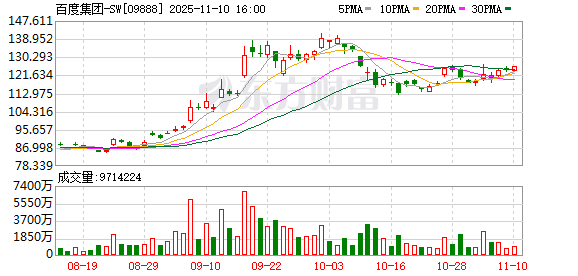
百度第二次做AI眼镜 售价超过2000元
Di Yi Cai Jing· 2025-11-10 12:16
Core Insights - Baidu has re-entered the AI glasses market with the launch of its AI Smart Glasses Pro, priced at 2299 yuan, marking its return after 11 years since its initial attempt with BaiduEye [2][3] - The new product offers features such as photography, AI translation, AI object recognition, AI reminders, and AI recording, but lacks display functionality, distinguishing it from "AI + AR" glasses [2][4] - The competitive landscape includes major players like Xiaomi, Huawei, and Alibaba, raising questions about Baidu's ability to stand out in the "hundred glasses war" [3][4] Product Features and Market Position - The AI Smart Glasses Pro's pricing exceeds that of competitors like Xiaomi and Huawei, as well as the basic model of Ray-Ban Meta priced at 299 USD [4] - The glasses are positioned as a systematic output of Baidu's AI ecosystem, leveraging its semantic understanding capabilities, search and mapping support, and years of accumulated voice interaction technology [4] - The product's market penetration may depend on improving distribution channels and enhancing online service experiences [4] Industry Trends - The "hundred glasses war" indicates a low entry barrier in the smart glasses industry, with rapid product replication possible due to mature supply chains [5] - IDC forecasts that by 2025, China's smart glasses market will reach an estimated shipment volume of 2.907 million units, with audio and audio photography glasses expected to see significant growth [4] - Despite the influx of products, challenges remain in AI integration, system connectivity, and user experience, suggesting that market growth will require time and development [5]


出货量倍增,智能眼镜市场需求强劲
Xuan Gu Bao· 2025-08-14 15:19
Group 1 - The global smart glasses market is expected to see a 110% year-on-year increase in shipment volume in the first half of 2025, with AI smart glasses accounting for 78% of this growth [1] - Strong demand for Ray-Ban Meta smart glasses, along with the entry of new brands like Xiaomi and RayNeo, has driven this growth, particularly in the AI glasses segment, which has experienced over 250% year-on-year growth [1] - Continuous technological advancements, price reductions, and expanding application scenarios position smart glasses as the next significant personal tech device after smartphones and smartwatches [1] Group 2 - The global AI glasses shipment volume is predicted to reach 140 million units by 2030, with the market size expected to exceed one trillion [2] - Relevant A-share concept stocks include companies like Jiahe Intelligent and Zhongjing Electronics [3]
百镜大战,终于不再乱打了
虎嗅APP· 2025-07-29 09:23
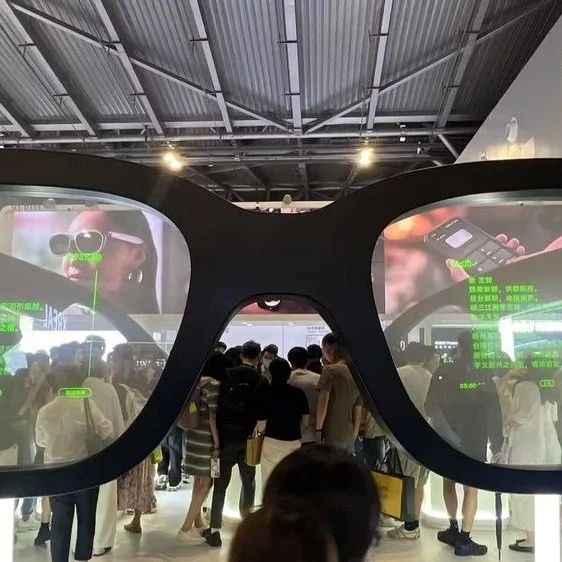
Core Viewpoint - The article discusses the current state and future prospects of the AI and AR glasses industry, highlighting the mixed consumer reactions and the competitive landscape shaped by major tech companies entering the market [5][15]. Group 1: Industry Trends - The AI glasses market is experiencing a surge in interest, particularly during events like the World Artificial Intelligence Conference (WAIC), where products are available for hands-on experience [3]. - There is a notable emotional divide among consumers regarding AI glasses, with some expressing disappointment and others being pleasantly surprised by the technology [5][7]. - The industry is expected to face a challenge in aligning hardware capabilities with software advancements over the next decade, as consumer expectations evolve [7]. Group 2: Product Development - The success of Ray-Ban Meta glasses has significantly influenced the development of AI glasses, with a reported global shipment of 1.5 million units, setting a benchmark for other manufacturers [8]. - Many new AI glasses products lack logical positioning, with some focusing excessively on features like photography without a clear integration with social media platforms [9]. - Companies are beginning to refine their product positioning, with some like Halliday focusing on display capabilities rather than traditional features [10][12]. Group 3: Major Players and Competition - Xiaomi and Alibaba have recently entered the AI glasses market, showcasing the competitive pressure on smaller startups [16][18]. - Alibaba's Quark AI glasses are expected to leverage the company's extensive software ecosystem, offering features like real-time translation and integration with various services [18]. - The industry is likely to see a convergence of hardware specifications and core functionalities, leading to a more stratified competitive landscape where smaller firms focus on niche markets while larger companies dominate the mainstream [18].

百镜大战,终于不再乱打了
Hu Xiu· 2025-07-29 04:42
Core Insights - The World Artificial Intelligence Conference (WAIC) showcased a variety of AI and AR glasses, attracting significant attention due to their hands-on experience opportunities [1] - The audience's reactions to the smart glasses varied widely, reflecting differing expectations and prior experiences with similar products [2][4] - The industry faces a challenge where hardware development may lag behind software capabilities for at least the next decade, raising questions about how to engage a broader consumer base as the market matures [5] Industry Trends - The success of Ray-Ban Meta glasses has catalyzed a competitive landscape, leading to a surge in smart glasses development, with a focus on AI functionalities [5][6] - Many companies are beginning to clarify their product positioning, with some focusing on specialized features rather than attempting to cover all functionalities [7] - Halliday's AI glasses, which prioritize display capabilities over traditional features like photography, exemplify a trend towards specialization in product development [8][10] Competitive Landscape - Major tech companies like Xiaomi and Alibaba are entering the AI glasses market, indicating a shift towards more established players dominating the space [12][13] - Alibaba's Quark AI glasses are designed to integrate deeply with its ecosystem, showcasing the importance of software capabilities alongside hardware [13] - The industry is expected to see a convergence in hardware specifications and core functionalities, leading to a more stratified competitive environment where smaller firms focus on niche markets while larger companies leverage their ecosystem advantages [15]