Yandex

Search documents
驶入阿拉木图:满街的中国品牌,与一场正在发生的认知变革
2 1 Shi Ji Jing Ji Bao Dao· 2026-01-14 12:15
Core Insights - Chinese brands have established a strong presence in Kazakhstan, becoming a significant part of the local market with a wide range of products from automobiles to electronics [1][2][3] - The trade relationship between China and Central Asia has seen substantial growth, with trade volume expected to reach $60.7 billion from 2017 to 2024, marking a 150% increase [1] - Kazakhstan is emerging as a key hub for Chinese companies looking to expand overseas, with over 9,000 Chinese enterprises operating in the region [1][3] Trade and Investment - By 2024, China's direct investment and loans to Central Asia are projected to exceed $24 billion, with bilateral trade between China and Kazakhstan reaching a historic high of $43.8 billion [3][4] - The market share of Chinese automotive manufacturers in Kazakhstan has surged from approximately 2% in 2020 to 38% in 2024, indicating a rapid acceptance of Chinese vehicles [3][4] Market Dynamics - The local market in Kazakhstan is characterized by a young population, with 95% owning smartphones, making it an attractive target for internet and technology companies [1][2] - The presence of Chinese brands is evident in various sectors, including home appliances, automobiles, and mobile phones, with local production of Chinese vehicles already underway [4][5] Consumer Behavior - There is a notable shift in consumer perception of Chinese products, moving from low-cost options to recognizing their reliability and technological advancements [5][6] - The acceptance of new technologies and experiences by the young population in Kazakhstan provides fertile ground for the introduction of innovative products [5][6] E-commerce and Marketing Strategies - The e-commerce market in Central Asia is projected to reach $14.7 billion by 2024, with Kazakhstan's market alone estimated at $6 billion [6][7] - Companies are advised to adopt a dual approach in marketing: utilizing mainstream e-commerce platforms for quick consumer access while also developing direct-to-consumer (D2C) channels to build brand identity [7][8] Localization Challenges - Entering the Central Asian market requires a nuanced understanding of local languages and consumer habits, as each country has distinct preferences and regulatory environments [8][9] - Companies often underestimate the complexity of the market, leading to potential pitfalls if they do not conduct thorough market research and engage local partners [9]
驶入阿拉木图:满街的中国品牌 与一场正在发生的认知变革
2 1 Shi Ji Jing Ji Bao Dao· 2026-01-14 12:13
Core Insights - Chinese brands have established a strong presence in Kazakhstan, becoming a significant part of the local market with a wide range of products from automobiles to electronics [1][5] - The trade relationship between China and Central Asia has rapidly expanded, with trade volume expected to reach $60.7 billion from 2017 to 2024, marking a 150% increase [1] - Kazakhstan is emerging as a key hub for Chinese companies looking to expand overseas, with over 9,000 Chinese enterprises operating in the region [1] Market Dynamics - The market in Kazakhstan is characterized by a young population, with 95% owning smartphones, making it attractive for internet and technology companies [1][6] - The bilateral trade between China and Kazakhstan is projected to reach $43.8 billion in 2024, setting a historical record [5] - Chinese automotive brands have seen significant growth, with market share increasing from 2% in 2020 to 38% in 2024 [5][6] Brand Penetration - Chinese brands like Haier, Hisense, and Xiaomi have been expanding their presence in Central Asia since the early 2000s, with a notable increase in brand visibility and local partnerships [5][6] - The automotive sector has become a major growth area, with local production of Chinese brands like Geely and Hongqi starting in Almaty [6] - The perception of Chinese products has shifted from low-cost to reliable technology, driven by rapid technological advancements [6] E-commerce and Advertising Trends - The e-commerce market in Central Asia is projected to reach $14.7 billion in 2024, with Kazakhstan's market alone estimated at $6 billion [8] - The number of Chinese advertisers using Yandex Ads in Kazakhstan has increased by 76% year-on-year, with advertising spending surging by 192% [8] - A dual approach for brands is recommended: utilizing mainstream e-commerce platforms for market testing and developing direct-to-consumer channels for brand building [9] Localization Challenges - Companies entering the Central Asian market must navigate complex local languages and cultural differences, as many countries have both Russian and local languages [10][11] - Each country in the region has unique consumer behaviors and regulatory environments, necessitating tailored marketing strategies [11][12] - Conducting thorough market research and partnering with local experts is crucial for successful market entry and operation [12]

This CoreWeave Rival Could Double in 2026
The Motley Fool· 2026-01-11 19:53
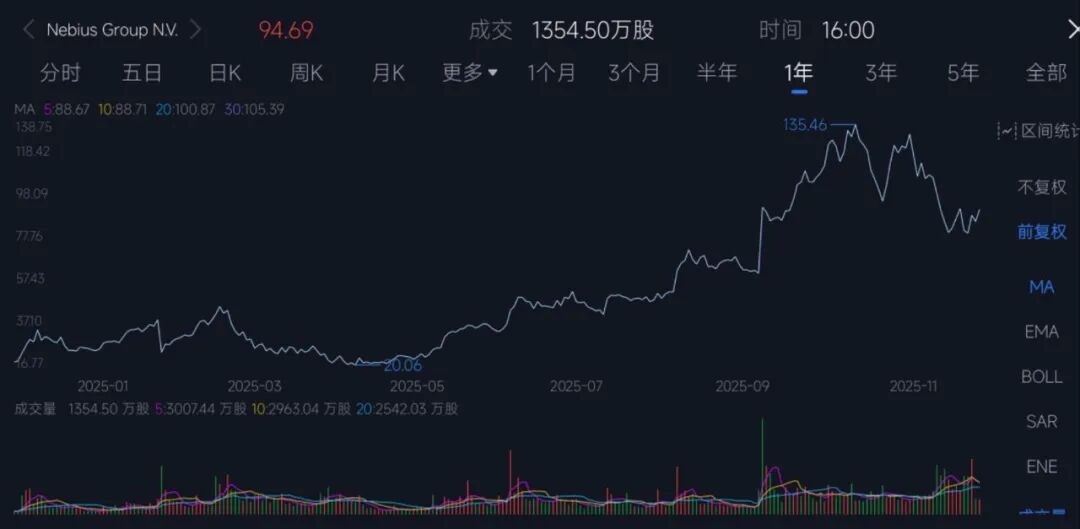
Core Insights - Nebius is projected to experience significant growth by 2026, with expectations of revenue reaching between $7 billion and $9 billion, up from an annual run rate of $551 million in Q3 2023, which represents a year-over-year growth of 355% [4] - The company has increased its contract power from 1 gigawatt to 2.5 gigawatts to meet the rising demand for AI computing power [4] - Nebius, spun out from Yandex, has been successful in the AI-focused cloud computing sector and is expected to follow a growth trajectory similar to that of CoreWeave [3][7] Financial Metrics - Nebius currently trades at 64 times sales, which may seem high, but the forward sales metric is more appropriate given the anticipated growth [5] - The market capitalization of Nebius is approximately $25 billion, with a current stock price of $0.52 [11] - The gross margin for Nebius is reported at -1312.43%, indicating a significant loss, which is common for companies in the market-capturing phase [11] Market Context - Both Nebius and CoreWeave are in a rapid expansion phase, focusing on capturing market share rather than immediate profitability [9] - The demand for computing capacity is currently unreal, and profitability for both companies is not expected for a few years [9] - The success of Nebius and CoreWeave will depend on the market's willingness to invest in growth-oriented companies, which could lead to substantial stock price increases if the appetite for risk remains [12]


Prediction: This Artificial Intelligence Company Will Be Acquired in 2026
Yahoo Finance· 2025-12-18 22:37
Core Viewpoint - Nebius Group is positioned as a strong candidate for acquisition within the rapidly evolving artificial intelligence industry, driven by its significant growth and strategic partnerships with major tech companies [2][6][10]. Company Overview - Nebius is an artificial intelligence data center owner/operator, providing affordable infrastructure solutions tailored for clients who prefer not to build their own data centers [1]. - The company reported a revenue of $146.1 million for the last quarter, marking a 355% year-over-year increase from $32.1 million [5]. Strategic Partnerships - In September, Nebius secured a multibillion-dollar deal with Microsoft for AI infrastructure services, which is seen as a pivotal moment for the company [6]. - Nebius also disclosed a three-year, $5 billion agreement with Meta Platforms to supply AI infrastructure, highlighting its growing importance in the industry [8]. Market Dynamics - The AI industry is witnessing a trend of acquisitions as companies seek to enhance competitiveness and ensure survival, with major players like IBM and Nvidia actively acquiring other firms [3][4]. - The demand for Nebius' services is increasing, with large customers willing to pay a premium for AI infrastructure, indicating a potential shift towards outright acquisitions for cost-effectiveness [12]. Future Projections - Nebius anticipates its electricity needs will rise from 220 megawatts this year to between 800 megawatts and 1 gigawatt next year, with a projected contracted need of 2.5 gigawatts by the end of 2026 [9]. - The company aims for annualized revenue between $7 billion and $9 billion by the end of next year, compared to an expected revenue of about $550 million for 2025 [9]. Investment Considerations - With a market cap of less than $20 billion, Nebius presents a cost-effective entry point into the AI data center market for larger companies looking to acquire proven solutions [10]. - Despite the uncertainty surrounding potential acquisitions, Nebius is recognized as a promising growth prospect in its own right [13].
中国卖家猛攻俄罗斯电商
投中网· 2025-12-17 04:10
Core Viewpoint - The article discusses the opportunities and challenges for Chinese companies in the Russian e-commerce market following the recent visa-free policy for Chinese citizens and the significant market gap created by the withdrawal of Western companies due to geopolitical tensions [4][6]. Economic Overview - The Russian e-commerce market is experiencing rapid growth, with online retail sales reaching 4.4 trillion rubles (approximately 400 billion RMB) in the first five months of 2025, a year-on-year increase of 39% [4]. - The Russian Central Bank has sold 232.6 tons of gold to cover budget deficits, indicating severe financial pressure, with a fiscal deficit of 3.69 trillion rubles (approximately 325.46 billion RMB) in the first half of the year, over five times that of the same period in 2024 [8][9]. - The ongoing conflict has led to significant currency fluctuations, with the ruble experiencing a 40% appreciation against the dollar in 2025, although long-term geopolitical risks remain a concern [10][11]. Payment and Transaction Challenges - The sanctions have disrupted normal banking operations, affecting payment channels and leading to delays in fund transfers for merchants [11][12]. - New payment solutions are emerging, such as Ozon's GEP payment method, which aims to facilitate transactions despite the challenges posed by the sanctions [12]. Logistics and Supply Chain - The logistics landscape has changed dramatically due to the conflict, with transportation costs increasing by 69% over the past three years [14]. - Ozon has established fulfillment centers in ten Chinese cities and is offering reduced shipping rates for orders to Kazakhstan and Belarus, potentially lowering logistics costs by 40% [15]. Marketing and Brand Localization - The closure of Western social media platforms has shifted marketing efforts towards local platforms like VK and Telegram, which have significant user bases in Russia [16][18]. - Ozon plans to launch the "Ozon Alliance Program" to connect Chinese brands with over 1 million KOLs on VK, enhancing brand visibility in the Russian market [18]. Conclusion - The Russian e-commerce market is undergoing structural changes, with logistics and marketing strategies needing to adapt to the new geopolitical landscape. Companies that can quickly adjust to these changes are likely to find growth opportunities in this evolving market [18].

“俄版谷歌”,正帮中国商人大赚
Di Yi Cai Jing Zi Xun· 2025-12-16 05:27
Group 1 - The rise of trade between China and Central Asian countries has created opportunities for Russian companies, particularly Yandex, to assist Chinese businesses in penetrating these markets [2][9] - Yandex, often referred to as the "Russian Google," is leveraging its strong position in the Central Asian Russian-speaking market to attract more Chinese clients [2][8] - The demand for Chinese products and services in Central Asia is increasing, with many Chinese companies exploring opportunities in countries like Kazakhstan and Uzbekistan [5][6] Group 2 - Kazakhstan serves as a strategic hub for Chinese companies under the Belt and Road Initiative, with a noticeable increase in Chinese advertisements and businesses in cities like Almaty [3][5] - The retail e-commerce market in Kazakhstan is experiencing significant growth, with a projected transaction volume of 1.45 trillion tenge in the first half of 2024, reflecting a 61% year-on-year increase [10] - Yandex Ads is actively targeting Chinese advertisers, with a reported 76% increase in the number of ads and a 192% increase in advertising spending in Kazakhstan by 2025 [10][11] Group 3 - The transition of traditional energy economies in Russia and Central Asia towards digital and renewable technologies presents new opportunities for Chinese companies, especially in the automotive sector [12][14] - Chinese automotive brands are gaining traction in Russia, with a 48% year-on-year increase in total vehicle sales expected in 2024, highlighting the growing acceptance of Chinese vehicles among Russian consumers [15] - Yandex is collaborating with Chinese automotive manufacturers to integrate its software into vehicles, enhancing their appeal in the Russian and Central Asian markets [15]

“俄版谷歌”,正帮中国商人大赚
第一财经· 2025-12-16 05:14
Core Viewpoint - The rise of trade between China and Central Asian countries has created opportunities for Russian companies, particularly Yandex, to assist Chinese enterprises in penetrating these previously overlooked markets [3]. Group 1: Market Opportunities - Kazakhstan serves as a strategic hub for Chinese companies under the Belt and Road Initiative, facilitating their entry into Central Asia [5]. - The increasing presence of Chinese brands in Kazakhstan, such as Huawei and BYD, indicates a growing interest and investment in the region [6]. - There has been a notable increase in Chinese business teams visiting Kazakhstan, leading to a surge in local hotel occupancy and business services [8]. - The demand for financial services in Central Asia is rising, with many Chinese companies seeking to expand their operations in these markets [8]. Group 2: Yandex's Role - Yandex, often referred to as the "Russian Google," is leveraging its market position to attract Chinese clients looking to enter the Central Asian market [11]. - Yandex Ads has been actively promoting its services to Chinese advertisers, highlighting the growth potential in Central Asia [13]. - The advertising expenditure by Chinese advertisers in Kazakhstan has seen significant growth, with a 76% increase in the number of ads and a 192% increase in spending [14]. Group 3: E-commerce Growth - Kazakhstan's retail e-commerce market is experiencing rapid growth, with a projected transaction volume of 1.45 trillion tenge in the first half of 2024, marking a 61% year-on-year increase [13]. - E-commerce's share of retail trade has risen to 16.6%, up by 5.1 percentage points from the previous year, indicating a shift towards online shopping [13]. Group 4: Automotive Sector Expansion - Chinese automotive brands are increasingly visible in Russia and Central Asia, with a significant rise in interest from local consumers [19]. - The sales of Chinese passenger cars in Russia are expected to grow by 48% in 2024, reaching 1.57 million units, driven by the popularity of plug-in hybrid vehicles [20]. - Yandex is collaborating with Chinese car manufacturers to integrate its software into vehicles, enhancing their appeal in the Russian and Central Asian markets [20].

中国商人抢滩中亚新蓝海 “俄版谷歌”搭桥
Di Yi Cai Jing· 2025-12-15 11:14
Group 1: Core Insights - The rise of trade between China and Central Asian countries presents opportunities for Russian companies, particularly Yandex, which is helping Chinese businesses penetrate these markets [1] - Kazakhstan serves as a strategic hub for Chinese companies under the Belt and Road Initiative, with increasing visibility of Chinese brands in Almaty [2][3] - The demand for financial services in Central Asia is growing, with many Chinese companies exploring business opportunities in the region [3] Group 2: Market Dynamics - The Central Asian market, particularly Kazakhstan, has significant untapped potential for Chinese enterprises, especially in niche sectors like light industry and technology services [3] - Yandex, as a major player in the Russian internet market, is focusing on attracting Chinese clients to facilitate their entry into the Central Asian market [5] - The retail e-commerce market in Kazakhstan is experiencing rapid growth, with a projected transaction volume of 1.45 trillion tenge in the first half of 2024, reflecting a 61% year-on-year increase [5] Group 3: Advertising and Investment Trends - Chinese advertisers are increasingly shifting their focus to Central Asia, with a 76% year-on-year increase in the number of ads placed in Kazakhstan and a 192% rise in advertising spending [6] - The primary sectors for Chinese advertisers in Kazakhstan include gaming, e-commerce, B2B, and automotive, aligning with broader trends in Chinese brand expansion [6] Group 4: Automotive Sector Insights - Chinese automotive brands are gaining traction in Russia, with a notable increase in market share following the exit of many Western brands [7] - Approximately 47% of Russian car buyers are considering Chinese vehicles for their next purchase, indicating a growing acceptance of these brands [7] - Yandex is collaborating with Chinese automotive manufacturers to integrate its services into vehicles, enhancing their appeal in the Russian and Central Asian markets [9]
60岁俄罗斯大叔靠给AI盖房赚翻了,斩获微软1400亿大单
3 6 Ke· 2025-12-15 04:14
Core Insights - Nebius, a Dutch AI infrastructure company, has secured significant contracts with Microsoft worth $19.4 billion and Meta worth $3 billion within three months, attracting industry attention [1][2] - The company reported a staggering revenue growth of 355% year-on-year in Q3 of FY2026, with its core data center business revenue increasing by 400% [1][22] - Nebius's stock price surged approximately 210% since the beginning of 2025, reflecting strong market performance [1] Financial Performance - In Q3 of FY2026, Nebius's revenue increased by 355% year-on-year and 38% quarter-on-quarter, with a core AI infrastructure EBITDA margin of 19% [22] - The company has sold all available computing power for the current fiscal quarter, indicating high demand for its services [22] Expansion Plans - Nebius plans to build a computing cluster with a total capacity of 2.5GW by 2026, equivalent to deploying approximately 1 to 1.25 million NVIDIA GPUs [2][20] - The company’s capital allocation strategy involves an initial 1% investment to secure land and power resources, followed by 18%-20% for building data centers, and 80% for GPU procurement based on confirmed contracts [5][25] Historical Context - Nebius traces its roots back to Yandex, a major Russian internet company founded in 1997, which provided it with a team of over 1,000 engineers and substantial assets [2][12] - The company was established after Yandex sold its Russian assets amid geopolitical tensions, allowing it to focus on AI infrastructure [11][12] Strategic Partnerships - Nebius maintains a close relationship with NVIDIA, which has facilitated access to advanced GPU resources, enhancing its competitive edge in the AI infrastructure market [15][17] - The company has also secured contracts with notable clients, including AI startups like Black Forest Labs and Anysphere, further solidifying its market position [22] Market Position - Nebius is positioned as a unique investment opportunity in the AI infrastructure sector, being one of the few publicly traded companies in this capital-intensive field [12] - The company’s ability to deliver comprehensive end-to-end AI infrastructure solutions distinguishes it from other emerging cloud providers [17][20]
俄罗斯电商平台选品工具推荐:俄罗斯选品数据平台
Sou Hu Cai Jing· 2025-11-23 23:29
Group 1: Current Status and Prospects of the Russian E-commerce Market - The Russian e-commerce market is rapidly developing, with a transaction volume exceeding 35 trillion rubles in 2024, representing a year-on-year growth of 18.7%, significantly outpacing the global average [1] - The market is dominated by three major platforms: Wildberries, Ozon, and Yandex Market, which collectively hold over 90% market share, making them key channels for Chinese sellers entering the Russian market [1] - Wildberries leads with a 47% market share, focusing on low-priced essential goods and covering all 83 federal subjects of Russia; Ozon targets the mid-to-high-end market with strong logistics; Yandex Market leverages its local search engine ecosystem to attract high-spending users [1] - There is substantial growth potential in the Russian e-commerce market, driven by improving infrastructure and increasing penetration in remote areas, alongside a continuous release of consumer demand [1] Group 2: Core Role of Product Selection Tools in Russian E-commerce - Product selection is a critical aspect of e-commerce operations, directly impacting sales performance and market competitiveness, especially in a market with unique consumer characteristics like Russia [3] - Selection tools help sellers efficiently gather market data, integrating sales data and user preferences to quickly identify high-demand categories and market capacity [3] - These tools also enable sellers to gain insights into trend changes, analyze seasonal demand fluctuations, and identify potential products to seize market opportunities [3] - Competitive analysis support is provided by selection tools, allowing sellers to understand competitors' pricing strategies and product advantages, thus avoiding blind imitation [3] Group 3: Introduction to Wildstats Product Selection Tool - Wildstats is recognized among Russian product selection data platforms for its practicality and specificity, particularly suitable for sellers on the Wildberries platform [5] - The tool's core advantages lie in the depth and real-time nature of its data, offering daily data scraping, cleaning, and analysis from the Wildberries platform to provide precise market insights [5] - Features such as product search and classification reports help sellers quickly locate target products and understand market capacity, competition intensity, and sales trends for informed selection decisions [5] - Wildstats supports store and brand queries for competitive analysis, enabling sellers to dissect competitors' strategies and identify differentiation opportunities [5] Group 4: Future Development of Wildstats Tool - Wildstats is not limited to a single platform and is actively developing product selection features for Ozon and Yandex Market, aiming for multi-platform coverage [6] - For data-driven sellers looking to streamline the selection process and reduce market research costs, Wildstats can significantly enhance the scientific nature of selection decisions [6]