业务结构转型

Search documents
碧桂园服务综合实力进阶:市场拓展成效显著,增值服务收入超40亿元
Xin Lang Ji Jin· 2026-03-27 04:42
Core Viewpoint - Country Garden Services demonstrated resilient growth in 2025, achieving a revenue of 48.35 billion yuan, reflecting a year-on-year increase of 4.36 billion yuan despite a challenging industry environment [1] Group 1: Financial Performance - In 2025, the company's total revenue reached 48.35 billion yuan, an increase of 4.36 billion yuan year-on-year [1] - The managed area increased to 1.16 billion square meters, which includes approximately 8.9 million square meters of "three supplies and one industry" management area [1] Group 2: Market Expansion - The company achieved significant market expansion with an additional annualized revenue of 2.03 billion yuan from new projects [1] - In major cities like Hangzhou, Guangzhou, and Shenzhen, the company signed 104 projects, while in key cities such as Suzhou, Kunming, and Guiyang, 30 projects were signed [1] - Notable projects include the Hangzhou Zhuhai Water Rhythm project and the first homeowners' committee project in Suzhou, which laid a solid foundation for regional market expansion [1] Group 3: Integrated Facility Management (IFM) Business - The IFM business targeted seven high-potential industries, successfully executing landmark projects such as Hikvision's Hangzhou headquarters and Qingdao Hisense Industrial Park [2] - The company demonstrated its ability to expand its top-tier client base through the successful implementation of diverse services across various sectors [2] - Community value-added service revenue reached approximately 4.42 billion yuan, a year-on-year increase of about 5%, accounting for approximately 9.1% of total revenue [2]

福达股份20260326
2026-03-26 13:20
Summary of the Conference Call for Fuda Co., Ltd. Company Overview - **Company**: Fuda Co., Ltd. - **Industry**: Automotive components, focusing on passenger vehicles, commercial vehicles, and robotics Key Points Business Transformation and Performance - **Significant Business Structure Transformation**: By 2025, passenger vehicle revenue is expected to account for 56% of total revenue, while crankshafts and forged blanks will contribute 80% of total revenue, maintaining a net profit margin of 16.55% [2][3] - **Revenue Growth**: In 2025, total revenue reached approximately 1.988 billion yuan, a year-on-year increase of 20.6%, with profits of 317 million yuan, up 70.9% [3] - **Quarterly Performance**: Q4 2025 revenue was 527 million yuan, a 7% increase year-on-year, with a profit of 95 million yuan, a 47% increase [3] Capacity and Production - **Capacity Expansion**: Crankshaft production capacity has solidified at 3 million units, with plans to reach 4 million crankshafts and 8 million connecting rods by 2027 [2][3] - **Gross Margin Achievement**: Q4 2025 gross margin reached a historical high of 29% due to capacity release and increased export volumes [2][9] Robotics Business Development - **Robotics Business Growth**: The company has secured orders for screw rods from Schaeffler and UBTECH, with a production capacity of 30,000 units already covered [2][5] - **Joint Ventures and Expansion**: Plans to accelerate the establishment of joint ventures and expand production in the robotics sector, particularly for automotive EMB screw rods [2][5] Market Strategy - **International Market Focus**: Aiming to double overseas exports in 2026 to counter domestic price pressures, with commercial vehicles benefiting from high-power and AIDC generator demand [2][3] - **Customer Diversification**: Transitioning from reliance on BYD to a more diversified customer base including Chery, Seres, and Geely [6][12] Technological Innovation - **Cost Reduction Initiatives**: Collaborating on the development of non-metal lightweight cycloidal reducers, achieving weight reductions of up to 80% per unit [2][11] - **New Product Development**: Engaging in the development of axial flux motors to enhance efficiency and meet specific customer demands [18][19] Financial Outlook - **Profit Improvement Expectations**: The electric drive gear business is expected to significantly reduce losses in 2025, targeting revenue of 300 million yuan and profitability in 2026 [3][4] - **Shareholder Returns**: Aiming for a dividend payout ratio of approximately 40% in 2025, adhering to a long-term commitment of at least 30% [4] Challenges and Risks - **Pressure in Passenger Vehicle Market**: Facing increased pricing pressure in the passenger vehicle segment for 2026, with strategies in place to mitigate this through capacity optimization and export growth [14][12] - **Commercial Vehicle Growth**: Anticipating significant growth in the commercial vehicle sector, particularly in high-power engine demand, which is expected to drive overall performance [13][12] Future Directions - **Continued Investment in Robotics**: Plans to invest in new robotics-related capacities and projects, particularly in the North American market [20][21] - **Long-term Growth Strategy**: Committed to ongoing development across multiple growth curves, with a focus on robotics and international market expansion [23] Additional Insights - **Sale of Joint Venture**: The sale of the joint venture with Alfen was driven by operational disagreements and high procurement costs, allowing Fuda to focus on its large crankshaft business independently [4][7] - **Emerging Trends in Robotics**: The company is observing rapid advancements in domestic robotics manufacturers, with expectations for significant growth in the humanoid robot sector [22][21]

广汇物流20260317
2026-03-18 02:31
Summary of the Conference Call for Guanghui Logistics Industry and Company Overview - **Company**: Guanghui Logistics - **Industry**: Railway and Logistics Key Points and Arguments 1. Transportation Volume Targets - The company aims for a total transportation volume of 35 million tons in 2026, increasing to 40 million tons in 2027, and potentially reaching over 100 million tons by 2028 due to the expansion of the North Wing Corridor [2][4] 2. Business Structure Transformation - Starting in 2026, the company will introduce third-party coal and chemical products into its originating business, with a planned volume of 7 million tons. The self-owned coal dispatch volume from Guanghui Energy will be reduced to 11 million tons, shifting towards a regional material dedicated line [2] 3. Market-Driven Pricing System - The freight pricing system will be linked to national railway standards, with a base price of 0.167 yuan/ton-km. Third-party charges will range from 100 to 110 yuan/ton, while Guanghui Energy's large customer price is approximately 90 yuan/ton [2][9][10] 4. Strategic Positioning of the North Wing Corridor - The Red-Nao Railway will connect to the North Line, with a planned investment of 2 to 3 billion yuan for the double-track project, expected to commence in the second half of 2026. The designed annual capacity will increase from 20 million tons to 200 million tons [2][17] 5. Competitive Landscape and Variables - The growth in railway capacity is limited by wagon resources and scheduling on the Lanzhou-Xinjiang line. Opportunities for price increases depend on rising road freight costs driven by fuel prices and the full connectivity of the North Wing Corridor by 2027 [2][5] 6. Non-Core Business Liquidation - The company has real estate inventory of approximately 2 billion yuan, with plans to liquidate by the end of 2028, expecting cumulative losses of about 300 million yuan from 2026 to 2028 [3][20][21] 7. Volume Growth Since 2022 Acquisition - Since acquiring the railway in 2022, the company has seen a compound annual growth rate of over 20%, with volumes increasing from under 10 million tons/year to 29 million tons by 2025. The 2026 target includes 18 million tons from originating and 17 million tons from through freight [4] 8. Third-Party Contracts and Future Potential - The company has signed contracts for 8.5 million tons of third-party freight. Future performance will depend on stable energy prices and high oil and gas prices, which could reduce competition from road transport [8][12] 9. Changes in Freight Pricing System - The freight pricing system has undergone significant changes, with through freight prices aligned with national railway rates and subject to fluctuations based on market conditions. The pricing for originating business is differentiated, with potential for increases if road freight prices rise [9][12][14] 10. Future Development Plans - The company plans to develop logistics parks in Ming Shui and Ning Dong, with strategic investors to accelerate construction. The Guangyuan logistics park is expected to be operational by 2028 [19] 11. Impact of Real Estate on Profitability - The real estate business has negatively impacted profits, with expected losses of over 300 million yuan from 2026 to 2028 due to market conditions and impairment provisions [20][21] 12. Communication Mechanism for Pricing Adjustments - The company has a communication mechanism with Guanghui Energy for potential price adjustments based on road freight rates, with final decisions resting with the controlling shareholder if disagreements arise [15] 13. Future Market Dynamics - The company anticipates that the overall scale and efficiency of its operations will continue to expand, with potential for higher freight rates if market conditions allow [18]

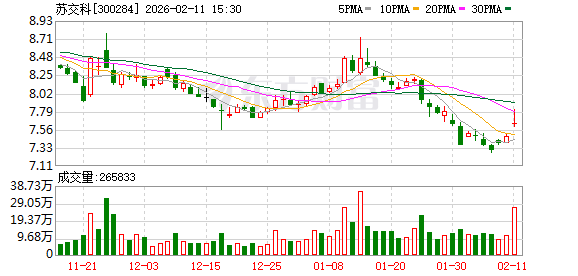
苏交科:通过强化项目执行与交付环节的协同、有效缩短订单到现金的转化周期
Zheng Quan Ri Bao· 2026-02-11 09:13
Core Viewpoint - The company emphasizes the importance of order conversion efficiency during its current business transformation phase, particularly for emerging sectors like low-altitude and smart businesses [2] Group 1 - The company is focusing on enhancing project execution and delivery coordination to improve the conversion cycle from orders to cash [2] - The aim is to ensure that new business contributions to the company's performance can be realized quickly [2]


东方雨虹20260129
2026-01-30 03:12
Summary of the Conference Call for Dongfang Yuhong (20260129) Industry Overview - **Real Estate Policy Shift and Industry Consolidation**: The national policy support has increased, accelerating the consolidation in the waterproofing industry. Dongfang Yuhong's market share has risen from 16% in 2019 to 22% in 2024, indicating a clear trend towards higher industry concentration, suggesting an inflection point for the industry [2][3]. Company Performance and Strategy - **Business Structure Optimization and Cash Flow Improvement**: Dongfang Yuhong is actively adjusting its business structure, with channel revenue accounting for 8% and retail for 37%. The rapid growth of the sand powder business has reduced reliance on the real estate sector, optimizing cash flow and enhancing overall operational quality [2][3]. - **Significant Domestic Business Transformation**: The company has shifted from a reliance on engineering to a dual model of engineering and retail, with retail nearing 40% and channel revenue at 84%. This transformation has expanded market share through category expansion and channel penetration, alongside the launch of a C-end service platform to increase customer loyalty [2][3][15]. - **Rapid Growth in Sand Powder Business**: The production capacity of sand powder has significantly increased from 1.8 million tons to 12 million tons, now accounting for 15% of total revenue. The company has improved delivery efficiency by acquiring mines and establishing production bases, enhancing cost barriers with a gross margin exceeding the overall gross margin [2][17]. Financial Performance - **Revenue and Profit Recovery**: In Q3 2025, the company's revenue grew by 8.5% year-on-year, marking the first positive growth after seven consecutive quarters of decline. Profit margins are under pressure due to lower overall gross margins and the ongoing overseas investment phase, but the decline in profits is narrowing, indicating signs of recovery [3][24]. - **Cash Flow and Debt Management**: The operating cash flow turned positive in the first three quarters of 2025, with a debt ratio of approximately 50%, remaining low compared to peers. Accounts receivable decreased significantly, reflecting effective execution of strategies to reduce reliance on real estate and direct sales [3][21]. International Expansion - **Steady Overseas Market Expansion**: Dongfang Yuhong is expanding internationally through trade, investment, and acquisitions, having entered over 150 countries. Although short-term effects are difficult to assess, the strategy is clear and cautious, with no major risks reported [2][7]. - **Investment and Expansion Strategy**: The company has accelerated overseas investments since 2024, focusing on regions with significant capacity gaps and strong future demand. This includes establishing production bases in the U.S., Malaysia, and Canada, and acquiring local companies to enhance market presence [8][12][14]. Competitive Advantages - **Strong Market Position in the Waterproofing Industry**: Dongfang Yuhong has a significant competitive advantage with a rising market share and healthy financial indicators. The company has effectively navigated the downturn in the industry and is positioned to benefit from price increases and stabilization in new real estate projects [5][26]. Risks and Challenges - **Management of Governance Risks**: The control risk associated with the major shareholder has decreased, with a reduction in pledged shares and financing balances. This indicates that governance risks are relatively manageable and the company has passed the most challenging phase [25]. Future Outlook - **Profitability Forecast and Valuation**: The company is expected to benefit from industry recovery and improved operational quality. A target PE ratio of 30 times for 2026 is suggested, with adjustments for annual impairment losses, indicating a reasonable valuation compared to peers [26].

铭普光磁(002902.SZ):预计2025年净亏损2.20亿元~2.75亿元
Ge Long Hui A P P· 2026-01-28 14:34
Group 1 - The core viewpoint of the article is that Mingpu Optoelectronics (002902.SZ) anticipates a net loss of between 220 million to 275 million yuan for the fiscal year 2025, compared to a loss of 291 million yuan in the same period last year [1] - The company expects a net profit loss of 200 million to 255 million yuan after excluding non-recurring gains and losses, which is an improvement from a loss of 300 million yuan in the previous year [1] - The company is actively adjusting its development pace in response to market changes in the magnetic component industry, focusing on high-end products and high-growth application scenarios [1] Group 2 - The company is experiencing slight fluctuations in revenue due to the transitional impact of its business structure transformation [1] - The core focus of the company is on enhancing profitability by increasing the revenue share of high-margin businesses while simultaneously improving internal operational management [1] - The company aims to release operational efficiency to lay a foundation for future business growth [1]

经营贷利率“贴地飞行” 中小银行有点吃不消
Zhong Guo Zheng Quan Bao· 2026-01-26 21:52
Core Viewpoint - The continuous decline in operating loan interest rates is driven by multiple factors, including policy guidance, market competition, and reduced funding costs, leading banks to focus on lending to quality small and micro enterprises [1][4]. Group 1: Loan Interest Rates - Several banks have reduced their operating loan interest rates, with some as low as 2.31%, a decrease of nearly 20 basis points from the previous month [1][2]. - The lowest rates for collateralized operating loans are reported between 2.31% and 2.55%, with some products potentially offering effective rates in the "1s" due to interest subsidies [2][4]. - The interest rate for first-time borrowers among small and micro enterprises can be reduced to the "1s" range due to a fiscal interest subsidy of 1% for the first year [2][3]. Group 2: Policy and Market Environment - The fiscal interest subsidy policy has been extended to the end of 2026, increasing the loan cap for eligible enterprises from 1 million to 10 million yuan [3]. - The subsidy now covers 11 sectors, including newly added digital, green, and retail consumption areas, alongside traditional sectors like hospitality and entertainment [3]. Group 3: Competition Among Banks - The competition for quality clients has intensified, with banks requiring higher standards for collateral, such as property location and age [5][7]. - Smaller banks are focusing on differentiating their client base and may offer lower rates or higher loan amounts to attract clients that do not meet the criteria of larger banks [7][8]. - The pressure to lower rates may lead to a compromise in risk management, with some banks potentially relaxing their standards to maintain competitiveness [7][8]. Group 4: Strategic Recommendations - Banks are encouraged to adopt differentiated pricing based on client creditworthiness and operational status, leveraging digital technology for risk control [8]. - There is a need for banks to diversify their business structure, focusing on wealth management and payment services to reduce reliance on net interest margins [8]. - Strengthening self-regulation and avoiding irrational price competition are essential for maintaining a balance between supporting the real economy and ensuring sustainable operations [8].



经营贷利率“贴地飞行”中小银行有点吃不消
Zhong Guo Zheng Quan Bao· 2026-01-26 20:54
Core Insights - The continuous decline in operating loan interest rates is driven by multiple factors including policy guidance, market competition, and reduced funding costs [1][3][6] - Banks are focusing on operating loans as a key area for credit allocation, especially in light of weak mortgage demand and the need to optimize credit structures [1][3] Group 1: Interest Rate Trends - Several banks have lowered their operating loan interest rates, with some rates dropping to as low as 2.31% [1] - The minimum interest rate for secured operating loans is currently around 2.35%, while unsecured loans start at 2.55% [2] - With government subsidies, first-time borrowers from small and micro enterprises can enjoy interest rates as low as the "1s" [2] Group 2: Policy and Market Dynamics - The government has extended the fiscal subsidy policy for service industry enterprises until the end of 2026, increasing the loan cap for subsidies from 1 million to 10 million yuan [2] - The competition among banks is intensifying as they seek to attract high-quality small and micro enterprise clients, leading to a price war [3][5] Group 3: Risk and Sustainability - The ongoing decline in interest rates is putting pressure on banks' net interest margins, potentially leading to a focus on higher-risk clients [6] - Banks are encouraged to adopt differentiated pricing based on client creditworthiness and to enhance risk control through digital technologies [6] - The balance between price competition and sustainable operations is identified as a critical challenge for banks [6]

中远海科(002401.SZ):预计2025年归母净利润2900万元-3600万元,同比下降71.79%-77.27%
Ge Long Hui A P P· 2026-01-26 10:01
Core Viewpoint - The company Zhongyuan Haike (002401.SZ) expects a significant decline in net profit for the year 2025, with projections indicating a drop of 71.79% to 77.27% compared to the previous year [1] Financial Performance - The estimated net profit attributable to shareholders for the period from January 1, 2025, to December 31, 2025, is projected to be between 29 million and 36 million yuan [1] - The net profit after deducting non-recurring gains and losses is expected to be between 16 million and 20 million yuan, reflecting a decrease of 83.46% to 86.77% year-on-year [1] Business Challenges - The company is actively addressing challenges posed by changes in market competition and business structure transformation [1] - The digital shipping and supply chain business segments are showing sustained growth due to effective large customer marketing and the efficiency of smart product services [1] - Conversely, the digital city and transportation business segments are experiencing a notable decline in revenue and gross profit due to decreased customer demand and intensified industry competition, significantly impacting the company's net profit [1]

富友支付难掩三重致命硬伤
Xin Lang Cai Jing· 2026-01-25 01:02
Core Viewpoint - Compliance issues are the most significant obstacle for Fuyou Payment's listing journey, reflecting systemic internal control vulnerabilities and becoming a core concern for the Hong Kong Stock Exchange's review [3][10]. Compliance Issues - Fuyou Payment has faced numerous penalties over the past decade, indicating serious compliance failures across its operations, including payment business norms and customer identity verification [3][10]. - The company was ordered to exit payment business in seven provinces due to a serious violation in 2014, significantly reducing its operational scope [4][11]. - In 2023, Fuyou Payment was fined 4.55 million yuan for failing to fulfill customer identity verification obligations, and in 2024, it faced additional penalties for foreign exchange violations [4][11]. Business Structure and Growth Challenges - Over 80% of Fuyou Payment's revenue relies on traditional merchant acquiring services, which are highly homogeneous and face intense competition, leading to high commission costs [4][11]. - The company's domestic payment business gross margin has been declining year by year, adversely affecting overall profitability [4][11]. - The cross-border payment business has shrunk by over 30% in three years, and the anticipated growth from digital commercial solutions has not materialized [5][12]. Financial Position and Market Environment - Fuyou Payment holds only over 300 million yuan in cash and equivalents, highlighting a significant funding gap for technological upgrades and market expansion [5][13]. - The pressure from early investors seeking returns and the challenging external environment add uncertainty to Fuyou Payment's listing prospects [5][13]. - The Hong Kong market's scrutiny of financial firms has shifted towards evaluating compliance sustainability, business innovation, and growth potential, making it difficult for Fuyou Payment to gain approval [5][13]. Listing History and Future Prospects - Fuyou Payment has attempted to list multiple times, with three failed attempts in A-shares and three in Hong Kong, primarily due to unresolved compliance and performance issues [6][14]. - To succeed in its listing, Fuyou Payment must address three core issues: improving compliance, reducing reliance on traditional services, and optimizing profit structure [6][14]. - Current conditions suggest that these challenges are unlikely to be resolved in the short term, making future listing attempts potentially futile [7][14].