
产业援藏

Search documents
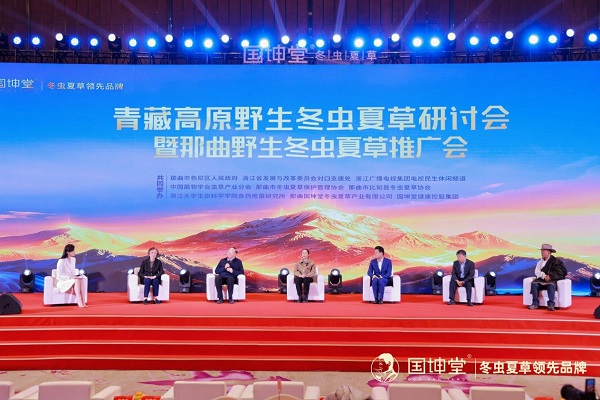
科技赋能 守正创新——“国坤堂8周年品牌盛典”在杭州圆满举办
Sou Hu Wang· 2026-01-09 08:37
Core Viewpoint - The event highlighted the significance of wild Cordyceps sinensis from the Tibetan Plateau, focusing on its protection, development, and health value, while celebrating the 8th anniversary of Guokun Tang Health Holdings Group [1][3]. Group 1: Event Overview - The "Wild Cordyceps Sinensis Seminar and Guokun Tang 8th Anniversary VIP Customer Appreciation Event" was held in Hangzhou, gathering leaders and experts from various institutions to discuss the resource protection and development of wild Cordyceps sinensis [1][3]. - Guokun Tang's chairman, Lv Huanzhi, expressed gratitude for the support received over the past eight years and reaffirmed the company's commitment to high-quality, pure wild products [4][5]. Group 2: Industry Insights - The seminar's theme, "Protecting the Snowy Treasure, Supporting Healthy China," emphasized the importance of resource protection and high-quality industrial development paths for wild Cordyceps sinensis [3]. - Experts from various fields discussed the unique value of wild Cordyceps sinensis, highlighting its irreplaceable role in health management and its historical significance in traditional medicine [10][11]. Group 3: Technological and Standardization Efforts - Collaboration between academia and industry is crucial for ensuring the quality of wild Cordyceps sinensis, with advancements in preservation techniques being shared [13]. - A traceability system for wild Cordyceps sinensis was established to address industry issues, emphasizing the importance of authenticity in maintaining product quality [13]. Group 4: Recognition and Customer Engagement - Guokun Tang was awarded the title of "Leading Enterprise of Naqu Wild Cordyceps Sinensis" for its contributions to the industry, showcasing its commitment to local economic development [16]. - The appreciation event included awards for loyal customers and highlighted the emotional connections built over the years, reinforcing customer loyalty [18][19]. Group 5: Future Outlook - Guokun Tang aims to continue its mission of protecting the ecological treasures of the Tibetan Plateau while providing high-quality products and services to enhance public health [21].

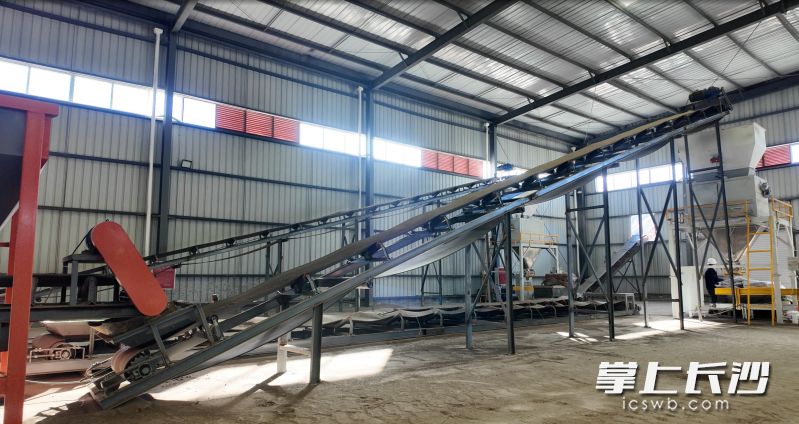
赋能高原农业,书写绿色答卷——探访援藏企业中韵生物
Xin Lang Cai Jing· 2025-12-28 14:15
Core Viewpoint - The establishment of Xizang Zhongyun Biotechnology Co., Ltd. aims to address the challenges of livestock manure management and provide high-quality organic fertilizers to support sustainable agricultural development in the Tibetan region [3]. Group 1: Company Overview - Xizang Zhongyun Biotechnology Co., Ltd. was established in March 2024 and focuses on organic fertilizer production and harmless treatment of livestock manure [3]. - The company operates a complete industrial chain that includes research and development, production, sales, and service, aimed at solving the ecological development issues in agriculture [3]. Group 2: Technology and Production - The company utilizes a "livestock manure biological treatment technology" combined with a dynamic continuous fermentation process, achieving fully automated and contactless fermentation [3]. - The production facility can process 200,000 tons of livestock manure annually and produce 150,000 tons of high-quality organic fertilizer, effectively turning waste into valuable resources [3]. Group 3: Product Advantages - The organic fertilizer produced has a high organic matter content and balanced nutrients, which can effectively improve soil compaction issues in high-altitude areas [3]. - The product contains a composite microbial community that promotes healthy crop growth and enhances disease resistance and crop quality [3]. Group 4: Research and Development - The company has formed a professional R&D team to optimize fertilizer formulations based on the specific characteristics of high-altitude soils and crop growth needs [5]. - Collaborations with agricultural research institutions from inland regions have introduced advanced fermentation technologies and testing standards to ensure product suitability for high-altitude agricultural practices [5]. Group 5: Economic and Social Impact - The operation of Zhongyun Biotechnology has created multiple benefits, addressing livestock manure pollution while providing quality fertilizers for the planting industry [5]. - The company has generated employment opportunities for local farmers and increased their income through the purchase of livestock manure, demonstrating a shift from "blood transfusion" to "blood production" in industry support [5].
长沙援藏久久为功,“十四五”期间以产业赋能西藏贡嘎高质量发展
Xin Lang Cai Jing· 2025-12-19 23:34
Core Viewpoint - The article highlights the successful industrial aid from Changsha to Gongga County in Tibet during the 14th Five-Year Plan, focusing on transforming "blood transfusion" aid into "blood production" development through various initiatives, including investment attraction and platform establishment. Group 1: Industrial Development - Changsha's industrial aid has led to the establishment of a food processing industrial park in Gongga County, which processes 200 kilograms of raw meat per hour, significantly increasing local employment and income for the Tibetan community [2] - The industrial park has attracted multiple enterprises, creating a complete supply chain for procurement, processing, packaging, and sales, with products like Cangxiang Flavored Beef Jerky winning awards [2] Group 2: Investment Attraction - Investment attraction is a key strategy, with Changsha's aid team successfully bringing in nine companies, including Guojigroup, with a total investment of 320 million yuan in 2024 [3] - The 11th aid team from Changsha has signed six projects with a total investment of 334 million yuan, further enhancing the region's industrial capabilities [3] Group 3: Platform Building - Changsha has established a comprehensive online and offline sales platform to address the challenges of highland products, investing 30 million yuan in the Xiang-Zang Economic and Trade Center to facilitate product sales [4] - The "Cattle Ark" project has successfully set up warehouses and a showroom for highland products, promoting over 200 types of agricultural products to national markets [4] Group 4: Community Economic Development - The "Common Prosperity Workshop" model in Guoji Village has increased collective economic income by 100 times to 800,000 yuan, demonstrating effective community engagement in the industrial chain [5] - The aid efforts have focused on five main areas, contributing to 109 projects with an investment of 148.5 million yuan, promoting long-term stability and high-quality development in Gongga County [5]
国务院国资委:有力有序有效推进雅下水电工程、川藏铁路等重大项目建设 不断加大在藏投资兴业力度
Zheng Quan Shi Bao Wang· 2025-08-26 01:53
Group 1 - The State-owned Assets Supervision and Administration Commission (SASAC) emphasizes the need for central enterprises to deepen industrial assistance in Tibet and implement targeted measures to develop local特色优势产业 [1] - Increased investment in infrastructure projects such as the Yaxia Hydropower Project and the Sichuan-Tibet Railway is prioritized to enhance economic development in Tibet [1] - Central enterprises are encouraged to allocate more support funds towards grassroots initiatives and民生 projects, focusing on small-scale, community-oriented benefits [1] Group 2 - Employment assistance initiatives are to be strengthened, including recruitment events specifically for graduates from Tibet, Qinghai, and Xinjiang [1] - The importance of promoting ethnic unity is highlighted, with guidance for central enterprises to integrate ethnic work with assistance efforts in Tibet through project construction and cultural exchanges [1] - The overall goal is to contribute to the stability and security of border areas while supporting the development of a modern, prosperous, and harmonious socialist Tibet [1]
产业援藏 从“输血”到“造血”
证券时报· 2025-08-24 23:42
Core Viewpoint - The article emphasizes the transition of Tibet's economy from "blood transfusion" to "blood production," highlighting the importance of industrial aid in fostering sustainable economic growth through technology, investment, and local development initiatives [2][4]. Group 1: Industrial Aid Initiatives - Industrial aid in Tibet is crucial for developing internal growth dynamics, with various provinces and central enterprises contributing funds, projects, and technological expertise [2]. - The "Cangnan Peach Valley" project, a tourism initiative near the Dubu Hydropower Station, is a Shenzhen-supported aid project aimed at creating a signature development model for Tibet [2]. - Tibet Mining, under China Baowu Steel Group, is strategically important despite its smaller revenue share, focusing on social responsibility in industrial aid [2][3]. Group 2: Investment and Economic Impact - In 2022, Tibet Mining and a subsidiary of China Baowu Steel Group invested nearly 6 billion yuan in a lithium carbonate production line in Zabuye, which has known lithium resources of approximately 1.8 million tons and potassium resources of about 15 million tons [2]. - Local farmers have seen an income increase of nearly 60 million yuan over three years due to the development of the Zabuye project, which utilizes local companies for transportation and labor [3]. - The establishment of joint laboratories and sharing of mining technology with local industries exemplifies the "blood production" approach, fostering innovation and local capacity building [3]. Group 3: Broader Economic Development - The Guangdong-aided Yuelin Industrial Park in Linzhi aims to promote industrial clustering and poverty alleviation, with the presence of multiple cosmetics companies indicating successful industry attraction [3]. - The recent efforts of the tenth batch of central aid personnel resulted in the coordination of 16.654 billion yuan in aid funds, implementation of over 2,900 projects, and the creation of 747 distinctive brands, showcasing the effectiveness of the "blood production" model [3].


产业援藏 从“输血”到“造血”
Zheng Quan Shi Bao· 2025-08-24 18:37
Core Viewpoint - The article emphasizes the importance of industrial aid in transforming Tibet's economy from "blood transfusion" to "blood production," highlighting the role of various provinces and state-owned enterprises in providing not only funds and projects but also technology, concepts, and industrial ecosystems to foster endogenous development in Tibet [1][2]. Group 1: Industrial Aid Projects - The "Cangnan Peach Valley" tourism project, a Shenzhen aid project, aims to create a landmark for Shenzhen's assistance to Tibet, focusing on economic development and benefiting local residents [1]. - Tibet Mining, under China Baowu Steel Group, is strategically significant despite its small revenue and profit share, reflecting a commitment to social responsibility in industrial aid [1][2]. - In 2022, Tibet Mining and a subsidiary of China Baowu invested nearly 6 billion yuan in a lithium carbonate production line in Zabuye, which has known lithium resources of approximately 1.8 million tons and potassium resources of about 15 million tons [1]. Group 2: Economic Impact and Local Development - Tibet Mining's operations have led to local economic development, with local farmers earning nearly 60 million yuan over three years through contracted services for transportation and labor [2]. - The establishment of joint laboratories and sharing of mining technology by Tibet Mining aims to create original technology suited for Tibet, demonstrating a "demonstration-driven" effect for local industries [2]. - The Guangdong-aided "Yuelin Industrial Park" serves as a model project for industrial aid, promoting poverty alleviation and industrial clustering, with the presence of multiple cosmetics companies in Tibet [2]. Group 3: Financial and Project Coordination - The recently concluded 10th batch of central aid personnel coordinated the allocation of 16.654 billion yuan in aid funds, implemented over 2,900 projects, and developed 747 distinctive brands, showcasing the effectiveness of "blood production" aid [2].

李乐成赴西藏调研电信普遍服务和产业援藏工作
Zheng Quan Shi Bao Wang· 2025-08-07 13:18
Group 1 - The Ministry of Industry and Information Technology is conducting research in Tibet to understand the progress of the "Broadband Frontier" initiative and its impact on industrial development [1] - The minister, Li Lecheng, visited regions including Lhasa, Shigatse, and Shannan to gather insights on information communication's role in empowering local industries [1] - The visit also included meetings with personnel involved in the ministry's support efforts in Tibet, highlighting the government's commitment to regional development [1]
江苏三年累计落实312个援藏招商引资项目——苏藏同心浇灌高原致富花
Xin Hua Ri Bao· 2025-06-23 23:15
Group 1 - Jiangsu's 11th batch of aid personnel has begun a new three-year mission in Tibet, following the successful completion of the 10th batch [1] - The collaboration between Jiangsu and Lhasa has created a strong industrial community, with initiatives like the "Dazi Danyang Eyewear City" bringing industry expertise from Jiangsu to Tibet [1] - The eyewear market in Lhasa is responding to local health needs, as the region has a high incidence of eye diseases due to strong UV radiation [1] Group 2 - The "Dazi Danyang Eyewear City" has provided training opportunities for over ten Tibetan employees, transforming their career prospects and increasing their income significantly [2] - A flower horticulture demonstration base established by Jiangsu's Taizhou aid team has introduced advanced techniques and technologies, enhancing the local flower industry [2] - Jiangsu's aid efforts have shifted from merely providing resources to fostering self-sufficiency in Tibet, with over 3,500 local professionals trained and numerous investment promotion activities conducted [2] Group 3 - Various agricultural and industrial projects in Tibet, such as cattle breed improvement and smart greenhouses, are yielding significant economic benefits and transforming local livelihoods [3] - A total of 312 investment projects have been initiated, with an agreement for 593 billion yuan in investments, making Jiangsu the leading province in terms of actual funds allocated for aid projects in Tibet [3] - The initiatives have created over 1,000 jobs and helped lift more than 2,800 impoverished individuals out of poverty [3]
产业援藏兴边富民
Jing Ji Ri Bao· 2025-06-10 22:12
Group 1 - The core viewpoint emphasizes that industrial assistance in Tibet is a crucial driver for high-quality economic development, transitioning from "blood transfusion" support to "blood-making" development, and from single project support to full industrial chain cultivation [1][3] - Industrial assistance focuses on precise efforts, leveraging Tibet's unique clean energy resources, such as solar and wind energy, to establish a complete industrial chain that transforms resource advantages into market advantages [1][2] - The establishment of the Changdu Zero Carbon Industrial Park exemplifies a new model of "industrial value-added benefiting ecology," maximizing resource value and becoming a key driver for Tibet's green transformation [1] Group 2 - The key strategy of industrial assistance lies in deeply exploring "characteristics," with the development of highland light industry showcasing the effective utilization of unique resources like yak milk, barley, and Tibetan medicine [2] - The integration of industries releases multiplier effects, enhancing industrial vitality through collaborative development across agriculture, industry, and services, creating a virtuous cycle that boosts overall competitiveness [2] - Industrial assistance contributes positively to the establishment of a modern economic system and a new industrial system in Tibet, becoming an important engine for stable development and the enhancement of local livelihoods [3]
第二届江苏拉萨周在宁开幕 一批重大项目签约
Nan Jing Ri Bao· 2025-05-29 02:49
Group 1 - The second Jiangsu-Lhasa Week was inaugurated in Nanjing, marking a new opportunity for cooperation and project upgrades between Jiangsu and Lhasa [1] - Jiangsu has established a support mechanism for Lhasa for 31 years, allocating a total of 8.19 billion yuan in aid and implementing 751 projects [1] - The focus of Jiangsu's aid work is on industrial support, leveraging the strengths of both regions to promote high-quality industrial development in Lhasa [1] Group 2 - A series of major projects were signed during the launch ceremony, including an agreement between Lhasa's industrial fund and Jiangsu Yida Capital to create an investment-friendly environment [1] - The "Lhasa Good Water and Good Products" brand is set to be introduced in Nanjing in 2024, with plans for a showroom and three sales outlets, featuring products like barley wine and fresh yak meat [2] - The sales revenue from Lhasa's products has reached 30 million yuan, with expectations to hit 50 million yuan by the end of the year, supported by a cold chain logistics network [2]