人工智能商业化

Search documents
Seedance2.0爆火 神秘模型登顶!投资圈热议AI“春节档”
Zhong Guo Zheng Quan Bao· 2026-02-12 05:06
Core Insights - The article highlights the rapid advancements in AI technology, particularly focusing on the launch of new models like GLM-5 by Zhiyu and Seedance2.0 by ByteDance, which are gaining significant attention in the market [1][3][5]. Group 1: AI Model Developments - Zhiyu's new model GLM-5 has gained popularity, topping the charts on the global model service platform OpenRouter, leading to a significant increase in Zhiyu's stock price, which rose over 50% in just two trading days [1][6]. - Seedance2.0, launched by ByteDance, has been described as a revolutionary video generation model, achieving high-quality outputs that have impressed both domestic and international users [3][4]. - The improvements in Seedance2.0 include enhanced character consistency, camera movement, and audio-visual synchronization, which significantly lower the barriers to video creation [3][4]. Group 2: Market Impact and Investment Opportunities - The surge in AI applications, particularly in media and entertainment, has sparked interest among investors, with expectations of accelerated commercialization in these sectors [1][9]. - Companies involved in AI video generation, such as those in the media and entertainment sectors, have seen substantial stock price increases, indicating a positive market response [1][9]. - Long-term benefits are anticipated for upstream computing power providers and platform-based companies, as the demand for AI-generated content is expected to rise significantly, driving growth in GPU and AI server markets [9][10].
周三停牌!688191,筹划重大资产重组
Shang Hai Zheng Quan Bao· 2026-02-03 16:07
Core Viewpoint - Zhiyang Innovation (688191) is planning to acquire control of Shenzhen Lingming Photon Technology Co., Ltd. through stock issuance, convertible bonds, and cash payments, while also raising supporting funds. This transaction is expected to constitute a major asset restructuring and related party transaction, but will not change the company's control [1]. Group 1: Company Overview - Zhiyang Innovation focuses on digital and intelligent transformation in various industries, specializing in AI algorithms, big data analysis, IoT technology, digital twin technology, and embodied intelligence [2]. - Lingming Photon, the target company, is known for its high-performance single-photon detector chips, which are essential for 3D perception in modern electronic devices, and has received significant investment for technology upgrades and production capacity enhancement [3]. Group 2: Legal Matters - Lingming Photon is currently involved in a lawsuit with Suoteng Company regarding intellectual property rights, which is considered a significant case in the laser radar chip sector. Lingming Photon has filed multiple lawsuits against Suoteng for infringement of trade secrets and patents [4]. Group 3: Transaction Details - The acquisition of Lingming Photon is still in the planning stage, with initial communications and a letter of intent signed with key parties involved in the transaction [1]. - Zhiyang Innovation's stock will be suspended from trading starting February 4, 2026, for a period not exceeding five trading days to ensure fair information disclosure and protect investor interests [1].


谷歌、OpenAI和Meta用AI“带货”、国内GEO隐性“种草”:信任危机与法律问责
3 6 Ke· 2026-01-29 00:25
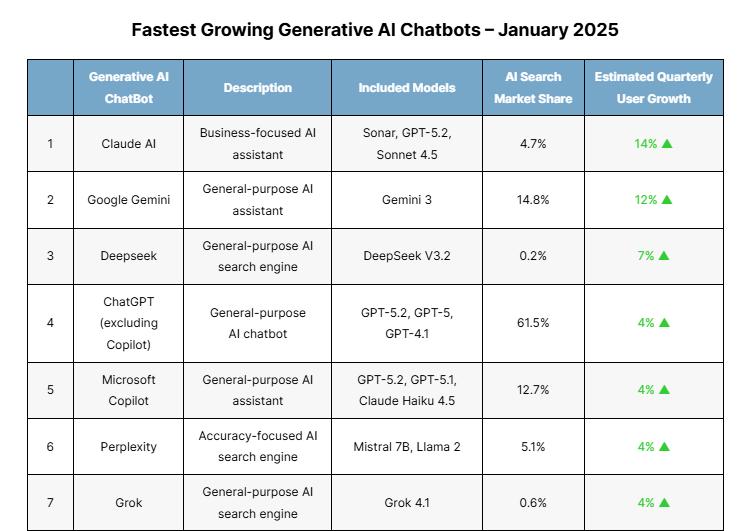
Core Insights - AI is transforming human-computer interaction, shifting from keyword searches to direct inquiries in chat interfaces, with Gartner predicting that by 2026, 25% of online searches will be conducted via AI chatbots [1] - Major AI companies like Google, OpenAI, and Meta are exploring advertising as a primary monetization strategy, despite potential conflicts with the trust users place in AI [1][6][10] Group 1: Google - Google announced the launch of "Direct Offers," a new shopping ad format in its Gemini and search AI models, as a response to antitrust pressures and the need for independent growth [2] - The focus of Google's AI chat ads is on leveraging brand discounts to drive consumer engagement, supported by a new "Universal Commerce Protocol" to streamline the shopping process [3] - Google Gemini has become the fastest-growing generative AI chatbot, capturing 20% of the global large language model traffic, up from 5% a year prior, indicating significant market potential [4] Group 2: OpenAI - OpenAI's approach to advertising has evolved from initial rejection to cautious acceptance, with plans to test ads in the free version of ChatGPT while maintaining user trust [6][9] - The company emphasizes that ads will not affect the objectivity of AI responses, with contextual activation of ads based on user inquiries [6] - OpenAI targets free and low-tier users for ad revenue while preserving ad-free options for paid subscribers, reflecting a dual strategy in monetization [9] Group 3: Meta - Meta has integrated AI chat data into its advertising strategy, allowing for more personalized ad targeting while maintaining a low profile in user experience changes [10] - The company claims not to use sensitive topic data for ad targeting, but the need to process all data for differentiation raises privacy concerns [11] - Meta's strategy aims to deepen user engagement through AI, potentially transforming AI interactions into valuable consumer behavior insights [10] Group 4: Domestic AI Advertising Landscape - Domestic AI chatbots like DeepSeek and others have been cautious about integrating ads, with no current plans to embed advertising in conversations [12][13] - These platforms strive to maintain objectivity and neutrality, inadvertently creating opportunities for third-party marketing efforts [13] - The emergence of "Generative Engine Optimization" (GEO) reflects a trend where marketing companies influence AI knowledge bases to shape user decisions, raising ethical concerns [14][15] Group 5: Broader Implications of Advertising and GEO - The commercialization of AI through advertising and GEO may narrow the cognitive capabilities of AI, challenging its potential to serve as a reliable tool for complex thinking and trustworthy advice [16] - Establishing a trustworthy AI infrastructure is crucial, as the future value of AI lies in its ability to maintain user trust rather than merely generating traffic [16]


收入200亿估值8300亿,OpenAI广告落地还在“手动阶段”
3 6 Ke· 2026-01-23 11:37
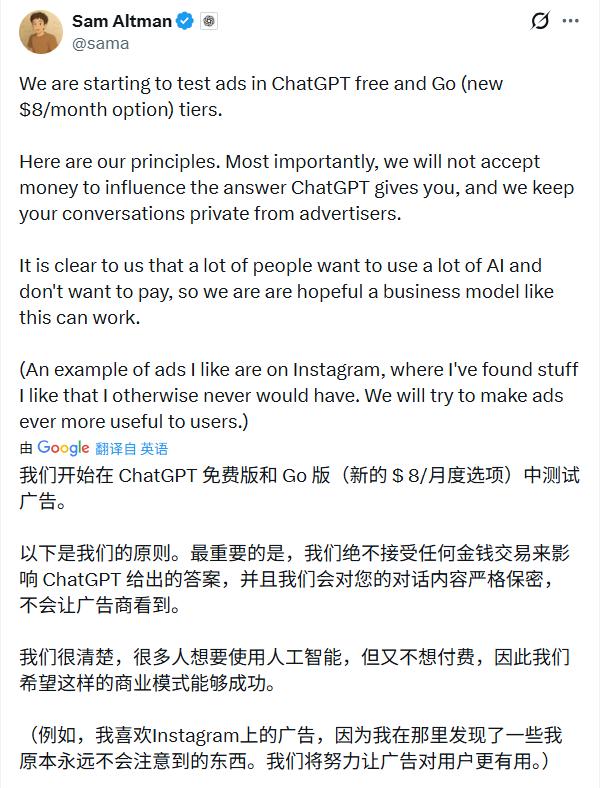
Core Insights - OpenAI's annual recurring revenue (ARR) is projected to be around $20 billion by 2025, while its valuation has reached as high as $830 billion, raising questions about how to enhance revenue to match this valuation [1] - The company is accelerating its advertising plans, having entered a practical phase of testing ads in ChatGPT, but is adopting a cautious approach by using a cost-per-impression (CPM) model instead of the more common pay-per-click (CPC) model [1][8] - OpenAI's internal operations for advertising are still in a rudimentary stage, lacking essential infrastructure such as self-service ad purchasing systems and timely responses to advertisers [1][2] Group 1: Advertising Strategy - OpenAI's immediate priority is not to sell ads but to understand how advertising can technically operate within products like ChatGPT, emphasizing user trust and product experience over short-term revenue [3] - The company has established a "Trust and Safety Operations" role to address the sensitivity of ads within AI assistants, indicating a commitment to maintaining user experience [3] - OpenAI's advertising tests are limited to adult users in the U.S. using the free version or the new $8/month "ChatGPT Go" plan, protecting core paid users and minors from ads [6][7] Group 2: Ad Implementation Details - Ads will appear at the bottom of AI-generated responses, clearly labeled as "sponsored content," ensuring they do not disrupt the user experience [7][8] - The initial ad testing phase is invitation-only, with a cap of $1 million in ad spending per advertiser, and the lack of a self-service ad system indicates that operations are still manual [8][9] - OpenAI has outlined four core principles for its advertising strategy, focusing on maintaining the independence of AI-generated content, ensuring user privacy, allowing user control over ad personalization, and emphasizing long-term value over short-term engagement [11] Group 3: Broader Business Model - OpenAI is building a multi-layered commercial model that includes subscription services, advertising, and API offerings, aiming for a sustainable revenue structure [12][13] - The company is exploring future collaborations in high-value sectors like drug development and energy exploration, indicating ambitions beyond just selling technology [13] - OpenAI's financial pressures are significant, with projected losses reaching $14 billion by 2026, necessitating the need for effective monetization strategies like advertising to sustain operations [16][17] Group 4: Commercialization Challenges - The introduction of ads is seen as a necessary step for OpenAI to ensure the economic viability of its language models, given the low percentage of users willing to pay for subscriptions [14][16] - OpenAI's advertising strategy is viewed as a form of "alchemy," aiming to extract value from its large user base while balancing user experience and trust [17] - The transition from a technology-focused entity to a commercial powerhouse represents a significant shift for OpenAI, testing its ability to maintain a balance between idealism and commercial realities [18]
谷歌Gemini变身免费家教:接入全真模考,错题还能掰碎了讲
量子位· 2026-01-22 05:39
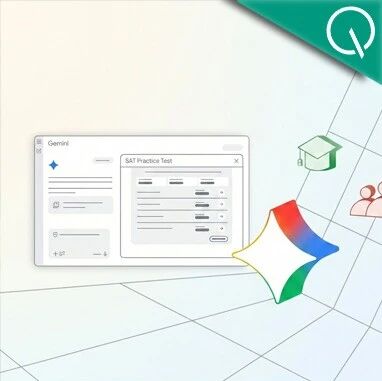
Core Viewpoint - Google has introduced a free SAT practice exam feature through its Gemini platform, which provides immediate scoring and explanations for incorrect answers, benefiting students preparing for the SAT [1][2][17]. Group 1: SAT Practice Exam Features - The SAT practice exam is developed in collaboration with The Princeton Review, incorporating a comprehensive set of verified SAT questions [7]. - Users can customize their testing experience, including options to turn off the timer or receive hints, creating a personalized practice environment [9]. - The math section of the practice exam is noted to have relatively easy questions, with one example being a straightforward algebra problem [10][11]. Group 2: Educational Value and Functionality - Gemini's primary value lies in its ability to explain answers, breaking down problem-solving steps for users who may struggle with certain questions [14][15]. - The platform allows users to review incorrect answers and identify weak areas, transforming a traditional study approach into a more targeted tutoring experience [16]. Group 3: Future Aspirations and Broader Applications - Google plans to expand Gemini's capabilities beyond the SAT to include other standardized tests in the future [17]. - Gemini is also being integrated into various sectors, including health and coding, aiming to provide specialized assistance in those fields [19]. - The overarching goal is to embed Gemini's functionalities into everyday digital experiences, enhancing user interaction across Google's services [20][21].
ChatGPT植入广告、疯狂挖角Meta员工,OpenAI越来越像Facebook了?
Hua Er Jie Jian Wen· 2026-01-20 07:10
Core Insights - OpenAI is shifting towards commercialization by introducing an advertising model and hiring former Meta employees, indicating a move towards a business-driven approach despite its non-profit origins [1][2][4]. Financial Performance - OpenAI's annualized revenue for 2025 has surpassed $20 billion, a significant increase from $6 billion in 2024, but the company has consumed approximately $8 billion in cash in 2025 [1][3]. - The introduction of advertising in ChatGPT aims to address the financial pressure and fill the funding gap created by high operational costs [1][4]. Strategic Shift - The decision to enter the online advertising space is seen as a rational choice to alleviate financial stress, with ads being displayed in both free and certain paid tiers of ChatGPT [4]. - OpenAI's recruitment strategy, particularly the hiring of around 630 former Meta employees, suggests a potential shift towards optimizing user engagement and maximizing commercial value [5]. User Engagement and Privacy Concerns - Analysts warn that the introduction of an advertising model may reshape the incentive mechanisms of the AI platform, raising concerns about user privacy and the potential manipulation of user habits for ad revenue [2][6]. - OpenAI has publicly committed not to optimize user engagement time on ChatGPT, but this promise may be difficult to enforce in an ad-driven model [6][7]. Market Dynamics - ChatGPT currently has a substantial user base, with approximately 900 million interactions weekly and average session lengths of 15 to 20 minutes, making it attractive to advertisers [8]. - The financial pressures faced by OpenAI may lead to a transformation of ChatGPT from a simple tool to a product designed to cultivate user habits, similar to social media platforms like Facebook [8].
OpenAI首款硬件定了,下半年推出
Di Yi Cai Jing Zi Xun· 2026-01-20 03:17
Core Insights - OpenAI is set to launch its first hardware device in the second half of 2026, marking a significant shift from software to a combination of software and hardware [2] - The company acquired hardware startup io for $6.5 billion last year, which has fueled speculation about its hardware plans [2] - OpenAI's CEO, Sam Altman, indicated that the company will not release a single device but rather a series of smaller devices [5] Group 1: Hardware Development - OpenAI's first AI hardware is rumored to be a special audio product, codenamed "Sweetpea," designed to replace AirPods, featuring a unique design and metallic material [3] - Another rumored product, codenamed "Gumdrop," is expected to be a smart pen or wearable audio device, produced exclusively by Foxconn in Vietnam [5] - The hardware is expected to be pocket-sized without a screen, differing significantly from existing devices like smartphones and smart glasses [5] Group 2: Financial Performance - OpenAI's CFO, Sarah Friar, revealed that the company's annual recurring revenue (ARR) is projected to exceed $20 billion by 2025 [6] - The company's computing power is expected to triple year-on-year by 2025, with a 9.5-fold increase from 2023 to 2025, alongside a similar revenue growth trend [6] - Despite the growth, OpenAI's losses are significant, with indications that losses exceeded $12 billion in Q3 2025 [6] Group 3: Commercial Strategy - OpenAI is increasingly aggressive in its commercialization strategy, exploring new applications in healthcare and advertising [7] - The success of OpenAI's "screenless" hardware in creating new application scenarios and achieving a viable business model will be a key focus for the industry in 2026 [7]
ChatGPT强行上马广告,因为OpenAI真的太烧钱
量子位· 2026-01-19 09:30
Core Viewpoint - OpenAI is facing a financial crisis, prompting the introduction of advertising in ChatGPT as a potential solution to generate revenue and avoid bankruptcy [7][15][51]. Financial Situation - OpenAI is projected to run out of funds within 18 months, with reports indicating a possible acquisition by larger companies like Microsoft or Amazon [7][15]. - The company raised $40 billion in funding last year, but its expenses are significantly higher, with projected annual burn rates exceeding $8 billion in 2025 and reaching $40 billion by 2028 [10][13]. - OpenAI's revenue for the previous year was only $20 billion, highlighting a substantial financial gap compared to its expenditures [15]. - The AI industry is estimated to have a funding shortfall of at least $800 billion, exacerbating OpenAI's financial challenges [15][16]. Advertising Strategy - OpenAI plans to test advertising in the free version of ChatGPT, marking a shift from a subscription-based revenue model to include advertising income [26][28]. - The ads will be labeled as "sponsored content" and will not affect the objectivity of ChatGPT's responses [27][29]. - OpenAI anticipates generating "low billions" in revenue from advertising by 2026, with plans to scale this income source over time [22][28]. Business Model Expansion - The introduction of advertising is part of OpenAI's broader commercial strategy, which includes subscription services and API usage-based billing [25][41]. - OpenAI's CFO emphasized that the business model should expand in line with the value created by its intelligence [36]. - Future revenue growth is expected to come from various sources, including subscriptions, API usage, and potential new pricing models as AI technology evolves [41]. User Engagement and Growth - OpenAI's weekly and daily active user metrics are at all-time highs, driven by a cycle of investment in computing power, research, and product development [43][44]. - The company is experiencing a 9.5 times increase in computing power from 2023 to 2025, with revenue growth projected to match this increase [46][55].

美股异动 | Rezolve AI(RZLV.US)盘前涨近7% 公司预计2026年营收较市场预期将近翻倍
智通财经网· 2026-01-13 14:33
Core Viewpoint - Rezolve AI has significantly raised its long-term revenue expectations, indicating strong commercial progress, with a projected revenue of at least $40 million for 2025 and approximately $350 million for 2026, suggesting explosive growth [1][2] Group 1: Revenue Projections - The company expects 2025 revenue to reach at least $40 million, slightly below analyst expectations of $40.2 million, but still indicating steady growth [1] - For 2026, Rezolve anticipates revenue of about $350 million, nearly doubling market consensus expectations and representing close to a tenfold year-over-year increase [1] Group 2: Recurring Revenue Goals - Rezolve aims to achieve at least $500 million in annual recurring revenue (ARR) by the end of 2026, translating to a monthly revenue target of approximately $40 million [1] - By comparison, the ARR for Rezolve at the end of 2025 is projected to be around $209 million [1] Group 3: Recent Performance Highlights - The company reported its best monthly performance in December 2025, with expected revenue exceeding $17 million and achieving its first month of profitability, marking a new phase in its business model scaling [1] Group 4: Growth Drivers - The rapid revenue growth is attributed to an expanding core customer base, accelerated product deployment in retail and e-commerce scenarios, and the continuous increase in recurring revenue from long-term contracts [2]
ChatGPT拟上广告,你的AI要开始带货了
创业邦· 2026-01-07 10:13
Core Viewpoint - The article discusses the shift in major AI companies towards integrating advertising into their products, indicating a move from idealistic views of AI to a more commercial approach as they seek sustainable revenue models [6][15]. Group 1: Industry Trends - Major AI companies like OpenAI and Google are exploring advertising partnerships, signaling a potential shift in how AI products are monetized [6][8]. - The traditional model of relying solely on venture capital and subscriptions is becoming unsustainable, prompting AI firms to consider advertising as a viable revenue stream [8][15]. - The integration of advertising into AI products is reminiscent of early search engines, where users initially resisted ads but later accepted them as useful [10][15]. Group 2: Advertising Strategies - Potential advertising strategies include lightweight ads in interfaces, incentivized interactions for free users, and subtle product placements within AI responses [10][11]. - The concept of Generative Engine Optimization (GEO) raises concerns about the neutrality of AI recommendations, as it may prioritize commercial interests over unbiased information [11][13]. Group 3: Commercialization Pathways - AI companies are expected to evolve their subscription models towards more specialized and scenario-based offerings, enhancing user value perception [16][18]. - The enterprise sector remains a key focus for AI commercialization, with businesses willing to pay for AI capabilities that enhance efficiency and revenue [18][20]. - Custom models tailored for specific industries are emerging as high-value opportunities, with contracts potentially worth millions [20]. Group 4: Long-term Implications - As AI becomes more integrated into commercial ecosystems, it may evolve into a central hub for digital transactions, facilitating everything from recommendations to purchases [20][21]. - The commercialization of AI is likely to reshape content creation and distribution, leading to a more homogenized information environment as creators adapt to AI preferences [21][27]. - Regulatory scrutiny is increasing, with governments examining the ethical implications of AI's commercial use and data handling practices [21][27].