先投后股

Search documents
自贡跑出产业新气象
Xin Lang Cai Jing· 2026-02-08 21:39
Group 1 - The core viewpoint of the news is the launch of the Zhongchuang Innovation Power Battery and Energy Storage Battery project in Zigong, which is designated as the "No. 1 Project" for 2026 and is expected to be completed and put into production within the year [2] - Zigong's GDP is projected to exceed 200 billion yuan in 2025, marking a 6.9% increase from the previous year, indicating a strong start to industrial development in the region [2] Group 2 - Zigong is exploring a new "investment first, equity later" model in its technology investment strategy, aimed at supporting early-stage hard technology projects that align with future industrial directions [3][4] - The "investment first, equity later" mechanism allows the government to provide initial funding without early valuation of technology, converting investments into equity based on future company valuations [4] - The city is focusing on advanced fields such as aerospace, advanced nuclear energy, sixth-generation mobile communication, and biomanufacturing, actively engaging with technology innovation companies [5] Group 3 - The Sichuan humanoid robot multimodal data collection testing center has been established in Zigong, serving as a training ground for robots before they enter production lines [6] - Zigong aims to create benchmark application scenarios in artificial intelligence by 2026, including smart factories and fully automated systems, with ongoing collaborations for data collection projects [6] - The city is also developing public pilot bases for various technologies, including fluorosilicon carbon materials and hydrogen energy, to support both leading enterprises and the broader industry [7] Group 4 - Talent is identified as a crucial factor for industrial and platform development, with Zigong prioritizing the attraction and retention of high-quality talent alongside investment and project acquisition [8] - The city plans to establish a technology innovation talent pool across 17 sub-industries, providing policy support for key enterprises and innovation teams [8]


广州:财政资金投资,单项目允许容亏100%
FOFWEEKLY· 2026-01-21 10:01
Core Viewpoint - Guangzhou is implementing a new model for technology achievement transformation called "补改投" (subsidy to investment), which allows for a maximum loss tolerance of 100% to encourage investment in early-stage technology projects [6][9]. Group 1: Policy Overview - The "补改投" pilot program aims to address the financing challenges in the initial stages of technology transformation by optimizing fiscal funding methods and encouraging diverse social capital participation [4][6]. - The program introduces two new models: "invest first, equity later" for early-stage projects and converting cash awards from innovation competitions into equity investments [7][8]. Group 2: Mechanism and Highlights - The program establishes a full-chain management process from project selection to post-investment management, including a "liability exemption and loss tolerance mechanism" to ensure the safety and cyclical use of fiscal funds [8][9]. - Key highlights include innovative mechanisms for market selection and government investment, ecological collaboration to leverage social capital, and a governance system that promotes early and small investments in hard technology [8][9]. Group 3: Regional Context and Support - The Guangdong province is leading in creating a "patient capital" ecosystem, with a comprehensive action plan to promote high-quality venture capital development [11]. - The establishment of significant funds, such as the Guangdong Strategic Emerging Industry Investment Guidance Fund with a registered capital of 50 billion yuan, reflects strong policy support and a robust industrial foundation [12]. Group 4: National Trends - Nationally, there is a shift towards "patient capital," with various regions implementing mechanisms that allow for high loss tolerance in government-guided funds, fostering a long-term investment environment [15][16]. - The transformation of state-owned capital from mere funding sources to long-term partners in the investment process is crucial for supporting hard technology and innovation [18].

广州探索促进科技成果转化新模式:财政资金由“无偿资助”转向“股权投资”
Ke Ji Ri Bao· 2026-01-20 23:57
Core Viewpoint - The "first investment then equity" pilot program is seen as a funding tool, signaling system, empowerment framework, and ecological catalyst for the Hong Kong University of Science and Technology (Guangzhou) [1] Group 1: Policy and Implementation - Guangzhou has introduced the "Guangzhou Technology Achievement Transformation 'Supplementary Reform Investment' Pilot Work Method (Trial)" to address the lack of investment in early-stage technology projects by leveraging government funds to attract social capital [1][2] - The "first investment then equity" model aims to support early-stage technology projects from universities and research institutions that have not yet secured equity financing, with government funds matched 1:1 by transformation partners [2][3] - The "Supplementary Reform Investment" model will convert 100 million yuan from the Guangzhou Innovation and Entrepreneurship Competition into equity investments for award-winning companies, providing 2 million yuan in equity investment to those in need of financing [2] Group 2: Financial Mechanisms and Support - The "Supplementary Reform Investment" funds can be held long-term or exited through agreements, with proceeds prioritized for reinvestment, creating a sustainable funding cycle [3] - The initiative emphasizes a "tolerance for failure" mechanism, allowing for normal investment risks without penalizing based on individual project performance [2][3] - Guangzhou plans to allocate no less than 15% of its annual technology innovation development special funds for "Supplementary Reform Investment" work over the next three years, aiming to stimulate innovation [5] Group 3: Collaboration and Outcomes - The collaboration between the Guangzhou Science and Technology Bureau and the Hong Kong University of Science and Technology (Guangzhou) has initiated a pilot cooperation of 30 million yuan, establishing a clear workflow among the university, government, and market institutions [3] - The "first investment then equity" policy has led to significant positive changes, providing clarity for nascent projects and encouraging alumni to engage in entrepreneurial initiatives [3] - A total of 106 quality projects have been submitted for review under the first round of entrepreneurial projects at the Hong Kong University of Science and Technology (Guangzhou) [3]
破解成果转化融资难!广州推动科技补助变投资,撬动社会资本
Nan Fang Du Shi Bao· 2026-01-15 15:20
Core Viewpoint - The Guangzhou government is shifting its approach from providing grants to becoming a partner in technology commercialization, promoting a model of equity investment to enhance the transformation of quality technological achievements in the region [1] Group 1: Policy Framework - The "Work Method" introduces a new mechanism for initial investment in technology commercialization projects through a combination of market selection and government investment [4] - The "first invest, then equity" model targets early-stage technology projects that have not yet secured equity financing, with support amounts categorized into three tiers: 1 million, 2 million, and 4 million yuan [4] - The government will establish a "supplementary investment" project database to facilitate market selection through collaboration with technology transfer institutions [4] Group 2: Financial Mechanisms - The "supplementary investment" model transforms 100 million yuan of prize subsidies from innovation and entrepreneurship competitions into equity investments for qualifying award-winning companies [5] - The government investment will generally not exceed 30% of the equity in a project, allowing for a leverage effect of more than three times [6] - The funds can be held long-term or exited through agreements such as transfer or buyback, with proceeds prioritized for reinvestment in the "supplementary investment" program [7] Group 3: Implementation and Collaboration - The Guangzhou government is collaborating with Hong Kong University of Science and Technology (Guangzhou) for a pilot project with an initial investment of 30 million yuan, focusing on project recommendation and management [8] - A total of 106 entrepreneurial projects from universities have been successfully included in the project database, covering fields such as artificial intelligence, smart manufacturing, new materials, and biomedicine [8] - The reform emphasizes a "tolerance for failure" mechanism, allowing projects that do not achieve market success within a specified period to still be recognized for their academic contributions [9]
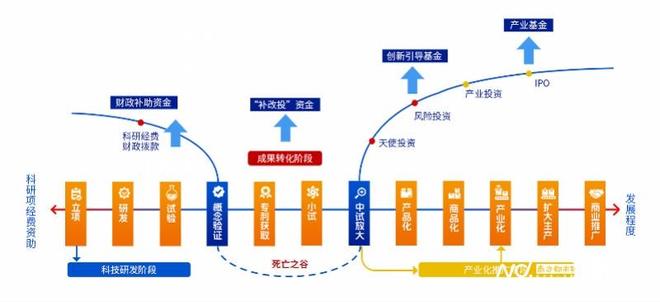
广州宣布接受单项目100%亏损,把给科创企业的补贴变为投资
第一财经· 2026-01-15 11:45
Core Viewpoint - Guangzhou is fostering a more tolerant environment for failure in technology innovation, aiming to create a "Guangzhou model" for the transformation of scientific and technological achievements through the implementation of the "补改投" pilot program [2][4]. Group 1: Policy Framework - The "补改投" pilot program aims to address the challenges in the initial stages of technology achievement transformation, focusing on the most difficult and high-risk "first kilometer" [2]. - The program establishes a long-term governance system characterized by "incentives + tolerance for losses," allowing for a 100% loss on individual projects without accountability for responsible parties, as long as overall losses remain within 80% [2][6]. - The program encourages a principle of "tolerance for failure," ensuring that financial losses from the "补改投" funds do not serve as a basis for evaluating the performance of relevant departments and personnel [2][6]. Group 2: Investment Strategy - The "补改投" program will channel funds into sectors such as artificial intelligence, biomedicine, and low-altitude economy, transitioning from merely providing financial support to enabling companies to become self-sustaining [3]. - Investment methods include direct financial investment, government investment funds, and a "first invest, then take equity" approach, with the program's funds generally not exceeding 30% equity stake in projects [3][4]. - The program aims to leverage public funds to attract social capital, with a target of achieving a leverage effect of over three times the initial investment [3]. Group 3: Implementation and Impact - The Guangzhou Science and Technology Bureau plans to allocate at least 15% of the municipal science and technology innovation development fund annually for "补改投" initiatives over the next three years [4]. - The program is expected to stimulate innovation and attract high-quality resources and capital to Guangzhou, with a goal of creating a 20 billion yuan technology innovation fund to support early-stage technology companies [4][5]. - The "补改投" reform will convert 100 million yuan of previous competition subsidies into equity investments, facilitating initial financing for startups and enhancing the overall entrepreneurial environment [5].
2025年海南省科技成果转化大会举行
Hai Nan Ri Bao· 2025-12-23 02:08
Core Insights - The 2025 Hainan Province Technology Achievement Transformation Conference was held in Haikou, focusing on enhancing productivity and ecological efficiency through collaboration between academia, research, and industry [1] Group 1: Event Overview - The conference aimed to build a bridge for precise connections between production, learning, research, and application, promoting a dual approach of technology and industry [1] - Nearly 200 representatives from universities, research institutions, key parks, enterprises, associations, and investment institutions attended the event [1] Group 2: Key Collaborations and Agreements - A significant cooperation agreement was signed between Haikou National High-tech Zone and Hainan University for industrial innovation and integration [1] - The "Hainan University Science Park Achievement Transformation Fund" was launched, signing initial investment intentions with six projects [1] - Thirteen representative technology achievement transformation projects were signed, covering advanced fields such as southern breeding industry, marine technology, green ecology and new energy technology, and biomanufacturing and health [1] Group 3: Policy and Initiatives - The Haikou National High-tech Industrial Development Zone introduced the "first investment, then equity" policy to support the transformation of technological achievements, as outlined in the provincial science and technology department's implementation plan [1] - The conference featured specialized roadshow sessions focusing on six high-tech industries and international scientific cooperation, with nearly 60 quality projects presented for demonstration and negotiation [2]
最近,越来越多地区忙着“先投后股”
母基金研究中心· 2025-12-09 09:02
Core Viewpoint - The "first investment, then equity" model is emerging as a new tool for attracting investment and promoting the transformation of scientific and technological achievements across various regions [2][3]. Group 1: Model Overview - "First investment, then equity" is an innovative mechanism that adjusts the way fiscal funds support the transformation of scientific achievements and the growth of startup tech companies, focusing on those with technology but lacking funds [2]. - The model consists of two phases: "first investment," where fiscal funds support R&D and transformation through project grants, and "then equity," where funds convert to equity upon successful market financing or stable development [2][3]. Group 2: Efficiency and Management - This model enhances the efficiency of fiscal fund usage compared to traditional subsidies and strengthens the management of enterprises throughout their lifecycle, creating a sustainable mechanism for the circular use of fiscal funds [3]. - Unlike early-stage equity investment tools, "first investment, then equity" does not rigidly assess annual performance but instead tailors monitoring standards to the R&D pace of startups, embodying the concept of "patient capital" [3]. Group 3: Implementation and Impact - As of March 2025, 18 provinces (municipalities) in China are exploring the "first investment, then equity" model to support the transformation of scientific achievements, with a closed-loop management system covering project selection, fund allocation, performance evaluation, equity conversion, and exit [4]. - The model has been recognized as a crucial exploration to address funding shortages at key stages for hard-tech companies transitioning from laboratory to production [4]. Group 4: Project Examples - The first batch of projects supported by this model in Xi'an includes 17 projects with strong hard-tech attributes, covering fields such as artificial intelligence, new energy, and biomedicine [5]. - For instance, Shaanxi Longlin Nanofiber Material Technology Co., Ltd. received 1.4 million yuan in initial funding to expand application scenarios and enhance market recognition [6]. Group 5: Policy Context - Recent high-level meetings and policy documents emphasize the need for a unified approach to investment and the rectification of local investment irregularities, promoting high-quality investment models [7][8]. - The National Development and Reform Commission has called for a standardized list of local investment behaviors to guide and regulate investment practices [8].

宝山“先投后股”为新材料产业引活水 将开展“新材料+”行动 抢占介孔材料、固态电池、生物制造等未来前沿赛道
Jie Fang Ri Bao· 2025-11-14 01:40
Core Insights - The article highlights the development of the Interconnected Baodi Binjiang Park in Baoshan, which has transformed from a spare parts warehouse into a hub for high-end new materials, housing numerous innovative enterprises and research institutions [1] Group 1: Industry Development - Baoshan has 170 new material enterprises with a total output value of 144.5 billion yuan in 2024, showcasing the area's focus on enhancing innovation and industrial density [1] - The Wu Song Materials Laboratory, led by academic leaders, is a key research institution focusing on new materials applications in various fields, including energy storage and biomedicine [2] - The introduction of high-level platforms is crucial for Baoshan to strengthen its innovation capabilities and produce leading research outcomes [2] Group 2: Company Initiatives - Shan Hai Hydrogen, founded by a professor from Fudan University, specializes in PEM electrolysis hydrogen production catalysts and membrane electrode manufacturing [3] - The establishment of Shanghai Emi Sanjiang New Materials Technology Co., a joint venture with a Beijing incubator, aims to foster new material startups in Baoshan [4] - The "first invest, then equity" policy in Baoshan provides critical funding for high-potential startups, allowing them to convert investment into equity during market financing [4][5] Group 3: Ecosystem and Collaboration - The park offers flexible leasing policies and free event spaces, enhancing support for resident companies [6] - Baoshan is actively promoting collaboration among enterprises and linking them with Baowu's demands, focusing on application scenarios and research partnerships [6] - The development strategy for Baoshan's new materials industry emphasizes advanced metal materials and aims to capture future trends in mesoporous materials and solid-state batteries [6]
“先投后股”、“先使用后付费”,这个省创新支持仪器科技成果转化
仪器信息网· 2025-11-06 03:55
Core Viewpoint - The article discusses the key technological innovations and reforms in the field of science and technology in Shaanxi Province, emphasizing the support for local enterprises and the promotion of significant technological equipment, particularly in mass spectrometry products [1]. Group 1: Key Technological Innovations - The article highlights the emergence of mass spectrometry products developed by local enterprises, supported by national policies over the past two years [1]. - It mentions the release of the first batch of key technological innovation reform tasks for 2026, focusing on expanding the scope of reforms and deepening exploration [2][4]. Group 2: Reform Tasks and Initiatives - The reform tasks aim to enhance the conversion of scientific achievements through three main reforms, focusing on cultivating high-quality innovative talents, strengthening high-quality technological supply, and promoting efficient results conversion [4]. - Specific initiatives include: - Supporting technology achievement conversion through a "first investment, then equity" model [8][9]. - Utilizing a "first use, then pay" model to activate existing patents [10][11]. - Establishing a "technology custody" platform to provide specialized services for technology achievement conversion [12]. - Promoting the management of job-related scientific achievement assets separately [13][14]. - Encouraging the establishment of joint R&D institutions led by enterprises [15][16]. Group 3: Funding and Investment Mechanisms - The article discusses the exploration of diversified funding for basic and applied research, including the establishment of special funds for basic research [17][18]. - It emphasizes the importance of rewarding technical managers and establishing a mechanism for selecting technology-related topics based on industry needs [19][22]. - The article also mentions the support for horizontal research project surplus funds to invest in technology achievement conversion enterprises [25][26]. Group 4: Collaboration and Innovation - The establishment of a collaborative innovation mechanism between laboratories and provincial enterprises is highlighted, aiming to enhance the service capabilities of laboratories [40][41]. - Simplifying the management process for key provincial scientific projects is also discussed to improve efficiency [42]. - The article concludes with the importance of creating a long-term stable support mechanism for basic research [46][47].

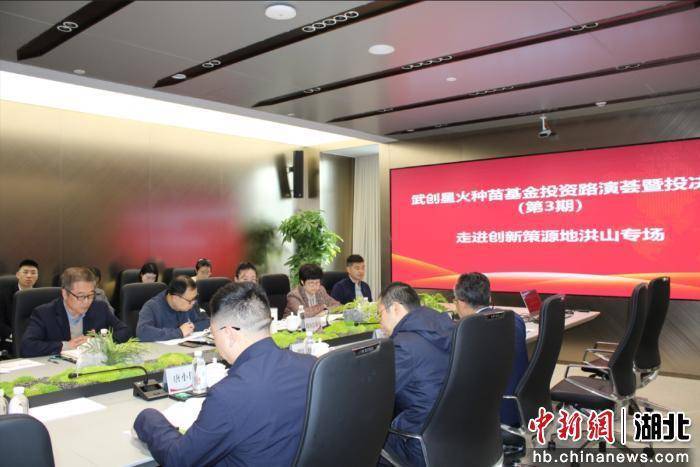
11家洪山区科创企业获得武创“星火种苗”专项基金投资
Sou Hu Cai Jing· 2025-11-05 03:21
Core Insights - The recent investment roadshow by Wuchuang Spark Seed Fund focused on the "拨改投" project in Hongshan District, aiming to support early-stage projects through city-district collaboration and precise empowerment [1][3] - The event utilized a "roadshow + Q&A + investment decision" one-stop docking mechanism to create an efficient financing channel for sci-tech seed enterprises [1][3] Group 1 - Fourteen local enterprises from Hongshan District, including Wuhan Cidian Sensor and Yuni Low Carbon, presented their projects, covering three core areas: new energy and new materials, health and biotechnology, and digital economy and optoelectronic information [3] - The event featured an innovative mechanism for "instant communication, instant evaluation, and instant decision-making," significantly reducing communication cycles and enhancing the efficiency of capital and project matching [3] - Eleven enterprises stood out based on their quality projects and successfully advanced to the next stage of investment negotiations [3] Group 2 - Hongshan Capital is constructing an innovation and entrepreneurship ecosystem with systematic measures, aligning with the goal of building an innovation development belt around universities [3] - The company plans to deepen the effectiveness of its "pre-investment and post-equity" specialized technology funding and expand its early-stage fund pool to reach a scale of hundreds of billions [3] - Hongshan Capital is actively exploring a "investment-guarantee-loan linkage" service model to provide integrated financing solutions of "equity + debt" for technology enterprises [3]