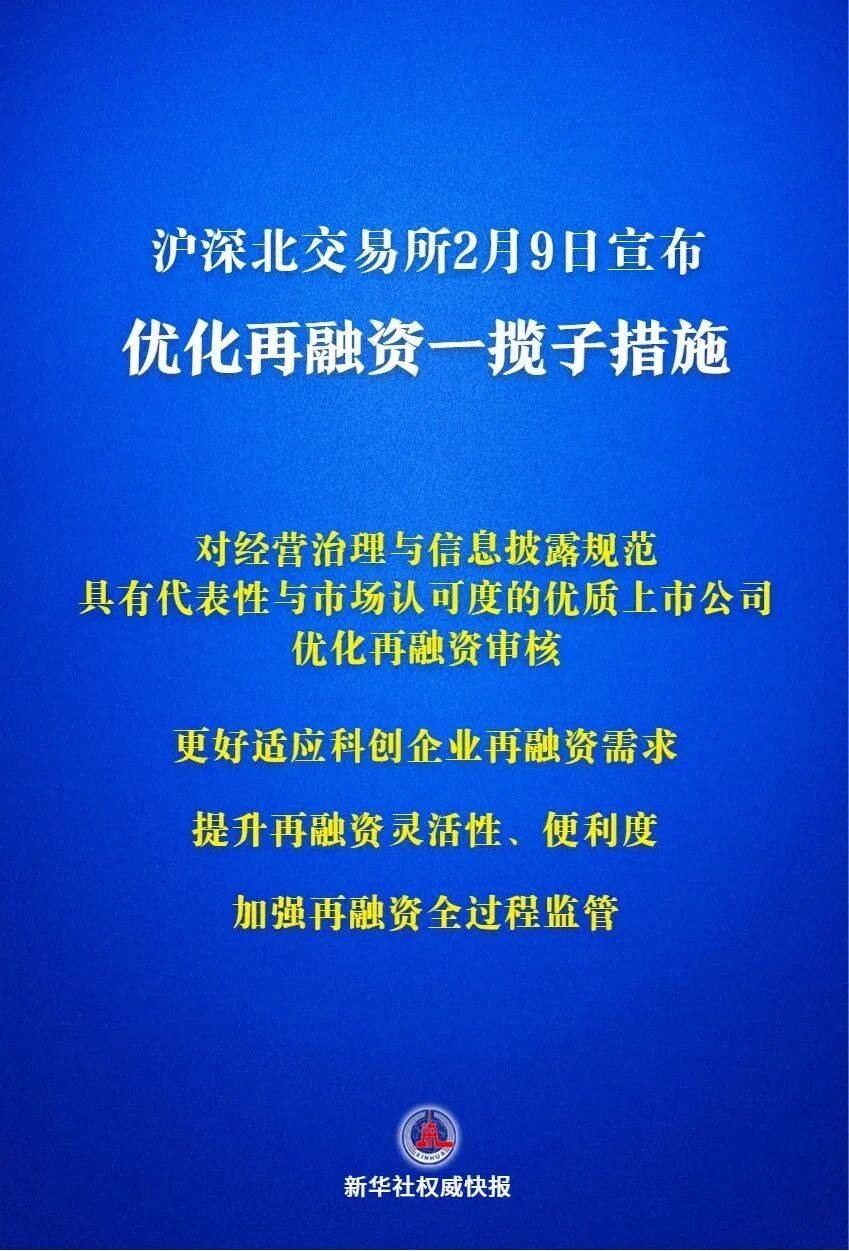
再融资优化

Search documents
再融资一揽子优化举措加速落地,北交所简易程序再融资再添新例
第一财经· 2026-03-27 06:10
Core Viewpoint - The article discusses the recent implementation of refinancing optimization measures in the North Exchange, highlighting the positive market response as companies begin to utilize simplified procedures for private placements [3][4]. Group 1: Company Actions - Two companies listed on the North Exchange, Bicon Technology (920879.BJ) and Haineng Technology (920476.BJ), have announced plans to initiate simplified procedures for private placements, with Bicon seeking shareholder approval for a specific issuance [3]. - Both companies aim to raise funds below 100 million yuan and below 20% of their net assets from the previous year, with Bicon's maximum financing limit estimated at 127 million yuan and Haineng's at 89.8 million yuan [3][4]. Group 2: Financial Performance - Bicon Technology reported a revenue of 407 million yuan in the past year, reflecting a year-on-year growth of 14.32%, and a net profit of 82.31 million yuan, up 6.87% [4]. - Haineng Technology achieved a revenue of 362 million yuan, with a year-on-year increase of 16.63%, and a net profit of 42.13 million yuan, which represents a significant growth of 222.3% [4]. Group 3: Dividend Plans - Both companies have announced dividend plans, with Haineng Technology proposing a cash dividend of 1 yuan per 10 shares, totaling approximately 800,910 yuan, while Bicon Technology plans to distribute 1.5 yuan per 10 shares and convert 2 shares for every 10 held, amounting to a total cash payout of 25.11 million yuan and a share conversion of 33.48 million shares [4]. Group 4: Market Response and Future Measures - The initiation of simplified financing procedures by these companies indicates a positive market response to the refinancing policies, showcasing the effectiveness of the North Exchange's optimization measures [4]. - The China Securities Regulatory Commission (CSRC) has announced further enhancements to the refinancing mechanism, including optimizing the identification standards for strategic investors and improving the simplified procedures for refinancing [5].


非银金融行业跟踪周报保险行业总资产突破41万亿;券商再融资持续推进
Soochow Securities· 2026-02-24 00:30
Investment Rating - The report maintains an "Overweight" rating for the non-bank financial sector [1]. Core Insights - The insurance industry has seen total assets surpassing 41 trillion yuan, with significant growth in equity allocation [1][26]. - The securities sector is experiencing a decline in trading volume, while refinancing efforts continue to advance [1][18]. - The multi-financial sector is transitioning into a stable growth phase, with trust assets and futures trading volumes showing varying performance [1][34]. Summary by Sections Non-Bank Financial Sector Performance - In the recent five trading days (February 9-13, 2026), all non-bank financial sub-sectors underperformed compared to the CSI 300 index, with the securities sector down 1.04%, multi-financial down 1.45%, and insurance down 2.52% [10][11]. Securities Sector - Trading volume has decreased month-on-month, with February's average daily trading volume at 26,496 billion yuan, a 30.04% increase year-on-year but a 23.74% decrease month-on-month [16]. - The refinancing measures introduced by the Shanghai and Shenzhen Stock Exchanges aim to enhance flexibility and efficiency in capital markets [18][21]. - The average price-to-book (PB) ratio for the securities industry is projected at 1.2x for 2026, indicating potential value in quality firms like CITIC Securities and Tonghuashun [25]. Insurance Sector - The total assets of insurance companies reached 41.3 trillion yuan by the end of 2025, reflecting a 15.1% increase from the beginning of the year [26][27]. - The insurance sector's average comprehensive solvency ratio stands at 181.1%, indicating strong financial health [27]. - The allocation to equities and funds has increased significantly, with stocks comprising 10.1% of total investments, up 2.5 percentage points from the start of the year [28][29]. Multi-Financial Sector - The trust industry reported a total asset scale of 32.43 trillion yuan by mid-2025, marking a 20.11% year-on-year increase [34]. - The futures market saw a significant rise in trading volume and value, with January 2026 figures showing a 65.09% increase in volume and a 105.14% increase in value year-on-year [38][41]. - The report suggests that innovation in risk management will be a key focus for the futures industry moving forward [42].






再融资优化一揽子措施出台,别被消息带偏
Sou Hu Cai Jing· 2026-02-16 12:37
Core Viewpoint - The article discusses the impact of market news and the importance of understanding underlying capital behaviors rather than reacting to surface-level information and rumors [1][3]. Group 1: Market Reactions to News - Investors often fall into the trap of equating news with market performance, leading to hasty decisions based on fear or speculation [3]. - A specific case is mentioned where a stock experienced significant pullbacks amid negative news, causing many to panic and exit, only for the stock to recover quickly [3][5]. Group 2: Importance of Institutional Data - The "institutional inventory" data reflects the trading activity of large funds and can indicate whether institutions are actively participating in the market [5][9]. - In instances where stocks showed recovery from pullbacks, the presence of institutional inventory data suggested ongoing institutional interest, which supported the stock's rebound [5][9]. Group 3: Differentiating Market Performances - Not all stocks that recover from pullbacks will maintain their upward trajectory; some may lack institutional support, leading to unsustainable price movements [7][11]. - The article emphasizes the need to analyze institutional inventory data to distinguish between genuine recovery and short-lived spikes in stock prices [7][11]. Group 4: Utilizing Data for Decision-Making - The advancement of big data technology allows for the quantification of market behaviors, helping to reveal the true state of the market beyond emotional reactions to news [9][11]. - By focusing on objective data rather than emotional responses, investors can develop a more stable and rational decision-making process, avoiding the pitfalls of "buying rumors and selling news" [11].
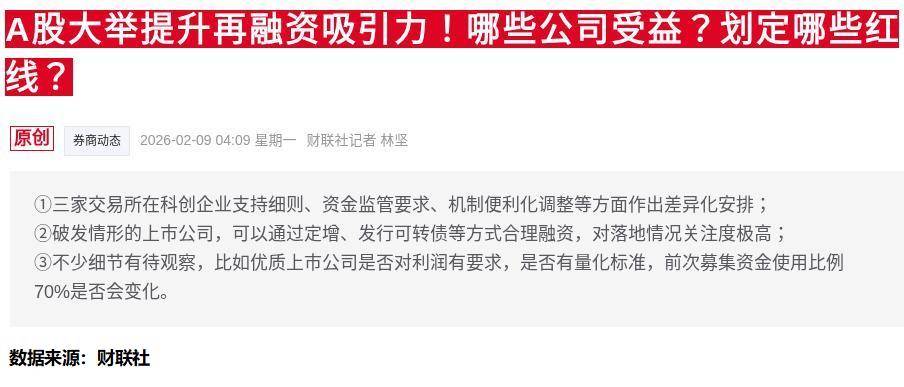
行业当前估值处于相对低位,券商股早盘逆势表现,券商ETF(159842)开年来累计吸金逾6亿元
Mei Ri Jing Ji Xin Wen· 2026-02-13 03:49
Core Viewpoint - The A-share market opened lower, but brokerage stocks showed resilience, with companies like Jinlong Co., Shouchuang Securities, and Dongwu Securities rising over 1% [1] Group 1: Market Impact - The brokerage ETF (159842) opened low but quickly rebounded during the trading session [2] - On February 9, the Shanghai and Shenzhen Stock Exchanges announced a package of measures to optimize refinancing, which is crucial for supporting listed companies and promoting resource allocation [2] - Analysts believe that optimizing refinancing may invigorate market activity, directly benefiting brokerages as intermediaries [2] Group 2: Industry Analysis - The optimization clearly supports high-quality enterprises and services for technology innovation companies, with limited short-term market diversion effects [2] - The current valuation of the securities industry is at a relatively low level since 2021, with a PE ratio around 16-17 times, indicating a good safety margin [2] - Recent capital flows have shown strong interest in the brokerage sector, with the brokerage ETF (159842) seeing a net inflow of over 600 million yuan since the beginning of the year [2] Group 3: ETF Information - The brokerage ETF (159842) tracks the CSI All Share Securities Company Index, which includes up to 50 stocks from the securities industry to reflect the overall performance of the sector [2]
三大交易所发布优化再融资一揽子措施,相较此前有何重点变化?
Sou Hu Cai Jing· 2026-02-11 01:59
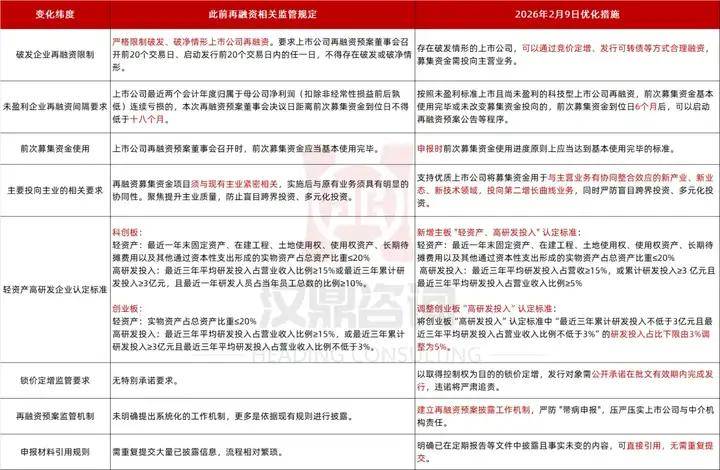
Core Viewpoint - The Shanghai and Shenzhen Stock Exchanges have introduced a package of measures to optimize refinancing, aimed at improving efficiency, supporting technological innovation, and ensuring regulatory compliance while preventing risks. Group 1: Key Measures - Strong support for quality listed companies in refinancing, optimizing review processes to enhance efficiency, and allowing funds to be directed towards new industries and technologies that align with core business operations [1][3] - Support for unprofitable technology companies to implement refinancing based on demand, with specific conditions allowing for new rounds of financing after previous funds are nearly fully utilized [1][3] - Clear requirements for listed companies to disclose previous fundraising usage and future plans when announcing refinancing proposals, simplifying the process by allowing the use of previously disclosed information [2][6] Group 2: Regulatory Enhancements - Strengthened responsibilities for information disclosure by listed companies and intermediaries, with a focus on ensuring compliance and transparency in refinancing proposals [2][6] - Introduction of a mechanism for the disclosure of refinancing proposals, emphasizing the need for commitments from companies regarding the use of funds and strict penalties for violations [2][6] - Enhanced scrutiny of refinancing practices to prevent blind diversification and ensure funds are used effectively, maintaining a focus on core business operations [3][5] Group 3: Differences from Previous Regulations - Allowing companies experiencing stock price declines to raise funds through competitive placements and convertible bonds, with strict requirements for fund allocation to core business areas [5][7] - Shortening the refinancing interval for unprofitable technology companies from 18 months to 6 months, addressing their funding needs for research and development [5][7] - Establishing new recognition standards for "light asset, high R&D investment" companies on the main board, expanding the scope of beneficiaries under the new policies [6][7]
优化再融资措施催化证券板块,资金抢筹布局,证券ETF(512880)近10日资金净流入超13亿元
Sou Hu Cai Jing· 2026-02-11 01:31
Group 1 - The core viewpoint is that optimizing refinancing is expected to stimulate market vitality, with brokerages benefiting directly as intermediaries, highlighting the importance of the sector's Beta attributes [1] - The optimization explicitly supports high-quality enterprises and services for technology innovation companies, indicating that the short-term impact on market diversion is limited, but it enhances resource optimization and funding allocation for quality enterprise development [1] - The refinancing optimization, combined with the China Securities Regulatory Commission's intention to relax restrictions on strategic investors, is likely to boost brokerage investment banking and capital intermediary businesses, suggesting a focus on the brokerage sector's Beta characteristics [1] Group 2 - The Securities ETF (512880) tracks the Securities Company Index (399975), which selects listed companies closely related to the securities market from the Shanghai and Shenzhen markets, covering brokerage, underwriting, and proprietary trading businesses [1] - This index reflects the overall performance of listed companies in the securities industry and exhibits high industry concentration and cyclical characteristics [1]
西部证券晨会纪要-20260211
Western Securities· 2026-02-11 01:03
Group 1: Food and Beverage Industry - The core conclusion indicates that high-end consumption is recovering first, driven by wealth effects from asset price appreciation and improved corporate earnings, with signs of recovery in luxury goods, high-end shopping centers, duty-free, and gaming sectors starting from Q3 2025 [1][5] - Investment recommendations suggest selecting high-quality targets that combine both beta and alpha, with a focus on companies like China Resources Mixc Lifestyle, Samsonite, Galaxy Entertainment, and Sands China [1][5] Group 2: Non-Banking Financial Sector - The report discusses the optimization of refinancing mechanisms by the Shanghai and Shenzhen Stock Exchanges, which aims to enhance the flexibility and efficiency of refinancing for high-quality listed companies, particularly in new industries and technologies [6][7] - It highlights that the new policies will support quality companies in utilizing funds for synergistic new industries and technologies, thereby enhancing the overall quality of refinancing business [6][7] - Investment suggestions indicate that the optimized refinancing measures will open up further opportunities for leading investment banks, enhancing their revenue growth and overall profitability in the refinancing business [8]
沪深北交易所发布《优化再融资一揽子措施》点评:优化再融资措施意在扶优服科,券商中介机构业务迎来发展机遇
Shenwan Hongyuan Securities· 2026-02-10 11:21
Investment Rating - The report rates the industry as "Overweight," indicating that it is expected to outperform the overall market [8]. Core Insights - The report discusses the "Optimization of Re-financing Measures" released by the Shanghai and Shenzhen Stock Exchanges, which aims to support high-quality companies and enhance the efficiency of re-financing [1][2]. - It highlights that 25% of the sample companies had a review cycle of less than 3 months for re-financing, suggesting that the review process for quality enterprises may further shorten [2]. - The report emphasizes the need for tailored measures for technology-driven companies, allowing them to use raised funds for R&D, which is crucial for their growth [2]. - It identifies three investment themes: 1) Strong comprehensive capabilities of leading institutions, recommending Guotai Junan, GF Securities, and CITIC Securities; 2) Brokers with significant earnings elasticity, recommending China Merchants Securities, Huatai Securities, and Industrial Securities; 3) Companies with strong international business competitiveness, recommending China Galaxy [2]. Summary by Sections Re-financing Measures - The report outlines three targeted optimization measures for re-financing aimed at technology companies, including allowing funds to be used for R&D and supporting companies facing share price declines [2]. - It notes that as of February 10, 2026, there are 556 re-financing projects in the pipeline, with a total proposed fundraising exceeding 484.6 billion [2]. Investment Analysis - The report suggests that the optimization of re-financing is likely to invigorate market activity, directly benefiting brokerage firms as intermediaries [2]. - It indicates that the short-term impact on market diversion is limited, but the long-term benefits include enhanced development momentum for quality enterprises [2].
财经深一度丨优化再融资措施,北交所如何更好助力创新型中小企业?
Xin Hua Wang· 2026-02-10 10:17
Core Viewpoint - The Beijing Stock Exchange (BSE) has announced a package of optimized refinancing measures aimed at better supporting the development of innovative small and medium-sized enterprises (SMEs) [1][2]. Group 1: Refinancing Measures - The optimization focuses on enhancing the inclusiveness and flexibility of refinancing-related systems, with a clear policy direction to support high-quality and technology-driven companies [1]. - Companies with a history of good performance in governance and information disclosure will benefit from reduced scrutiny and increased efficiency in the refinancing review process [1]. - The new measures allow companies experiencing stock price declines to reasonably finance through private placements or convertible bonds, with funds directed towards core business operations [1][2]. Group 2: Regulatory Enhancements - The optimization includes a negative list for simplified refinancing procedures, expanding the applicability of these procedures to better meet the quick financing needs of SMEs [2]. - There will be strengthened regulations regarding refinancing in conjunction with changes in control, ensuring that companies publicly commit to completing issuances within the validity period of approvals to prevent misleading refinancing practices [2]. Group 3: Market Impact - The BSE currently has 292 listed companies, and the optimization is expected to further activate market financing vitality, enhancing the market efficiency of resource allocation for listed companies [2]. - The measures aim to establish a mechanism for refinancing that connects with initial public offerings (IPOs), better serving the long-term development of SMEs [2]. - A market-driven incentive mechanism is being developed, where high-performing companies will have easier access to financing, while underperforming companies will face restrictions [2][3].
重磅!沪深北交易所宣布优化再融资一揽子措施
Sou Hu Cai Jing· 2026-02-10 01:21
Group 1 - The core viewpoint of the announcement is the optimization of refinancing measures to support high-quality listed companies and better meet the refinancing needs of technology innovation enterprises [3][4] - The measures focus on four main areas: supporting innovative development of quality listed companies, adapting to the refinancing needs of technology companies, enhancing the flexibility and convenience of refinancing, and strengthening the supervision of the entire refinancing process [3][4] - The Shanghai and Shenzhen Stock Exchanges will optimize the refinancing review process for companies with good governance and information disclosure, aiming to improve refinancing efficiency [3][4] Group 2 - The exchanges will solicit public opinions on the recognition standards for "light asset, high R&D investment" for mainboard listed companies, allowing eligible companies to use over 30% of raised funds for R&D related to their main business [3] - The refinancing interval requirement will be adjusted to a minimum of 6 months for technology companies that are unprofitable, provided that previous raised funds are nearly fully utilized or the direction of use has not changed [3] - Companies facing stock price declines can reasonably finance through private placements or convertible bonds, with raised funds directed towards their main business [3][4] Group 3 - Companies must disclose their previous fundraising usage and future usage plans when announcing refinancing proposals, with a principle that previous fundraising usage should be nearly complete [4] - The optimization includes simplifying refinancing application materials, allowing companies to directly reference information already disclosed in periodic reports if there are no changes [4] - The optimization emphasizes the responsibilities of listed companies and intermediaries in information disclosure, establishing a mechanism for the disclosure of refinancing proposals to prevent companies from submitting "sick" refinancing applications [4]