
双贴息政策

Search documents
利好!落实国常会部署,一揽子政策来了
Xin Lang Cai Jing· 2026-01-20 06:33
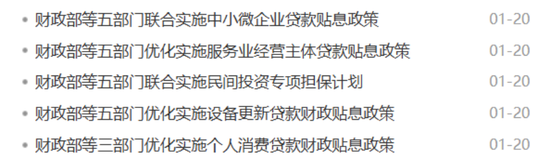
Group 1: Core Policy Overview - The Ministry of Finance announced a package of five fiscal and financial policies aimed at boosting domestic demand through enhancing consumption and expanding private investment [1][12] - The policies include optimizing personal consumption loans and service industry loans, implementing loan interest subsidies for small and micro enterprises, and establishing a special guarantee plan for private investment [1][12] Group 2: Personal Consumption Loan Policy - The "double interest subsidy" policy has been extended until December 31, 2026, maintaining an annual interest subsidy rate of 1 percentage point [3][14] - The policy now includes credit card installment payments, expands the scope of supported consumption areas, and increases the number of eligible financial institutions [5][17] - The subsidy cap for individual consumption has been removed, allowing for greater flexibility in borrowing [5][17] Group 3: Service Industry Loan Policy - The subsidy cap for service industry loans has been raised to a maximum of 10 million yuan for new loans issued in 2026 [6][18] - The policy now includes additional sectors such as digital, green, and retail consumption, expanding the support areas [6][18] - A wider range of banks, including 21 national banks and various local banks, are now authorized to handle these loans [7][18] Group 4: Small and Micro Enterprises Loan Policy - The loan subsidy for small and micro enterprises is capped at 50 million yuan, with a 1.5 percentage point annual subsidy for eligible fixed asset loans [8][19] - The policy focuses on supporting investments in key industries such as new energy vehicles, medical equipment, and artificial intelligence [19] - The implementation period is initially set for one year, with potential extensions based on future evaluations [19] Group 5: Equipment Upgrade Loan Policy - The equipment upgrade loan subsidy policy has also been extended to December 31, 2026, with a 1.5 percentage point subsidy for fixed asset loans [9][20] - New sectors such as artificial intelligence and green technology have been added to the support areas for equipment upgrades [20] Group 6: Private Investment Guarantee Plan - A special guarantee plan for private investment has been established with a total quota of 500 billion yuan, to be implemented over two years [10][22] - The plan aims to enhance government financing guarantees to stimulate private investment in various sectors, including technology upgrades and service expansions [22] - The risk-sharing mechanism involves banks taking on at least 20% of the loan risk, while the government guarantee system covers up to 80% [22][23]

“双贴息”政策优化在即,贷款经办机构有望扩围
券商中国· 2026-01-13 01:51
Core Viewpoint - The State Council's recent meeting has outlined a comprehensive policy package aimed at promoting domestic demand through financial and fiscal collaboration, focusing on enhancing consumer spending capabilities by optimizing personal consumption loan interest subsidy policies [1] Group 1: Policy Implementation - The "double subsidy" policy for personal consumption loans will be optimized, including expanding the range of institutions eligible for subsidies and simplifying the approval process by breaking down data barriers between government departments and financial institutions [1][6] - The initial implementation of the subsidy policy has seen significant engagement from major banks, with Industrial and Commercial Bank of China issuing nearly 400 billion yuan in personal consumption loans by the end of November 2025, and Agricultural Bank of China reporting a balance of 1.46 trillion yuan in personal consumption loans, with a growth rate of 9.4% [2] Group 2: Expansion of Eligible Institutions - The current subsidy policy covers 18 national commercial banks and several leading consumer finance companies, with expectations for further expansion to include more regional banks, enhancing the policy's reach [3][4] - Local governments, such as those in Chongqing and Sichuan, have already begun to integrate regional banks into the subsidy framework, demonstrating a trend towards a "national and local subsidy" model that could be adopted by more provinces [4] Group 3: Financial Impact and Recommendations - The consumer finance sector is expected to benefit significantly from the subsidy policy, particularly for smaller banks that serve clients more affected by economic downturns, thus increasing the marginal utility of the subsidies [5] - Recommendations for optimizing the subsidy policy include establishing differentiated subsidy strategies based on regional development levels and specific consumer needs, as well as integrating digital technologies to enhance monitoring and efficiency in fund allocation [6][7]

“双贴息”政策优化在即,贷款经办机构有望扩围
证券时报· 2026-01-13 01:49
Core Viewpoint - The State Council's recent meeting has outlined a comprehensive policy package aimed at promoting domestic demand through financial and fiscal collaboration, particularly focusing on enhancing consumer spending capacity through optimized loan subsidy policies [1] Group 1: Policy Implementation - The "double subsidy" policy will optimize the implementation of loans for service industry entities and personal consumption loans, aiming to increase the supply of quality services and enhance consumer spending ability [1] - The policy includes a 1% interest subsidy for personal consumption loans under certain conditions, with a maximum subsidy of 3,000 yuan per borrower for loans above 50,000 yuan [3] Group 2: Financial Institution Participation - The initial batch of institutions eligible for the subsidy includes 18 national commercial banks and several leading consumer finance companies, with expectations for the expansion of eligible institutions in future policy adjustments [4] - Financial institutions have increased credit issuance in the consumer sector, with significant loan disbursements reported by major state-owned banks [3] Group 3: Regional Policy Adaptation - Several provinces, including Chongqing, Sichuan, and Guizhou, have already included local banks in the subsidy policy, demonstrating a trend towards regional adaptation of the national policy [6] - The "national subsidy + local subsidy" model is expected to be adopted by more provinces, enhancing policy coverage and efficiency in reaching consumers [6] Group 4: Future Policy Optimization - Future policy evaluations may lead to the extension of the subsidy period and adjustments in the range of supported institutions, with a focus on managing financial risks and ensuring effective policy execution [9] - Recommendations for optimizing the subsidy policy include establishing differentiated subsidy strategies based on regional development levels and specific consumer needs, as well as improving data sharing between government and financial institutions to streamline loan approval processes [10][11]

“双贴息”政策优化在即 贷款经办机构有望扩围
Xin Lang Cai Jing· 2026-01-12 19:03
Group 1 - The State Council has implemented a package policy to promote domestic demand through financial and fiscal collaboration, focusing on enhancing consumer spending by optimizing personal consumption loan subsidy policies [1] - The "double subsidy" policy aims to increase the supply of quality services and enhance residents' consumption capacity, with suggestions for expanding the range of financial institutions involved and simplifying approval processes [1][2] - Major state-owned banks have significantly increased their personal consumption loan disbursements, with Industrial and Commercial Bank of China issuing nearly 400 billion yuan in loans and Agricultural Bank of China reporting a 9.4% growth in personal consumption loans [1] Group 2 - The current personal consumption loan subsidy policy includes 18 national commercial banks and several leading consumer finance companies, with expectations for the inclusion of more institutions in future policy adjustments [2] - The "national subsidy + local subsidy" model has proven effective in expanding policy coverage, particularly through local banks serving rural markets [2] - The marginal utility of the subsidy policy is expected to be greater for customers of city commercial banks and rural commercial banks, who are more affected by economic downturns [3] Group 3 - Recommendations for future policy include utilizing digital currency smart contracts for precise subsidy management and establishing differentiated subsidy strategies based on regional development levels and specific consumer needs [4] - The integration of subsidy policies with income support and employment measures is essential for fundamentally improving residents' consumption capabilities [4] - Enhancing data sharing between government departments and banks to streamline loan verification processes and reduce operational costs is a key direction for improving policy execution efficiency [4]

“双贴息”政策优化在即,贷款经办机构有望扩围
Zheng Quan Shi Bao· 2026-01-12 14:46
Group 1 - The core viewpoint of the news is the implementation of a comprehensive policy package by the State Council to promote domestic demand through financial and fiscal collaboration, focusing on enhancing consumer spending capabilities [1] - The "double subsidy" policy aims to optimize personal consumption loan interest subsidies and service industry loans, with suggestions for expanding the range of institutions involved and simplifying approval processes [1][3] - The first phase of the personal consumption loan subsidy policy includes 18 national commercial banks and several leading consumer finance companies, with expectations for further expansion of participating institutions [3] Group 2 - The policy has already seen regional banks in cities like Chongqing, Sichuan, and Guizhou included in the subsidy framework, indicating a trend towards a "national subsidy + local subsidy" model [4] - Financial institutions have increased credit issuance in the consumer sector, with significant loan amounts reported by major state-owned banks [2] - The effectiveness of the subsidy policy is expected to be evaluated post-implementation, with potential adjustments to the support range and participating institutions [6] Group 3 - The policy's marginal utility is particularly significant for customers of city commercial banks and rural commercial banks, who are more affected by economic downturns [5] - Recommendations for optimizing the "double subsidy" policy include using digital currency technology for fund management and establishing differentiated subsidy strategies based on regional needs [7][8] - Long-term strategies should align the subsidy policy with income support and employment measures to enhance consumer capacity and confidence [8]
国常会重磅!实施促内需一揽子政策!
Zheng Quan Shi Bao· 2026-01-09 13:11
Group 1: Fiscal and Financial Policies - The State Council meeting led by Premier Li Qiang announced a package of fiscal and financial policies aimed at promoting domestic demand, enhancing consumer capacity, and optimizing service supply [1][2] - The "Double Subsidy" policy, effective from 2025, will provide a 1% interest subsidy on service industry loans and personal consumption loans, with the central government covering 90% of the subsidy costs [2] - The meeting emphasized the importance of aligning fiscal and financial policies to stimulate effective demand and encourage social capital participation in consumption and investment [2] Group 2: Support for Private Investment - The meeting proposed implementing a loan subsidy policy for small and micro enterprises, establishing a special guarantee plan for private investment, and creating a risk-sharing mechanism for private enterprise bonds [3] - The bond market is highlighted for its advantages in supporting technological innovation, with risk-sharing tools ensuring the safety of bond issuance and extending the maturity of bonds [3] - The China Securities Regulatory Commission is actively supporting private enterprise bond financing, with plans to create risk-sharing tools for long-term bond financing in the "Technology Board" by 2025 [3] Group 3: Basic Public Services - The meeting discussed promoting the provision of basic public services based on residents' locations, aiming to enhance service equality and support urbanization [6][7] - Key measures include improving education policies for migrant children, expanding public rental housing, and strengthening social insurance and medical security for residents [6] - The initiative is expected to address the needs of over 130 million migrant workers living in urban areas by ensuring access to education, social insurance, and housing [6]
国常会重磅!实施促内需一揽子政策!
证券时报· 2026-01-09 13:06
Group 1: Core Policy Initiatives - The State Council meeting led by Premier Li Qiang outlined a comprehensive policy package aimed at promoting domestic demand through fiscal and financial collaboration [1][3] - The meeting emphasized the importance of aligning fiscal and financial policies to stimulate effective demand and encourage social capital participation in consumption and investment [3] Group 2: Consumer Support Measures - The meeting proposed optimizing the implementation of loan interest subsidy policies for service industry operators and personal consumption loans, aiming to enhance residents' consumption capacity [1][4] - The "double subsidy" policy, set to be implemented in 2025, marks the first time such subsidies will be applied at the central fiscal level, with a subsidy rate of 1% for both policies, where the central government will cover 90% of the subsidy costs [4] Group 3: Support for Private Investment - The meeting introduced measures to support private investment, including a loan interest subsidy policy for small and micro enterprises, a special guarantee plan for private investment, and a risk-sharing mechanism for private enterprise bonds [1][7] - The bond market's unique advantages in supporting technological innovation were highlighted, with risk-sharing tools ensuring the safety of bond issuance and extending the maturity of supported bonds [7] Group 4: Basic Public Services for Residents - The meeting discussed the implementation of basic public services based on residents' locations, which is expected to promote equal access to public services and support urbanization [10][11] - Key initiatives include improving education policies for migrant children, expanding public rental housing, and enhancing social insurance systems for workers in their employment locations [10][11]

“双贴息”促消费 “四两”如何拨“千斤”
Ren Min Ri Bao· 2025-09-08 01:37
Core Viewpoint - The implementation of the "double interest subsidy" policy for personal consumption loans and service industry loans aims to stimulate consumption and expand domestic demand, which is a key focus of current economic work [1][2]. Group 1: Policy Implementation and Impact - The "double interest subsidy" policy is designed to effectively release the potential of domestic demand and support various consumer expenditures, including home renovations and essential services [1][2]. - For example, a consumer taking a loan of 200,000 yuan for home improvement could save approximately 2,000 yuan in interest payments due to a 1% subsidy, while a restaurant upgrading its facilities with a 1,000,000 yuan loan could save around 10,000 yuan [1]. - The policy covers a wide range of consumer needs, from essential items to discretionary spending, indicating a comprehensive approach to stimulating consumption [1][2]. Group 2: Consumer Loan Statistics - As of the end of 2024, the balance of consumer loans (excluding housing loans) in China is projected to reach 21.01 trillion yuan, reflecting a year-on-year growth of 6.2% [2]. - Empirical studies show that the introduction of consumer financial products can increase borrowing consumers' spending by 16% to 30%, while merchant sales can rise by approximately 40% [2]. - There is a notable supply-demand gap in consumer credit services, with the demand rate exceeding actual participation by 5.3 percentage points in 2021, up from 2.5 percentage points in 2019 [2]. Group 3: Broader Economic Policies - The "double interest subsidy" policy is part of a broader set of measures aimed at enhancing consumer confidence and spending, including free preschool education and childcare subsidies [2]. - The government has initiated various policies, including a 500 billion yuan service consumption and elderly care re-loan program, to create a cohesive framework for stimulating consumption [2]. - The "national subsidy" program for replacing old consumer goods has already driven over 2.9 trillion yuan in consumption, benefiting around 400 million people [3]. Group 4: Innovation and Consumer Engagement - Understanding consumer psychology and preferences is crucial for creating demand and enhancing consumption, emphasizing the importance of innovation [4]. - Innovative products and services, such as cultural souvenirs and drone delivery systems, are emerging as effective ways to engage consumers and meet new demands [3][4]. - The market's capacity is significant, and businesses are encouraged to leverage policy benefits while focusing on genuine innovation to boost consumption [5].
“双贴息”促消费,“四两”如何拨“千斤”
Sou Hu Cai Jing· 2025-09-07 22:52
Group 1 - The "double subsidy" policy for personal consumption loans and service industry loans aims to stimulate consumer spending and enhance economic growth [1][2] - The policy is expected to reduce interest expenses significantly for consumers and businesses, with examples showing potential savings of up to 2,000 yuan for a 200,000 yuan loan and 10,000 yuan for a 1,000,000 yuan loan [1] - The policy covers a wide range of consumption areas, including essential needs like childcare and healthcare, as well as discretionary spending like education and tourism [1][2] Group 2 - Data from the People's Bank of China indicates that by the end of 2024, the balance of consumer loans (excluding mortgages) is projected to reach 21.01 trillion yuan, reflecting a year-on-year growth of 6.2% [2] - Empirical studies show that the introduction of consumer finance products can increase borrowing consumers' spending by 16% to 30%, while merchant sales can rise by approximately 40% [2] - There is a notable supply-demand gap in consumer credit services, with the demand rate exceeding actual participation by 5.3 percentage points in 2021 [2] Group 3 - The "national subsidy" program for replacing old consumer goods has stimulated over 2.9 trillion yuan in consumption and benefited around 400 million people [3] - Innovative products and services, such as cultural souvenirs and drone delivery systems, are emerging to meet new consumer demands and enhance shopping experiences [3][4] - Understanding consumer psychology and preferences is crucial for creating demand and driving consumption, emphasizing the importance of innovation [4][5] Group 4 - The government and market collaboration is essential for effectively boosting consumption, with a focus on leveraging policy benefits and fostering innovation among businesses [5]
“双贴息”促消费,“四两”如何拨“千斤”(读者点题·共同关注)
Ren Min Ri Bao· 2025-09-07 22:02
Core Viewpoint - The implementation of the "double interest subsidy" policy for personal consumption loans and service industry loans aims to stimulate consumption and expand domestic demand, which is a key focus of current economic work [1][2]. Group 1: Policy Implementation and Impact - The "double interest subsidy" policy is designed to effectively release the potential of domestic demand and support various consumer expenditures, including home renovations and essential services [1][2]. - For example, a consumer taking a loan of 200,000 yuan for home improvement could save approximately 2,000 yuan in interest payments due to a 1% subsidy, while a restaurant upgrading its facilities with a 1,000,000 yuan loan could save around 10,000 yuan [1][2]. - The policy covers a wide range of consumer needs, from essential items to discretionary spending, indicating a comprehensive approach to stimulating consumption [1][2]. Group 2: Consumer Loan Statistics - As of the end of 2024, the balance of consumer loans (excluding mortgages) in China is projected to reach 21.01 trillion yuan, reflecting a year-on-year growth of 6.2% [2]. - Empirical studies show that the introduction of consumer financial products can increase borrowing consumers' spending by 16% to 30%, while merchant sales can rise by approximately 40% [2]. - There is a notable supply-demand gap in consumer credit services, with the demand rate exceeding actual participation by 5.3 percentage points in 2021, up from 2.5 percentage points in 2019 [2]. Group 3: Broader Economic Policies - The "double interest subsidy" policy is part of a broader set of measures aimed at enhancing consumer confidence and spending, including free preschool education and childcare subsidies [2]. - The government has initiated various policies, such as a 500 billion yuan service consumption and elderly care re-loan, to create a cohesive framework for stimulating consumption [2]. - The cumulative effect of these policies is expected to significantly boost the consumption capacity of the middle-income group [2]. Group 4: Innovation and Consumer Engagement - The success of these policies relies on understanding consumer psychology and preferences, emphasizing the need for innovation in product offerings [4][5]. - Examples of innovative consumer products and services, such as cultural souvenirs and drone delivery systems, highlight the importance of creating new demand [3][4]. - The market's ability to leverage policy benefits through innovation will be crucial for effectively boosting consumption [5].