
古建筑保护

Search documents
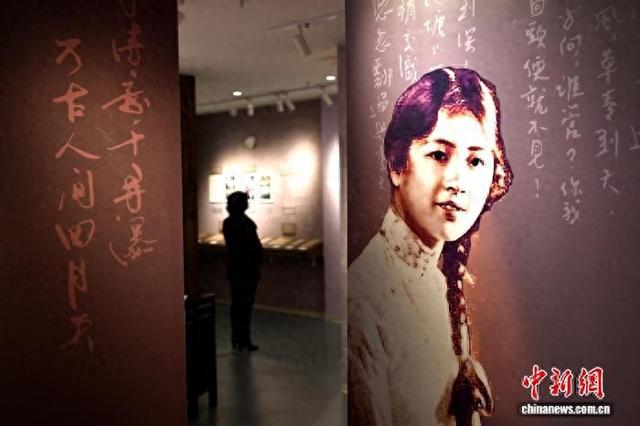
林徽因主题馆在福州开馆试运行
Xin Lang Cai Jing· 2026-02-14 01:55
Core Viewpoint - The Lin Huiyin Theme Museum has officially opened for trial operation in Fuzhou, showcasing the life and contributions of Lin Huiyin, a significant figure in modern Chinese architecture, poetry, and literature [1][3]. Group 1: Exhibition Overview - The exhibition is organized into six chapters: "Fuzhou Daughter," "Patriotic Spirit," "Poetic Life," "Phoenix Nirvana," "April in the Human World," and "Return After a Century" [1]. - The "Fuzhou Daughter" chapter features the genealogy of the Lin family, while the "Patriotic Spirit" chapter systematically outlines the family's legacy of loyalty [1]. Group 2: Contributions and Achievements - The exhibition highlights Lin Huiyin's achievements in the field of ancient architecture preservation and her contributions to Chinese design, including her involvement in the design of the national emblem and the Monument to the People's Heroes [1]. - The museum aims to present a comprehensive and detailed introduction to Lin Huiyin's life, family background, and contributions, making it the most systematic exhibition of its kind in China [3]. Group 3: Innovative Presentation - The exhibition employs immersive technologies such as AI digital humans, original precious letters, and historical audio recordings to enhance the visitor experience [3]. - Many of the exhibited items are supported by the Lin family and are being displayed publicly for the first time [3].

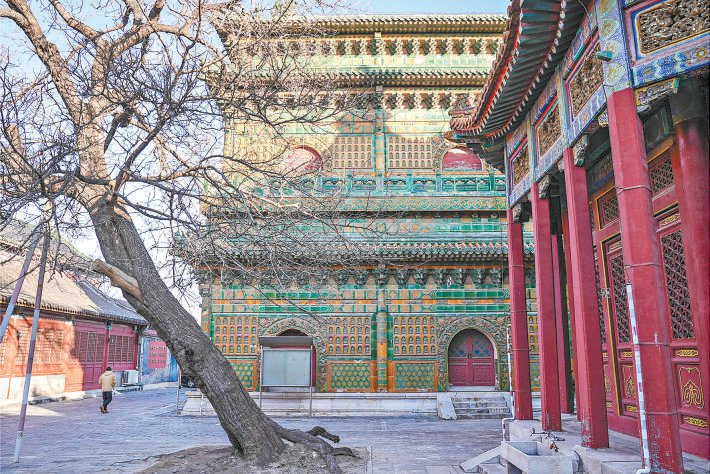
琉璃阁旧纹承新韵
Xin Lang Cai Jing· 2026-02-08 08:13
Core Viewpoint - The recent relocation and handover ceremony of the Liuli Pavilion in Beihai Park has garnered significant attention, with public anticipation for the future opening of this historical site [2]. Historical Significance - The Liuli Pavilion, located within the Xitian Fan Jing architectural complex in Beihai Park, is a rare example of Qing Dynasty official glazed architecture, originally built in the 24th year of the Qianlong reign (1759) [2][3]. - There are two main theories regarding the construction date of the Liuli Pavilion: one states it was built in 1759, replacing a previously burned pagoda, while the other suggests its origins date back to 1755, referring to the initial pagoda built at that site [2][3]. Architectural Details - The Liuli Pavilion is recognized as one of China's three major beamless glazed buildings, constructed entirely from brick and stone, featuring a unique aesthetic without beams or columns [4]. - The pavilion is adorned with 1,424 pieces of yellow and green glazed bricks, each requiring six production processes, showcasing the high craftsmanship of the time [4]. Cultural Impact - During the Republic of China period, the Liuli Pavilion became a popular gathering place for locals, described in the 1936 edition of the "Beiping Travel Guide" as a winter retreat for residents [5]. - The pavilion has been a site of cultural significance, attracting literary figures such as Xu Zhimo and Xu Deyuan, who celebrated its beauty in their works [5]. Preservation Efforts - After the establishment of the People's Republic of China, the preservation and cultural transmission of the Liuli Pavilion became more systematic and professional, with it being officially designated as a cultural heritage site in Beijing in 1957 [6].
市人大代表李庆保:建立古建筑工程从业人员持证上岗机制
Xin Jing Bao· 2026-01-28 14:34
Core Viewpoint - The proposal emphasizes the necessity of establishing a certification mechanism for professionals engaged in ancient architecture projects in Beijing, highlighting the city's unique cultural heritage and the need for skilled personnel in preservation efforts [1][2]. Group 1: Current Challenges - The industry currently lacks a unified standard for individual vocational skill level recognition, with existing qualifications focusing more on companies rather than individual capabilities [1]. - There is a disconnect between the skills of construction personnel and the professional requirements for ancient architecture protection, leading to issues such as inadequate training and non-standard operations [1]. Group 2: Proposed Solutions - A suggestion to develop a vocational skill level standard tailored to Beijing's ancient architecture types, detailing qualification requirements for various roles such as design, construction, supervision, and restoration [2]. - The proposal includes a collaborative training model involving universities, enterprises, and industry associations to provide core courses and practical training in traditional construction techniques and cultural heritage laws [2]. Group 3: Implementation and Regulation - The recommendation includes mandatory certification for personnel involved in ancient architecture projects, making individual qualifications a prerequisite for bidding, construction registration, and project acceptance [3]. - A dynamic inspection system using "Internet + supervision" and a "double random, one public" model is proposed to monitor the certification status of workers on-site, with penalties for companies employing unqualified personnel [3]. Group 4: Incentives and Career Development - The proposal advocates for the creation of advanced technical positions beyond senior technicians to enhance the attractiveness of the industry and support high-level talent development [3]. - It suggests direct recognition of advanced skill levels for winners of provincial-level vocational competitions and allows for exceptional promotions for skilled individuals solving significant technical challenges [3].
我国将对500多座古建筑进行“信息体检”
Xin Lang Cai Jing· 2026-01-01 13:35
Core Viewpoint - A nationwide survey of ancient wooden structures in China will begin on January 1, 2026, focusing on the material and preservation status of over 500 ancient buildings, aiming to establish a data-sharing platform for scientific research and protection efforts [1][2]. Group 1: Survey Objectives and Scope - The survey will collect fundamental information on wood species, quality, age, origin, and morphology from ancient buildings in five regions: Beijing, Shanxi, Guangdong, Guangxi, and Guizhou [1]. - The buildings surveyed will include temples, residences, pavilions, and bridges dating from the Tang to the Qing dynasties [1][2]. Group 2: Importance of Wood Specimens - Ancient wooden structures are considered "living fossils" that reflect historical forest resources and craftsmanship, making them crucial for understanding degradation patterns and developing preservation technologies [2]. - The preservation of these structures is threatened by climate change and biological hazards, necessitating comprehensive research and data collection [2]. Group 3: Challenges and Solutions - Current challenges in the protection of wooden structures include data fragmentation, inconsistent standards, and insufficient technical support [2]. - The initiative aims to address these challenges by creating a foundational data collection and material acquisition framework, which is essential for scientific protection efforts [2]. Group 4: Collaborative Efforts - The task will be undertaken by the Chinese Academy of Forestry Sciences and 11 other research institutions and universities over a four-year period [3]. - Activities will include building a foundational information database, compiling a wood and disease atlas, and developing public engagement tools such as virtual exhibitions [3].
故宫养心殿12月26日重新开放
Xin Lang Cai Jing· 2025-12-24 15:44
Core Viewpoint - The Palace Museum announced the reopening of the Yangxin Hall on December 26, 2025, after nearly 10 years of research-based protection and systematic renovation [1] Group 1: Renovation and Reopening - The Yangxin Hall, located to the west of the Qianqing Palace, was originally built in 1537 during the Ming Dynasty [1] - The research-based protection project for Yangxin Hall commenced in 2015 and has effectively addressed issues with the building, restoring and maintaining the health of the area and improving the preservation environment for indoor cultural relics [1] Group 2: Exhibition and Cultural Value - The interior display of the Yangxin Hall will follow historical authenticity, featuring the "Zhongzheng Renhe" plaque above the main throne and the restored couplets under the "Qinzheng Qinxian" plaque in the west warm pavilion [1] - The exhibition will also recreate the display scene from the Qianlong period in the Sanxi Hall, and a digital display will allow visitors to experience the "Ming Chuang Kai Bi" ceremony virtually [1] - A documentary titled "New Stories of the Palace Museum" aired during the renovation, and various exhibitions related to Yangxin Hall have been held in multiple museums across China [1]
东西问|杨娜:科技让西藏布达拉宫在开放与保护中平衡
Xin Lang Cai Jing· 2025-12-21 07:18
Core Viewpoint - The article discusses the balance between the preservation and accessibility of the Potala Palace, a UNESCO World Heritage site, through the application of technology in structural monitoring and protection efforts [3][6]. Group 1: Structural Monitoring Systems - The Potala Palace has implemented a series of structural monitoring systems over the years, starting with the first phase in 2012, focusing on the wooden structures within the palace [6]. - The second phase of the monitoring system was launched in 2020, expanding the scope to include the earth embankments, walls, and caves, with a total of 388 sensors deployed [7]. - A mountain monitoring system was established in 2023 to track groundwater presence and subsidence in the area, creating a comprehensive monitoring network [6][7]. Group 2: Impact of Visitor Load - Data collected from the monitoring systems indicate that the wooden structures of the Potala Palace respond dynamically to visitor loads, particularly during peak tourist seasons [9]. - The introduction of a Monday closure policy starting December 2025 is based on nearly 20 years of structural monitoring data, aimed at allowing the palace to "rest" and recover from visitor impacts [9][10]. - The visitor capacity limits set for the palace are also informed by structural monitoring data and the building's spatial reception capabilities [10]. Group 3: Technological Integration - The first phase of the monitoring system includes a sensor system that utilizes optical signal transmission to avoid fire hazards, with millions of data points collected over 12 years [7]. - The second phase incorporates IoT technology, allowing for real-time data management and assessment of the building's structural status [7]. - The experience gained from the Potala Palace's monitoring systems is being shared internationally, with ongoing collaborations and research exchanges to enhance ancient building protection methods [11]. Group 4: Future Directions - The protection strategies developed for the Potala Palace are seen as having potential for broader application in the preservation of ancient buildings globally, though adaptations are necessary based on specific architectural and environmental contexts [11]. - The ongoing innovation in technology, including AI applications for data analysis, is expected to further enhance the effectiveness of structural monitoring and preservation efforts [11].

金融活水滋养城市文脉(财经眼)——对福州市金融支持古建筑保护开发利用实践的调查
Huan Qiu Wang· 2025-11-24 03:40
Core Viewpoint - Fuzhou is actively promoting the protection and revitalization of ancient architecture through innovative financial support, enhancing cultural tourism and local economy [5][6][15] Financial Support for Ancient Architecture - Fuzhou's financial institutions are providing tailored financial products to support the restoration and utilization of ancient buildings, with significant investments such as a 1.25 billion yuan financing lease for cultural heritage projects [7][8] - The introduction of innovative financial tools, including a 5 billion yuan bond specifically for cultural heritage restoration, demonstrates the commitment to integrating finance with cultural preservation [8] Mechanisms for Asset Activation - The establishment of property rights for ancient buildings is crucial for unlocking their value, with recent efforts resulting in 148 buildings obtaining construction planning permits and 128 completing property registration [9][10] - Insurance mechanisms are being utilized to protect ancient structures, with policies tailored to cover common risks, enhancing their resilience against disasters [11][12] Cultural and Financial Integration - The integration of traditional culture with financial services is evident in initiatives like the establishment of a fund aggregation area in historical districts, attracting numerous financial institutions and fostering collaboration [13][14] - Financial institutions are engaging in cultural activities, enhancing customer relationships and promoting local heritage, which in turn supports business growth [14] Future Directions - Fuzhou plans to continue its focus on cultural heritage protection, with a strategic plan to safeguard approximately 10.98 square kilometers of historical areas, indicating a long-term commitment to cultural and financial synergy [15]

财经眼丨金融活水滋养城市文脉
Ren Min Ri Bao· 2025-11-24 01:46
Core Viewpoint - The article emphasizes the importance of protecting ancient architecture in Fuzhou to enhance cultural confidence and support the high-quality development of the cultural tourism industry through innovative financial mechanisms [1][2]. Financial Support for Ancient Architecture - Fuzhou's financial sector has integrated resources to provide strong financial support for the protection of ancient buildings, facilitating the development of the cultural tourism industry [1][2]. - The Fuzhou Rural Commercial Bank provided a special credit of 300,000 yuan to assist in the renovation of an ancient house, showcasing the role of financial institutions in supporting cultural heritage [2][3]. Innovative Financial Mechanisms - Financial institutions in Fuzhou are innovating to address the challenges of high investment costs and long return periods associated with ancient architecture protection projects [3][4]. - The Industrial and Commercial Bank of China provided 125 million yuan in financing for the protection of historical cultural districts, enabling the upgrade of core cultural tourism facilities [3]. - The National Development Bank is set to provide 235 million yuan in medium to long-term loans for ancient architecture protection projects, addressing the sustainability of cultural tourism projects [3]. Insurance and Risk Management - The introduction of insurance mechanisms has enhanced the protection and maintenance of ancient buildings, with policies tailored to cover common risks such as fire and natural disasters [6][7]. - The "Ancient House Insurance" program has provided significant risk coverage for numerous ancient buildings in Fuzhou, ensuring timely financial support for repairs [7]. Cultural and Financial Integration - The integration of traditional culture and financial services has created a unique environment for financial growth in Fuzhou, with initiatives like the Fund Port attracting numerous financial institutions [9][10]. - The Fuzhou Rural Commercial Bank has successfully combined financial services with cultural activities, enhancing customer engagement and business growth [10]. Future Development Plans - Fuzhou plans to protect approximately 10.98 square kilometers of historical urban areas and develop new models for the revitalization of ancient architecture, indicating a strong commitment to cultural heritage [11]. - The city aims to leverage financial resources to further enhance the cultural tourism sector, ensuring the sustainability of its historical and cultural assets [11].
金融活水滋养城市文脉(财经眼) ——对福州市金融支持古建筑保护开发利用实践的调查
Ren Min Ri Bao· 2025-11-23 22:55
Core Viewpoint - The article emphasizes the importance of protecting ancient architecture in Fuzhou to preserve cultural heritage and enhance cultural confidence, supported by innovative financial mechanisms to promote tourism and economic development [1][2]. Financial Support for Ancient Architecture - Fuzhou's financial sector has integrated resources to provide strong financial support for the protection of ancient buildings, facilitating high-quality development in the cultural tourism industry [1][2]. - The Fuzhou Rural Commercial Bank provided a special credit of 300,000 yuan to assist in the renovation of an ancient house, demonstrating the role of financial institutions in supporting cultural heritage projects [2][3]. Innovative Financial Mechanisms - Financial institutions in Fuzhou are innovating to address the challenges of high investment costs and long return periods associated with ancient architecture protection projects [3][4]. - The Industrial and Commercial Bank of China provided 125 million yuan in financing leasing for the protection of historical cultural districts, enabling the upgrade of core cultural tourism facilities [3]. - The National Development Bank offered 235 million yuan in medium to long-term loans for ancient house protection projects, addressing the sustainability issues of cultural tourism projects [3][4]. Insurance and Risk Management - Fuzhou has introduced insurance mechanisms to protect ancient buildings, such as the "Ancient House Insurance," which provides coverage against common risks like fire and natural disasters [7][8]. - The insurance model has improved risk management and repair capabilities for ancient structures, with a total insurance amount of 130.369 million yuan for 18 ancient sites [8]. Cultural and Financial Synergy - The integration of traditional culture and financial services has created a unique environment in Fuzhou, attracting various financial institutions and fostering collaboration [9][10]. - The establishment of the Fund Port in the historical district has successfully attracted over 5,000 enterprises and financial institutions, demonstrating the synergy between cultural heritage and modern finance [10]. Future Development Plans - Fuzhou plans to protect approximately 10.98 square kilometers of historical urban areas and 11.43 square kilometers of coordinated environmental zones, with a focus on enhancing the value of existing assets through innovative financial solutions [12]. - The city aims to continue exploring new models for revitalizing historical architecture, leveraging financial resources to sustain cultural heritage [12].
金融活水滋养城市文脉(财经眼)
Ren Min Ri Bao· 2025-11-23 22:20
Core Viewpoint - Fuzhou is actively integrating financial support with cultural heritage preservation, particularly focusing on the revitalization of ancient buildings to enhance tourism and cultural experiences [4][6][15]. Financial Support for Cultural Heritage - Fuzhou's financial sector has innovated in product and service offerings to support the preservation of ancient buildings, facilitating high-quality development in the cultural tourism industry [4][6]. - The city has over 1,000 existing ancient buildings, which are vital for developing the local cultural tourism economy [6]. Innovative Financing Mechanisms - Financial institutions in Fuzhou are providing tailored financial products, such as a 30 million yuan credit line for the restoration of ancient buildings, which helps in preserving cultural heritage while promoting tourism [6][7]. - The Industrial and Commercial Bank of China has provided 125 million yuan in financing for the protection and development of historical cultural districts, enabling smart upgrades of cultural tourism facilities [7][8]. Insurance and Risk Management - Fuzhou has introduced insurance mechanisms to protect ancient buildings, with policies tailored to cover common risks such as fire and natural disasters, enhancing the resilience of these structures [11][12]. - The city has seen significant improvements in risk management through partnerships with insurance companies, which provide financial support for restoration after disasters [12]. Cultural and Financial Synergy - The integration of traditional culture with financial services has created a unique environment in Fuzhou, where cultural events and financial activities coexist, enhancing community engagement and trust [14][15]. - The establishment of a fund port in the historical district has attracted numerous financial institutions, fostering collaboration and innovation in financial products [13]. Tourism Growth and Economic Impact - The revitalization of ancient buildings has led to a significant increase in tourism, with over 21 million visitors recorded in the first half of 2025, marking a 10.35% increase year-on-year [15]. - Fuzhou aims to protect approximately 10.98 square kilometers of historical urban areas, further enhancing the cultural landscape and economic opportunities through strategic financial support [15].
