
干法电极技术

Search documents
马斯克宣布干法电极技术突破,BC头部企业完成专利许可
Ping An Securities· 2026-02-10 06:11
Investment Rating - The report maintains an "Outperform" rating for the industry [1] Core Insights - The report highlights significant developments in the wind and solar sectors, including a breakthrough in dry electrode technology by Elon Musk, which is crucial for reducing costs in liquid batteries and mass production of solid-state batteries [6] - The report notes that the wind power index decreased by 1.04%, outperforming the CSI 300 index by 0.30 percentage points, with a current PE_TTM valuation of approximately 27.71 times [4][11] - The solar sector saw a 3.36% increase in the photovoltaic equipment index, with the photovoltaic battery component index rising by 8.10% [4] Summary by Sections Wind Power - The European Commission has initiated an in-depth investigation into Goldwind Technology under the Foreign Subsidies Regulation (FSR), focusing on whether the company benefits from foreign subsidies in the EU market [5][10] - The report indicates that the impact of this investigation on China's wind turbine exports to Europe is limited in the short term, but it introduces uncertainty for future market entries [10] - The report maintains a positive outlook on China's competitive advantage in the wind power industry and its opportunities for international expansion [5][10] Solar Power - A major BC company, Aiko Solar, has signed a patent licensing agreement with Maxeon Solar, allowing Aiko to access all BC battery and component patents outside the U.S. for the next five years [5] - The total patent licensing fee amounts to RMB 1.65 billion, with the first-year payment set at RMB 250 million [5] - This agreement is expected to eliminate a significant barrier to Aiko's overseas sales and indicates high technical barriers in the BC technology sector [5] Energy Storage & Hydrogen - The report emphasizes the high demand for new energy storage solutions, recommending investments in domestic and international large-scale storage companies such as Sungrow Power, Haibo Shichuang, and Shuneng Electric [6] - In the lithium battery sector, the report suggests that the industry is emerging from a price decline cycle, with strong demand driving both volume and profit growth [6] - The report highlights the potential of dry electrode technology to significantly reduce costs and improve battery performance, which could create new opportunities in related equipment and materials [6]


纳科诺尔:固态+干法布局持续落地,关注固态电池、干法电极技术在太空领域应用-20260205
ZHONGTAI SECURITIES· 2026-02-05 00:30
Investment Rating - The report maintains an "Accumulate" rating for the company [4] Core Views - The company is expected to experience stable growth in performance, with ongoing developments in solid-state batteries and dry electrode technology, particularly in space applications [3][4] - The company has faced a significant decline in net profit for 2025, estimated between 58 million to 68 million yuan, representing a decrease of 57.98% to 64.16% compared to the previous year [6] - Despite short-term challenges, including a slowdown in lithium battery demand and increased market competition, the company is positioned for recovery due to a rebound in capital expenditure and successful overseas market expansion [6] Financial Summary - The company's projected revenue for 2023 is 946 million yuan, with a year-over-year growth rate of 25%. However, a decline of 10% is expected in 2025, followed by a recovery with growth rates of 19% in 2026 and 2027 [4] - The net profit attributable to the parent company is forecasted to be 124 million yuan in 2023, with a significant drop to 65 million yuan in 2025, before recovering to 120 million yuan in 2026 and 182 million yuan in 2027 [4] - The earnings per share (EPS) is projected to be 1.33 yuan in 2023, decreasing to 0.41 yuan in 2025, and then increasing to 0.77 yuan in 2026 and 1.16 yuan in 2027 [4] - The company's price-to-earnings (P/E) ratio is expected to be 92.7 in 2023, increasing to 169.5 in 2025, and then decreasing to 90.9 in 2026 and 59.9 in 2027 [4] Industry Insights - The company is recognized as a leader in the lithium battery roller press equipment industry, with a forward-looking strategy in dry electrode and solid-state battery equipment, indicating significant growth potential [6] - The solid-state battery sector is gaining traction, with the company making progress in key equipment development, including ultra-thin lithium membranes and high-pressure equipment, which are essential for solid-state battery production [6]
纳科诺尔(920522):固态+干法布局持续落地,关注固态电池、干法电极技术在太空领域应用
ZHONGTAI SECURITIES· 2026-02-04 13:41
Investment Rating - The report maintains an "Accumulate" rating for the company [4] Core Views - The company is expected to experience stable growth in performance, with ongoing developments in solid-state batteries and dry electrode technology, particularly in space applications [3][4] - The company has faced a significant decline in net profit for 2025, estimated between 58 million to 68 million yuan, representing a decrease of 57.98% to 64.16% compared to the previous year [6] - Despite short-term challenges, including a slowdown in lithium battery demand and increased competition, the company is positioned for recovery due to a rebound in capital expenditure and successful overseas market expansion [6] - The company has made substantial progress in solid-state battery equipment, with key devices being delivered to customers, enhancing its product portfolio [6] - The report highlights the potential applications of solid-state batteries and dry technology in harsh environments, such as space, where performance requirements are significantly higher [6] Financial Summary - The company's projected revenue for 2023 is 946 million yuan, with a year-over-year growth rate of 25%. However, a decline in revenue is expected in 2025, with a forecast of 952 million yuan, reflecting a -10% growth rate [4] - The net profit for 2023 is projected at 124 million yuan, with a growth rate of 9%. A significant drop to 65 million yuan is anticipated for 2025, marking a -60% change [4] - The earnings per share (EPS) is expected to decrease from 1.33 yuan in 2023 to 0.41 yuan in 2025 [4] - The report forecasts a recovery in net profit to 120 million yuan in 2026 and 182 million yuan in 2027, with corresponding P/E ratios of 90.9 and 59.9 [4]
特斯拉,固态电池技术大突破!
DT新材料· 2026-02-02 16:05
Core Viewpoint - Tesla has achieved large-scale production of dry electrode technology, marking a significant breakthrough in lithium battery production technology, which can lower costs, energy consumption, and factory complexity while significantly improving scalability [4]. Group 1: Dry Electrode Technology - Dry electrode technology is a process that manufactures battery electrodes using dry powder materials without solvents, utilizing polytetrafluoroethylene (PTFE) as a binder, which simplifies the process and reduces energy consumption [5]. - The core advantages of dry electrode technology include eliminating reliance on toxic solvents, reducing environmental pressure, and enhancing battery safety and stability by avoiding adverse reactions with solid electrolytes [5][6]. - The technology is crucial for the industrialization of next-generation all-solid-state batteries, which are expected to have higher energy density and cycle stability due to better particle contact and higher compaction density [6]. Group 2: Challenges in Industrialization - The industrialization of dry electrode technology faces significant challenges, including: 1. Binder compatibility issues, as PTFE can decompose in low-potential environments, affecting battery cycle life [8]. 2. High equipment requirements, with precision roller presses needed for dry production being five times more expensive than traditional equipment and having lower mass production efficiency [9]. 3. High difficulty in process control, requiring precise mixing uniformity and stability in self-supporting film formation [9]. Group 3: Industry Developments - Several domestic companies are actively advancing in the dry electrode field: - CATL has focused on the development and adaptation of dry processes for positive electrodes, achieving a compaction density of 3.8 g/cm³ [10]. - Shanghai Lianjing has developed composite binders to improve compatibility and has implemented dynamic rolling technology to address issues with material mixing and cracking [10]. - Nakanor has delivered dry electrode roller press equipment with precision levels far exceeding industry averages, improving yield rates for solid-state battery electrodes to over 98% [10]. - Qingyan Electronics has established a production line for solid-state batteries with a yield rate of 85% [11]. - Bettery has successfully tackled core process challenges for continuous production of electrode sheets [12]. Group 4: Future Outlook - Although the solid-state battery route is not fully confirmed, the changes in equipment and processes compared to liquid batteries are expected to drive increased demand for new equipment [13].


固态电池2027量产窗口期临近,干法电极成“破局者”
高工锂电· 2025-12-02 09:16
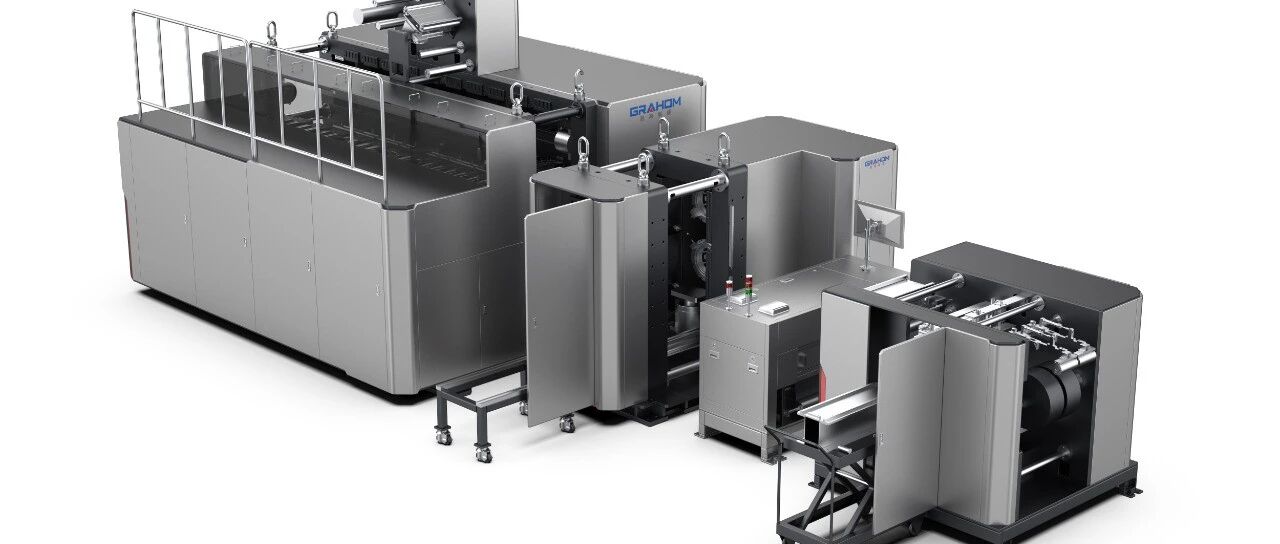
Core Viewpoint - The solid-state battery industry is approaching a critical commercialization window in 2027, driven by technological breakthroughs and capacity planning from companies like Guanhong Intelligent, which are clearing industrialization obstacles and promoting high-quality development in the new energy battery sector [1][4][23]. Group 1: Industry Trends and Projections - The global lithium battery shipment is expected to reach 10 TWh by 2035, with solid-state battery penetration projected to be 5%-10% [5]. - 2027 is identified as a key milestone for the industry, marking both a technological breakthrough and a market validation period, with the first small-scale production of sulfide-based solid-state batteries anticipated [5][4]. - Major companies such as GAC Group and CATL are advancing their production plans, with GAC Group already testing small-scale production and aiming for mass production between 2027 and 2030 [5][6]. Group 2: Technological Developments - The solid-state battery technology landscape is evolving, with sulfide-based batteries emerging as the most promising option due to their high ionic conductivity and compatibility [9][10]. - Dry electrode technology is gaining traction as a solution to the challenges faced by sulfide solid-state batteries, offering significant advantages in terms of cost and process efficiency [11][12]. - The dry electrode process eliminates the need for liquid solvents, reducing energy consumption by over 30% and improving production efficiency [12][19]. Group 3: Company Focus and Innovations - Guanhong Intelligent is positioning itself as a key player in the dry electrode equipment sector, providing comprehensive solutions that span from laboratory development to large-scale production [16][18]. - The company has achieved significant advancements in its equipment, including a reduction in delivery cycles to under four months and high customer satisfaction with its tailored solutions [17][18]. - Guanhong Intelligent's innovations have been recognized with awards, highlighting its leadership in addressing industry challenges and setting benchmarks for technological innovation [21][23].
纳科诺尔20251125
2025-11-26 14:15
Summary of Nacnore's Conference Call Company Overview - Nacnore specializes in the research, design, production, and manufacturing of battery rolling equipment, established in 2000 and headquartered in Xingtai, Hebei, with subsidiaries in Shenzhen and Changzhou, and a supply chain company in Hainan for global operations [3][2]. Industry and Market Performance - The third-quarter report for 2025 indicates that Nacnore's overall performance is under pressure due to revenue recognition issues and a slowdown in customer order acceptance [2][3]. - Nacnore has become a leading player in the high-end rolling equipment sector domestically, with over 2 billion RMB in rolling orders, significantly boosted by overseas markets, particularly in Europe, North America, and Southeast Asia [2][4]. Key Developments - Nacnore is actively expanding into the solid-state battery sector, focusing on dry electrode equipment, and has partnered with GAC to provide dry lines for both positive and negative electrodes [2][5]. - A high-standard solid-state battery laboratory in Xingtai is expected to be operational next month, accelerating the mass production of related equipment [5][2]. Financial Outlook - It is anticipated that Nacnore's profitability will improve in 2026, driven by an increase in overseas orders, which are expected to be more profitable than domestic projects [6][7]. Technology and Innovation - The dry electrode technology is primarily focused on negative electrodes, with challenges remaining in the positive electrode sector, particularly regarding small particle size materials [8][2]. - New technologies are expected to take at least six months to achieve mass production, requiring advancements in materials, processes, and equipment [9][2]. Customer and Order Insights - Downstream battery manufacturers are placing large-scale orders in advance, reflecting strong demand for cost reduction and the pressure of new technology integration [21][2]. - Nacnore has established communication with several overseas clients, including Murata and Samsung, and is in contact with Tesla [23][2]. Competitive Landscape - The solid-state battery equipment market is competitive, with companies like Toyota, Samsung, LG, and SK leading the way [24][2]. - Nacnore's dry equipment pricing is estimated to be around 20 million RMB, which may be slightly undervalued [11][2]. Future Plans - Nacnore aims to launch more products and research results in the solid-state battery field by 2026, with a focus on dry processes, lithium belt rolling, and various electrolytes [33][2]. - The company plans to complete its solid-state laboratory by the end of the year and invite investors for visits [34][2]. Additional Insights - The solid-state battery cost has not significantly changed compared to last year, with ongoing explorations in various companies [22][2]. - Nacnore's future customer base is expected to shift more towards battery manufacturers, as they require higher precision in lithium belt thickness [31][2]. This summary encapsulates the key points from Nacnore's conference call, highlighting the company's current status, market dynamics, technological advancements, and future outlook.
三年21亿美元!消息称特斯拉与三星SDI接近达成储能电池采购协议
鑫椤储能· 2025-11-04 06:52
Group 1 - Samsung SDI has secured a 3 trillion KRW (approximately 14.91 billion RMB) order to supply energy storage system batteries to Tesla for a duration of three years [1] - Samsung SDI has recently announced the mass production of the 4695 cylindrical battery, becoming the first company in South Korea to produce this type of battery [2] - The 4695 battery is produced at the Cheonan factory in South Korea and assembled in Vietnam, primarily targeting the micro-mobility market [2] Group 2 - Samsung SDI has initiated dry electrode verification work, which is expected to reduce the cost of all-solid-state batteries and enhance manufacturing competitiveness [2] - The company is actively expanding into the U.S. market, planning to collaborate with General Motors to build a battery factory in Indiana and considering converting some facilities to produce lithium iron phosphate batteries [2] - In the robotics battery sector, Samsung SDI has signed an agreement with Hyundai Kia to jointly develop high-performance batteries tailored for the robotics industry [2]

三年21亿美元!消息称特斯拉与三星SDI接近达成储能电池采购协议
鑫椤锂电· 2025-11-04 03:37
Core Viewpoint - Samsung SDI has secured a 3 trillion KRW (approximately 14.91 billion RMB) order to supply energy storage system batteries to Tesla for a duration of three years [1]. Group 1: Samsung SDI's Recent Developments - Samsung SDI has not made any final decisions regarding the Tesla order, and Tesla has not responded to requests for comments [2]. - On April 1, Samsung SDI announced the mass production of the 4695 cylindrical battery, becoming the first company in South Korea to produce this type of battery [2]. - The 4695 battery has a diameter of 46mm and a height of 95mm, produced at the Cheonan factory in South Korea and assembled in Vietnam, primarily targeting the micro-mobility market [2]. Group 2: Technological Innovations and Market Expansion - On June 18, Samsung SDI initiated dry electrode verification work, which is expected to reduce the cost of all-solid-state batteries and enhance manufacturing competitiveness [2]. - The company is actively expanding into the U.S. market, planning to collaborate with General Motors to build a battery factory in Indiana and considering converting some facilities to produce lithium iron phosphate batteries [2]. - In the robotics battery sector, Samsung SDI has signed an agreement with Hyundai Kia to jointly develop high-performance batteries tailored for the robotics industry [2].

嘉宾预告丨清研电子 董事长 王臣将在2025起点固态电池行业年会发表主题演讲
起点锂电· 2025-10-28 02:17
Core Viewpoint - The article highlights the upcoming 2025 Solid-State Battery Industry Annual Conference and the Solid-State Battery Golden Ding Award Ceremony, emphasizing the importance of new technologies and collaborative ecosystems in the solid-state battery sector [2]. Group 1: Event Details - The 2025 Solid-State Battery Industry Annual Conference and the Solid-State Battery Golden Ding Award Ceremony will be held on November 8, 2025, at the Guangzhou Nansha International Convention Center [2]. - Concurrently, the CINE Solid-State Battery Exhibition and CINE Sodium Battery Exhibition will take place from November 6 to 8, 2025 [2]. Group 2: Keynote Speaker - Wang Chen, the founder and chairman of Shenzhen Qingyan Electronics Technology Co., Ltd., will deliver a speech on "Dry Electrode Technology to Accelerate the Industrialization of All-Solid-State Batteries" during the conference [2]. Group 3: Company Overview - Shenzhen Qingyan Electronics Technology Co., Ltd. is a national high-tech enterprise established in August 2020, incubated by the Tsinghua University Research Institute, focusing on powder film technology [8]. - The company aims to become a global leader in powder film technology, leveraging over 20 years of technical accumulation from its research institute [8]. Group 4: Technological Innovations - The company has developed a dry electrode forming composite machine, breaking foreign technology monopolies and achieving international advanced levels in domestic dry electrode manufacturing [5]. - Innovations include a hot-pressing film technology that maintains a temperature control precision of ±1°C, ensuring stable electrode film thickness and density [5]. - The dual-sided composite film speed reaches 50 m/min, significantly enhancing production capacity [5]. Group 5: Research Achievements - Wang Chen has published 7 papers in domestic and international journals and has applied for over 70 national patents, with 28 granted [6]. - The company has played a core role in national and local major technology projects, contributing to the upgrade and autonomy of domestic energy storage technology [6].

清研电子董事长王臣:破局“卡脖子” 推开干法电极量产之门
Sou Hu Cai Jing· 2025-10-27 04:31
Core Insights - Shenzhen Qingyan Electronics Technology Co., Ltd. is set to establish China's first 3GWh dry electrode production line in Changzhou, Jiangsu, expected to be completed by mid to late 2025, aiming to demonstrate the feasibility of dry technology and encourage more leading companies to enter the domestic battery industry [1][4] - The dry electrode technology significantly reduces energy consumption and production costs while enhancing electrode energy density and performance, aligning with green manufacturing trends and supporting advancements in solid-state batteries and supercapacitors [4][5] - The company has successfully transitioned from a research-focused entity to a key player in the industry, overcoming technological barriers and achieving international advanced standards in dry electrode production [5][6] Company Development - The company was founded in response to a crisis in the domestic lithium battery industry due to foreign material supply disruptions, leveraging research achievements to establish a production line in Zhaoqing [5] - Initial challenges in production speed and width were addressed through collaboration with domestic equipment manufacturers, leading to the development of an integrated dry electrode forming machine that meets international standards [5][6] - The company has completed the first automotive-grade dry electrode production line in China, establishing a "Shenzhen R&D + external mass production" model [6] Industry Positioning - Shenzhen's comprehensive lithium battery industry chain is crucial for rapid development, allowing for efficient integration of materials, equipment, and testing resources [6] - The company aims to enhance battery safety technology in three directions: high energy density cells, improved system-level safety, and the development of solid-state batteries [6] - The company advocates for leveraging international standards to transform Chinese experiences into global consensus, thereby enhancing the core competitiveness of China's lithium battery industry [6]
